Care and Maintenance
Best Hard Water Stain Remover for Windows: 2026 Guide
Discover the best hard water stain remover for windows that actually works. Our 2026 guide reviews top products to restore streak-free shine.


We’ve all been there—staring up at those second-story windows, noticing the film of dust and grime, and feeling a sense of dread. Knowing how to clean outside windows you can't reach isn't just about getting a good shine; it's about doing it safely.
The best way to tackle this is to think like a pro. Forget about wobbly ladders and risky balancing acts. Professional window cleaners use ONLY two methods: a squeegee with an extension pole or a pure-water system. Both of these professional methods let you achieve a perfect, streak-free finish while your feet are firmly on the ground.

Whether it’s that fine layer of dust from the dry air in Phoenix or the built-up grime on a second-story home in Denver, the problem is always the same: how do you get them sparkling clean without putting yourself in danger?
That classic image of someone teetering on a ladder with a bucket and sponge is not just outdated—it’s a recipe for disaster.
When you're dealing with windows that are out of arm's reach, safety has to be your number one priority. A smarter approach means understanding the very real risks of working at heights. This guide is here to cut through the noise and focus on the two tried-and-true methods that professionals swear by for getting incredible results without the danger.
After more than 26 years in this business, our team at Professional Window Cleaning has seen it all. When it comes to high windows, there are really only two methods that deliver that consistent, streak-free clarity every time:
These two methods are the cornerstones of professional window cleaning for a reason: they put safety and effectiveness on equal footing. By letting you work from the ground, they completely remove the single biggest risk of the job—a fall from a ladder.
We're going to break down exactly how you can use these techniques to finally get those windows clean. It’s time to get back that satisfying, crystal-clear view you've been missing. You don't have to live with dirty, out-of-reach windows any longer.
Having the right equipment is the difference between a frustrating afternoon and a flawless finish when you’re figuring out how to clean outside windows you can't reach. Instead of just grabbing any old pole and a rag, it’s worth understanding the tools professionals rely on to get the job done safely and effectively from the ground.
Investing in the right gear not only makes the task worlds easier but also protects your windows and, more importantly, yourself. There are only two methods professionals use: the traditional squeegee method or a modern pure-water system. Each has its place and requires a specific setup.
The squeegee-and-pole method is a classic for a reason—it’s incredibly effective when you get the hang of it. But let’s be clear: the cheap combo kit from a big-box store isn't going to cut it for high windows.
A common mistake I see homeowners make is buying a pole that's just long enough. Always get one with a few extra feet of length. This gives you much better leverage and control, so you're not uncomfortably stretching and leaving streaks behind.
For the serious DIYer, or for homes with a ton of high, hard-to-reach windows, a water-fed pole system is the ultimate setup. This is the modern approach our teams at Professional Window Cleaning, serving areas like Las Vegas and Phoenix, have used for years to deliver those pristine, spot-free results. You can learn more about the different kinds of professional window cleaning equipment in our detailed guide.
A water-fed pole system might sound complex, but it boils down to a few key parts working together to leave a perfect shine without any manual drying.
Because the water is totally pure, it dries naturally without leaving a single mineral spot or residue behind. This method isn't just safer because it keeps you on the ground; it's also incredibly efficient. You can clean windows in a fraction of the time it takes with traditional methods.
Deciding between a traditional setup and a water-fed system often comes down to budget, how many windows you have, and how often you plan to clean them. Here's a quick breakdown to help you compare.
Ultimately, both methods can give you fantastic results. The traditional squeegee is a time-tested craft, while the water-fed pole is a game-changer for efficiency and safety.
For decades, the squeegee has been a window cleaner's best friend, and for a good reason. When you pair it with a solid extension pole, its reach is practically limitless, making it a cornerstone of professional window cleaning. This ground-based method is a bit of an art form, but once you get the hang of it, you can pull away grime and water in one fluid motion, leaving nothing behind but a perfect, streak-free shine.
The secret to this technique doesn't actually start with the squeegee, but with the cleaning solution you use. A professional-grade mix is absolutely essential for cutting through the tough exterior grime you find on windows in places like Las Vegas, where dust and hard water minerals are a constant battle.
Forget those store-bought sprays that evaporate the second they hit sun-baked glass. The best solution is often the simplest one—a recipe pros have relied on for years.
The biggest rookie mistake is adding too much soap. You're looking for a silky, slippery feel in the water, not a foamy bubble bath. This simple mixture is more than enough to break down dirt without leaving a film on the glass.
This visual breaks down the essential tools that pros use for cleaning high-reach windows right from the ground.
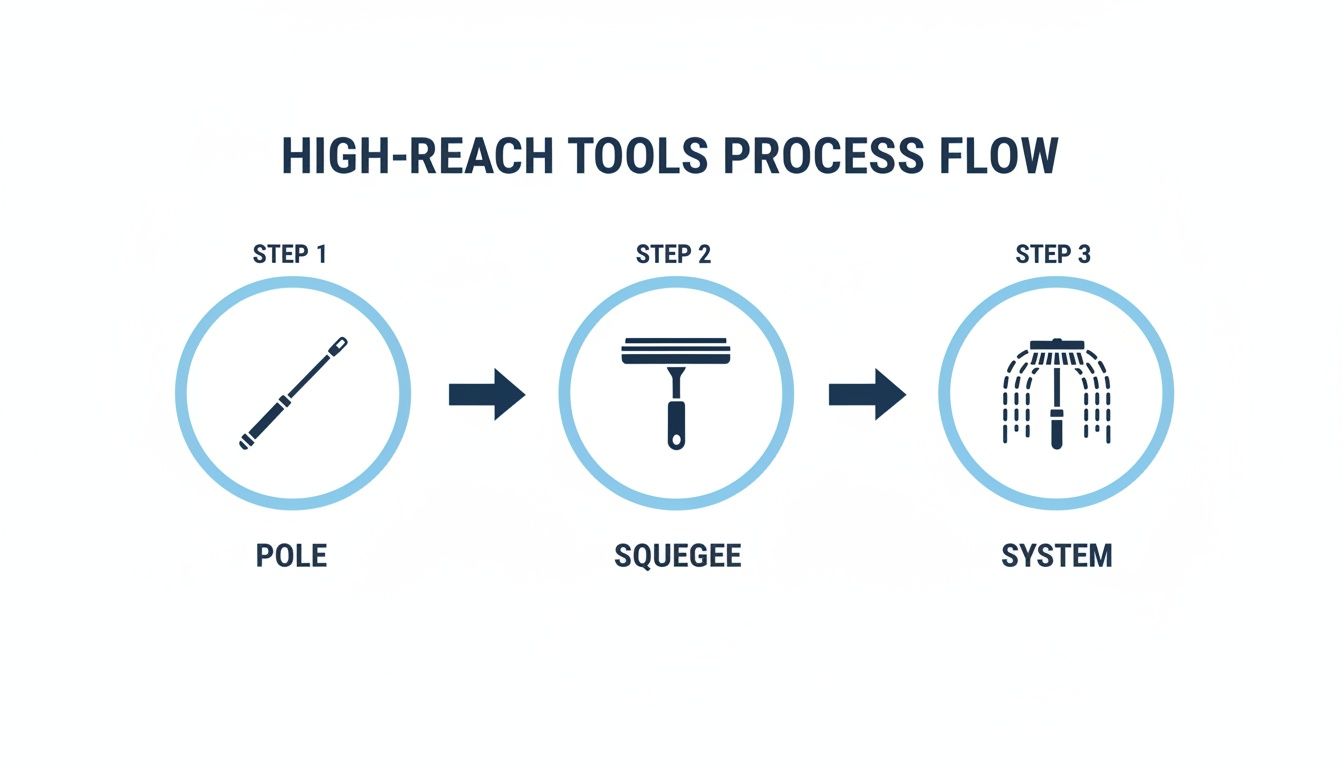
It really just highlights that whether you stick with a traditional pole and squeegee or upgrade to a modern water-fed system, having the right tool is the first step toward getting professional results.
Working with a long pole is a totally different ballgame than cleaning a window up close. Your movements have to be deliberate and controlled. The whole point is to keep consistent pressure and the perfect angle to clear the glass effectively.
The most effective technique by far is the "S-stroke" or "snake" method. After you've scrubbed the entire window with your applicator, start at a top corner. Angle the squeegee just slightly and pull it across the top inch of the glass. This creates a dry zone to start from. From there, you'll work your way down the window in an overlapping "S" pattern, making sure you never lift the blade from the glass until you hit the bottom.
This fluid motion is key—it directs all the dirty water into the path of your next stroke, which prevents those ugly vertical drips and streaks. It definitely takes some practice to get right, but mastering this technique is how the pros achieve that flawless, invisible-glass finish.
And one last pro tip: always wipe your squeegee blade with a clean microfiber cloth after each window. It's a small detail, but it stops you from dragging dirt onto the next pane of glass. That little bit of extra care is what separates a decent job from a truly professional one.
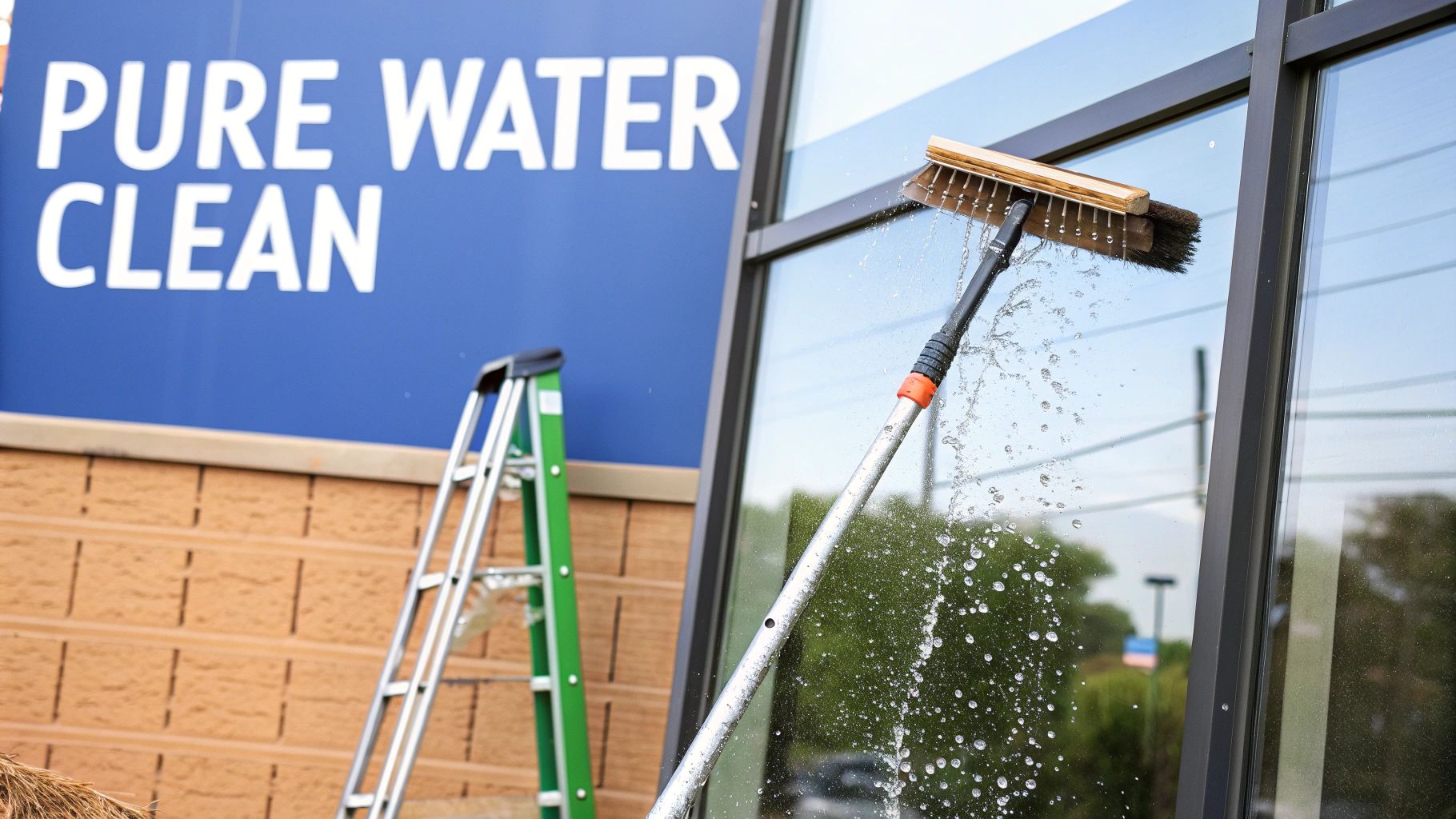
Imagine cleaning your highest, most unreachable windows and getting a perfect, streak-free shine without ever touching a squeegee. It sounds too good to be true, but that’s exactly what a pure-water system does. This advanced technology is one of only two methods used by top-tier professionals, and it completely changes the game for tackling second-story glass.
At its core, the system works by taking ordinary tap water and stripping it of absolutely all impurities. This isn't just simple filtering; it's a process of total deionization that turns regular H₂O into a powerful cleaning agent.
Your tap water is loaded with dissolved minerals and solids—calcium, magnesium, and chlorides, to name a few. When that water evaporates on a surface, it leaves those minerals behind, creating the frustrating spots and streaks we all know too well.
A pure-water system uses a multi-stage filtration process that removes 100% of these total dissolved solids (TDS). The water that comes out the other side is so pure it actively attracts and bonds with dirt, grime, and dust, lifting them right off the glass.
Because it’s completely free of minerals, pure water dries to a flawless, spot-free shine every single time. This is what eliminates the need for a squeegee altogether.
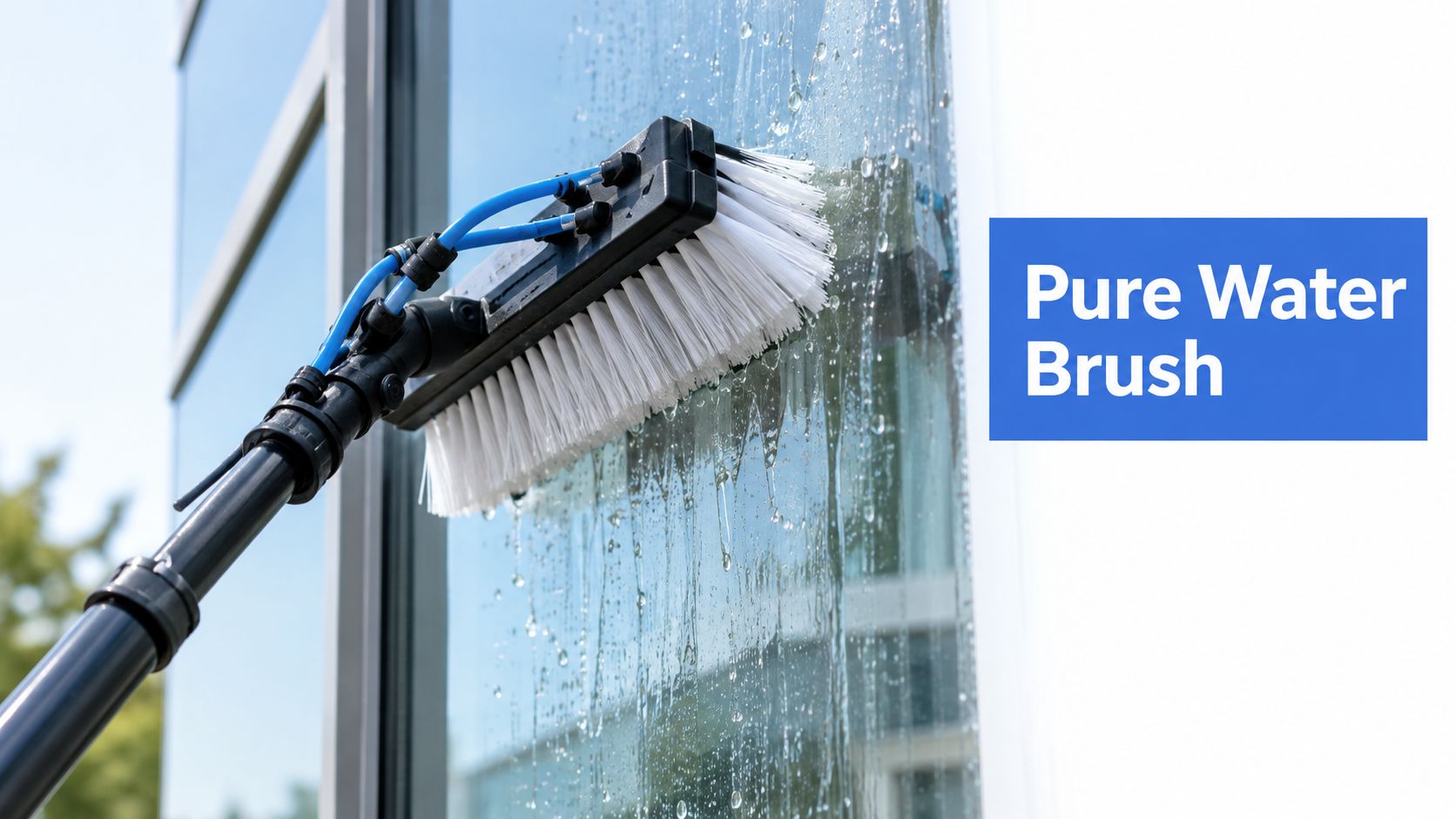
When this purified water is pumped through a specialized, lightweight pole tipped with a soft-bristle brush, you get a powerful two-in-one action. The brush gently scrubs away stubborn, built-up grime while jets of pure water rinse all the dirt away.
The benefits of a water-fed pole system go far beyond a great finish. It’s fundamentally a safer, faster, and more efficient way to handle hard-to-reach windows, especially on multi-story homes or commercial buildings. You can dig deeper into pure water window washing to see why it has become such a professional standard.
For our teams, with over 26 years of experience, this method is invaluable. It keeps our technicians safely on the ground, taking the risks associated with ladders almost entirely out of the equation.
In fact, the adoption of water-fed poles among professional services like ours in cities such as Scottsdale has grown by 50% since 2015. These poles can reach up to 60 feet from the ground, which has helped cut accident rates by a staggering 40% compared to older, ladder-based methods. You can find more on these industry safety trends if you're curious.
The efficiency is undeniable, too. A single technician can clean windows in a fraction of the time it would take with a bucket and squeegee, scrubbing and rinsing in one fluid motion. This makes it the gold standard for challenging jobs where both safety and speed are critical.
While there’s a certain satisfaction in a good DIY job, some projects are best left to the pros. Knowing how to clean outside windows you can't reach is one thing, but knowing when to step back is just as important. For certain situations, the risks, time commitment, and specialized gear required just don't stack up against the benefits of calling in an expert.
This is especially true when you're dealing with windows that are extremely high, architecturally complex, or caked with years of stubborn grime. If you’re looking at third-story windows, skylights over a steep roof, or delicate stained-glass panels, the potential for a costly accident or damage to your home goes up dramatically.
The first step is to be honest with yourself about the job's difficulty. Not all high-reach windows are created equal, and a realistic assessment is key.
Ask yourself about these scenarios:
When cleaning those high windows starts to feel overwhelming or risky, it’s a clear sign to call for backup. These specialized cleaning jobs often fall under the umbrella of expert building maintenance services, where pros can eliminate the guesswork and the danger for you.
Hiring a seasoned pro brings more than just clean windows—it brings peace of mind. With over 26 years of hands-on experience, Professional Window Cleaning has seen it all and has fine-tuned our techniques to handle just about any challenge safely and efficiently. We use both traditional squeegee methods and advanced pure-water systems, always choosing the right tool for your specific job.
The biggest benefit of hiring a professional is the guaranteed result. A reputable company stands behind its work, ensuring a flawless, streak-free finish. You don't have to worry about re-doing spots you missed or living with streaks after spending hours on a ladder.
For our clients in cities like Phoenix and Scottsdale, this means getting a perfect shine every time, backed by rigorous safety protocols and full insurance coverage. You’re not just paying for a service; you're investing in a risk-free, perfect result delivered by seasoned experts. For the toughest jobs, a professional is always your safest and most reliable solution.
Even with the best game plan, cleaning those hard-to-reach exterior windows can leave you scratching your head. With 26 years of experience under our belts, we’ve heard just about every question in the book. Here are some of the most common ones we get from homeowners, along with our straight-up, professional advice.
For most homes, a good cleaning twice a year is the sweet spot. This schedule is usually enough to keep that heavy, caked-on layer of dirt and grime from settling in for good. Think of it as essential maintenance.
That said, your local environment is a huge factor. If you're in a dusty area like Phoenix, or dealing with the urban grime you'd find in a city like Denver, you’ll probably want to bump that up to a quarterly cleaning. Staying on top of it not only keeps your view crystal clear but also helps protect the glass from getting etched by pollutants over time.
In a word: no. We strongly advise against pointing a high-pressure washer at your windows. It might look like a quick and powerful fix, but the potential for expensive, irreversible damage is incredibly high.
That intense blast of water can easily:
Professional methods, like using a squeegee or a water-fed pole system, are designed to be tough on dirt but gentle on your home.
The professional pure water systems we use operate at very low pressure. It’s the deionized water doing the cleaning, not brute force. It's a smarter, safer, and far more effective way to get the job done.
The absolute best time to wash your windows is on a cloudy day, or at least when the glass is fully in the shade. Direct sunlight is the number one enemy of a perfectly streak-free finish.
Here’s why: when the sun is beating down, it heats up the glass and makes your cleaning solution evaporate in a flash. That rapid drying is what causes those frustrating streaks and spots to appear before you even have a chance to squeegee them away.
For a smoother process and much better results, plan your window washing for the early morning or late afternoon when the sun isn't so intense.
Ready for a guaranteed streak-free shine without the hassle or safety risks? Professional Window Cleaning has been delivering pristine results for more than two decades. Contact us today for a free estimate!
Read our blog posts regularly and keep learning.