Care and Maintenance
How Does Water Fed Pole Window Cleaning Work
Learn how does water fed pole window cleaning work, from purified water chemistry to telescopic poles, brush heads, safety benefits, and when to hire pros.


Those stubborn spots you see on your glass, even right after you’ve cleaned it? That’s what we in the business call window cleaning water spots. The real frustration isn't the water itself—it's the dissolved minerals like calcium and magnesium that get left behind once the water evaporates, leaving a dingy, chalky film on an otherwise perfect view.
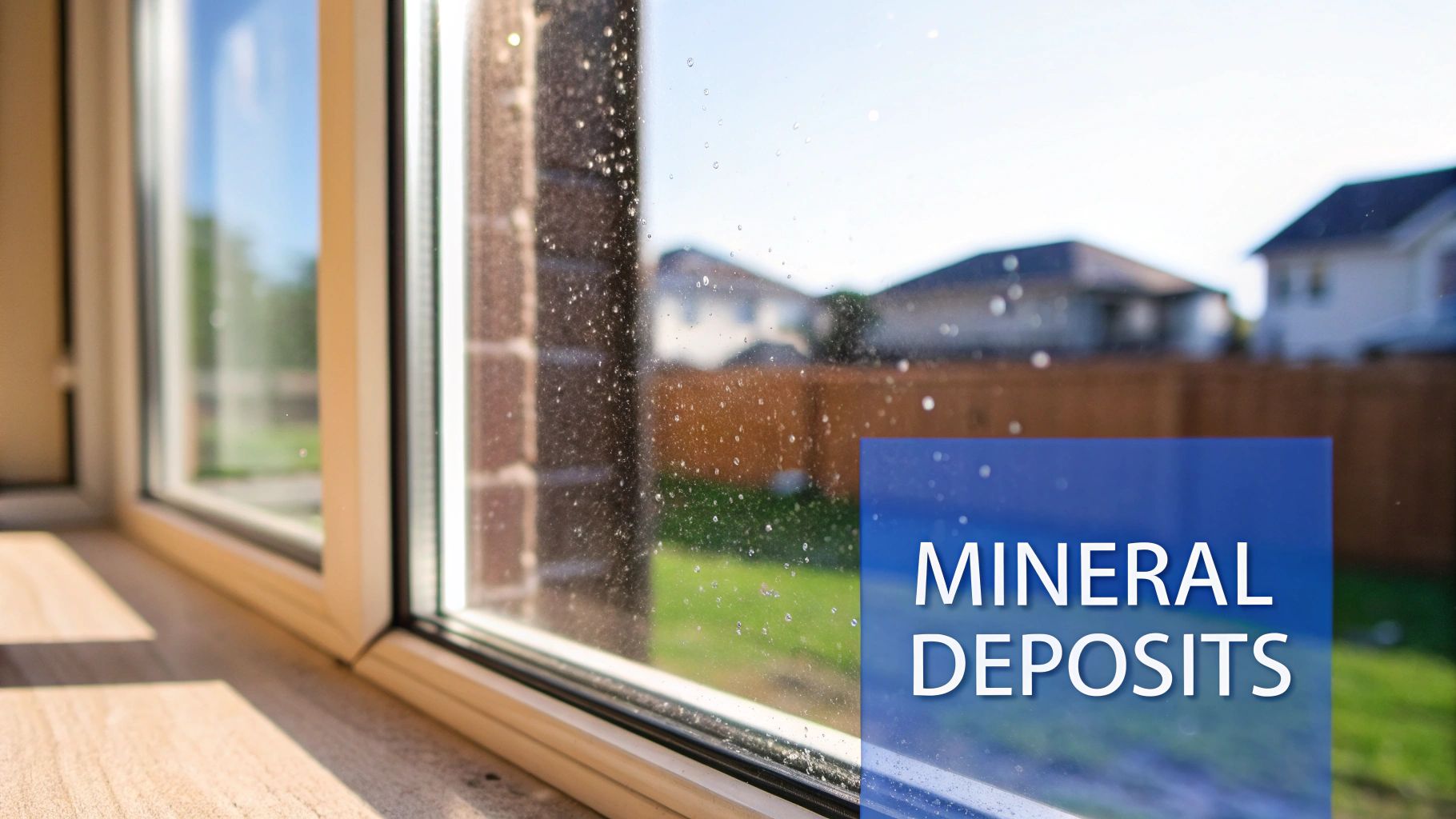
Ever notice how those annoying spots seem to appear out of nowhere as your windows dry? The science is pretty straightforward, even if the results are infuriating. When a water droplet lands on your glass, it eventually evaporates. But the minerals dissolved in it are too heavy to go with it, so they stay right there on the surface.
This is a massive headache for property owners in areas with hard water, like our service areas in Phoenix and Las Vegas. The higher the mineral content in your local supply, the worse the spotting is going to be.
It’s important to know that not all water spots are created equal. Figuring out what you're up against is the first step to getting rid of them for good. We generally break them down into two categories:
Think of it like the limescale you see building up on a shower head—it’s the same basic idea, just happening on your windows. Sometimes, what looks like a spot is actually moisture trapped between the panes from a failing window seal, which is a whole different issue.
With over 26 years in the business, we've seen every kind of water spot imaginable at Professional Window Cleaning. The fastest way to get stubborn Type II etching? Let your sprinklers hit the windows day after day. It’s a guaranteed recipe for damaged glass.
Before you grab a bottle of cleaner, it helps to know what you’re dealing with. A quick look can tell you a lot about the severity of your water spots.
Here’s a quick guide to help you figure out what kind of spots you have and what your next move should be.
Knowing the difference between a simple mineral deposit and true glass etching will save you a ton of time and frustration. If you're dealing with anything beyond Stage 2, it's often best to call in a professional to avoid causing more harm than good. Our teams in Denver and Scottsdale are experts at assessing and treating severe water damage.
When you spot those first faint, chalky outlines of water spots, it's the perfect time to act. For these fresh, light stains—what we in the business call Type I spots—you often don't need aggressive chemicals or heavy-duty equipment.
A few simple, effective DIY methods can restore clarity to your glass, especially if you catch them early. The key is using the right solution and technique to dissolve the mineral deposits left behind by hard water without damaging your windows.
One of the most trusted methods for tackling window cleaning water spots involves an ingredient you definitely have in your pantry: white vinegar. Its natural acidity is perfect for breaking down the alkaline mineral deposits, like calcium and magnesium, that form those frustrating spots.
Creating the solution couldn't be easier. Just mix equal parts distilled white vinegar and water in a clean spray bottle. Using distilled water is a crucial little detail because, unlike tap water, it’s mineral-free and won't leave any new spots behind as it dries. This simple mixture is often all you need to cut through fresh mineral buildup.
Pro Tip: Always test any new cleaning solution, even a natural one like this, on a small, out-of-the-way corner of the window first. This quick check ensures it won't react negatively with any coatings or tints on your glass.
Having the right tools is just as important as the cleaning solution. A cheap cloth or a worn-out squeegee can turn a simple job into a streaky, lint-filled mess. For a finish that looks like a pro was there, here’s what you’ll want to have on hand:
What if the vinegar solution isn’t quite cutting it? For spots that have been sitting a little longer but haven't yet etched the glass, you can step up your approach slightly. Before you think about calling for professional help in cities like Phoenix, where the intense sun and hard water are a constant battle, try this technique.
After spraying your vinegar solution, you can use ultra-fine #0000 grade steel wool to gently work on the surface. The grade is critical here—anything coarser will scratch your glass. Using light, circular motions on the wet window, gently agitate the spots to loosen the mineral deposits.
Remember, the goal is to gently scrub the deposits off the surface, not to scratch the glass itself. Always keep the surface well-lubricated with your cleaning solution while using the steel wool. Once you're done, squeegee the window clean to remove all the residue. This two-step process can often lift those moderate spots that simple spraying and wiping can't handle, leaving your windows crystal clear.
While DIY methods can certainly handle fresh, light mineral deposits, there's a definite tipping point where elbow grease and vinegar just won’t cut it. Have you ever scrubbed a window only to find those hazy spots are still there? That’s a telltale sign you’re up against something more serious than a simple surface stain.
This usually means you're dealing with severe mineral etching. It's a type of damage where minerals from hard water have chemically bonded with the glass, creating a blemish that’s literally part of the window now. For property owners in Las Vegas and Denver, this is a common problem.
When you hit that wall, it's time to put the household cleaners away. Trying to power through etched-in spots with harsh abrasives is a recipe for disaster—you can easily cause irreversible scratches, turning a fixable issue into a costly window replacement.
When you hire a seasoned company like Professional Window Cleaning, you aren't just paying for clean glass; you're investing in specialized techniques we've perfected over decades. In our 26 years of experience, we've learned that there are ONLY 2 methods of window cleaning professionals use: a squeegee or a pure-water system. These deliver consistently flawless, spot-free results.
The first is the traditional squeegee method, which is a true art form in the hands of a skilled technician. We use specialized, safe cleaning agents formulated to break down stubborn grime and mineral buildup without harming your glass, frames, or landscaping. Combined with expert squeegee work, this method guarantees a streak-free shine, every single time.
This flowchart gives you a good idea of when a DIY approach might work versus when it's time to bring in a pro.
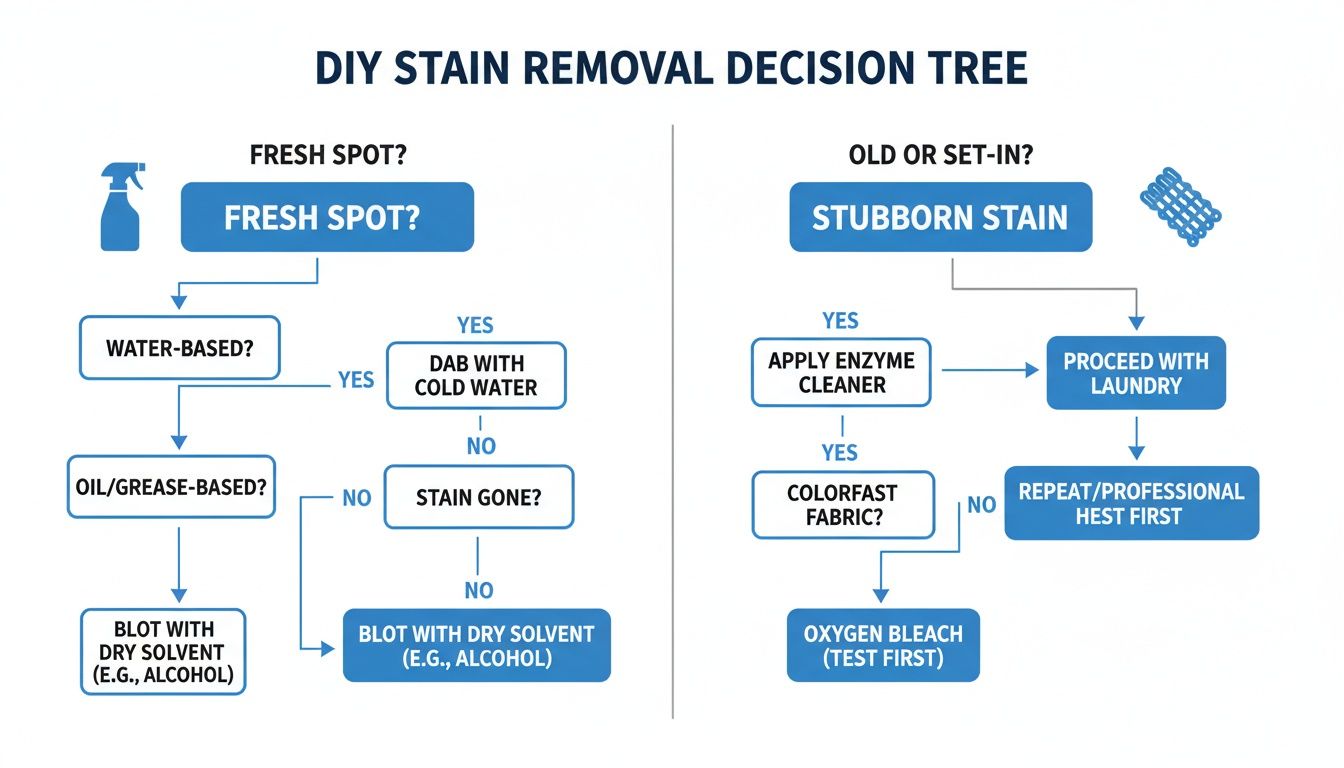
As the visual guide shows, simple spots can often be managed at home. But for those deeply ingrained stains, you need a more powerful solution that only professionals are equipped to provide.
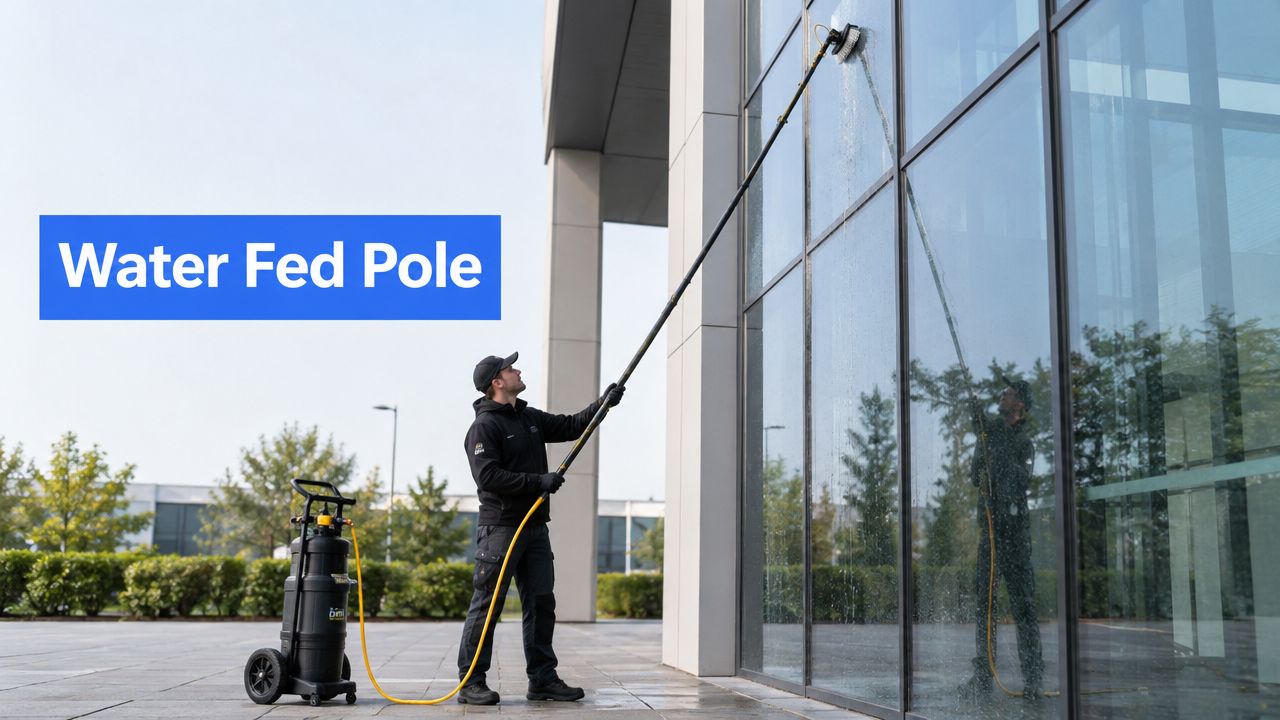
For more challenging exterior jobs—especially on multi-story buildings or homes with hard-to-reach windows—we bring out our second and most advanced technique: the pure-water system. This technology is a complete game-changer in the battle against stubborn water spots.
These systems use a multi-stage filtration process, like reverse osmosis and deionization, to strip 100% of the dissolved solids from the water. This ultra-pure water is so effective because it’s in an unstable state and actively wants to grab onto minerals and dirt from your windows.
Essentially, pure water acts like a magnet for impurities. It pulls the minerals right off the glass, and because there are no minerals left in the water itself, it dries to a perfectly clear, spot-free finish without any need for squeegeeing.
This eco-friendly method is incredibly safe for your property and works wonders in hard water areas like Scottsdale and Phoenix, where high mineral content is a constant headache. The demand for solutions this effective has fueled massive growth in our industry. The global market is valued at around $2 billion, with over 100,000 people employed in the US alone—a number expected to grow by 13% by 2028 as property hygiene standards rise. You can dig into more of these trends in this detailed report on window cleaning industry statistics.
Trusting a professional ensures your property benefits from the best tools and techniques the industry has to offer.
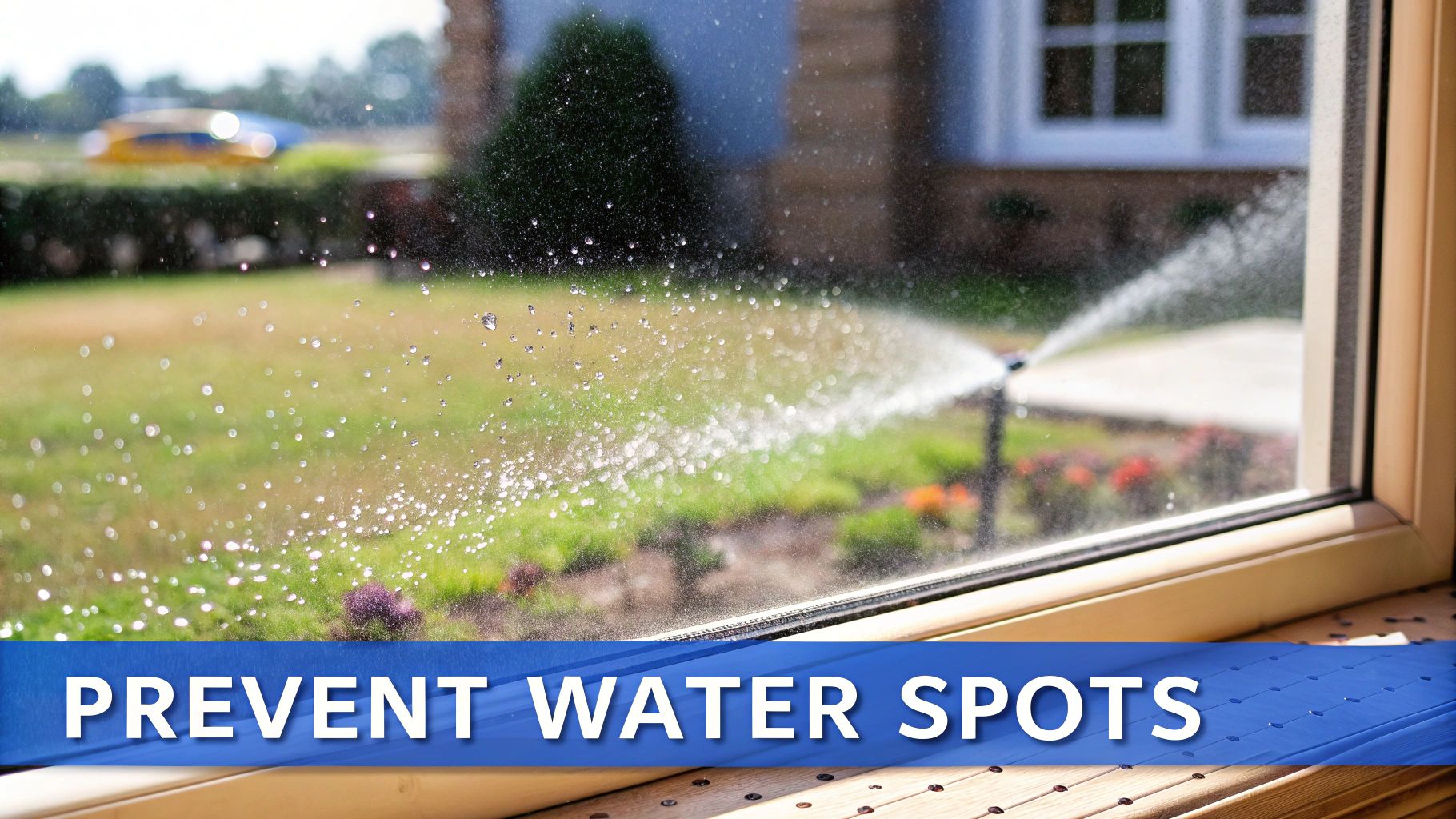
Dealing with existing water spots is one battle, but the real win is preventing them from ever showing up. Taking a few proactive steps can dramatically cut down on mineral deposits forming on your glass, keeping your view crystal clear and saving you a ton of frustration later on.
This is especially true for property owners in places like Scottsdale and Denver, where hard water and intense sun create the perfect storm for stubborn spots. A few simple adjustments can make all the difference.
One of the biggest culprits we see for severe water spots is a sprinkler system gone rogue. When sprinkler heads are constantly soaking your windows, they're essentially giving your glass a daily bath in mineral-rich water. As that water evaporates, a tough layer of calcium and magnesium builds up, which can eventually etch the glass itself.
Take a few minutes to run your sprinklers and just watch where the water goes. If you see any heads hitting your windows or the side of the building, adjust them. This simple fix is often the single most effective preventative measure you can take to protect your glass from long-term damage.
A simple tweak to your irrigation can prevent hundreds of dollars in professional restoration work down the line. It's a five-minute job that protects your biggest investment.
Another fantastic strategy is to make your windows actively repel water. You can do this by applying what’s called a hydrophobic glass sealant or treatment. These products create an invisible, slick layer on the glass surface that water just can't stick to.
Instead of clinging to the window and leaving minerals behind, water beads up and rolls right off, taking most of the dissolved solids with it. This "lotus effect" minimizes spotting and makes future cleanings a whole lot easier.
There are plenty of DIY-friendly sealants out there that can offer protection for several months. For a more durable, professional-grade application, you can also have us apply a protective coating during your next scheduled window cleaning in areas like Phoenix. It’s a great way to keep your windows looking pristine between our visits. To effectively prevent future water spots and ensure a pristine finish, understanding the role of proper drying tools is crucial; for instance, learn more about microfiber towels for achieving a streak-free shine.
Ultimately, the most reliable way to stop tough water spots from taking hold is a consistent, professional cleaning schedule. With over 26 years of experience in this business, we at Professional Window Cleaning can tell you that regular maintenance is everything.
Consistent cleaning stops mineral deposits before they ever get a chance to bond with and etch into the glass. We use one of two professional methods—either flawless squeegee work or our advanced pure-water systems—to remove every trace of grime and minerals. If you're curious about the tech, you can learn more about the benefits of pure water window washing. A regular schedule is the best defense, ensuring your property looks its best year-round and saving you from costly restoration down the road.
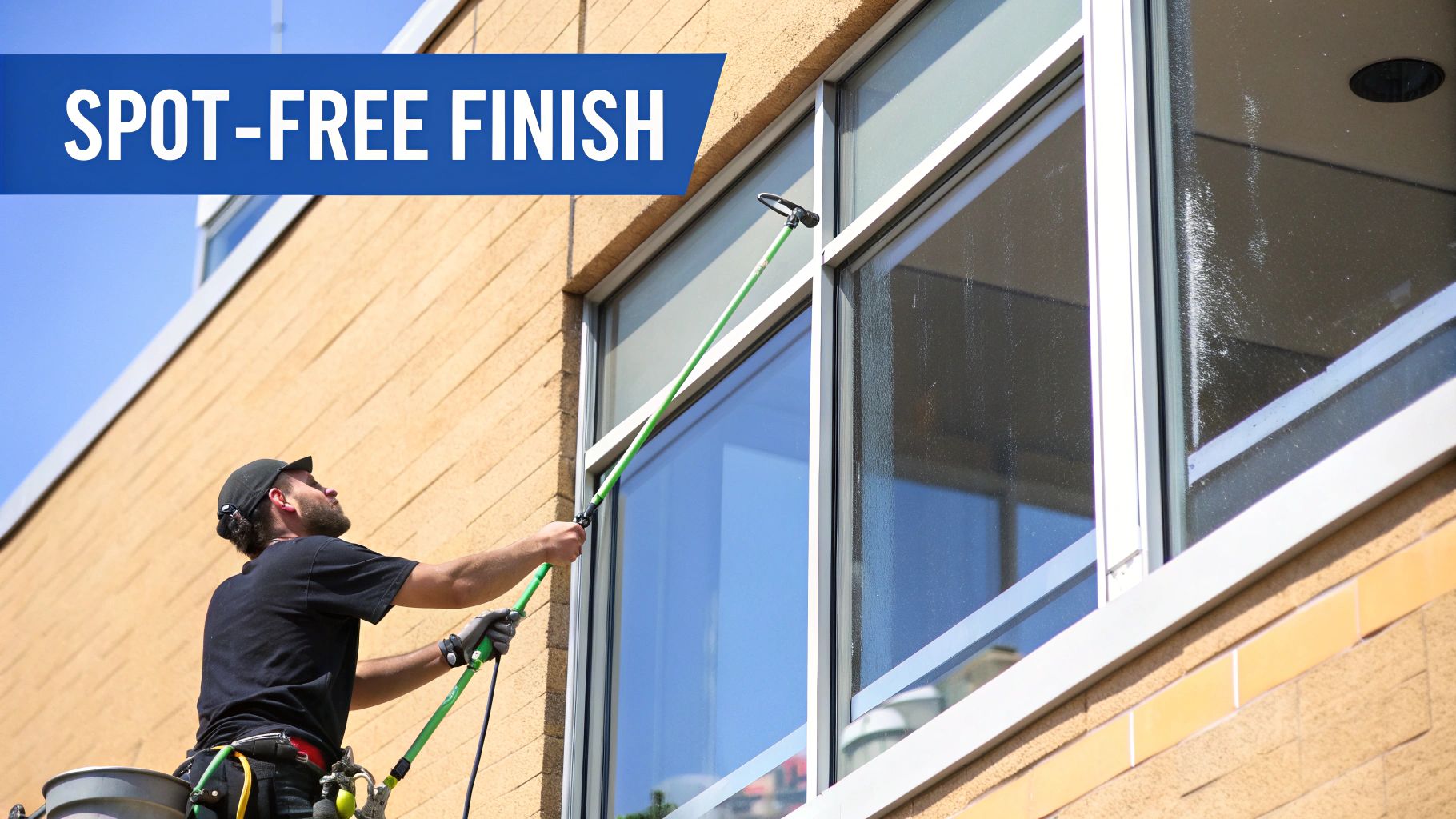
Getting rid of stubborn window cleaning water spots takes more than just elbow grease—it demands the right techniques and specialized gear. With over 26 years of experience, our team at Professional Window Cleaning has fine-tuned our process down to the two most effective methods in the industry. This ensures we leave every window with a flawless finish, whether in Las Vegas or Scottsdale.
Our two-pronged approach means we can adapt to any job, from a single-family home to a towering commercial high-rise. It’s this versatility that allows us to safely and efficiently restore perfect clarity to any type of glass, no matter how challenging.
For interior windows and easily accessible exterior glass, nothing beats the time-honored craft of traditional squeegee cleaning. This isn't just wiping down a window. It’s a skill that requires a steady hand, the perfect angle, and professional-grade tools to achieve a truly streak-free shine.
Our technicians use specialized, eco-friendly cleaning solutions that cut through surface grime and fresh mineral deposits without leaving any sticky film behind. Paired with the precision of an expert, the squeegee method delivers a pristine, hand-finished look that paper towels or cloths just can't match.
When we’re up against high-rise buildings or other tricky exteriors, we bring out our state-of-the-art pure-water systems. This eco-friendly technology is a total game-changer for removing tough hard water stains. The system pushes tap water through a multi-stage filtration process, stripping it of 100% of its mineral content.
What you’re left with is ultra-purified water that acts like a magnet for minerals, pulling deposits right off the glass. Since the water itself is completely pure, it dries to a perfect, spot-free finish without any chemicals or squeegeeing needed. This method is incredibly effective in arid climates where hard water is a constant headache.
We see the demand for this firsthand. Searches for 'glass water spot remover' always spike in the summer when the intense sun bakes mineral rings onto glass. This trend is especially strong in our key markets like Phoenix and Denver, where hard water plagues countless properties.
Across Arizona, Colorado, and Nevada, we’re proud to solve the toughest hard water challenges for our clients, restoring clarity and boosting curb appeal one window at a time. If water spots have dug in and etched the glass, our professional glass polishing services can fully restore your view.
We field a lot of questions about water spots on windows, so we've put together answers to the ones we hear most. This should clear up some of the confusion and help you keep your glass looking pristine.
You can, but using tap water is often what causes water spots in the first place. This is especially true in places with notoriously hard water, like our service areas in Las Vegas and Phoenix.
When tap water evaporates, all those minerals—calcium, magnesium, you name it—get left behind on the glass, creating a brand new layer of spots.
If you're going the DIY route, distilled water is a much safer bet because it’s completely mineral-free. For a truly guaranteed spot-free shine, though, nothing beats a professional service that uses a pure-water system. It’s one of the two core methods we rely on at Professional Window Cleaning for flawless results.
This is a common myth we’re always happy to bust. Rainwater itself is naturally soft and contains virtually no minerals, so it won’t cause the hard water spots you’re fighting against.
The problem happens when rain hits windows that are already dirty. The raindrops mix with the film of dust, pollen, and grime sitting on the glass. As that dirty water dries, it leaves behind muddy-looking spots.
A professional cleaning strips away that base layer of dirt. With nothing for the rain to cling to, it just sheets off the glass, helping your windows stay cleaner for much longer. That’s a benefit our clients in Denver and Scottsdale appreciate.
After more than 26 years in this business, we can say with certainty that professionally cleaned windows hold up way better in a rainstorm than dirty ones. The rain simply has less grime to stick to.
There’s no magic number here—the right cleaning schedule really depends on your property and its environment. But based on our experience, we have some solid recommendations.
Staying on a consistent schedule is your best defense against long-term glass damage.
Don't let stubborn water spots compromise your view. With over 26 years of hands-on experience, Professional Window Cleaning has the expertise to bring back total clarity to your glass, using either time-tested squeegee techniques or our advanced pure-water systems.
Contact us today for a free, no-hassle estimate in Arizona, Colorado, or Nevada!
Read our blog posts regularly and keep learning.