Care and Maintenance
How to Restore Window Glass and Frames the Right Way
Learn how to restore window glass, frames, and seals with pro methods, real tools, and honest trade-offs. A practical guide


Absolutely. Using ammonia for cleaning windows is a classic for a reason—it delivers a powerful, streak-free shine, especially when you're up against some serious grime. It works by cutting right through tough residues like grease and fingerprints and then evaporating in a flash, which is the secret to avoiding those frustrating streaks. In fact, plenty of pros still swear by it for its unbeatable effectiveness.
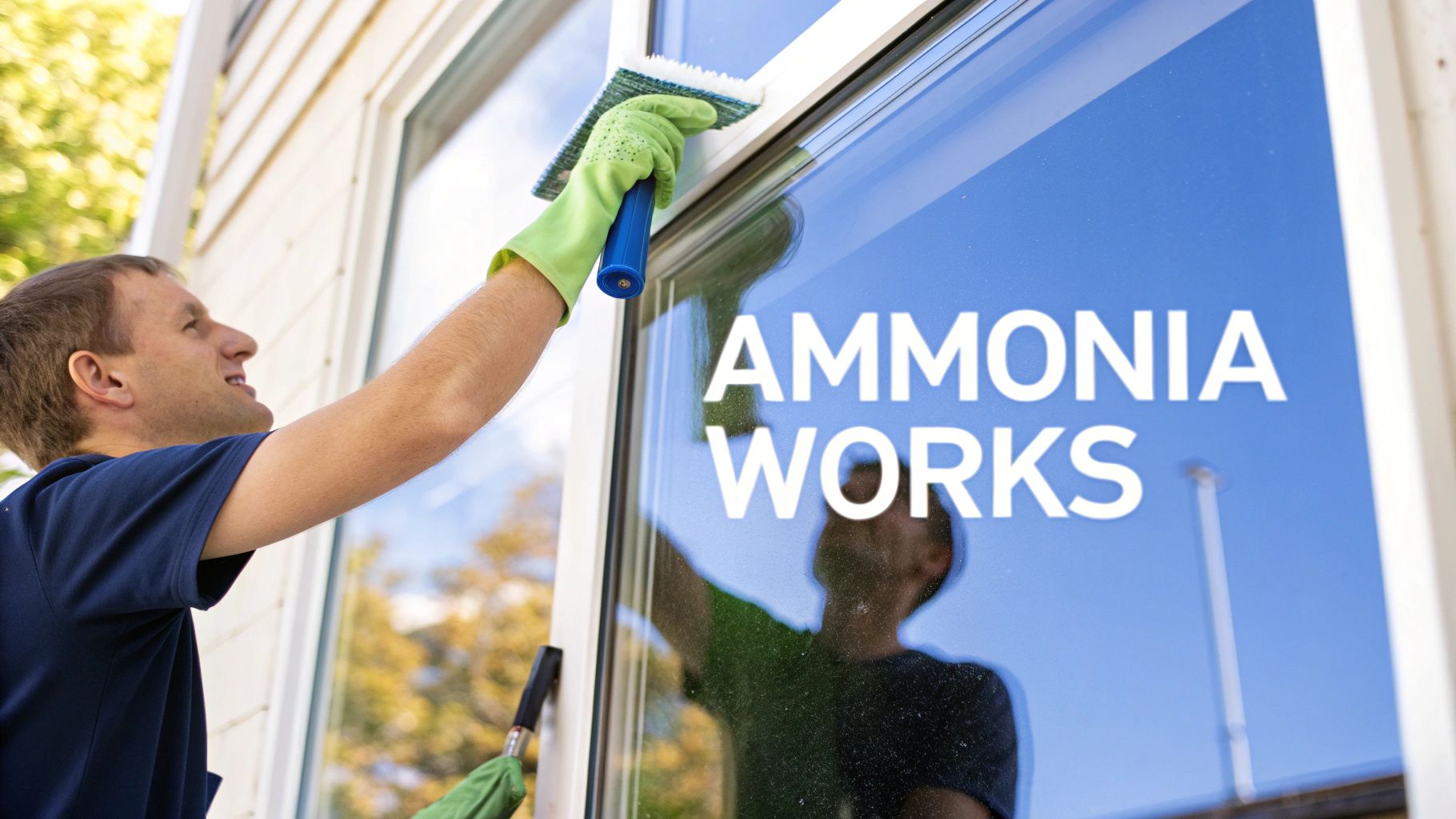
In a world overflowing with specialized cleaning products, you might be surprised to learn that a simple chemical like ammonia remains a top pick for professionals. The reason is pretty straightforward: it delivers consistent, exceptional results where other cleaners just can't keep up.
Ammonia’s power is all about its unique chemical properties. It's a potent alkaline solution, which means it’s fantastic at dissolving organic gunk like grease, oils from fingerprints, and smoke film. This is exactly why it’s a go-to for windows in kitchens or homes with smokers, where that sticky residue seems to build up overnight.
Unlike a lot of soap-based cleaners that can leave a hazy film behind, ammonia evaporates completely and quickly. This rapid evaporation is the key to that perfect, streak-free finish. It doesn’t give residue or mineral deposits from your tap water a chance to settle and dry on the glass.
For a professional window cleaner, it all comes down to efficiency and results. There are really only two methods we rely on: the classic squeegee method or a modern pure-water system. When you're using a squeegee, the cleaning solution has to perform flawlessly, and ammonia is a core ingredient in many of our trusted mixes. Its ability to slice through heavy soil means less scrubbing and fewer passes, which saves a ton of time on the job.
The secret to ammonia's power lies in its volatility. It does the heavy lifting by breaking down grime and then simply vanishes, leaving nothing but crystal-clear glass behind.
This level of performance is crucial whether we're tackling a residential home or a huge commercial building with a massive glass facade. The goal is always the same: restore the glass to perfect clarity. Ammonia is a time-tested tool that helps us get there. If you're curious about the other tools of the trade, you can explore more about what professional window cleaners use to get these superior results here: https://www.professionalwindowcleaning.com/post/what-do-professional-window-cleaners-use
The principles that make for great window cleaning often apply to the rest of your home maintenance. If you’re getting ready to tackle more than just glass, this comprehensive spring cleaning guide can give you some broader strategies for making your whole home sparkle. Once you understand why certain ingredients work so well, you can make smarter choices for your entire cleaning routine.
Forget those expensive, ineffective store-bought cleaners. Creating a solution that genuinely works is simpler than you might think, and mixing it yourself gives you total control over its strength and ingredients. The real secret to a streak-free shine isn't a fancy brand name; it's using the right components to cut through grime without leaving anything behind.
The absolute cornerstone of any pro-level window cleaner is distilled water. If you use regular tap water, especially in hard water regions like Phoenix, you're setting yourself up for failure. Tap water is full of minerals like calcium and magnesium, and when it evaporates, those minerals get left behind as a chalky, spotty film—the very thing you're trying to clean off. Distilled water is pure, ensuring a clean evaporation every time.
Your active ingredient should always be clear, non-sudsing ammonia. The sudsing kind has soaps that leave nasty streaks, and any colored ammonia risks staining your window frames, sills, or surrounding paintwork. Stick with the clear stuff.
For your regular maintenance—tackling fingerprints, dust, and light water spots—a standard-strength mix is all you need. It's gentle but effective.
That tiny drop of dish soap is an old-school professional trick. It acts as a surfactant, breaking the surface tension of the water. This little tweak helps the solution spread more evenly across the glass and gives it a bit more "hang time," allowing the ammonia a few extra seconds to dissolve grime before you squeegee it all away. If you're looking for other great recipes, we've detailed another excellent window cleaning solution recipe right here on our blog.
Now, for the really tough jobs—think greasy kitchen windows or exterior glass that’s been collecting dirt and pollen for months—you'll need to kick it up a notch. This heavy-duty mix has the extra power to break down stubborn, caked-on messes.
This stronger formula is a lifesaver in places with a lot of airborne dust, like Las Vegas, or for homes near busy roads where exhaust creates a greasy film on the glass.
Here’s what you’ll need for a more potent cleaner:
For a quick reference, here's a handy table to help you mix the perfect solution for any level of dirt you're facing.
No matter which formula you choose, remember to always add the ammonia to the water, never the other way around. This simple step helps prevent splashing and keeps fumes to a minimum. Always mix in a well-ventilated area, and make sure you clearly label your container.
With these recipes, you’ve got a professional-grade cleaner that costs just pennies to make. You're now ready to pair your perfect mix with the right technique for a flawless, streak-free shine every single time.
Having the right solution is only half the job—your technique is what really separates a DIY look from a truly professional result. While modern pure-water systems are one way the pros get it done, the classic squeegee is still king. For cleaning windows with an ammonia solution, it's the single most important tool for getting that perfect, streak-free shine.
But it’s not as simple as just dragging rubber across the glass. There’s a rhythm to it, a specific set of motions designed to control the flow of your ammonia solution and leave absolutely nothing behind. It's a systematic process of removing dirt, grime, and the cleaning liquid itself.
This visual guide breaks down the simple but crucial components for creating your powerful cleaning solution.
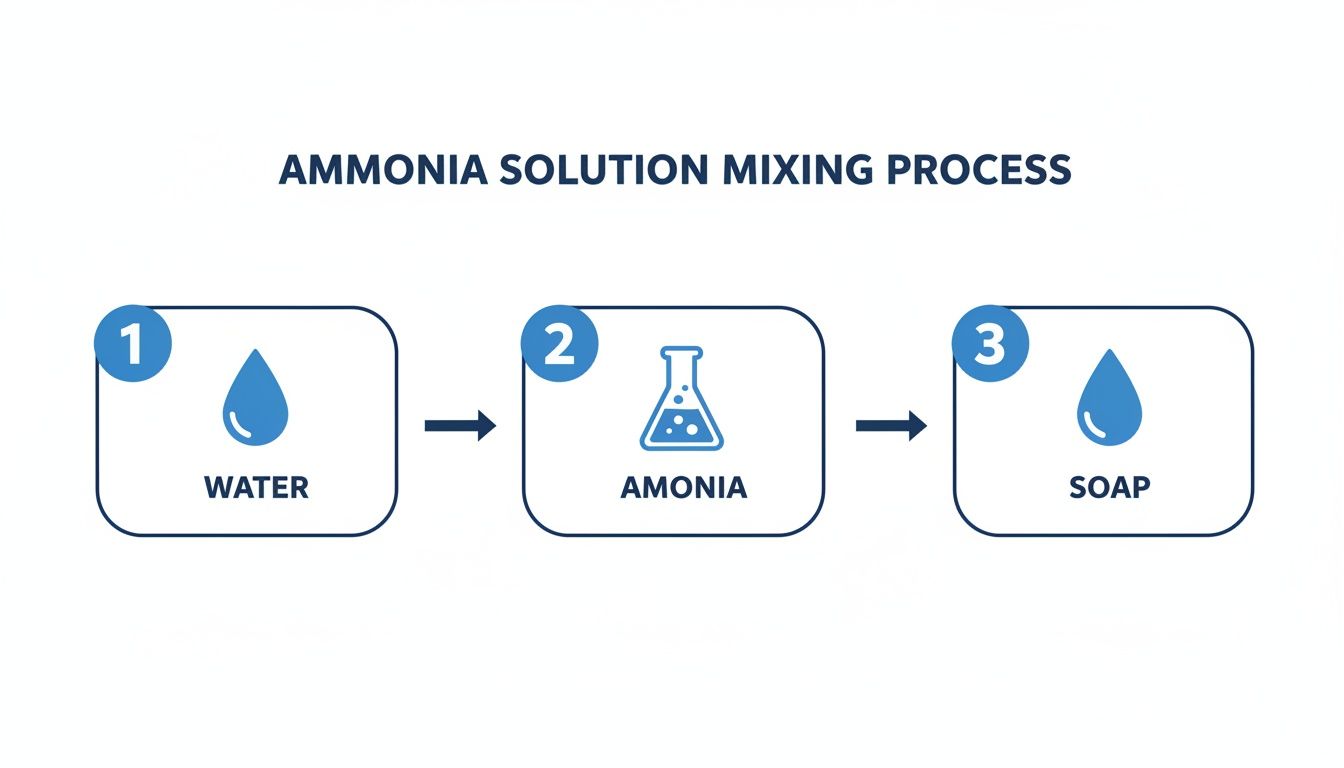
Starting with pure water, then adding ammonia and an optional drop of soap, ensures a balanced mix that maximizes cleaning power while minimizing the risk of streaks.
First things first: get your solution on the window. Use a strip washer or a sponge to apply it generously. You want the glass fully saturated but not dripping everywhere. This gives the ammonia enough time to break down the grime without drying out too fast.
And here's a pro tip: never clean windows in direct sunlight. The heat will make your solution evaporate in seconds, leaving behind a stubborn, streaky film that’s a pain to remove.
Once the window is wet, grab your squeegee. Getting a streak-free finish comes down to these three non-negotiable rules:
Depending on the window's size and shape, pros generally use one of two techniques. For smaller panes, a simple straight pull from top to bottom works great and is easy to master. Start in a top corner, pull straight down with even pressure, wipe your blade, then repeat with an overlapping stroke.
For bigger windows, the "S-curve" or "fanning" method is far more efficient. This is where you move the squeegee in a continuous, flowing "S" motion from one side of the window to the other, keeping the blade on the glass the entire time. It takes a little practice to get the hang of it, but it's the fastest way to clean large surfaces without leaving any lines behind.
At the end of the day, a squeegee is what delivers that pristine finish. It’s why the professional window cleaners market, which hit USD 2.68 billion in 2023, continues to grow. Ammonia-based products are a huge part of this, showing around 95% effectiveness on tough grime on commercial glass in places like Las Vegas or on buildings across Denver. You can learn more about the market's growth and trends from this detailed research.
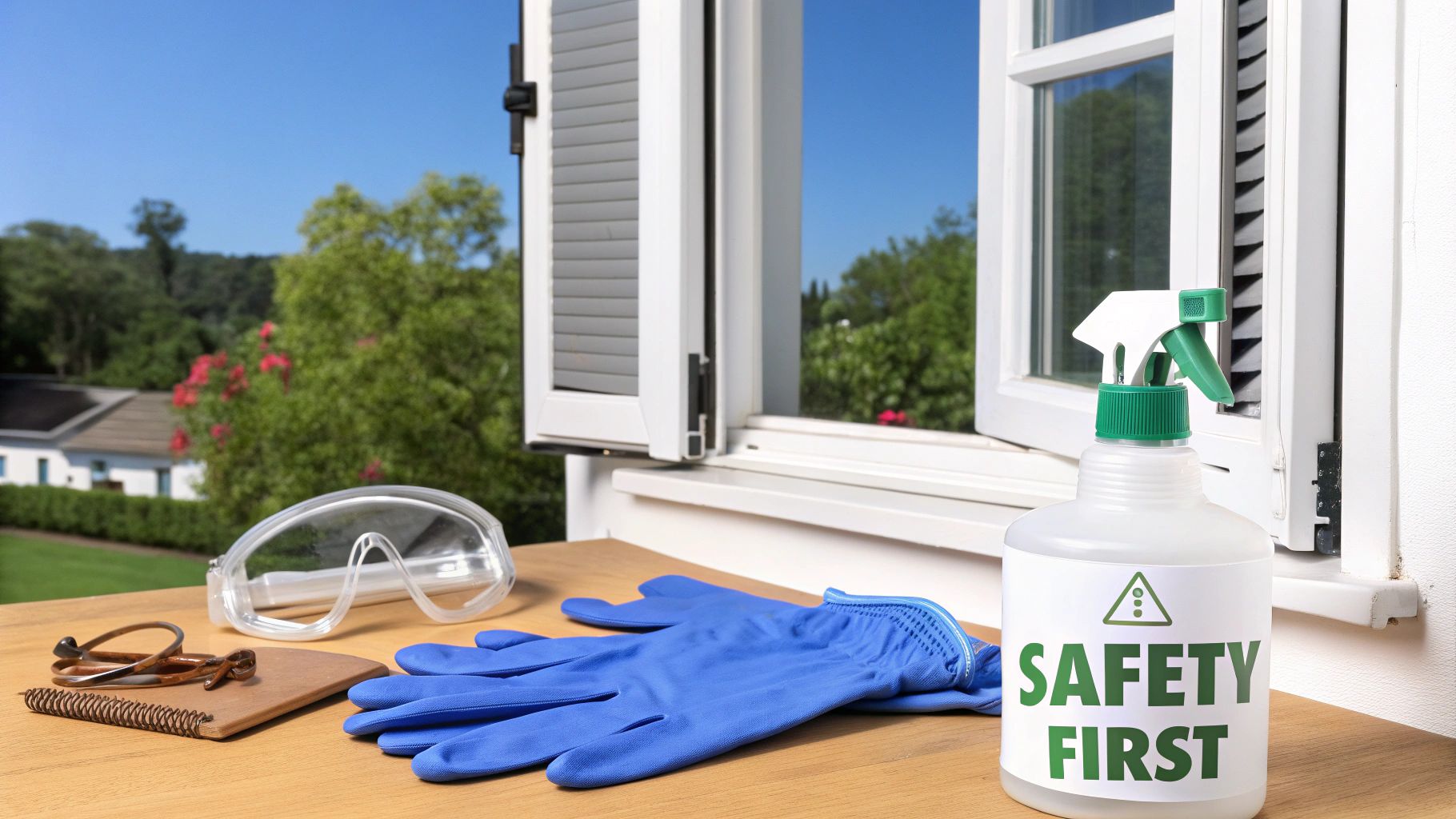
Ammonia is a powerhouse cleaner, no doubt about it. But that strength demands respect. Using it safely isn't just a suggestion—it's non-negotiable. A few simple precautions will make sure your window cleaning project is a success, not a trip to the ER. Think of it as your pre-flight check before you get to work.
The absolute first thing you need to address is proper ventilation. Ammonia fumes are potent and can easily irritate your eyes, nose, and lungs, especially indoors. Before you even think about mixing your solution, open up windows and doors to get a good cross-breeze going. If the airflow is weak, grab a fan to help push the fumes out and fresh air in.
Next up: protecting yourself. Your Personal Protective Equipment (PPE) is your first and best line of defense against direct contact with the ammonia solution. Don't even think about skipping these items. They're what stand between you and potential skin irritation or serious eye damage.
Here's your essential PPE checklist:
This isn't about being paranoid; it's about being smart and prepared. For a deeper dive into the full range of gear we pros use, check out our guide to https://www.professionalwindowcleaning.com/post/professional-window-cleaning-equipment.
Here’s a pro tip: knowing where not to use ammonia is just as important as knowing how to use it. Ammonia is an alkaline chemical, and it can react badly with certain materials, causing permanent damage.
Crucial Warning: Never, under any circumstances, mix ammonia with bleach. This combination creates toxic chloramine gas, which is extremely dangerous to inhale. Stick to the proven recipe: just ammonia and water.
Be extra cautious around these surfaces, as ammonia can ruin them:
By ensuring good airflow, wearing your PPE, and knowing what surfaces to avoid, you can use ammonia's cleaning power confidently and keep both yourself and your property safe.
Mixing your own ammonia solution is a fantastic, budget-friendly way to get your windows sparkling. There's a real satisfaction in it. But as any seasoned pro will tell you, some jobs are just better—and a whole lot safer—when left to the experts. Knowing when to put down the spray bottle and pick up the phone is key to protecting yourself and your property.
A DIY approach is perfect for ground-floor windows you can easily and safely reach. The minute a ladder gets involved, though, especially for second or third-story windows, the game changes. The risk of a fall skyrockets. Professional teams have the training, insurance, and safety equipment to tackle heights without a second thought.
Some situations go way beyond a simple cleaning job. They require specialized tools, techniques, and the kind of know-how that only comes with experience. If you're facing any of these, it's a clear sign to call for backup.
This is where you really see the gap between a DIY job and a professional service. While a good squeegee is a fantastic tool, it’s only part of the pro toolkit.
For high, exterior windows, many teams in dry, dusty climates like Phoenix or Las Vegas have moved to pure-water systems.
These systems use telescopic, water-fed poles to pump highly purified water right up to the window. Because the water has been stripped of all minerals, it dries to a perfect, spot-free finish. No squeegee needed. It's an incredibly efficient and safe way to clean high windows right from the ground.
The global glass cleaner market has hit USD 3.29 billion, and liquid ammonia-based cleaners make up a USD 1.20 billion slice of that pie. It just goes to show how critical powerful, efficient solutions are for pros who tackle vast commercial glass surfaces day in and day out. Discover more insights about the glass cleaner market on fortunebusinessinsights.com.
For property managers in bustling areas like Denver, hiring a professional service is just smart business. It ensures the job is done right the first time, protecting the building’s appearance and value. They have the insurance, the high-tech equipment, and the experience to handle any challenge, from stubborn stains to quirky architectural designs, delivering a level of clean that’s almost impossible to achieve on your own.
As you wrap up your project, a few common questions always seem to pop up. Let's tackle some of the most frequent ones about ammonia cleaning windows to make sure you're feeling confident and ready to go.
This is a big one, and the answer is a hard no. It's a really bad idea to use ammonia-based cleaners on your car's windows.
Most vehicles today have an aftermarket tint film applied to the glass. Ammonia is incredibly good at breaking down the very adhesives that hold that tint in place. One cleaning session could be all it takes to cause bubbling, peeling, or a permanent hazy look you can't get rid of.
Even if you don't have tint, ammonia can be harsh on the rubber seals and plastic trim around your automotive glass, causing them to dry out and degrade over time. Just stick with a cleaner specifically designed to be safe for cars.
Streaks are the absolute worst, right? You put in all that effort, only to be left with lines. The good news is that streaks are almost always caused by a few simple, preventable issues. If you’re seeing them, run through this quick mental checklist:
Here's a pro tip to remember: The goal of a professional window cleaner isn't just to clean the glass, it's to remove everything from the glass—the dirt, the grime, and the cleaning solution itself. Streaks are just leftover residue. Perfecting your environment and your technique is the secret to a flawless finish.
Absolutely not. This is hands-down the most important safety rule when you're working with ammonia. You should never, ever mix ammonia with other household cleaners, especially not with bleach.
When you combine ammonia and bleach, they create a highly toxic chemical reaction that releases something called chloramine gas. Inhaling this gas is incredibly dangerous and can lead to severe respiratory damage.
Stick to the simple, proven, and safe recipes: just ammonia, distilled water, and maybe that tiny drop of dish soap. There's just no reason to add anything else to the mix.
When your windows need more than a DIY touch-up, it’s time to call in the experts. Professional Window Cleaning has the right experience and the right tools—from professional-grade squeegees to advanced pure-water systems—to deliver a perfect, streak-free shine, every single time. For a crystal-clear view you can be proud of, visit our website to schedule your service today.
Read our blog posts regularly and keep learning.