Care and Maintenance
Commercial Window Cleaning Phoenix: Costs and Schedules
Commercial Window Cleaning Phoenix explained: services, squeegee vs pure-water methods, pricing factors, heat-safe scheduling and how to request a quote.


Forget spending a fortune on commercial cleaners. A powerful, streak-free window cleaning solution recipe is probably already sitting in your pantry. All you really need are two parts distilled water to one part white vinegar.
It’s that simple. The natural acidity in the vinegar is fantastic for cutting through everyday grime, while the distilled water ensures you won’t be left with annoying mineral spots after it dries.

Making your own window cleaner is a game-changer. It’s incredibly cost-effective, but more importantly, it puts you in complete control of the ingredients you’re using around your home. No more harsh chemicals or overpowering fumes—just a couple of household staples are all it takes for brilliantly clean windows.
The market for commercial glass cleaners is massive. It was valued at USD 3.29 billion and is expected to hit USD 6.14 billion by 2033. People are clearly serious about keeping their views clear, but you can get those same professional-level results with this simple DIY approach.
This recipe's magic comes down to the basic properties of its two key ingredients. Each one has a specific job to do, and together, they deliver that perfect, streak-free shine.
When you're grabbing your ingredients, it's good to know the difference between cleaning vinegar versus white vinegar, as their acidity levels aren't the same. Standard white vinegar is perfect for this recipe.
Ready to mix? Here’s a quick-reference table for my go-to recipe. This ratio is perfect for a standard 32-ounce spray bottle and works for most everyday cleaning jobs.
This blend gives you a powerful, safe, and incredibly effective solution that honestly outperforms many store-bought cleaners I’ve tried over the years.
Pro Tip: A Little Soap Goes a Long Way
If you’re dealing with extra-stubborn grime, adding a single drop of mild dish soap can make a huge difference. It helps break the surface tension of the water, allowing the solution to spread more evenly and lift dirt more effectively.
Just pour the ingredients into your spray bottle, give it a gentle shake to combine, and you’re good to go. This basic recipe is the foundation you need to tackle almost any residential window cleaning task with total confidence.
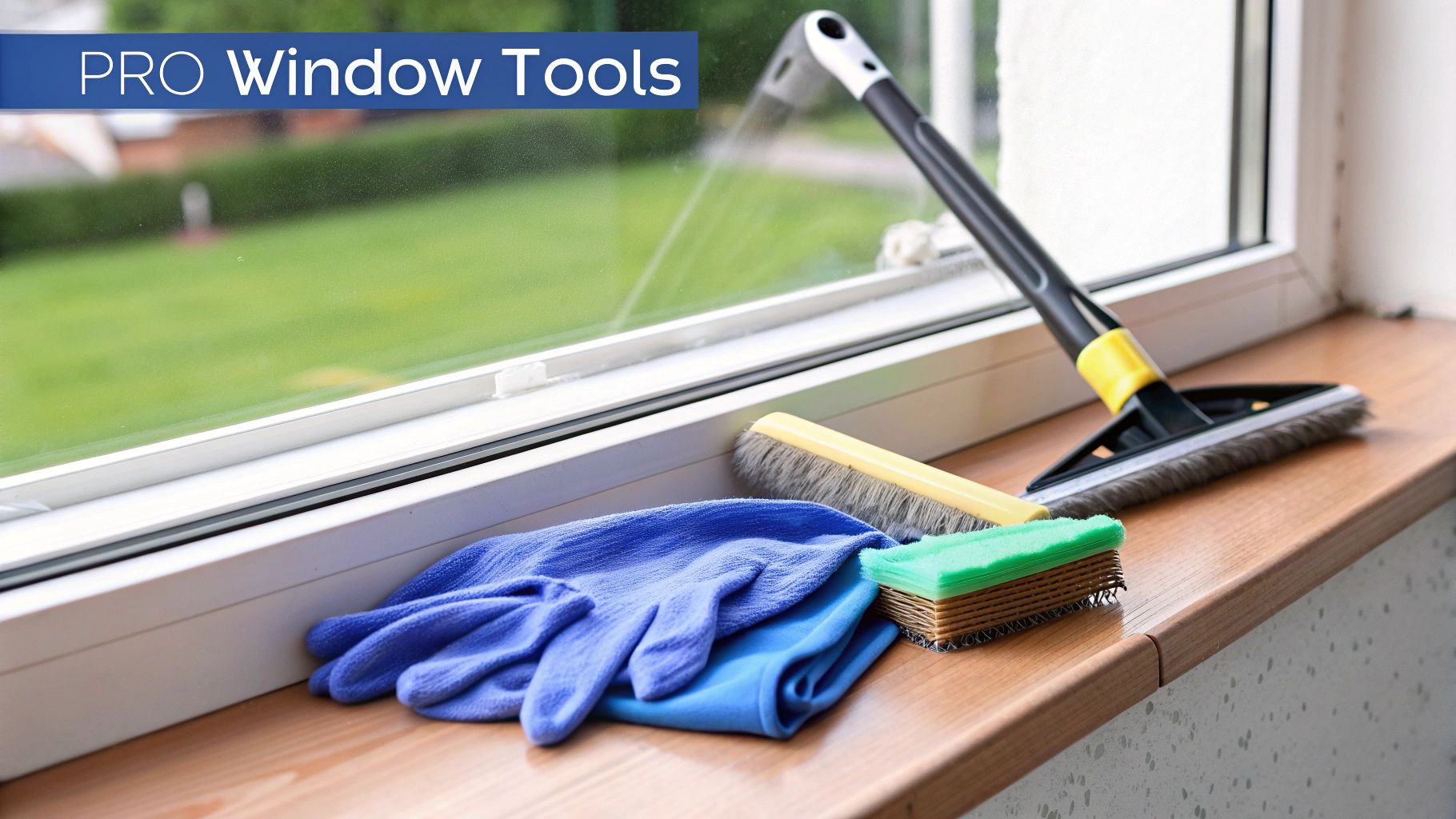
Even the absolute best window cleaning solution recipe is going to fall flat if you're not using the right equipment. The honest truth is that professionals get that invisible-glass look because they have specific tools designed for the job. It's time to forget the paper towels and old t-shirts—that's a guaranteed recipe for lint and streaks.
When you break it down, the pros really only rely on two core methods for getting those consistent, top-tier results: the traditional squeegee and the more modern pure-water system. Getting the hang of either one of these will completely change your window cleaning game.
The squeegee isn't just another tool; it's the absolute key to a streak-free finish. A high-quality squeegee, when paired with a good scrubber, is the classic combination that professionals have sworn by for decades. It's incredibly efficient, surprisingly effective, and with a bit of practice, anyone can master it.
The process is pretty straightforward:
Why Your Squeegee Matters
A cheap, flimsy squeegee with a hardened or nicked rubber blade will always leave streaks. Investing in a professional-grade squeegee with a replaceable rubber blade is the single most important upgrade you can make to your cleaning arsenal.
For the ultimate clean, especially on exterior or hard-to-reach windows, you'll often see professionals turn to a pure-water system. This advanced method uses water that has been deionized and purified to remove 100% of its mineral content.
This purified water is then pumped through a water-fed pole with a soft brush on the end. The technician scrubs the window with the brush as the pure water flows, rinsing away all the dirt and impurities. Because the water is completely pure, it dries to a perfect, spot-free shine without needing a squeegee at all. It’s a remarkably efficient method used for homes and businesses alike.
While a full-blown pure-water system is a significant investment usually reserved for professional services, understanding how it works really highlights why using mineral-free water (like distilled water) is so important in any cleaning method.
Choosing the right equipment is just as critical as the cleaning solution itself. To dive deeper into what the experts use, check out our complete guide to professional window cleaning equipment. Whether you stick with the classic squeegee or hire a pro with a pure-water system, the right tools are what separate an amateur job from a truly professional finish.
Sometimes, the standard vinegar and water mix just doesn't have the muscle for tougher jobs. Stubborn grease, sticky residue, or layers of outdoor grime call for a more specialized window cleaning solution recipe. The good news is you can easily upgrade your formula with a few extra household ingredients to tackle these specific challenges head-on.
It's no surprise that the demand for effective cleaning solutions is growing. The global window cleaner market, valued at USD 2.68 billion in 2023, is on track to hit USD 5.34 billion by 2031. This trend shows a worldwide push for formulas that are both powerful and safe—whether it's for commercial high-rises in North America or eco-conscious homes in Europe. You can discover more insights on the window cleaner market trends to see where the industry is heading.
Kitchen windows are notorious for accumulating that fine, greasy film from cooking. This is where the natural acidity of lemon juice and the gentle lifting power of cornstarch really shine. This eco-friendly recipe is surprisingly potent at cutting through grease without resorting to harsh chemicals.
For this mix, you'll want to grab:
Just combine all the ingredients in a spray bottle and shake it like you mean it until the cornstarch is completely dissolved. You might need to give it a quick shake every now and then during use to keep everything mixed well.
Exterior windows, especially in dry climates like Phoenix or Las Vegas, are in a constant battle with hard water stains and caked-on dust. Those tough mineral deposits need a solvent that can break them down, and rubbing alcohol is the perfect secret weapon for this job.
Hard water spots are especially tricky because they're mineral residues that have essentially bonded to the glass. A standard cleaner just won't cut it. If you're really struggling with this, we have a whole guide where you can learn more about how to get hard water spots off windows.
For a really robust solution, I recommend mixing equal parts distilled water, white vinegar, and 70% isopropyl rubbing alcohol. This trio gives you the acidity from the vinegar to loosen grime and the powerful solvent action of alcohol to dissolve mineral buildup and evaporate quickly for a perfect, streak-free finish.
Choosing the right recipe for the job is half the battle. To make it easier, here’s a quick comparison of the two specialized cleaners we just covered. Think of it as your cheat sheet for tackling tougher window grime.
At the end of the day, the best window cleaning solution recipe is the one that’s right for the job in front of you. By tailoring your formula to the specific kind of grime you're facing, you’ll be amazed at the professional-level results you can achieve.
Having the perfect window cleaning solution recipe is one thing, but how you apply it is what truly separates a DIY job from a professional one. In our world, there are really ONLY 2 methods of window cleaning professionals use: the use of a squeegee, or the use of a pure-water system.
Mastering the squeegee is an art form. Once you get the hang of it, you’ll clean faster and achieve a flawless, streak-free finish every single time. It's a game-changer.
The whole process starts with properly prepping the window. Before you even think about getting the glass wet, give the window frame and sill a quick wipe with a damp cloth. This gets rid of any loose dust, cobwebs, or debris so you don't end up dragging that dirt across the glass and making a muddy mess.
Once you've prepped the area, it's time for the solution. Using a dedicated scrubber or a high-quality microfiber cloth, generously wet the entire surface of the glass. You're aiming for a nice, even coat that will loosen up all the grime. Don't be shy with it; you need enough liquid on the glass for the squeegee to glide smoothly without skipping.
Next up is a pro move we call "creating the edge." Take a clean, dry microfiber cloth and wipe a thin, one-inch strip down one side and across the top of the window. This dry zone gives you a clean place to start your squeegee pass without it instantly grabbing and chattering on a wet edge.
The Golden Rule of Squeegee Pressure
The secret to a perfect pull isn't brute force. You want just enough firm, consistent pressure to make sure the rubber blade has a clean seal against the glass. Let the tool do the work—pressing too hard can actually cause the blade to warp and leave behind those ugly streaks you're trying to avoid.
For truly professional results, you’ll want to learn the "S-stroke" or "fanning" method. This technique lets you clean an entire pane of glass in one continuous motion, which is way more efficient than just pulling from top to bottom. It takes some practice, but mastering this will dramatically elevate your cleaning game.
To get a better handle on the movements, we’ve put together a detailed breakdown on how to squeegee a window like a professional in our dedicated guide.
As this graphic shows, different messes like grease, hard water spots, and general buildup often require a specific approach.
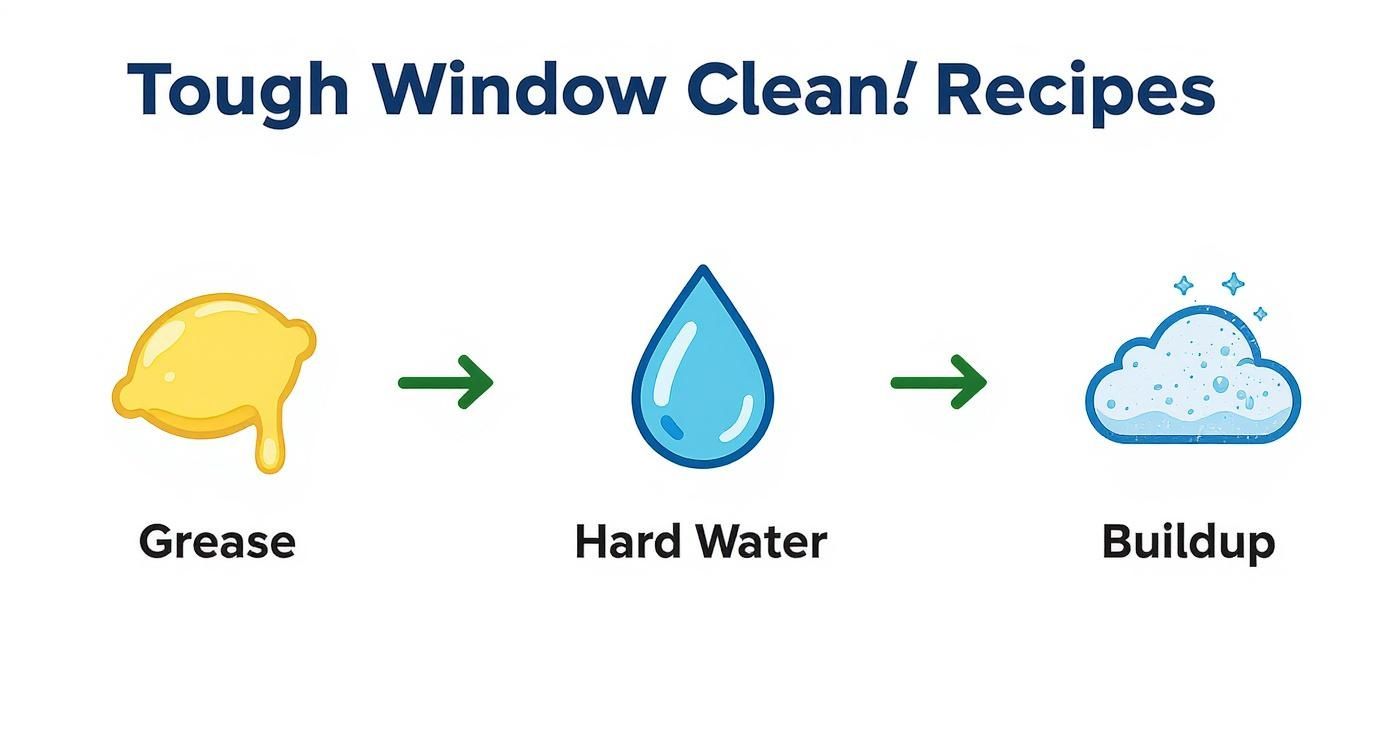
The key takeaway is that matching your solution's ingredients to the specific problem you're facing is what makes all the difference.
A few small details can make or break your finish. Always try to maintain about a 30-degree angle between your squeegee blade and the glass. This is the sweet spot that allows the blade to effectively shear the water off the surface.
Most importantly, and I can't stress this enough: after every single pass, wipe your squeegee blade clean with a dry cloth. If you skip this, you'll just drag dirty water right back onto the clean glass with your next stroke, creating instant streaks. It’s a simple step that makes all the difference.
While a killer window cleaning solution recipe and the right moves can work wonders, some jobs are just plain better left to the pros. Knowing when to put down the squeegee and pick up the phone is the real secret to getting flawless results safely and without losing your entire weekend.
Sometimes, the challenge isn't the grime itself but simply where the windows are. Cleaning second or third-story glass means getting up on ladders and working at heights, which is a serious safety risk. A professional service takes that danger completely out of the equation, using specialized equipment to reach every single window without a problem.
Professionals don't just show up with a taller ladder; they bring years of expertise and advanced tools that most of us don't have sitting in the garage. There are ONLY 2 methods of window cleaning professionals use: the use of a squeegee, or the use of a pure-water system. They have perfected the classic squeegee technique through countless hours of practice, and they use high-tech pure-water systems. This approach uses deionized water to rinse windows clean, leaving a perfect, spot-free shine that dries on its own—no wiping required.
This kind of gear is a game-changer for certain stubborn issues.
The demand for this level of expertise is huge. The global window cleaning services industry is valued at a whopping USD 141 billion and is expected to keep growing. This trend shows just how many people value professional results that DIY methods can't always deliver. With its high concentration of commercial buildings, North America holds the largest market share. You can read the full research on the window cleaning market to get a sense of the industry's scale.
When to Make the Call
If you're looking up at multi-story windows, fighting hard water stains that just won't budge, or simply don't have the time, hiring a professional is the smart move. Your time and safety are worth it.
In demanding climates, from the intense sun in Phoenix to the urban grime you'll find in Las Vegas and Denver, professional services are a lifesaver. They know how to tackle environmental challenges that require specialized knowledge. In the end, calling a pro is your best bet for a flawless, long-lasting clean without the risk or the hassle.
Even with the best window cleaning solution recipe in your back pocket, you're bound to run into a few questions. Trust me, getting the little details right is what separates a decent, DIY job from a truly professional-looking finish. Let's walk through some of the most common hurdles to clear up any confusion and get you on the path to spotless windows.
One of the first things people ask about is the water. It’s easy to just use water straight from the tap, but that’s almost always the culprit behind those frustrating white spots and streaks. Tap water is full of dissolved minerals like calcium and magnesium, and when the water evaporates, those minerals get left behind on the glass. It’s the reason pros are so picky about their water source.
The Secret to a Spotless Finish
The game-changer here is distilled water. It's been purified to remove all those pesky minerals, which means when it dries, it leaves absolutely nothing behind. Making this one simple switch from tap water will give you a massive improvement and that truly streak-free shine you’re after.
Another big question is whether vinegar-based cleaners are safe for every type of window. This is a really important one, especially if you have aftermarket tinted windows on your car or home. While vinegar is perfectly fine for standard, untreated glass, its acidity can, over time, potentially damage or discolor certain tinting films.
Before you start spraying away, it's always a good idea to:
If you’re ever in doubt, the safest bet is to skip the vinegar entirely. A simple mix of distilled water with just a single drop of mild dish soap will do the trick, offering gentle cleaning power without risking damage to sensitive films.
So, what if you follow a recipe to the letter but still end up with a hazy film on the glass? This almost always boils down to one of two things: using way too much soap or cleaning in direct sunlight.
You only need a tiny drop or two of dish soap to break the water’s surface tension. Any more than that, and you’re just leaving behind a sticky residue that’s tough to get off.
Also, cleaning windows when the sun is beating down on them is a recipe for streaks. The heat makes your solution evaporate way too fast—the water is gone before you can squeegee it away, leaving behind all the soap and dirt you were trying to remove. The best time to clean is on a cloudy day or when the windows are completely in the shade.
While getting your homemade solution right is key, don’t forget that overall window care is just as important for a lasting shine. Different types of windows have their own needs, for example. You can find some essential maintenance tips for aluminium windows and doors to help keep them in top shape no matter the weather.
When DIY solutions just aren't cutting it or the job feels too big to handle, Professional Window Cleaning is here to help. Our experts use proven techniques and equipment to deliver a perfect, long-lasting shine for your home or business. Contact us today for a free estimate!
Read our blog posts regularly and keep learning.