Care and Maintenance
Window Washing Cloths: The Professional Guide
Discover the best window washing cloths for streak-free glass. Compare microfiber, chamois, and cotton, plus expert care tips for homes and high-rises.


You're probably looking at your property the same way tenants, visitors, and ownership do. The glass has a haze to it. The entry concrete is darker than it should be. Dust has settled into ledges, signs, and frames. Maybe the building isn't “dirty” in a dramatic way, but it no longer looks cared for.
That's usually how exterior maintenance problems start. Not with a crisis. With a slow decline that makes a property feel older, less professional, and more expensive to own than it needs to be.
A good exterior cleaning plan fixes more than appearance. It protects surfaces, reduces avoidable wear, helps crews spot developing issues earlier, and keeps a property from drifting into reactive maintenance. For property managers, that shift matters. Ad hoc cleaning almost always costs more in the long run because it turns routine work into restoration work.
A property manager can spend months improving interiors, renegotiating vendors, and tightening operations, then lose ground in five seconds at the curb. People notice the exterior before they notice anything else. They read the condition of the building as a signal of how the property is run.
That first impression affects more than aesthetics. A clean exterior tells tenants that maintenance is active, not deferred. It tells prospective occupants that ownership pays attention. It tells visitors that standards carry through the whole property. Dirty glass, stained stucco, algae on north-facing walls, and runoff streaking below scuppers send the opposite message.
The strongest maintenance programs don't treat exterior cleaning as a once-a-year cosmetic project. They treat it as part of asset care. Windows, façade panels, sidewalks, gutters, roofs, and entry areas all weather differently, and each one needs the right cleaning interval and method.
That matters even more because this is a large, professionalized industry. The global exterior building cleaning market was valued at $78.4 billion in 2025 and is projected to reach $138.6 billion by 2034, with North America accounting for 34.2% of global revenue in 2025, according to Dataintelo's exterior building cleaning market report. That tells you two things. Demand is substantial, and property owners are already treating façade and high-rise maintenance as a serious line item.
Practical rule: If the building's exterior only gets attention when someone complains, the maintenance plan is already late.
The effect is cumulative. Clean windows improve natural light and visibility. Washed concrete brightens the approach to the entrance. Debris-free gutters reduce overflow staining. A properly cleaned façade looks sharper because shadow lines, trim details, and material color show up again.
Professional Window Cleaning has been cleaning windows for over 26 years, and that kind of longevity reflects something property managers learn quickly: exterior cleaning isn't one service. It's a group of specialized services that have to work together on a schedule.
A retail center, medical office, condominium tower, or dealership may all need exterior care, but they won't need the same plan. The right question isn't “Do we need cleaning?” It's “Which surfaces are aging fastest, which risks are avoidable, and what schedule keeps this property consistently presentable without overspending?”
A strong plan usually includes:
That's the difference between a building that looks managed and one that looks patched together.
A property manager may call for window cleaning after tenant complaints, then schedule pressure washing once the entry starts looking worn. That approach handles symptoms. A stronger plan maps every exterior surface, the type of soil building up on it, and the right service interval for each one.
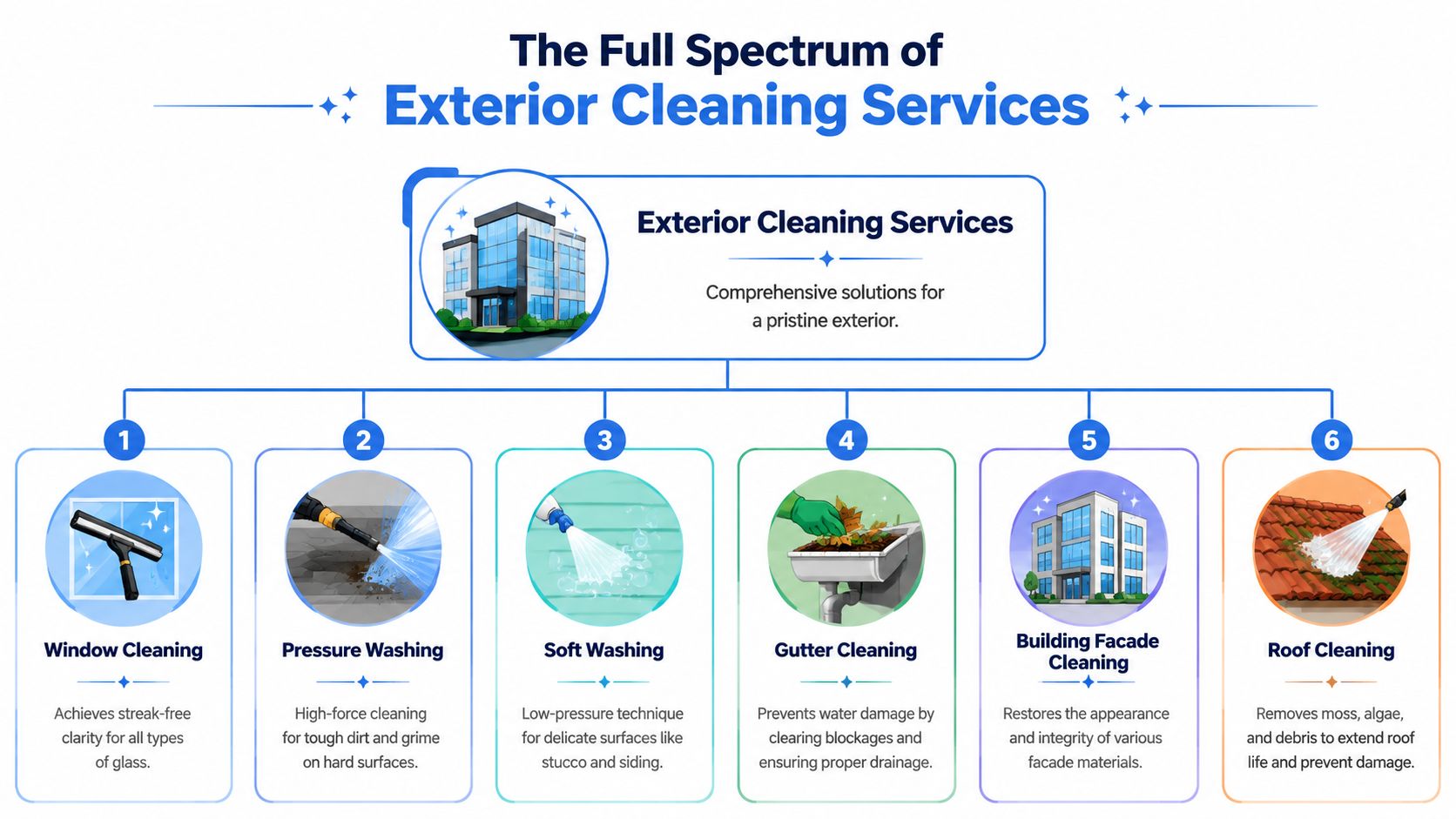
Exterior cleaning is a group of separate trades under one maintenance heading. Glass, concrete, roofing, drainage components, metal panels, stucco, signage, and coated walls all age differently. In high-sun, high-altitude markets, that difference gets sharper because UV exposure, dust, and fast temperature swings can make a clean surface look tired again sooner than many managers expect.
Exterior glass cleaning does more than improve appearance. It removes mineral residue, pollen, dust, insect spotting, and runoff marks that slowly reduce clarity and leave frames and seals looking neglected.
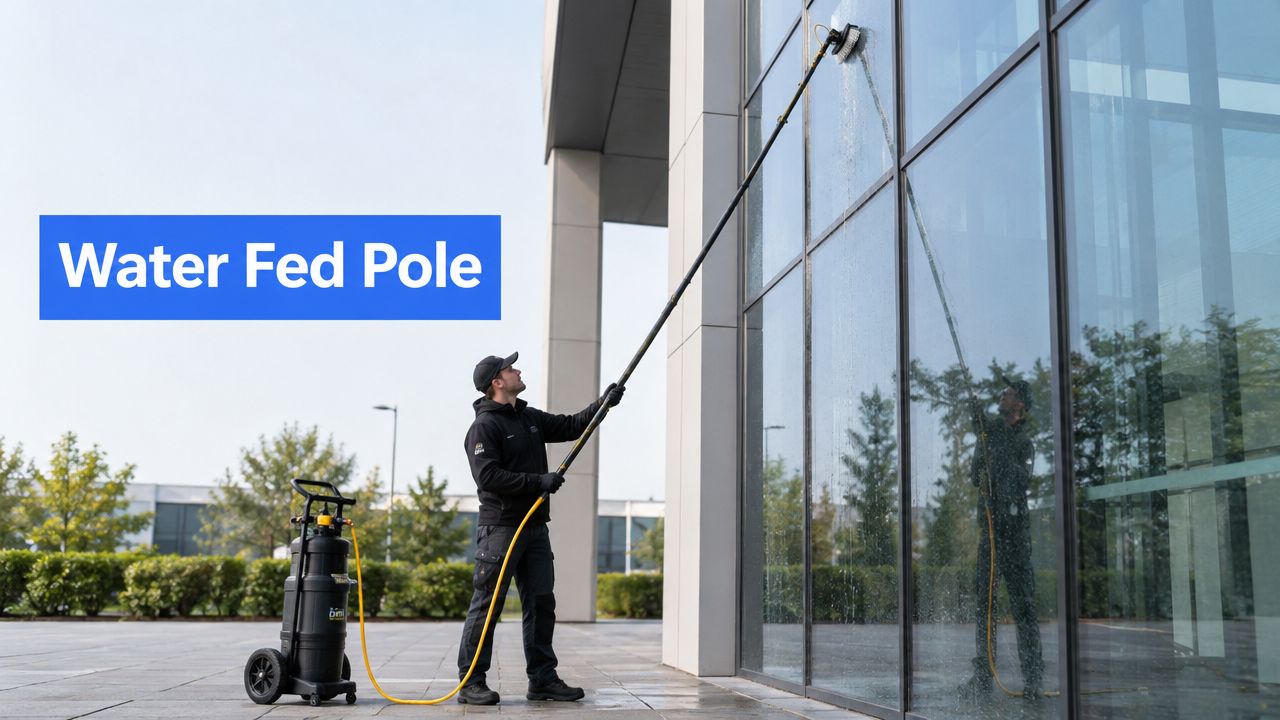
Crews generally use two field-proven approaches. Traditional mop-and-squeegee work is still the right choice for detail work, lower glass, and areas where close inspection matters. Pure-water cleaning uses deionized water through extension poles so technicians can clean exterior glass and frames efficiently without leaving mineral spots. Managers comparing access methods and tools can review this guide to professional window cleaning equipment.
The trade-off is straightforward. Hand work gives tighter control on problem glass. Pure-water systems improve speed and reach on many exterior elevations.
These services get grouped together, but they solve different problems. Pressure washing is suited to hard-wearing surfaces such as concrete walks, dumpster pads, garage entries, and some dense masonry where embedded grime needs mechanical force. Soft washing fits painted surfaces, stucco, EIFS, roof components, and other assemblies that can be scarred or saturated by aggressive pressure.
Good contractors do not arrive with one setting and use it everywhere. They match the method to the surface, the contaminant, and the risk of damage. Oil staining, oxidation, bird waste, algae, and plain dust buildup do not respond the same way, so the wash plan should not be generic.
Gutters and roof edges usually get ignored until water starts spilling over the side of the building. By then, the cost is higher. Overflow stains walls, soils entry areas, and can push water toward places it does not belong.
Roof cleaning also needs restraint. The goal is to remove debris, biological growth, and edge staining without loosening shingles, damaging membranes, or voiding warranties. On many properties, a light-touch maintenance visit at the right time of year is safer and cheaper than an aggressive cleanup after neglect.
Façade cleaning is where exterior maintenance plans either get precise or get expensive. Brick, split-face block, painted CMU, stone, stucco, precast, metal panels, and EIFS each have different tolerances for water, dwell time, brushing, and chemistry. Using the wrong detergent or too much pressure can leave etching, streaking, or trapped moisture behind.
Coated surfaces deserve even more care. Elastomeric and other specialty coatings are there to protect the wall assembly, bridge hairline movement, and improve service life. Cleaning should preserve that film, not wear it down. If your property includes those finishes, it helps to explore flexible coating products before setting a wash specification so the cleaning method supports the coating instead of shortening its life.
The practical takeaway is simple. Exterior cleaning works best as a year-round building plan, not a series of isolated work orders. Property managers who treat windows, hardscape, drainage, roofing, and façade materials as one coordinated scope usually get better curb appeal, fewer surprise repairs, and a more predictable maintenance budget.
The biggest mistake in exterior cleaning is assuming dirt is the problem and force is the answer. In reality, the method has to match both the contaminant and the surface. If a contractor can't explain that difference clearly, the proposal needs more scrutiny.
The easiest way to think about it is this: some surfaces need a scrub brush, some need a sponge, and some need chemistry that does the work before rinsing. Exterior cleaning is the same idea at a larger scale.
Building exterior cleaning services commonly rely on a technical triad. High-pressure water can reach up to 4,000 PSI, while soft washing operates below 300 PSI and uses chemical solutions to dissolve biological growth on more delicate materials, according to Atlas Facilities' guide to exterior cleaning services. High pressure belongs on durable substrates. Soft washing belongs where force would etch, gouge, or drive water into the assembly.
Low-pressure washing sits between them. It's useful where the crew needs rinse power but not the aggression of full pressure.
| Method | Primary Use | Pressure Level | Best For Surfaces Like | Key Benefit |
|---|---|---|---|---|
| Pressure Washing | Removing set-in grime and heavy surface buildup | Up to 4,000 PSI | Concrete, some dense masonry, hardscape | Strong mechanical cleaning power |
| Soft Washing | Treating biological growth and delicate finishes | Less than 300 PSI | Siding, historic brick, painted surfaces, sensitive façade areas | Cleans with less risk of surface damage |
| Pure-Water Window Cleaning | Exterior glass cleaning without soap residue | Filtered water system rather than pressure-driven cleaning | Exterior windows, upper glass, frames in many routine applications | Dries clear without mineral spotting when used correctly |
Pressure washing works well on durable concrete that can tolerate aggressive cleaning. It doesn't belong on every wall just because the machine is already on the truck. Using high pressure on porous brick, aging mortar, window seals, or delicate coatings can force water behind the surface and create a bigger maintenance issue than the stain you were trying to remove.
Soft washing works because it addresses the source of organic staining instead of just stripping the visible layer. That's why it's often the right answer for shaded walls, siding, and areas with persistent biological growth.
For window cleaning, the line is even clearer. Professionals use only two methods for exterior glass: a squeegee system or a pure-water system. Pure water is ordinary tap water that has been filtered to remove natural minerals so it can clean without leaving residue, as explained in this introduction to pure-water cleaning. Crews should always work from the top down so runoff doesn't contaminate lower sections.
The proposal should line up with the tools. For example:
If you want a clearer picture of what a serious contractor should be using, review this guide to professional window cleaning equipment.
The wrong method can make a building look cleaner for a week and age faster for years.
Once a building moves beyond a simple low-rise layout, exterior cleaning stops being just a cleaning task. It becomes an access, rigging, and risk-management job. That's where inexperienced crews get into trouble, and where property managers take on avoidable liability if they hire based on price alone.

On a multi-story building, the crew has to solve several problems before the first pane or panel gets cleaned. They need a safe access method, a rescue plan, proper tie-off and anchor use, protection for pedestrians below, and enough training to work efficiently without cutting corners.
That may mean rope access, suspended scaffolding, or an aerial platform, depending on the structure. Each option has trade-offs. Rope access can be efficient on certain façades. A lift may be better where ground conditions and setback allow it. Suspended systems make sense on some towers but require disciplined setup and inspection practices.
For a closer look at what that work involves, this overview of high-rise window washing gives useful context on the demands of high-level exterior access.
A bargain quote on high-rise work usually means one of three things. The scope is incomplete. The insurance is thin. Or the crew is underqualified for the exposure involved.
A professional contractor should be able to explain:
The important point for managers is simple. If a vendor is vague about safety, they'll probably be vague when something goes wrong.
High-rise exterior cleaning is a safety operation first and a cleaning operation second.
Good compliance protects tenants, visitors, parked vehicles, façade materials, and the owner's legal position. It also improves execution. Trained crews move more predictably, communicate better, and are less likely to improvise with the wrong anchor point, the wrong ladder setup, or the wrong drop sequence.
This is one of those areas where professionalism is visible before the job starts. You can see it in the site walk, the written scope, the staging plan, the personal protective equipment, and the way the contractor talks about risk. If that conversation is casual, move on.
Property managers usually want one number. Contractors usually respond with “it depends.” In this case, that answer is fair, but only if they can explain exactly what drives the price.
The cleanest way to think about pricing is as a four-part formula. Building height, façade area, surface material, and contamination rate are the core benchmarks used to price exterior cleaning work, according to this commercial building exterior cleaning guide. If a quote ignores one of those variables, it's probably too generic.
Height is the biggest separator. A two-story commercial building can often be handled with ladders, poles, and limited lift time. Once the property rises above that level, access gets more technical. The same source notes that using rope access systems or Aerial Work Platforms can increase operational costs by 40 to 60 percent because the work requires certified personnel and specialized insurance.
Surface material matters just as much. Dense concrete, sealed metal, storefront glass, EIFS, historic brick, and coated panels all need different chemistry, dwell time, and rinse control. That affects labor speed and risk.
Contamination also changes the quote. Loose dust is not the same as mineral staining, grease, algae, oxidation, or runoff marks below roof drains. A contractor who prices all “dirt” the same hasn't looked closely enough.
The same pricing reference notes that a standard two-story commercial clean ranges from $800 to $2,500, while high-rise work can exceed $10,000 depending on access complexity and safety requirements. Those ranges are useful because they show how quickly cost changes once special access enters the picture.
Still, the number alone doesn't tell you whether the quote is good. A lower price may exclude debris removal, detailing around signage, stain treatment, water reclamation considerations, or repeat visits. A higher price may include specialized access planning that reduces your risk.
Reactive cleaning usually costs more because soils bond harder, stains set deeper, and the crew has to spend time restoring instead of maintaining. A better approach is to match the schedule to exposure.
Here's a practical planning framework:
For dusty desert properties, the interval often needs to be tighter on glass and entry approaches. For buildings with shaded elevations or moisture-prone walls, soft washing may need to happen before biological growth becomes embedded.
Budgeting works better when you price maintenance at the “clean enough” stage instead of waiting until the property reaches the “restore it” stage.
The hiring process gets easier when you stop looking for the lowest bid and start looking for the lowest risk. Exterior cleaning contractors vary widely. Some run disciplined crews with the right insurance, equipment, and training. Others own a washer, a ladder, and a pickup and call it a business.
The difference shows up in the estimate, the site walk, and the questions they ask you.
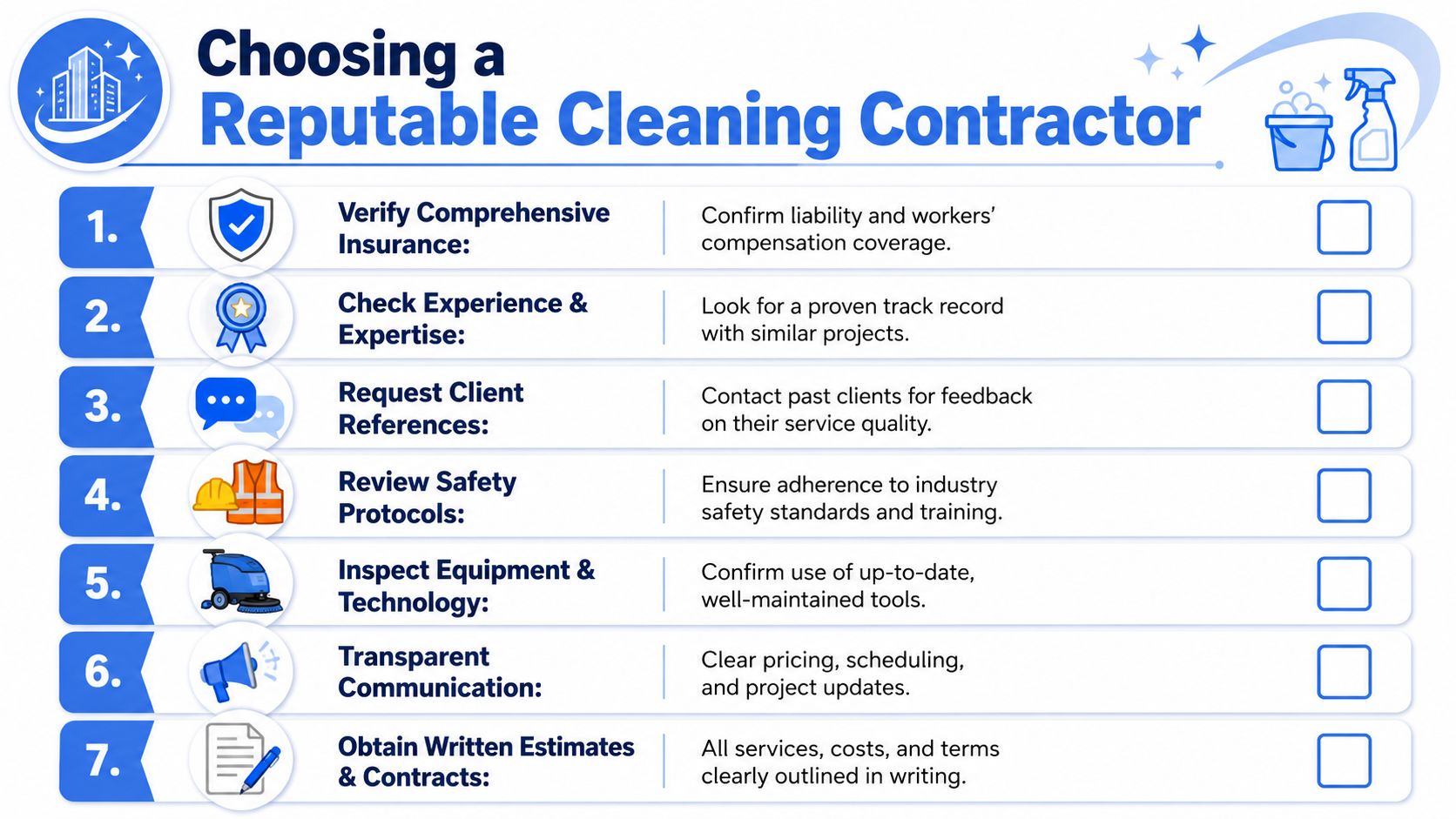
Start with the must-haves:
If you need a good outside reference for why this matters, review what qualified licensed, bonded, and insured professionals should bring to a project. The same logic applies here. Documentation isn't paperwork for its own sake. It's how you reduce exposure before work begins.
Track record is critical. Professional Window Cleaning has been in business since 1999 and has more than 26 years of window-cleaning experience. That kind of longevity usually means the company has already dealt with problem glass, brittle seals, awkward access, sun-baked mineral deposits, and tenant-sensitive scheduling.
Ask contractors about the situations that complicate work. If they only talk about shiny outcomes and never mention risk, surface sensitivity, or access limits, they probably haven't done enough complex jobs.
A quick visual overview can help you think through the vetting process:
Don't ask only “How much?” Ask things like:
The best contractors answer directly. They don't hide behind generic promises.
A good estimate should read like a work plan, not a guess.
A property can look under control on Monday and tired by Friday if the cleaning plan ignores local conditions. Dust, hard water, freeze-thaw cycles, and intense UV all leave different types of buildup. Property managers in Arizona, Colorado, and Nevada usually need a year-round plan that changes by season, surface, and exposure, not a single service frequency applied across every building.

Desert conditions drive the schedule. In Phoenix, Scottsdale, and similar markets, fine dust settles on glass, stucco, metal trim, signage, and entry canopies, then bakes in place under strong sun. The practical result is simple. Front elevations and main entrances often need more frequent service than shaded secondary sides because that is where appearance drops first and tenant complaints usually start.
Heat changes the work itself. Glass and metal can get hot enough to dry water or cleaning solution too fast, which leaves spotting and forces rework. Crews have to sequence the building carefully, start earlier, and pay attention to which elevations take direct sun first.
Arizona properties also benefit from pairing cleaning with routine exterior inspections. Dust hides failed sealant, blocked drainage points, and early roof edge issues. A simple reference point is this 7 Summits Roofing checklist, which shows the kind of organized exterior review that helps catch small defects before they turn into water intrusion or surface damage.
Colorado creates a different set of problems. High altitude, stronger UV exposure, sudden weather shifts, and freeze-thaw cycles all affect how exterior surfaces age and how they should be cleaned.
Lower walls, entries, and concrete transitions often collect runoff staining and winter residue. Snowmelt can carry minerals and grime into places that do not stand out until the surface dries. On older buildings, that matters because aggressive washing can damage mortar joints, painted trim, and weathered masonry that already has some loss of strength.
Scheduling also gets tighter in Colorado. A mild morning can turn into a cold, windy afternoon, and that affects both safety and finish quality. On these sites, method selection is less about speed and more about protecting the substrate while still getting acceptable visual improvement.
Nevada combines desert dust with hard water and extended heat exposure. In Las Vegas, glass can look hazy shortly after cleaning if rinse quality is poor or mineral residue is left behind. That makes water management a service issue, not a technical detail.
The sun also puts constant stress on sealants, coatings, and painted surfaces. Cleaning crews need to account for that wear before choosing pressure, brush type, and chemistry. A method that works on newer storefront glass may be too harsh for faded paint, brittle caulk lines, or older coated panels nearby.
These states share sun, dust, and large temperature swings, but the maintenance playbook should still change from property to property. A low-rise medical office in Arizona, a mixed-use building in Denver, and a retail center in Las Vegas will not soil the same way or respond to the same cleaning intervals.
The best regional contractors build plans around exposure, water quality, material type, and season. That is how property managers protect curb appeal, control cost, and avoid cleaning methods that shorten the life of the building exterior.
The return usually shows up in avoided problems, stronger presentation, and fewer surprise complaints. Regular cleaning helps preserve finishes, keeps traffic areas presentable, and gives maintenance teams a better chance of spotting failed sealant, clogged drainage, cracked glazing, or surface deterioration before those issues expand.
If you're building a broader inspection routine, it also helps to pair façade care with roof review. A practical example is this 7 Summits Roofing checklist, which shows the kind of organized inspection thinking that keeps small exterior issues from becoming larger capital problems.
Yes, but only if the contractor chooses the method based on the material. Fragile brick, aging mortar, painted trim, coated surfaces, and decorative details often require low-pressure or soft-wash methods, controlled chemistry, and careful rinse practices. If a bidder proposes high pressure without discussing the substrate, that's a warning sign.
It depends on access, scope, weather, and how much setup the building requires. A simple low-rise job may move quickly. A high-rise or multi-surface project may spend a meaningful portion of its time on access planning, safety setup, and sequencing rather than the cleaning itself. The best way to evaluate timing is to ask for a written sequence of work instead of a vague completion promise.
Prepare the site so the contractor can work without delays or surprises:
A clean exterior doesn't happen by accident. It comes from matching the right method to the right surface, hiring a contractor who can work safely, and keeping the schedule consistent enough that the building never falls behind.
If your property needs expert care for residential, commercial, or high-rise glass and exterior surfaces, Professional Window Cleaning is a trusted resource. Their team has served Arizona, Colorado, and Nevada since 1999, bringing practical field experience to everything from routine window washing to complex high-rise work.
Read our blog posts regularly and keep learning.