Care and Maintenance
Window Washing Cloths: The Professional Guide
Discover the best window washing cloths for streak-free glass. Compare microfiber, chamois, and cotton, plus expert care tips for homes and high-rises.


The first time someone calls for window cleaning local help, it's usually because the house looks fine until the sun hits it. Then the front windows show every streak, every dust line, and every dried water spot, and the glass that looked “good enough” yesterday suddenly looks tired. That is the moment to stop pretending a paper towel and a spray bottle will fix it.
Local window cleaning is not just about wiping glass. It is about a crew that shows up on schedule, cleans upper panes safely, and leaves a finish that still looks sharp when the afternoon light is brutal. In a fragmented market like the U.S. window-washing industry, that reliability matters more than flashy branding, and industry profiles from IBISWorld industry profile show how much the trade depends on repeat work, route efficiency, and trust. That same market is supported by steady demand for crews that can handle homes, storefronts, and larger properties without treating every visit like a first-time experiment.
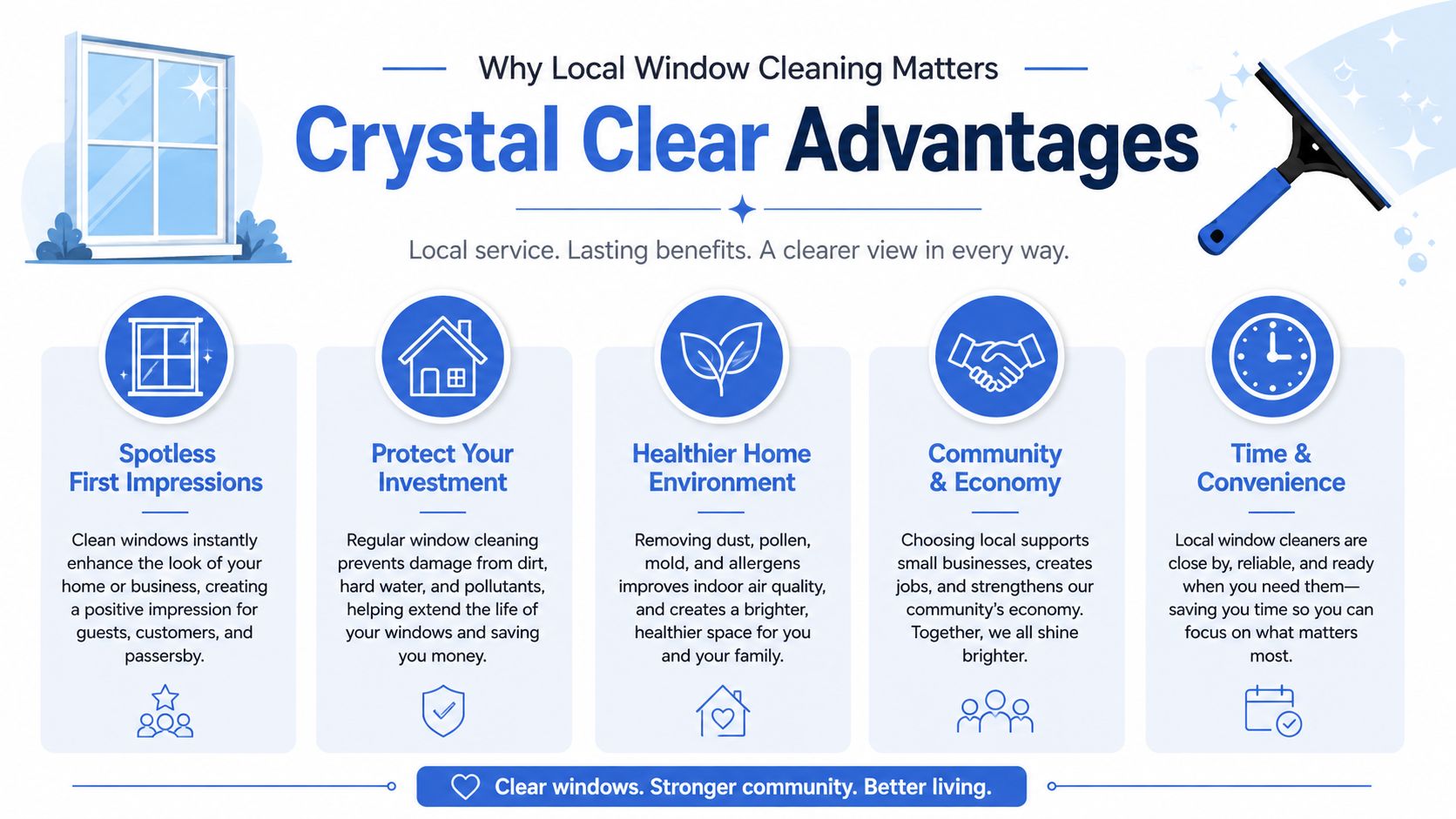
For a homeowner, that means one simple thing. You are not buying “a shine,” you are buying access, consistency, and a crew that knows how to handle the glass on your property without cutting corners. Clean windows change how a house feels from the curb and from inside the room, especially when direct sunlight exposes every flaw. If you want the job done right, you need to know what method is being used, what drives the price, and how to tell a real local operator from a fly-by-night outfit.
The call usually comes right after a bright morning exposes what weeks of ordinary weather hid. The glass looked fine in the shade, then sunlight hit the front windows and made every smudge, mineral spot, and layer of dust obvious. That is the point where homeowners see the underlying issue. The problem is not the glass, it is the cleaning method and the crew doing the work.
A solid local crew can do what a DIY job usually cannot. They reach upper panes safely, they move faster because they already know the neighborhoods they serve, and they leave a finish that still looks clean when the glass sits in direct sun. That matters in areas with strong glare and hard water, where a rushed rinse leaves residue that shows up all day.
Practical rule: if the windows look clean only until the light changes, the job was not finished correctly.
Local service also gives you something cheap operators cannot fake, repeatable results. A crew that works nearby can keep a route tight, return on schedule, and treat your house like part of an ongoing plan instead of a one-off stop. That is a significant advantage of hiring local. You are paying for consistency, access, and a team that knows the glass on your property.
Value is straightforward. Local window cleaning gives you predictable upkeep instead of a last-minute scramble. It keeps the house looking maintained, not patched together after the fact, and it does it without putting you on a ladder you should not be on in the first place.
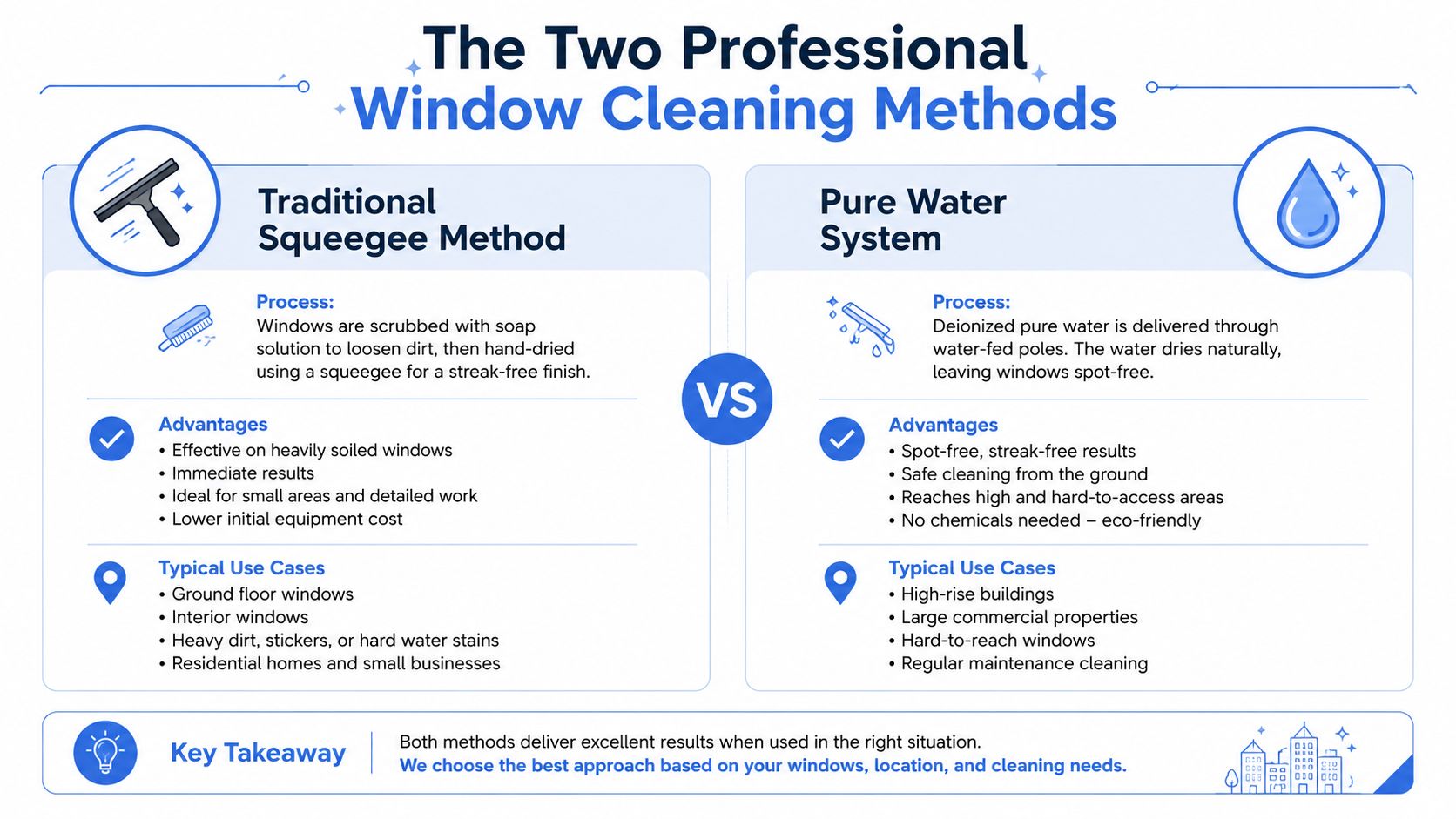
There's a lot of sales fluff in this industry, but the work itself comes down to two methods. If a company can't explain which one it's using on your property, that's a warning sign. The tools are different, the results are different, and the right choice depends on access, height, and the type of glass.
The traditional method uses a scrubber, cleaning solution, and a squeegee to remove the water and dirt from the pane. It gives the cleaner tight control over the finish, which is why it's the standard for interior glass, storefronts, and detail work around edges, frames, and awkward panes. It's the method you want when you care about precision on reachable glass.
The upside is obvious. A skilled technician can see the surface as they work and correct streaks before they dry. The downside is just as obvious. It's slower on hard-to-reach glass, and it's not the best choice for upper stories where ladders or lifts would add unnecessary risk.
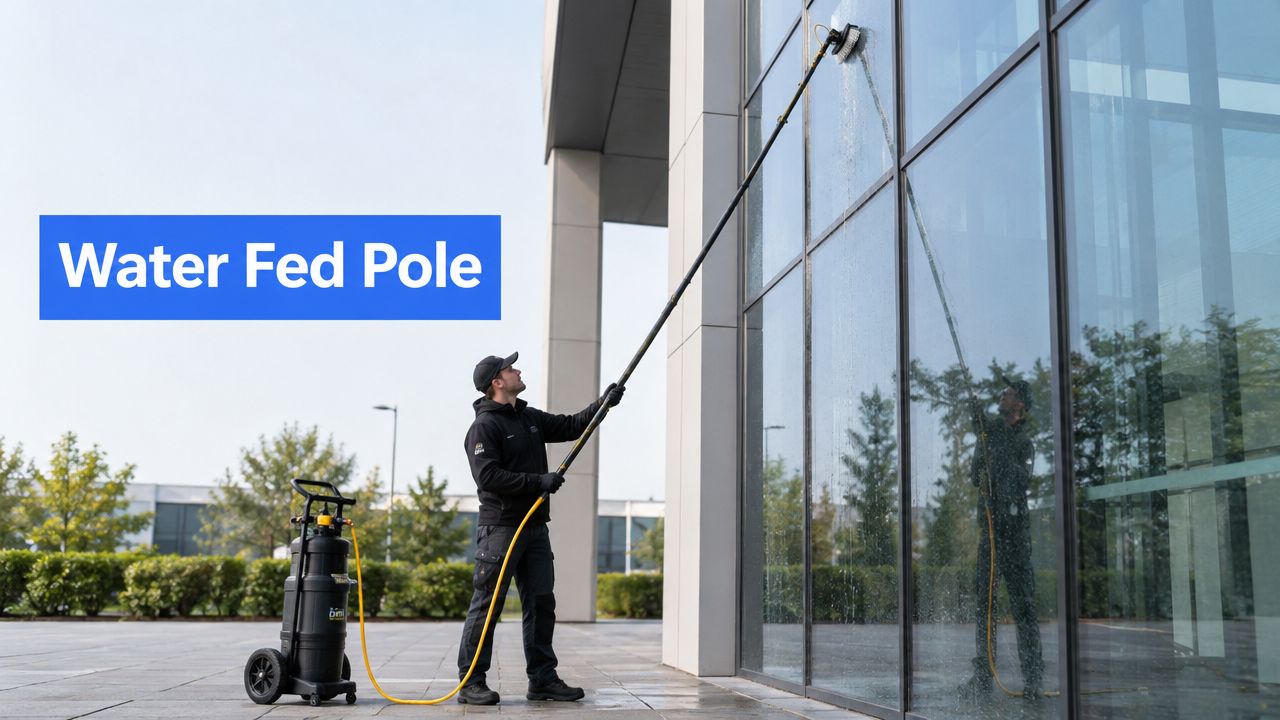
The other method is the pure-water system, usually a water-fed pole that lets the technician clean from the ground with purified water. Public specifications recognize water-fed pole systems as the preferred or recognized method for routine external glazing, and they also note that higher-risk work may require ladders, scaffolding, cherry pickers, or suspended platforms depending on the building and access conditions (window-cleaning specification). That's the reason crews use it for second-story homes and many commercial façades.
The big advantage is safety and reach. The cleaner can handle upper windows without dragging equipment up and down a ladder every few minutes, which improves speed and lowers exposure. The trade-off is that it's a system, not a magic wand. It only works well when the water is properly purified and the technique is disciplined.
The best local crews don't force one method on every job. They use the squeegee where it gives the cleanest finish and the pure-water system where it makes the job safer and more efficient. If you want to sound informed on the phone, ask one question, which method are you using on the upper windows, and why? That answer tells you a lot about the crew's competence.
For a deeper breakdown of how the equipment is set up, the internal guide on the window washing system is worth a look.
Not every property belongs in the same bucket, and bad quotes usually start with pretending they do. A single-family home, a retail storefront, and a tower with suspended access are all “window cleaning,” but they are not the same job in practice. If you know which category your property falls into, you'll ask better questions and avoid paying for the wrong level of crew and equipment.
Residential work covers single-family homes, condos, and small multi-unit properties. The work is usually a mix of ground-level glass and a smaller number of upper panes, which makes access the main issue. A modest home can still become time-consuming if it has French panes, storm windows, or glass that's tucked behind landscaping or patio structures.
Homeowners often overthink it. You do not need tower-level equipment for a typical house, but you do need a crew that knows how to clean safely around second-story windows and finish the job without dripping residue all over the sills. The best residential crews are efficient, tidy, and comfortable switching between the two professional methods described above.
Commercial work is a different animal. Storefronts, offices, medical buildings, car dealerships, and property-managed portfolios all need recurring schedules and consistent finish quality. That's why the industry data matter, since one source estimates the commercial segment accounts for about 60% of global window-cleaning revenue, and another puts the global exterior window cleaning market at US$6,802.0 million in 2024, projected to reach US$10,049.6 million by 2030 at a 6.8% CAGR (global window-cleaning market data). North America was the largest revenue-generating region in 2024 in that same market data, which fits the concentration of commercial property in dense metro areas.
Commercial buyers aren't paying for one shiny visit. They're paying for consistency, route coverage, and crews that don't drift in quality from one stop to the next.
High-rise work is its own category because the access system changes everything. Towers, stadiums, and condominium high-rises can require rigging, suspended platforms, rope access, or other specialized setups. That changes crew size, insurance exposure, training, and the way the quote gets built.
If your building has more than one level and the upper glass can't be handled from the ground, you're not shopping for a basic home wash. You're shopping for a crew with the equipment, competence, and safety process to handle a higher-risk job without improvising. That's the line that separates a real commercial operator from someone who's only good at small houses.
Good pricing isn't a mystery. It's a calculation based on how much glass you have, how hard it is to reach, how often you want it cleaned, and how bad the condition is when the crew arrives. If a company gives you a quote that ignores those variables, it's not a better deal. It's a shallow quote.
| Factor | Why It Moves Price | Typical Impact |
|---|---|---|
| Window count and pane layout | More glass means more labor, and divided lights or French panes take longer per opening | Raises the quote when pane count climbs |
| Access difficulty | Ground-floor glass is faster than second-story or hard-to-reach glass | Adds time, equipment, or both |
| Service frequency | Recurring visits are usually faster than a first-time clean | Lowers per-visit effort on repeat service |
| Condition of the glass | Neglected windows, post-construction debris, and hard-water staining take more labor | Can move the job out of standard cleaning |
| Add-on scope | Screens, tracks, and extra detailing add work to the same stop | Increases the total visit time |
The logic is similar to how how security guard services determine bill rates is explained in the security world. You don't pay for a vague label, you pay for labor, risk, scheduling, and the scope of the assignment. Window cleaning works the same way.
Residential work is often priced by pane or by window, while commercial and high-rise work is usually quoted per visit or per drop based on building height and total scope. That doesn't mean there's one universal formula, but it does mean the company should explain the structure clearly. If they can't tell you what's included, they haven't really priced the job.
Good rule: get the same scope from every bidder, then compare the numbers side by side.
A weirdly low bid usually means something got left out. Maybe it's insurance, maybe it's screens, maybe it's the second story, and sometimes it's finish quality. The safer move is boring but effective. Get two or three written quotes, make sure they itemize the same work, and only compare the bids once the scope matches.
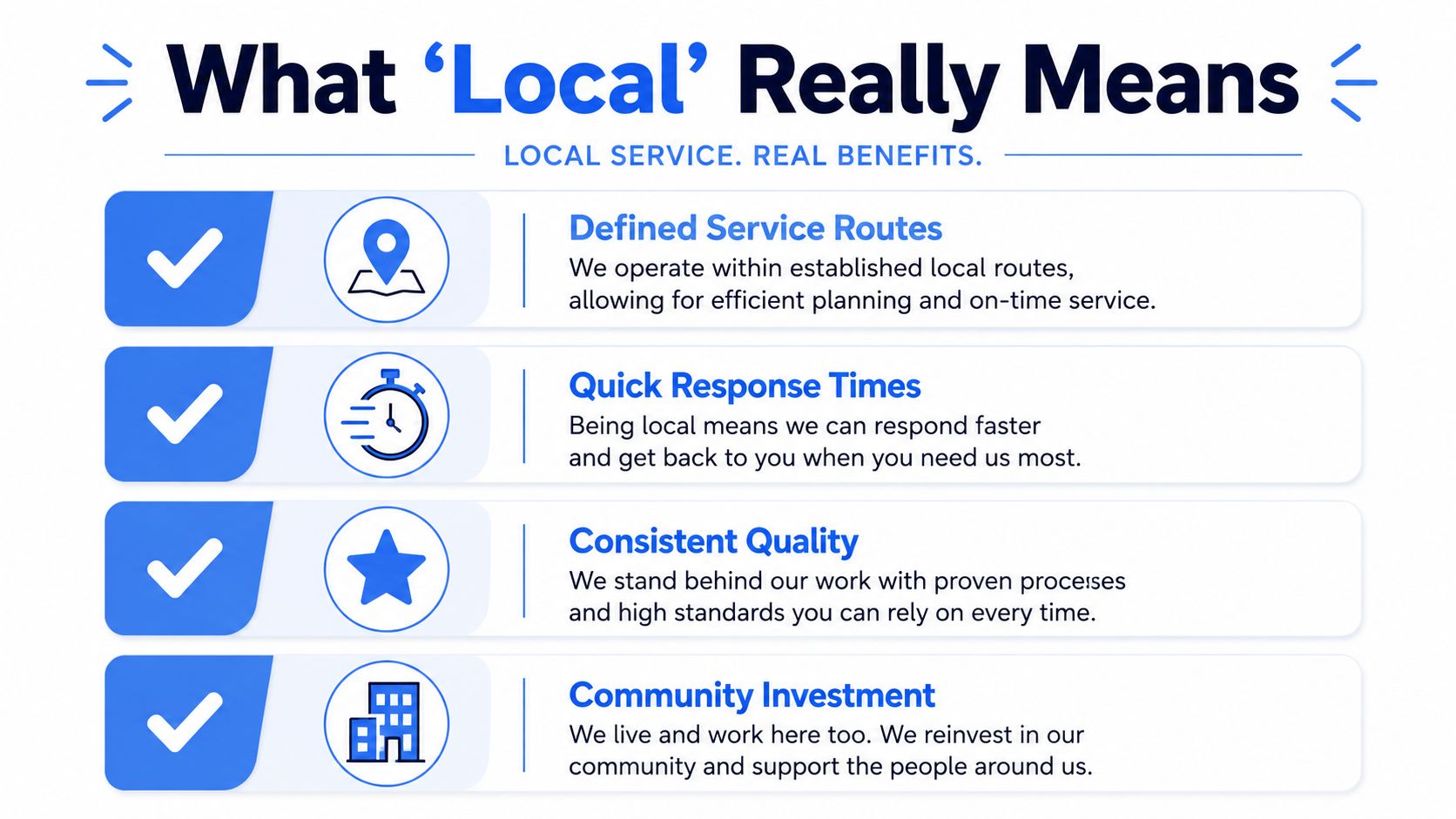
“Local” should mean a crew that operates near you, not just one that bought a nearby ad. A real local company has defined routes, knows how to slot in repeat visits, and can come back for a callback without dragging someone in from another corner of the region. If they cannot do that, they are not running a local service. They are just marketing one.
A good local operator builds the schedule around nearby properties, not a pile of scattered one-off jobs. That matters because route density makes recurring service cleaner, faster, and less chaotic for everyone involved. The crew also gets to know your property, which means fewer surprises and fewer sloppy first-time mistakes on later visits.
You can see why this model works by looking at the industry itself. Window cleaning is still a field where smaller operators win on responsiveness, route planning, and repeat contracts, not on national brand size (IBISWorld industry profile). That is an advantage of a local provider. They can stay close to the work and respond like they live off those routes, because usually they do.
Ask the questions that property managers and multi-site buyers care about:
For a homeowner, the same standard applies. A local crew should be reachable, predictable, and accountable. If they treat your house like a one-time stop they may or may not return to, you are dealing with a flyer, not a partner.
Start with the unglamorous stuff. Ask for insurance certificates, ask about licensing, and ask how they handle work above ground level. Most U.S. operators don't need a special national window-washing license, but they usually still need local business licensing, and some cities add permits for water use, wastewater runoff, or tall-building equipment (Housecall Pro licensing guidance). That means the compliance burden is local, not generic.
For safety, don't just ask if they're insured. Ask for proof of general liability and workers' compensation, because that's what protects you if someone gets hurt or something gets damaged. Then ask how they access upper windows. A serious crew will tell you whether they use poles, ladders, lifts, or suspended platforms, and they'll match the method to the job instead of guessing.
California's rules are a useful reminder of how serious this work can get. The state requires belts, lifelines, or equivalent protection for work on unguarded surfaces more than 4 feet above the ground or floor, and on window-cleaning devices 16 feet or more above the ground or floor (California DIR window-cleaning rules). The UK Health and Safety Executive says the same basic thing in plainer language, that window cleaners working at height must use suitable equipment and control measures, and that ladders are only for short-duration, low-risk work where better access equipment isn't justified (HSE window-cleaning guidance).
A reputable crew should sound calm, specific, and willing to explain the process without defensive talk. If they're evasive before the job starts, they'll be worse after they've taken your money. Choose the company whose answers survive scrutiny, not the one with the lowest number shouted fastest.

Professional Window Cleaning has been in business since 1999, and that kind of long run matters because window cleaning gets easier to evaluate when you've seen enough properties, enough weather, and enough access problems to know what works. It serves residential, commercial, and high-rise properties across Arizona, Colorado, and Nevada, which is precisely the kind of mix that forces a crew to be fluent in both routine maintenance and harder access work.
Arizona brings dense suburban homes, lots of sun-exposed glass, and plenty of neighborhood routes that reward consistent scheduling. In Colorado, especially around Denver, you see more multi-story homes and commercial buildings that need a cleaner who understands recurring exterior maintenance and higher access. Nevada, especially in and around Las Vegas, leans harder into towers, condos, office properties, and other glass-heavy buildings where the access plan matters as much as the cleaning itself.
If you want location-specific details, the city pages are the best place to start. See Las Vegas service details, Phoenix service details, Denver service details, and Scottsdale service details for the areas that get the most questions. If you're comparing broader coverage options, the internal guide on local window cleaning services is a useful reference point.
Don't pick a provider just because they're nearby. Pick the one that can handle your property type and your schedule without dragging the job out. In Arizona, Colorado, and Nevada, that usually means matching the building to the crew, not the other way around.
For homeowners, the next step is simple. Pick your city, ask for a written quote, and make sure the company puts eyes on the glass before they give you a final number. That's how you avoid guesswork and get a real local estimate instead of a generic sales line.
Professional Window Cleaning handles residential, commercial, and high-rise window work across Arizona, Colorado, and Nevada, with crews that know how to match the method to the property instead of forcing every job into the same box. If you want a straight answer on your glass, visit Professional Window Cleaning and request a quote from a team that's used to local routes, recurring service, and the kind of access problems that separate real pros from the rest.
Read our blog posts regularly and keep learning.