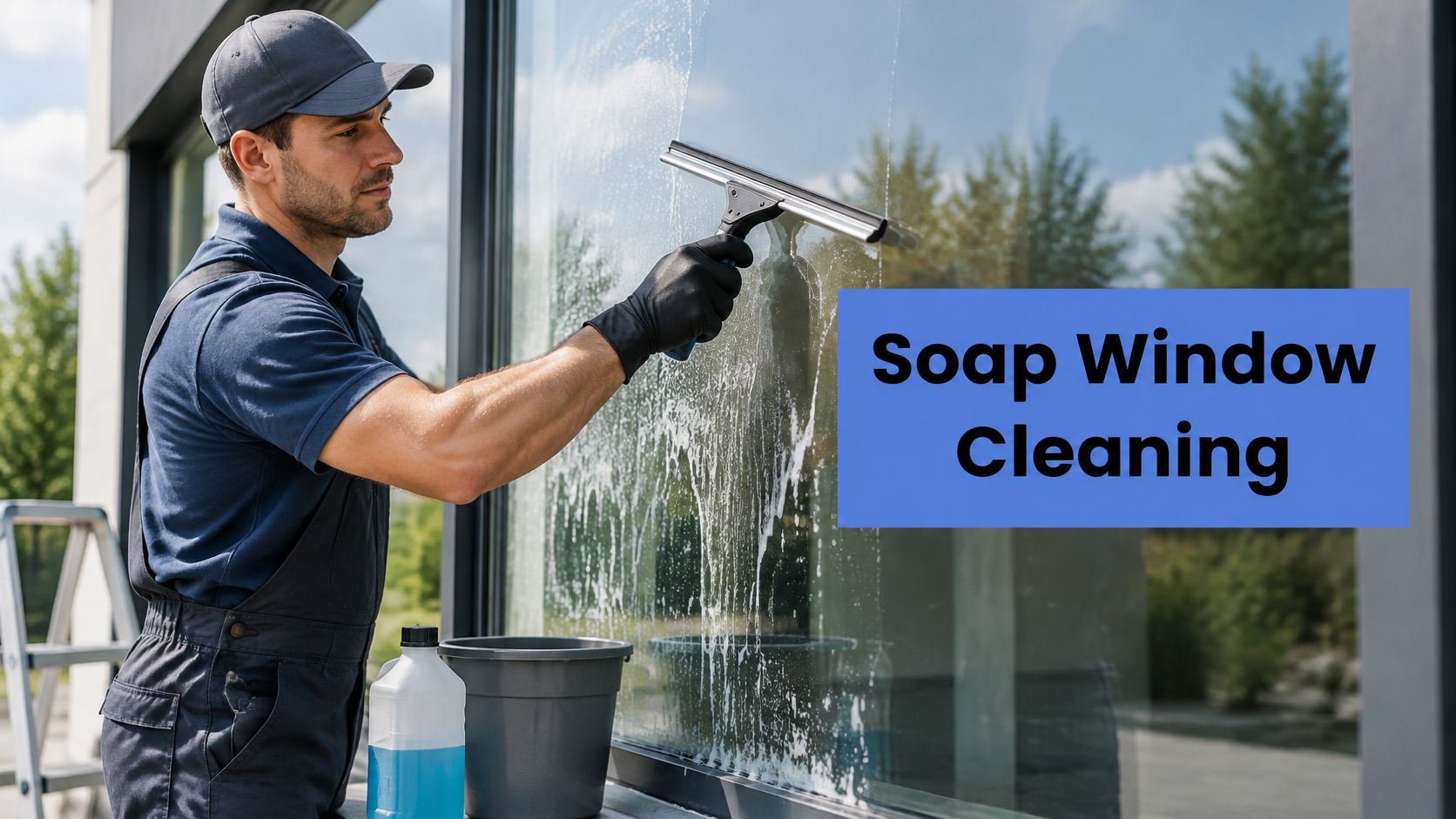
Care and Maintenance
Rain Catchers Gutters: How to Choose and Maintain One
Rain catchers gutters explained: how rain catchers and gutter systems work, what they cost to maintain, and how to keep harvested water safe in dry climates.


You're standing at the patio door with a razor in your hand, staring at dried paint specks and a stubborn label, and you're asking the right question too late. Will this scraper for cleaning take the residue off, or will it leave a permanent line in the glass? That answer doesn't come from how sharp the blade is. It comes from the glass type, the grit sitting on it, and whether you wet the pane before you touch it.
Dried paint on a patio door calls for a different tool than routine window washing. A scraper removes stuck residue; it does not wash glass. Treat it as a residue tool, then use a squeegee or pure-water brush to clean the pane.
For routine washing, a squeegee pulls cleaning solution off the glass with a rubber blade. A pure-water system rinses the pane with filtered water through a water-fed brush. A scraper belongs only where residue needs removal.
The California State Library history of the squeegee notes that Ettore Steccone patented a lighter single-blade design in 1936, replacing an older tool with two heavy rubber blades held by 12 screws. The basic design remains familiar: a rigid handle, a replaceable rubber blade and a channel that holds it in place.
Scraper types, blades and surfaces
| Tool | Blade | Best surfaces | Scratch risk | Typical use |
|---|---|---|---|---|
| Rubber squeegee | Replaceable rubber blade | Interior and exterior glass | Low | Removing wash water |
| Metal razor scraper | Single stainless steel edge | Plain, uncoated glass | High | Paint, labels and dried residue |
| Plastic scraper | Rigid plastic edge | Glass, cooktops and stuck-on residue | Low to moderate | Residue where metal may be too risky |
| Pole squeegee | Rubber blade on an extension pole | Upper panes reachable from the ground | Low | Removing wash water from high windows |
| Hand scraper with carbide blade | Replaceable carbide or steel blade | Bare glass and tile | High | Construction residue and hardened deposits |
Start with a plastic scraper when the glass type is uncertain, and keep a spare edge available. A nicked metal blade can catch and score the surface. Even a sharp blade can scratch if grit gets trapped underneath it.
For example, a fresh metal razor may lift paint from a patio door, while grit beneath the edge leaves a fine scratch visible in angled light. The residue comes off, but the mark may remain. Choose the blade for the most fragile surface involved, not for the toughest deposit.
Practical rule: If you can't identify the glass type, don't use a metal edge.
A rubber or pole squeegee clears wash water; it is not a substitute for a residue scraper. Use each tool for its own task.
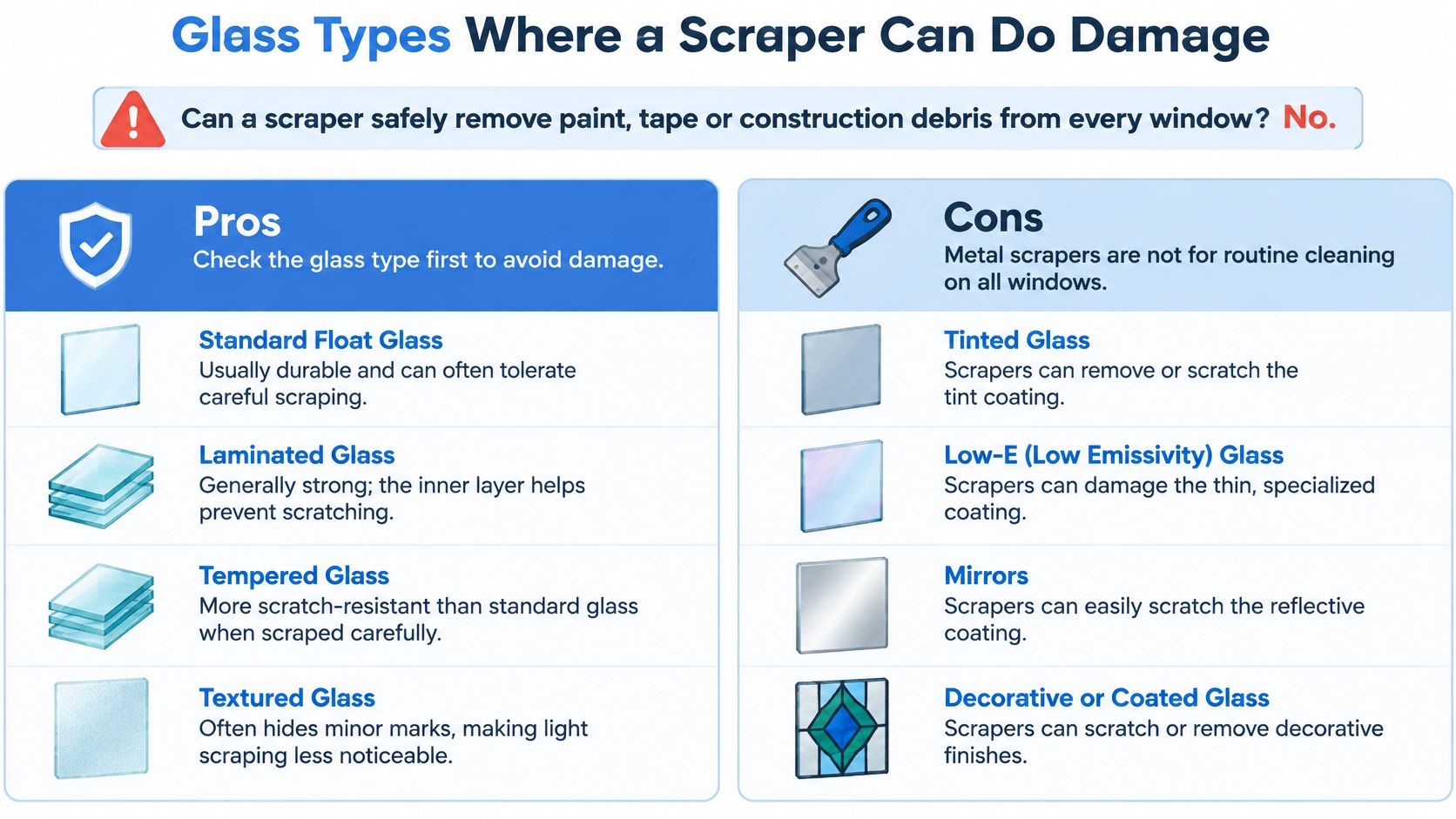
Can a scraper safely remove paint, tape or construction debris from every window? No, and anyone who tells you otherwise hasn't paid for a replacement pane.
The National Glass Association guidance on cleaning architectural glass states that metal scrapers should not be part of routine cleaning. For non-routine removal, that guidance limits scraping to the affected area, in one direction with a new blade, and never on coated glass. On heat-treated glass, microscopic particles trapped beneath a blade can cause scratching or chipping, and abrasives can create damage you can't reverse.
That distinction matters because scratches blamed on a blade often come from silica and grit dragged under it. The process fails first. The tool just delivers the evidence.
Glass types and scraping approach
| Glass type | Scraping approach | How to identify | Risk note |
|---|---|---|---|
| Uncoated annealed glass | Plastic or metal, wet and clean | Clear glass with no coating | Lower risk after flushing grit |
| Tempered or heat-treated glass | Plastic only, wet | Look for an etched stamp in a corner | Grit-caused chips are common |
| Low-E or other coated glass | Avoid metal scrapers | Check for a tint or sheen in reflection | Coating scratches are often permanent |
| Tinted, laminated or film-covered glass | Avoid scraping; test first | Check for lifting film edges | Professional assessment preferred |
| Etched or frosted glass | Avoid scraping | Textured or matte surface | Spot clean only |
If you're trying to sort out what you're looking at, this overview of laminated versus toughened glass safety from Binks Balustrades helps you tell those two apart before you choose a tool. For film specifically, follow the same caution you'd use for cleaning tinted window film without lifting it, because a blade that catches an edge can ruin the sheet in one pass.
Use this pre-scrape protocol every time:
Your decision is always one of three. Avoid the scraper entirely, run a controlled spot treatment, or get a professional assessment. "Scrape carefully" isn't a plan. Knowing which of those three you're in is.
A storefront gets its parking lot restriped, and overspray lands across the lower panes. One crew goes steep and heavy and leaves drag lines you can see from the sidewalk. Another soaks the film with warm water, then clears it with a plastic blade at a moderate angle in two strokes.
A scraper is a residue tool, not a third way to wash the pane. Glass type and grit decide whether you scrape at all. After that, a wet pass in one direction, held at a set angle, decides whether the glass survives.
The difference is peeling versus scraping. A shallow contact angle lifts material a little at a time and cuts surface wear. A steeper blade concentrates force to break a tight bond, and that same concentration raises scratch risk.
Starting angle and blade by residue
| Residue | Starting angle | Pressure | Blade | Watch for |
|---|---|---|---|---|
| Dust and light film | 30 degrees | Light | Rubber | Wet first, since dry wiping spreads grit |
| Hard water spots | 35 degrees | Light to moderate | Plastic | May need an acidic cleaner; test first |
| Paint overspray | 45 degrees | Moderate, short strokes | Plastic, or new metal blade on plain glass only | Stop at any coating |
| Adhesive or label residue | 40 degrees | Moderate | Plastic | Soften with warm water before scraping |
| Construction grit | 30 degrees | Light | Rubber after flushing | Flush before the blade; grit causes scratches |
Push an acute angle with too much pressure and material packs under the edge. The blade rides up, loses contact, and skips the deposit while grinding whatever is trapped beneath it. That is planing. Residue stays on the glass, and marks show up underneath it.
Softening beats force on most residues. Warm water loosens adhesive. Time with the right cleaner loosens mineral spots. Extra pressure does not replace either one.
Off the glass, softening and lifting rather than gouging is the point of good hardwood floor wax cleanup advice from Renue Systems Four Points. That page is about candle wax on hardwood, not window film. On glass you are still trying to release a bond, not win a fight with the blade.
Raise the angle or the pressure by one step only, and only after a test in a hidden corner tells you it's safe.
If a deposit does not move at moderate pressure with the right blade, the problem is chemistry or dwell time, not effort. I would change the cleaner before raising the angle again.
A scraper is a residue tool, not a third washing method. Glass type decides whether a blade is allowed on the pane at all. Grit decides whether that blade can touch it. A wet, one-direction pass at a set angle decides whether the glass survives.
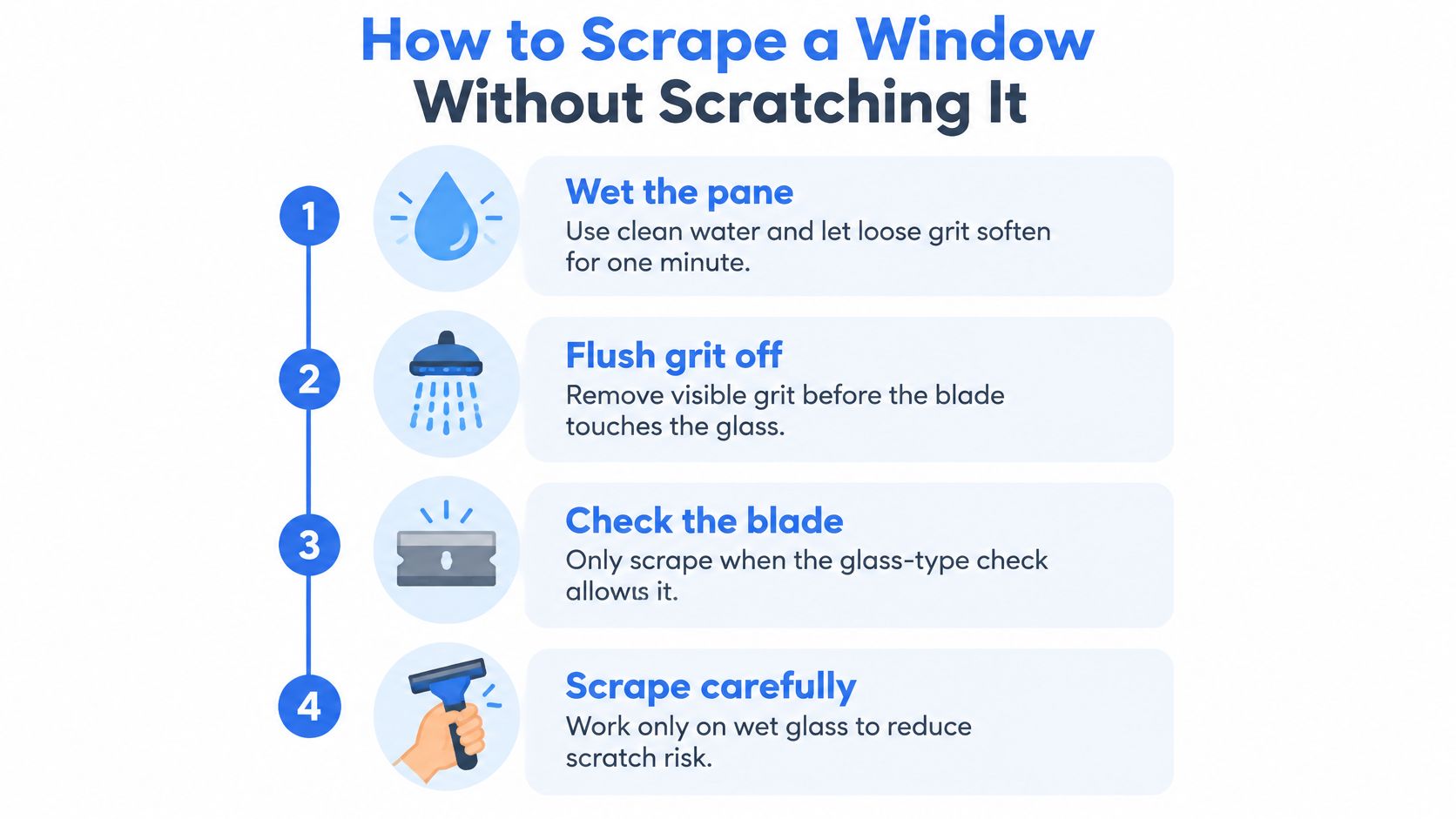
Work wet glass only. Flood the pane with clean water and give loose dirt about a minute to soften before anything rigid meets the surface. Rinse visible grit away first. A dry pass, or a wet pass over sand, drags particles under the edge and cuts.
Stop if the blade chatters, skips, or drags. Those sounds mean something is trapped, the edge is damaged, or the surface is not the glass you expected. More pressure will not fix it. Swap the blade, re-wet, and retest the corner.
Success is plain. No drag marks in angled light, and no residue line at the edge of the strokes. Wash the pane with a squeegee or a pure-water rinse so loosened fines do not dry back on.
Residue work carries two separate risks, and only the first one is usually planned for. A pole setup, like the one shown here, keeps feet on the ground for upper panes where site conditions allow it.
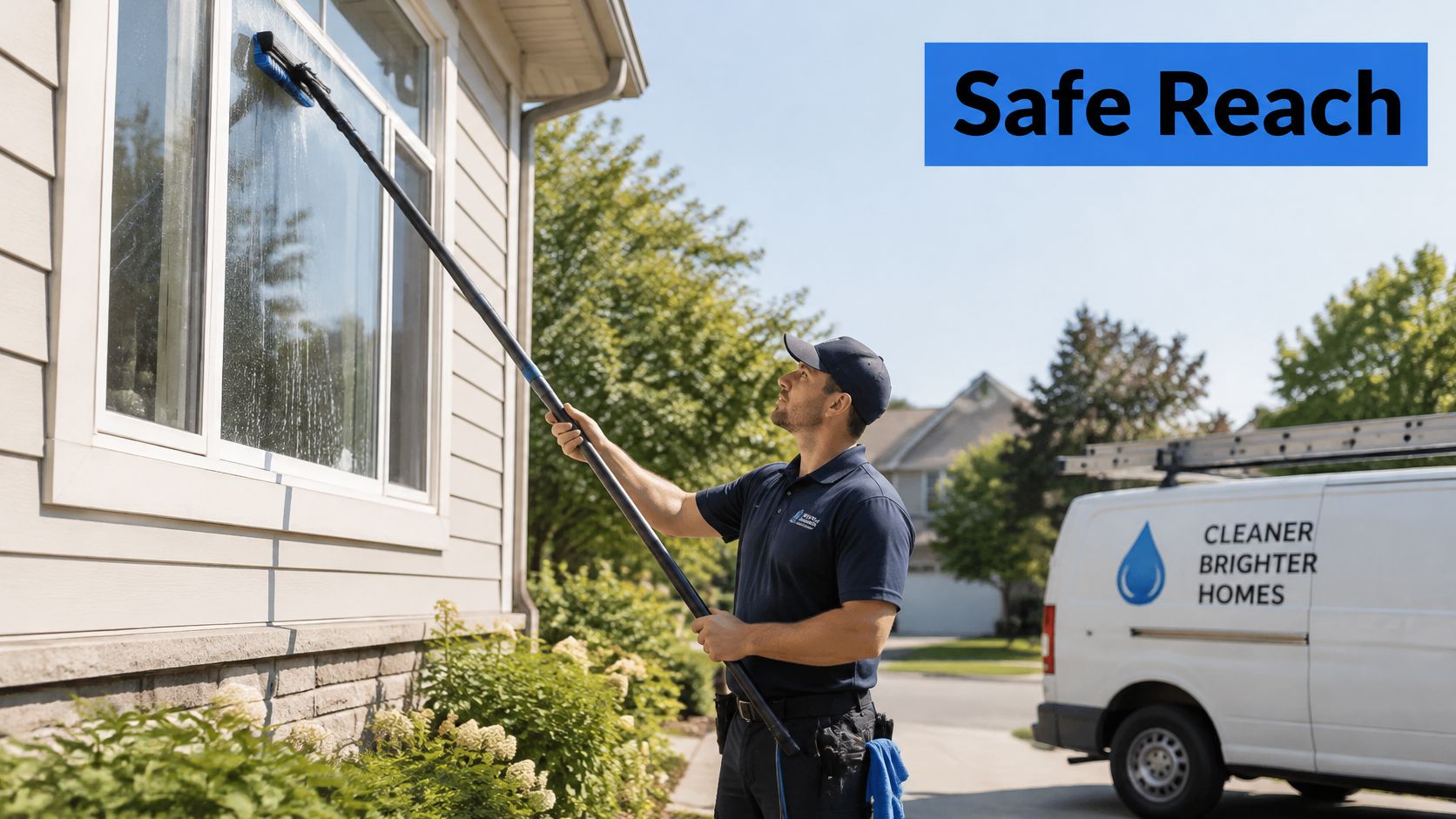
Working from the ground cuts ladder use, but it doesn't clear the job. You still assess overhead power lines, traffic, equipment condition and building shape before you extend a pole. If you do use a ladder, set it on firm, level ground and keep three points of contact while you work, which means you don't lean out to finish a stroke.
For a fuller rundown of the gear side, our guide to window cleaning safety equipment for residential and commercial work covers what to check before anyone leaves the ground. A two-storey house and a multistory tower don't share a risk plan just because both have glass.
The second risk is quieter. A cleaning-work ergonomics study on arXiv reported back-compression forces of approximately 2,405 N for scraping and 3,412 N for collection tasks, so gathering debris after the pass can load your back more than scraping itself. That same source describes a separate assessment that found 80% of workers performing wiping at medium risk, while 51.58% doing trash pickup were classified at high risk.
The short demonstration below shows the posture and pacing that keep that loading manageable on a real job.
Apply these controls on every job, not just the big ones:
Field note: If collection is an afterthought in your plan, it's where the injury is already scheduled.
Prolonged static posture is the other trap, especially on repetitive storefront glass. Move your feet, reset your stance, and let the pole do the reaching.
Sort yourself with a checklist before you buy anything. Your answers decide the tool, not your confidence.
Call a professional for coated, laminated or tinted glass, multistory or high-rise work, construction residue, or anything needing a ladder or rigging. Those jobs combine the highest scratch risk with the highest fall risk, and a mistake costs more than the service would have.
Professionals then wash with one of the two established methods. The squeegee method applies cleaning solution, loosens soil with an applicator and removes the liquid with a rubber squeegee. The pure-water method filters out dissolved minerals and rinses with a water-fed brush on a pole, so the glass dries without mineral residue. The scraper only handles the residue step before that wash.
Professional Window Cleaning has been cleaning windows for over 26 years, since 1999, serving families, non-profits and businesses from single-story homes to high-rises. Using that service also means you don't need to buy or store specialized cleaning tools for a one-off residue problem.
We serve Las Vegas, Phoenix, Denver and Scottsdale, plus Flagstaff, Tempe, Chandler and Gilbert. Dust, sand and mineral deposits in these markets make the flush and test steps more important, not less.
Before you book anyone, note the glass type, height, residue and access for each pane. Then confirm which of the two washing methods fits your building and how coated glass will be handled, because that answer tells you whether the crew understands the risk. If you can't identify the glass yourself, say so upfront. That's useful information, not a weakness.
If your panes are coated, high, or carrying construction residue you're not sure how to lift, Professional Window Cleaning can assess the glass, remove the deposit safely, and finish with the squeegee or pure-water method that fits your property. You won't need to buy or store specialized tools for a job that carries real scratch and fall risk. Visit Professional Window Cleaning to tell us the glass type, height and residue you're dealing with, and we'll recommend the right next step.
Read our blog posts regularly and keep learning.