Care and Maintenance
Cloth for Window Cleaning Choices That Deliver Results
Choose the best cloth for window cleaning by comparing microfiber, cotton, lint-free, and chamois options, plus care and selection tips.


Dirty windows usually sneak up on people. One week the glass looks fine, then the afternoon sun hits it just right and every dust streak, water spot, and screen outline suddenly shows up. Homeowners notice it when the living room feels dimmer than it should. Business owners notice it when the front entry starts looking neglected before customers even walk through the door.
That moment matters because window cleaning isn't a side chore anymore. It's a specialized service category with real scale. The U.S. window cleaning services industry generated $2.8 billion in revenue in 2023 according to Gitnux's window cleaning industry statistics. That tells you something important. Good local window cleaning services aren't just someone with a bucket and paper towels. They're part of a mature trade that depends on technique, safety, and consistent results.
After more than 26 years in this business, one lesson stands out. Customers make better decisions when they understand what professionals do, what drives pricing, and which method fits their property. That's especially true in markets with strong sun, dust, hard water, multi-story homes, and glass-heavy commercial buildings.
If you're comparing local window cleaning services in Las Vegas, Phoenix, Denver, and Scottsdale, the right question isn't just “Who's cheapest?” The better question is “Who knows how to clean my kind of property the right way?”
Shopping for local window cleaning services often begins only after the problem has been actively ignored for some time. The windows looked acceptable from inside, then morning light exposed everything. On a house, that often means dusty exterior glass, bug debris around frames, and mineral spotting near sprinklers. On a business, it usually means fingerprints on entry doors, haze on storefront panels, and upper windows that no one on staff can safely reach.
That's where experience changes the outcome. Clean windows aren't only about appearance. They affect how a home feels and how a commercial property presents itself. Bright glass lets in more natural light, sharpens views, and makes the rest of the property look better maintained.
Not every market creates the same kind of glass problems. Dry climates leave behind dust. Irrigation systems leave mineral residue. Busy roads leave film. Downtown buildings introduce access challenges that don't exist on a one-story house.
A provider who works locally understands those conditions and plans around them. That includes choosing the right method, the right tools, and the right service scope.
Clean glass is the final result. The real work is choosing the method that matches the soil on the window, the height of the building, and the risk around the job.
The biggest difference is that trained window cleaners don't guess. They inspect the glass, frames, sills, screens, access points, and safety needs before they start. They also know there are only two professional methods that consistently produce quality results: the squeegee method and the pure-water system.
That distinction matters more than most customers realize. If a provider can't clearly explain when each method should be used, you're probably not dealing with a true specialist.
People often think window cleaning means wiping the glass and moving on. Real service is more complete than that. A proper visit usually involves the glass itself, surrounding frames, sills, and often the tracks and screens that make clean glass look dirty again if they're ignored.
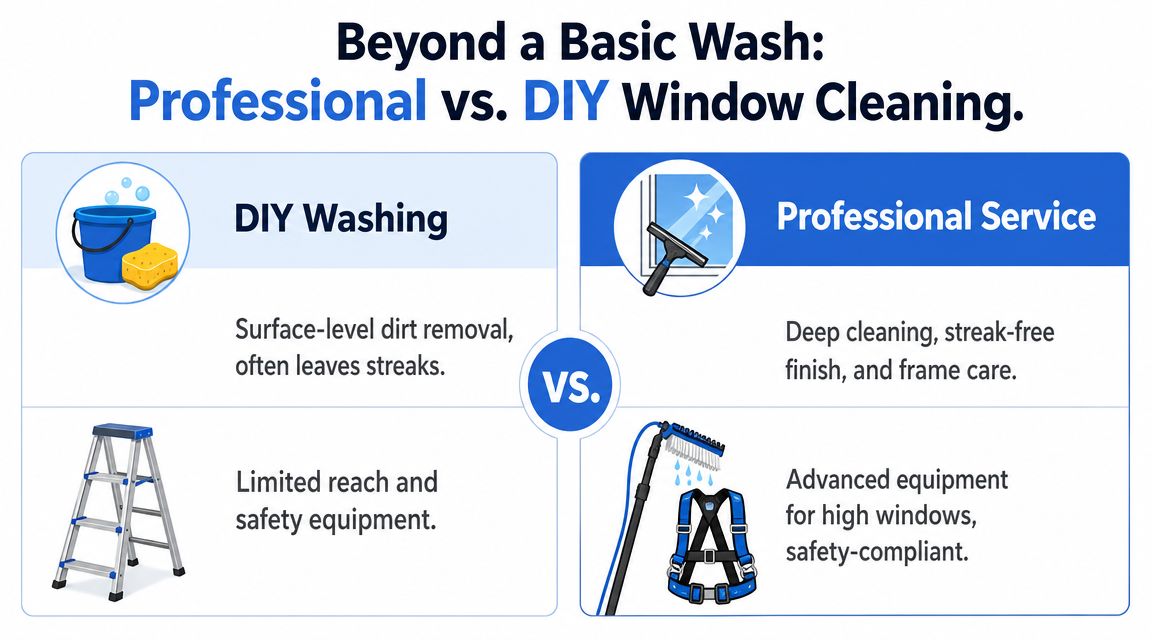
The squeegee method is the classic trade skill. It's still the best option for many interior windows and for exterior glass where hand-detailing gives the cleanest finish. Done correctly, it includes scrubbing the glass to loosen soil, pulling the water cleanly with a quality squeegee rubber, and detailing edges so no residue dries into lines.
This isn't the same as a homeowner using glass spray and paper towels. Paper products can leave lint. Household sprays can smear residue. Untrained hand work often pushes dirty water into edges and corners instead of removing it.
A skilled squeegee technician pays attention to things customers notice immediately:
The other true professional method is the pure-water system. This uses purified water, commonly deionized or otherwise treated to remove minerals, delivered through a water-fed pole with a specialized brush. The brush agitates dirt. The purified water rinses it away. Because the water is purified, it dries without leaving the spotting that untreated tap water often leaves behind.
This method shines on exterior glass, especially when a crew needs safe access to taller windows without leaning ladders all over a property. It also works well on many modern homes, multi-unit buildings, and commercial properties with repetitive exterior glass.
A professional service should also talk clearly about scope. That means whether the quote includes:
Practical rule: If a company only talks about “washing windows” and never asks about screens, tracks, access, or spotting, the quote probably isn't complete.
Think of it this way. A squeegee is precision hand-finishing. A pure-water system is engineered exterior rinsing. Both are professional. Both have a place. The mistake is assuming one method fits every job.
That's often the line between a real window cleaner and a handyman. Professionals know the method is part of the result.
Clean windows solve different problems depending on the property. On a home, the payoff is usually visual comfort. Rooms feel brighter, views look sharper, and the exterior looks cared for. On a commercial property, the payoff is presentation. Customers, tenants, visitors, and employees all notice the front glass long before they notice anything technical about the building.
That demand for upkeep isn't shrinking. One market forecast cited by Fortune Business Insights on window cleaning services projects a 9.66% CAGR, driven by urbanization and more glass-heavy commercial buildings. The exact projections may vary by report, but the direction is clear. Properties with more glass require more professional maintenance.
Residential customers usually care about three things most. They want clean views, stronger curb appeal, and less hassle. A good cleaning also helps remove the grime that collects over time around frames and sills, which is why regular maintenance tends to work better than waiting until the windows look bad from the street.
For many homeowners, window cleaning also pairs well with other indoor comfort work. If you're trying to brighten a space and reduce the dusty look inside the house, it's also worth understanding how air duct cleaning fits into broader home maintenance.
Commercial properties have a different standard. The front glass is part of the customer experience. Storefronts need clean entry glass because smudges and dust are visible at eye level. Medical offices need a polished, orderly appearance. Dealerships and office buildings need exterior glass that supports the brand instead of distracting from it.
High-rise and larger commercial sites also face a practical issue. They can't treat window cleaning like an occasional cosmetic task. Glass-heavy buildings need a repeatable service model because weather, traffic film, and exposure keep coming back.
| Benefit | Residential Focus | Commercial Focus |
|---|---|---|
| First impression | Better curb appeal from the street | Cleaner storefront and stronger brand presentation |
| Light and visibility | Brighter rooms and clearer outdoor views | More polished lobbies, offices, and public-facing spaces |
| Maintenance | Removes everyday buildup before it becomes a bigger issue | Supports recurring upkeep for glass-heavy properties |
| Convenience | Saves homeowners time and ladder risk | Keeps staff focused on operations instead of improvised cleaning |
| Property fit | Tailored to screens, tracks, and home access | Tailored to entry glass, multi-story access, and service scheduling |
Businesses don't get judged only by their sign. People also judge the glass, the doors, and the condition of the building before they ever speak to staff.
A one-story home, a corner retail suite, and a downtown office tower all need clean windows. They don't need the same service model. The more complex the property, the more value comes from a provider who understands access, frequency, and method selection.
That's why the best local window cleaning services don't sell one generic package. They match the work to the building.
Price is usually the first question, but it shouldn't be the only one. Window cleaning quotes vary because the work varies. A straightforward single-story residential job is one thing. A property with difficult access, heavy buildup, divided panes, or upper-level exterior glass is something else entirely.

Industry guidance gives a useful baseline. GorillaDesk's window cleaning pricing guide reports typical U.S. residential jobs at about $150 to $302, with per-window pricing commonly ranging from $4 to $15. The same guide notes that high-rise commercial work can reach about $170 per hour because access complexity and safety requirements raise labor costs.
The biggest pricing mistake customers make is counting panes and assuming that tells the whole story. It doesn't. Access often matters just as much as glass count.
A realistic quote usually reflects factors like these:
A very low bid usually means one of three things. The company is skipping part of the work. The cleaner doesn't understand the access challenge yet. Or the crew will rush through the job with basic tools and minimal detail.
That's why it helps to compare written estimates line by line. If you want a broader breakdown of what homeowners usually compare, this guide on average window cleaning rates is useful for framing the discussion before you book.
A quick visual can also help if you're comparing service levels and property types:
The best quote is rarely the lowest one. It's the one that clearly explains what's included, what isn't, and which method fits your property. That protects you from surprise add-ons and disappointing results.
If a quote sounds simple but your property isn't, ask more questions before you schedule.
For most customers, the right next step is a no-obligation estimate. A short site review tells you far more than a generic number over the phone.
A homeowner in Denver may need spotless interior glass before listing a house. A retail manager in Phoenix may care more about keeping front windows clean through dust and foot traffic. A property manager in Las Vegas may need exterior service on upper floors without disrupting tenants. Those are three different jobs, and the right provider should treat them that way.

The first question is not price. It is whether the company regularly handles your type of building.
Residential work often includes interior glass, screens, tracks, and careful work around furniture and flooring. Storefront work is more about frequency, appearance, and fast access to entry glass. Multi-story commercial work adds safety planning, water-fed pole systems, lift access, and tighter scheduling requirements.
A provider who cleans ranch homes well may not be the right choice for a medical office or apartment complex. Experience should match the building, the glass, and the access conditions.
Customers can separate a true window cleaner from a general handyman.
Ask what method they plan to use on your property. A skilled company should explain whether the job needs traditional squeegee work, pure-water cleaning, or both. Squeegee cleaning usually gives the best control on interior glass, detail-heavy panes, and first-floor storefront windows where close-up finish matters. Pure-water cleaning is often the better option for exterior glass on larger homes and low- to mid-rise buildings because it reaches higher windows safely and rinses the glass without soap residue.
Neither method is automatically better. The right method depends on the glass location, the soil load, the frame condition, and how accessible the windows are.
Use questions like these during the estimate:
Good answers are specific. Vague answers usually lead to uneven results.
Window cleaning is simple to describe and easy to do poorly. The provider should carry the right coverage for the type of work being performed, especially if ladders, roofs, lifts, or commercial access points are involved. If you want a plain-English explanation, this guide on bonded vs insured clears up what those terms mean.
Also ask how the crew works on site. Do they wear shoe covers indoors when needed? Do they protect floors and furnishings? Do they test for damaged screens or loose frames before removing anything? Experienced technicians notice those details because they have seen what can go wrong.
A real specialist usually asks better questions than the customer does. They want to know how many stories the building has, whether windows open inward or outward, whether there are divided panes, hard water stains, paint specks, or fragile screens, and whether purified water access makes sense for the exterior.
That tells you something important. They are planning the work before they price it.
Strong providers also write estimates clearly. You should be able to see what is included, what costs extra, and where restoration work begins. Hard water removal, post-construction cleanup, and mineral stain treatment are different services from routine cleaning. If those differences are not spelled out, expect confusion later.
Five-star ratings alone do not tell you much. Read the comments for patterns.
Look for mentions of punctuality, care inside the home, consistency on repeat visits, and whether the windows stayed clean without spotting. For commercial properties, pay attention to comments about reliability and communication. For homes, comments about respect for the property usually matter just as much as the final appearance.
If you are comparing bids and trying to balance service level against budget, this overview of the cost of cleaning windows gives useful context on how pricing is commonly structured.
The best provider is the one who can explain the method, the scope, and the risks in plain language before the job starts.
That kind of clarity usually leads to cleaner glass, fewer surprises, and a service plan that fits the property.
A good window cleaning appointment starts before the crew arrives. Small prep steps save time, reduce interruptions, and help the technicians work more thoroughly. They also help protect fragile items and make access easier.
Most properties only need a short prep list:
These steps don't make the cleaner's job easier just for convenience. They help the crew work with fewer stops, less risk of accidental contact, and better attention to detail.
Once the windows are finished, take a slow walk around the property. Look at the glass from different angles and at different light levels. Some issues only show when the sun hits the pane directly, while others show best from inside.
If you have screens removed and reinstalled, check that they're seated correctly. If the service included tracks or sills, make sure debris has been fully removed rather than just shifted around.
Freshly cleaned windows deserve a final walkthrough. It's the easiest time to catch a missed corner, a stubborn spot, or a screen that needs adjustment.
Most homeowners and property managers get the best results from regular service rather than occasional rescue cleanings. When windows are maintained on a steady schedule, dirt stays manageable, spotting is easier to address early, and each visit tends to be more efficient.
That matters even more on storefronts, exposed homes, busy roads, and properties with a lot of direct sun or irrigation overspray. Waiting too long often turns normal cleaning into heavier restoration work.
A practical maintenance rhythm depends on the property, not a one-size-fits-all rule. Some homes only need occasional full service with exterior touch-ups in between. Some storefronts need recurring front glass care to stay presentable. Larger commercial properties often need a planned schedule tied to appearance standards and access logistics.
Clean windows hold up best when the service interval matches the building, the environment, and the way the property is used.
If you want clear guidance and dependable service from a company that's focused on window cleaning, contact Professional Window Cleaning for a free estimate. Whether you need residential glass cleaned, recurring storefront service, or a more complex commercial or high-rise plan, their team can help you choose the right method and the right schedule for your property.
Read our blog posts regularly and keep learning.