Care and Maintenance
All Seasons Window Cleaning: A Complete Year-Round Guide
All seasons window cleaning explained: how weather affects glass, season-by-season scheduling, methods pros use, and the real benefits of regular service.


You've probably noticed it on a bright morning. The room looks clean, the glass below eye level looks fine, but the skylight overhead turns the whole space dull with streaks, dust, and a film that catches every beam of sunlight. That's the moment it becomes clear a skylight cleaning service is less about appearance and more about how your home or building feels day to day.
Skylights sit in a tougher spot than regular windows. They collect dust, pollen, construction debris, and mineral residue, and they're harder to reach safely. That's why skylight work sits inside a much larger maintenance category, with IBISWorld estimating the U.S. window-washing industry at $2.9 billion in 2026 with 35,344 businesses and noting that the industry includes exterior cleaning for high-rise and low-rise buildings (IBISWorld industry overview).
A homeowner usually notices the problem at the wrong time, right after the morning sun hits the glass. What looked like a light haze from the floor becomes a full pattern of spots, streaks, and trapped grime overhead. In commercial buildings, the same thing happens on a bigger scale, where dirty skylights can make lobbies, offices, and shared areas feel older and dimmer than they really are.
Skylights are easy to forget because they sit outside your normal line of sight. They also face a different set of conditions than vertical windows, since debris settles on top of them and water can pool if drainage paths are blocked. That makes a simple “wipe the glass” approach less useful than a proper maintenance visit.
The market context matters because this isn't a niche chore. IBISWorld estimates the U.S. window-washing industry at $2.9 billion in 2026 with 35,344 businesses, and skylight work is part of that broader service category (IBISWorld industry overview). For property owners, that means skylight care belongs in the same maintenance conversation as windows, gutters, and roof access planning.
A clear skylight does more than brighten a room. It restores natural light, helps a building look cared for, and gives you a chance to spot issues before they become leaks or staining. That's the practical value behind a professional service call.
Professional work starts with method, not guesswork. There are only two professional methods in standard window cleaning, the traditional squeegee method and the pure-water system (Professional Window Cleaning methodology overview). That matters because it helps you judge a provider by process, not by flashy promises.
The squeegee method is the classic approach. On high windows, pros typically start with an initial scrub from the top of the window, then pull the squeegee with about a one-inch overlap between strokes, and finish with edge detailing using a microfiber cloth (high-window process). That overlap matters because missed edges are where streaks often begin.
The pure-water system works differently. It uses filtered water with no soap, and the water is meant to dry without leaving residue. A technically sound skylight-cleaning workflow uses deionized output below TDS < 5 ppm, because low-mineral water dries with minimal residue and extension poles help reduce fragile-roof fall risk (pure-water skylight method).
Practical rule: if a provider can't explain whether they're using a squeegee or pure-water setup, they're probably selling a generic wash, not a real skylight service.
For repair-prone roofs, a small accessory can matter too. Roof-edge details such as Essential Dek Cap flashing for roofs are the kind of component a careful maintainer notices while working around skylight hardware, especially where water management and roof transitions are already sensitive.
A good provider should explain the method they'll use, how they'll reach the glass, and what they'll do if the skylight isn't just dirty but showing signs of wear.
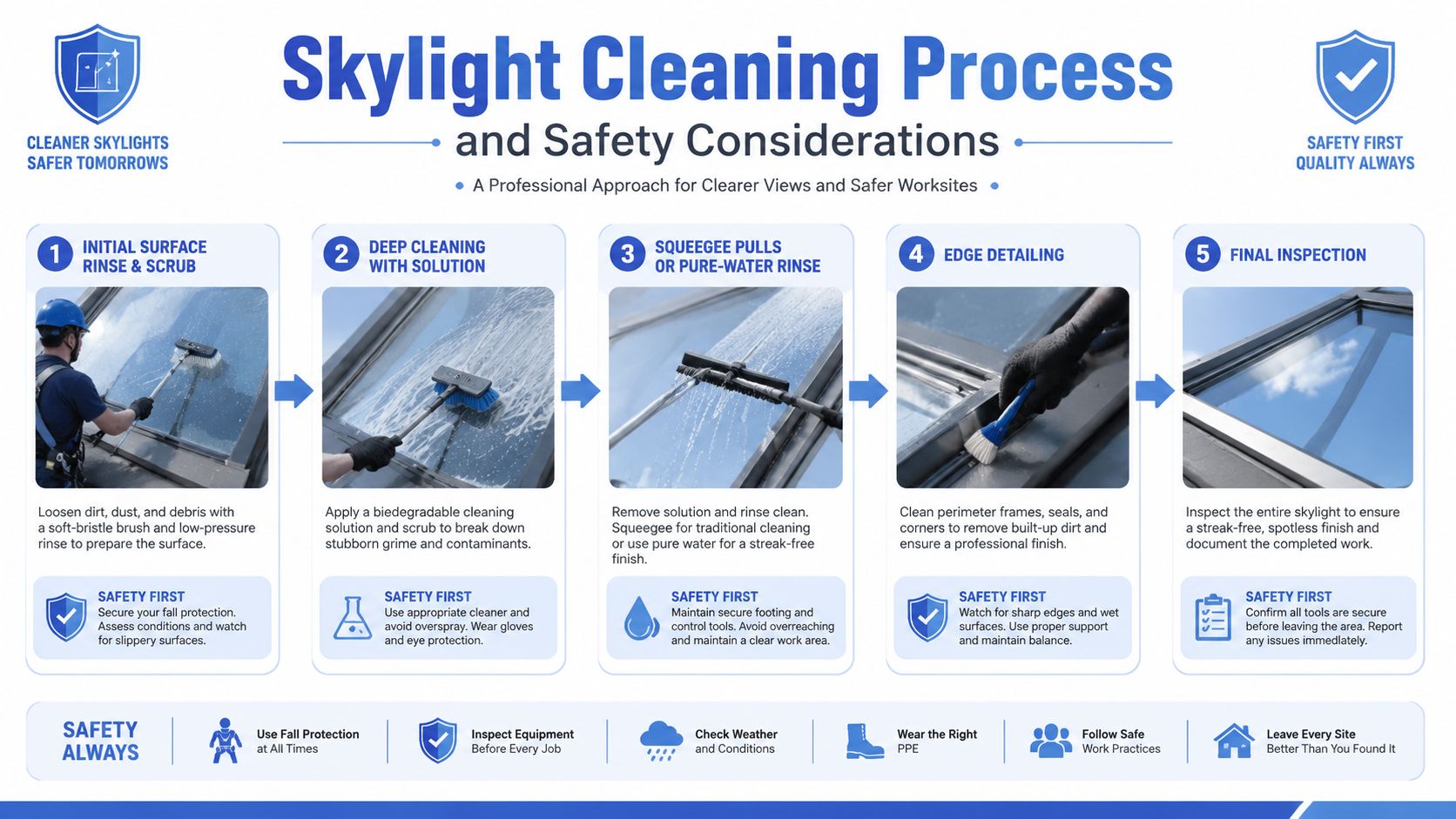
A proper skylight job is a sequence, not a single wipe. The first pass removes loose grit, then the cleaner works the surface, then the water is removed or rinsed away, and only after that do the edges and surrounding frame get detailed. If the process skips a step, the glass often looks clean for a day and then starts showing lines again.
The maintenance manual for skylights is blunt about the last step. The surface should be rinsed thoroughly and dried immediately, because residue left to dry, or pooling on horizontal surfaces, increases streaking and can require extra flushing to prevent chemical buildup and spotting (skylight maintenance manual). That's why a rushed rinse can create the exact problem it was supposed to remove.
A useful analogy is washing a dinner plate on a counter. If soap dries on it before you rinse, you don't get a clean shine, you get a film. Skylights behave the same way, only the angle, reach, and safety issues are more complicated.
Here's where access planning becomes part of the service, not an afterthought:
A quality workflow does not treat the skylight as a standalone pane of glass. It treats the surrounding roof and drainage area as part of the job. That's also why a provider worth hiring should be willing to explain access routes before they begin.
For a deeper look at the service sequence, see this skylight cleaning overview.
Skylight cleaning usually costs more than standard window washing because access is harder and the tools are more specialized. Yelp's skylight-cleaning cost guide reports a national average of $25 to $35 per skylight and ties the premium to harder access and specialized tools (Yelp skylight cleaning cost guide). That price spread makes sense when you compare it to regular windows, which that same source says are often cleaned at a lower per-unit rate.
The final quote isn't about one number, it's about conditions. A small, easy-to-reach unit is a very different job from a large skylight on a steep roof, and that difference shows up in labor, setup, and safety planning. It's also why some public pricing guides give very different ranges, which tells you that accessibility is part of the cost conversation.
| Cost Factors for Skylight Cleaning | Impact on Cost |
|---|---|
| Access difficulty | Harder access usually raises labor and safety planning needs |
| Skylight size | Larger glass surfaces take longer to clean and detail |
| Roof condition | Steeper or more fragile surfaces increase complexity |
| Special equipment | Extension poles and safety gear can affect the quote |
| Inspection add-ons | Bundled checks may change the service scope |
For broader pricing context, the Atomic Exteriors window cleaning cost guide is useful because it reinforces the idea that glass cleaning prices depend heavily on access, surface type, and labor intensity, not just the number of panes.
Cleaning frequency should follow the site, not the calendar alone. A residential skylight on a low-debris roof may only need periodic service, while properties in dusty or construction-heavy areas may need more regular attention. If you want a practical cadence guide, this skylight cleaning frequency resource is a helpful reference point.
Budgeting tip: if a quote sounds unusually simple, ask whether the provider is pricing just the glass or the full access-and-inspection job.
DIY skylight cleaning looks simple until the ladder comes out. The task might initially seem to involve only a bucket and a cloth, but the primary concern is not the cleaning itself, but the roof. On a low, easy roof, some homeowners try to manage light maintenance themselves, but steep pitches, fragile materials, and awkward angles quickly change the risk profile.
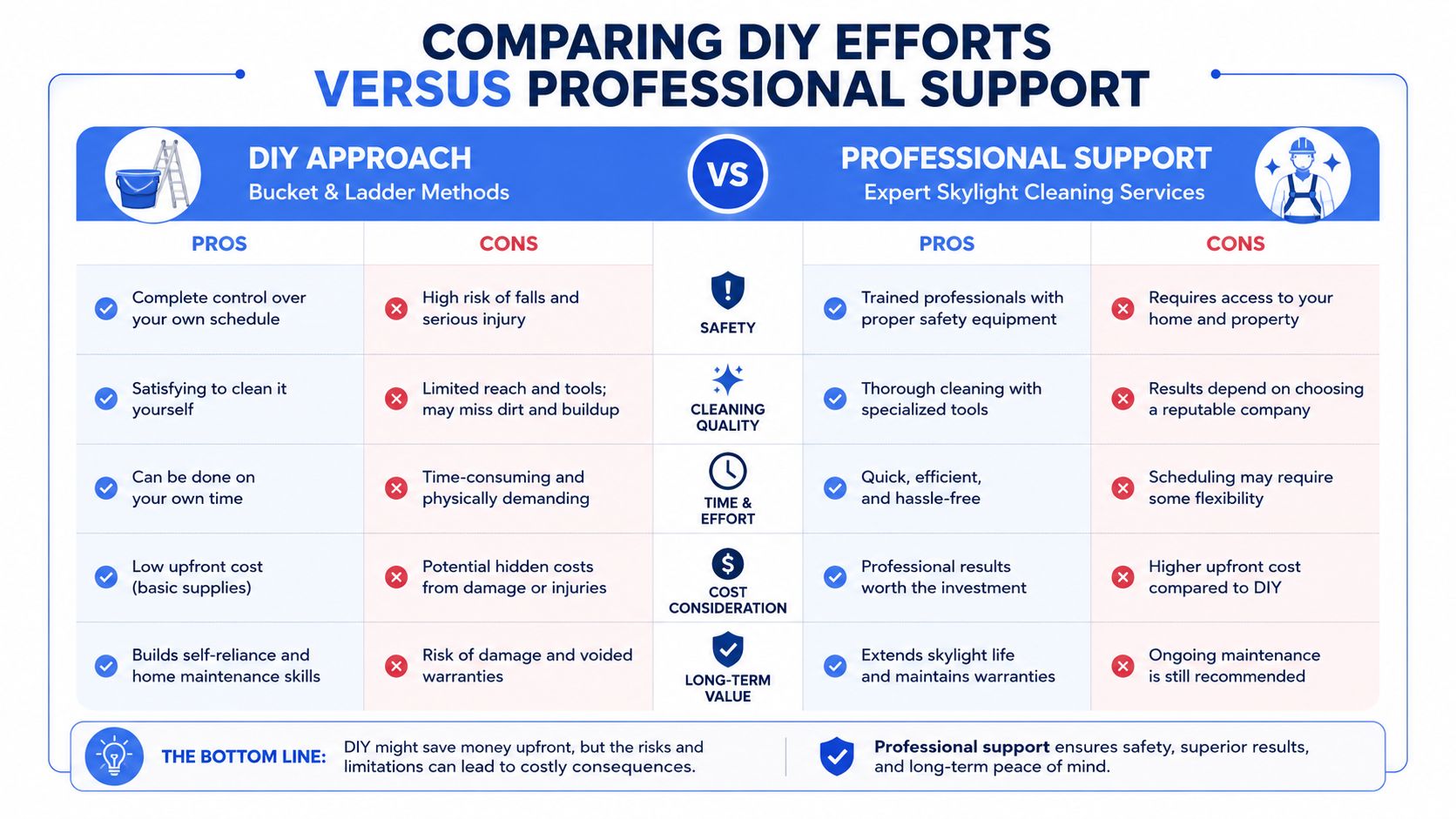
| Approach | Pros | Cons |
|---|---|---|
| DIY | Lower upfront cash outlay, flexible timing | Safety risk, poor access, more streaking, more chance of damage |
| Professional support | Better reach, cleaner finish, safer setup, more consistent results | Higher upfront cost than basic DIY supplies |
The biggest hidden cost of DIY is usually time. The second biggest is equipment, since proper reach tools, safe footing, and cleaning supplies add up fast. If you use the wrong water or leave residue behind, you may end up doing the job twice.
Professional help makes the most sense on rooftops common in Denver and Las Vegas, where higher roofs and harder access can turn a simple job into a safety issue. In those settings, the extra cost often buys better risk control and a cleaner result.
The practical decision is simple. If you can't reach the skylight without balancing yourself on a roof edge, it's already beyond basic homeowner maintenance.

A strong hire starts with the questions you ask before the appointment. You want a provider who can explain method, access, and maintenance in plain language, not someone who only talks about sparkle. The best crews also know that skylight cleaning often overlaps with inspection, because dirt is sometimes a symptom, not the root problem.
That last point matters. Columbia Skylights guidance recommends bundling cleaning with inspection of interior glazing, condensation gutters, and weep holes to prevent recurring leaks or buildup (Columbia Skylights maintenance guidance). If a provider ignores those areas, you may get clean glass but still keep the same streaking or drainage issue.
Local conditions matter too. In Phoenix and Scottsdale, dust and sun exposure can make residue and buildup more noticeable. In Colorado and Nevada, roof pitch and building height often push the work into a more technical category, which is why the service should be scoped carefully instead of priced as a casual add-on.
Good vendor sign: they can tell you what they'll clean, what they'll inspect, and what counts as extra work before the job starts.
A skylight cleaning service does more than brighten a room. It restores overhead light, helps protect the glass from buildup, and gives a trained tech the chance to spot drainage or maintenance issues before they become bigger repairs. The best jobs are not just cosmetic, they're methodical.
The key takeaways are straightforward. Professional crews use two methods, the squeegee method and the pure-water system. Safe service depends on roof access planning, immediate drying, and the kind of inspection that includes glazing, gutters, and weep holes. Pricing varies because access varies, and the quote should reflect that reality.
If your skylights are streaked, hard to reach, or overdue for a maintenance check, get a quote from a crew that understands both cleaning and roof safety. Professional Window Cleaning has served residential, commercial, and high-rise properties since 1999, and it's a sensible next call if you want a no-obligation estimate for Arizona, Colorado, or Nevada.
It depends on access, number of units, and whether the job includes inspection work. A single easy-to-reach skylight is very different from multiple hard-to-access units on a complex roof.
Clear access paths inside the building and move anything fragile away from the area below the skylight. If the service includes roof access, make sure the crew can reach gates, roof hatches, or other entry points without delay.
No. Skylights are part of the broader window-cleaning category, but they usually need more careful access planning and a tighter focus on drainage and residue control. Regular vertical glass is simpler because water doesn't sit on it the same way.
A cosmetic clean focuses on appearance. A maintenance visit also checks the glass condition, nearby drainage paths, and any buildup that could affect performance later. That difference matters most on aging skylights or buildings with prior renovation work.
Yes, if the service includes inspection. Dirt around the frame, streaking that keeps returning, or blocked weep holes can point to a deeper issue that cleaning alone won't solve.
A CTA for Professional Window Cleaning.
Read our blog posts regularly and keep learning.