Care and Maintenance
How to Clean Cement the Right Way Without Damage
Learn how to clean cement on driveways, patios, and sidewalks with safe, effective methods. Step-by-step guide to stains, pressure washing, and prevention.


You pull back the blinds, look toward the morning sun, and see a haze across the glass you thought was clean. Maybe a dust storm passed through, the sprinklers reached a lower window, or nearby construction left a fresh coating. The useful question isn't simply when you last washed the windows. It's what landed on them, whether conditions are safe to clean, and what should happen next.
That's the practical meaning of all seasons window cleaning. A workable plan changes with the contamination and the property, rather than treating every home or building as a spring-cleaning appointment.
A homeowner can reasonably wonder whether a cleaning was worthwhile when the view looks dusty again soon afterward. But a newly dirty window doesn't necessarily mean the previous service failed. It may mean the property needs a different maintenance plan, particularly where exposed glass faces landscaping, traffic, construction, or blowing dust.
The important distinction is between removing today's dirt and managing recurring exposure. A sheltered bedroom window and a storefront facing an active construction site shouldn't automatically receive the same schedule. Neither should an upper pane and a lower pane repeatedly reached by irrigation.

Research on exposed glass identifies particulate matter, soluble salts, and organic material as contributors to transparency loss and haze, with particle accumulation and salt recrystallization involved in urban glass soiling, as described in this research on glass exposure and weathering. That distinction matters because a general film, localized spotting, and debris around the edges aren't the same cleaning problem.
Start with a walk around the property and record what you see:
For a regional comparison, Ventura County Roof Cleaners window cleaning is a useful additional resource to consult when considering how a local service describes window maintenance. Use regional advice as a starting point, not a substitute for assessing your own property.
Practical rule: Schedule around the windows that get dirty first, then decide whether the rest of the building needs the same attention.
Year-round maintenance doesn't mean washing everything whenever the weather changes. It means inspecting consistently, addressing recurring causes, and cleaning the right surfaces before the condition becomes harder to manage.
Professional window cleaning uses two methods: a squeegee or a pure-water system. Ladders, lifts, and rope-descent equipment provide access. They're not additional cleaning methods.
A professional window-cleaning resource describing both approaches explains traditional hand cleaning with a squeegee and purified-water cleaning with a water-fed pole. The useful choice depends on access, the glass condition, and where the work takes place, not on which tool a contractor prefers to sell.
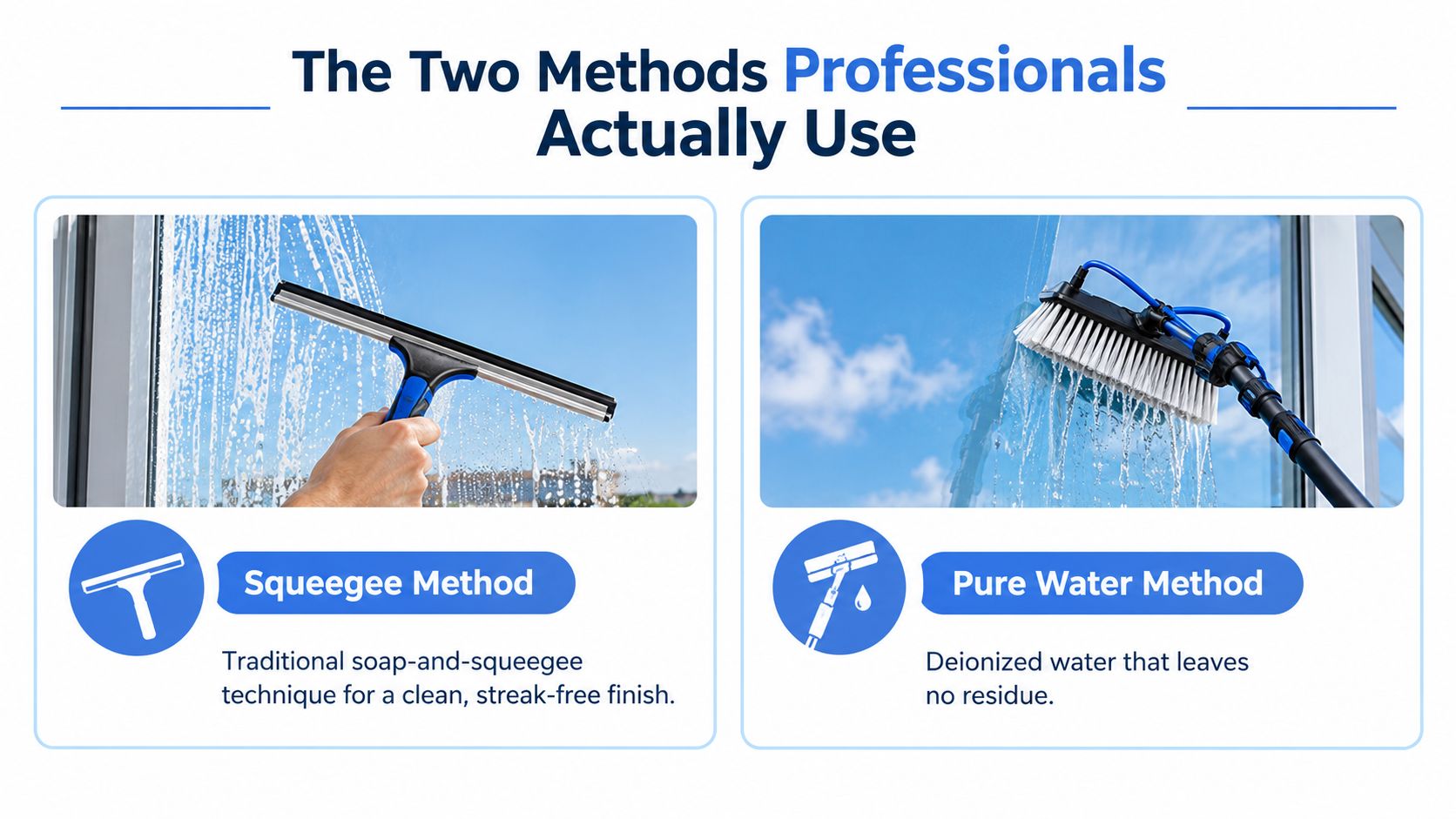
With the squeegee method, the cleaner wets and agitates the surface, then removes the cleaning liquid with the rubber blade. Detailing the edges completes the work. For interiors, this approach lets the technician control water around flooring, furniture, and window finishes.
It's also a practical choice for reachable storefront glass and windows that need close inspection. The trade-off is access: direct hand work requires a safe way to position the cleaner. A squeegee doesn't make an awkward roof edge or an obstructed opening acceptable.
A pure-water system filters dissolved impurities from the water. A water-fed brush loosens dirt from the glass, frames, and sills, followed by a purified final rinse that allows the surface to dry without typical mineral spotting.
That isn't the same as spraying a window with a garden hose. Filtration, agitation, and rinsing all matter. For suitable exterior work, a water-fed pole can provide access from the ground, but the contractor still needs to assess reach, obstructions, and control.
When discussing the method, ask:
A competent quote can specify different methods for different parts of the property. There's no benefit in forcing an interior pane and an exposed upper exterior window into the same workflow.
Weather affects both the condition of the window and the cleaner's ability to work properly. A warm, exposed elevation calls for different job planning than a shaded elevation with wet access surfaces. The calendar alone doesn't tell the crew enough.
The earlier glass research also identifies humidity as a factor in deposit reactivity after contaminants accumulate. For practical scheduling, that means inspecting the residue after changing conditions rather than assuming every mark is fresh, loose dust.

A sensible assessment separates the deposit from the condition of the window itself. Marks concentrated near an irrigation line deserve a different conversation from haze across an entire exposed façade. A defect that remains after cleaning shouldn't automatically receive more scrubbing.
Use these observations to guide the service discussion:
For appointment planning, the guidance on the best temperature to wash outside windows provides a useful starting point. The final decision should still reflect the actual property and conditions on arrival.
Don't promise yourself that washing will resolve every cloudy area. If the location or appearance of a mark suggests a glazing, frame, or seal issue, ask for an assessment before authorizing increasingly aggressive work. Cleaning and repair should remain separate decisions.
Likewise, don't assume a regional label explains every building. A dry-market property may still have persistent irrigation exposure, and a sheltered courtyard may need a different appointment window from the street-facing façade.
A forecast helps schedule the job. The crew's on-site assessment determines whether the job should proceed.
The practical aim is controlled work under suitable conditions, not completing every appointment regardless of what the crew finds.
Use the seasons as inspection prompts, not automatic orders to wash every window. The following frequencies are suggested decision points, not universal service intervals. Adjust them after seeing how quickly the property's most exposed glass becomes objectionable.
In spring, inspect for pollen, dust, and nearby construction activity. Book a baseline cleaning when the glass needs it, then reassess exposed panes as those conditions change. Ask the contractor to identify construction-related residue before treating it as ordinary dirt.
A squeegee suits interior work and reachable glass needing close attention. For suitable exterior elevations, choose pure water when the access assessment supports it. The season doesn't determine the method.
In summer, investigate recurring spotting before repeatedly paying to remove it. Ask whether irrigation reaches the glass and whether the same panes become marked after each watering cycle. Cleaning without addressing that exposure is a maintenance loop, not a complete solution.
After monsoon dust or another significant event, inspect once conditions have settled. There's little practical value in rushing a routine exterior appointment while the same exposure is still active.
Fall planning should distinguish ordinary debris from smoke-related conditions. Check accessible sills and surrounding areas, but let outdoor air-quality guidance determine whether opening windows is appropriate. Exterior washing and ventilation don't have to happen together.
Winter calls for flexibility. From January to July, the biggest operational change may be the usable work window rather than the amount of dirt: access, surface conditions, daylight, and the forecast all influence sequencing. If the crew can't establish safe working conditions, reschedule rather than insist on the original date.
Ask for a service scope that names:
A contractor working across different Western markets should adapt this plan to each site. Copying a summer appointment pattern from one property to another isn't a substitute for checking the exposure.
| Season | Primary Contaminant | Recommended Method | Suggested Frequency |
|---|---|---|---|
| Spring | Pollen and construction dust | Squeegee for interiors; pure water for suitable exteriors | Inspect during active exposure; clean when buildup warrants |
| Summer | Dust and irrigation-related spotting | Either method after assessing deposits and access | Reassess after dust events and recurring overspray |
| Fall | Smoke-related residue and leaf debris | Either method under suitable conditions | Inspect after the event has passed |
| Winter | Retained grime and weather-related residue | Either method when the site is safe | Schedule within suitable weather windows |
A clean window isn't an invitation to open it. During outdoor smoke or heavy particulate pollution, keeping it closed may be the more important maintenance decision.
The EPA's guidance on indoor particulate matter explains that outdoor particles enter through windows, doors, cracks, and other openings, and recommends keeping windows closed when outdoor pollution is high. It also identifies frequent cleaning and appropriate ventilation as ways to reduce indoor dust and pollutants. The distinction is timing: ventilation should respond to outdoor conditions.
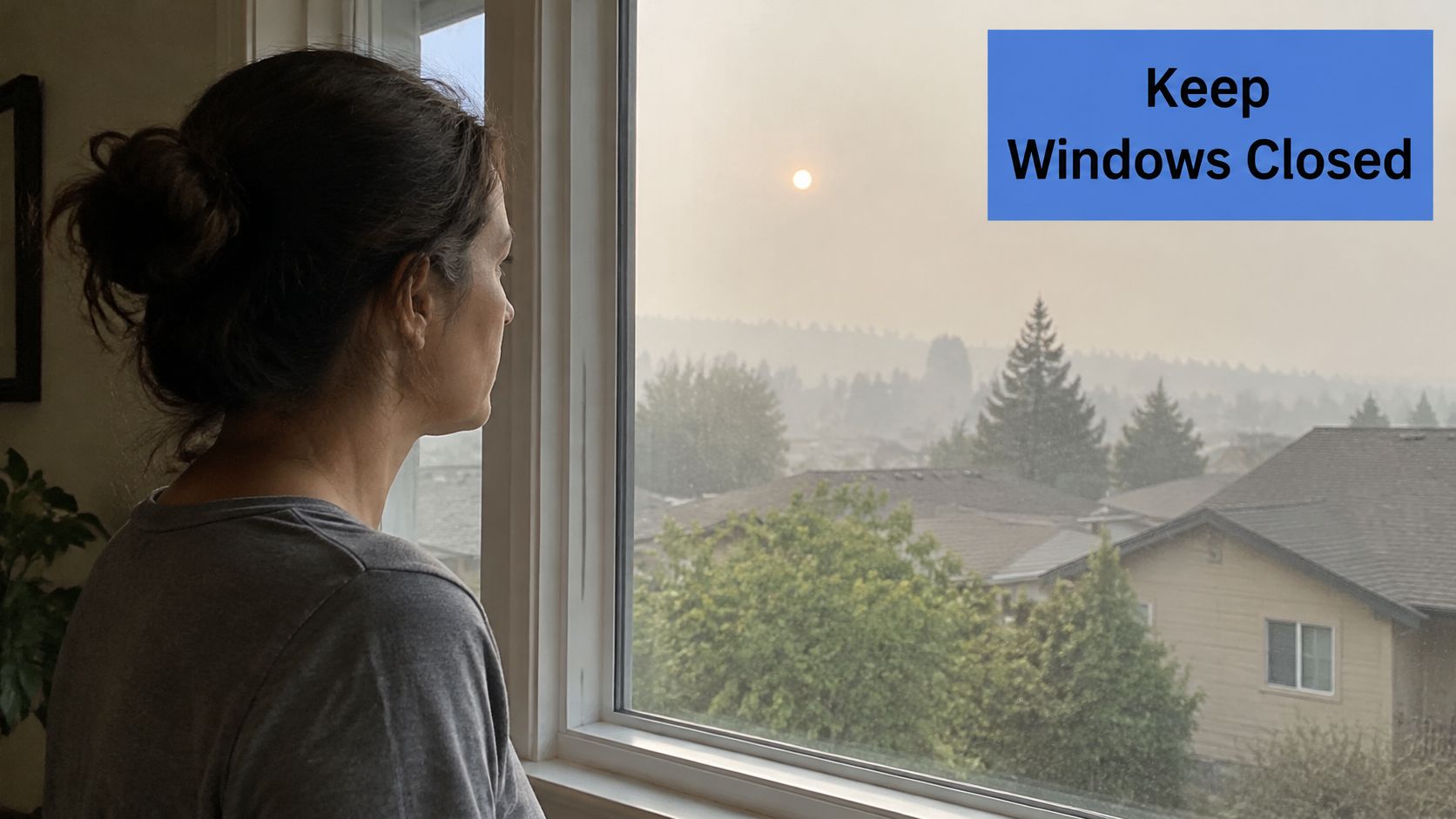
Check local air-quality alerts before opening windows. Consider recent wildfire smoke, blowing dust, and nearby construction rather than judging the air solely by how the view looks.
For a cleaning appointment, communicate the conditions to the contractor and discuss whether exterior work should wait. Once the event has passed and work can proceed safely, assess the glass without assuming the interior needs to be opened to complete the exterior service.
Washing a window removes material from that surface. It doesn't, by itself, remove airborne particles from the room or clean the HVAC system. A spotless view shouldn't be presented as proof that indoor air is clean.
For the same reason, a homeowner shouldn't feel compelled to choose between clear glass and keeping polluted outdoor air out. Those are different decisions, and the service scope should respect that distinction.
Keep the decisions separate: Clean exterior glass when conditions permit. Open windows only when outdoor air conditions and building guidance support it.
This approach is more useful than declaring spring or fall the ideal season for every property. The right date is the one that fits the exposure, the air conditions, and the work requirements.
A seasonal appointment isn't ready just because the glass is dirty and the forecast looks clear. Building access and documentation must be ready too. Property managers and condominium boards shouldn't assume the contractor can resolve missing anchorage records on arrival.
Guidance explaining OSHA window-cleaning requirements identifies building-owner duties for rope-descent anchorages, including identification, testing, certification, and maintenance to support at least 5,000 pounds in every direction for each attached worker. It also describes independent fall-arrest requirements, stabilization provisions, and a generally applicable 300-foot rope-descent limit, subject to specified exceptions.
The access conversation should happen before occupants receive a firm work date. Ask the owner, manager, and contractor to confirm their respective responsibilities in writing.
High-rise window-cleaning safety procedures describe a commonly used sustained-wind stop threshold near 25 mph at working height, while emphasizing the need to validate the limit against equipment, manufacturer instructions, exposure, gusts, and site conditions. That figure is not blanket permission to work whenever the wind is below it.
The suspended worker needs explicit authority to stop. Wind monitoring, communication, equipment inspection, and forecast review belong in the work plan, along with criteria for postponing because of lightning, precipitation, or unsafe wet surfaces.
An owner should expect a straightforward rescheduling conversation when conditions change. Pressuring a crew to finish a façade because residents have been notified is not an acceptable alternative to the contractor's weather controls.
The same applies when documentation is incomplete. Clear skies can't compensate for an unverified anchorage or an unresolved rescue arrangement. A reliable year-round plan includes time to correct those problems before anyone goes over the edge.
The financial case for recurring service is strongest when the scope matches the property's actual needs. It isn't a guaranteed return, and more frequent washing isn't automatically better. The useful comparison is between planned maintenance and repeatedly reacting after visibility, appearance, or access problems become urgent.
For a homeowner, that might mean prioritizing exposed living-room glass while leaving sheltered panes on a less frequent schedule. For a dealership, medical office, or commercial entrance, presentation may justify more frequent attention to customer-facing glass than to less visible elevations. A recurring plan should explain those differences, not hide them inside a standard package.
Ask the contractor to separate routine cleaning, deposit assessment, and any proposed restoration work. Earlier attention may help avoid a more involved cleaning problem, but no responsible quote should promise longer glass life or guaranteed restoration savings without evaluating the window.
The same honesty applies to health claims. The air-quality distinction discussed earlier matters: cleaning glass is a maintenance service, not a replacement for managing indoor particles or building ventilation.
For commercial planning, the guide to how often commercial windows should be cleaned can help frame a conversation about exposure and presentation. Use it to develop a property-specific schedule rather than selecting an interval without an inspection.
High-rise owners also need to budget for preparation. A facilities-industry report citing OSHA records identified 28 window-washing incidents during a five-year period, including 11 deaths. Those reported incidents aren't a measure of the risk of every cleaning job, but they underscore why trained crews, documented procedures, and postponement rules belong in the purchasing decision.
Professional Window Cleaning is one option for residential, commercial, and high-rise work, with over 26 years of operating history, having been founded in 1999, according to its company profile. Experience should still be evaluated alongside the proposed method, access plan, and written scope for your building.
Its published service locations include Scottsdale, Phoenix, Tempe, Chandler, Gilbert, and Flagstaff in Arizona, plus Denver, Boulder, Lakewood, Golden, and Commerce City in Colorado. Its regional service information also supports Nevada coverage in Las Vegas, Henderson, and Summerlin.
Before approving a recurring quote, ask:
The best maintenance agreement is understandable before the first visit. You should know what the crew will do, what may remain, and what will trigger a change to the schedule.
Professional Window Cleaning offers residential, commercial, and high-rise window washing for properties that need a practical year-round maintenance plan. Visit Professional Window Cleaning to request a quote, describe your dust or spotting concerns, and discuss the cleaning method, access requirements, and weather arrangements for your property.
Read our blog posts regularly and keep learning.