Care and Maintenance
Window Cleaning with Pure Water: A Practical Guide
Learn how window cleaning with pure water works, the equipment behind it, real benefits and limits, and what to expect on cost for homes and high-rises.


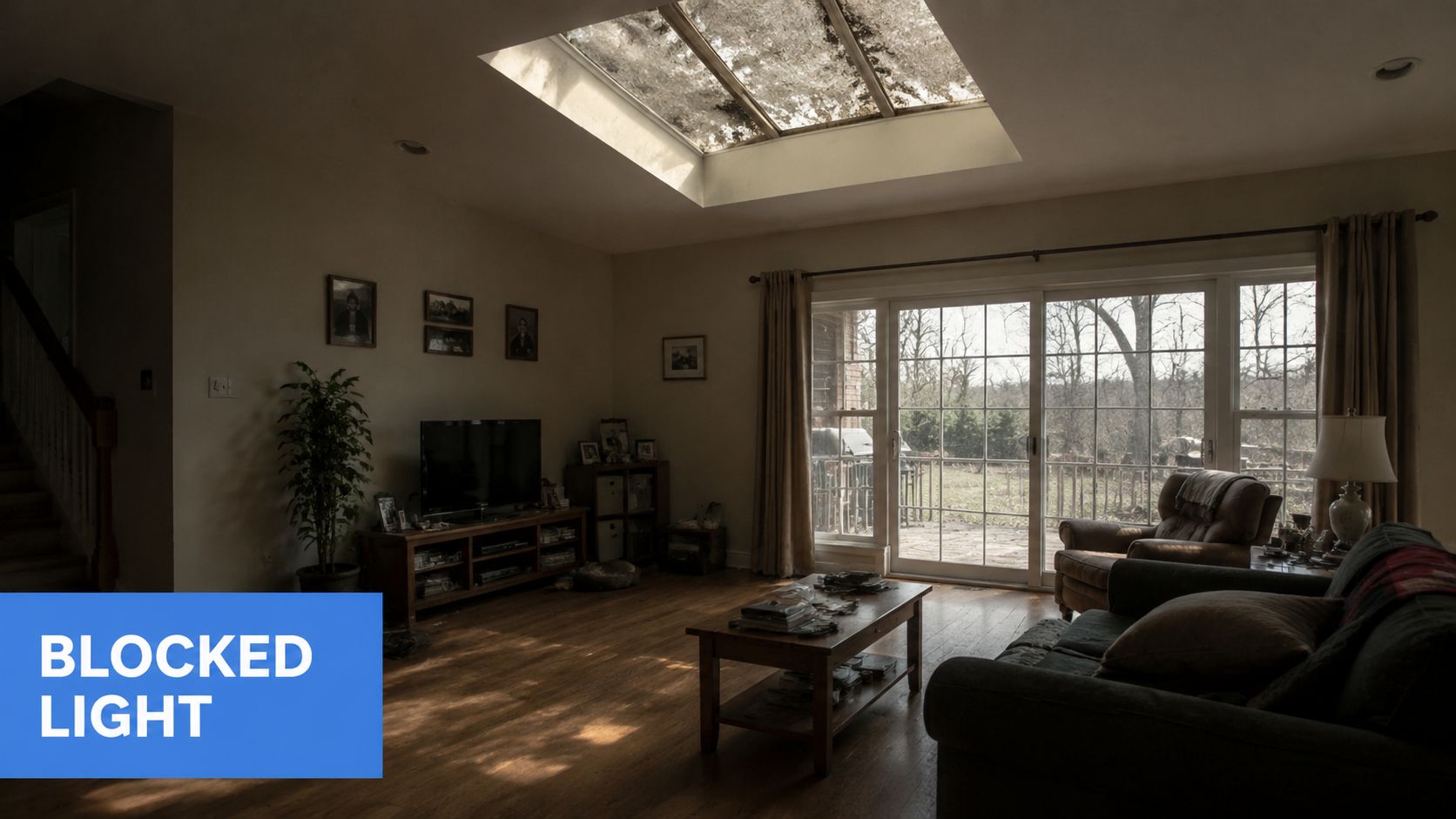
A dirty skylight sneaks up on you. One day the room feels bright, and the next it looks flat, hazy, and a little tired even though the sun is out. Most homeowners notice the light first. The glass isn't always obviously filthy from below, but the dullness shows up in the room.
That's why the question isn't just how do you clean skylights. It's how do you clean them safely, without streaks, and without turning a simple maintenance job into a roof or leak problem. After 26 years in window cleaning, the trade-off is always the same. A clean skylight is worth it. A risky climb or careless rinse isn't.
Skylights take a harder beating than vertical windows. They sit where dust, leaves, water spotting, and roof debris collect more easily, so buildup tends to show up faster on the exterior pane and around the frame. That's why regular cleaning is more than appearance. It's part of keeping the roof envelope in good shape.
When people ask me about skylights, they usually mean the glass. Pros look at the whole opening. The pane matters, but so do the seals, the frame, and the flashing around it. One independent maintenance guide recommends cleaning skylights two times a year, and another says wiping them down two or three times a year keeps them clear and bright. The same guidance says to inspect seals and flashing during each cleaning because even small defects can affect watertight performance, as noted in this skylight cleaning and maintenance checklist.
A dirty skylight creates two problems at once:
That's where a lot of online advice falls short. It treats skylights like regular windows set at a funny angle. They aren't. The height changes the safety plan. The roof changes the access plan. The overhead view changes how obvious streaks become.
Practical rule: If you can't reach the skylight with stable footing and controlled tools, the cleaning method matters less than the access risk.
Professional window cleaners really rely on two methods. One is a squeegee method. The other is a pure-water system. Everything else is basically support gear around those methods.
For a capable homeowner, that's good news because it keeps the process simple. If the skylight is safely reachable, you don't need a truck full of specialty equipment. You need the right day, the right tools, and enough discipline not to rush the drying stage. Most bad results come from doing too much, spraying too much, or trying to force a hard roof job into a DIY project.
A skylight can look close enough to clean from the ground, then turn into a bad job the moment you set a ladder. That marks the decision point. Pros weigh the reward against the access risk before they fill a bucket.
For skylights, the tool choice follows the access plan. If the glass is safely reachable from inside or from a stable ladder position, a squeegee setup gives the cleanest finish and the most control around edges. If reaching the exterior means stretching, walking a slick roof, or working above awkward landscaping, a pole-based pure-water window washing approach is often the smarter option because it reduces close ladder work and leaves less residue behind.
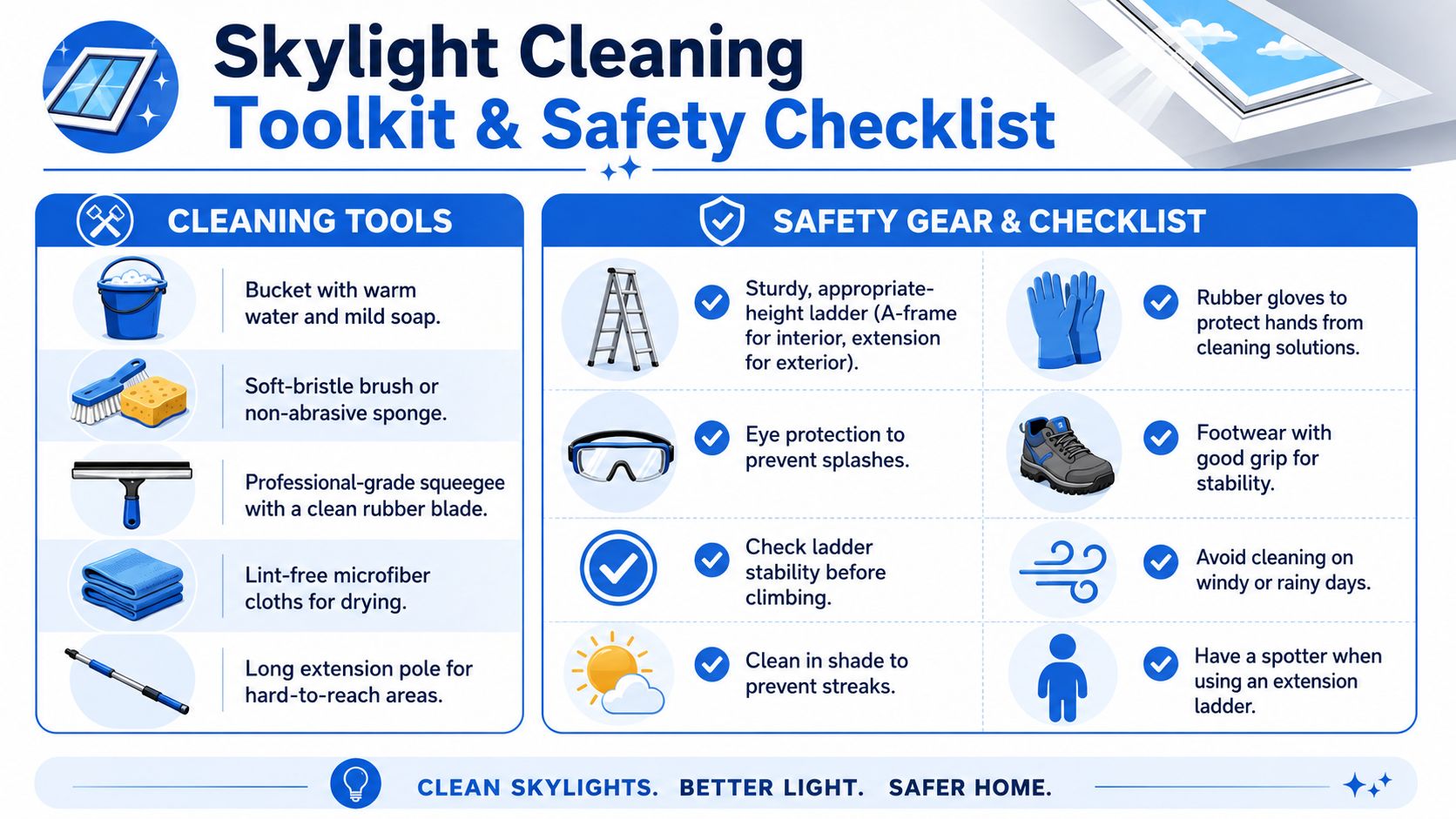
Multiple independent guides also point to the same baseline safety rules: use a stable ladder, work on a dry day, and avoid steep or high roof access unless you have the right equipment and experience. That guidance is laid out clearly in this skylight safety guidance.
| Method | Best use | What you need |
|---|---|---|
| Squeegee cleaning | Interior skylights and exterior panes you can reach with stable footing | Applicator, mild soap solution, quality squeegee, microfiber cloths |
| Pure-water cleaning | Exterior skylights that are safer to clean from the ground or a controlled position with a pole | Water-fed pole, purified water, soft brush |
I would not load up on specialty sprays, abrasive pads, or gimmick tools. Good results usually come from controlled contact, clean rubber, and a drying method that does not leave residue.
Keep the kit simple and job-specific:
Material matters. Glass can handle standard professional methods. Acrylic and polycarbonate scratch more easily and react badly to harsh chemicals, so use lighter pressure and softer tools.
Run through these points before you start:
That last point matters more than any cleaner you buy. A clean skylight is worth doing. It is not worth testing whether you can get away with one sketchy ladder placement.
A skylight on the roof can look like a quick win from the ground. Up close, it becomes a judgment call. The glass may only need a simple wash, but the wrong angle, the wrong tool, or too much water at the frame can turn a cleaning job into a roof leak or a fall hazard.
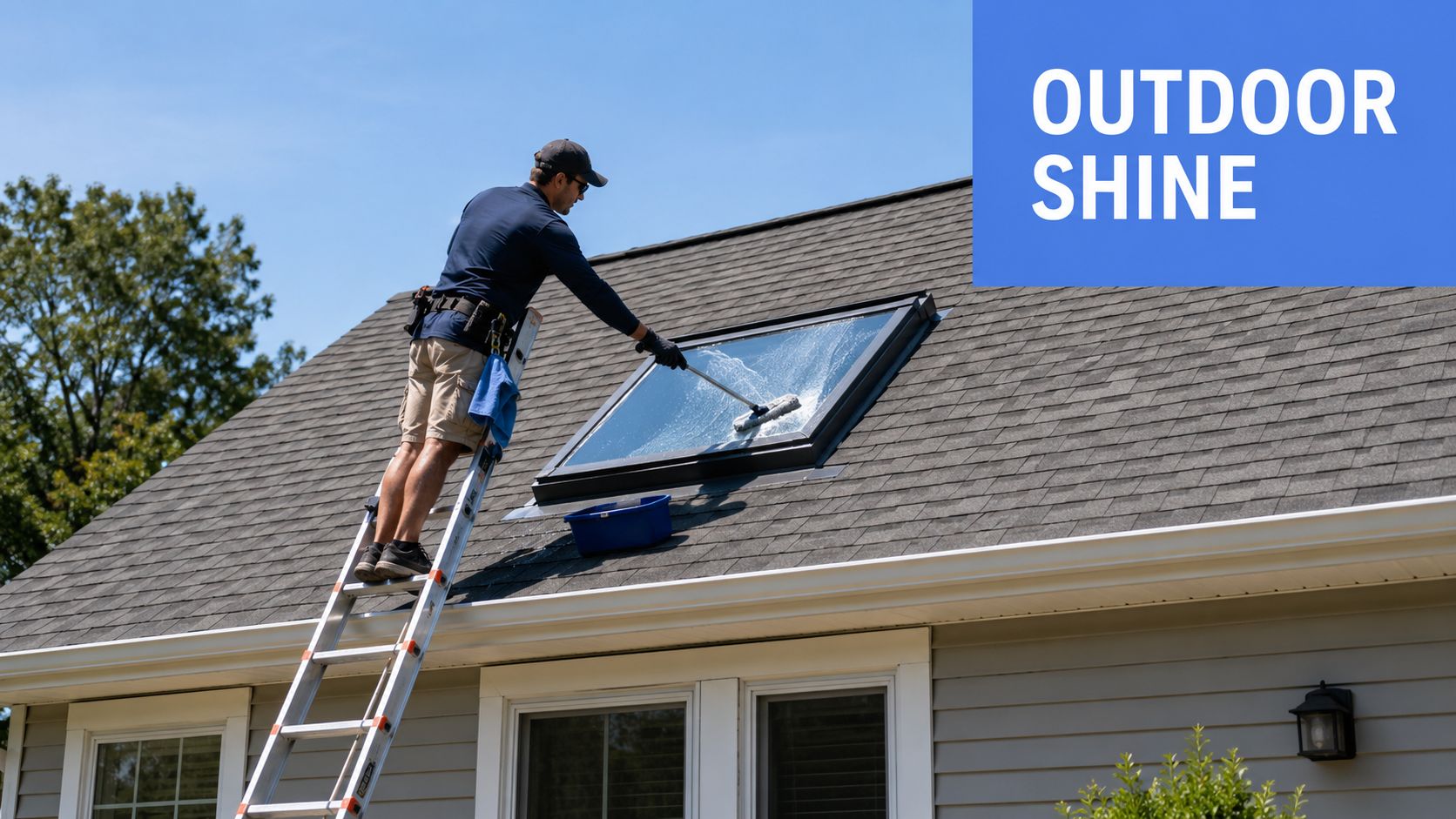
On exterior skylights, the goal is not just getting the glass wet and clear. The goal is controlled cleaning. Pros work in a sequence that limits grit, limits runoff, and gets the pane dry before soap and minerals can bake onto the surface.
Direct sun makes that harder. Cleaning solution flashes off fast, especially on warm glass, so schedule the job for a cool, overcast period or the shaded side of the day if you can.
For standard glass skylights, the cleanest finish usually comes from a scrubber-and-squeegee method. For skylights that are hard to reach safely from the roof, a pole system with purified water can be the better choice because it lets you work from a safer position and rinse without leaving mineral residue. If you want to understand why that method dries spot-free, this guide to pure water window washing methods explains the principle well.
Clear loose debris first
Remove leaves, twigs, and grit before any water touches the pane. Grit under a pad or brush is what causes scratching, especially on acrylic and polycarbonate units.
Wet the surface with control
Apply a mild cleaning solution with a soft washer or microfiber applicator. Use enough to loosen soil, but do not soak the frame and surrounding roofing.
Agitate the dirt, not the glazing
Let the solution do the work. On pollen, traffic film, and tree sap residue, a few extra passes with light pressure are safer than hard scrubbing.
Squeegee the glass immediately
Start at the top and pull down in smooth, overlapping passes. Keep the rubber edge clean. A dirty blade leaves lines no matter how good your soap mix is.
Finish the edges and frame
Wipe remaining water from the perimeter, corners, and lower edge before it dries. That is where drips collect and where many homeowners mistake runoff marks for failed cleaning.
One sentence rule. Never let soapy water sit on exterior skylight glass and air dry.
For bird droppings or stuck organic buildup, soak the spot first and lift it off gently. Dry scraping is how people score the surface or drag grit across coatings. If that is the main problem, this resource on DIY and expert bird poop cleaning is useful.
A short visual can help if you want to see exterior technique in action:
A few shortcuts cause more damage than the dirt ever would.
If you can reach the skylight from a stable ladder position or a water-fed pole with both feet planted safely, a capable homeowner can often handle the work. If the only way to do it is to stand on a steep roof, stretch sideways, or guess at the condition of old flashing, the professional answer is simple. Pass on the reward and avoid the risk.
Interior skylight cleaning is safer than exterior work, but it's often more annoying. The challenge isn't roof access. It's controlling drips over floors, furniture, drywall, and trim while working overhead.
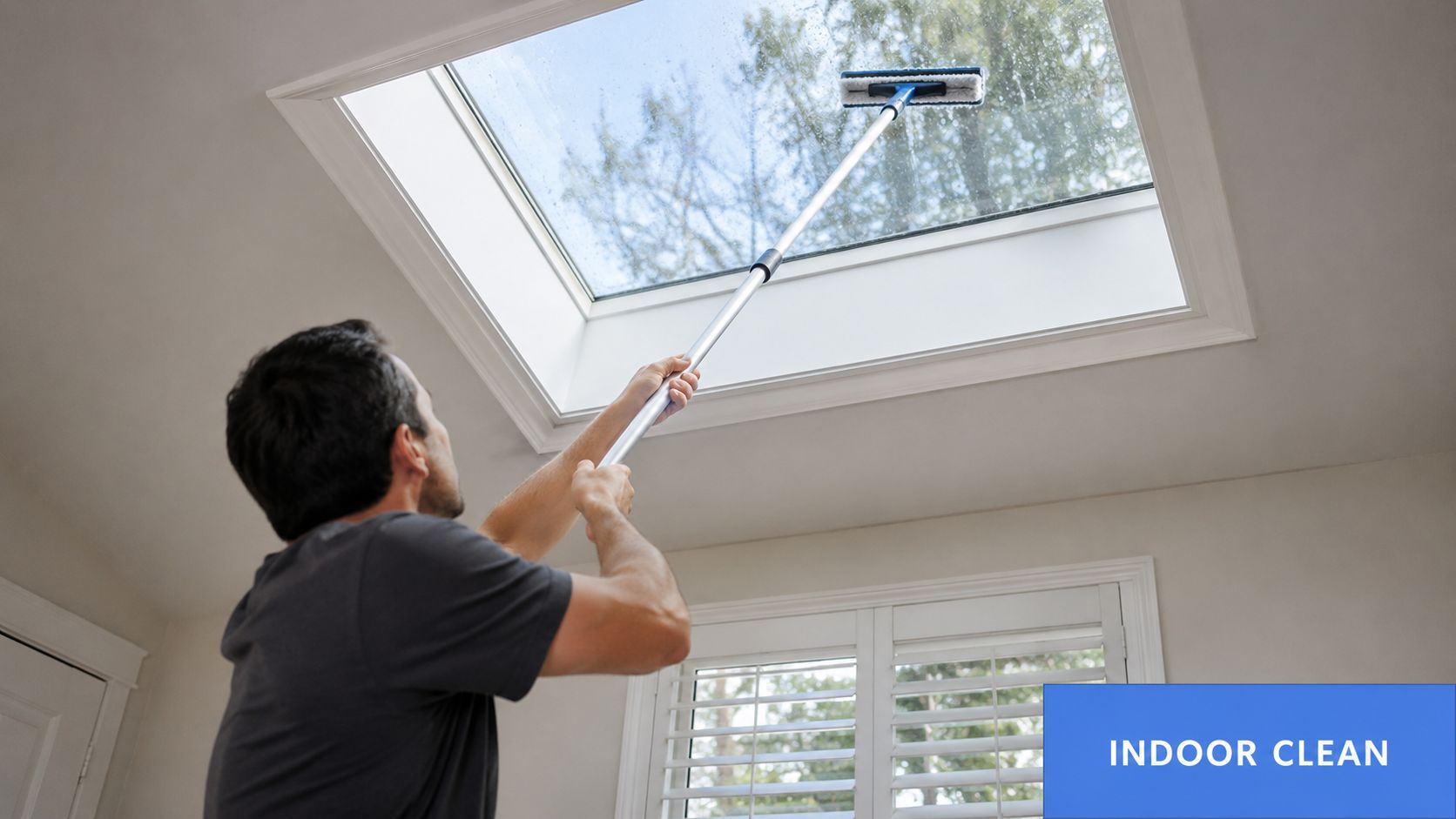
Take a minute to protect the space below:
That last point matters. Homeowners tend to over-wet interior glass because it feels safer than exterior washing. On an overhead pane, extra liquid turns into runs down the frame, drips on trim, and spots on the floor.
Dust the frame and edges first. If you skip that step, dirt can wash down onto the pane after you think you're done. Then apply a light amount of solution with a damp microfiber pad, sponge, or pole-mounted applicator.
After that, use a squeegee if the shape and reach allow it. If the skylight is awkwardly placed, a microfiber pad followed by a dry cloth can work, but the finish needs a careful final pass. Keep your strokes controlled and work in smaller sections so the solution doesn't run ahead of you.
Clean the frame first, then the glass. Dirty edges are one of the easiest ways to re-soil a freshly cleaned skylight.
Interior cleaning is also your best chance to notice warning signs that have nothing to do with dirt.
Look for these issues:
If you see moisture trapped between panes, cleaning won't solve it. If you see repeated staining around the opening, the skylight may need repair attention rather than another round of glass cleaning.
The easiest skylight to clean is the one that never gets heavily neglected. Regular maintenance keeps debris from baking on, keeps water spots from building in layers, and gives you a scheduled moment to inspect the surrounding roof components.
Authoritative guidance recommends cleaning skylights two times a year and inspecting seals and flashing for cracks or leaks during each cleaning because this is part of routine roof-envelope maintenance, as explained in this guide on how often skylights should be cleaned.
A simple twice-yearly routine works well for most homes:
| Time | What to check |
|---|---|
| First seasonal cleaning | Glass clarity, frame dirt, drainage paths, visible seal condition |
| Second seasonal cleaning | Water spotting, debris around flashing, signs of cracks or leaks |
If your home sits near trees, gets frequent dust, or takes a lot of storm residue, you may need touch-ups between those cleanings. Keep those touch-ups light. It's easier on the glass and easier on you.
Some skylight issues need a different response than routine film.
One maintenance gap I see often is forgetting the roof side of the system. Cleaning glass without checking water flow around the skylight misses half the job. Keeping gutters and flashing areas clear helps water move around the opening instead of backing up near it.
Clean skylights like part of the roof system, not just a patch of glass.
If you're dealing with active leaking concerns and want a repair-focused read, this guide for Pacific Northwest homeowners gives useful context on what leak symptoms can look like in wetter climates.
You climb up for what looks like a quick cleanup, then the job changes once you see the roof pitch, the distance to the skylight, and the buildup baked onto the glass. That is the point to make the same call a pro makes. Is the extra light worth the fall risk, the chance of breaking a seal, or rinse water getting where it should not?
A safe DIY skylight cleaning job has two things in your favor. Easy access and light to moderate soil. If either one drops out, the risk goes up fast. A reachable interior pane is one thing. A second-story exterior skylight on a steep roof is a different trade entirely.
General homeowner guidance also points people toward professional help when skylights are too high or difficult to reach, including this article on cleaning skylights without a ladder. That lines up with how experienced window cleaners judge the work in the field.
Call a pro if any of these apply:
Professionals do not just bring taller ladders. They bring a method. On some skylights, a hand-cleaning approach with a washer and squeegee gives the cleanest finish. On others, purified water and a pole let the cleaner stay off the roof and rinse the glass without spotting. The right choice depends on access, glass condition, sun exposure, and whether the frame details can handle water safely.
Repair work is a separate lane. If a roofer is addressing flashing or sealing details, products like bulk butyl tape supply may be part of that work. That does not solve a dirty skylight. It tells you the job has moved beyond cleaning and into repair.
In dry, high-mineral areas such as Las Vegas and Phoenix, spotting can be stubborn even when the glass is not badly soiled. In Scottsdale and Denver, as noted earlier, access and exposure still matter more than the city name. The rule stays the same. If you cannot clean it safely and leave it truly clear, hire it out.
If your skylights need a professional touch, Professional Window Cleaning offers method-based service for residential, commercial, and hard-to-reach glass. If you are unsure whether your skylight is a DIY job or a service call, describe the access, height, and glass condition first. That is usually enough to sort out the right next step.
Read our blog posts regularly and keep learning.