Care and Maintenance
How to Clean Cement the Right Way Without Damage
Learn how to clean cement on driveways, patios, and sidewalks with safe, effective methods. Step-by-step guide to stains, pressure washing, and prevention.


You spray the glass, catch that sharp cleaner smell, and then wonder whether the haze on the pane is residue or just the fumes bothering you. That's where a lot of people are right now. They want clear windows, not a chemistry experiment in the kitchen, nursery, clinic, or condo hallway.
A good non toxic window cleaner solves two problems at once. It cuts grime without loading the air with ammonia and fragrance, and it avoids the streaks that make people think safer products “don't work.” In markets we serve and know well, including Flagstaff AZ, Las Vegas NV, Phoenix AZ, Denver CO, Scottsdale AZ, Tempe AZ, Chandler AZ, and Gilbert AZ, that matters even more because dust, hard water, and sun expose every weakness in a cleaning method fast.
Individuals switch window cleaners for one of two reasons. They're tired of the smell, or they're tired of wiping twice.
The health side isn't minor. A 10-country study summarized by EWG found that weekly use of spray cleaners increases asthma risk by 30% to 50%, while ammonia-free, non-toxic window cleaners avoid the VOCs and terpenes tied to respiratory irritation. That changes the conversation for homes with kids, medical offices, and high-rise condos where people live around cleaned surfaces all day.
A lot of conventional glass cleaners rely on ammonia and synthetic fragrance. Even when the glass looks clean for a minute, the trade-off can be indoor air irritation and that familiar sharp smell that lingers after the job is done.
The better non toxic window cleaner formulas use plant-based ingredients and a controlled amount of liquid, so you're not flooding the pane and pushing dirty runoff into seals, frames, and sills. If you're already rethinking other household products, Fillaree's guide to eco-friendly cleaning solutions is a useful place to compare safer options beyond glass.
Clean glass should not require you to air out the room afterward.
Safer chemistry helps, but results still depend on how you apply it. The best non toxic window cleaner can still leave marks if you overspray, use the wrong cloth, or clean hot glass in direct sun.
For a broader look at lower-impact methods, this guide to eco-friendly window cleaning is worth reading before you mix your first bottle.
You mix a quick bottle, spray the whole pane, and the glass looks worse ten minutes later. That usually comes down to three problems. Too much acid, too much liquid, or a recipe that ignores coatings and hidden fragrance additives.
A safer DIY cleaner starts with a narrow job. One mix for routine film and fingerprints. Another for delicate glass where you do not know exactly what coating, tint, or factory treatment is on the surface.
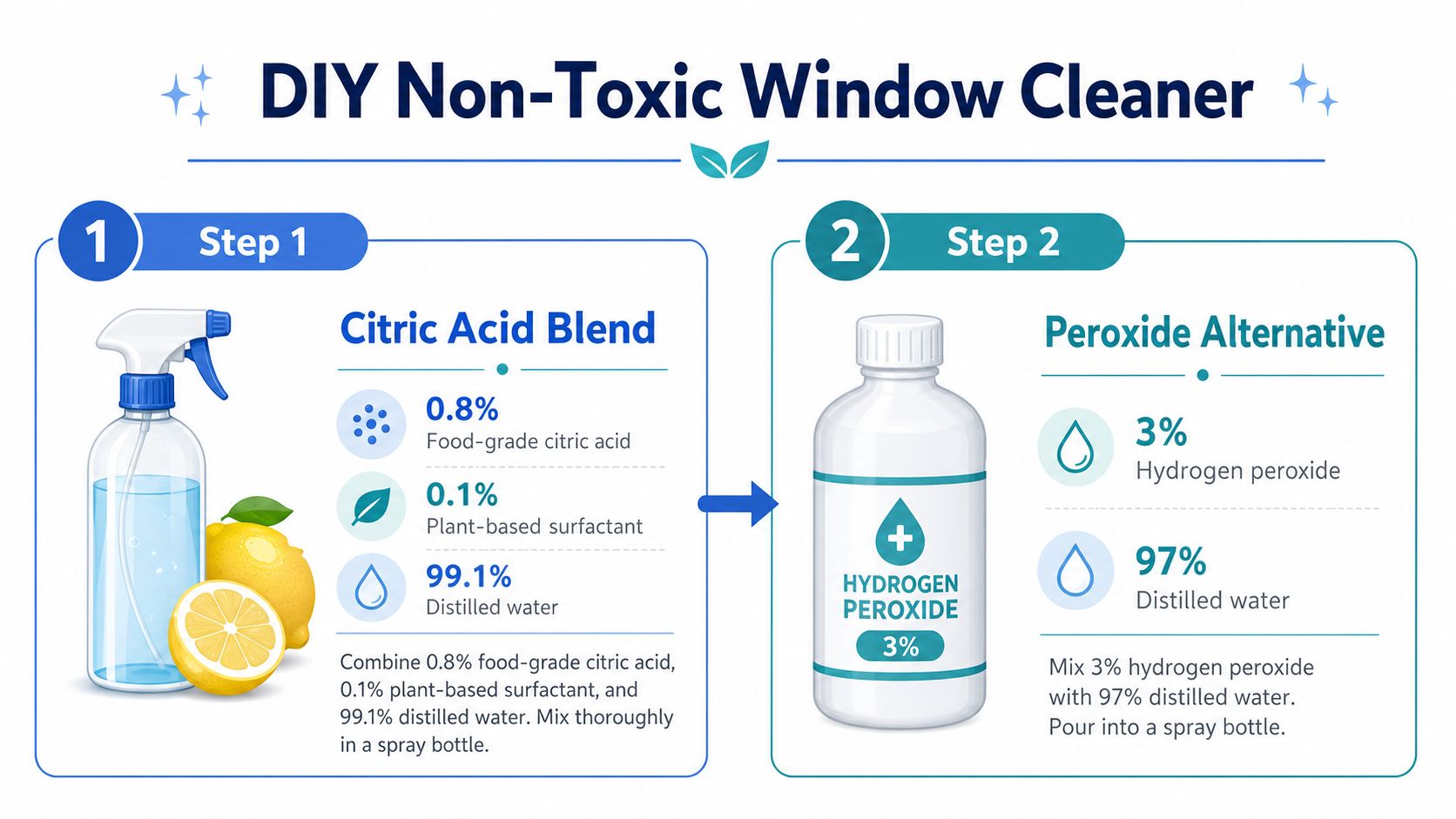
For standard interior glass with light mineral haze, kitchen grease, or fingerprints, use a measured citric-acid mix instead of the usual vinegar guesswork.
Mix:
Stir gently and pour it into a clean spray bottle. Use just enough to dampen the glass or, better yet, mist the cloth first. If you need a quick reference on why purified water leaves fewer deposits behind, this guide on cleaning windows with distilled water is useful.
Best use: everyday grime, fingerprints, light hard-water film on uncoated or confirmed compatible glass.
Avoid it on: unknown specialty coatings, aftermarket window film, and any pane where the manufacturer warns against acidic cleaners.
Citric acid cuts film well, but stronger is not better. On delicate surfaces, extra acid raises the risk of haze or finish damage without giving you a cleaner result.
If the pane has Low-E glass, aftermarket tint, acrylic panels, or a coating you cannot verify, start with the mildest workable mix.
Mix:
This is the better starting point for light smudges and fresh grime. It does not have the acid load of vinegar or citric blends, which matters on uncertain surfaces.
Skip essential oils here. A lot of DIY guides add lemon, orange, or lavender for smell, but fragrance is not harmless by default. Citrus oils and other scented additives can leave residue, trigger irritation, and create compatibility problems on films and coated glass. If the goal is non toxic window cleaner, fragrance-free usually gets you closer than plant-scented.
A quick visual walkthrough helps if you prefer to see application technique before mixing your bottle.
Bad results usually come from application, not the bottle.
The working rule is simple. Use less liquid than you think, keep the formula unscented, and test first if the surface finish is not obvious.
There's a lot of noise online about “pro methods,” but the trade is simpler than the internet makes it sound. Professional window cleaning uses only two methods: a squeegee with cleaning solution or a pure-water system with filtered water. That's the standard outlined by Professional Window Cleaning's explanation of window washing systems.

Professional Window Cleaning has been cleaning windows for over 26 years, and that longevity lines up with what experienced crews know firsthand. Fancy gadgets come and go. These two systems stay.
Here's the practical comparison.
| Method | Best use | Main advantage | Main drawback |
|---|---|---|---|
| Traditional squeegee | Interior glass, detailed work, first-time deep cleans | Fast control over soap, edges, and spotting | Requires good hand technique |
| Pure-water system | Exterior glass, upper floors, routine maintenance | No soap residue, efficient on larger runs | Water quality must be right |
With a squeegee, stroke overlap matters. The National Window Cleaning Authority's technique guide recommends overlapping each pass by about one inch, and using a fluid fanning or S-shaped motion on larger panes to clear the surface in one continuous move.
Pure water isn't just tap water in a tank. For that method to leave glass spotless, the water must test below 0.07 TDS, according to Checkatrade's explanation of pure-water system requirements. That's why crews use DI vessels and resin in soft-water conditions, and reverse osmosis systems where water is harder.
For homeowners curious about that approach, this overview of cleaning with distilled water helps connect the chemistry to the result you see on the pane.
The pure-water method fails fast when the filtration is wrong. Spots after drying usually mean the water wasn't pure enough, not that the pole brush was the problem.
Not every mark on glass needs the same fix. A fingerprint, a hard-water ring, and bird droppings may all look like “dirty windows,” but they respond differently. That's why one spray bottle can seem unreliable when the issue is a mismatch between stain and method.
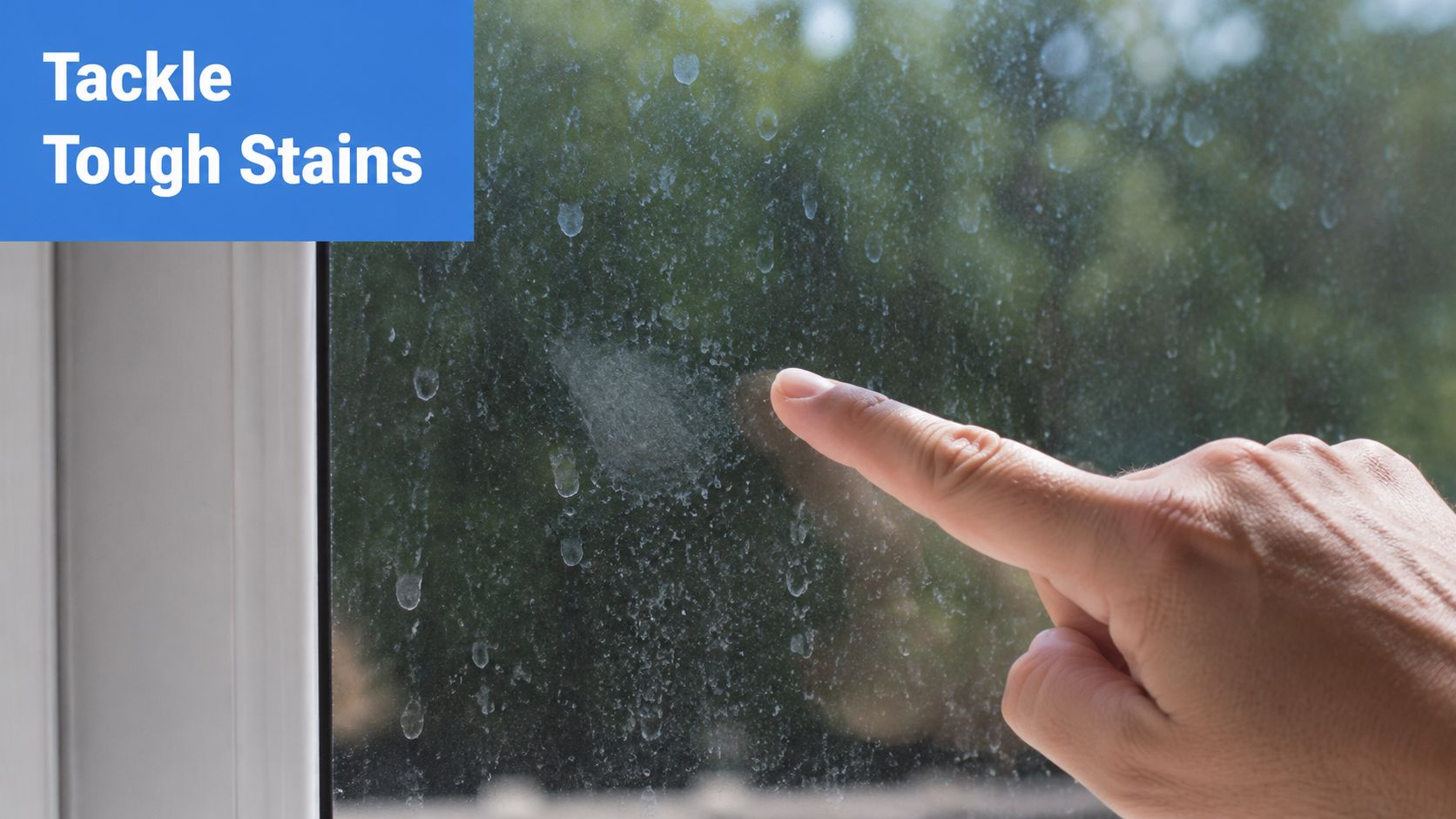
The encouraging part is that eco-friendly products aren't automatically weaker. Green Llama's overview of eco-friendly glass cleaners versus conventional products notes that eco-friendly glass cleaners match conventional performance when applied correctly, using plant-based alcohols and surfactants for streak-free clarity without VOC fumes.
Keep the setup lean:
If stains keep coming back in the same pattern, the problem may be sprinkler spray, screen runoff, or oxidation from the frame rather than the glass itself.
You spray a simple homemade cleaner on one window, and it looks fine. You use that same mix on a newer pane with a Low-E coating or a tinted film, and six months later the glass starts showing haze, drag marks, or edge damage that will not wipe away. That is a common DIY mistake.
Surface compatibility decides whether a non toxic window cleaner stays safe after repeated use. The risk is not just the glass. Frames, edge seals, films, and factory coatings can all react differently to acids, solvents, and heavy fragrance additives.
Vinegar is the product that gets overused here. It can work on plain, uncoated glass, but it is a poor default for modern windows with specialty coatings. If the pane has Low-E treatment, anti-reflective coating, or aftermarket film, use a milder coating-safe cleaner and keep dwell time short. Spray lightly, wipe promptly, and dry the edges instead of letting liquid sit.
Damage usually shows up slowly. Repeated cleaning with the wrong chemistry can dull coated surfaces, leave uneven drag, or weaken film edges. Heat makes it worse. A cleaner that seems harmless in a cool bathroom can behave very differently on sun-warmed west-facing glass.
I see two trouble spots over and over. First, homeowners assume all clear glass is the same. Second, they focus on the pane and forget the rest of the assembly. Painted wood can soften. Aluminum can spot. Rubber seals can hold residue.
If you are not sure what you are cleaning, treat it like coated glass until you confirm otherwise.
Use this quick check before you commit to any cleaner:
| Surface type | Safer approach |
|---|---|
| Standard uncoated glass | Mild fragrance-free glass cleaner or a simple soap-alcohol mix used sparingly |
| Low-E or anti-reflective glass | Coating-safe cleaner, light application, immediate wipe-off |
| Tinted film | Ammonia-free cleaner and soft microfiber only |
| Mixed-material frames and seals | Control runoff and wipe edges dry right away |
A cleaner can be plant-based and still be a bad choice indoors if it is heavily scented. Fragrance is the part many DIY guides ignore. It does not improve cleaning performance, and it can leave residue on glass, react poorly with sensitive occupants, or create air-quality problems in tight spaces.
Consumer Reports' guidance on healthier cleaning products notes that fragrance ingredients may not be fully disclosed and can include components linked to respiratory irritation, VOC exposure, endocrine disruption, and developmental toxicity concerns. That matters more than people think in nurseries, bedrooms, clinics, and anywhere windows stay shut for long stretches.
Fragrance-free is the safer default. It is easier on indoor air, easier on sensitive users, and less likely to leave a film that you end up polishing twice.
DIY works well for routine interior glass, reachable exterior panes, and light buildup. It stops making sense when the job adds height, access risk, or specialty surfaces.

Call in help when the work includes:
There's also a quality threshold. If you're cleaning commercial storefronts, medical offices, car dealerships, or high-rise condominiums, consistency matters more than whether a single pane “looks decent” from ten feet away.
For exterior work in particular, the method matters. The trade standard is still the same two-method system discussed earlier: squeegee or pure water. Once the scope gets large, filtered-water setups, proper poles, and controlled detailing save time and reduce the odds of damage.
A strong non toxic window cleaner routine is less about trendy ingredients and more about matching the cleaner, cloth, and method to the glass in front of you. Use coating-safe formulas. Skip heavy fragrance. Don't overspray. Dry with microfiber while the surface is still workable.
If you want to test the difference for yourself, mix a small batch, clean one problem window carefully, and compare it to your usual spray. The result usually comes down to technique more than hype.
If your windows are high, heavily spotted, coated, or too numerous to handle efficiently, Professional Window Cleaning is the smart next call. They provide residential, commercial, and high-rise window cleaning, and they've been in business since 1999. For property managers, homeowners, medical offices, and commercial buildings that need reliable results without guesswork, schedule a consultation and get the right method for the glass you have.
Read our blog posts regularly and keep learning.