Care and Maintenance
Casement Window Cleaning the Right Way at Home
Learn safe, streak-free casement window cleaning techniques. Covers tools, prep, hardware care, frequency, and when to call a pro.


Let’s get straight to it: No, you should never pressure wash your windows.
It might seem like a genius shortcut to blast away stubborn dirt, but the reality is that a high-pressure stream will almost certainly cause expensive, irreversible damage. It’s a high-risk gamble that any seasoned window cleaning professional would tell you to avoid at all costs.
We get it. Tackling dirty windows feels like a chore, and the idea of using a power washer to get the job done in minutes is tempting. But this approach almost always ends in disaster, turning a simple cleaning task into a costly repair project.
The intense, focused force from a pressure washer is just not meant for something as delicate as window glass, seals, and frames. Instead of a quick fix, you’re looking at serious consequences that can compromise your home’s structural integrity. It’s precisely why our teams at Professional Window Cleaning, with over 26 years of experience in cities like Las Vegas and Phoenix, will never use this method.
Before you even think about aiming that high-pressure nozzle at your glass, it’s critical to understand what’s on the line. The potential for damage isn't a small "what if"—it's a very real threat to your window assembly and even the walls around it.
The biggest mistake you can ever make is hosing your windows down with high pressure. The force can easily break window seals, leading to moisture between the panes, and can even shatter the glass outright, creating both a safety hazard and a significant expense.
To get that perfect, flawless shine, professionals rely on only two proven, safe methods: the classic squeegee technique and modern pure-water systems. Both clean your windows beautifully without subjecting them to the destructive force of a pressure washer.
As we’ll explore, these professional methods are the only truly safe and effective choice for maintaining your home's windows, whether you're in Denver or sunny Scottsdale.
When you weigh the options, the choice becomes clear. The quick gratification of pressure washing is completely overshadowed by the potential for long-term damage and high repair costs.
Ultimately, while the power of a pressure washer is tempting, it’s a tool built for durable surfaces like concrete, not delicate glass. Sticking with professional, time-tested methods ensures your windows not only look great but also remain in excellent condition for years to come.
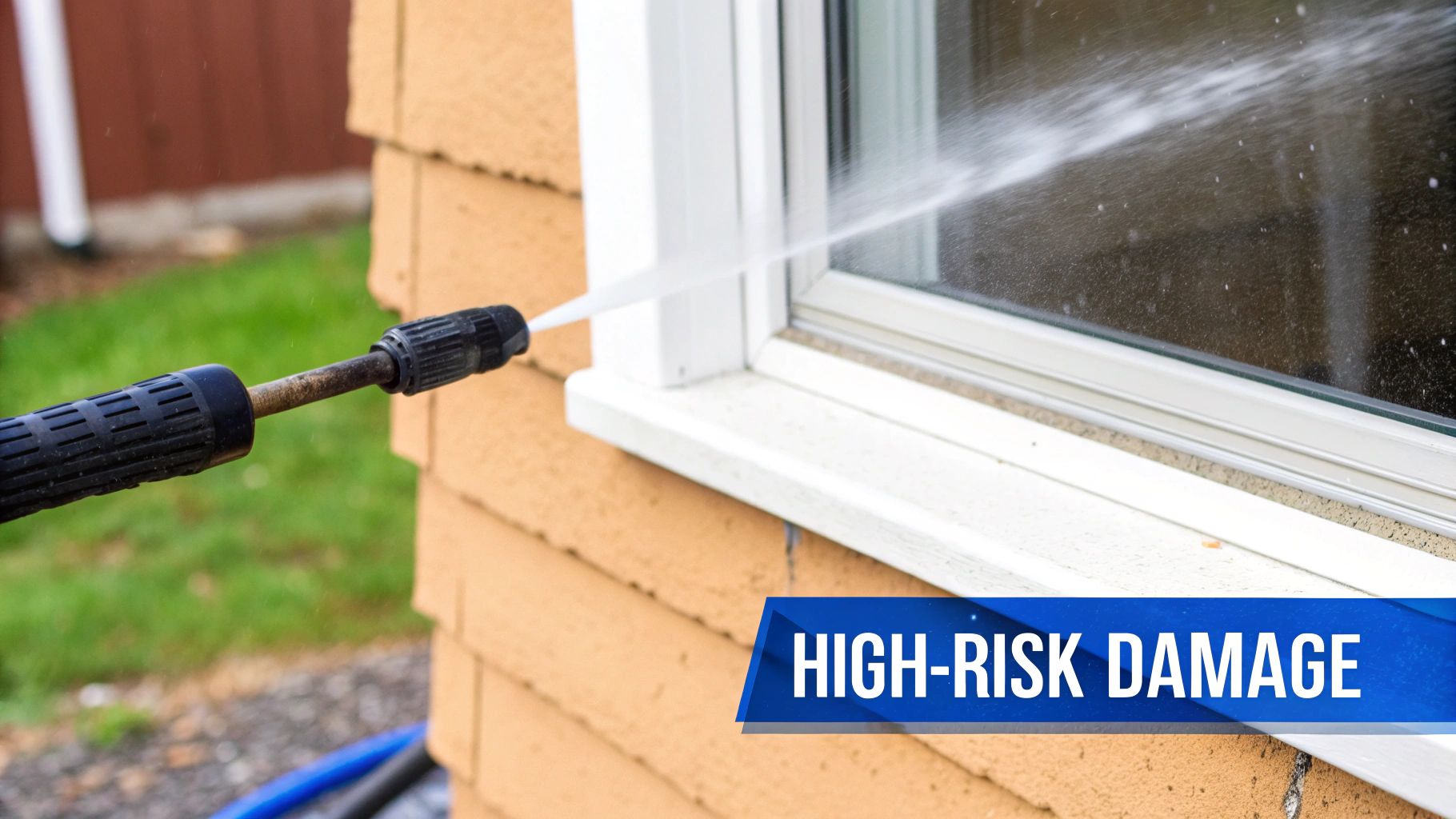
The appeal of a pressure washer is undeniable. It promises speed, power, and a satisfyingly clean finish. But when you aim that raw force at something as fragile as a window, you're not just cleaning—you're rolling the dice on some serious damage.
The most obvious risk is shattered glass. It’s an immediate, dangerous, and all-too-common outcome of applying too much force. The real dangers, however, are often sneakier and far more expensive.
A focused jet of water is powerful enough to slice right through the delicate rubber or silicone seals holding your window panes together. Once that seal is broken, moisture creeps into the gap between the panes of a double- or triple-pane window. The result is what we in the industry call a 'blown seal,' leaving your window permanently foggy and streaked.
This isn’t just a cosmetic problem. A blown seal completely destroys a window's insulating properties, which means higher energy bills and a less comfortable home. It's an issue we see all the time in places like Las Vegas, NV and Phoenix, AZ, where a quick cleaning attempt spirals into a costly window replacement project.
It’s not just the glass and seals at risk. The window frame and even the structure of your house can suffer. That intense spray can cause significant damage that builds up over time, turning a quick DIY job into a major repair headache.
Here’s a quick look at the collateral damage:
Using a pressure washer on windows is like trying to perform surgery with a sledgehammer. The goal might be simple—remove dirt—but the tool is far too powerful and clumsy for such a delicate task. You’re practically guaranteed to cause collateral damage.
The financial risks here are huge. In major markets like Scottsdale, AZ and Denver, CO, where Professional Window Cleaning has operated for over 26 years, we're seeing more and more homeowners shy away from DIY pressure washing. Why? Because 22% report seal failures after trying it themselves.
With the residential cleaning service market projected to hit $15.2 billion by 2025, it's clear people are opting for safe, professional solutions. For high-rise condo owners, the stats are even more frightening: pressure at 2,000 PSI can etch low-E coatings, slashing energy efficiency by up to 35%. The average replacement cost? A staggering $1,200 per pane.
When you're dealing with glass, knowing its limits is critical. Consulting a specialized glass company can offer deeper insight into why certain pressures cause such irreversible harm. At the end of the day, the pros at Professional Window Cleaning stick to the ONLY two proven methods—the classic squeegee and modern pure-water systems. They guarantee a perfect shine without risking a five-thousand-dollar mistake.
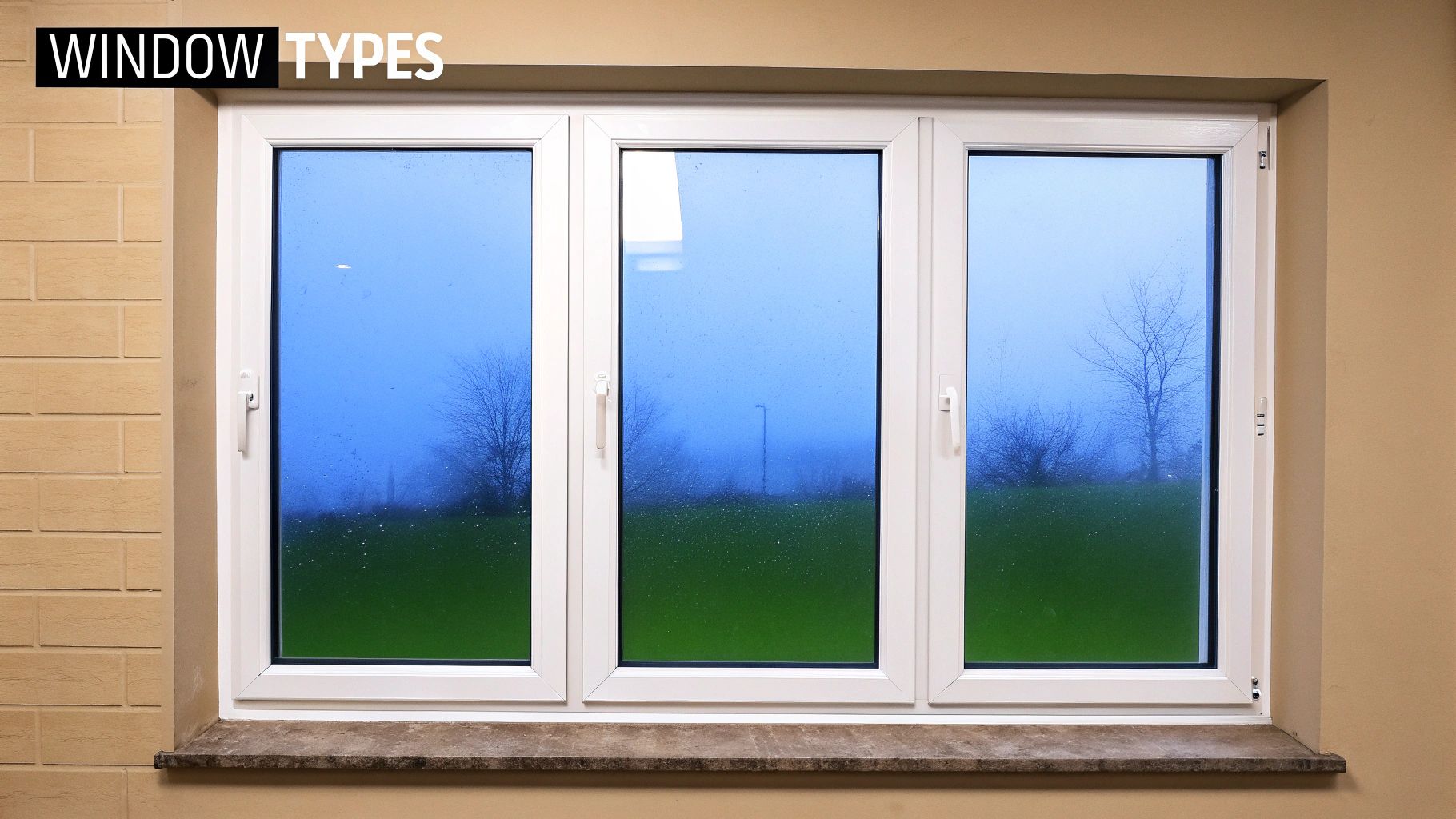
Not all windows are created equal, and their ability to stand up to the brute force of a pressure washer varies wildly. The first step in understanding why a gentle touch is always the right answer is knowing what kind of windows you actually have. The materials, construction, and any special features all create unique weak spots that high-pressure water loves to exploit.
From the classic wooden frames on a historic home to the high-tech coated glass in a new build, each type comes with its own set of risks. A vinyl frame might crack right down the middle, while a wooden one can splinter and invite rot. Knowing these vulnerabilities makes it crystal clear why professional window cleaners stay far away from pressure washers.
In our 26 years of service, we at Professional Window Cleaning have seen just about every way a window can fail under pressure. This hard-won experience is exactly why we stick to the ONLY two methods that are both safe and truly effective: the traditional squeegee and modern pure-water systems.
Modern double- and triple-pane windows are fantastic insulators, but their complex design is also their biggest weakness. These windows are built with multiple sheets of glass separated by a sealed gap filled with air or gas. The whole thing is held together by a delicate perimeter seal.
When a high-pressure jet of water slams into this seal, it acts like a tiny, powerful hammer. It will find and force its way through any microscopic imperfection. Once that seal is broken, moisture seeps in between the panes, leading to that ugly, irreversible fogging and condensation. This completely defeats the window's energy-saving purpose and ruins your view for good. In places with big temperature swings, like Denver, CO, a blown seal becomes a major headache fast.
Many of today's windows have special treatments to boost their performance, but these high-tech features are incredibly fragile when faced with abrasive force.
Think of a Low-E coating like a delicate pair of sunglasses for your home. Blasting it with a pressure washer is like scrubbing the lenses with sandpaper—you'll destroy the very feature that makes it work, leaving it permanently compromised.
Whether you have classic wood frames or modern vinyl windows like those you see all over Scottsdale, AZ, the risk just isn't worth it. The delicate balance of glass, seals, and frames is simply no match for the blunt force of a pressure washer. That’s why a gentle, professional hand is the only way to get a brilliant, damage-free clean.
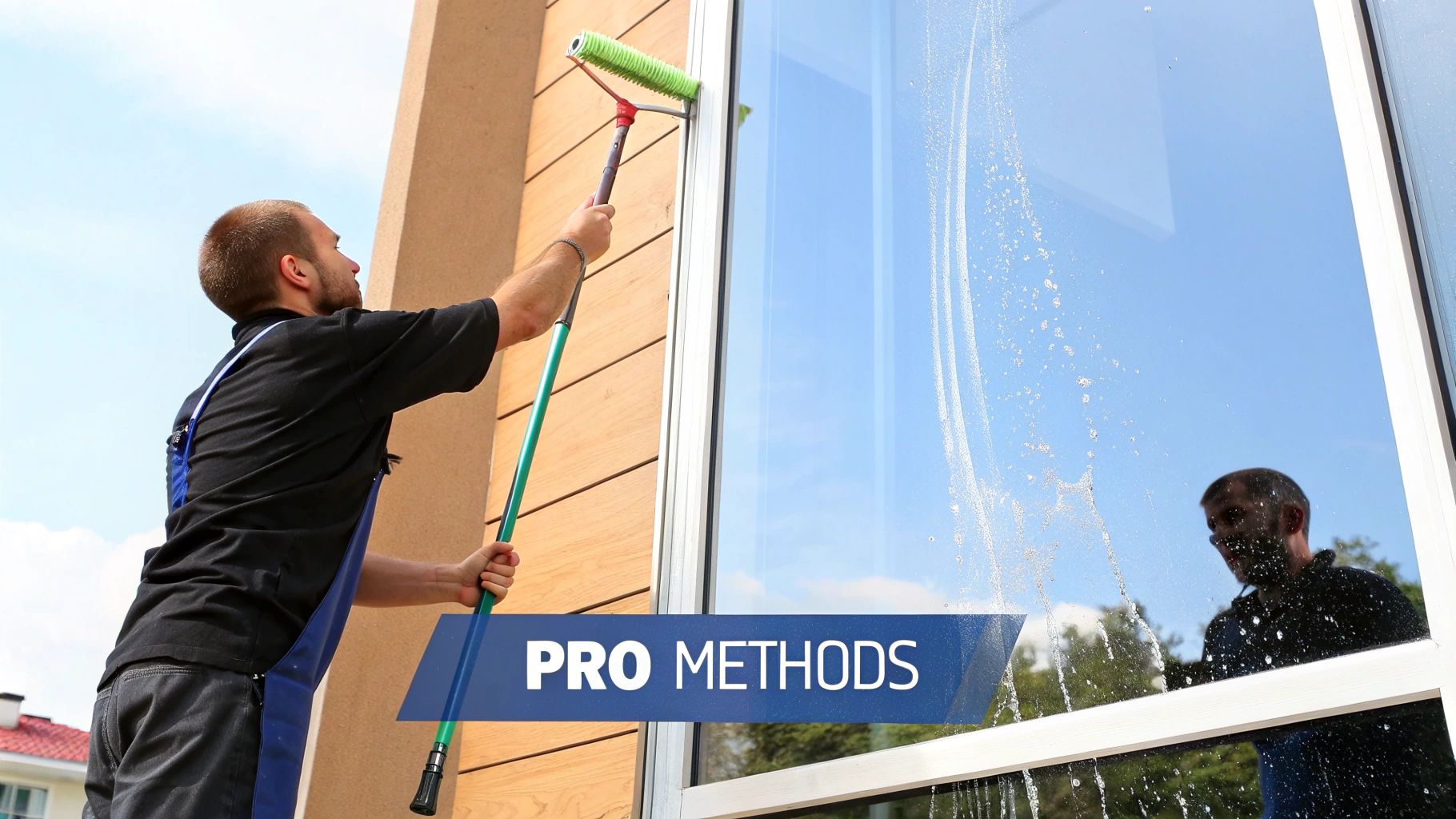
Now that you know the serious risks that come with aiming a pressure washer at your windows, let's talk about the right way to get that flawless, streak-free shine. While the idea of a high-pressure shortcut is tempting, seasoned pros in the window cleaning industry stick to ONLY two time-tested, safe, and incredibly effective techniques.
These methods are the gold standard for a reason: they deliver pristine results without ever compromising the integrity of your glass, seals, or frames.
With over 26 years of hands-on experience, our teams at Professional Window Cleaning have these techniques down to a science. We know exactly which method to use for every unique property, from sprawling estates in Phoenix, AZ to the towering high-rise condos that dot the skyline of Las Vegas, NV.
The traditional squeegee method is a true art form when done correctly. It's so much more than just dragging a rubber blade across the glass; it’s a systematic process that guarantees every inch of the window is perfectly clear.
The process starts with a gentle but thorough scrub using a soft applicator and a specialized cleaning solution. This lifts away dirt, grime, and pollen without a single scratch. The real skill, though, is in the next step. A professional-grade squeegee is used to pull the solution—and all the dirt with it—off the glass in one smooth, practiced motion. What's left behind is nothing but a brilliant, streak-free surface.
The second professional method is a more modern approach that uses technology to get an equally impressive result. A pure-water system runs tap water through a multi-stage filtration process that removes 100% of the dissolved minerals and other impurities.
This deionized water is then fed through a long, lightweight pole to a soft-bristled brush, letting technicians safely clean windows several stories high right from the ground.
The magic here is in the water itself. Pure water is an aggressive cleaning agent, naturally attracting and lifting dirt right off the surface.
Because the water is completely free of minerals, it dries to a perfectly spotless finish without any need for wiping or squeegeeing. This eliminates streaks and water spots, providing a crystal-clear view that lasts.
The window washing industry, valued at $2.9 billion in 2024, is dominated by professionals who understand these safe techniques are non-negotiable. This is especially true for complex jobs like high-rise condos, where avoiding pressure damage is critical. Property owners are increasingly choosing professional services to avoid becoming part of the $500 million in yearly glass claims caused by improper cleaning. You can learn more about how industry trends favor safety over shortcuts by exploring these cleaning industry statistics.
Ultimately, both the squeegee and pure-water methods offer superior, safe alternatives to the high-risk gamble of pressure washing. To see a detailed comparison of these professional techniques, check out our guide on the best way to clean windows.
So, you're determined to tackle your windows yourself? I get it. But it's absolutely critical to use a method that delivers that professional sparkle without risking thousands in damages. The good news is you can mimic what the pros do, safely and effectively, with just a few simple tools and a bit of patience.
This whole approach is about gently loosening dirt, not blasting it away with dangerous force. We're aiming to replicate the results of a professional clean, not the raw power of a pressure washer. This gentle, hands-on method ensures your glass, seals, and frames stay in perfect shape while still getting you that gleaming finish. For homeowners in Phoenix and Denver, this is hands-down the smartest way to handle DIY window maintenance.
Forget the heavy machinery. The best tools for the job are probably already in your garage or under your sink. This simple setup is all you need for a streak-free shine without the high-stakes gamble of pressure washing.
Here’s what you’ll need:
With your tools ready, just follow these simple steps for a professional-grade clean. Remember, it's all about technique, not brute force.
This low-pressure rinse is the most important step. Unlike a pressure washer that can force water straight into your window seals, a garden hose gives you a safe, effective way to clear away the cleaning solution, leaving nothing but crystal-clear glass behind.
This method delivers a fantastic clean without putting your windows at risk. If you want to explore more advanced techniques, you can look into the benefits of pure water window washing, which is what many professionals use.
While the garden hose method is a solid, safe alternative to pressure washing, some jobs are just too big, too high, or too risky to take on yourself. There are times when calling in an expert isn’t just about making your life easier—it’s about guaranteeing your safety and getting a flawless, long-lasting result.
Deciding between a DIY job and calling a pro often boils down to a simple choice: high pressure versus low pressure. This flowchart breaks it down perfectly.
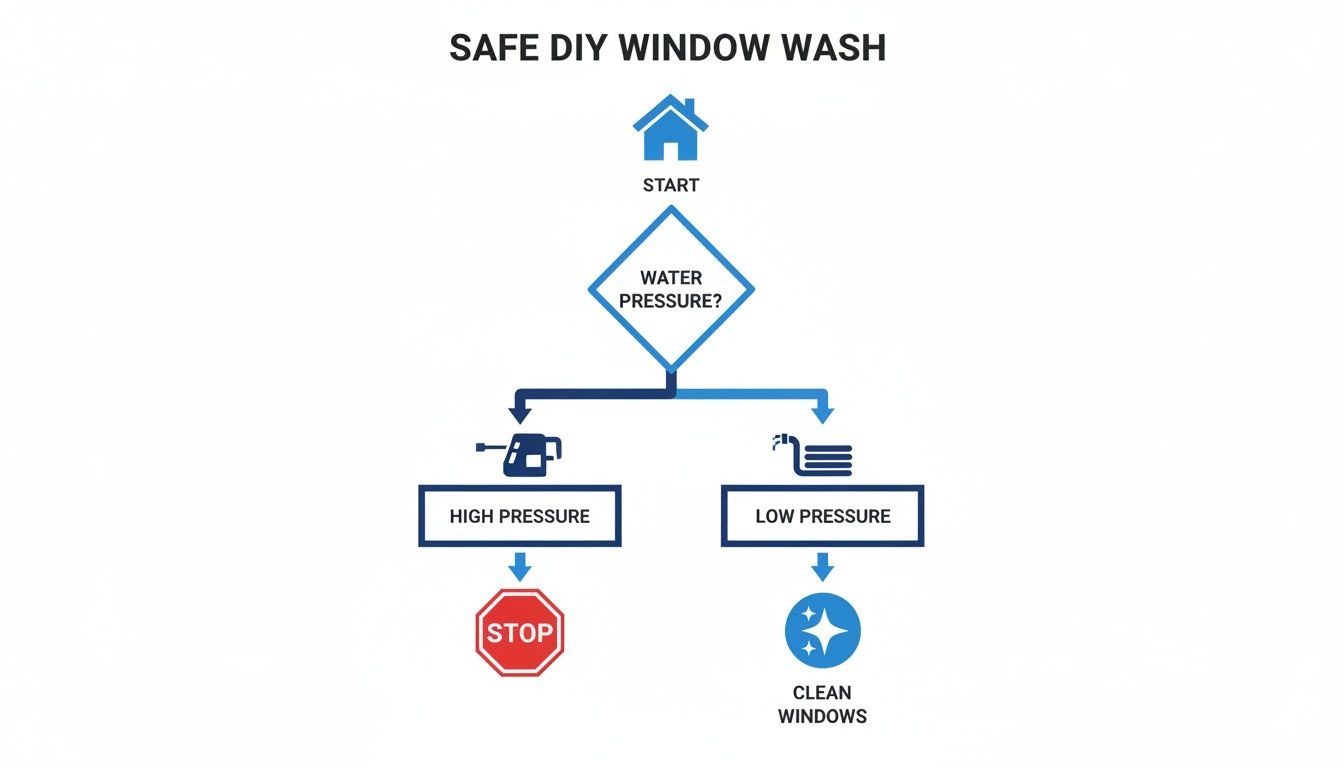
The takeaway here couldn't be clearer. High-pressure tools like a power washer lead straight to a dead end of potential damage. Low-pressure techniques, on the other hand, are the only path to a safe, sparkling clean.
Certain scenarios can turn a DIY window cleaning project from a weekend chore into a serious hazard. If any of the following sound familiar, it’s probably time to put down the bucket and pick up the phone.
Did you know the window cleaning industry is valued at a whopping $2.9 billion in 2024? That's because professionals rely on safe, proven methods that protect your property. Clean, undamaged windows can even help homeowners save 20-30% on energy bills by improving insulation. Hiring a pro is the surest way to get that perfect finish without the risk.
If tackling your windows feels too daunting or risky for a DIY attempt, consider reaching out to professional power washing services. For over two decades, Professional Window Cleaning has been the trusted choice for homeowners in Las Vegas and Scottsdale, delivering peace of mind and a perfect shine every single time.
Still curious about the best way to tackle your windows? I get it. Here are some of the most common questions homeowners ask us, along with some straight-from-the-field answers.
Even on its lowest setting, a pressure washer packs way too much punch for a window. That intense, focused spray can easily destroy your window seals, force water behind siding, and blast its way into your frames. It’s a recipe for disaster.
This is exactly why you'll never see a true professional use one on glass. The risk of causing expensive, irreversible damage is just too high. When it comes to trusted methods, experts stick to ONLY two things: the classic squeegee and modern pure-water systems. Anything else is a gamble.
Honestly? Any direct pressure from a power washer is too high for windows. While a blast of around 1,200 PSI is notorious for shattering glass, even much lower pressures can pop the seals right out or crack the pane.
Think about it this way: a standard garden hose with a gentle spray nozzle provides all the force you need for a safe and effective rinse. There’s simply no need to bring a cannon to a water fight.
This is where the right tools make all the difference. For any windows above the ground floor, our teams at Professional Window Cleaning use advanced water-fed pole systems. These specialized poles let us reach windows up to 60 feet high while our technicians stay safely on the ground—no wobbly ladders required.
This system pumps purified water up to a soft-bristled brush, allowing us to scrub away grime gently and effectively. Because the water is completely pure, it dries to a perfect, spot-free finish every single time. For our clients in cities like Phoenix and Denver, it's hands-down the safest and most effective way to get that second-story sparkle.
Ready for a perfect, risk-free shine every time? The experts at Professional Window Cleaning have been delivering exceptional results for over 26 years. Get your free estimate today!
Read our blog posts regularly and keep learning.