
Care and Maintenance
Window Squeegee Rubbers: A Complete Reference Guide
Window squeegee rubbers explained — types, sizes, materials, how to measure, replace, and pick the right rubber for clean, streak-free glass every time.


When you’re planning a window replacement, the first question is always about the bottom line. For casement windows, you can generally expect the casement window replacement cost to land somewhere between $500 and $1,000 per window, including professional installation. Of course, that's just a starting point—the final price tag can swing quite a bit depending on the size, material, and how complex the job is.
Getting a handle on the costs involved is the first real step in any home improvement project. Think of it as mapping out your budget before you get lost in the details of frame materials and glass types. While the numbers can feel like a moving target, the cost really boils down to two key things: the price of the window itself and the labor to get it installed correctly.
Casement windows are incredibly popular, and for good reason. Recent data shows that a whopping 46% of homeowners chose to include at least one casement window in their replacement projects. For homeowners swapping out one to five windows, the average project cost came in around $12,072. This investment speaks volumes about the demand for the superior airflow and clean, modern aesthetic that casements offer.
For a deeper dive into the numbers, you can check out this complete report on casement window pricing trends.
To give you a clearer starting point, let's break down the typical costs. Seeing the numbers separated like this helps you understand exactly where your money is going.
As you can see, the window unit itself can be as low as $260 for a smaller, standard model or climb past $626 for a larger, more premium one. The installation fee is a separate charge that covers the professional labor needed to ensure a perfect, weatherproof fit.
For property managers and commercial building owners in cities like Phoenix or Las Vegas, there's good news. Ordering windows in bulk for a large-scale project can often unlock significant volume discounts, making the overall investment much more manageable.
So, what’s behind that wide price range? Several key factors will influence the final quote you receive. The size of the window, the frame material you pick (like vinyl, wood, or fiberglass), and the type of glass (such as energy-efficient double or triple-pane) all play a major role.
We’ll dig into each of these variables next, so you can figure out how to budget effectively for your specific project and get the most value for your investment.
Ever wonder why one quote for a casement window replacement comes in at $400 while another soars past $1,400? The final price tag comes down to a few key decisions you'll make along the way. Getting a handle on these cost drivers is the best way to manage your budget and ensure you’re getting real value for your investment.
Think of it like buying a new car. A basic vinyl window is your reliable sedan—it’s affordable, functional, and gets the job done without any fuss. A premium wood-clad window, on the other hand, is more like a luxury SUV, offering superior looks, high-end performance, and a price tag to match. Both get you where you need to go, but the experience and the cost are worlds apart.
Your total cost is mainly split between two big pieces: the window unit itself and the professional installation.
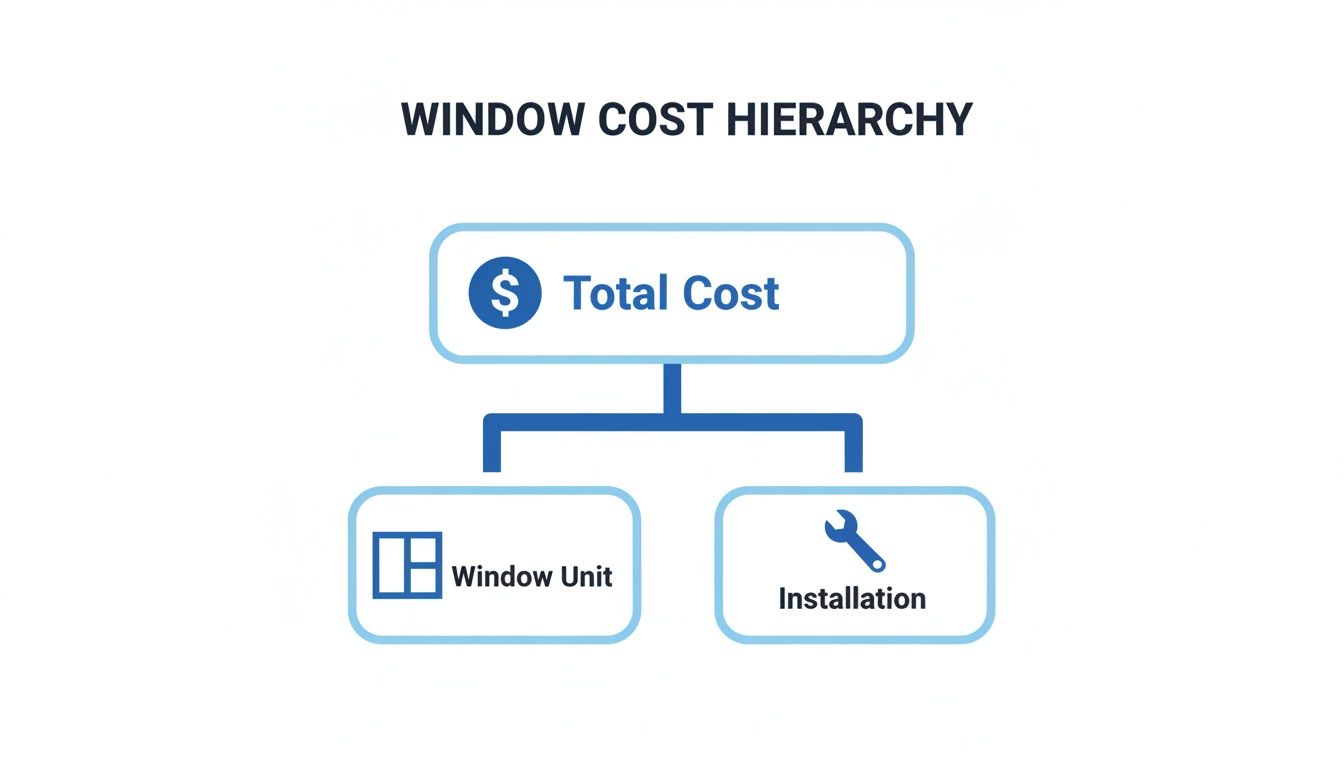
As you can see, both the window and the labor are essential parts of the equation. The three main factors that really shape the cost of the window unit are its size, the frame material, and the type of glass you choose.
The material you choose for your window frame is arguably the single biggest factor influencing the final price. Recent market data from 2026 highlights just how much this choice matters.
The table below breaks down the typical installed costs for the most common frame materials.
Vinyl remains the most popular choice for homeowners and property managers across Arizona, Colorado, and Nevada because it hits a sweet spot between cost and function. Fiberglass offers a nice step up in durability, while wood and aluminum-clad windows sit at the premium end, prized for their craftsmanship and timeless look. You can learn more about how window materials impact pricing in 2026.
Beyond the frame, the glass you select plays a huge role in both cost and performance. This is especially true in climates with extreme temperatures, where the right glass can make a massive difference in your energy bills.
Finally, size matters. It’s simple, really: a larger window requires more material for both the frame and the glass, which directly increases the unit cost. If you need custom sizes that deviate from what manufacturers produce as standard, expect that to add to your final bill as well.

When you're thinking bigger than just one or two windows, planning a whole-home replacement is a completely different ballgame. It's less like a quick repair and more like managing a significant home upgrade. The good news? Bigger projects often come with a silver lining: economies of scale.
Contractors can work much more efficiently when they tackle multiple windows at once, setting up their equipment just one time. This usually leads to savings on labor, which can make a real difference in your total casement window replacement cost. The upfront investment is substantial, but the payoff in energy savings and home value is, too. If you're trying to get a handle on the finances for a major home project, this contractor's guide to new construction costs can offer some valuable perspective.
To turn a vague idea into a solid budget, it helps to look at some real-world numbers. The total cost for a full replacement really comes down to the number of windows you have.
Small Starter Home (5-7 Windows): For a smaller home, you can expect to budget somewhere between $4,000 and $8,000. A project this size can often be wrapped up quickly, completely transforming your home's efficiency and curb appeal in one shot.
Average Family Home (10-15 Windows): This is a very common project size for most homeowners. The national average for a home this size in 2026 is projected to fall between $10,000 and $25,000. This is where those economies of scale really start to kick in and offer great value.
Large Custom Home (20+ Windows): For larger properties with a high window count, the budget can easily climb past $25,000. These projects often involve custom sizes or premium materials, which adds to the final price tag.
Survey data confirms this trend. Homeowners who replaced six to ten casement windows saw an average project cost of $15,215, while those replacing just one to five windows averaged $12,072.
A whole-home window replacement isn't just another expense—it's a smart investment. In competitive real estate markets like Scottsdale and Denver, new, energy-efficient windows are a major selling point that can seriously boost your home's resale value.
Once your new windows are installed, you’ll want them looking their absolute best. At Professional Window Cleaning, we know that final touch makes all the difference. Our crews in cities like Phoenix use either a squeegee or a pure-water system to get rid of every bit of construction dust and film, making sure your new investment shines.
That initial quote for your new windows? It's best to think of it as a starting point, not the final number. The sticker price on a window and the basic installation fee are just part of the story, and it's easy to get blindsided by extra charges you weren't expecting.
Knowing about these potential "hidden" costs is the key to creating a realistic budget that won’t leave you scrambling. These aren’t sneaky fees—they’re necessary expenses that depend entirely on the unique condition of your home. They are the difference between a rough guess and a firm, final price.
Of course, some homeowners plan for extras from the start. For example, adding functional upgrades like fly screens for casement windows that open outwards is a common consideration, especially in bug-prone climates. But the costs we're talking about are the ones that only pop up once the work begins.
To help you prepare, think of this as a financial checklist for common costs that can land on your final invoice. It’s all about arming yourself with the right questions to ask your contractor before you sign anything.
Old Window Removal and Disposal: Your old windows have to go somewhere, and that's not free. Most contractors include a fee for the labor to remove the old unit and properly dispose of it, which usually runs between $50 to $100 per window.
Repairing Hidden Damage: This is the biggest wild card. Once the old window is out, your contractor might find rot, insect damage, or water issues in the surrounding wall frame. Fixing this structural damage is non-negotiable and will add to both labor and material costs.
Permit Fees: Depending on your city and how big the project is, you might need a building permit. These fees can range from $50 to $200 or more and ensure all the work is up to local building codes.
The location of your windows also plays a major part in the final cost. A ground-floor window is a much quicker and easier job than one on the third story.
Accessibility is a major cost factor. For high-rise buildings in cities like Las Vegas, replacing windows requires specialized equipment like scaffolding or lifts, along with extra safety measures. This significantly increases labor costs.
After your new windows are installed, you might sometimes see fog or condensation form. If you're curious about why your new windows might be foggy, our guide explains what’s happening and what to do. Talking about all these potential costs with your contractor upfront is the best way to ensure your budget is solid and that there are no surprises on the final bill.
So, your beautiful new casement windows are in. The installers have packed up and gone, but there’s one last thing standing between you and that perfect, crystal-clear view: the mess they left behind.
No matter how meticulous the installation, a fine layer of construction dust, stray fingerprints, and smudges from handling and adhesive is inevitable. Wiping it down with paper towels and a spray bottle might seem like a quick fix, but it often just moves the grime around, leaving you with streaks and a film that dulls the glass.
This isn't just regular dirt. That post-installation residue needs a specific touch to be removed completely without scratching the new glass or damaging the fresh seals. This is where a professional cleaning makes all the difference, truly finishing the job.
With over 26 years of experience in the field, we at Professional Window Cleaning know there are really ONLY 2 methods of window cleaning professionals use: the time-honored squeegee and the modern pure-water system. Our expert technicians serving homeowners and property managers in cities like Phoenix and Denver have mastered both.
The Squeegee Method: This is the classic technique, and it’s an art form. In the hands of a pro, a high-quality squeegee glides across the glass, pulling every last drop of water and dirt with it. The result is a perfectly clear, streak-free surface that’s almost impossible to get on your own.
The Pure-Water System: For upper-story windows or large-scale jobs, we bring out the advanced water-fed poles. This system uses water that has been deionized, making it so pure it acts like a magnet for dirt. It lifts away every speck of grime and then dries to a spot-free shine without anyone ever needing to wipe it down.
A professional post-installation cleaning isn’t just about making things look good; it's a final quality control check. Our trained eyes can spot any minor imperfections from the installation process, giving you an extra layer of assurance that the job was done right.
You chose new windows to bring more light and clarity into your home. Letting them sit behind a film of construction dust just diminishes their impact and obstructs the very view you were trying to improve. Think of a professional cleaning as the final, crucial touch that unveils the true value of your upgrade.
Our teams, like those working in Scottsdale, come prepared with the right tools to handle this specific type of cleaning safely and effectively. You can get a closer look at the gear we use in our guide to professional window cleaning equipment.
Ultimately, this final, expert clean ensures your significant investment in new casement windows looks absolutely spectacular from day one, maximizing both your curb appeal and your daily enjoyment.
When you’re thinking about a big project like replacing your casement windows, questions are bound to pop up. We get it. To help you feel confident in your decisions, we’ve put together clear, straightforward answers to the questions we hear most often from homeowners just like you.
In almost every case, the answer is yes. While it’s a bigger check to write upfront, tackling all your windows in a single project nearly always brings down the cost per window. Think about it from the contractor's perspective: they set up their equipment once, work more efficiently, and can pass those time savings directly on to you.
On top of that, you can often get a bulk discount from the manufacturer for a larger order. It also gives your home a consistent look and ensures all your windows perform at the same level, which makes future maintenance much simpler.
This strategy is a game-changer for property managers in cities like Scottsdale or Las Vegas overseeing multiple units. Bundling replacements can create some serious savings across an entire property portfolio.
New windows are consistently one of the smartest home improvements you can make, offering an excellent return on investment. According to the latest remodeling reports, homeowners can expect to get back 60-70% of their project cost when they sell their home.
But the value isn't just in the numbers. New windows give your home other powerful benefits that really catch a buyer's eye.
In hot real estate markets like Denver and Phoenix, these perks can be the very thing that makes your home stand out and sell faster.
The idea of saving a chunk of change on labor by going the DIY route is definitely tempting. However, window installation is a job that demands absolute precision, and even a tiny mistake can lead to big headaches down the road.
Improper installation is one of the most common reasons for drafts, water leaks, and windows that just don't open and close right. Worse yet, a DIY job can completely void the manufacturer’s warranty on your brand-new windows, leaving you high and dry if a problem pops up. For a secure, weatherproof seal that delivers the energy efficiency you’re paying for, professional installation is the only way to protect your investment.
The lifespan of your new casement windows really comes down to the frame material you select. Each one offers a different trade-off between durability, maintenance, and how long it will last.
Choosing the right material for your local environment is the single best way to get the most life out of your new windows. After your project is complete, make sure that investment shines with a professional cleaning. With over 26 years in business, our teams at Professional Window Cleaning use specialized squeegee and pure-water methods to give you a perfect, streak-free finish every time.
You've made a significant investment to improve your home—let Professional Window Cleaning provide the finishing touch. Contact us today for a free estimate to make your new windows look their absolute best. https://www.professionalwindowcleaning.com
Read our blog posts regularly and keep learning.