
Care and Maintenance
Window Cleaning for Business: A Complete Property Guide
Window cleaning for business boosts curb appeal and tenant satisfaction. Learn practical tips to keep commercial properties spotless and safe all year.


A lot of Colorado Springs homeowners notice their gutters only when water starts going the wrong direction. It happens fast. A spring cloudburst rolls in, or a sunny afternoon melts a roofline full of snow, and suddenly water is spilling over the front edge of the gutter instead of moving cleanly to the downspout. That overflow doesn't just soak mulch. It can hit siding, fascia, walkways, window trim, and the soil around the foundation.
That's why gutter cleaning in Colorado Springs isn't a cosmetic chore. Gutters are part of the home's drainage system. When they're open and pitched correctly, they move runoff away from the structure. When they're packed with pine needles, seed pods, roof grit, and compacted sludge, they stop doing the job they were installed to do.
Colorado's weather makes the stakes higher. A clogged gutter in fall can become an ice problem in winter. A partially blocked downspout can turn snowmelt into sheet flow against the house. If you're already dealing with winter roof concerns, this homeowner's guide to ice dam prevention gives useful background on how water backs up and where prevention matters most.
Clean gutters protect more than the roof edge. They help protect landscaping, exterior finishes, entry areas, and the base of the home. They also make routine exterior inspections easier, because leaks and staining are easier to spot before they become expensive repairs.
Colorado Springs gets weather that exposes weak points quickly. One blocked elbow, one buried downspout outlet, or one gutter run full of wet debris can turn ordinary runoff into a problem that reaches multiple parts of the property.
Homeowners often think of gutters as leaf catchers. In practice, they're water-control channels. Their job is simple. Collect roof runoff, move it efficiently, and discharge it away from the home. When any part of that path fails, water starts finding its own route.
On a typical home, gutter trouble shows up in a few predictable ways:
Practical rule: If water is visible anywhere except inside the gutter and out the downspout exit, the system needs attention.
Most gutter systems fail subtly before they fail dramatically. Debris builds gradually. Pine needles mat together. Roof granules settle into the bottom. Small twigs catch more debris behind them. Then one storm or one melt cycle exposes the blockage all at once.
That's why routine service works better than emergency service. By the time you see water sheeting off the front edge, the gutter has usually been underperforming for a while.
Colorado Springs has a combination that's hard on gutters. Debris accumulates through the year, storms can compact that debris, and winter adds freeze-thaw stress that many homeowners underestimate.
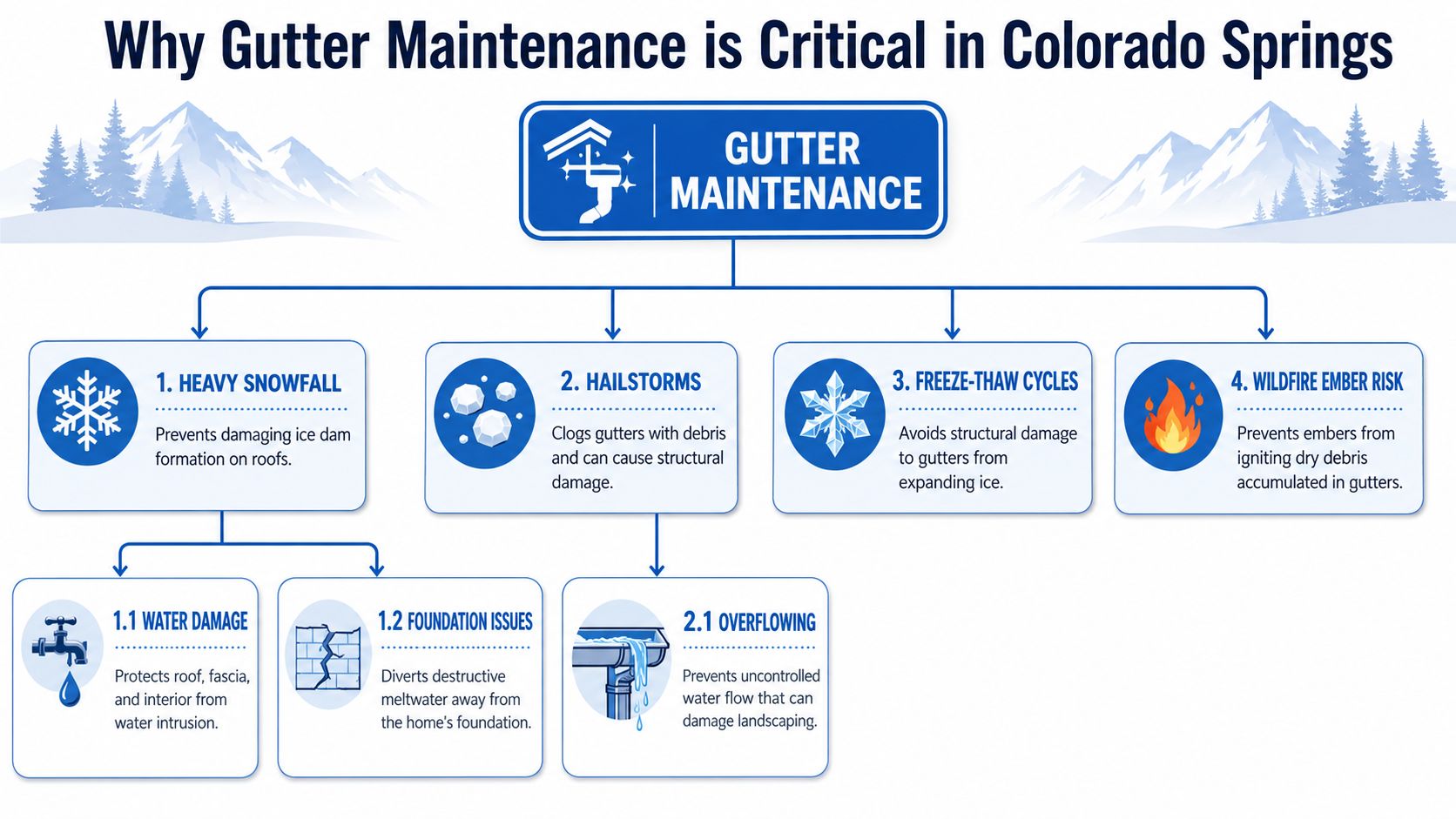
A lot of local service pages talk about clearing leaves and needles, but they stop there. That misses the bigger issue. Local market guidance also points to an overlooked trade-off in Colorado Springs: whether a homeowner should prioritize basic cleaning or winter-focused protection such as heat tape or gutter covers, especially in a freeze-thaw climate where clogged gutters can contribute to overflow and ice buildup, as discussed by Best Buy Gutter.
That matters because winter gutter problems don't start in winter. They often start in fall, when debris is left in place and traps water. Once temperatures swing above and below freezing, that trapped water hardens, expands, and keeps later meltwater from draining.
One clog can create a sequence of problems:
The damage doesn't stay confined to the gutter. Overflow can stain siding, erode soil, splash against windows, and saturate the area near the foundation. In colder stretches, the same trapped water can contribute to ice buildup along the roof edge.
Not all clogs are fluffy piles of leaves. Around Colorado Springs, many gutters fill with a dense mix of pine needles, seed material, shingle grit, and mud-like sludge. That mix packs tightly. Hail can also hammer loose debris into a tighter mass, which makes hand removal harder and rinsing less effective if the outlet is already restricted.
A gutter that looks only half full can still be functionally blocked if the outlet is buried and the bottom is sealed with compacted grit.
Water management problems show up in places owners don't connect to the gutter right away. Stained trim, peeling paint near the roofline, slippery concrete near entryways, erosion in planting beds, and recurring wet spots near the base of the house often trace back to poor drainage.
A home doesn't need a dramatic gutter failure to suffer damage. Repeated small overflows are enough. That's why consistent maintenance is one of the least glamorous but most protective exterior services a homeowner can schedule.
A gutter problem in Colorado Springs often shows up right before weather turns against you. A warm afternoon loosens packed debris, evening temperatures drop below freezing, and the water that should have drained out hardens at the roof edge instead. That is how a simple clog turns into overflow, ice buildup, and fascia damage in a hurry.
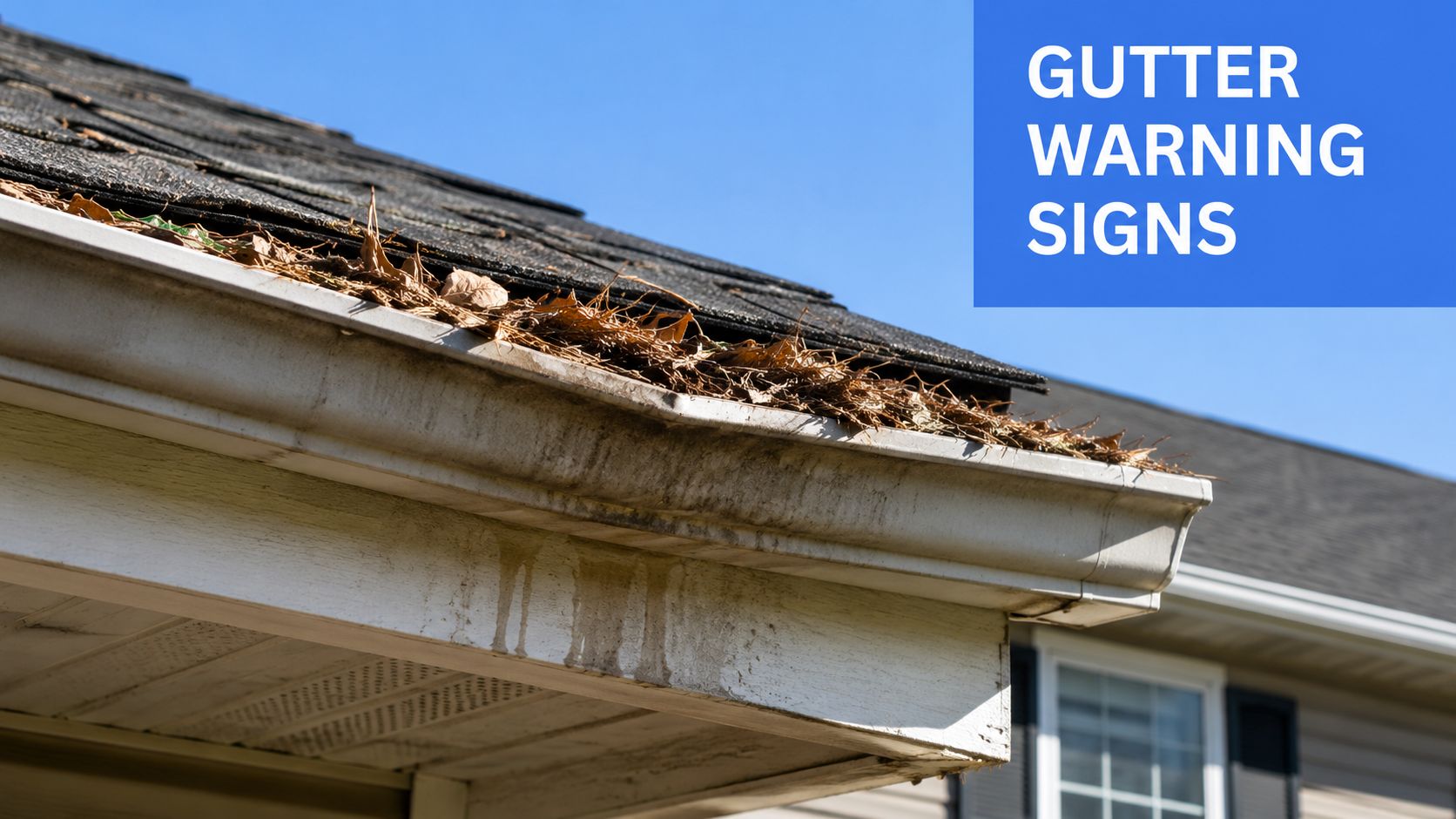
The first thing to watch is performance during actual runoff. If water shoots over the front lip, spills behind the gutter, or pours out of one corner while the downspout barely flows, the system is already failing at its main job. In this climate, that matters more in late fall and winter because trapped water does not just sit there. It freezes, expands, and stresses hangers, seams, and the roof edge.
These signs usually mean service should happen soon, not sometime later in the season:
Some signs are less obvious but matter just as much. One downspout may run weak while the others discharge normally. Concrete below one gutter line may stay darker longer after a storm. You may also see drip lines behind the gutter, which usually means water is backing up at the roof edge instead of dropping cleanly into the trough.
Those early clues are where the trade-offs start. A standard cleaning fixes many of these problems if the issue is debris and the gutter is still sound. Gutter guards can cut down on repeat buildup, but they do not solve poor pitch, buried outlets, or compacted shingle grit. Heat tape can help in the right locations, especially near chronic freeze points, but it is not a substitute for a clean, freely draining gutter. If water cannot move, adding heat only treats part of the problem.
For most homes here, spring and fall service is the baseline. Homes under pines or near heavy seed drop often need more frequent checks, especially before hard freezes. Thumbtack's Colorado Springs gutter cleaning guidance reflects that pattern, and it matches what crews see in the field.
Timing matters as much as frequency. Spring service clears winter residue and checks for loose sections after snow and ice. Fall service is the one that helps reduce winter trouble, because it removes the debris most likely to trap water before freeze-thaw cycles start. Homeowners who want a better schedule can use this guide on when to clean out gutters to plan around debris load and seasonal weather.
Good maintenance habits hold up in other climates too. If you want a comparison point, these expert gutter cleaning tips for Dallas show how local weather changes the warning signs and service timing.
This short visual walkthrough can help you recognize common problem conditions before they spread.
Some homeowners can handle gutter cleaning safely. Some shouldn't. The right answer depends on roof height, slope, access, debris type, and your comfort working from a ladder for long periods.

DIY can work on a simple, accessible home where the gutters are easy to reach and the debris load is light. If you do it yourself, the basics matter:
DIY tends to go wrong when homeowners underestimate time, reach, or compaction. Wet pine needles don't behave like dry leaves. A blockage in an elbow or underground drain connection can also take more than surface scooping to fix.
The common mistake is thinking the job is just removing what you can see from the top. A proper cleaning also checks pitch, joint leakage, spike or hanger condition, downspout flow, outlet restriction, and whether water is discharging in the right place on the ground.
That's similar to professional window cleaning. People often assume it's just soap and a brush, but pros generally rely on one of only two methods: a squeegee system or a pure-water system, depending on the glass, access, and finish required. Gutters are the same idea. The visible dirt is only part of the job. The result depends on the method, the tools, and whether the entire system is evaluated.
If you clean the gutter but don't restore full drainage, you've done part of the work and kept most of the risk.
For a lot of homes, professional service is the better value because it reduces risk and usually results in a more complete inspection. A crew that works on exterior systems every day can spot loose hangers, separated seams, crushed downspouts, and signs of water tracking behind the gutter that a homeowner might miss.
Cost also matters, and local pricing gives useful context. In Colorado Springs, ProMatcher reports an average gutter cleaning price of $155.44 per cleaning, with a range from $78.88 to $232.00, and notes that service is commonly priced at $0.95 to $2.25 per linear foot, with 125 to 200 linear feet being typical for many homes, according to ProMatcher's Colorado Springs gutter cleaning cost report.
Those numbers won't be identical for every property. Height, access, debris volume, and condition all affect pricing. But they do show that hiring a pro is often a manageable maintenance expense compared with the cost and hassle of avoidable water damage.
For readers who like comparing regional best practices, these expert gutter cleaning tips for Dallas are a helpful contrast because they show how service decisions change with climate, debris patterns, and storm exposure.
Choose professional service if any of these apply:
DIY is fine when access is easy and you can work safely. If safety is questionable, the decision is already made.
A bad hire often shows up in January, not on service day. The gutters looked clean in October, then a warm afternoon melted roof snow, a hard overnight freeze locked that water in place, and the overflow started staining fascia or icing the walkway below. In Colorado Springs, that is the standard worth hiring against.

Ask for proof before the crew ever sets a ladder.
That last point matters more than many homeowners expect. A crew can clean a gutter and still leave a mess on siding, patios, and entry areas if the process is careless.
A short phone call tells you a lot about how a company works. Ask direct questions.
That last question is specific to Colorado Springs. A company that understands freeze thaw behavior will usually talk about flow, slope, discharge location, and trouble spots on the roofline. A company that only talks about leaf removal is giving you a partial service.
Gutter cleaning here is tied to winter risk reduction. The primary job is to restore drainage before meltwater has a chance to sit, refreeze, and back up under shingles or spill next to the foundation. That takes more judgment than many homeowners realize.
Established exterior service companies usually do better because their crews have seen what repeat overflow looks like on fascia, siding, soffits, and concrete below the downspouts. They also tend to be better at spotting the trade-offs. Some homes need routine cleaning and nothing more. Others are better candidates for selective guards in heavy debris areas. A smaller group has known cold-weather trouble spots where heat tape makes sense after drainage is corrected.
If you want a comparison point while vetting companies, this guide to best gutter cleaning services is a useful checklist.
Some warning signs come up again and again.
Good contractors sound organized because they are organized. They know that clean gutters are only part of the result. The ultimate benefit is controlled water movement through summer storms, fall debris, and the freeze thaw swings that make Colorado Springs harder on gutter systems than many homeowners expect.
Cleaning fixes current blockage. It doesn't automatically solve recurring conditions. If your home collects heavy pine needles, if one roof valley dumps debris into the same section every season, or if you've dealt with ice buildup near the eaves, it may be time to think beyond routine cleanings.
Gutter guards can reduce the amount of large debris that enters the trough. On the right house, that means slower buildup and easier maintenance. They're most useful where open gutters repeatedly collect the same material and access is inconvenient.
They are not a maintenance eraser. Fine debris can still settle on top of some guard styles or work its way into the system. Guards also don't correct bad pitch, loose hangers, poor downspout placement, or existing drainage design problems.
Heat tape addresses a different problem. It's aimed at helping vulnerable roof-edge or gutter areas resist ice buildup during freezing conditions. That can help in homes with known trouble spots, but it should be treated as a targeted winter tool, not a substitute for cleaning.
If the gutter is already holding debris and trapped water, adding heat tape without fixing the drainage issue first usually misses the fundamental problem. Cleaning restores flow. Heat tape can support a specific cold-weather strategy after that, if the home requires it.
Use this simple framework:
The best long-term plan is rarely the most complicated one. It's the one that matches the house.
Colorado Springs homes need drainage systems that can handle rain, melting snow, and temperature swings without sending water back onto the structure. That's why proactive gutter maintenance protects more than curb appeal. It helps protect the roof edge, the siding, the foundation area, and the overall condition of the property.
If you want help from a team that's spent decades caring for exterior surfaces, Professional Window Cleaning offers experienced service backed by a long track record in residential, commercial, and high-rise properties. Whether you're maintaining windows or staying ahead of gutter issues, working with an established exterior care company can make routine maintenance simpler and more reliable.
Read our blog posts regularly and keep learning.