Care and Maintenance
Medical Office Windows: Complete Care and Cleaning Guide
Learn how to keep medical office windows clean, safe, and code-compliant. Covers protocols, schedules, costs, and what to expect from professionals.


When it comes to home maintenance, timing is everything. So, when is the right time to clean out your gutters? The simplest and most effective schedule is twice a year: once in the late spring and again in late fall.
This straightforward routine is your best defense against the costly headaches of water damage, ensuring your gutters are clear and ready to handle whatever the weather throws at them.
Think of your gutters as your home's first line of defense against water. When they're clear, they channel rain and melting snow safely away from your foundation, roof, and siding. But when they get clogged, you’re looking at a recipe for disaster.
Sticking to a bi-annual cleaning schedule turns a small maintenance task into powerful protection against major repair bills.
The first cleaning of the year should happen in late spring. This is when you’ll clear out all the pollen, seeds, and leftover winter debris that can quickly create blockages. Getting this done prepares your system for the heavy spring and summer rains. For properties in places like Phoenix, this pre-monsoon cleaning is an absolute must.
Your second, and arguably most important, cleaning is in late fall. This is your chance to remove the huge volume of leaves and twigs that drop from the trees. It’s crucial to get this done before the first freeze to prevent ice dams, which can become so heavy they rip gutters right off your house.
Too often, homeowners and property managers in places like Arizona, Colorado, and Nevada underestimate just how much debris collects in a single season. The consequences can be severe.
Take the beautiful, tree-lined neighborhoods of Denver, for example. A single 40-foot section of gutter can easily accumulate 50-100 pounds of wet, heavy leaves. That weight alone is enough to cause overflows, leading to foundation damage that can average $4,500 to repair.
This simple timeline shows the two most important cleaning windows for any property.
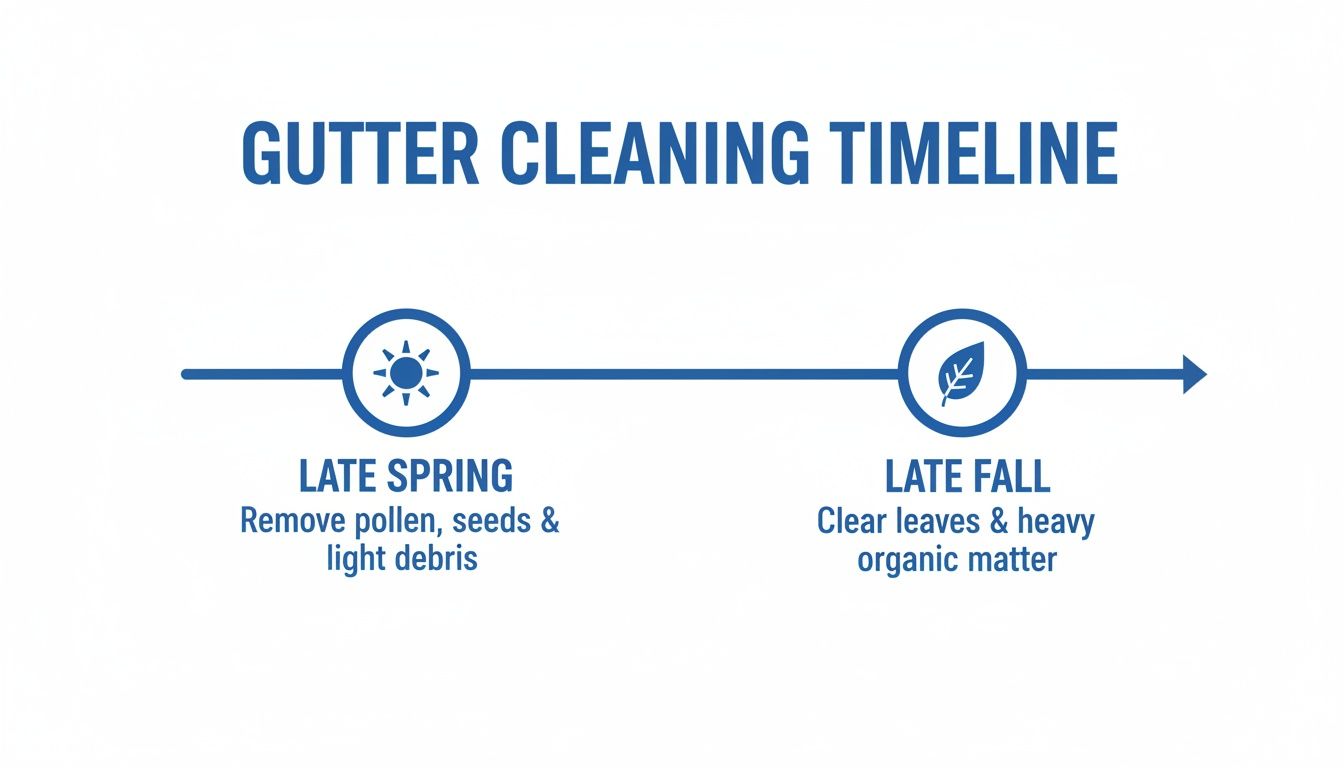
As you can see, each cleaning has a specific purpose—tackling seasonal debris to keep water flowing freely all year long.
To help you stay on track, here’s a quick-reference guide to your yearly gutter cleaning plan.
This calendar is a great starting point, but remember to keep an eye on your gutters, especially after big storms.
While a twice-a-year schedule is a fantastic rule of thumb, it’s a baseline. Your home might need more frequent attention if you’re surrounded by tall trees or live in an area with high winds.
The real goal is proactive protection, not reactive repairs. Understanding the wider picture of gutter maintenance is just as important as knowing when to clean them.
At Professional Window Cleaning, we've seen firsthand for over 26 years how a disciplined approach to gutter maintenance saves our clients thousands in avoidable repairs. A clean gutter is one of the best investments you can make in your property's longevity.
Ultimately, knowing when to clean your gutters is the first step. By aligning your maintenance with the seasons, you're taking control and protecting your home from the very element your gutters were designed to manage.
Your calendar isn't the only thing that'll tell you it's time to clean your gutters. Your house has its own way of sending distress signals when the gutters are clogged and overwhelmed. Learning to spot these clues means you can catch small issues before they snowball into expensive disasters.
Some signs are impossible to miss, while others are a bit more subtle. When you know what to look for, you can act based on real evidence, not just the time of year.
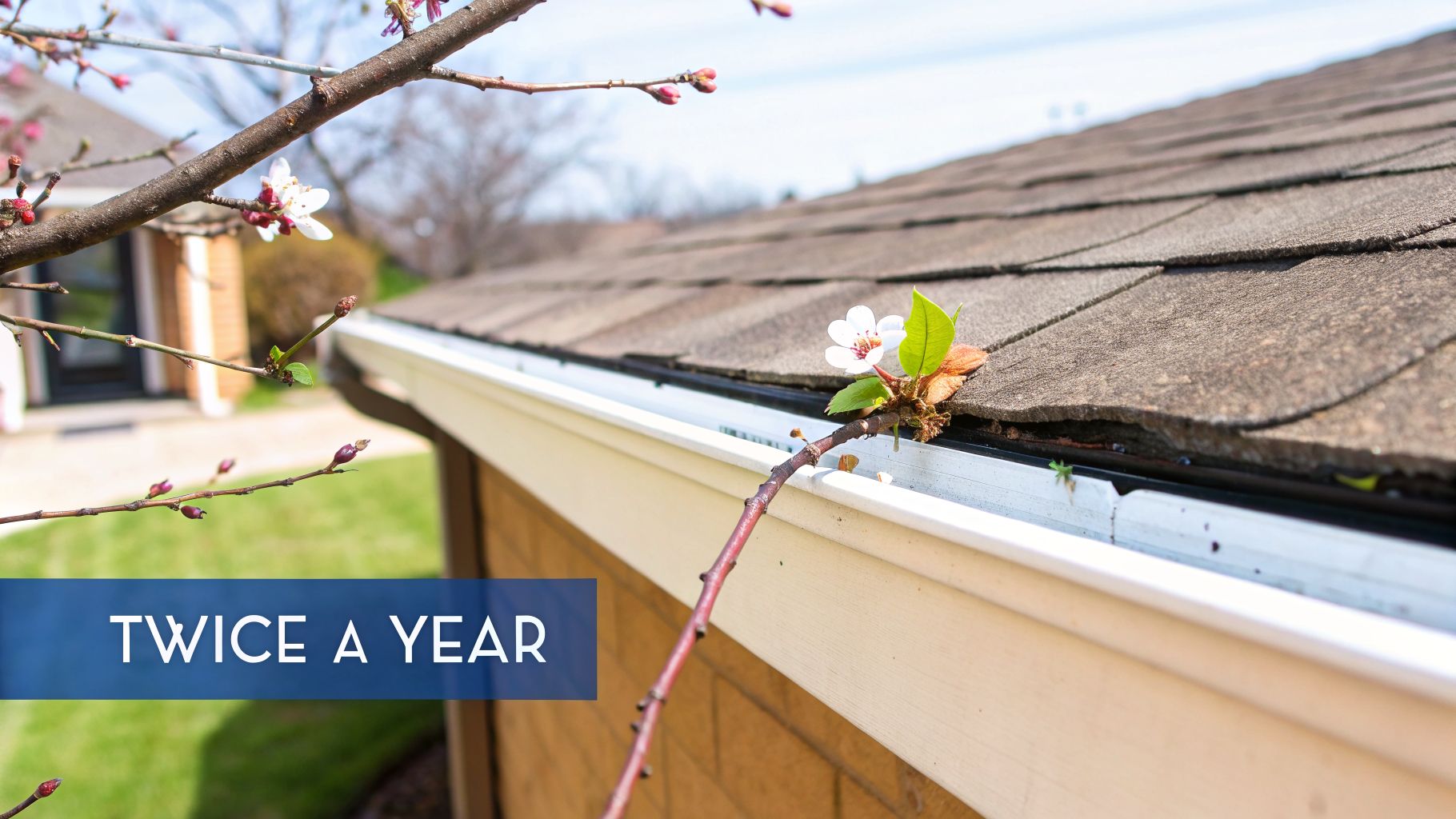
The most urgent signs are the ones you can spot from the ground with just a quick walk around your property. If you notice any of these, your gutters need immediate attention.
These aren't just cosmetic problems—they're clear signs your gutter system has already failed. This failure can cause severe water damage if you don't address it right away.
Sometimes, the signs of a clog are less dramatic but just as serious. Catching these early can save you a ton of headaches and repair bills down the road.
A sagging gutter is a cry for help. The weight of waterlogged leaves, shingle grit, and mud can easily exceed 50 pounds in a short section, bending the metal and pulling fasteners loose from the fascia board.
Keep an eye out for these more subtle red flags:
Clogged gutters can also create major water problems around your foundation and in your yard, disrupting your property's entire drainage system. To get a better handle on how water should be managed, this homeowner's guide to backyard drainage systems is a great resource.
Even in dry climates like Las Vegas, where you might not have a lot of leaves, windblown dust can mix with rain to form a heavy sludge that causes the exact same issues.
A universal, twice-a-year gutter cleaning schedule is a solid foundation, but let's be honest—it's not a one-size-fits-all solution. Regional weather patterns are the single biggest factor that can turn a standard schedule completely on its head. A home in the snowy mountains of Colorado faces entirely different challenges than a commercial building in the arid deserts of Nevada, meaning your approach to timing has to adapt.
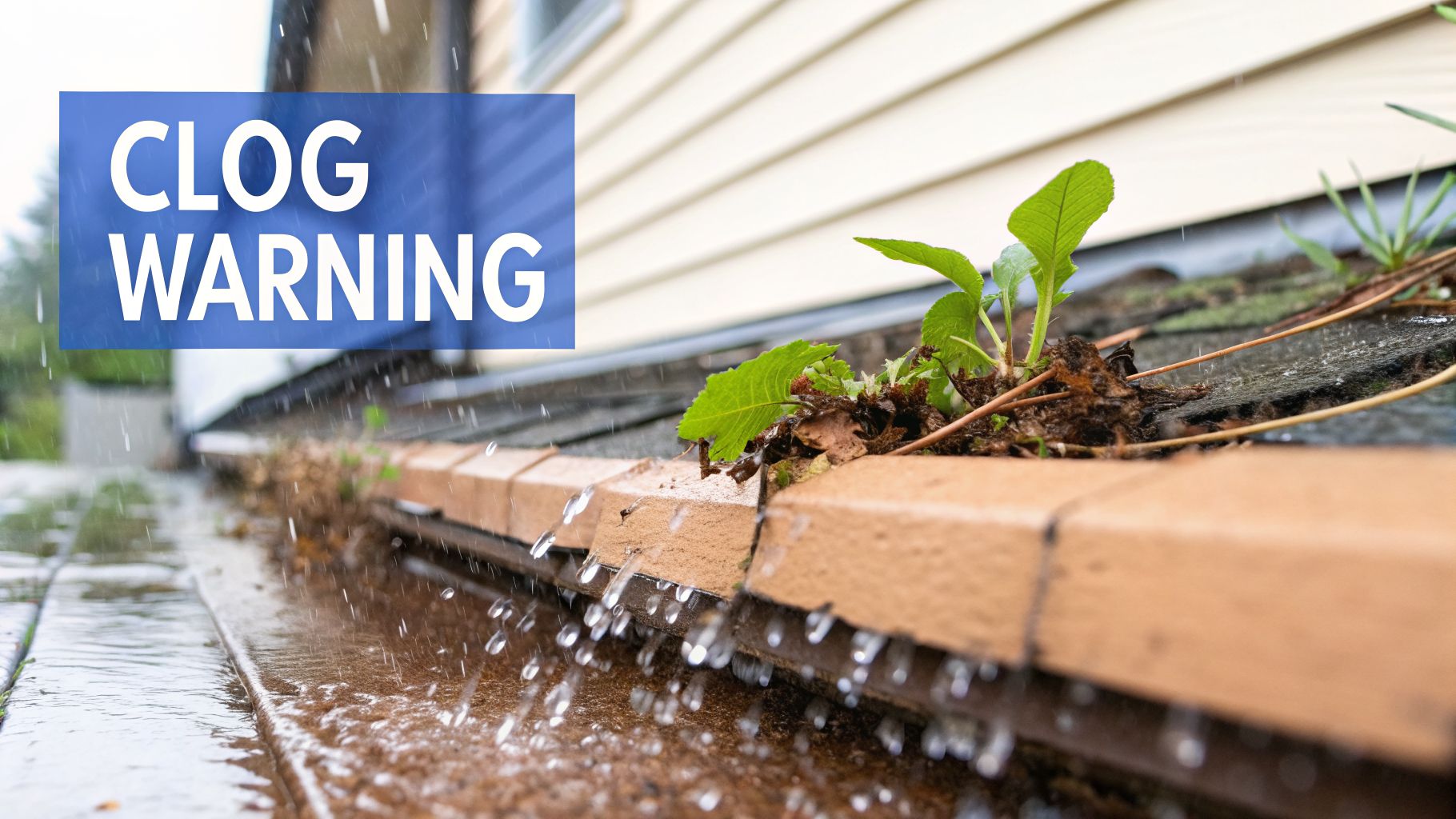
Understanding these local weather extremes is the key to creating a maintenance plan that actually works. What's effective in one state could lead to disaster in another. It’s a proactive philosophy Professional Window Cleaning has perfected over 26 years of serving properties in all kinds of climates.
For properties in Arizona, the entire year revolves around preparing for one major event: the monsoon season. From roughly June to September, the state gets hammered with powerful, localized thunderstorms that can dump inches of rain in under an hour.
A standard spring cleaning just won't cut it. For homes and businesses in cities like Phoenix and Scottsdale, a gutter cleaning in late spring (May/June) is absolutely essential. This pre-monsoon service clears out the fine dust, shingle grit, and winter debris, ensuring your gutters can handle those sudden, intense deluges without overflowing and causing flash flooding around your foundation.
During Arizona's monsoon season, the sheer intensity of the rainfall can increase debris compaction in your gutters by as much as 200%. This turns light debris into a dense, heavy sludge that completely blocks water flow, making a post-storm check crucial.
Along the Front Range of Colorado, the primary threat isn't rain; it's ice. The beautiful autumn season in cities like Denver brings a massive downfall of leaves. If those leaves aren't cleared out before the first heavy snow, the consequences can be severe.
Here's how the disaster unfolds:
The water has nowhere to go but back up under your shingles, leading to roof leaks, rotted fascia boards, and interior water damage. The key is a meticulously timed late-fall cleaning to get every last leaf out before the first significant snowfall hits.
In Nevada, especially in a windy city like Las Vegas, the challenge is year-round. While you might see fewer leafy trees, the constant wind relentlessly fills gutters with dust, sand, loose roofing material, and other fine debris. This sediment might seem harmless, but it's the perfect ingredient for creating a concrete-like sludge when it finally mixes with rainwater.
This means property owners in Nevada often need to check their gutters more frequently than the standard twice-a-year schedule. A quick inspection after a major windstorm is a smart move to prevent that slow, steady buildup that leads to stubborn clogs. The timing of your maintenance, just like knowing the best time to clean windows, can make all the difference in protecting your property.
No matter your location, major storms are a clear trigger for an unscheduled gutter check. In storm-prone markets across Nevada and Colorado, cleaning frequency ramps up, with pros advising checks after every significant weather event. For commercial high-rises, where debris from 60 mph gusts can block 70% of a gutter's capacity, this proactive approach prevents foundation cracks that can average $10,000 in repairs. You can find more insights on this at TotalRoofingSTL.com.
It’s a common belief that installing gutter guards means you can "set it and forget it." While that sounds great, it’s a costly myth. Gutter guards aren't force fields that make your gutters invincible; think of them more like filters that still need a good cleaning.
Sure, high-quality guards do an excellent job blocking the big stuff like leaves, twigs, and pinecones. But they can’t stop everything. The smaller particles always find a way through.
Over time, all that fine sediment—shingle grit, pollen, seeds, and fine dust—slips past the guards. It settles in the bottom of your gutter, mixes with rainwater, and turns into a thick, heavy sludge. This hidden blockage is often even harder and more expensive to remove than a few handfuls of loose leaves.
A great way to think about gutter guards is like the air filter in your car or HVAC system. They’re fantastic at trapping contaminants and keeping the main system running smoothly, but they won't work forever without being cleaned or replaced. A clogged filter is just as useless as no filter at all.
This is especially true in the unique climates we serve. In places like Phoenix, the fine desert dust is relentless. It passes right through most guard screens and, once it gets wet, hardens into a substance like cement. This sludge buildup is often silent and invisible from the ground, meaning your gutter system could be failing without you ever knowing.
The most common mistake we see is property owners assuming their guarded gutters are clear, only to discover years of compacted sludge has caused the metal to corrode or pull away from the roofline. By then, the damage is already done.
This hidden gunk completely defeats the purpose of your gutters, leading to the very water damage you were trying to prevent in the first place.
So, if they still need cleaning, are gutter guards even worth it? Absolutely, as long as you go in with realistic expectations. They dramatically cut down on how often you need to clean your gutters, but they don't get rid of the need for it entirely. The key is to shift from frequent clean-outs to periodic professional inspections.
This is where having an expert eye becomes invaluable. Professional Window Cleaning has been cleaning windows for over 26 years, and we bring that same expertise to maintaining all types of gutter systems, including those with guards. We know exactly what to look for and how to safely remove the stubborn sludge that builds up underneath. We use two main professional methods for exterior maintenance, the traditional squeegee and modern pure-water systems, to ensure a comprehensive clean every time.
Data shows that while gutter guards can cut cleaning frequency by up to 75%, bi-annual professional inspections are still a must, especially for commercial properties in dry states like Arizona and Nevada. Even though guards may block 90% of leaves, the fine particles common in our service areas still build up, making spring and fall checks essential. Properly maintained guarded gutters can lower water intrusion claims by 45%—a huge benefit for buildings where leaks can cause catastrophic damage. You can read more about why this is so critical for commercial properties over at JacoContracting.com.
Thinking about cleaning your own gutters to save a few bucks? It might seem like a simple weekend chore, but that DIY project can quickly turn into a costly—and dangerous—headache. Deciding between spending your Saturday on a wobbly ladder and calling in an expert is about more than just money; it's about safety, peace of mind, and protecting your home from accidental damage.

Before you pull out the ladder, it’s worth thinking about the real risks. Ladder safety is no joke. Falls from ladders are one of the leading causes of serious injuries and ER visits for homeowners every single year.
And it’s not just the fall you have to worry about. That muck you’re scooping out is a soggy, decaying mix of organic matter—the perfect breeding ground for nasty bacteria, mold, and fungus. If you handle it without the right protective gear, you could end up with skin irritation or even respiratory problems.
While personal injury is the biggest worry, damaging your property is a close second. Using the wrong tools, or even just using the right ones the wrong way, can create brand new problems that are far more expensive than a professional cleaning.
It’s surprisingly easy to accidentally:
What started as a simple money-saving task can spiral into a repair bill that dwarfs the cost of just hiring a pro in the first place.
When you hire a professional service, you sidestep all of these risks entirely. At Professional Window Cleaning, our technicians are thoroughly trained in modern safety protocols and are fully insured, which means you carry zero liability. For over 26 years, we’ve been the trusted choice for safe and reliable exterior cleaning for both homes and businesses.
A professional gutter cleaning isn't just about removing debris. A trained technician's eye can spot underlying issues you would likely miss, such as loose fasteners, hidden corrosion, improper gutter slope, or separated seams. Catching these problems early prevents catastrophic failure down the road.
Whether you're a homeowner in Scottsdale or managing a commercial property in Denver, the peace of mind that comes with hiring an expert is invaluable. Our teams show up with the right equipment to do the job safely and correctly, without any collateral damage. We bring the same level of professionalism to every task, from using traditional squeegees and modern pure-water systems for windows to ensuring your gutters are clear and functional. Ultimately, deciding when to clean out gutters is just as important as choosing how they get cleaned.
To help you get a complete picture, we've gathered some of the most common questions property owners ask about gutter maintenance. Let's clear up everything from cost and safety to the real risks of neglect, so you can feel confident in your decisions.
The price tag for professional gutter cleaning really depends on a few things: your property's size, its height, and just how much gunk has built up. For a typical single-story home, you can expect the cost to land somewhere between $150 and $350.
For bigger or multi-story commercial buildings, like those in Phoenix, the job is more complex. These often require special lifts and follow advanced safety protocols, so costs are figured out with a custom quote. The only way to know for sure is to get a free, no-strings-attached estimate for your specific property.
We strongly advise against it. It might seem like a quick fix, but using a pressure washer on your gutters is a recipe for disaster. That high-powered water jet is easily strong enough to dent metal, blow out the sealed corners, and strip away the protective coating.
Once that coating is gone, you’re looking at premature rust and corrosion. Plus, it creates a massive mess, splattering mud and decaying leaves all over your siding, windows, and landscaping. Professionals use much safer, more controlled methods that get the job done without causing collateral damage.
Putting off gutter cleaning isn't just a small oversight—it's a surefire way to cause a chain reaction of expensive problems. It’s never a matter of if the damage will happen, but when.
Clogged gutters leave rainwater with nowhere to go but over the edge, completely saturating the ground around your foundation. This can lead to basement flooding and even costly foundation cracks, a repair that can run into the thousands.
On top of that, the constant moisture rots the wooden fascia and soffit boards along your roofline, creating a welcome mat for pests and mold. In the winter, that trapped water freezes into heavy ice dams that can literally rip the gutters right off your house and cause serious roof damage.
Yes, the difference is significant. While the goal is always to manage water effectively, commercial properties are a different ballgame. They often feature complex, multi-level rooflines, internal drainage systems, and have much higher liability concerns.
Cleaning the gutters on a commercial building in Denver demands specialized safety gear, strict adherence to OSHA standards, and a plan that won't disrupt business. While cleaning residential gutters is simpler, hiring a pro still brings crucial safety and efficiency benefits that protect both you and your home.
With over 26 years of experience, Professional Window Cleaning has the expertise to handle all your gutter maintenance needs safely and efficiently. Contact us today for a free estimate and ensure your property is protected year-round! Visit https://www.professionalwindowcleaning.com.
Read our blog posts regularly and keep learning.