Care and Maintenance
Medical Office Windows: Complete Care and Cleaning Guide
Learn how to keep medical office windows clean, safe, and code-compliant. Covers protocols, schedules, costs, and what to expect from professionals.


You can see it from the curb in Phoenix. The stucco looks dusty even after a windy week, the driveway has that baked-in gray film, and the monsoon streaks on the walls make the whole property feel older than it is. Most owners start by thinking about appearance. The bigger issue is wear.
In the desert, dirt isn't just sitting on the surface. UV exposure, alkaline dust, and seasonal moisture work together. They dull paint, stain masonry, and grind away at finishes that already take a beating from heat. That's why smart buyers look at pressure washing services in Phoenix as maintenance, not a once-in-a-while cosmetic job.
By late May, a Phoenix house can already look tired. The west-facing stucco picks up a chalky film, the driveway turns flat and gray, and the first monsoon runoff leaves dirty lines under scuppers and window sills. Owners often read that as a cosmetic issue. On desert homes, it is a maintenance issue first.
Exterior cleaning isn't only about making a home look cared for. In Phoenix, fine dust settles into textured stucco, porous concrete, coated block, and painted trim, then heat locks it in place. Add a burst of monsoon moisture and that same buildup starts holding grime against finishes instead of letting surfaces dry clean.
That seasonal timing catches people off guard. During the dry stretch, many owners wait because everything looks dusty again a few days later. After monsoon storms, they wait because they assume the rain already rinsed the house. In practice, those are the two periods when washing decisions matter most. Dry-season dust loads the surface. Storm moisture turns that dust into residue.
On a Valley property, dirt is rarely just dirt. It usually includes:
A simple field test helps. If a rinse leaves the surface blotchy, dull, or streaked after it dries, the buildup has bonded enough that method matters more than pressure.
That point gets missed in a lot of generic advice. Phoenix architecture has more stucco, elastomeric coatings, painted block, and fragile trim than many wetter markets. Those surfaces often need lower-pressure cleaning with the right chemistry, not a stronger blast. A good soft washing overview for delicate exterior surfaces explains why pressure alone is often the wrong tool.
Roof edges are their own category. If you see dark organic growth near tile laps, under shaded overhangs, or along roof transitions, contact Arizona Roofers for mold removal instead of treating it like driveway soil.
Delayed cleaning usually turns a straightforward maintenance visit into stain treatment, spot correction, or surface recovery. That changes the labor, the chemistry, and the risk. On stucco and painted exteriors, the trade-off is simple. Clean earlier with the right method, or clean later with fewer safe options.
Phoenix properties hold up better when owners stay on a schedule that matches the desert cycle, not a generic annual checklist.
The biggest mistake buyers make is assuming every exterior surface should be cleaned the same way. It shouldn't. In Phoenix, that assumption causes a lot of preventable damage.
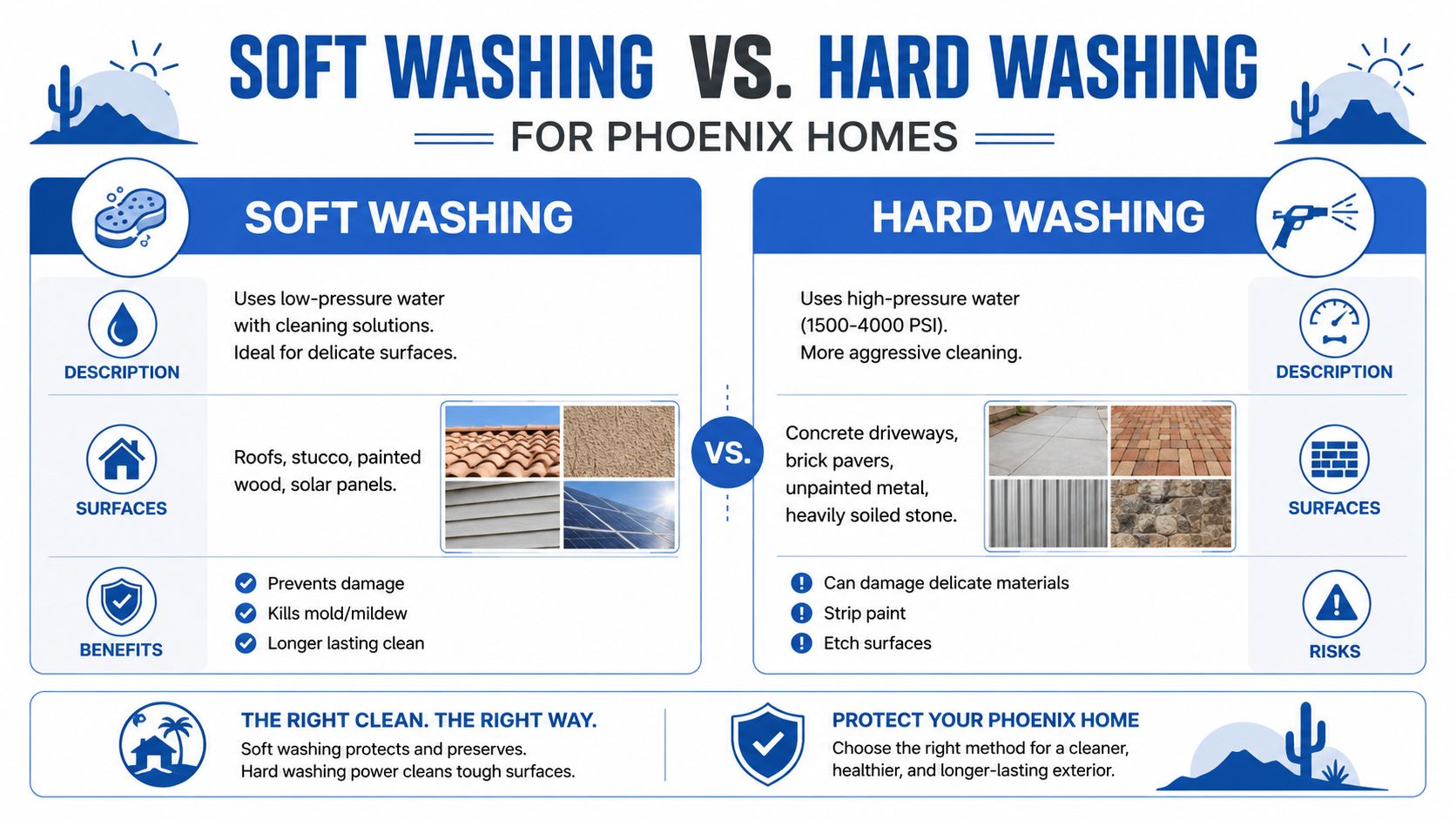
Hard washing uses higher pressure and belongs on durable surfaces. Think concrete driveways, some brick surfaces, pavers, and heavily soiled unpainted hardscape. On the right material, pressure does the job efficiently.
On the wrong material, it strips paint, scars the finish, opens up weak spots, and drives water where it shouldn't go.
Soft washing uses low pressure plus cleaning chemistry. That's usually the right choice for stucco, siding, painted wood, roofs, and other surfaces that need soil and organic growth removed without blasting the finish apart. If you want a clear overview of the process, this guide on what soft washing is is useful.
Most Phoenix content doesn't explain this distinction well. That gap matters because common local materials need a different approach. As noted by Wash Patrol's Phoenix overview, many guides fail to explain the split between hard washing and soft washing, and experts recognize that some delicate materials require precise low-pressure thresholds, including under 500 PSI for vinyl.
Soft washing cleans by loosening and treating contamination first. Hard washing cleans by force first. In Phoenix, force-first is often the wrong answer on residential walls.
Phoenix homes are full of surfaces that look sturdy but aren't pressure-proof. Stucco is the big one. Textured finishes hold dust well, but they can also erode or scar if a contractor cleans too aggressively. Painted wood trim, decorative coatings, fascia, and some fence materials have the same problem.
For owners comparing bids, ask what method they'll use on each surface. If one company says they clean everything with the same machine and the same pressure, that's a red flag.
A similar issue shows up on perimeter fencing and gates. Material matters. Wood doesn't react like PVC, and painted metal doesn't react like raw masonry. For a practical material-by-material example, this piece on cleaning wood, PVC, and metal fences shows why the method has to match the substrate.
In humid climates, people often focus on mold alone. In Phoenix, the bigger challenge is dust bonded to heat-stressed surfaces. That means the right chemistry and rinse pattern usually outperform brute pressure on home exteriors. Buyers who understand that distinction ask better questions and avoid paying for damage disguised as cleaning.
A lot of Phoenix owners book cleaning in spring because that's when the house feels overdue. The timing makes emotional sense. It often doesn't make practical sense.

Phoenix has a real timing paradox. Wash too early in spring, and dust plus monsoon activity can undo the visual benefit quickly. Wait too long, and summer humidity and grime sit on the surface longer than they should.
According to Pressure Power Pros, 68% of Phoenix homeowners wash their homes in March or April, but the local monsoon season from June through September often negates those efforts within 30 days. The same source points to late August as a more strategic post-monsoon window.
For most residential properties, the strongest timing options are:
The best cleaning date in Phoenix isn't the first warm week of the year. It's the point when you're least likely to pay for the same dust twice.
Don't schedule by habit. Schedule by exposure.
A home near open desert, active construction, or traffic corridors may load up with dust faster. A shaded north wall may hold grime differently than a west-facing stucco wall that gets baked all afternoon. A one-size-fits-all calendar usually misses that. The best schedule matches the property's actual soil pattern, not just the season on the calendar.
Price shopping without understanding scope is how owners end up with bad work. In Phoenix, the number on the quote depends on material, square footage, condition, and how carefully the contractor plans to clean it.
The local market gives a useful baseline. In Phoenix, the average residential pressure washing job costs $235, with most homeowners spending between $145 and $362, according to Angi's Phoenix pricing guide. The same source notes that pricing commonly runs from $0.10 to $0.50 per square foot, and stucco or wood siding can run higher at $0.30 to $0.55 per square foot.
| Service / Home Size | Typical Price Range |
|---|---|
| Average residential job | $145 to $362 |
| Standard 1,500-square-foot home | $150 to $750 |
| Larger 2,500-square-foot home | $250 to $1,250 |
| General square foot pricing | $0.10 to $0.50 per square foot |
| Stucco and wood siding | $0.30 to $0.55 per square foot |
| Brick surfaces | $0.10 to $0.40 per square foot |
The same Phoenix source explains why prices move around. A 1,500-square-foot home may fall between $150 and $750, while a 2,500-square-foot home can range from $250 to $1,250. Labor in the area is cited at $50 to $150 per hour, and many residential jobs take 2 to 5 hours.
That spread usually comes down to a few real job variables:
A low quote can mean the contractor is skipping prep, rushing the dwell time, or planning to use pressure where chemistry would be safer. A fair price usually reflects insurance, proper equipment, and enough labor to clean the surface without damaging it.
If a bid sounds too low for the amount of dirt, height, or surface sensitivity involved, look harder at the method before you look at the number.
A Phoenix contractor can make your house look sharp in one visit, or leave you with etched stucco, blown paint edges, and water pushed behind trim. The difference usually shows up before the job starts, in how they inspect the property and explain the method.

Phoenix homes are rarely one-material jobs. A single property may have stucco, painted fascia, block walls, coated driveways, travertine, and a little concrete that can handle far more force than the rest. A contractor who treats all of it the same is guessing.
Ask how long they have worked on Valley homes specifically. Desert dust, hard water runoff, monsoon residue, and sun-baked oxidation change how surfaces respond to cleaning. A crew with real local experience will talk about what gets soft washed, what can be surface cleaned at higher pressure, and where they expect permanent staining or coating failure to show up once the dirt is gone.
Good vetting comes down to method. Homeowners who ask better questions usually get better work.
Use questions like these:
Those answers matter more in Phoenix than many owners realize. The seasonal timing paradox is part of it. A house may look dirtiest after dust and monsoon season, but that does not mean every surface should be hit aggressively right away. Sometimes the right call is a softer wash on the walls, then a separate pass on concrete and masonry where pressure belongs.
For another example of what thoughtful process looks like in residential exterior work, this overview of expert residential exterior cleaning is a good benchmark.
Here's a short visual walkthrough worth reviewing before hiring anyone:
A useful estimate is specific. It should list the surfaces being cleaned, the method for each surface, what prep or access is needed, and what stains may improve versus remain. If a company just writes "house wash" and a price, you still do not know what you are buying.
A good comparison point helps. This guide to the best pressure washing services shows the kind of details serious companies put in front of customers.
Buyer check: Ask where they plan to reduce pressure, where they plan to use chemistry, and where they expect results to be limited by age, staining, or previous coating failure.
Some warning signs are easy to miss because they sound confident.
A Phoenix cleaning job can go sideways before the first hose comes off the truck. A gate is locked, a loose window leaks, or a fragile planter gets left in a spray zone. The prep is simple, but it affects results and liability.
Start with access and surface condition.
A short walkthrough saves a lot of frustration later. Show the technician the wall with runoff staining, the entry that gets sprinkler overspray, or the garage apron with oil spots. Confirm what is being cleaned, which areas need low pressure, and which stains may improve but not fully disappear.
Show the worst area before the job starts. That is when the crew can adjust method, chemistry, and expectations.
This matters more in Phoenix than in milder climates. Stucco, painted surfaces, coated patios, and bare concrete do not all get cleaned the same way. If the plan treats every surface like a driveway, the risk goes up.
The timing in Phoenix is tricky. Summer dust storms, monsoon runoff, hard water, and intense sun age surfaces fast, but cleaning at the wrong time can be less efficient. A practical schedule is based on exposure, material, and season, not a one-size-fits-all calendar.
A workable rhythm looks like this:
Maintenance also does not mean washing every surface every visit. Often the smart approach is spot cleaning concrete and entries more often, then scheduling a broader house wash on a separate cycle. That protects appearance without overworking softer materials.
Property owners usually spend less on correction work when they treat exterior cleaning like regular upkeep instead of waiting for baked-in staining, coating wear, or heavy runoff marks.
It can be if the contractor uses more water than the job calls for, lets runoff carry debris into the street, or applies chemicals without controlling where they land. In Phoenix, good technique matters as much as product choice because water use and overspray both matter on tight lots with desert plants, gravel beds, and coated stucco nearby.
A careful crew adjusts the method to the surface. Soft washing uses lower pressure and cleaning agents for stucco, painted exteriors, and other finishes that can be scarred by force. Hard washing has its place on durable concrete and some masonry, but high pressure on the wrong wall can do more harm than the dirt you were trying to remove.
Usually no, but the first walkthrough is useful.
That is when problem areas get identified clearly: oil spotting, rust bleed, loose paint, cracked stucco, failing caulk, or oxidation that cleaning will not reverse. After that, the job usually comes down to access, water availability, gate codes if needed, and a clear agreement on what is being cleaned.
Sometimes. Sometimes the stain lightens but does not disappear.
Phoenix driveways bake in contaminants fast, and old oil can sink deep into porous concrete. A good contractor should explain the difference between removing surface grime and reversing a set stain, especially if the slab is older, unsealed, or already discolored from hard water and tire marks.
It usually makes sense to treat it as a separate but related service. A freshly cleaned driveway and house exterior can still look unfinished if the glass is dusty, spotted, or carrying mineral residue from irrigation and hard water.
For windows, professionals generally use two methods: traditional squeegee work with scrubbing tools, or a pure-water system. Orloff's professional method guide explains when each approach makes sense. In practice, Phoenix properties often need method selection based on mineral buildup, sun exposure, screen condition, and access around landscaping or upper-story glass.
If your property needs more than a quick rinse, Professional Window Cleaning can help coordinate exterior cleaning with the right window cleaning method for the job. The goal is simple. Clean the right surfaces with the right process, avoid unnecessary pressure on delicate materials, and leave the property looking cared for rather than just sprayed off.
Read our blog posts regularly and keep learning.