Care and Maintenance
Sliding Window Cleaning That Actually Works
Learn sliding window cleaning the right way with pro tips on tracks, sills, and glass, plus the tools, solutions, and safety habits that prevent streaks


Soft washing is a low-pressure, chemical-based exterior cleaning method that typically uses 150 to 300 PSI instead of the 1,300 PSI minimum used in standard pressure washing, so it cleans by killing organic growth rather than blasting the surface. Its approach is akin to pest control for your building's exterior. It targets the growth causing the stains instead of just stripping away what you can see.
If you're looking at black roof streaks, green siding, dingy stucco, or that grimy film that makes a property feel older than it is, you're in the same spot as a lot of homeowners and property managers. The first instinct is often to rent a pressure washer and hit everything hard. That's understandable. It's also where a lot of avoidable damage starts.
Soft washing is the modern answer when the surface is delicate, painted, sealed, or vulnerable to water-force damage. It's common on homes and commercial buildings in dry, dusty, sun-heavy markets like Phoenix, where exterior materials take a beating and stains show up fast.
A homeowner notices dark streaks under the eaves, green haze on shaded stucco, and a roof that suddenly looks tired. The house isn't old. It just looks neglected. So the natural thought is, “I need more pressure.”
That's where many people get tripped up. More pressure doesn't automatically mean better cleaning. On the wrong surface, it means surface loss, paint damage, water intrusion, and shortened material life.
A black streak and a dirt streak aren't always the same problem. A green patch on siding usually isn't “just grime.” It's often living growth on the surface. Mold, algae, mildew, moss, and pollen behave differently than plain dust or mud. If you only blast the visible layer off, you may improve the look for a while without solving the cause.
Soft washing approaches the problem from the source. Instead of treating the stain like a stuck-on crust, it treats it like biological contamination that needs to be neutralized.
Practical rule: If the surface is delicate and the staining is organic, brute force is usually the wrong first move.
That matters for curb appeal, but it also matters for maintenance planning. If you're thinking beyond a quick cosmetic fix, it helps to pair cleaning with other smart strategies for home exterior refresh that protect the look and longevity of the whole property.
At its simplest, soft washing is a low-pressure treatment that applies cleaning solution to the surface, allows it to work, and then rinses gently. The pressure is there to deliver and remove, not to strip and carve.
That's why soft washing is often the right fit for:
People often think of exterior cleaning as one category. It isn't. The method has to match the material.
Soft washing works because the chemistry does the cleaning and the water pressure carries the solution where it needs to go. This fundamental concept is often overlooked.
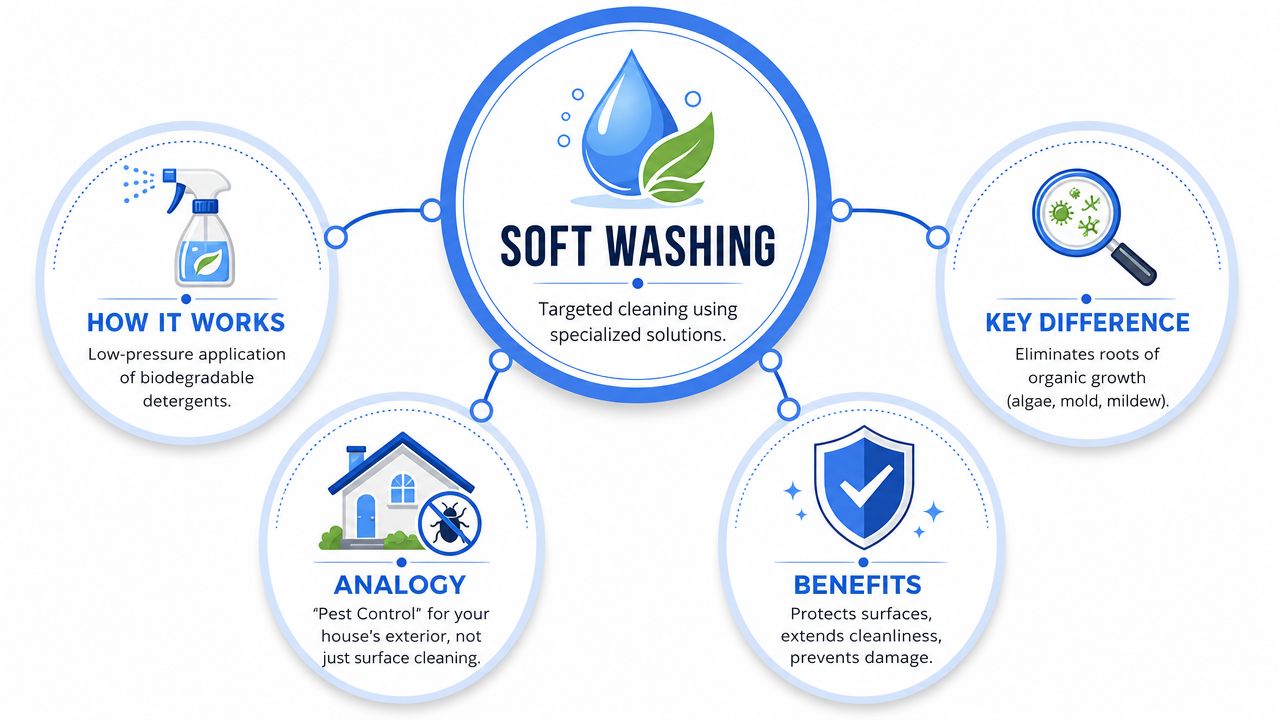
If pressure washing is like knocking weeds flat with a hose, soft washing is more like applying a treatment that kills them at the root. The stain disappears because the growth is broken down chemically, not because the surface was hammered until it looked clean.
According to Angi's explanation of soft washing and pressure washing, soft washing uses 150 to 300 PSI, far below the 1,300 PSI minimum of standard pressure washing. That difference is significant on fragile surfaces. Asphalt shingles can be damaged by pressures above 500 PSI, and the same source notes that industry experts say shingle roofs should “always be soft washed.”
The usual soft washing formula relies on a few basic components:
The purpose isn't to grind dirt off by force. The purpose is to let the solution contact the contamination long enough to break it down.
A useful way to think about it is this:
| Part of the process | What it does |
|---|---|
| Low pressure | Applies and rinses without tearing up the surface |
| Sodium hypochlorite | Targets organic growth |
| Surfactant | Helps the solution stick and work evenly |
| Dwell time | Gives the chemistry time to do its job |
Low pressure protects the material under the stain. That includes shingles, stucco, painted wood, trim, and other surfaces that don't tolerate aggressive force well. The solution penetrates contamination while the surface stays largely undisturbed.
Soft washing cleans the cause of the stain, not just the face of it.
That's why a house can come out cleaner without looking “blasted.” The finish, coating, and texture remain intact, which is exactly what you want when you're cleaning a building instead of stripping one.
The best way to choose between these methods is to stop asking which one is “better” and start asking which one matches the material. Each has a place. Problems start when people use one method for every job.
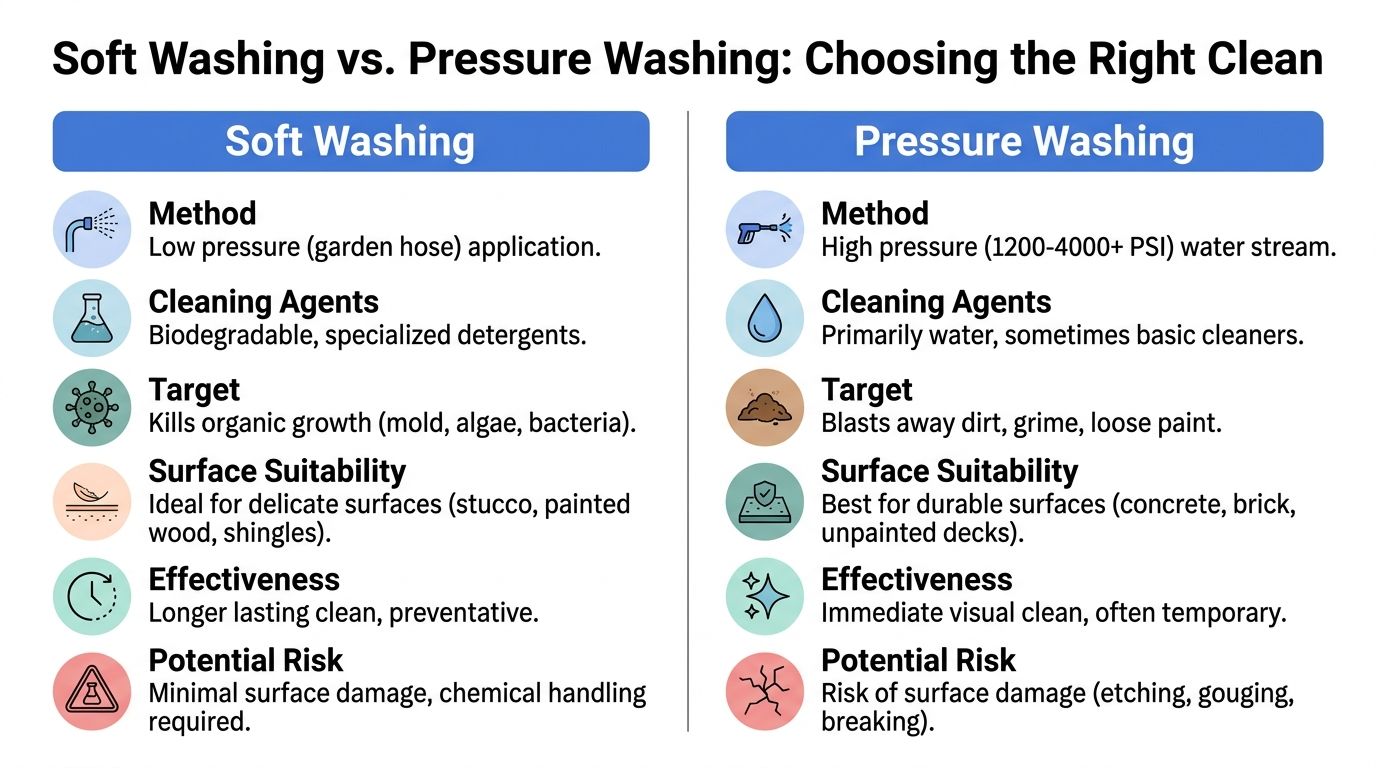
According to Southeast Softwash's guide to soft wash systems, soft washing typically operates between 40 and 300 PSI, while traditional pressure washing starts at 1,300 PSI and can exceed 4,000 PSI. That's not a small difference in feel. It's a different cleaning mechanism entirely.
Soft washing relies on chemical oxidation to dissolve and neutralize organic grime. Pressure washing relies on mechanical force. That force can etch, gouge, or delaminate surfaces if the operator chooses the wrong tip, gets too close, or stays too long in one spot.
Here's a side-by-side way to view it:
| Criteria | Soft washing | Pressure washing |
|---|---|---|
| Main cleaning action | Chemical treatment | Water force |
| Pressure range | 40 to 300 PSI | 1,300 PSI and up |
| Best for | Delicate and coated surfaces | Hard, durable surfaces |
| Main target | Organic growth | Embedded dirt, debris, loose buildup |
| Main risk | Chemical misuse | Surface damage from force |
For a closer look at one common trouble spot, this guide on whether you should pressure wash vinyl siding is worth reading.
Pressure washing isn't the villain. It's the wrong tool for some surfaces.
It's often the right choice for:
It's a poor choice for surfaces that rely on coatings, granules, seals, paint films, or softer finishes.
A quick visual can help if you want to see these methods in action.
Use soft washing when the surface is fragile or the contamination is alive. Use pressure washing when the surface is hard enough to handle force and the problem is mostly surface debris.
That one rule clears up most of the confusion.
A good exterior wash should do two jobs at once. It should remove the stain you can see and help preserve the surface you paid for.
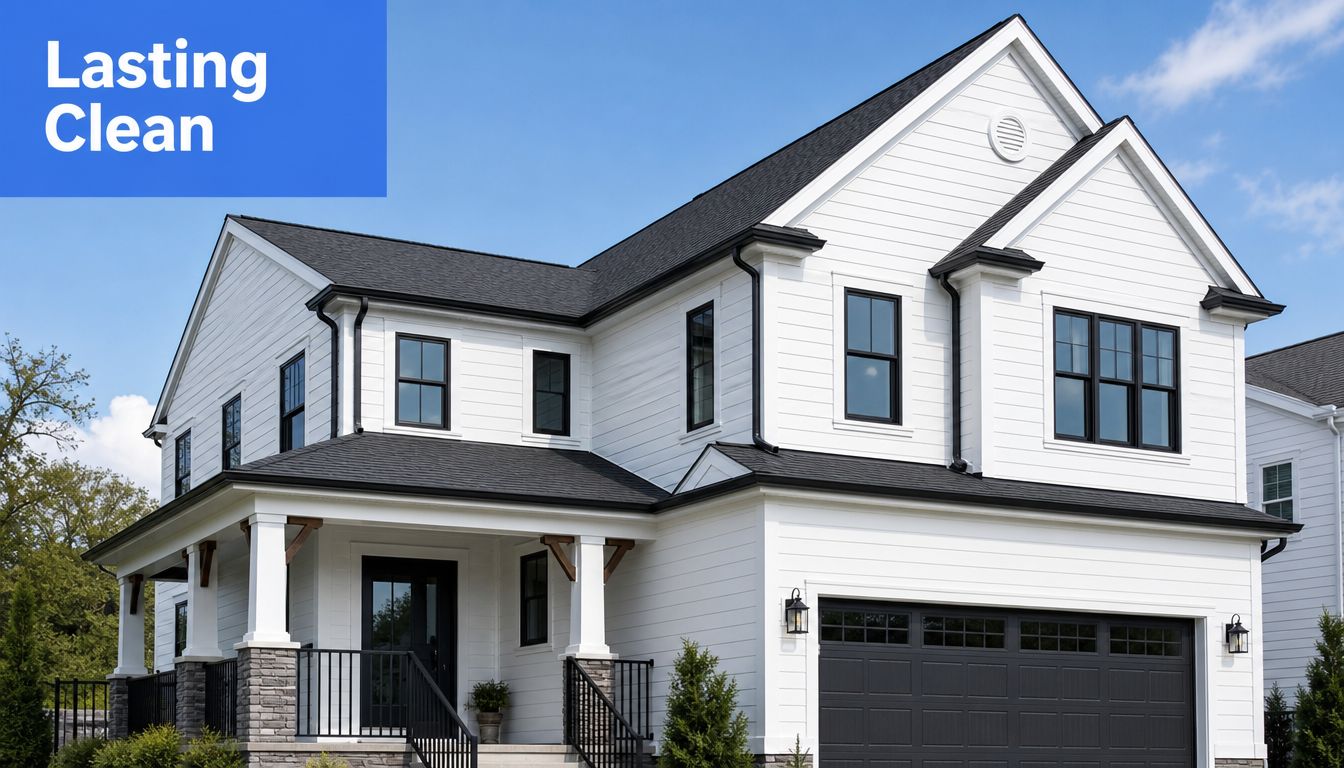
Many exterior materials have a thin protective layer that does more work than owners realize. Paint sheds water. Factory finishes resist UV wear. Roof surfaces protect the structure below. Once that outer skin is scarred, stripped, or loosened, the building may still look acceptable for a while, but its protection has already been reduced.
Soft washing helps preserve surfaces that can be worn down by aggressive spray:
The simplest way to picture it is this. Scrubbing a nonstick pan with steel wool may remove the mess, but it also ruins the finish. Exterior cleaning works the same way. A surface can look cleaner, all things considered, and still be worse off.
Soft washing is especially useful where discoloration comes from living growth such as algae, mildew, mold, and bacteria. Dirt sitting on the surface is one problem. A colony feeding and spreading on the surface is a different one.
When the treatment deals with that biological growth, the result usually lasts longer than a rinse that only blasts away the visible layer. That matters on shaded siding, north-facing walls, soffits, and roofing where growth tends to return if the root cause is left behind.
For a homeowner, that means the property keeps a cared-for look longer between service visits. For a commercial property, it means fewer cycles of “clean today, stained again soon,” which is a frustrating and expensive pattern.
A cleaning method should improve appearance without shortening the life of the material underneath.
The long-term value of soft washing is less about one dramatic before-and-after photo and more about repeatable care. Owners who treat exterior cleaning as maintenance usually spend less time correcting avoidable wear later.
That point becomes even more important around window lines, trim details, seals, and coated frames. A contractor can clean siding successfully and still create problems near glass if the process is careless. Proper soft washing should leave the exterior cleaner without turning the window package into a separate repair or restoration issue.
That is why experienced crews focus on more than stain removal. They pay attention to dwell time, rinse control, runoff, surrounding materials, and where the cleaning mix travels after it leaves the wall.
Soft washing is safer for many exterior materials, but it isn't risk-free. The pressure is lower. The chemistry is more serious. That tradeoff needs skill and attention, especially around landscaping, glass, metal frames, and seals.
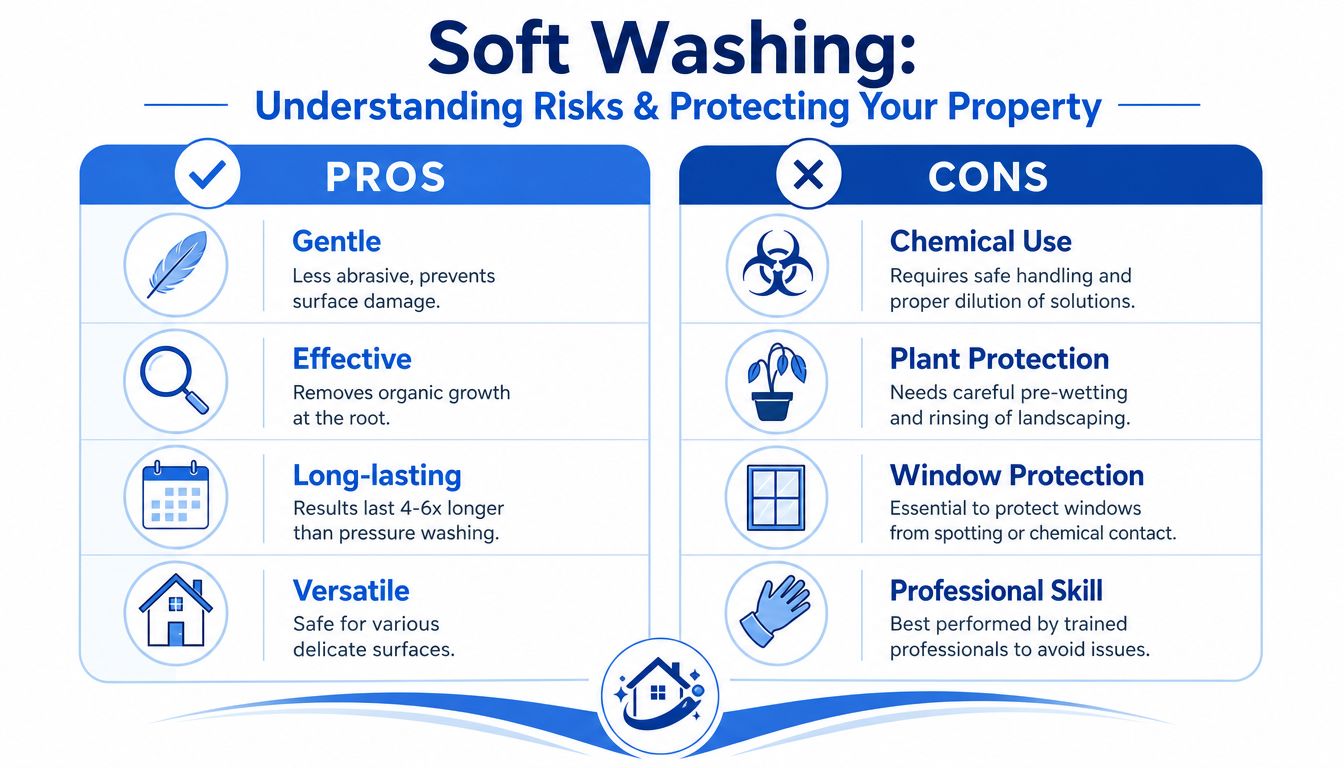
Many consumer guides talk about roof safety and siding safety, then glide right past the window package. That's a mistake. Windows sit in the splash zone, and they combine several vulnerable parts in one place: glass, anodized aluminum, sealants, gaskets, screens, and frames.
According to this discussion of soft washing and chemical risk to windows, research from the National Institute of Building Sciences found that improper bleach concentrations can degrade anodized aluminum frames and compromise window sealants over time. The same source notes that the risk can be worse in Arizona and Nevada, where intense UV exposure may speed up that deterioration.
That means a siding-safe mindset isn't enough. The operator has to think like a window specialist when working near glass and frames.
This distinction matters more than most owners realize. When people ask about cleaning windows professionally, there are only 2 methods window cleaning professionals use. The squeegee method, or the pure-water system.
Professional Window Cleaning has been cleaning windows for over 26 years.
According to this explanation of professional window cleaning methods, professional exterior window cleaning relies on either a traditional mop-and-squeegee process using water and detergent or a pure-water system that uses filtered or deionized water delivered through a water-fed pole.
Those methods are purpose-built for glass. Soft washing is not.
Don't assume that because a chemical is safe for siding, it belongs on glass or window frames.
A responsible soft wash crew plans around windows instead of treating them as an afterthought.
That usually means:
If a property needs both exterior washing and window cleaning, those are related services, but they are not the same task and shouldn't be performed with the same chemistry.
Renting equipment is the easy part. Correctly reading a surface, mixing the treatment to the growth you have, controlling runoff, and protecting nearby materials is where professional work earns its price.
Soft washing works a lot like using the right medicine at the right dose. Too weak, and the algae survives. Too strong, and you can stain trim, stress plants, or leave residue on glass and frames that now needs separate attention. That last part gets missed often. A house can look cleaner from the curb while the windows and surrounding finishes take the hit.
The soft wash market is a large part of exterior cleaning now. According to the 2025 industry report on pressure washing and soft washing, soft washing is a major service category across North America, and project pricing usually ranges widely based on house size, access, and surface conditions.
That range makes sense in the field. A small vinyl-sided home with light organic growth is a very different job from a larger property with painted trim, oxidation-prone metal, shaded walls, and lots of window area.
If you are comparing bids, it helps to understand the broader scope of building exterior cleaning services so you can tell what belongs in the wash itself, what requires extra protection, and what should be treated as a separate service.
A reputable crew follows a sequence for a reason. Good results start before the first application.
Field note: Crews that look methodical at the start usually prevent the problems owners notice later.
Homeowners often judge the job by how bright the siding looks an hour later. A seasoned exterior cleaner is watching different things at the same time. Painted surfaces can react differently than vinyl. Oxidized metal can mark easily. Window frames, seals, and screens can be affected by chemical dwell and rinse patterns even when the wall itself cleans up well.
That is why hiring a pro is really paying for judgment. You are paying for someone who knows that exterior cleaning is not one big category, and that soft washing the house is different from professionally cleaning the windows. When that distinction is handled correctly, you avoid the expensive version of a cheap mistake.
A lot of the confusion around soft washing starts here. Homeowners hear one term and assume it covers every exterior surface the same way. It does not. Siding, masonry, glass, frames, seals, and screens each react differently, which is why the right answer often depends on the material in front of you.
There is no single schedule that fits every home.
A shaded house with heavy tree cover, poor airflow, and frequent moisture usually develops algae and mildew faster than a home that gets strong sun and dries quickly after rain. Surface type matters too. Painted siding, vinyl, stucco, and trim can each show growth differently. The better rule is to watch for returning organic staining and clean before it becomes heavily established.
Often, yes, but the decision should be based on the condition of the surface and the mortar, not just the fact that it is masonry.
Brick and stone are hard materials, but older mortar joints can be fragile, and some surfaces absorb solution differently than others. A good contractor treats the wall according to what it can safely handle. In some cases that means soft washing the whole area. In others, it means using a mix of low-pressure chemical treatment and more targeted cleaning on select spots.
It can be, if the crew handles the chemistry correctly and manages the site with care. Kevco's explanation of soft washing chemistry and safety steps outlines the same principles experienced cleaners follow in the field: soft wash solutions are aimed at organic growth, surrounding vegetation should be pre-wet, and the area should be rinsed and controlled so plants and pet areas are not left with concentrated residue.
The same logic applies to windows and frames. Glass may look tough, but overspray left to dry on frames, seals, or surrounding finishes can create problems that have nothing to do with whether the siding cleaned up well.
Usually, no. The odor tends to fade after the surface is rinsed and the area dries.
What matters more is how the job is managed during application and rinse. If runoff sits where it should not, or if solution dries on nearby materials, the bigger concern is surface contact time, not the temporary smell.
Usually not with the standard house wash mix.
Soft washing chemistry is designed for organic staining such as algae, mold, and mildew. Rust, oxidation, and mineral deposits are different problems. They call for different acids, specialty products, or restoration methods. That distinction matters around windows because hard water on glass and oxidation on frames should be treated as window and frame care, not lumped into a general house wash.
They can be scheduled on the same day, but they should not be treated as the same task.
Soft washing a house is like washing the body of a vehicle. Professional window cleaning is the glass-detail stage that follows its own method. Exterior glass may need a squeegee, a pure-water system, or separate stain removal depending on the condition of the panes and frames. If a contractor talks about windows as if they are an ordinary part of the siding rinse, that is a sign to ask more questions.
If you want help with exterior glass after a soft wash, or you need expert window washing for a home, commercial property, or high-rise, Professional Window Cleaning is a trusted choice. Since 1999, the company has served property owners across Arizona, Colorado, and Nevada, with service in cities including Phoenix.
Read our blog posts regularly and keep learning.