Care and Maintenance
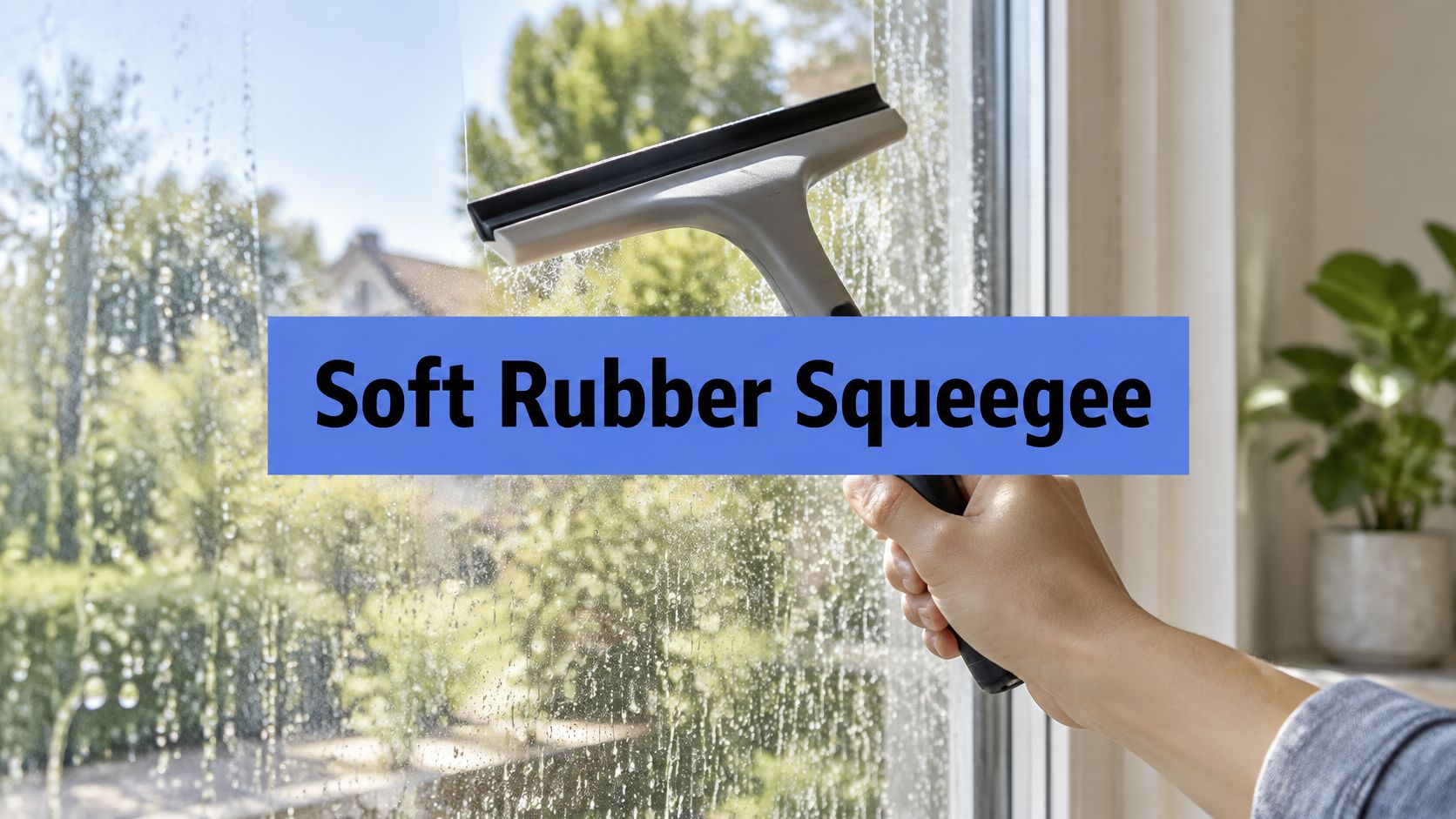
Soft Rubber Squeegee: What It Is and When to Use It
Learn what a soft rubber squeegee is, how it compares to other blades, and when pros choose it for streak-free window cleaning in homes and high-rises.


You walk up the driveway, look at the side of the house, and notice what changed. The vinyl doesn't look bright anymore. There's a dusty film across the panels, darker streaks under a few windows, and maybe some green growth near a shaded corner.
That's when most homeowners ask the same question. Should you pressure wash vinyl siding? The short answer is yes, sometimes. The better answer is yes, but only after you check the siding itself and only if you use the right method.
After more than 26 years around exterior cleaning, one thing is consistent. Homeowners usually focus on the machine first. The decision starts with the surface. Clean, solid vinyl in good shape can often handle a careful wash. Older, chalky, faded, or brittle siding is a different story.
Vinyl siding doesn't usually fail all at once. It just gets dingier by degrees until one day the house looks tired. That buildup is often a mix of dust, pollen, mildew, algae, and runoff staining.

Exterior washing has shifted from an occasional big cleanup to regular maintenance. One homeowner guide says most residential properties benefit from an exterior wash every 12 to 18 months, and the same source notes the global pressure washer market is projected to reach $3 billion by 2026, which reflects how routine exterior cleaning has become for homeowners trying to stay ahead of staining and buildup (home exterior washing intervals and market projection).
In dusty, sunny areas like Phoenix, that maintenance mindset makes sense. Dirt sticks faster, sun exposes streaking, and neglected grime gets harder to remove cleanly.
Vinyl siding is generally considered washable. The problem isn't whether water can clean it. The problem is whether the cleaning method will push water behind the panels, mark the surface, or damage already weakened sections.
A lot of DIY jobs go wrong because the homeowner rents a machine and treats the siding like concrete. Vinyl is more forgiving than some materials, but it still has seams, gaps, trim edges, and age-related wear. If you miss those details, you can turn a cosmetic cleanup into a moisture problem.
Practical rule: If your siding only looks dirty, washing may help. If it looks damaged, chalky, or unevenly faded, cleaning may expose a bigger issue.
Walk the house first and check for these signs:
If mold is showing up indoors too, the problem may go beyond the siding. For interior moisture-related cleanup, these effective ceiling mold removal methods are a useful companion read because exterior water issues and interior mold concerns often overlap.
For a broader maintenance schedule, this guide on how often you should pressure wash your house helps put siding washing into the full exterior care cycle.
The biggest mistake homeowners make is thinking pressure is what gets the siding clean. Pressure helps rinse. It is not what should be doing all the work.
High pressure creates three common problems on vinyl siding. None of them are minor once they happen.

Vinyl siding is designed to shed water, not to resist a jet driven upward into the laps and seams. If you aim the wand wrong, water can get behind the siding and stay there longer than you think.
That hidden moisture is where trouble starts. Wall cavities, sheathing, insulation, and trim details don't dry well when you force water into them. The siding may look clean on the outside while the problem is developing out of sight.
This is the issue most generic articles skip.
Independent guidance warns that high pressure can remove oxidation unevenly from vinyl siding and leave “splotchy” marks, especially on weathered exteriors in sun-intense markets like Arizona and Nevada where UV exposure accelerates wear (oxidation warning for vinyl siding).
If you rub your hand across the siding and get a chalky residue, that matters. It often means the outer surface has aged. A pressure washer can strip that oxidation unevenly, leaving clean-looking streaks beside dull, faded areas. Once that happens, the house can look worse after washing than before.
If the siding is chalking, the question isn't just “Can I wash it?” The better question is “Will washing reveal uneven aging I can't undo?”
For homes in Arizona, Nevada, and Colorado, that pre-wash oxidation check is one of the most important parts of the job. Strong sun changes the condition of the siding long before most homeowners realize it.
The third risk is impact damage. Older vinyl can crack. Loose panels can shift. Window trim can get hammered. Seals around openings can be stressed if the operator gets too close or lingers in one spot.
Watch for these red flags before you wash:
A pressure washer is a useful tool. It's also very good at turning a small weakness into visible damage.
If your siding is in solid condition and you're going to clean it yourself, treat this as a controlled maintenance job. Don't rush it. Don't chase speed. The safest approach is low pressure, steady technique, and constant attention to spray angle.
Consumer Reports recommends about 1,200 to 1,500 psi for vinyl siding and warns against spraying directly into gaps around windows, doors, and lap joints because trapped moisture can promote mold growth (Consumer Reports guidance for vinyl siding pressure settings).

Before you ever squeeze the trigger, prep the work area.
If you're cleaning in a place with seasonal dust and pollen, like Denver, this prep matters because fine debris tends to collect around trim, corners, and upper laps where careless rinsing can drive it deeper instead of removing it.
A safe DIY setup usually includes:
Keep the wand at a sensible distance from the wall and test an inconspicuous section first. If the siding reacts badly, if oxidation shows up, or if seams start catching water, stop there.
Field note: Straight-on or downward spray is safer. Upward spray is where many DIY jobs go wrong.
Here's the practical sequence that works:
A few things that do not work well:
If a stain won't come off with safe technique, that's usually a sign you need a different cleaning method, not more pressure.
A lot of homeowners frame this as a strength question. Can vinyl handle pressure or not. That's not the best way to look at it.
The better question is which method fits the siding's condition and the kind of contamination you're dealing with. Pressure washing relies more on water force. Soft washing relies more on detergent, dwell time, light agitation when needed, and a gentler rinse.
Home improvement guidance has helped push this distinction into the mainstream. While some guides still say vinyl can withstand 2,500 to 3,000 PSI, the safer recommendation increasingly favors soft washing because it uses detergent and brushing to reduce the chance of forcing water behind panels, especially on delicate or weathered exteriors and when mold or mildew is involved (soft washing guidance for house exteriors).
| Feature | Pressure Washing | Soft Washing |
|---|---|---|
| Primary cleaning force | Water pressure | Cleaning solution and low-pressure rinse |
| Best for | Solid siding with surface dirt and general grime | Weathered siding, organic growth, and risk-sensitive areas |
| Water intrusion risk | Higher if technique is poor | Lower when done correctly |
| Older or oxidized vinyl | Riskier | Usually the safer option |
| Mold and mildew treatment | Can remove surface growth | Better suited when you want to treat the growth, not just rinse the surface |
| DIY difficulty | Higher than most homeowners expect | Still requires care, but often less dependent on force |
| Chance of visible damage | Higher on aged, brittle, or sun-damaged siding | Lower when chemistry is matched to the surface |
Pressure washing can be appropriate when the vinyl is still structurally sound, the staining is mostly surface-level, and the operator can maintain a safe angle and low setting. It's a maintenance method, not a rescue method.
People run into trouble when they use pressure for jobs that really call for treatment. Dirt may rinse off. Embedded grime, mildew staining, or weathered film often won't.
Soft washing is usually the better fit when the siding is older, visibly faded, chalking, or carrying organic growth. The point is to reduce stress on the material while still cleaning effectively.
That makes it especially useful when:
If you're unsure, choose the method that reduces risk first. A slightly slower clean is better than a fast clean that leaves permanent marks.
Water alone doesn't solve every siding problem. It removes loose dirt well enough, but mildew, algae, and oily grime usually need help from a cleaning agent. The goal is to match the cleaner to the stain without creating a second problem on the siding surface.
For light dust and general dirt, a mild soap-and-water approach is often enough. For organic growth, use a vinyl-safe house wash or another cleaner specifically labeled for that use. If you prefer a simpler option for lighter mildew, a diluted vinegar-based approach is often used by homeowners, but it still needs spot testing first.
Avoid harsh abrasives, strong solvents, and any product that might discolor or dull the finish. If you need to scrub, use a soft brush rather than anything aggressive.
Cleaners should do the heavy lifting. Pressure should only support the rinse.
Some mistakes come from using the wrong chemistry, not the wrong machine.
If you're comparing exterior materials and thinking beyond cleaning alone, this guide to siding cost, durability, and maintenance gives useful context for how care expectations differ between vinyl and fiber cement.
Some siding projects shouldn't be DIY. That doesn't mean homeowners can't handle basic maintenance. It means the risk changes quickly when height, aging materials, or heavy staining enter the picture.

Hire a professional if any of these apply:
Ladders and pressure washers are a bad combination for many. Add wet surfaces, overspray, upper-story windows, and landscaping below, and the margin for error gets very small.
For large homes, urban properties, and buildings in markets like Las Vegas or Scottsdale, professional service often makes more sense because access and risk control matter as much as cleaning technique.
A seasoned exterior cleaner doesn't start by washing. They start by reading the surface. They look for oxidation, weak seams, brittle sun exposure, trim vulnerabilities, stain type, runoff patterns, and nearby window risks.
Professional Window Cleaning has been cleaning windows for over 26 years. For window cleaning, professionals use only two methods: the squeegee or a pure-water system. That same surface-first thinking carries into exterior cleaning, where the right method matters more than the most aggressive tool. If you're comparing options, this overview of pressure washing services for homes and buildings can help you evaluate what to ask before booking.
A quick look at the process helps show why trained work is different:
Here's a short visual example of exterior pressure washing in action:
It's not just labor. It's judgment.
Most bad siding washes come from one of two things. The wrong method, or the right method used on the wrong surface. A professional should be able to tell you which one applies before any cleaning starts.
The best answer to should you pressure wash vinyl siding is a decision process, not a yes-or-no slogan.
Start with condition. If the siding is brittle, chalky, heavily faded, or already showing wear, skip high pressure. Next, look at the stain. Surface dirt may respond to a careful rinse. Mildew and algae usually point toward a softer approach with the right cleaner. Then be honest about access. If the work involves upper walls, ladders, or sensitive trim, the risk climbs fast.
A clean house always looks better, but curb appeal shouldn't come at the cost of water intrusion or visible damage. Good exterior maintenance protects the siding, the trim, and the windows around it.
If your vinyl is in good shape, a cautious low-pressure wash may be enough. If it's weathered or sun-damaged, soft washing is often the smarter move. If you're unsure which category your home falls into, that uncertainty is itself a good reason to bring in a trained eye.
If your siding, trim, and windows need a careful exterior cleaning plan, Professional Window Cleaning can help you determine whether low-pressure washing, soft washing, or a different approach makes the most sense for your property.
Read our blog posts regularly and keep learning.