Care and Maintenance
Window Squeegee Rubbers: A Complete Reference Guide
Window squeegee rubbers explained — types, sizes, materials, how to measure, replace, and pick the right rubber for clean, streak-free glass every time.


Let's get right to it. For the vast majority of homes, the simple rule of thumb is to pressure wash your house once a year. Think of it like an annual tune-up for your property—it keeps everything looking its best, prevents long-term damage from built-up grime, and protects your investment. This yearly wash, however, is really just a starting point.
While a yearly cleaning is a solid baseline, your home’s unique environment is what really dictates the ideal schedule. Things like your local climate, the type of siding you have, and even how many trees are nearby all play a huge role. A house in a dry, dusty area simply has different needs than one in a humid, shady spot prone to algae.
To make things a little easier, we put together a simple decision tree to help you nail down a schedule that’s just right for your home.
This visual guide helps you quickly decide on a washing frequency based on your climate and local environment.
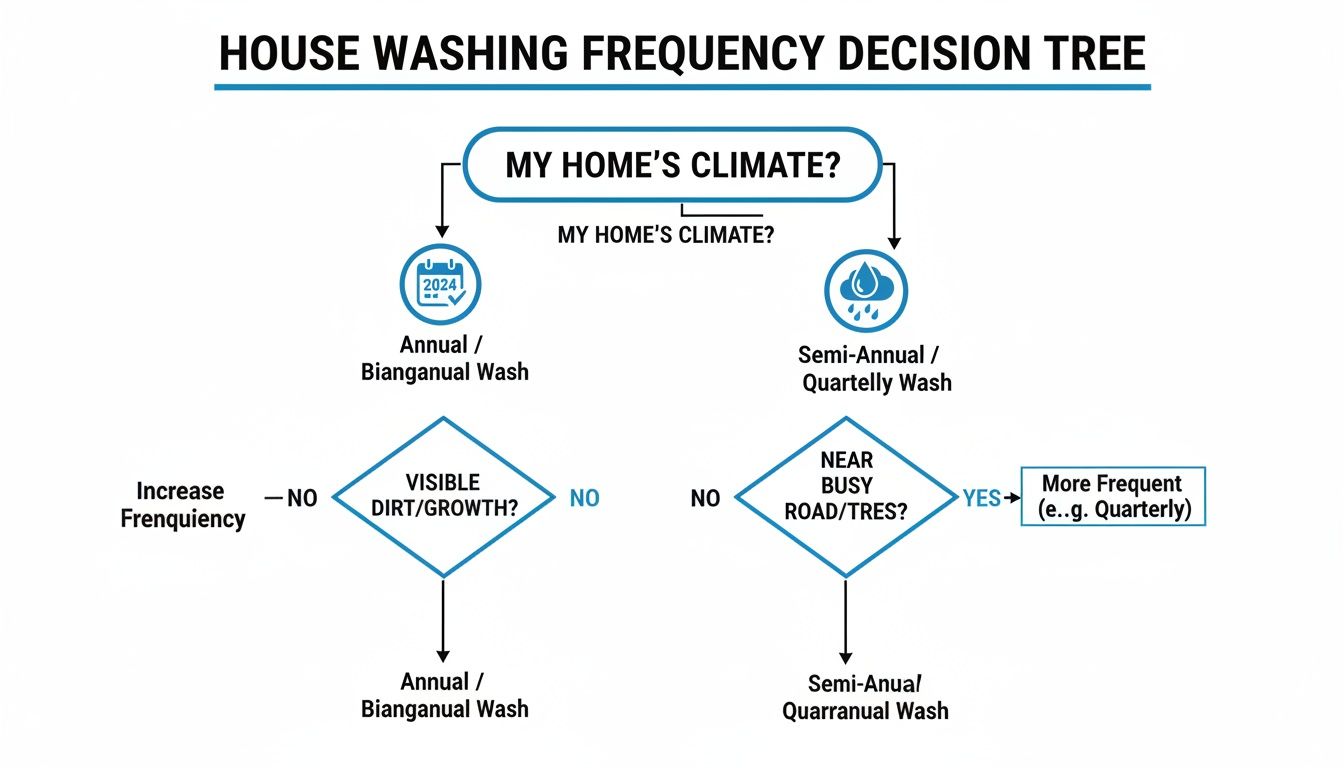
As you can see, while a yearly schedule works for many, factors like high humidity or heavy pollution might mean you’re better off washing every six months.
To simplify things even further, here's a quick reference table.
This table provides a quick reference for homeowners to determine their ideal pressure washing schedule based on common conditions.
This table serves as a great starting point, but always trust your eyes—if your house looks dirty, it probably is!
Experts across the board agree: for most homes in the US, pressure washing once a year is the gold standard. Take a sunny place like Scottsdale, AZ, for example. The desert climate keeps things relatively dry, but you still get plenty of wind-blown dust. An annual wash is the perfect solution for this kind of environment.
This yearly ritual does more than just make your house look new again—it’s critical preventative maintenance. If left to sit, accumulated grime can actually shorten your home's lifespan by up to 20-30%. You can find more research on how exterior cleaning protects your investment over at PremierPowerWashingVT.com.
Here at Professional Window Cleaning, our 26 years of experience have shown us time and again how a simple yearly wash can completely transform a home, boosting its curb appeal and preserving property value.
In drier climates with low humidity, like you find across much of Arizona and Nevada, dirt and pollen don’t have as much moisture to help them cling to surfaces. This makes a single, thorough cleaning each year incredibly effective.
For homeowners in cities like Phoenix, AZ, or Las Vegas, NV, this yearly plan is the key to maintaining a pristine exterior. It’s a small investment that pays off big in longevity and simple pride of ownership.
While a yearly pressure wash is a fantastic rule of thumb, it’s not set in stone. Several key factors can easily shift this timeline, turning a once-a-year chore into a semi-annual necessity. Think of it like this: a car driven daily on dusty country roads needs a wash far more often than one that stays tucked away in a clean garage. Your house is no different.
The single biggest variable is your local climate. A home in a damp, humid area with plenty of shade from trees is prime real estate for mold, mildew, and algae. These organic growths don't just look ugly; they actively feed on and break down your home's exterior surfaces. This kind of environment demands more frequent attention, often requiring a wash every six to eight months to keep that destructive growth in check.
The materials on your home's exterior, like the siding or even the type of pressure-treated lumber used for your deck, are a huge factor in how often you should pressure wash. Different materials hold onto dirt and grime in their own unique ways.
This is exactly why a one-size-fits-all approach just doesn't cut it. A professional assessment always considers these material differences to create a cleaning plan that’s both safe and effective for homes in areas like Phoenix, AZ, and Denver, CO.
Your home’s specific location—right down to the street it’s on—also plays a massive role. The grit and grime from a city are completely different from natural debris, and that can significantly change your washing schedule. A home near a busy highway is constantly bombarded with exhaust and soot, creating a sticky, oily film on the siding. This acidic residue can eat away at paint and demands more frequent cleaning than a home in a quiet suburb.
With over 26 years of experience, Professional Window Cleaning has seen firsthand how all these variables interact. We develop custom cleaning plans for clients everywhere, from the dusty monsoon seasons in Phoenix, AZ, to the high-pollen springs in residential neighborhoods.
Likewise, living in a new construction zone means your home will be blanketed in fine dust and dirt for months, often requiring an extra wash. Even being downwind from a large farm can mean more organic matter clinging to your home. Taking these local details into account is the key to figuring out how often you really need to pressure wash. You might also find our guide on the best times for seasonal washing helpful for planning ahead.
Forget circling a date on the calendar. While having a yearly schedule is a great rule of thumb, the best way to know when to pressure wash your house is to let your house tell you. Learning to spot the early warning signs of grime lets you be proactive, transforming a simple wash into preventative maintenance that protects your biggest investment.

Often, the first signs are pretty subtle. You might just notice your home’s vibrant color looks a little dull, or that the siding has a generally “tired” appearance. That lackluster look is usually the first film of dirt, pollen, and pollutants settling on the surface.
Go ahead and grab a notepad—a quick walk around your property will tell you everything you need to know. Make sure to pay close attention to the north-facing side of your home. It gets less sunlight, making it a prime spot for organic growth to take hold.
Here’s what you should be looking for:
Spotting these issues early is the key. When mold and algae are left to thrive, they can cause permanent staining and even start to break down your paint and siding. That’s when a simple cleaning job turns into a much more expensive repair.
If you’re seeing any of these signs, your house is telling you it's time for a wash. This holds true whether you live in the dry heat of Phoenix, AZ, or the four-season climate near Denver, CO. Don't wait for the problem to get worse—tackling it now protects your property and gives your curb appeal an instant boost.
When it comes to pressure washing, one size definitely does not fit all. A generic, once-a-year schedule might fly in other parts of the country, but the unique climates across the Southwest and Mountain West call for a much smarter game plan.
Knowing the right rhythm for pressure washing your house in these regions means understanding what you’re up against—from Arizona’s monsoon dust storms to the grime left behind by a Colorado winter.

With over 26 years of experience serving these exact communities, we’ve dialed in the perfect timing and techniques for each local challenge. We know this terrain because it’s our own backyard.
For homeowners in Arizona cities like Phoenix and Scottsdale, the biggest enemies are dust and sun. The infamous summer monsoon storms don’t just bring a little rain; they kick up massive dust clouds that blanket everything in a fine layer of dirt. Then, the intense sun bakes that grime right onto your siding, making it a nightmare to remove.
In Las Vegas, NV, the challenge comes from the relentless, dry wind. It’s constantly carrying dust and fine sand that acts like a slow-motion sandblaster on your home’s exterior. Combine that with urban pollutants from traffic, and you get a gritty film that dulls your home’s appearance and can eat away at your paint. A bi-annual schedule here isn't just a good idea; it's often a necessity.
Homes in and around Denver, CO, face an entirely different set of problems. The winter leaves behind a nasty residue of road salt and de-icing chemicals that are incredibly corrosive to siding materials. Just as that threat passes, a heavy spring pollen season arrives to coat everything in a sticky yellow film.
For certain properties, even twice a year isn't quite enough. Picture a high-rise condo in Las Vegas, NV, or a commercial building in Denver, CO, that's constantly battered by urban pollution. In those scenarios, pressure washing every 6-8 months is a smart, preventative move. In fact, homes in polluted urban areas can accumulate soot and exhaust 50-60% faster, making this rhythm essential for protecting property value and preventing long-term damage. You can find more insights on how these factors impact your schedule at WindowGenie.com.
So, you've figured out your house is due for a good cleaning. The next thought that pops into most homeowners' heads is, "Can I just do this myself?" Renting a pressure washer from the local hardware store for a weekend seems like a great way to save a few bucks. But before you go down that road, it's worth knowing that this DIY project is filled with pitfalls that can turn a simple wash into a very expensive headache.

The real danger is in the machine itself. A pro knows the exact pressure (PSI) and the right nozzle needed for every surface, whether it's tough brick or more fragile vinyl siding. One of the most common DIY mistakes is cranking the pressure too high or using the wrong tip. That's how you end up with permanently scarred siding, splintered wood decks, or even faint lines etched into your concrete driveway.
Often, the worst damage isn't what you can see right away. Forcing a high-pressure jet of water at the wrong angle can shoot moisture deep behind your siding. Once it’s trapped there, you’ve created the perfect dark, damp home for mold and mildew to thrive inside your walls. This can lead to serious structural rot and health issues—all from an attempt to save a little cash on a Saturday afternoon.
It’s a lot like professional window cleaning. Anyone can buy a squeegee and a bucket, but getting that perfectly clear, streak-free result takes years of practice. The only two methods professionals use are the squeegee or a pure-water system, and the same idea applies here—the techniques pros use are honed to be both safe and incredibly effective, something a first-timer just can't replicate.
Hiring a professional service takes all that risk right off your plate. This is something we've learned over 26 years in business at Professional Window Cleaning—a great pressure washing job isn't about raw power, it's about precision. We use specialized commercial-grade equipment and time-tested techniques to give your home a deep clean without any of the collateral damage.
If you're curious about how we approach delicate surfaces, you can learn more in our guide on using a pressure washer on stucco.
To give you a clearer picture, here’s a breakdown of what to expect when you tackle the job yourself versus bringing in the pros.
This table breaks down the key differences between tackling pressure washing yourself and hiring an expert service.
Ultimately, a professional service brings something you can't rent: peace of mind. We show up with the right tools, the correct cleaning solutions for your home's specific grime, and the expertise to get the job done right the first time. For homeowners in cities like Denver, CO, that means knowing your home is in safe hands, guaranteed. The cost of hiring an expert is a small price for a damage-free, long-lasting result that protects your biggest investment.
It’s easy to see professional pressure washing as just another line item on your home maintenance budget. But looking at it as a simple expense misses the bigger picture. Think of it instead as a high-return investment in your property’s health, beauty, and long-term value. A small yearly cost now can save you from thousands of dollars in repairs down the road.
Regular cleaning is some of the best preventative maintenance you can do. That layer of grime, algae, and general buildup isn't just an eyesore—it's actively working to break down your home's exterior. This can cause paint to peel and siding to rot, forcing you into a massive repainting project or even a full siding replacement much sooner than you’d expect.
One of the most immediate and satisfying returns is the instant upgrade to your home's curb appeal. A clean, bright exterior makes a fantastic first impression that you can't put a price on. Well, actually, you can—real estate experts often find that a well-maintained exterior can bump up a home’s market value by as much as 5-7%.
For homes in unique environments, like those baking in the Las Vegas, NV sun or those near forests with heavy seasonal pollen, the need for regular cleaning becomes even more critical. Some industry data even suggests that homes in these high-exposure spots—think salty sea air or dense tree cover—might need a wash every 3-6 months to head off accelerated decay. While that frequency is less common in our service areas, it really shows how proactive washing protects your investment. You can find more details on how local conditions influence washing frequency and cost at WindowHero.com.
Simply put, regular exterior cleaning is one of the most effective ways to boost your home's first impression and maintain its value. For a deeper look into making your property shine from the outside in, check out this practical guide on how to improve curb appeal.
At the end of the day, understanding how often to pressure wash your house and actually doing it is a genuinely smart financial move. It's an investment that pays for itself by preventing expensive damage, increasing your property value, and bringing back that immense pride you feel every time you pull into your own driveway.
Pressure washing can seem straightforward, but it’s natural to have questions before you start. Let's clear up a few of the most common concerns we hear from homeowners.
Absolutely. If it’s not done right, pressure washing can cause serious harm. Using too much force (a high PSI) or the wrong nozzle tip can easily gouge wood, crack vinyl siding, or leave permanent "wand marks" etched into the surface.
This is exactly why hiring a pro is so important. An experienced technician knows the right technique and pressure setting for every material, ensuring a safe, deep clean without any damage for our customers in Las Vegas, NV, and Phoenix, AZ.
It all comes down to pressure and purpose. Traditional pressure washing relies on high-velocity water to physically blast away stubborn grime from hard, durable surfaces like concrete driveways.
Soft washing, on the other hand, is a much gentler approach. It uses low pressure—about the same as a garden hose—along with specialized cleaning solutions. This method is designed to kill organic growth like mold, mildew, and algae at the root without risking damage to more delicate surfaces like your roof or siding.
No, you should never use a high-pressure washer on your windows. The intense jet of water can easily break the glass or, more commonly, destroy the seals around the panes. Once a seal is broken, moisture gets trapped between the glass layers, leading to foggy, permanently-streaked windows.
For a flawless, streak-free shine, the only safe and effective methods professionals use are a traditional squeegee or a modern pure-water system. This guarantees your windows get sparkling clean without any risk of damage.
For a clean you can count on, trust the team at Professional Window Cleaning. With over 26 years of experience, we know exactly how to make your home’s exterior and windows shine safely and effectively. Get your free, no-obligation estimate today by visiting us at https://www.professionalwindowcleaning.com.
Read our blog posts regularly and keep learning.