Care and Maintenance
Medical Office Windows: Complete Care and Cleaning Guide
Learn how to keep medical office windows clean, safe, and code-compliant. Covers protocols, schedules, costs, and what to expect from professionals.


Technically, yes, you can use a pressure washer on stucco. But should you? That’s a whole different question. From our experience, it’s like using a sledgehammer for a job that needs a delicate touch—the chances of causing expensive, irreversible damage are just too high. This is why we, and just about any other professional exterior cleaner, will almost always point you toward a safer, more effective method: soft washing.
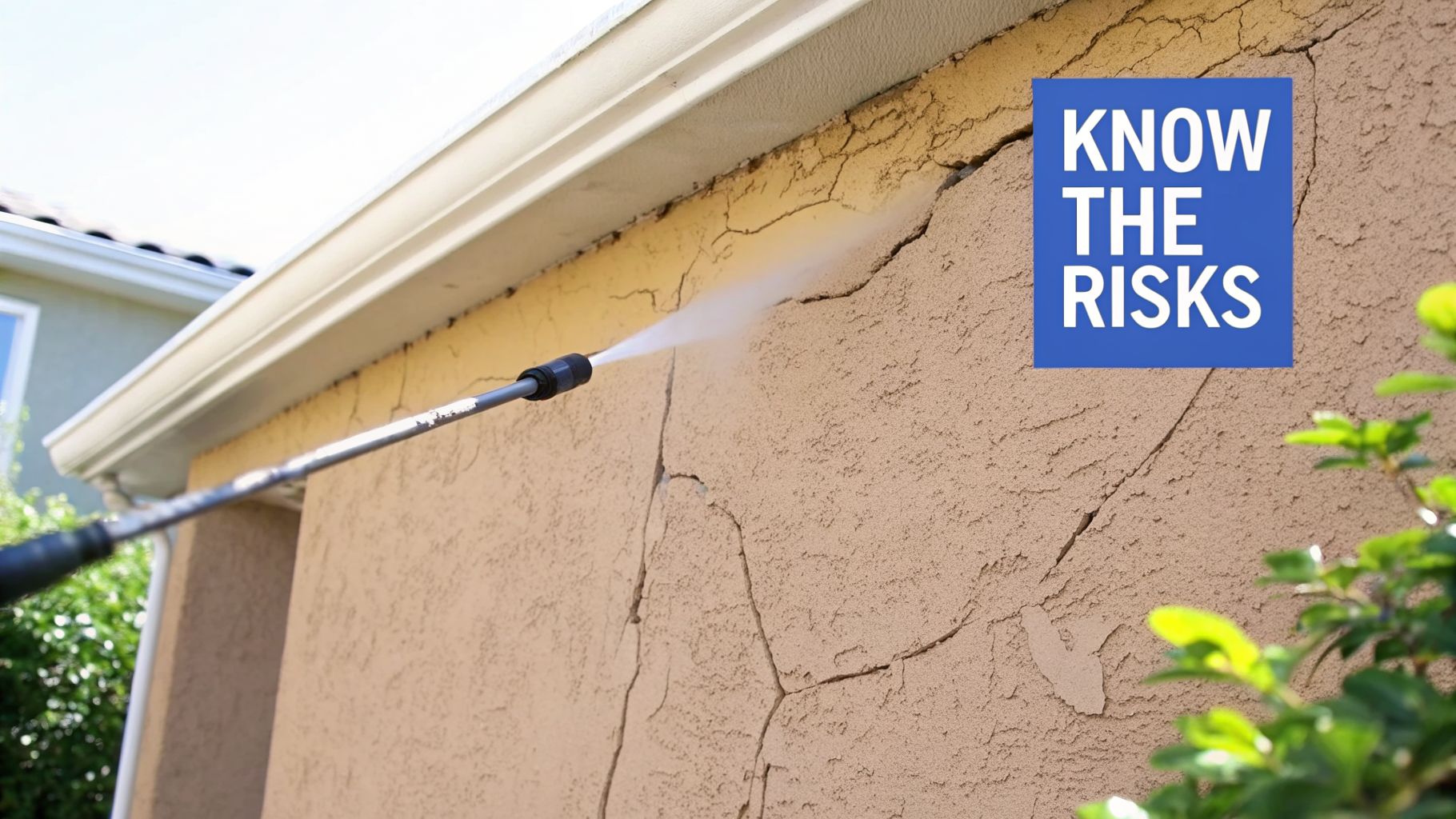
The thought of blasting away years of dirt from your home is satisfying. We get it. It seems like a quick fix. But stucco isn't like concrete or brick; it’s a porous, cement-based material that’s surprisingly fragile when you hit it with concentrated force.
Over our 26 years of cleaning homes at Professional Window Cleaning, we've seen too many DIY pressure washing jobs in cities like Phoenix and Las Vegas turn into massive repair bills. What starts as a simple weekend project can quickly lead to cracked finishes, water intrusion, and even mold growth behind your walls.
The main issue is the sheer force coming from a standard pressure washer. Imagine you're standing in front of your beautiful stucco home, seeing that desert dust clinging to the walls. Many homeowners instinctively reach for a pressure washer, not realizing that machine can shoot water at up to 243 miles per hour.
That kind of force, often exceeding 3,000 PSI, turns a cleaning job into a demolition job. Restoration experts will tell you that improper pressure washing is a leading cause of stucco damage. It creates and widens cracks, forcing moisture deep inside and leading to thousands of dollars in mold and rot remediation.
It's precisely why pros have moved away from high-pressure methods on delicate surfaces. The risk just isn't worth it, especially when a far better alternative exists. For homeowners in Phoenix or Denver, protecting their stucco from harsh cleaning methods is crucial.
Stucco’s beautiful textured finish is its first line of defense, but it’s also its biggest weakness against high pressure. A powerful water jet can easily chip, etch, or blow off entire chunks of the finish, leaving behind ugly marks that are impossible to fix without a costly patch job.
The biggest danger isn’t the damage you can see—it’s the water you can’t. High-pressure streams force water deep into existing hairline cracks, completely saturating the structure underneath. This trapped moisture quickly becomes a breeding ground for mold and can compromise the integrity of your home.
Even if you avoid obvious blotches, you can still cause serious problems. If you decide to go ahead with pressure washing, you have to know what to look for. It's vital to learn the 8 critical signs of water damage in walls, because the wrong technique can force water right into your home's framework.
So, if high pressure is out, how do we get stucco clean? The answer is soft washing. This technique completely flips the script on exterior cleaning. Instead of relying on brute force, soft washing uses specialized, biodegradable cleaning solutions to do all the heavy lifting.
These solutions are applied with very low pressure—often less than what comes out of your garden hose. They work to kill the mold, mildew, and algae and gently lift dirt and grime from the surface. Once the cleaning agents have done their job, we rinse the wall with clean water.
This method delivers a deeper, longer-lasting clean without any of the risks. It’s the trusted approach we use on homes and businesses everywhere, from single-family houses in Scottsdale to large commercial buildings.
To make it even clearer, here's a quick side-by-side look at why soft washing is the only method we trust for stucco.
As you can see, the difference is huge. One method relies on dangerous force, while the other uses smart science to clean safely and effectively. When it comes to your home's stucco, the choice is obvious.
Before you even think about firing up a pressure washer, the single most important thing you can do is give your stucco a thorough inspection. Think of it like a doctor’s check-up before prescribing treatment; washing without a proper assessment can turn a small, hidden problem into a full-blown disaster.
This initial once-over will tell you everything you need to know about your stucco's health and whether it can actually handle the pressure.
Your first task is to get up close and personal with your walls. Go ahead and run your hands over the surface. Does it feel solid with a sandy texture, or do you find any soft, spongy spots?
Softness is a massive red flag. It often means moisture has already worked its way behind the stucco and the materials underneath are beginning to rot. If you press gently on these spots and feel any give, stop right there. It's time to call a professional. Professional Window Cleaning has been cleaning windows for over 26 years, and we know how to spot these issues from a mile away.
Not all stucco is created equal, and knowing which type you have is critical because they react very differently to water. You'll generally find one of two kinds.
For homeowners in climates with dramatic weather swings, from the intense sun of Scottsdale to the freeze-thaw cycles of Denver, knowing your stucco type is even more crucial. These environmental factors can seriously test its integrity, and EIFS is especially vulnerable to failed seals around windows that trap water and cause hidden decay.
Once you’ve figured out your stucco type, it’s time to play detective and hunt for any pre-existing damage. Grab a notepad and walk the entire perimeter of your home. Pay extra close attention to corners, window frames, and any areas close to the ground.
Keep an eye out for these specific issues:
If your inspection turns up any issues like cracks, it's vital to learn how to repair cracks in stucco walls before you even consider washing. Trying to clean damaged stucco will only force more water into those weak spots, making the problem ten times worse.
Pro Tip: Pay special attention to the north-facing side of your home. It gets the least amount of sun, making it the perfect spot for mold and algae to grow and for moisture to linger. This is often where problems first appear.
Ultimately, this pre-wash assessment is your go/no-go gauge. If you find anything more serious than a few tiny hairline cracks on traditional stucco, your DIY project should end immediately. The risk of causing major structural damage far outweighs the reward of a cleaner wall, whether you're in Las Vegas or Phoenix.
So, you’ve carefully inspected your stucco and confirmed it’s in good shape. Great. Now you can move on to cleaning, but this isn't a task to be rushed. Safely pressure washing stucco is a game of finesse, not force. The right gear, settings, and technique are what separate a clean wall from a costly repair job.
Your success really starts with having the right tools on hand. You'll need a gas or electric pressure washer with adjustable pressure settings. You’ll also want a set of nozzles—specifically the white 40-degree nozzle. It creates a wide, fan-like spray that distributes the pressure evenly and safely.
Before a single drop of water starts spraying, take some time to prep the area around your house. I can't stress this enough: this step is just as important as the washing itself. It's all about protecting your property and landscaping from accidental damage.
A little prep work now can save you a world of headaches later. It ensures the only thing you’re cleaning is the stucco itself. Our service teams in Scottsdale and Las Vegas make this a priority on every job.
This is where most DIY attempts go completely sideways. Using too much pressure is the fastest way to etch, crack, or even blow entire chunks off your stucco siding.
Here's the golden rule: keep the pressure low. You should never, ever exceed 1,500 PSI on stucco. In fact, for most of the dirt and grime we see on homes, a setting between 800 and 1,200 PSI is more than enough and a whole lot safer.
Pro Tip: Always test your pressure setting on a hidden spot first. Think about a section of wall behind some bushes or next to an AC unit. Start at the lowest setting and only increase it if absolutely necessary, checking for any surface damage before you move on.
Precision is everything when you're pressure washing stucco. Industry research and our own field experience show that keeping the pressure at a controlled 1,200-1,500 PSI maximum and using a 40-degree wide-angle nozzle is critical. You’ll also want to maintain a spraying distance of at least 12-18 inches and hold the wand at a 45-degree angle to the wall. This technique dramatically reduces the risk of etching or forcing water into the porous surface. In markets with lots of stucco homes, this angled spraying method has been shown to decrease damage risk by a remarkable 80% compared to blasting the wall head-on, which can cause micro-cracks. You can find more insights on safe techniques at rhinoshieldflorida.com.
The infographic below gives you a simple workflow for assessing your stucco before you even think about starting the washer.
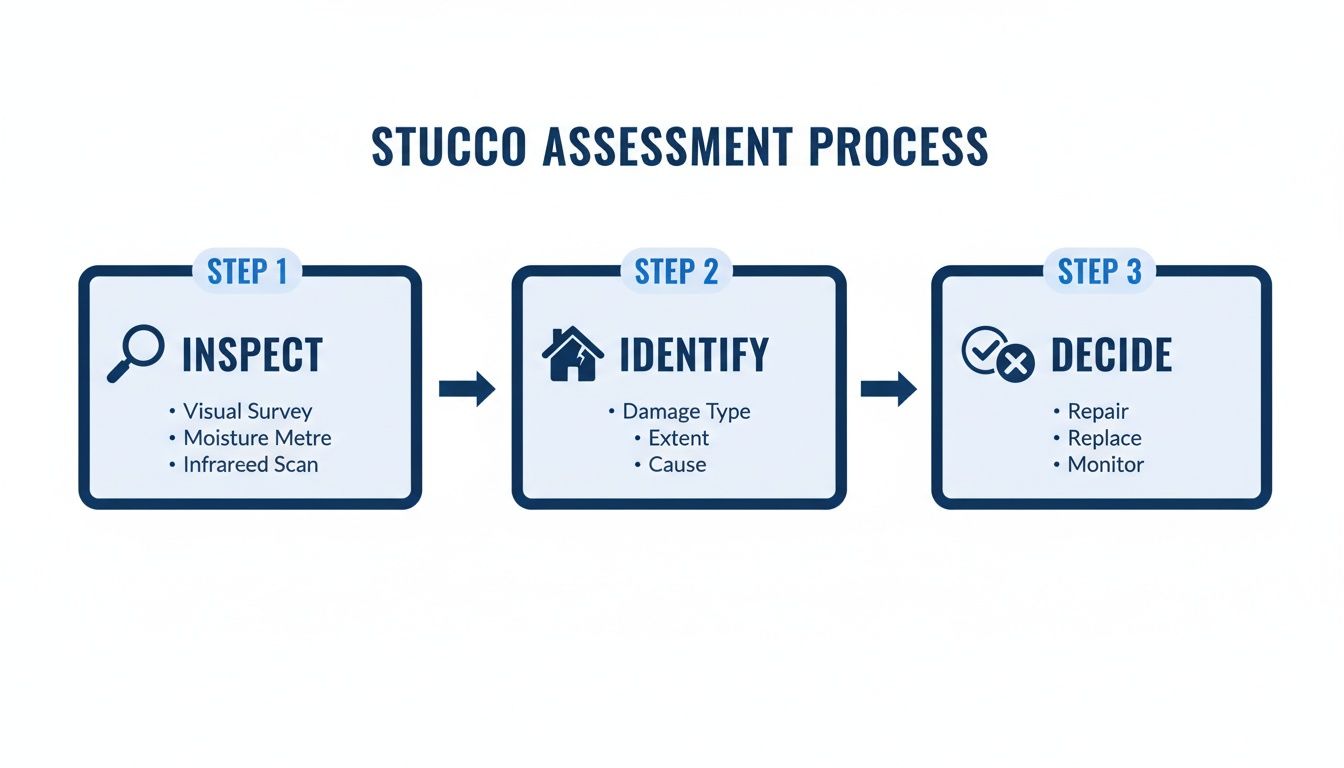
This visual process—Inspect, Identify, Decide—is the crucial first step to make sure you don't turn a cleaning job into a repair project.
Your washing technique is just as important as your pressure settings. If you're inconsistent, you’ll end up with a blotchy, uneven finish that somehow looks worse than when you started.
The right way to do it is to work in manageable sections, about 10x10 feet at a time. This gives you total control and prevents the cleaning solution from drying on the wall before you can rinse it.
This bottom-up, top-down method is a professional standard for a reason—it just works. It stops streaks in their tracks and ensures all the dirt and detergent are washed away, leaving you with a clean, uniform surface. At Professional Window Cleaning, it’s a fundamental part of training for our exterior cleaning crews, whether they're working on homes in Las Vegas or on commercial properties in Denver.
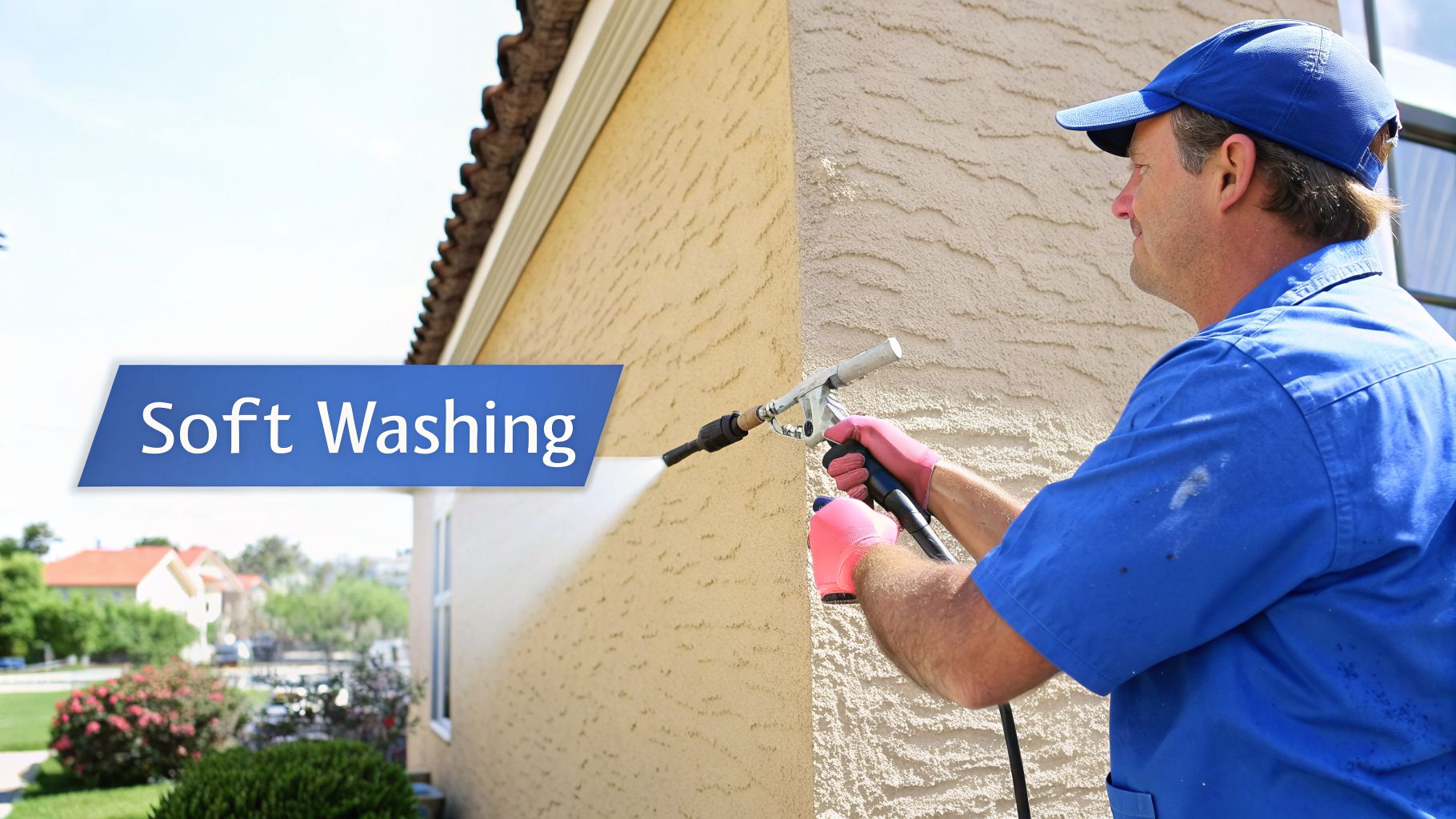
Sure, you can clean stucco with a pressure washer if you’re extremely careful, but it’s not the technique the pros trust for safe, reliable results. Instead, we rely on a method called soft washing. It's the standard for our teams at Professional Window Cleaning because it puts the health of your home’s exterior first while still delivering a fantastic clean.
Soft washing completely changes the game. It moves the focus away from brute force and puts it on smart science. Rather than blasting grime off the surface, this technique uses specialized, biodegradable detergents applied at a very low pressure—often under 500 PSI. To put that in perspective, that’s less pressure than some garden hoses.
With soft washing, the real hero is the cleaning solution, not the water pressure. These professional-grade detergents are designed to target and kill organic growth like mold, mildew, and algae right at the source. They get deep into the pores of the stucco, breaking down grime and dissolving the bond it has with the surface.
After applying the cleaning agents and letting them sit for a few minutes, we gently rinse everything away with clean, low-pressure water. This washes off all the loosened dirt, dead organic matter, and leftover detergent, revealing a truly deep clean without any risk of damage. It’s the same method we use on everything from residential homes in Phoenix to sprawling commercial buildings.
The core difference is this: high-pressure washing uses force to shear dirt off a surface, while soft washing uses chemistry to release dirt from a surface. One is an attack, the other is a treatment.
Because soft washing detergents eliminate organic growth at the root, the clean lasts significantly longer than a typical pressure wash. When you just blast away with high-pressure water, you might remove the visible layer of mold, but you leave the roots behind. This allows that ugly growth to come back much faster.
Soft washing leaves behind a more sterile surface that makes it harder for new growth to take hold, keeping your home looking pristine for much longer. It’s not just about cleaning what you see; it’s about treating the underlying problem.
The proof is in the results. A low-pressure soft wash at 500 PSI or less removes 95% of organic growth without abrading the surface. In contrast, high-pressure washing is a leading cause of damage—some restoration firms report it’s responsible for a staggering 75% of their stucco repair jobs. That damage usually comes from high-velocity water cracking the material. Our 26 years of experience have shown that letting soft wash chemicals dwell for about ten minutes gives us a nearly perfect clean with almost zero risk. You can get more pro insights on industry best practices from the experts at wet-inc.com.
The best part about soft washing is its safety. With pressure staying well below 500 PSI, there’s virtually no risk of etching, cracking, or chipping your stucco. You won’t see any wand marks, blasted-off chunks of finish, or water forced behind the siding where it doesn’t belong.
This gentle approach makes it the perfect solution for any delicate surface, but it's especially critical for:
Whether your home is in sunny Scottsdale or anywhere else, protecting your investment is the top priority. Soft washing delivers that deep clean without the high-stakes gamble of taking a pressure washer to your stucco. It’s the definitive choice for professionals who are committed to doing the job right.
Knowing when to roll up your sleeves for a DIY project versus when to call in an expert is a skill every homeowner develops. While that can-do spirit is great, pressure washing stucco is one of those jobs where a simple mistake can lead to some seriously expensive damage.
What might look like a straightforward cleaning job can sometimes be a sign of a deeper problem. Calling a professional isn't giving up—it's making a smart call to protect your home's value and integrity.
Some situations immediately take a stucco cleaning project out of the DIY category. If you spot any of these red flags during your walk-around, it’s time to put down the pressure washer and pick up the phone.
Think of these as non-negotiable signs that you need specialized equipment and know-how to do the job right and safely.
The sheer size of the job is another huge factor. Cleaning a one-story ranch-style home is one thing, but tackling a multi-story house, like many you’ll see in places like Las Vegas, is a completely different ballgame.
Trying to use a pressure washer while standing on a ladder is incredibly dangerous. The kickback from the wand can easily knock you off balance, leading to a serious fall. Professionals use tools like extension wands and lifts to safely clean upper levels without ever having to step on an unstable ladder.
On top of the safety risk, a multi-story home demands a perfectly consistent technique over a huge surface. Any little change in your pressure, distance, or motion will create a splotchy, uneven finish that’s impossible to miss. Pros have the muscle memory and training to keep that consistency from the foundation to the roofline.
Hiring an experienced company like Professional Window Cleaning brings a lot more to the table than just the right tools. With over 26 years in the business, we’ve pretty much seen it all. We know how to clean exteriors in all sorts of climates, from the dry heat of Phoenix to the snowy winters of Denver, without causing damage.
Our guide to professional exterior washing services explains how our approach is designed to protect your home.
We also know how to prevent those annoying side effects of a DIY job, like spraying dirt and grime all over your nice, clean windows. It’s right there in our name—we know how to pair exterior washing with professional window cleaning, using only squeegees or pure-water systems for a perfect, streak-free finish.
Ultimately, calling a pro is a safe bet and often a more cost-effective one when you weigh it against the staggering cost of potential DIY repairs.
Even with a solid plan, it’s completely normal to have a few lingering questions before you take on a project as delicate as cleaning stucco. We hear the same concerns from homeowners all the time, so we’ve gathered them here to give you fast, straightforward answers.
Our goal is to help you make the safest, most informed decisions for your home, especially when a pressure washer on stucco is involved.
This is easily the most critical question, and the answer demands real caution. As a hard and fast rule, you should never exceed 1500 PSI when pressure washing stucco. But honestly, to be on the safe side and avoid any risk of etching or damage, our professional advice is to keep it under 1200 PSI.
The best-case scenario? Use a soft wash system that runs below 500 PSI. High pressure, even for a moment, can carve permanent lines into the finish. Worse, it can force water deep into tiny, invisible cracks, leading to thousands of dollars in water damage that you won't discover until it's too late.
Always start on your pressure washer's lowest possible setting. Use a wide, 40-degree nozzle and keep it at least 18 inches from the wall.
While household bleach can kill mold and mildew, it's a very risky chemical in untrained hands. If you mix it too strong or apply it incorrectly, you can easily discolor your stucco finish or, even worse, kill the surrounding plants and landscaping you've worked so hard on.
Professional soft wash solutions are far more sophisticated. They use a buffered form of sodium hypochlorite (the active ingredient in bleach) but blend it with special surfactants and cleaning agents. These additives do a few things: they help the solution cling to the wall for a deeper clean, and they allow it to be rinsed away easily with less impact on the environment.
If you’re determined to try a DIY mix, it must be extremely diluted—think 1 part bleach to 10 parts water. You absolutely have to pre-soak and post-rinse all nearby plants, grass, and soil to protect them. Professional Window Cleaning has been cleaning windows for over 26 years, and we always put property protection first.
There’s no magic number here; it really depends on your local climate and the specific conditions around your property. However, we can offer some solid guidelines based on our experience.
A great rule of thumb is to give your home's exterior a good look every spring. Once you start seeing noticeable dark spots or organic growth, it’s time to get a cleaning on the calendar.
Our Pro Experience: At Professional Window Cleaning, we've seen firsthand that homes getting regular, gentle cleanings have far fewer problems with deep stains. It's much easier—and safer for the stucco—to wash off a light layer of dirt every year than to blast away years of stubborn, caked-on grime.
This is one of the most frustrating outcomes of a DIY pressure washing job, and we see it all the time. Those blotchy patches, streaks, or "wand marks" are almost always a tell-tale sign of improper technique.
Here's what usually causes it:
The uneven pressure strips away dirt inconsistently, leaving a patchy finish that can look even worse than when you started. This is precisely why a professional soft wash is the gold standard. Its low-pressure, even application of cleaning solution gives you a uniform result without relying on an operator's ability to maintain perfect distance and speed.
When your stucco is due for a cleaning but the risks of a DIY project feel too high, it's time to trust the experts at Professional Window Cleaning. With over 26 years of experience, we deliver safe, effective exterior washing that protects your home's value. Find out more about our professional services at https://www.professionalwindowcleaning.com.
Read our blog posts regularly and keep learning.