Care and Maintenance
How to Clean Building Windows Safely in 2026
Learn how to clean building windows with professional squeegee and pure-water methods. Step-by-step guide covering safety, tools, and maintenance.


Can you clean windows with a pressure washer? It's a question we hear all the time. The short answer is yes, but it’s a high-stakes job that demands a very specific, delicate approach called soft washing.
This isn't about blasting grime off with brute force. Success hinges entirely on using the right low-pressure settings and wide-angle nozzles. Get it wrong, and you risk shattering glass, blowing out window seals, or forcing water deep into your home's walls. While it's technically possible, there's a good reason this isn't the go-to method for professionals.
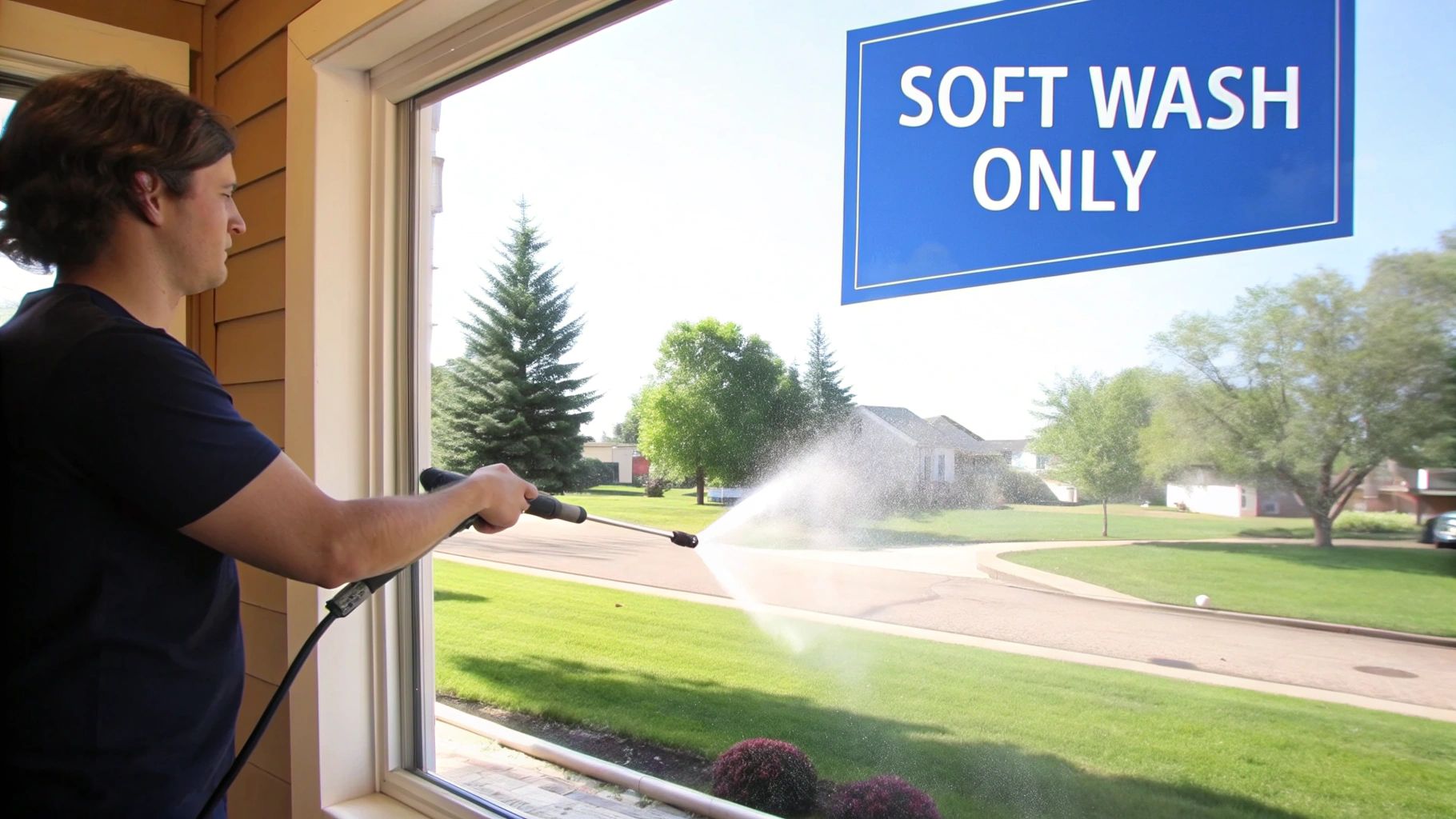
The image of a pressure washer instantly stripping dirt from a window is appealing, but the reality is much more about precision than power. Using a standard, high-pressure approach on glass is a recipe for disaster. We're talking cracked panes, broken double-pane seals that lead to permanent fogging, and water infiltration that can cause thousands in rot and mold damage.
The only safe way to tackle this is with soft washing. This technique uses pressure that's often just a little stronger than a garden hose to apply a cleaning solution and then gently rinse it away. It’s the detergent that does the heavy lifting, breaking down dirt and grime, not the force of the water.
There's a reason you won't see experienced window cleaners using high-pressure wands on homes. Professionals use ONLY 2 methods of window cleaning for a guaranteed damage-free, streak-free shine: the use of a squeegee, or the use of a pure-water system. Both methods give them total control and eliminate the risks that come with pressurized water.
The core principle is simple: The cleaning power should come from the solution, not the water pressure. High pressure is the enemy of glass, seals, and frames.
For a deeper dive into the risks and rewards, you can learn more about if you can pressure wash windows in our detailed guide: https://www.professionalwindowcleaning.com/post/can-you-pressure-wash-windows. Here, we’ll focus on the soft wash process, but it’s critical to understand why the experts almost always choose a different path.
If you're still determined to try this DIY project, you need to know its limits. Soft washing can be a decent option for first-floor windows with light to moderate dirt. However, it’s not going to touch stubborn, baked-on grime or hard water spots nearly as well as manual scrubbing.
Before you even start, ask yourself these questions:
Here’s a quick table to help you visualize the difference between doing it the right way (soft washing) and the wrong way (high-pressure blasting).
Ultimately, choosing the safe approach is non-negotiable. The dangerous path is a surefire way to damage your property.
Let's be clear: the line between sparkling clean windows and a shattered pane of glass is razor-thin when a pressure washer is involved. Success here isn't about brute force; it's almost entirely about having the right equipment dialled in perfectly. Using the wrong gear is like trying to perform surgery with a sledgehammer—the results are predictable, and they're never good.
Think of this as your pre-flight checklist. The goal is to transform your pressure washer from a high-impact blaster into a gentle, effective rinsing tool. The most critical parts of this transformation are your pressure settings and, most importantly, the nozzle you choose.
The nozzle is the single most important piece of equipment for this job. It dictates exactly how that stream of water hits the glass. A narrow, high-impact nozzle (like a red 0-degree or yellow 15-degree tip) concentrates the machine's full power into a tiny, destructive point. This is precisely how glass gets etched, cracked, or blown out in an instant.
For windows, you absolutely must use a wide-angle nozzle. These tips spread the water over a much larger surface, which dramatically reduces the impact pressure at any single point.
Never, under any circumstances, use a 0-degree (red) or 15-degree (yellow) nozzle on a window. These are designed for stripping paint off concrete. They will cause catastrophic damage to glass.
Understanding your machine's power is non-negotiable. The two key metrics are PSI (pounds per square inch) and GPM (gallons per minute). PSI measures the force, while GPM measures the water volume. For windows, PSI is your primary concern.
Your target pressure needs to be under 500 PSI. To put that in perspective, many common residential pressure washers can generate 2,000 to 3,000 PSI—a force strong enough to gouge wood. Setting your machine to its lowest possible pressure is the first step, but the wide-angle nozzle is what truly brings the pressure down to a safe level.
The type of washer matters, too. For homeowners, electric models are often a better fit for this task. Electric washers, which hold a 54% market share, are often preferred for residential jobs because they're quieter (under 70 dB) and have instant-start functionality, making them ideal for denser neighborhoods. The rise of e-commerce has made getting the right gear easier than ever, with platforms selling 30% more units yearly and enabling quick delivery of window-specific nozzles that help adjust pressure down to a safe 100-300 PSI range.
The final piece of your gear puzzle is the cleaning solution. Because you're using very low pressure, the detergent is doing the real work of breaking down dirt, dust, and grime.
It's tempting to use household cleaners like dish soap, but they often leave behind a sticky film that attracts more dirt and creates frustrating streaks.
Instead, opt for a detergent specifically formulated for pressure washers that is also safe for windows. Look for solutions that are:
Always apply detergent using the black 65-degree soaping nozzle. This ensures a low-pressure application that lets the solution coat the surface evenly without being blasted right off. Getting this combination of nozzle, pressure, and detergent right is the foundation of a successful project. For a more exhaustive look at the tools professionals rely on, check out our guide on professional window cleaning equipment.
Okay, you've got the right gear assembled, so it's time to put it all into practice. This is where precision and patience really pay off. Cleaning windows with a pressure washer isn't a race; it's a careful process of prepping, washing, and rinsing. Rushing through any of these stages is how mistakes happen, leading to ugly streaks, water damage, or worse.
This walkthrough will guide you through the entire process, from getting your workspace ready to that final, satisfying rinse. Following these steps methodically will give you the best shot at a clean, damage-free result.
Before you even think about turning on the pressure washer, you need to prep the area thoroughly. This is all about protecting your property and making sure the job goes as smoothly as possible. Skipping this can lead to damaged plants, electrical shorts, or water seeping into your home where it doesn't belong.
Start by taking a good look around each window. What could be damaged by water or detergent spray?
Taking just 15-20 minutes to prep can save you hours of cleanup and hundreds of dollars in potential repairs. Think of it as setting the stage for success.
With the area prepped, it's time for the cleaning solution. The goal here is simple: coat the window evenly without letting the soap dry. Dried-on soap is the number one cause of streaks. The technique for this might feel a bit backward, but trust me, it’s incredibly effective.
Always start by applying the detergent from the bottom of the window and working your way up. This prevents the solution from running down a dry surface, which creates those long, stubborn streaks before you even have a chance to rinse. A bottom-up approach keeps the entire surface wet, letting the soap do its job uniformly.
To do this, use your black 65-degree soaping nozzle. Stand a few feet back from the window and use a consistent, sweeping motion to cover the glass and frame. Don't just blast one spot; keep the wand moving to apply a light, even coat.
Consistency is everything here. Let the detergent sit for a few minutes to break down the grime, but never, ever let it dry on the glass. If you're working on a hot, sunny day, you may need to work on smaller sections at a time to keep ahead of the sun. For a deeper dive into different methods, explore our detailed guide on how to clean outside windows.
This infographic breaks down the essential gear combination for a safe and effective window wash.
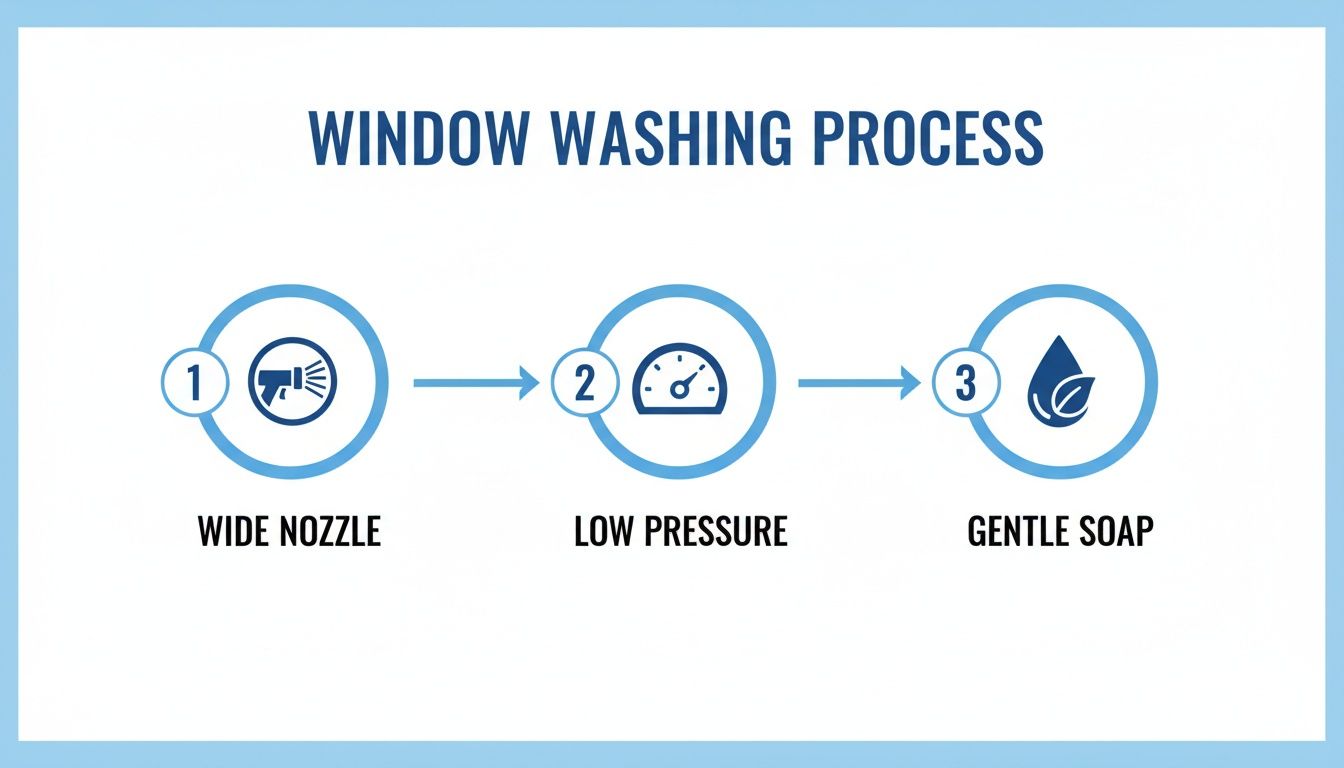
As you can see, success relies on a system: a wide nozzle to diffuse the force, low pressure to protect the glass, and a gentle soap to do the actual cleaning.
Once the detergent has had a moment to work its magic, it's time to rinse. This is where the most potential for damage exists, so your technique has to be on point. Switch from your soaping nozzle to a wide-angle rinsing nozzle, like the white 40-degree tip.
Now, you're going to reverse the application process: rinse from the top down. This lets gravity do the work for you, pulling the dirty, soapy water down and away from the clean areas. Starting at the top ensures you aren't splashing grime back onto sections you've just rinsed.
Maintain a safe distance of at least three to five feet from the window. You want the water to sheet off the glass, not blast it. Use a smooth, overlapping, horizontal sweeping motion—almost like you're painting the window with water. This consistent movement ensures an even rinse and prevents you from concentrating pressure on a single spot, which could stress the glass or damage the seals. Keep the wand moving at all times.
Clean windows do more than just let light in; they transform a home's visual appeal, a point we explore further in our guide on how to prepare a house for a photography session. After rinsing, you can let the windows air dry. But for a truly professional, spot-free finish, grab a high-quality squeegee and wipe away any remaining water.
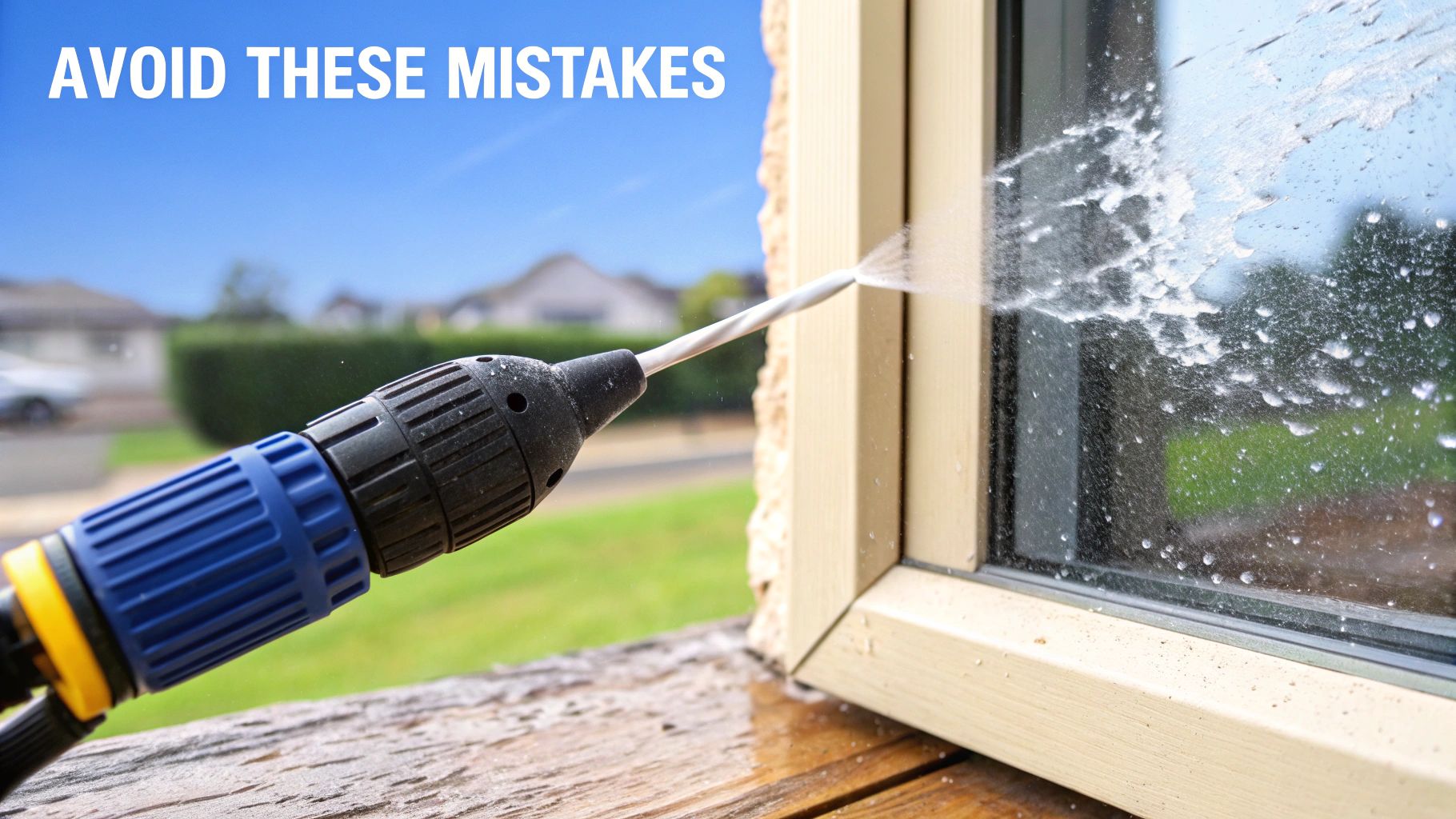
Trust me, learning from someone else’s mistakes is always cheaper than making them yourself—especially when a simple slip-up can lead to thousands of dollars in property damage. When it comes to pressure washing windows, a few common blunders can turn a weekend DIY project into a complete catastrophe.
These aren't just minor slip-ups; they come from a fundamental misunderstanding of how pressurized water interacts with something as fragile as glass. It's so tempting to treat a window like a concrete driveway, blasting away at a tough spot. But that one impulse is the root cause of most pressure-washing disasters. Getting this right isn't just about a streak-free shine; it's about protecting your home.
The absolute fastest way to destroy a window is by using a narrow, high-pressure nozzle. A zero-degree (red) or 15-degree (yellow) tip concentrates your machine’s entire force into a tiny, powerful jet. This stream is designed for stripping paint or obliterating weeds in sidewalk cracks—not for glass.
When that focused blast hits a window, one of three terrible things will happen:
Your nozzle choice is non-negotiable. Anything other than a wide 40-degree or 65-degree tip is a gamble you are almost guaranteed to lose. Think of it like using a sledgehammer for a job that requires a scalpel.
Another devastating mistake is spraying at a sharp upward angle. It’s a natural tendency when you’re on the ground trying to reach higher windows, but it's incredibly destructive. This approach forces high-pressure water directly under the window frame and right against the seals.
Those seals are designed to keep rain out, not to fight back against a pressurized jet stream being driven into them from below. When you do this, you can:
Once a window seal is broken, the only fix is a full, costly replacement of the insulated glass unit. The proper technique is to always spray at a 45 to 60-degree angle relative to the glass, never directly into the seams.
Since soft washing uses low pressure, the cleaning solution does all the heavy lifting. This makes your choice of detergent incredibly important. Just grabbing a random household cleaner or a harsh chemical meant for siding can have disastrous consequences.
Many aggressive cleaners contain chemicals like bleach or ammonia, which can:
Always use a biodegradable detergent specifically made for pressure washers and rated as safe for glass, frames, and landscaping. A few extra dollars for the right soap can easily save you hundreds in replacing damaged plants or siding.
Finally, a surprisingly common mistake is washing windows in direct, hot sunlight. The sun’s heat causes your soap and water mixture to evaporate almost instantly. When this happens, the detergent doesn't have enough time to break down the grime before it gets rinsed away.
Instead, the soap residue gets baked right onto the glass. This creates a hazy, streaky film that looks terrible and is incredibly difficult to remove later. For the best results, work on a cool, overcast day or tackle the windows that are in the shade. This simple change in timing gives you plenty of time to apply the soap, let it work its magic, and rinse thoroughly before evaporation takes over. It can be the difference between a pristine finish and a frustrating mess.
While this guide shows you the ropes for pressure washing your own windows, the smartest DIY decision is often knowing when not to. It’s about recognizing the line where enthusiasm meets unnecessary risk.
Professionals don’t gamble with your property. They use ONLY 2 methods of window cleaning to deliver a perfect, damage-free finish every single time. The first is the classic squeegee—a meticulous, hands-on technique that guarantees a flawless, streak-free shine with unmatched control. The second is a modern pure-water system, which uses deionized water to scrub away grime and evaporate without leaving a single mineral spot behind. No detergents needed. These methods are simply safer and more effective for protecting your home.
Some situations make DIY pressure washing not just tricky, but downright dangerous for your windows and home. If your windows fit any of these descriptions, hiring a pro isn't a luxury—it's essential maintenance.
Give an expert a call if you're dealing with:
The trend toward owning at-home power tools is undeniable. The global pressure washer market is projected to hit USD 4.03 billion by 2030, and North America holds a massive 43% market share. But just because more homeowners have the tool doesn't mean it's always the right tool for the job.
It's not just about the glass. Your home's age and even your local water quality can turn a simple cleaning job into a hazardous one.
For example, homes built before 1978 might have lead-based paint on the window frames. A pressure washer can easily blast toxic paint chips into the air and surrounding soil, creating a serious health hazard for your family and pets. A professional is trained to identify and handle these materials safely.
Hard water is another hidden enemy. If you live in an area with high mineral content, like the arid climates of Las Vegas or Phoenix, you're fighting an uphill battle. Tap water from a pressure washer will evaporate and leave stubborn, chalky deposits all over your glass. A pro's pure-water system is specifically designed to prevent this, leaving a perfectly clear finish that your hose simply can't match.
For a guaranteed, risk-free result, especially in challenging environments like the high-altitude sun of Denver, investing in expert care is the wisest move. It protects your property and delivers a superior clean.
The logic holds true for other outdoor tasks, too. If you're trying to maintain a pristine backyard, you might look into finding the best pool service companies. Sometimes, the best results—and your peace of mind—come from trusting people who have the specialized tools and experience to do the job right.
Even with the best guide, a few questions always seem to pop up before tackling a job like pressure washing windows. It's smart to be thorough—this isn't a task where you want to leave anything to chance. Let's dig into some of the most common concerns to make sure you're ready to go.
Getting these specifics right can be the difference between a successful cleaning and an expensive call to a repair service. These answers come from years of professional experience and a healthy respect for how delicate glass can be.
You should never exceed 500 PSI when cleaning windows. Honestly, for most residential glass, the safest and most effective range is even lower, somewhere between 100-300 PSI. That’s barely more pressure than a strong garden hose.
Always start with the lowest possible pressure setting your machine offers and grab your widest nozzle—the 65-degree black tip is usually the best bet. Before you even think about pointing it at a window, test the spray on a durable surface like concrete from a few feet away. Get a feel for the force before it goes anywhere near glass.
This is a hard no. It's extremely risky, and we strongly advise against it.
The intense force from a pressure washer, even on its lowest setting, can easily break the seals on double-pane (or triple-pane) windows. Once that seal is compromised, moisture gets trapped between the panes, causing that dreaded permanent fogging that ruins the window's insulating power. The only fix is a full, costly replacement.
For tinted windows, the danger is just as real. A pressurized stream of water can easily lift, peel, or scratch the delicate film, completely destroying the tint.
For these specialized window types, pros will only use approved methods. A traditional squeegee or a professional pure-water system are the only ways to clean these windows without risking catastrophic damage.
This is a critical distinction, and it's where a lot of DIY projects go wrong. Understanding the difference is the key to keeping your windows in one piece.
Think of it this way: pressure washing is a hammer, while soft washing is a paintbrush. When you're cleaning windows, you always want the paintbrush. They are fundamentally different tools for different jobs.
If the risks and precise requirements of soft washing seem a bit daunting, or if you just want a guaranteed perfect result without the stress, the experts at Professional Window Cleaning are here to help. Our technicians use the safest, most effective industry-standard methods to leave your windows spotless every time. Get your free estimate today.
Read our blog posts regularly and keep learning.