Care and Maintenance
Best Hard Water Stain Remover for Windows: 2026 Guide
Discover the best hard water stain remover for windows that actually works. Our 2026 guide reviews top products to restore streak-free shine.


If you want to clean outside windows like a pro, you need the right gear. Forget paper towels and a spray bottle—that's a recipe for streaks and frustration. Professionals stick to two tried-and-true methods: the classic squeegee for ground-level work and a pure-water system for anything higher up. Using these techniques is the secret to a flawless, streak-free finish every time.
Getting that crystal-clear, professional result starts with having the right equipment. When you decide to tackle your exterior windows, you’re really choosing between two distinct, highly effective approaches that pros have perfected over decades.
Your choice will ultimately come down to your home's layout, how high your windows are, and what you feel comfortable with. Just know that both methods are worlds better than a quick spray-down with a garden hose, which often just pushes dirt around and leaves hard water spots behind.
The world of professional window cleaning isn't nearly as complicated as it might seem. It really boils down to two core techniques, and each one has its own specialized set of tools.
The Squeegee Method: This is the classic, time-tested technique you’ve probably seen pros use. It’s perfect for ground-floor windows or any glass you can safely and easily reach. It involves applying a cleaning solution, giving the grime a good scrub, and then using a high-quality squeegee to wipe the glass completely clean and dry in a single, fluid motion.
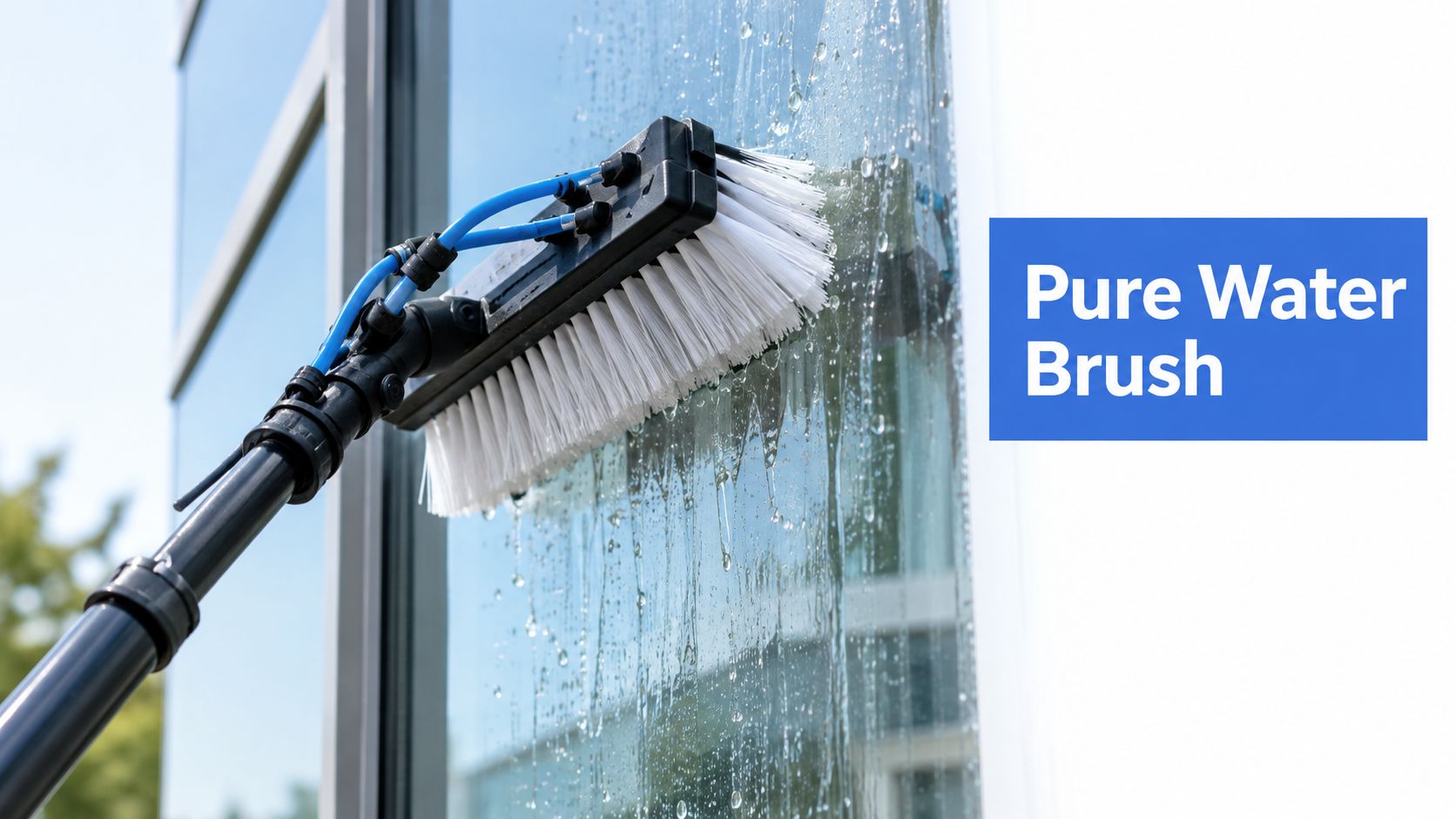
The Pure-Water System: This modern approach is a game-changer for safety and efficiency, especially for second-story windows or hard-to-reach glass. It uses a long, extendable pole with a special brush on the end that feeds purified water directly onto the window. This "pure" water is key—it scrubs away dirt and then dries completely spot-free, which means you don't even need a squeegee.
To help you decide which approach is right for your home, here’s a quick comparison of the two professional methods.
Ultimately, both methods deliver fantastic results. The squeegee is a great starting point for any homeowner, while the pure-water system offers a safer, faster solution for those tricky high windows.
A common misconception is that you need harsh chemical cleaners for a deep clean. In reality, a simple solution is often more effective. Most professionals use just a small amount of dish soap in water—it provides the perfect lubrication for the squeegee blade and helps break down grime without leaving a film.
You don’t need to buy an entire professional setup to get started. I always tell homeowners to begin with the basics for the squeegee method, since it’s the most accessible. It’s no surprise that the demand for cleaner living spaces has driven huge growth in the glass cleaner market, which was valued at USD 3.8 billion in 2024 and is projected to surpass USD 7.4 billion by 2035. You can learn more about the glass cleaner market growth drivers and see just how popular this is becoming.
For your own simple but powerful cleaning mix, all you really need is a bucket of clean water and a few drops of quality dish soap. If you want to dive deeper into creating the perfect blend, check out our guide on the best cleaning solution for outside windows.
This simple mixture is fantastic because it cuts right through dirt and provides the slick surface needed for a smooth squeegee glide. That lubrication is what prevents those dreaded streaks and ensures a brilliant shine every time you clean.
The squeegee is more than just a tool; it's the classic symbol of a job done right. When you want to clean outside windows and get that perfectly clear, streak-free look, mastering the traditional squeegee method is non-negotiable. This technique, refined by pros for generations, is all about precision, control, and a bit of finesse.
Before you even think about putting rubber to glass, a little prep work goes a long way. Start by popping out any window screens. Then, grab a soft-bristled brush or a dry cloth to sweep away loose debris like cobwebs, dust, and pollen from the window frames and sills. This simple step keeps you from turning dry dirt into mud once you add water.
With the window prepped, it's time for the cleaning solution. The goal here is complete, even coverage without making a huge mess. Professionals use a tool called a scrubber or a T-bar mop—which is basically a specialized sponge on a handle.
Dip your scrubber into your bucket of soapy water and squeeze out the excess so it’s saturated but not dripping everywhere. Apply the solution to the glass, scrubbing from top to bottom. Make sure you cover every single inch, paying extra attention to the corners and edges where grime loves to accumulate. The solution acts as both a cleaner and a lubricant for the squeegee, which is crucial for what comes next.
This is where the magic happens. A quality squeegee and the right technique are what separate a DIY job from a professional shine. There are a couple of primary methods that pros swear by, and knowing when to use each one is key to a flawless result.
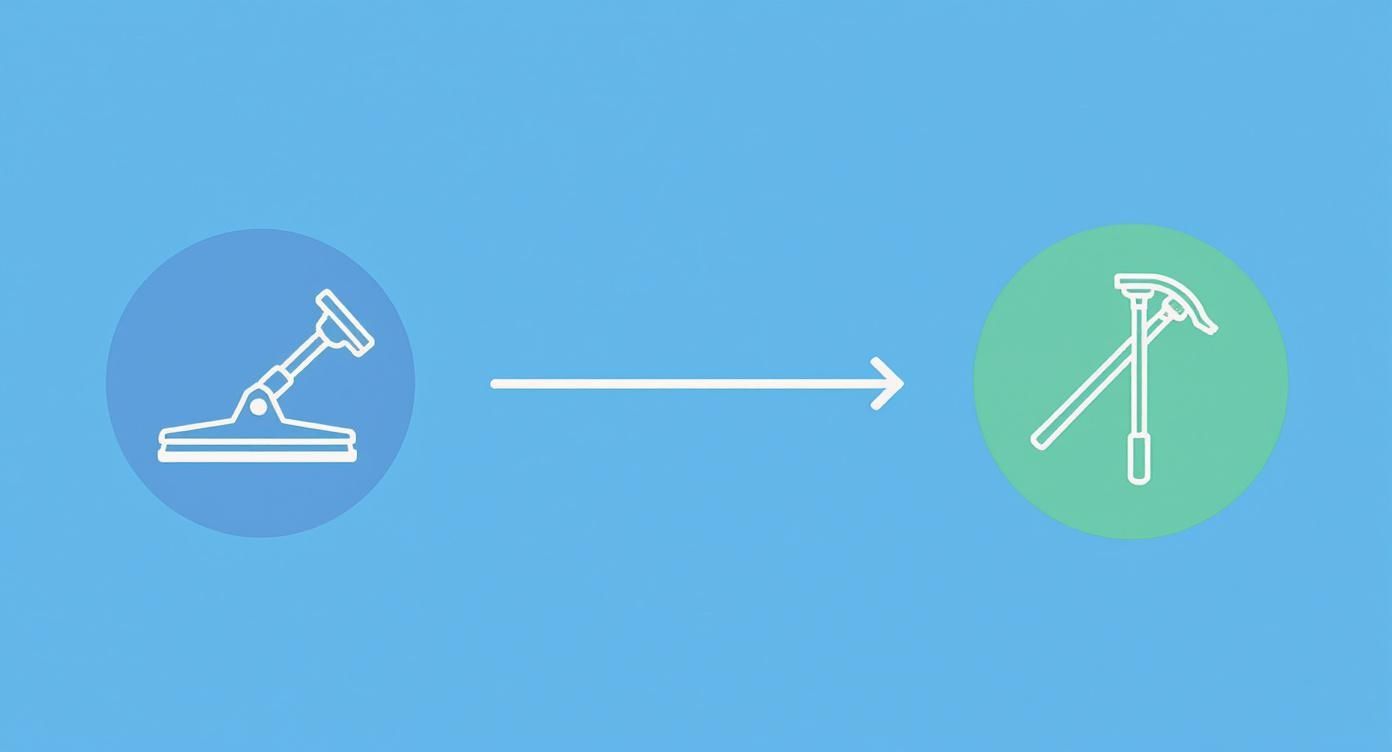
This graphic illustrates the two core tools professionals rely on: the traditional squeegee and the modern water-fed pole.
The secret to a streak-free finish isn't speed; it's consistency. Maintain steady pressure and a consistent angle on the blade throughout every single stroke. Most streaks are caused by the squeegee lifting off the glass, even for a split second.
The Straight Pull: This is the easiest technique to get the hang of and works great for smaller window panes. Start at the very top of the glass, angle your squeegee slightly, and pull it straight down in one smooth, continuous motion. After each pull, wipe the rubber blade with a clean microfiber cloth. You'll want to overlap each new stroke by about an inch to catch any drips.
The Fanning Method (or 'S' Method): For larger windows, this advanced technique is much faster and more efficient. Start in a top corner and move the squeegee across and down the glass in a continuous 'S' or serpentine pattern, without lifting the blade. This method keeps all the water moving to one side and prevents those annoying lines from forming in the middle of the pane. For a more detailed breakdown, you can learn how to squeegee a window with our in-depth guide.
To finish, grab a separate, dry microfiber cloth to detail the edges and corners of the glass, wiping away any leftover water droplets. This final touch is what ensures a truly spotless, professional-looking finish.
When you've got windows on a second story or higher, the idea of teetering on a ladder is enough to make anyone nervous. This is exactly where the modern, professional approach comes in. A pure-water system is a total game-changer, letting you get a perfect, spot-free finish with both feet safely on the ground.
The secret is in the water itself. Your average tap water is loaded with minerals and dissolved solids—the exact culprits that leave those chalky white spots behind when they dry. A pure-water system filters all of that gunk out, leaving nothing but pure H₂O. When you rinse a window with this ultra-pure water, it evaporates completely, leaving absolutely zero residue. It's so effective, it basically makes the final squeegee step obsolete.
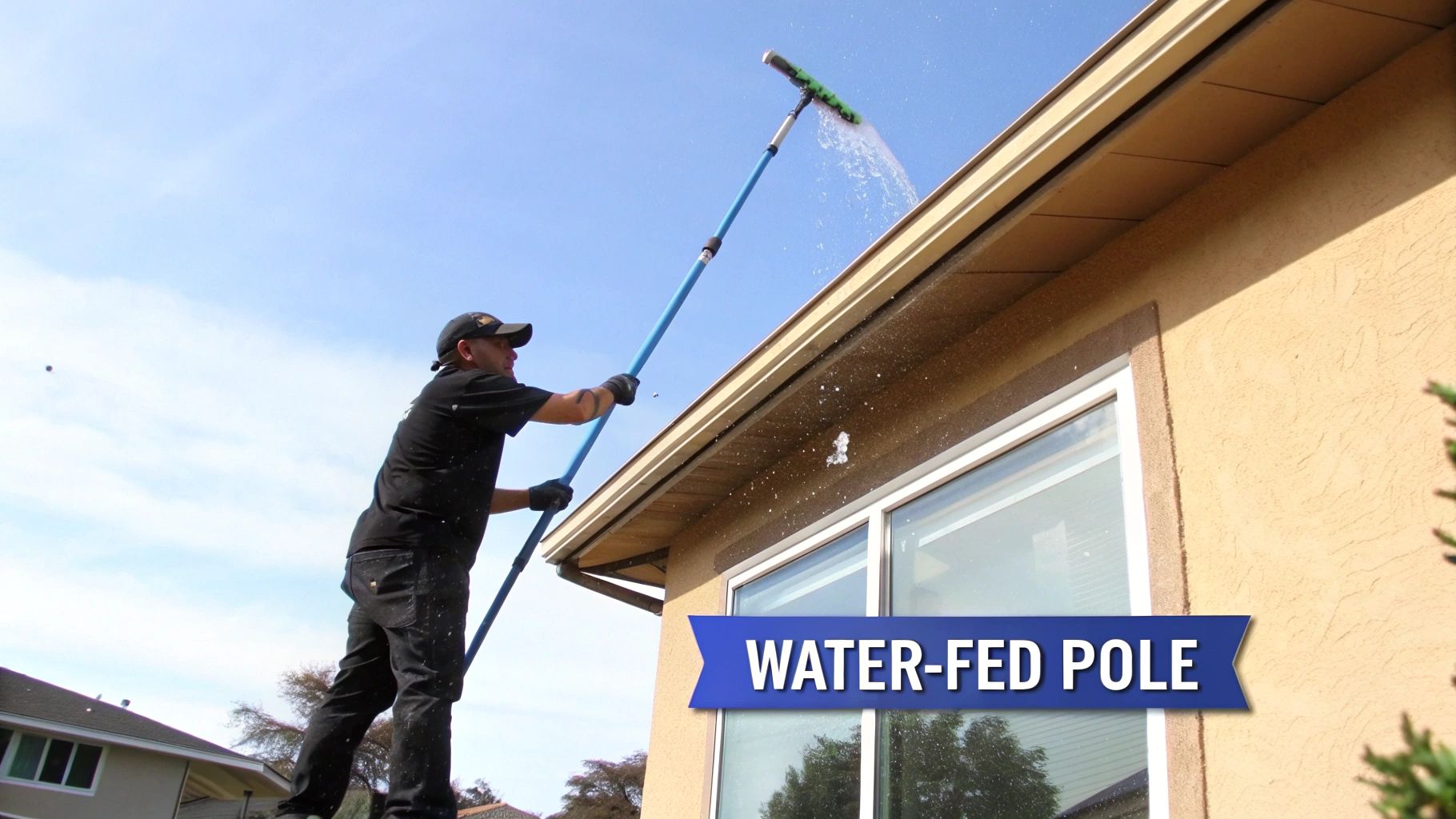
Using a pure-water system is a pretty slick process that rolls scrubbing and rinsing into one smooth motion. The setup is simple: a long, extendable pole, a special soft-bristled brush on the end, and a hose that runs from your water source through a purification filter.
To start, just connect the system and extend the pole up to the window. The purified water starts flowing through the pole and out of jets in the brush head. This continuous flow is all you'll need for the entire job.
The real magic here is how the purified water grabs onto dirt. Because it's free of its own minerals, it acts like a magnet for grime, dust, and other gunk on the glass, pulling it all away effortlessly.
Getting a flawless result boils down to a simple two-part technique: agitate, then rinse.
Start at the top of the window, using the brush to scrub the glass, frames, and sills. The whole point here is to break up and loosen every bit of built-up dirt.
Once you’ve given the entire window a good scrub, the final rinse is what makes or breaks the job.
This method works especially well in dusty places like Phoenix or areas with fine desert sand like Las Vegas, since it thoroughly rinses away tiny particles that could otherwise scratch the glass.
If you're curious about the science behind it all, we have an in-depth article that gets into the weeds of pure water window cleaning. The single most important takeaway is to let the window air-dry completely. Fight the urge to wipe it with a cloth—that will just put impurities right back on the glass and cause streaks, defeating the whole purpose of using pure water in the first place.
Sometimes, your standard soap and water solution just isn’t going to cut it. We’ve all been there—you encounter a patch of grime that refuses to budge, and suddenly, a simple job gets a lot more complicated. Things like hard water stains, paint overspray, and sticky tree sap require a more targeted approach to get your glass back to its original, crystal-clear state without causing damage.
This is a really common challenge, especially in areas with high mineral content in the water. For anyone trying to clean outside windows in a city like Denver, hard water spots can build up fast and even etch the glass if they’re ignored for too long. Honestly, these are the kinds of tough jobs that keep the professional window cleaning industry thriving.
Before you even think about scraping or aggressive scrubbing, it's critical to have the right tools. Using the wrong abrasive is a surefire way to permanently scratch your windows, turning a simple cleaning task into a costly mistake. For these stubborn stains, professionals like us rely on a couple of key items that are tough on grime but surprisingly gentle on glass.
With the right tools in hand, you can confidently tackle the most common types of stubborn grime. The secret is to always work on a well-lubricated surface. Your soapy water solution is perfect for this. Apply gentle, consistent pressure, and let the tool do the work.
For paint overspray or sticker adhesive, start by soaking the area with plenty of your cleaning solution. Then, hold a plastic razor blade at a flat angle against the glass and gently push forward. You’ll be surprised how easily the residue lifts off without leaving a single mark.
Hard water stains are a bit trickier. They're actually mineral deposits left behind as water evaporates. For light staining, wet the window and gently scrub in a small circular motion with your #0000 steel wool. For more severe cases that have been there a while, you might need a specialized hard water stain remover to break down the minerals.
This kind of attention to detail is what really sets a professional job apart from a quick DIY wash. It’s also why the global cleaning services industry, valued at $55.7 billion in 2020, is projected to hit $111.5 billion by 2030. The demand for specialized services like detailed window restoration is a huge driver of that growth. You can discover more insights about the window cleaning industry's growth and see just how important these specific skills have become.
When you need to clean outside windows that are off the ground, your mindset has to shift. It's no longer just about getting a good shine—safety becomes priority number one. Whether you’re climbing a traditional ladder or using a modern water-fed pole from the ground, a few fundamental practices are absolutely non-negotiable for preventing accidents.

The vast majority of window cleaning accidents are completely preventable. They usually happen because of a simple oversight, like grabbing the wrong ladder for the job or losing focus for just a split second. Taking a few extra minutes to set up correctly can honestly make all the difference.
Using a ladder seems simple enough, but there are specific rules that pros live by to stay safe. Before you even think about taking that first step up, remember that your setup is the most critical part of the entire process.
Your ladder must be placed on firm, completely level ground. If you’re on a soft or uneven surface, use a ladder leveling tool or even a sturdy, wide board underneath to create a solid base. Trust me, an unstable foundation is a recipe for disaster.
The "three points of contact" rule is the golden standard for a reason. Always have either two feet and one hand or two hands and one foot on the ladder at all times. This simple habit dramatically improves your stability and can save you from a fall.
Another huge risk is overreaching. It’s so tempting to stretch just a little bit further to get that last corner, but doing so shifts your center of gravity and is a leading cause of falls. Always keep your hips inside the ladder rails. If you can't reach, it's always safer to climb down and move the ladder. Don't risk it.
Even if you’re using an extension pole to keep your feet on the ground, you can't switch off your safety awareness. These poles can get long and unwieldy, and maintaining control is the key to preventing damage to your property or yourself.
There’s a certain satisfaction that comes from tackling home maintenance yourself, but let’s be honest—some jobs are best left to the experts. Knowing when to clean outside windows yourself versus hiring a pro usually boils down to three things: height, complexity, and the kind of mess you’re dealing with.
DIY methods are perfectly fine for ground-floor windows. But the minute you’re looking up at a home with three or more stories, the safety risks start to climb, too. Pros come equipped with serious safety training and commercial-grade gear, like pure-water systems, that let them work efficiently without ever leaving the ground.
Some situations are a clear signal that a DIY approach isn't the smartest, safest, or most effective choice. If your home fits any of these descriptions, it's probably time to make a call.
A professional brings more to the table than just clean glass. They carry comprehensive insurance that protects your property from accidental damage. That's a level of security you just don't get when you do it yourself.
Hiring an expert is really an investment in quality and your own peace of mind. They’ll typically use one of two proven methods: a traditional squeegee for that perfect, hand-finished look on lower windows, or a pure-water system that leaves high-reach windows completely spotless and streak-free. This expertise guarantees a better result that lasts longer.
The professional window cleaning industry isn’t just surviving; it’s thriving. That tells you something about the demand for reliable, skilled services. In the UK, for instance, the industry is on track to hit revenues of £467 million in 2025, with the number of businesses growing by 6.6% annually between 2020 and 2025. You can dig deeper into these window cleaning industry trends to see just how much the sector is expanding.
This growth really underscores the value homeowners place on a professional finish. For tough jobs in demanding climates like Las Vegas or dusty environments like Phoenix, a pro’s equipment and experience make all the difference.
Good communication is also a huge part of the professional package. The best companies are responsive and reliable. They often have solid systems in place to manage client calls, using proven strategies to reduce missed calls so clients can always get in touch when they need to.
We get a lot of the same questions from homeowners, so we've put together answers to a couple of the most common ones.
For most homes, a good rule of thumb is to have your exterior windows cleaned twice a year. This schedule is usually enough to keep dirt and hard water spots from building up and becoming a real problem.
However, your local environment plays a huge role. If you live in a particularly dusty area like Phoenix, or if your home is near a busy road kicking up grime, you'll want to bump that up to quarterly. More frequent cleanings in these conditions aren't just about looks—it's about protecting the glass from damage.
This is a classic mistake we see all the time. It’s actually best to avoid cleaning windows in direct, hot sunlight.
The sun will bake the cleaning solution onto the glass before you even have a chance to squeegee it off, which is the perfect recipe for streaks. For the best, crystal-clear results, aim for an overcast day or simply work on the shaded side of your house first, following the shade as it moves.
Read our blog posts regularly and keep learning.