Care and Maintenance
Medical Office Windows: Complete Care and Cleaning Guide
Learn how to keep medical office windows clean, safe, and code-compliant. Covers protocols, schedules, costs, and what to expect from professionals.


When it comes to professional window cleaning, there are only two methods the pros use: the classic, time-tested squeegee, and its modern counterpart, pure-water window cleaning. It's a highly effective system that uses water filtered to be 100% free of minerals and impurities, turning it into a grime-lifting powerhouse that leaves a flawless finish—no wiping required.
At its heart, the idea is pretty simple but rooted in science. Think of your regular tap water as a sponge that's already a bit damp and full of minerals like calcium and magnesium. When that water evaporates on your window, it leaves all those minerals behind as those annoying white spots.
Pure water, on the other hand, is like a brand-new, bone-dry sponge. It’s been stripped of everything, making it incredibly hungry to grab onto something. This demineralized water actively attracts and yanks dirt, dust, and pollen right off the glass.
Pros use a cool piece of gear called a water-fed pole system. It's a long, telescoping pole with a soft-bristled brush at the end. The pure water gets pumped all the way up the pole and sprays out through the brush, letting the technician clean windows from the safety of the ground.
The whole process boils down to a few key steps:
In the world of professional window cleaning, it really comes down to these two techniques: the modern pure-water system or the classic squeegee. A skilled pro can get fantastic results with either, but they work on totally different principles. You can dig deeper into the full range of tools professional window cleaners use to see what's in their toolkit. And to really appreciate the leap in efficiency, it helps to understand the serious skill involved in using traditional methods for streak-free window cleaning.
To give you a quick snapshot, here’s how the two methods stack up.
This table offers a quick comparison of the two primary professional window cleaning methods, highlighting their key differences in application and results.
While both methods have their place, the pure water system often provides a longer-lasting clean, especially for exterior windows.
One of the biggest wins for this modern method is that it leaves zero sticky soap residue. This means that not only do your windows get unbelievably clean, but they also stay cleaner for longer because there's nothing for new dust and pollen to cling to. It’s a cleaner clean that lasts.
Ever wondered how pure water window cleaning leaves glass so flawlessly clear? It’s not magic—it's just smart science. The whole process is built on one simple idea: turning regular tap water into a powerful, dirt-hungry cleaning agent by removing everything that isn't pure H₂O.
This is done with a pretty slick multi-stage filtration system that essentially acts like a super-fine sieve for water.
The journey from tap to pure water usually involves two key players working together: Reverse Osmosis (RO) and Deionization (DI). First, the water gets pushed through a semi-permeable membrane in the RO stage. Think of this membrane as a bouncer at an exclusive club—only the water molecules get in. It blocks the vast majority of bigger particles like salt, sediment, and minerals.
While RO does the heavy lifting, some tiny charged particles, called ions, can still slip through. That's where Deionization comes in to finish the job.
After the RO stage, the water flows through special resin beads in the DI system, which act like powerful little magnets. These beads grab and trap any leftover positive and negative ions, swapping them out and essentially polishing the water to perfection. The goal? To get the Total Dissolved Solids (TDS) down to zero parts per million (PPM).
This is where the water gets its cleaning superpowers.
In nature, water is packed with dissolved minerals. When you strip all of them away to hit zero TDS, the water becomes unstable and wants to get back to its natural, mineral-rich state. This "hydrophilic" (water-loving) quality makes it incredibly aggressive at bonding with and dissolving dirt, grime, and any other gunk on your windows.
This principle is a huge reason why green cleaning methods are taking over the service industry. In fact, the window cleaning industry is projected to hit $3.2 billion by 2029, with a major shift toward systems just like this one. These advanced filtration setups allow for a completely chemical-free clean that saves water and leaves surfaces looking incredible.
The actual cleaning process is as simple as it is effective.
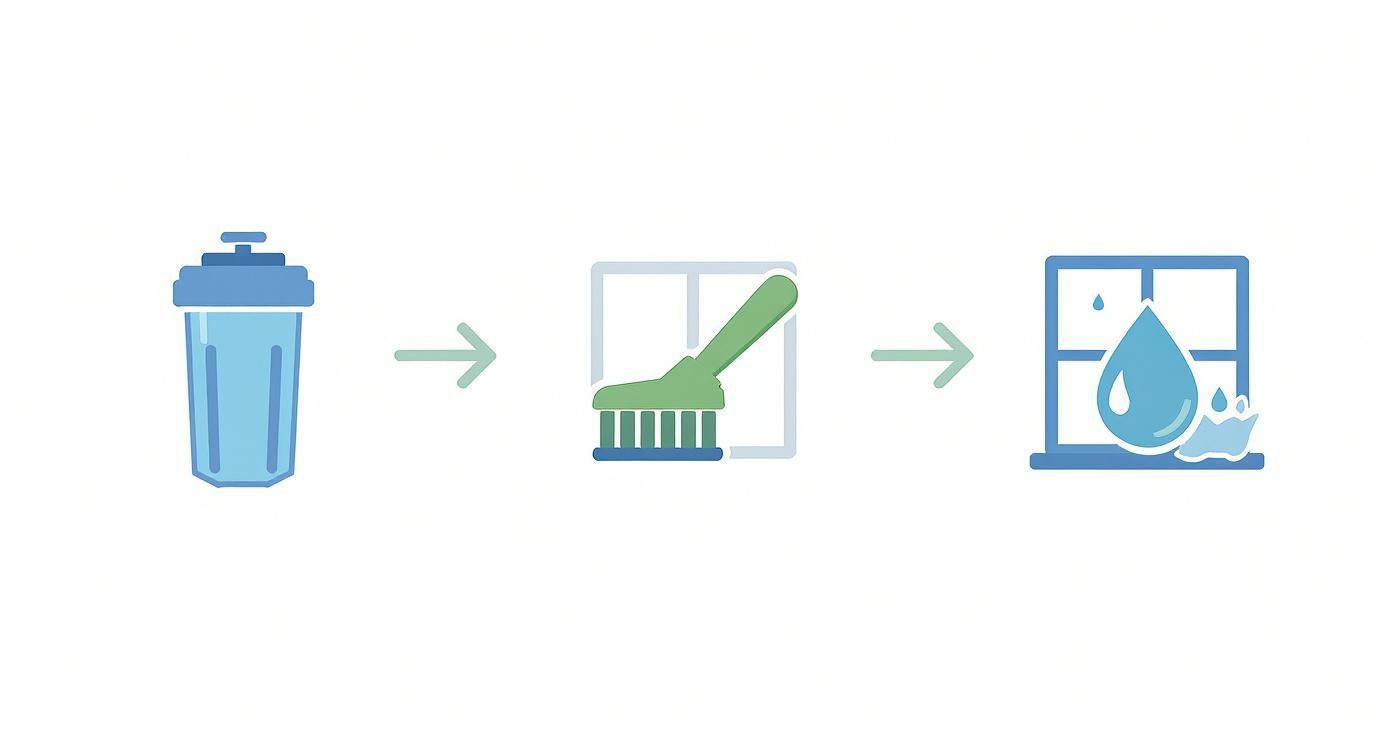
As you can see, it's a three-step dance: filter the water, scrub the glass to loosen up the grime, and give it a final rinse. Then, you just let it air-dry to a perfect, spot-free finish.
The secret to a spot-free shine is what the pure water doesn't have in it. Think about it: the spots and streaks you see on windows are almost always caused by mineral deposits left behind when regular tap water evaporates. This is a common headache in places with hard water.
When pure water evaporates, there's nothing left to leave behind. It just vanishes, taking all the dissolved dirt and grime with it.
There's another bonus, too. Windows cleaned this way actually stay cleaner for longer. Traditional squeegee methods often rely on soap, which can leave a microscopic, sticky film on the glass. That residue is like a magnet for new dust and pollen, making your windows look dirty again in no time. If you're already fighting mineral buildup, we have a guide on how to get hard water spots off windows and some extra tips for effectively removing stubborn water spots from windows.
Ultimately, pure water window cleaning is just a smarter way to work. By using the natural cleaning power of demineralized water, professionals can deliver a better, longer-lasting shine without a single drop of harsh chemicals. It’s a perfect example of science making things simpler and more effective.
When it comes to professional window cleaning, there are only two methods used by the pros: the classic squeegee and the modern pure water system. More and more, property owners are discovering the practical, powerful advantages that make pure water cleaning the clear winner. This isn't just about getting clean windows—it’s about a superior, longer-lasting result that’s safer and better for the environment.
The difference you'll notice immediately is the flawless, streak-free finish. Traditional cleaning often relies on detergents that, while effective at first, leave behind a subtle, sticky film on the glass. You can't see it, but this residue is a magnet for fresh dust, dirt, and pollen, making your windows look grimy again in no time.
Because pure water cleaning uses zero soaps or chemicals, it leaves absolutely nothing behind. The result is a truly pristine surface that naturally repels dirt, which means your windows stay cleaner for much longer.
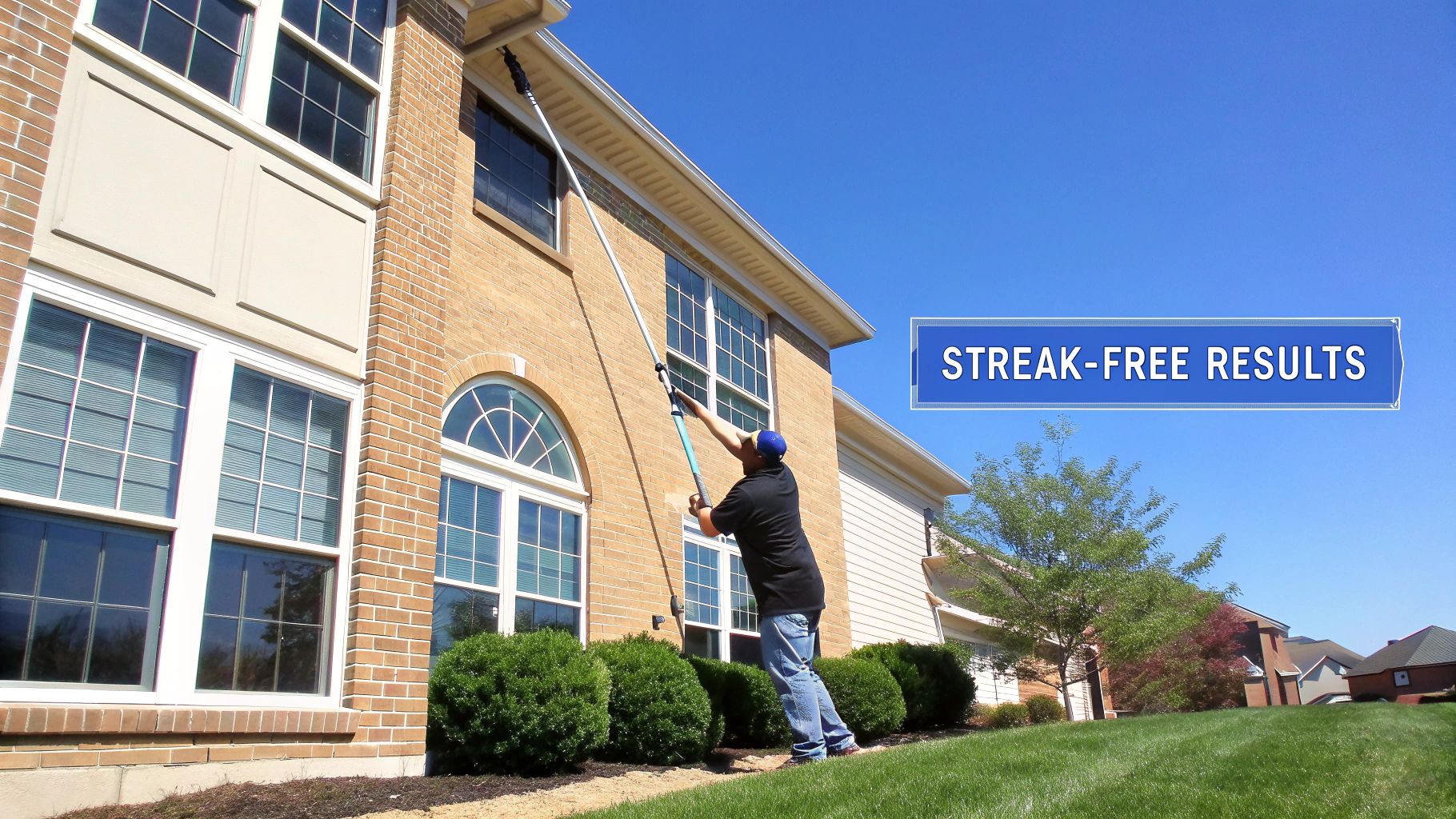
One of the biggest game-changers with pure water systems is the massive improvement in safety. The technology uses water-fed poles that can easily reach windows up to three stories high, all while the technician's feet are planted firmly on the ground. This simple change almost completely eliminates the risks that come with ladders.
For property owners, this ground-based approach brings incredible peace of mind. You don't have to worry about ladders scuffing your siding, denting your gutters, or crushing your carefully tended flowerbeds. It’s just a safer way to work, protecting both the technicians and your property.
This shift toward safer, more effective solutions is driving major growth in the industry. The global window cleaning market was valued at $2.68 billion in 2023 and is projected to hit $5.34 billion by 2031, largely thanks to demand for sustainable and safe technologies like pure water systems. You can read the full research about these market trends and see how eco-friendly practices are shaping the industry's future.
To give you a clearer picture, here’s a quick summary of the primary advantages pure water cleaning offers property owners.
Ultimately, this modern method delivers a superior clean that protects your property, your family, and the environment all at once.
Beyond safety, pure water window cleaning is an incredibly green choice. The entire process hinges on the natural cleaning power of demineralized water, completely sidestepping the harsh chemicals, detergents, and soaps common in other methods.
This makes it 100% safe for the world right outside your window. You can get a brilliant shine without a second thought for your:
This commitment to a chemical-free clean provides a spotless shine without compromising the health of your immediate environment. It's a cleaning method that is as kind to the planet as it is effective on your glass.
Finally, the system's efficiency is just remarkable. Water-fed poles give technicians unparalleled access to windows that would be a nightmare—or just plain impossible—to reach with a traditional ladder and squeegee. Think about those tricky windows over awnings, complex architectural features, or sensitive garden areas.
This extended reach ensures that every single window on your property gets cleaned to the same high standard, leaving no pane untouched. For homeowners and property managers, that means a consistently thorough clean across the entire building, boosting curb appeal and maintaining your property’s appearance with incredible efficiency.
When you're thinking about pure water window cleaning, one of the first questions that comes to mind is usually, "What's this going to cost me?" It's a fair question. The final price depends on a few key things, ensuring the quote you get is tailored specifically to your property. Think of it as an investment not just in a service, but in a higher quality, longer-lasting clean.
The main factors driving the cost are your property's size and how many windows you have. From there, a professional will look at how accessible the windows are—are we talking about easy first-floor panes or tricky third-story glass? Finally, the current state of your windows matters. If they're caked with months of dirt and grime, it's going to take a bit more time and effort to bring back their shine.
Even though the water-fed pole system is incredibly efficient—often making pure water cleaning a very competitive option—the equipment itself is a serious investment for any professional crew. We're talking about advanced filtration systems, high-quality carbon fiber poles, and an array of specialized brushes. This commitment to top-tier gear is a big part of why you get those superior, streak-free results that last.
And the demand for this kind of specialized equipment is really taking off. The pure water window cleaning equipment market is projected to grow at a compound annual growth rate of roughly 7% between 2025 and 2033. While the initial outlay for a skilled operator is high, the long-term gains in efficiency and sustainability are making it the new standard. You can check out more details about the expanding pure water equipment market at datainsightsmarket.com.
Figuring out the perfect cleaning schedule is all about finding that sweet spot between your budget and what your property actually needs to stay looking sharp all year round. There isn't a one-size-fits-all answer, because the right frequency really depends on your local environment and the type of property you have.
A good pro can help you build a custom plan, but here are some solid rules of thumb to get you started:
At the end of the day, the goal is to create a schedule that just works for you. A professional service can take a look at your property and recommend a frequency that keeps your windows looking their absolute best without being overkill.
While pure water window cleaning delivers stunning results just about anywhere, its advantages really shine in the unique climates of the Southwest and Mountain West. Both the traditional squeegee and the pure water system are professional-grade methods, but the local conditions out here often highlight the superior, longer-lasting finish you get from a pure water clean.
This method is perfectly suited to handle our environmental challenges, ensuring a flawless shine whether you're dealing with desert dust or mountain minerals.

In extremely dry, dusty areas like Phoenix and Las Vegas, windows are in a constant battle with airborne grime. It’s a frustrating cycle for any property owner. Traditional cleaning methods using soap can leave behind an invisible, microscopic film on the glass, and this sticky residue acts like a magnet for dust, making windows look dirty again almost immediately.
This is where pure water cleaning truly excels. Because it uses only highly filtered water with a Total Dissolved Solids (TDS) reading of zero, there is absolutely no residue left behind to attract new dust. The result? Your windows stay cleaner for significantly longer, even in the toughest desert conditions.
The residue-free finish is the key. In arid climates, a clean window surface that actively repels dust isn’t just a benefit—it’s a necessity for maintaining clarity and curb appeal.
Climates like Denver bring a different set of challenges, from hard water loaded with minerals to unpredictable weather that can ruin a fresh cleaning in minutes. Anyone with a shower door knows what hard water can do; it’s notorious for leaving stubborn white spots and streaks, which are just mineral deposits left behind as water evaporates.
The multi-stage filtration at the core of pure water cleaning solves this problem head-on. It strips out all that heavy mineral content—like calcium and magnesium—from the local water supply before it ever touches your glass. This guarantees a spot-free result that can stand up to the elements.
The process remains just as effective in colder months, too. For a deeper dive on year-round care, you can read our guide on washing windows in cold weather.
Ultimately, whether you're facing intense sun and dust or battling hard water and snow, pure water technology delivers a consistently perfect finish. It's a versatile solution that addresses the specific environmental challenges of your region, giving you a brilliant shine that lasts.
Even after seeing how the science works, it's totally normal to have a few questions. This method is a big leap from the old soap-and-squeegee routine, so it’s natural to wonder about the practical side of things. We’ve pulled together some of the most common questions we hear to clear up any doubts you might have.
Getting these answers usually shows why pure water cleaning is one of only two methods the pros really trust for incredible, long-lasting results.
This is easily the most common question we get, and the answer is at the heart of why this technique is so effective. Yes, technicians leave the windows wet on purpose—they’re designed to air-dry. Because the water is 100% free of dissolved minerals, it simply evaporates and leaves absolutely nothing behind.
Think about the spots and streaks you get from tap water. Those are just the mineral deposits left over after the water disappears. With pure water, there are no leftovers to leave a mark. There's no need for wiping or squeegeeing; the water does all the work as it evaporates, resulting in a perfectly clear finish. It's a hands-off final step that guarantees a flawless shine.
"A key misconception is that 'wet' means 'unfinished.' In pure water window cleaning, the wet, air-drying phase is the final step. It's the scientific proof that the water is completely free of the impurities that cause spotting, ensuring a perfectly transparent result every time."
Absolutely. Pure water cleaning is one of the safest, gentlest professional methods you can choose for your property. The whole process boils down to just two things: ultra-pure water and a soft-bristle brush.
There are no harsh chemicals or abrasive soaps that could damage your home or building. That makes it completely safe for every part of your window and the surrounding areas:
And since there’s no chemical runoff, it’s 100% safe for your landscaping, pets, and family. It’s the ideal choice for property owners everywhere, from the manicured gardens of Phoenix to the eco-conscious communities around Denver and Las Vegas.
While the idea sounds simple enough, getting professional-level results is another story. The success of pure water window cleaning depends entirely on specialized—and frankly, expensive—equipment.
Professional setups use multi-stage filtration units (combining things like Reverse Osmosis and Deionization systems) that need constant monitoring and maintenance. If the water quality isn't kept at zero Total Dissolved Solids (TDS), you'll end up with spots. Beyond the gear, there's a real technique to using the water-fed poles. Knowing just how to agitate grime with the brush and rinse different types of debris is a learned skill.
For that truly spot-free, professional-grade shine, it’s a job best left to a team that has invested in the right technology and training.
For a streak-free shine that protects your property and lasts longer, trust the experts at Professional Window Cleaning. We have the technology, training, and passion to make your windows look brand new. Schedule your professional window cleaning service today!
Read our blog posts regularly and keep learning.