Care and Maintenance
How to Restore Window Glass and Frames the Right Way
Learn how to restore window glass, frames, and seals with pro methods, real tools, and honest trade-offs. A practical guide


The real secret to getting a professional, streak-free shine on your home’s exterior windows isn't some complicated chemical formula. It’s all about using the right solution for the job.
More often than not, a simple mixture of distilled water, white vinegar, and a single drop of dish soap is the most effective cleaning solution for outside windows. It’s brilliant at cutting through grime without leaving that frustrating residue behind.
That endless frustration of looking at streaky, grimy exterior windows? It almost always comes down to one thing: you're using the wrong cleaning solution. Let's cut through the confusion and talk about why the mix you use is the single most important factor for getting that professional, crystal-clear finish.
Exterior windows face a much tougher battle than the glass inside your home. They’re constantly dealing with everything from pollen and bird droppings to stubborn hard water stains. A generic, all-purpose cleaner just won't cut it.
This guide dives into the exact solutions the pros rely on. Professional window cleaners use only two methods: a traditional squeegee or a modern pure-water system. You'll get actionable recipes and methods to finally achieve a flawless result.
When we tackle a job, we use one of two proven methods, and each has its own "solution" that makes it work so well.
For homeowners in dusty climates like Las Vegas or areas with hard water, understanding these methods is key. The right cleaning solution for outside windows can transform a frustrating chore into a deeply satisfying project with stunning results.
For a deeper dive into the techniques that guarantee a perfect shine, you can explore our detailed guide on how to get streak-free windows.
Forget those weak, generic blue sprays that promise the world and only deliver streaks. You can easily whip up a powerful and incredibly budget-friendly cleaning solution for outside windows with a few household items you probably already have.
This isn't just about dumping some vinegar into a bucket of water; it's about understanding why this simple mix works so well.

As you can see, getting professional-grade results doesn't require a cabinet full of expensive chemicals.
Each ingredient in a pro-level homemade cleaner plays a specific, vital role. Once you know what each one does, you can tweak your recipe to tackle anything from light dust to years of built-up grime.
Distilled Water: This is your secret weapon against spots. Tap water is full of minerals like calcium and magnesium. When it evaporates, those minerals get left behind, creating those annoying white spots. Distilled water is completely mineral-free, which guarantees a spot-free finish when it dries.
White Vinegar: The acetic acid in white vinegar is a natural workhorse. It effortlessly cuts through mineral deposits and tough hard water stains, dissolving the gunk that builds up on exterior glass.
Dish Soap: You only need a single drop of a simple dish soap (like original Dawn). Its main job here isn't cleaning—it's to act as a surfactant. This breaks the water's surface tension, letting your squeegee glide smoothly across the glass without skipping or chattering. That smooth glide is the key to a perfectly streak-free window.
Pro Tip: Always add the soap last, and do it gently. If you add it first and then blast it with water, you'll create way too many suds. Too much foam is a nightmare to rinse off and can leave a sticky residue behind.
Here's a quick guide to mixing the perfect homemade window cleaning solution for whatever your windows throw at you.
These simple recipes give you the power to create a customized, effective cleaner right in your own home.
Mixing your own solution not only saves a ton of money but also gives you complete control over the ingredients. You can tailor the strength to the exact needs of your home, ensuring a perfect, professional-quality shine every single time you clean.
If you've ever watched a pro window cleaner at work, you know it's a completely different ballgame from the usual spray-and-wipe routine at home. Their secret to a consistently perfect, streak-free finish isn't some unobtainable magic potion. It all comes down to mastering one of two highly effective methods—the very bedrock of the entire window cleaning industry.
The tools and techniques they use are surprisingly straightforward. We get into the specifics in our guide on what professional window cleaners use, but it really boils down to two distinct approaches.
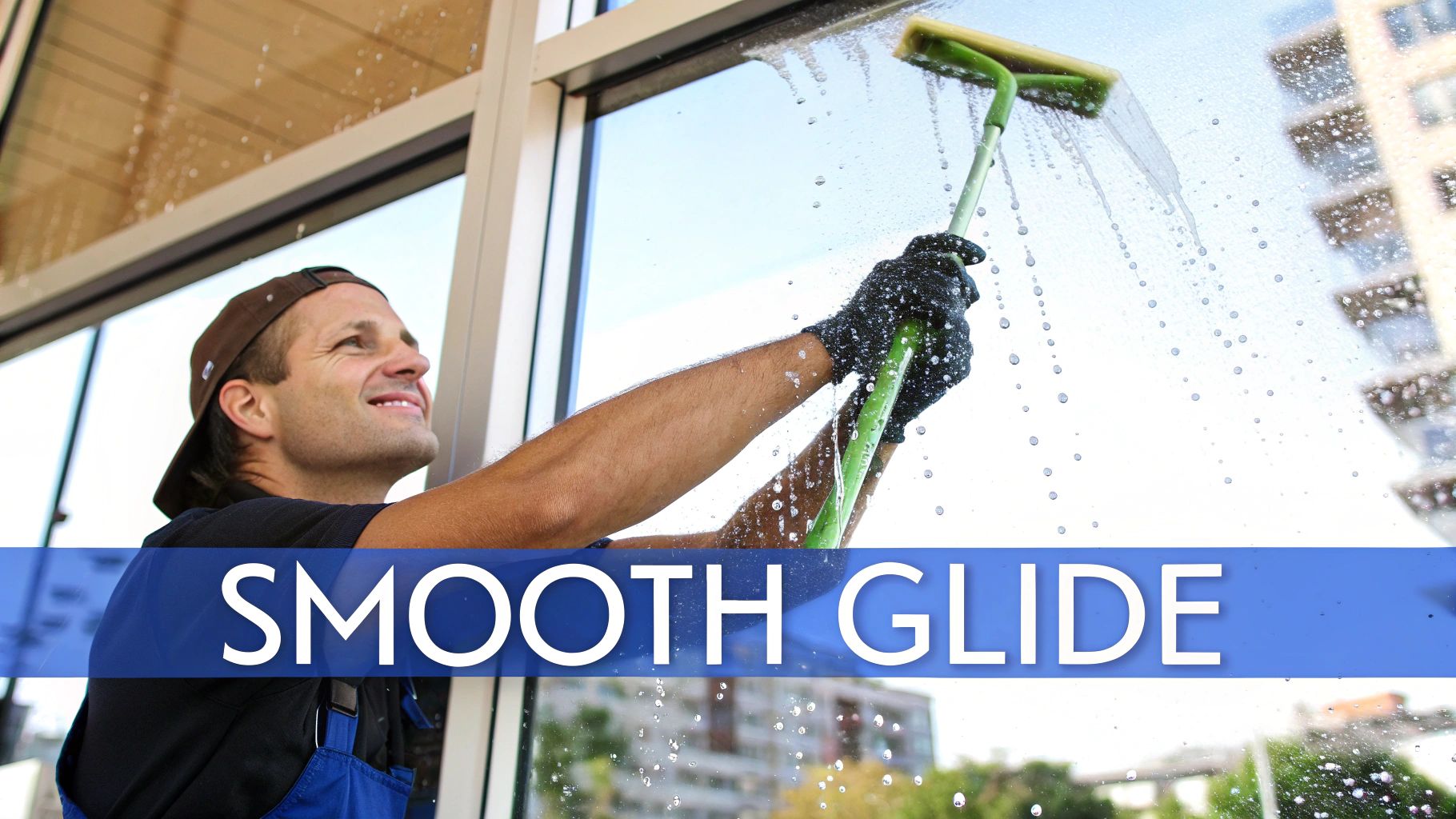
The classic method, and the one most people picture, involves a scrubber and a squeegee. In this setup, the "cleaning solution" is usually nothing more than water with a small amount of specialized soap or even basic dish soap. The soap's main job isn't just cleaning—it's to act as a crucial lubricant.
This lubrication is what allows the squeegee's rubber blade to glide effortlessly across the glass. It lifts and pulls away the dirt, grime, and soapy water in one smooth, continuous motion. Without that "slip" from the soap, the blade would skip and chatter, leaving behind those frustrating streaks and water lines we all hate.
A common mistake is thinking more soap means cleaner windows. Pros know the opposite is true. They use just enough to create a slick surface. Too many suds leave a sticky film that’s tough to remove and actually attracts more dirt over time.
The second approach is a more modern, high-tech marvel: the pure-water system. This technique turns the whole idea of a cleaning "solution" on its head by making ultra-purified water the solution itself. This isn't your average tap water. It goes through an intensive filtration process, like reverse osmosis or deionization, to strip out 100% of its mineral content. Some pros even install [whole home reverse osmosis systems](https://watermedic.com/whole-home-reverse- osmosis/) to guarantee a steady supply of pure water.
Because this deionized water has zero dissolved solids, it becomes a surprisingly aggressive cleaning agent. Its molecules are hungry to bond with minerals, dust, and dirt sitting on the window. A cleaner uses a water-fed pole with a soft brush to agitate the grime, and then a constant stream of pure water rinses it all away.
The result is incredible. The windows are simply left to air dry, and because there are no minerals in the water, they dry to a perfectly clear, spot-free finish. No squeegee ever touches the glass.
You can have the best cleaning solution for outside windows in the world, but if your technique is off, you’ll just be left with streaks. Achieving that coveted, perfectly clear finish really comes down to sidestepping a few common pitfalls. If you can avoid these simple mistakes, you'll see your hard work pay off with a sparkling view.
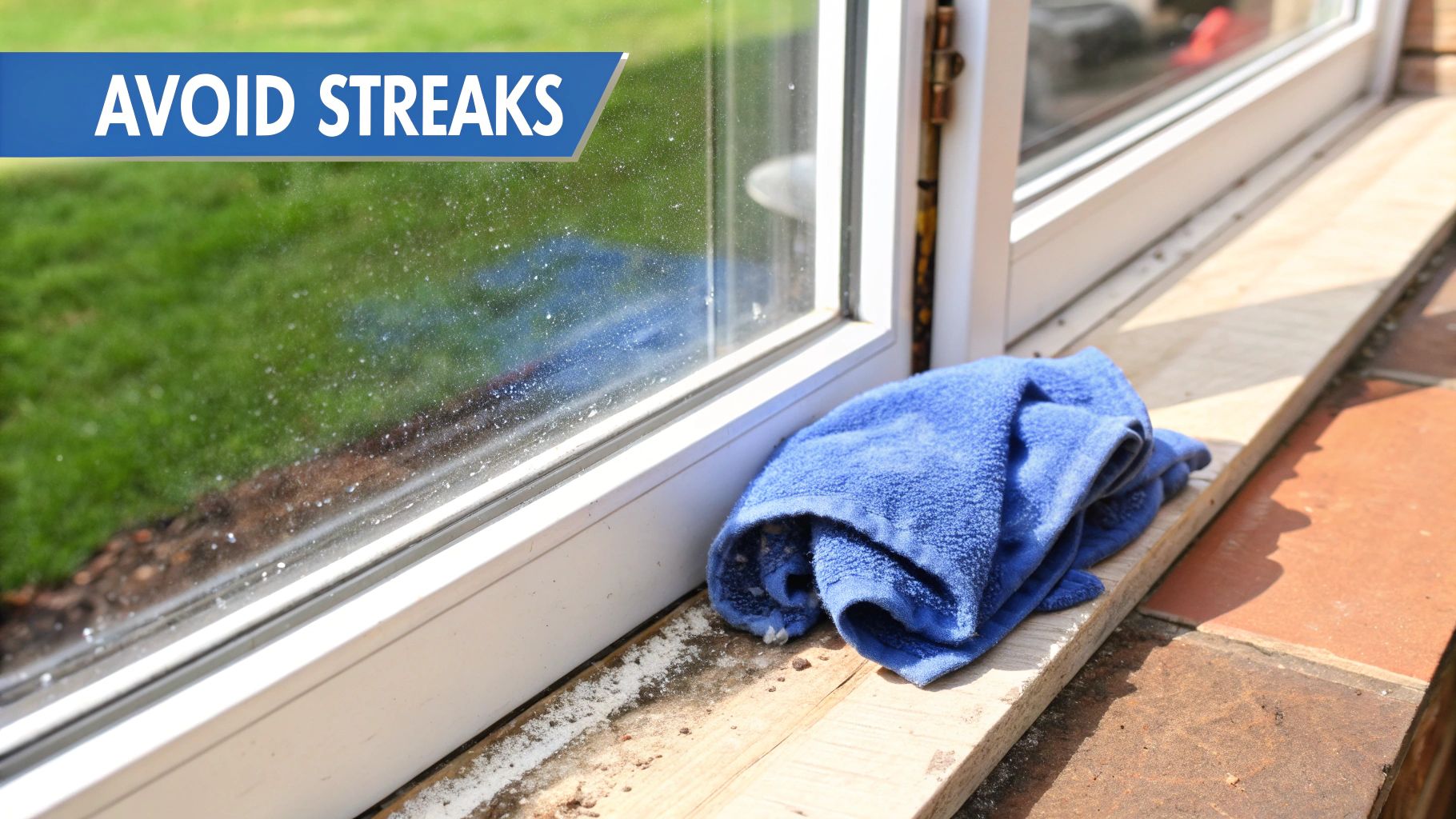
The biggest culprit? Washing windows in direct sunlight. I see it all the time. The sun's heat makes your cleaning solution evaporate almost instantly, baking streaks and soap residue right onto the glass before you even get a chance to squeegee it off. Do yourself a favor and always choose a cloudy day or wait until your windows are in the shade.
Another all-too-common error is just grabbing the wrong tools for the job. Reaching for old rags or a roll of paper towels is practically a guarantee for lint and smudges. Instead, do what the pros do and invest in a quality squeegee and a few microfiber cloths.
It’s also tempting to think that more soap equals a better clean, but it's actually the opposite. When you use too much dish soap, you create a sticky film that’s a real pain to rinse off completely. Worse, that residue acts like a magnet for new dirt and dust, making your windows look grimy again in no time.
A critical step so many people skip is prepping the window first. Before you even think about applying a cleaning solution, grab a soft brush and sweep away loose dirt, cobwebs, and debris from the frame and sills. Starting with a cleaner surface prevents you from just pushing mud around the glass.
Finally, remember that your typical indoor glass cleaner just isn't cut out for the grime on your exterior windows. Those formulas aren't strong enough to tackle the pollen, pollution, and hard water deposits that build up outside. Stick to one of the two professional methods: a proper squeegee technique with minimal soap or a pure-water system. By dodging these common missteps, your windows will look like a professional cleaned them.
While a good DIY solution is fantastic for routine upkeep, some messes just laugh in the face of vinegar and soap. When you're staring down stubborn hard water scale, artillery fungus, or the lovely remnants of a construction project like paint overspray, it's time to call in the big guns: a commercial-grade product. A store-bought cleaning solution for outside windows is almost always your best bet here.
These products are specifically formulated with potent ingredients designed to dismantle tough residues. The key is to check the label—you need something that's safe for your specific window materials, like vinyl or aluminum frames, and won't obliterate your surrounding flower beds. For those really tough jobs, knowing what the pros use can make all the difference. You can get a better sense of professional approaches in our guide to commercial window cleaning.
Thankfully, "powerful" doesn't have to mean "harsh" anymore. The demand for effective but environmentally safe products has exploded. In fact, the green cleaning market is on track to blow past $11 billion by 2025, which just goes to show where consumer priorities are heading.
These green cleaners strike a perfect balance. You get the grab-and-go convenience of a ready-made solution without having to compromise your environmental values. They typically use plant-derived solvents and biodegradable ingredients to cut through grime just as effectively.
And to make sure you have everything you need for a truly sparkling home from top to bottom, it never hurts to run through a complete household cleaning supplies checklist to keep yourself organized.
Got a nagging question about how to get your outside windows really clean? You're not alone. Here are some quick, no-nonsense answers to the questions we hear most often, straight from our years of experience.
What’s the best way to get rid of stubborn hard water stains?
Hard water stains are a real pain, but the right approach makes all the difference. Since they're mineral deposits, you need a mild acid to break them down. Your best bet is a simple mix of 50% distilled water and 50% white vinegar.
For really tough spots that have been there a while, you might need to apply straight white vinegar directly to the glass. Let it sit for a few minutes to do its work, then give it a gentle scrub with a non-abrasive pad before you squeegee the whole window.
Can I just use Windex on my outside windows?
While you can, we really don't recommend it. Windex and other household glass cleaners are made for light indoor dust and fingerprints. They evaporate way too quickly in the outdoor air, which is the number one cause of streaks.
They also just aren't strong enough to cut through the heavy-duty grime that builds up outside—we're talking pollen, dirt, and traffic pollution.
A simple solution of water, white vinegar, and a single drop of dish soap will outperform bottled cleaners any day when you're using a squeegee. Of course, for that flawless, truly professional finish, nothing beats a pure-water system, which leaves zero residue behind.
How often should I be cleaning my outside windows anyway?
For most homes, a good cleaning twice a year is a great rule of thumb. But honestly, your local environment is the biggest factor.
If you're in a dusty, dry area like Phoenix or live near a busy street, you’ll probably find they need attention quarterly. On the other hand, homeowners in milder climates like Denver can usually stick to that twice-a-year schedule and be perfectly happy.
Ready to see a truly professional shine without lifting a finger? The experts at Professional Window Cleaning use proven techniques to deliver a flawless, streak-free finish every time. Get your free estimate today!
Read our blog posts regularly and keep learning.