Care and Maintenance
Window Washing Cloths: The Professional Guide
Discover the best window washing cloths for streak-free glass. Compare microfiber, chamois, and cotton, plus expert care tips for homes and high-rises.


Thinking about tackling those grimy exterior windows with just a garden hose? It's a tempting shortcut, and yes, you can definitely start there to knock off the loose stuff. But for that truly invisible, streak-free look that professionals achieve, a hose is just the opening act.
In the world of professional window cleaning, there are ONLY 2 methods used: the traditional squeegee or an advanced pure-water system. Think of a hose rinse as the prep work. A good rinse is fantastic for clearing the stage, but it's not the main performance.

Let's set some realistic expectations here. Grabbing your garden hose is a great first pass for cleaning your home's exterior windows. It's perfect for blasting away cobwebs, layers of dust, and that lovely yellow film of pollen that blankets everything in the spring.
The problem comes after the water dries. This is where the DIY hose method shows its biggest weakness: hard water. Unless you live somewhere with exceptionally soft water, the minerals left behind are going to create spots and a hazy film. We see this all the time in our service areas from Las Vegas to Phoenix, where hard water is a fact of life.
What exactly is hard water? It's water with a high concentration of dissolved minerals like calcium and magnesium. When you spray it on your windows and let it air dry, the water evaporates, but those minerals stay put. The result? Stubborn, chalky spots that can make your windows look almost as dirty as they were before you started.
It's a common issue. Research shows that just hosing down windows can leave behind 40% more streak residue from hard water minerals. This is a huge reason why professional services have grown—pros use advanced deionized water systems to get that perfect shine.
After being in this business for over 26 years, Professional Window Cleaning can tell you there are only two ways to get a truly flawless finish: a classic squeegee in skilled hands or a professional pure-water system. Both methods are designed to get every last drop of water—and the minerals in it—off the glass before it has a chance to dry and leave spots.
So, should you even bother with the hose? Absolutely. It’s an essential tool for prepping the surface. A quick rinse makes the real cleaning so much faster because you're not just smearing mud around with your sponge or mop.
Here's a quick look at what a garden hose can and can't do for your exterior windows.
Ultimately, using a hose is a valid step, but it’s just that—one step in a bigger process. It won't give you that invisible-glass look on its own, but it sets you up for a much easier and more effective cleaning job.
And if you're thinking about stepping up the power, be sure to check out our guide on whether you can pressure wash windows (spoiler: you need to be very careful).
Having the right gear is the difference between a frustrating afternoon and a job well done. Before you even think about turning on the hose, gathering the proper tools is the first step toward getting the best possible results without accidentally causing damage.
Think of it this way: you're setting yourself up for success from the very beginning. This process is about more than just grabbing a hose; it’s about having a complete system ready to go. The right equipment protects your property and makes the entire job safer and more efficient, whether you're in Denver or Scottsdale.
Your garden hose might be the star of the show, but its supporting cast is just as important. Let’s start with the nozzle—this is a critical choice. You’ll want to avoid any setting that creates a powerful, concentrated jet.
Pro Tip: Always stick to a gentle spray pattern like "shower," "mist," or "fan." A high-pressure stream can easily force water behind siding, damage window seals, or even crack older, more fragile glass.
Beyond the hose, you'll need a few other essentials to complete your kit:
While the hose does the heavy lifting for rinsing, the final finish comes down to one key piece of equipment. At Professional Window Cleaning, we know from over 26 years of experience that the pros rely on only two methods for a perfect finish: a pure-water system or a high-quality squeegee.
For any DIY project, the squeegee is your most valuable player. You can learn more about all the tools of the trade by exploring our full guide to professional window cleaning equipment.
A good squeegee removes every last drop of water before minerals can dry and leave spots. Investing in a quality one with a sharp, pliable rubber blade will pay for itself by delivering that streak-free shine a simple hose-down and air-dry can never achieve.
Alright, you’ve got your tools. Now it's time to put them to work and get that professional, streak-free shine. This isn't about following a rigid checklist; it's more of a fluid process that experienced cleaners use to tackle dirt efficiently. The real secret is in the technique and the order you do things. A methodical approach is key—it keeps you from making extra work for yourself, like splashing dirty water onto a window you just cleaned.
This process is a refined version of what our teams at Professional Window Cleaning have been perfecting for over 26 years. It works whether you're cleaning a single-story home in Scottsdale or a multi-level property out in Denver. The core principles of cutting through grime and managing water are the same everywhere.
Before you even think about turning on the water, take a few minutes to prep the area. Trust me, this small step saves a ton of frustration later and protects your home and landscaping.
First, walk around and make sure every window is closed and latched tight. An open window is just asking for water to get inside, which can lead to damaged sills, walls, and floors.
Next, clear the deck. Move any patio furniture, grills, potted plants, or other decorations away from the windows. This gives you a clear shot at the glass and keeps your belongings from getting a soapy shower. If you have delicate flower beds or shrubs right below the windows, you can toss a plastic tarp over them to shield them from the runoff.
Start by giving all the windows a gentle rinse with your garden hose. Use a "shower" or "fan" setting to knock off the loose stuff—thick layers of dust, pollen, and cobwebs. Always work from the top of the house down. This initial rinse is crucial because it removes the easy-to-clean debris, so you're not just smearing mud around when you start scrubbing.
With the first layer of dirt gone, it’s time to bring in your cleaning solution. Dip your soft-bristle brush into the bucket of soapy water and start scrubbing the glass, again working from top to bottom. Use gentle, overlapping strokes to make sure you cover the entire pane. The goal here is to lift the stubborn grime that the rinse couldn't handle.
The key is not to let the soap dry on the glass, especially on a hot, sunny day. To avoid this, work in manageable sections. I recommend washing and rinsing one or two windows at a time before moving on.
Your three main tools—a bucket for the solution, a squeegee for the finish, and a towel for the details—create a simple but powerful system.
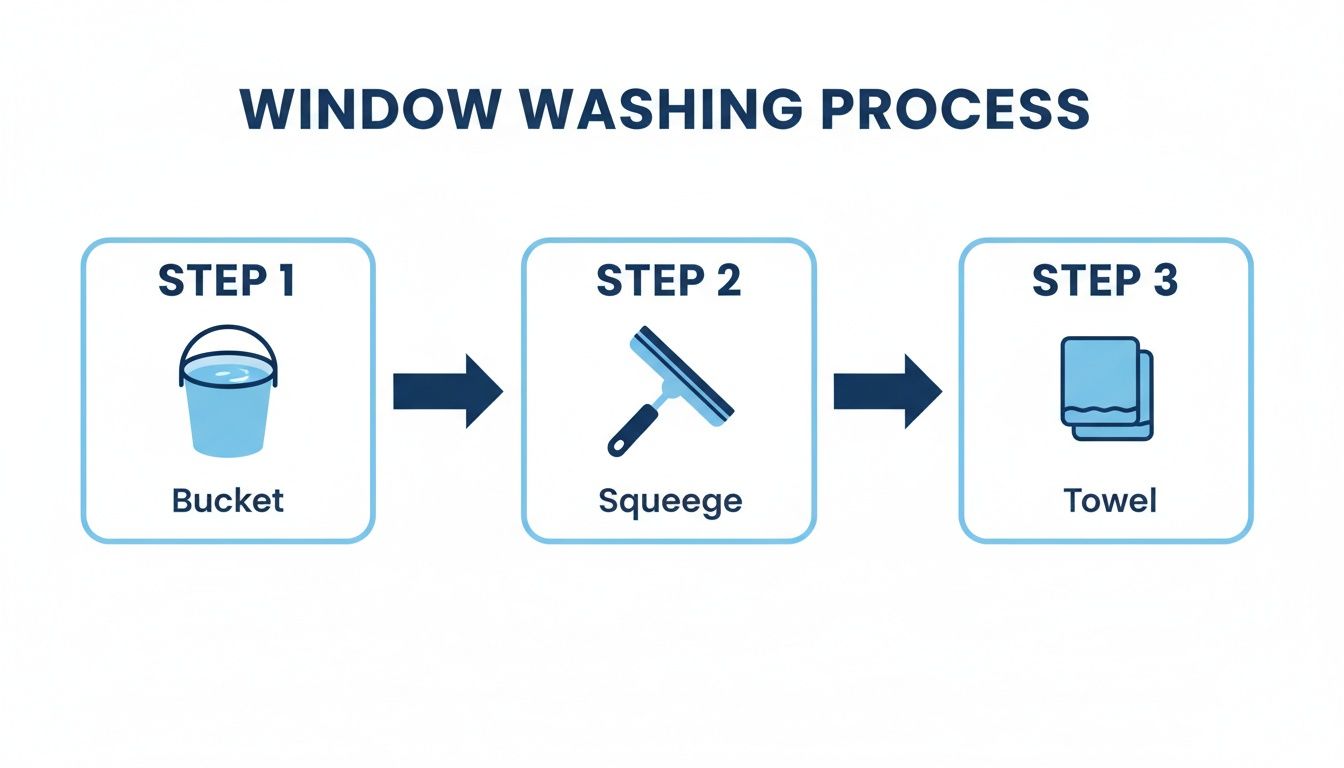
This workflow is exactly how the pros achieve those consistently perfect results, every single time.
This is where the magic happens. After you've thoroughly rinsed the soap off a window, grab your squeegee. The technique is everything when it comes to a truly streak-free finish. As professionals with over 26 years of experience, we can tell you that aside from a pure-water system, a quality squeegee is the only tool we trust for a perfect finish.
Start by angling the squeegee at about a 30-degree angle to the glass. Place the blade in a top corner and pull it down in one single, smooth, continuous stroke.
Here’s the most important tip: Overlap each new stroke by about an inch over the previous one. This simple action is what eliminates those tell-tale vertical lines. After each pass, wipe the rubber blade clean with a microfiber towel to remove collected dirt and water.
Once the main pane is dry, use a separate, clean microfiber cloth to wipe away any leftover drips along the edges and on the windowsill. This final detailing step is what separates a DIY job from a professional one.
This level of efficiency is why our commercial clients trust us. For property managers of large venues like stadiums and office complexes, a refined process like this means a typical 4-hour cleaning session can be cut down to just 2.5 hours. You can learn more about how efficiency is changing our field with these window cleaning industry statistics.
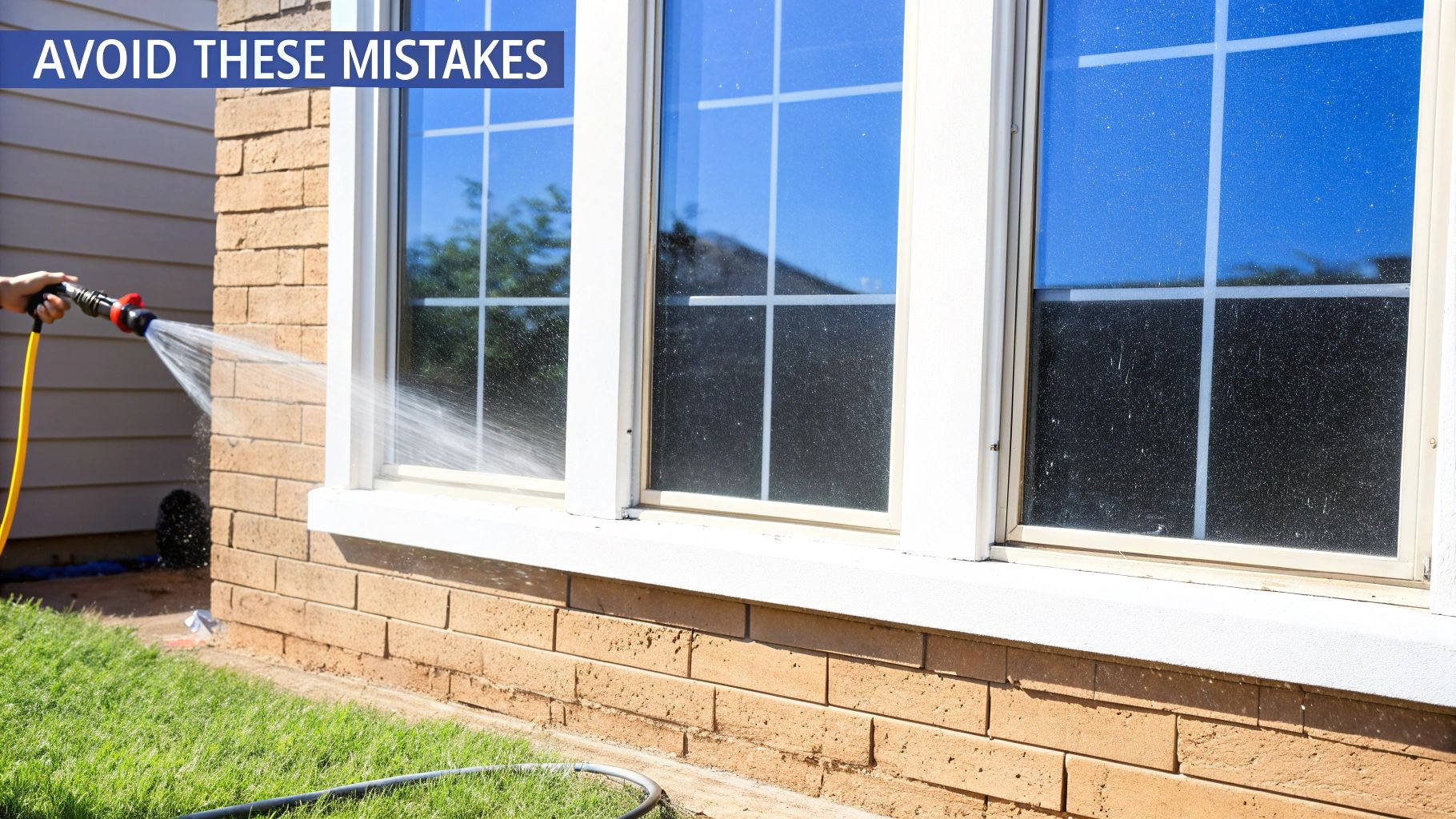
Learning from someone else's mistakes can save you a world of frustration. Professional Window Cleaning has been cleaning windows for over 26 years, and believe us, we’ve seen it all. While a garden hose can be a great tool, a few common slip-ups can turn a simple job into a damaging and disappointing mess. Steering clear of these pitfalls is the real secret to getting great results.
The single biggest mistake we see? Using way too much water pressure. It's incredibly tempting to just blast away the grime with a powerful jet stream, but that's a recipe for disaster. High pressure can shred your window screens, force water behind the seals (leading to that ugly fogging between the panes), and even chip away at your window frames or siding.
A gentle "shower" or "fan" spray from your hose nozzle is all you really need to rinse everything down without risking costly damage.
Another classic blunder is trying to wash windows in direct, intense sunlight. The heat causes your cleaning solution and rinse water to evaporate almost instantly. You're left with ugly streaks and mineral deposits before you even have a chance to dry the glass. This is a huge problem in sunny cities like Phoenix or Las Vegas.
The best time to clean your windows with a hose is on an overcast day or during the cooler morning or evening hours. This gives you plenty of time to work your magic and squeegee the glass dry for a flawless, spot-free finish.
Choosing the wrong cleaning agents can also stir up a hornet's nest of problems. You'll want to avoid harsh chemicals like ammonia or anything with bleach. These can damage window tint, discolor vinyl or painted frames, and absolutely wreck the delicate plants in your flowerbeds below. A simple solution of mild dish soap and water is both safe and surprisingly effective.
Finally, a complete job goes beyond just the glass. A common oversight is forgetting about the window treatments inside. To get a truly sparkling result, it helps to also know how to clean blinds.
The ultimate goal is a professional, invisible finish. You can only get that in one of two ways: with a high-quality squeegee or a professional pure-water system. Simply hosing down your windows and letting them air dry is a guarantee you’ll be left staring at spots from mineral deposits.
Remember to sidestep these frequent errors:
By dodging these common mistakes, you can use your hose as an effective tool to get your windows cleaner without accidentally creating a whole new set of problems.
Knowing your limits is the secret to any successful DIY project, and cleaning your windows with a garden hose is no exception. While the hose method is a fantastic way to handle a light refresh, there are definite times when it's smarter, safer, and just plain more effective to put down the hose and call for some expert help.
Safety is always the number one concern. If you're looking up at hard-to-reach second-story windows, staring at windows over a steep slope, or dealing with complex architectural designs, the risk of a fall is very real. Juggling a hose, a brush, and a squeegee while balanced on a ladder is a recipe for disaster. It's a tricky and dangerous task best left to trained professionals who have the right safety equipment and experience.
Beyond safety, some cleaning challenges are simply too tough for a garden hose and a bit of dish soap. These are the jobs where professional techniques and specialized equipment really make all the difference.
You'll quickly run into stubborn issues that defy your best DIY efforts, including:
These are exactly the scenarios where our team at Professional Window Cleaning steps in. With over 26 years of hands-on experience, we’ve seen every type of stubborn grime you can imagine and have the perfect tools to handle it.
When you see a professional cleaning windows, you’ll notice they use one of two methods: a traditional squeegee or a pure-water system. This second method is an absolute game-changer for tackling tough jobs, especially on multi-story homes or commercial buildings.
A pure-water system uses a multi-stage filtration process to strip 100% of the dissolved minerals from regular tap water. This deionized water becomes an aggressive cleaning agent on its own, readily dissolving and lifting dirt right off the glass.
The real magic of pure water is in the rinse. Because the water is completely free of minerals, it dries to a perfectly clear, spot-free finish every single time. There is absolutely no need for a squeegee.
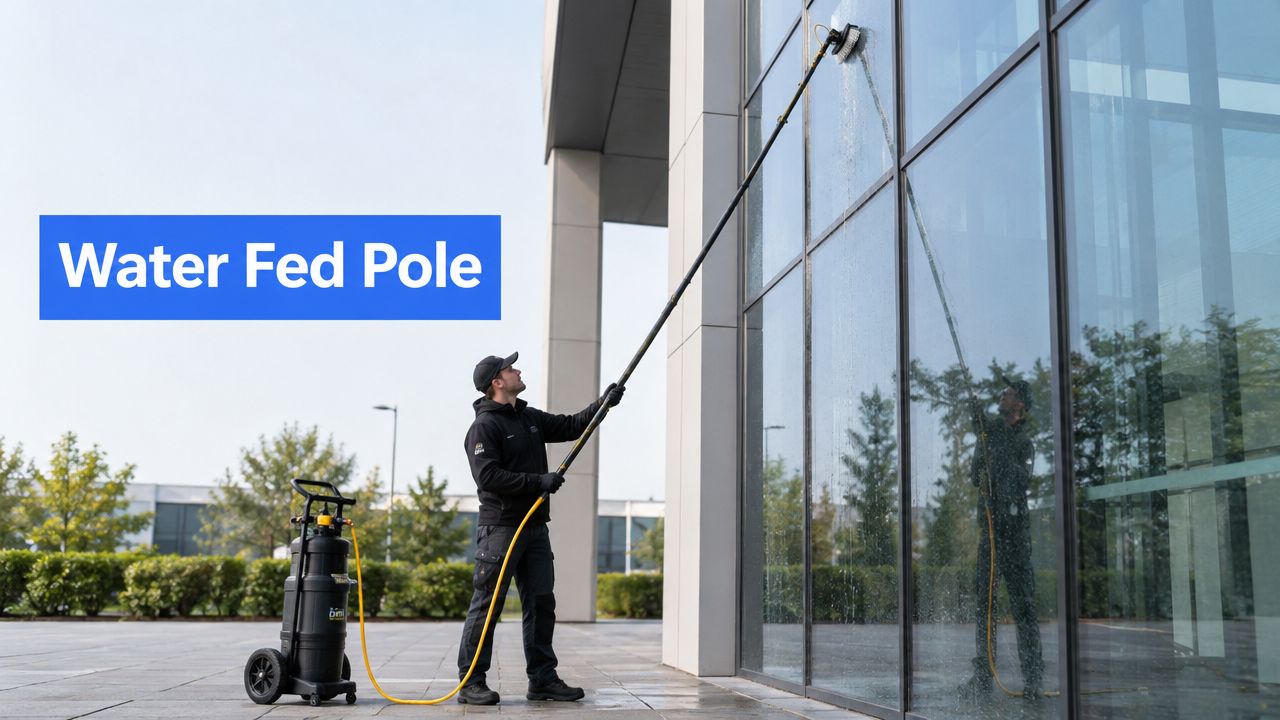
This technology allows professionals to clean high windows safely from the ground using long, water-fed poles. It's the core of how we deliver flawless, efficient results on everything from residential homes to high-rise buildings in cities like Las Vegas, Phoenix, and Denver.
So when your hose wash just isn't cutting it, know that a professional solution is ready to take over and deliver that truly invisible finish.
Even with the best plan, you're bound to have a few questions when you tackle a project like washing your own windows. Let's walk through some of the most common ones we hear from homeowners in Scottsdale and Denver to make sure you're feeling confident and ready to go.
I’m going to give you a hard "no" on this one. We strongly advise against ever pointing a pressure washer at your home's windows. The sheer force is just too much.
It can easily shatter the glass, destroy the seals between panes (which is what leads to that frustrating fogging effect), tear your screens to shreds, and even strip paint right off the window frames. Your standard garden hose with a good adjustable nozzle has all the power you need to get the job done without risking hundreds or even thousands of dollars in irreversible damage.
Honestly, the simplest solution is often the best. All you really need is a bucket of cool water with just a few drops of mild dish soap. The trick is not to overdo it—too much soap creates a mountain of suds that are a real pain to rinse off. Worse, it can leave behind a sticky film that actually attracts more dirt.
While a splash of white vinegar in your rinse water can help with mineral deposits from hard water, it's not a magic bullet. The only two ways to get a truly professional, guaranteed spot-free finish are with a squeegee or a pure-water system. Those are the methods the pros rely on for a flawless shine.
For most homes, giving your exterior windows a good cleaning twice a year is the sweet spot. This keeps your views crystal clear and protects the glass from the corrosive effects of built-up dirt and grime.
However, your local environment plays a big role. Here in our service areas of Phoenix, AZ and Denver, CO, we often deal with a lot more dust, pollen, and hard water. In climates like these, you might find that washing your windows every three to four months is what it takes to keep them looking pristine. Professional Window Cleaning has been cleaning windows for over 26 years, and we've found this schedule works wonders for our clients.
When the job is too big, the windows are too high, or you’re just not getting the streak-free results you want, don't hesitate to call in the experts. At Professional Window Cleaning, we have the right tools and decades of experience to deliver a perfect shine, every single time. Get your free estimate today!
Read our blog posts regularly and keep learning.