Care and Maintenance
Best Squeegee for Cleaning Windows: Expert Comparison
Find the best squeegee for cleaning windows with our expert buying guide. Compare blade materials, handle types, and sizes


To wash high windows correctly, you need more than just elbow grease—you need the right tools for a safe, streak-free result. Professionals only use one of two methods: the classic squeegee on an extension pole for lower-level high windows, or a modern pure-water system that uses a water-fed pole to reach serious heights, all while keeping your feet safely on the ground.
Your success, and safety, really hinge on picking the right approach for your specific windows.
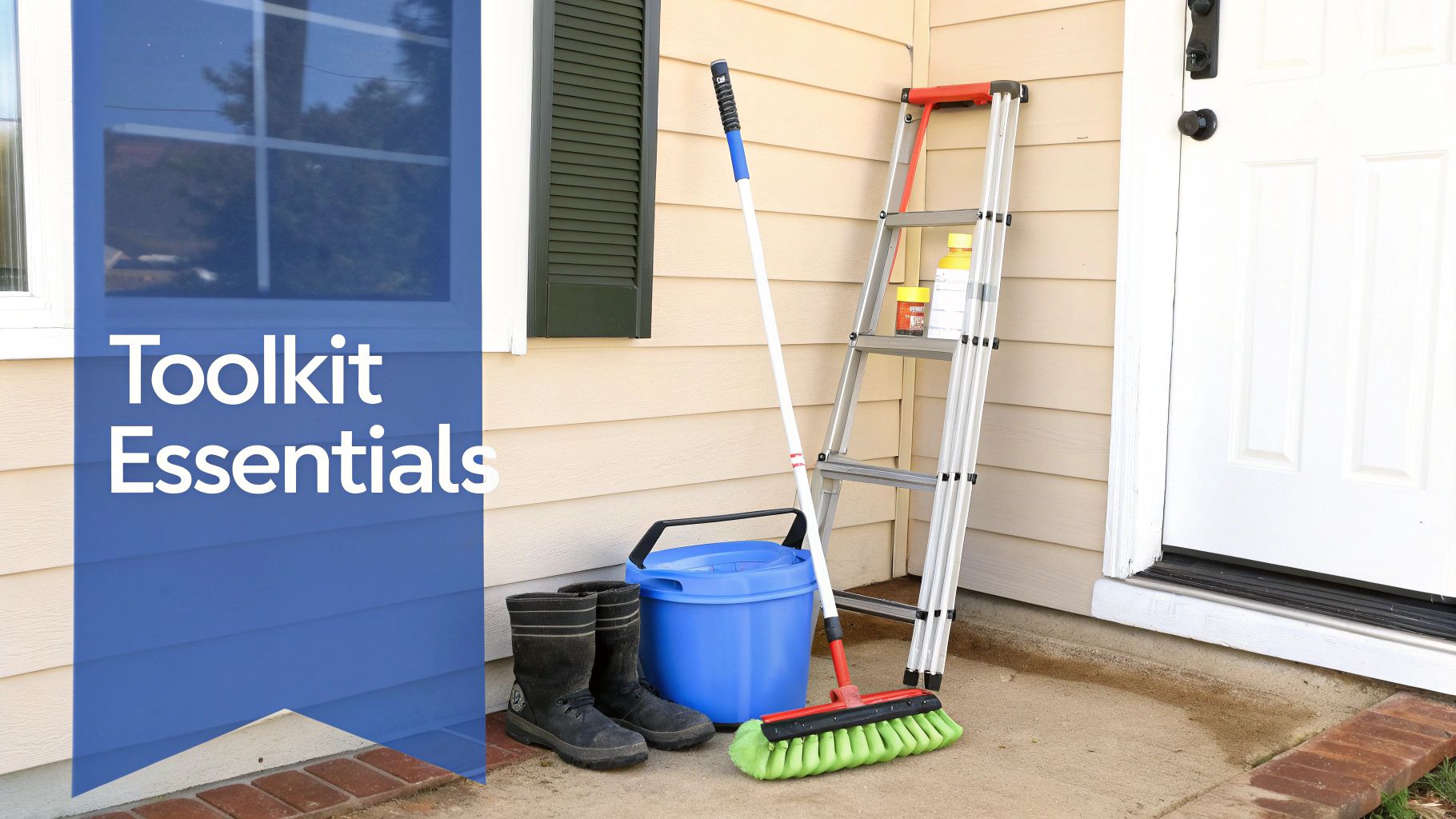
Before you even think about leaning a ladder against the house, let's talk gear. Assembling the correct toolkit isn't just a step—it's the most critical step. Tackling second-story or vaulted-ceiling windows isn’t a job for a generic spray bottle and some paper towels. It demands specialized equipment that guarantees both a professional-grade clean and, more importantly, your safety.
Here at Professional Window Cleaning, we've spent over 26 years helping homeowners in places like Phoenix, Denver, Las Vegas, and Scottsdale, and we know firsthand that the right tools make all the difference. The equipment you use will directly impact the quality of the finish and determine whether you can get the job done safely.
When it comes to washing high windows, professionals stick to two proven techniques: the squeegee or a pure-water system. Let’s take a look at both so you can figure out what makes sense for your home.
Here's a side-by-side look at the two professional methods for washing high windows, helping you choose the right approach for your project.
Ultimately, the traditional method is about technique, while the pure-water system is about technology. Both are excellent when used in the right situation.
Key Takeaway: The real magic of the pure-water system is the pure water. This water goes through a deionization or reverse osmosis process to strip out all minerals. When it dries on your windows, it leaves absolutely nothing behind—no spots, no streaks, just flawlessly clear glass.
If the job calls for a squeegee on a high window, a ladder might be necessary, and safety immediately becomes your number one priority. A standard stepladder just won’t cut it; you’ll need a sturdy extension ladder properly rated for the height you need to reach. But simply having the ladder isn't enough—you need the right accessories to protect yourself and your home.
A ladder stabilizer (also called a stand-off) is non-negotiable. This attachment rests against the wall on either side of the window, not on the fragile glass, trim, or siding. It prevents damage and creates a much more stable base for you to work from. Also, double-check that your ladder has secure, non-slip feet suitable for the surface you’re on, whether that’s grass, concrete, or a deck.
Finally, never, ever overlook your personal safety equipment.
Putting together this gear isn't just about preparing for a chore; it's about creating a safe and efficient workstation. Whether you're a DIY enthusiast in Las Vegas or a homeowner in Scottsdale, having the right tools is the first step toward a flawless finish. You can learn more by checking out our in-depth guide on professional window cleaning equipment.
Got your professional-grade tools ready to go? Hold on a second. Before a single drop of cleaning solution hits the glass, the most important part of any high-window cleaning job happens right on the ground. It's all about creating a secure, controlled environment—a dedicated safe zone. This isn't just a suggestion; it's the bedrock of a successful, accident-free project.
Skipping this step is a classic rookie mistake. A quick glance around simply won’t cut it. You need to do a proper site inspection, walking the entire perimeter of your work area. Pay close attention to the ground under your feet, the wall you’ll be working against, and everything overhead. This simple walkthrough can uncover hidden dangers that could quickly turn your day into a disaster.
Think of yourself as a safety detective for a few minutes. Your mission is to spot anything that could compromise your stability or throw a dangerous curveball your way. The ground where you place your ladder or stand with your pole is your foundation, and you need it to be rock-solid.
Here’s what our team of professionals always looks for before starting a job:
Once you’ve identified these potential issues, you have to deal with them. That might mean shifting your setup point a few feet, laying down a sturdy board to create a level base, or roping off the area to keep curious kids and pets safely out of the way. For our clients in places like Phoenix, where desert landscaping is common, watching out for uneven gravel and cacti is a standard part of our pre-cleaning routine.
With your inspection complete, it's time to clear the deck. Move anything directly below the windows—patio furniture, grills, planters, you name it. This not only protects your belongings from drips but, more importantly, it removes tripping hazards from your immediate workspace. If you’ve got delicate plants you can’t move, cover them with a plastic tarp.
Now, if you're using an extension ladder, this next part is critical. Just leaning it against the wall at a random angle is asking for trouble.
The gold standard for ladder safety is the 4-to-1 rule. For every four feet of height you need to climb, the base of the ladder should be one foot away from the wall. So, if your ladder is resting against the wall at a height of 16 feet, the base needs to be a solid four feet out.
This specific angle provides the perfect balance of stability. It keeps the ladder from slipping out from the bottom or tipping backward. Once you have it in position, make sure both feet are planted firmly and that the extension locks are securely engaged. Before you even think about putting a foot on the first rung, give the ladder a firm shake to confirm it’s not going anywhere.
Finally, do a quick check of the weather forecast. High winds can turn a ladder or a long water-fed pole into an uncontrollable sail. Rain is a double-whammy: it creates slippery surfaces and can instantly ruin your hard work by spotting up the freshly cleaned glass. If the weather looks iffy, just reschedule. It’s never worth the risk.
Now that your gear is prepped and the area is safe, it’s time to get down to the actual cleaning. Getting a perfect, streak-free shine on high windows isn’t about muscle; it's about technique. We’ve spent over 26 years at Professional Window Cleaning honing our craft, and it really comes down to two proven, industry-standard methods: the squeegee and the pure-water system.
Whether you're working under the intense sun in Scottsdale or dealing with the four seasons in Denver, mastering these approaches is what separates a frustrating, streaky mess from windows so clean they seem to disappear. This is how you learn to wash high windows like a seasoned pro.
The traditional squeegee method is a true craft. When you get it right, the clarity is unmatched, especially on windows caked with stubborn grime. The secret isn't just wiping; it's a controlled, fluid motion that pulls every bit of dirt and water off the glass in one go.
You'll start by applying your cleaning solution with a mop or scrubber attached to the pole. Once the glass is completely soaped up, you’re ready to clear it with the squeegee.
The most effective technique is what we call the "S-method" or "fanning."
The real trick to a flawless finish is keeping consistent, light pressure. If you push too hard, the rubber blade can skip and leave lines. Too little pressure, and you won't clear the water. It takes some practice, but once you find that sweet spot, the results are incredible.
The pure-water system works on a totally different principle—one that feels a bit like magic. Instead of drying the glass with a squeegee, you let purified water do the work for you. This method is incredibly efficient and by far the safest way to wash high windows from the ground.
It's a straightforward two-part process that delivers perfect results every time.
First, you use the brush on the end of the water-fed pole to scrub the entire window, breaking up all the dirt, pollen, and other gunk. The constant flow of pure water helps lift and wash the grime away. This step is all about agitation, not brute force.
Second, you do the final rinse. Lift the brush just off the glass and rinse the whole window from top to bottom. The pure water will sheet off the surface, taking every last spec of dirt with it. Because the water is deionized, it dries without leaving any mineral spots. You just let it air dry to a perfect, spot-free shine.
This visual guide breaks down the essential safety preparations needed before you begin cleaning.
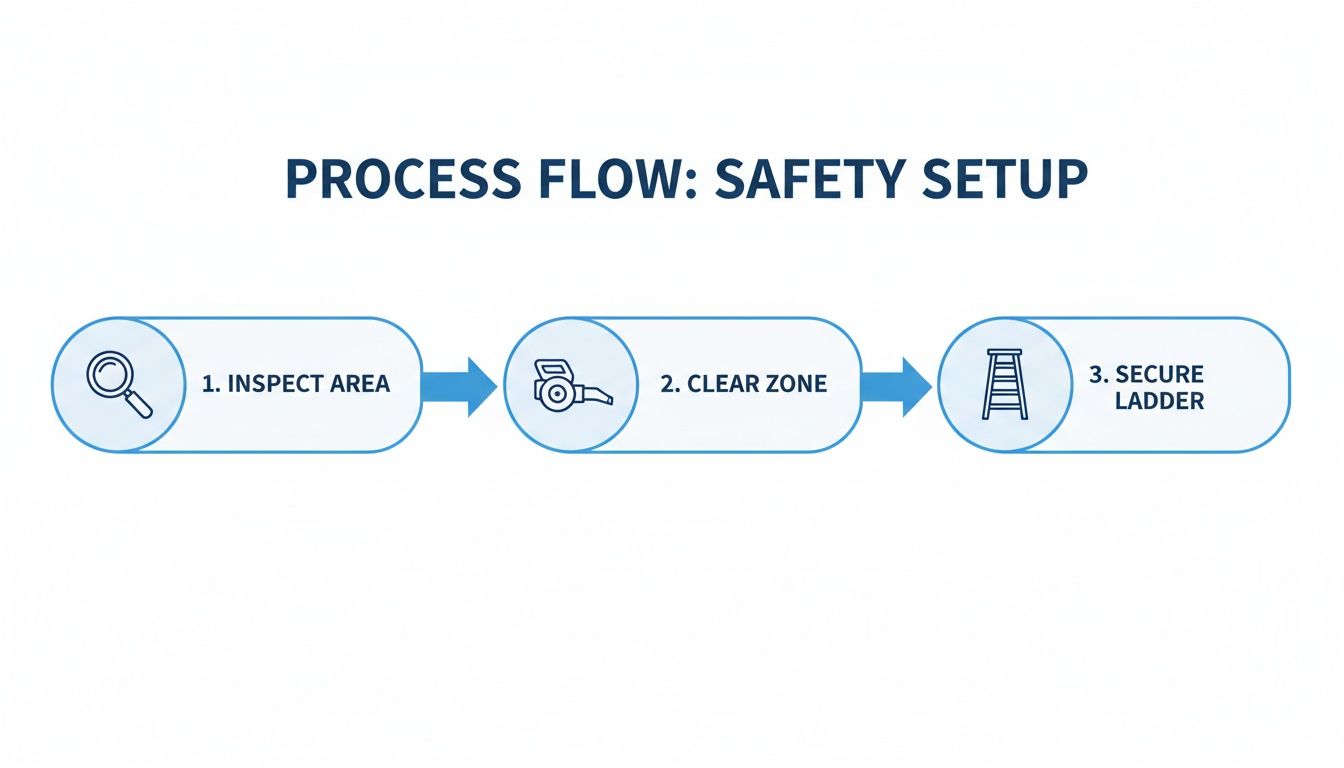
This process flow highlights that inspecting the area, clearing potential hazards, and properly securing your ladder are foundational steps for a safe project.
No matter which method you're using, you’re bound to run into stubborn messes like bird droppings, hard water stains, or caked-on grime. Just going at these spots with aggressive scrubbing is a great way to permanently scratch the glass.
The professional approach is to pre-treat them.
The demand for cleaning extremely high windows has fueled a massive industry. The global window cleaning market was valued at $10 billion in 2022, with commercial services making up 60% of that demand. For towering structures like high-rise offices or stadiums, specialized equipment becomes essential, as standard ladders just can't do the job. You can explore more fascinating statistics about the window cleaning industry and its growth.
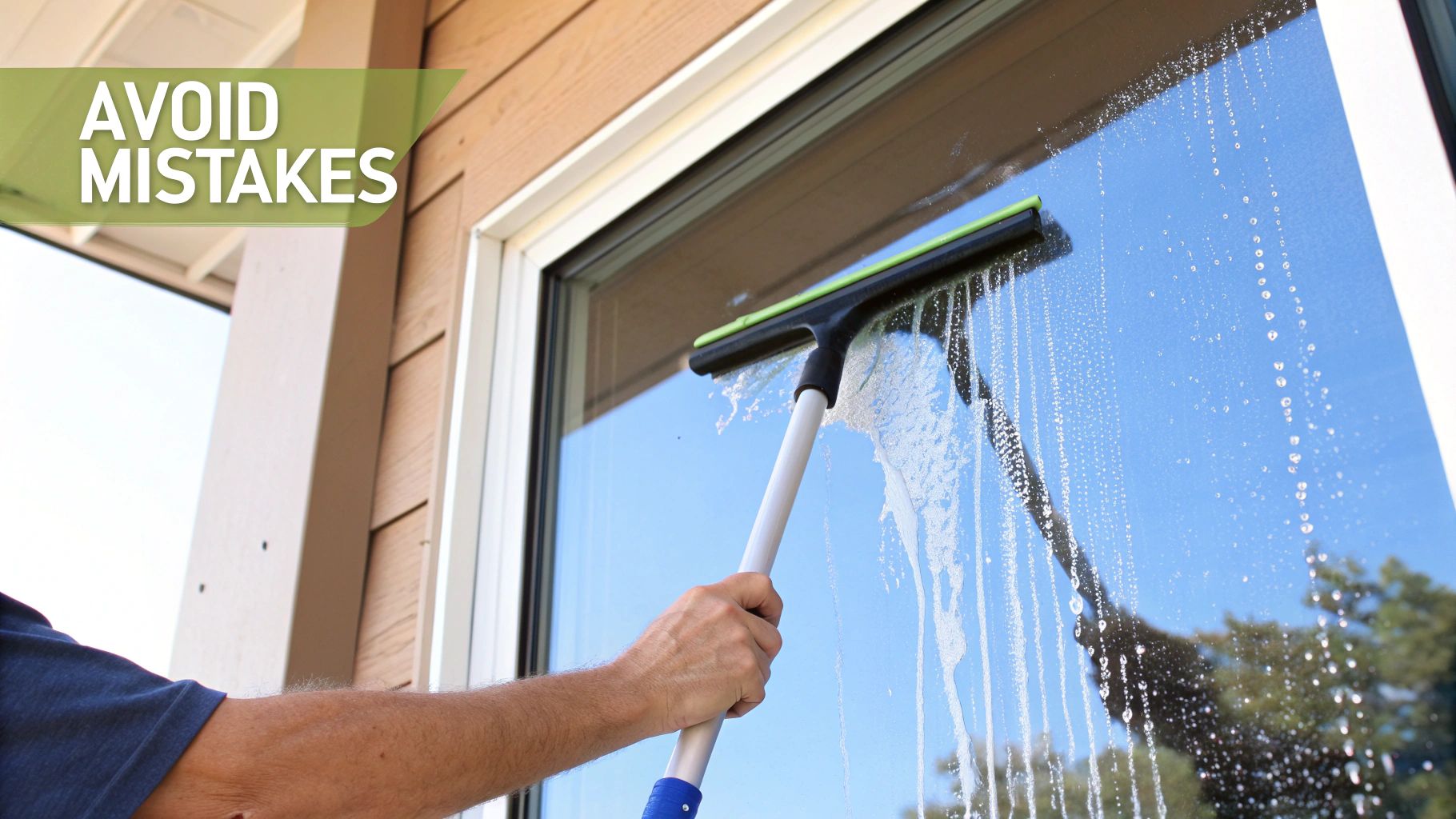
Even if you have the right tools and the best intentions, a few simple missteps can leave you with a streaky, frustrating mess. After more than 26 years in this business, we've seen every mistake in the book. Knowing what not to do is the key to getting that truly professional, crystal-clear finish.
Steering clear of these common errors will do more than just improve your results—it'll save you a ton of time and effort. It’s all about working smarter, not harder.
The biggest mistake we see, hands down, is using regular tap water. Whether you're in Las Vegas or Denver, your tap water is loaded with dissolved minerals like calcium and magnesium. When that water evaporates, it leaves all those minerals behind as ugly white spots, completely ruining your hard work.
This is exactly why pros who wash high windows swear by pure-water systems. These systems strip out the impurities, allowing the water to dry perfectly clean and leave nothing behind but a flawless shine. It's the industry standard for a reason.
Another classic blunder is trying to clean windows in direct, hot sunlight. The heat causes your cleaning solution to evaporate almost instantly, well before you get a chance to squeegee it off. That rapid drying is a guaranteed recipe for stubborn streaks and hazy patches. Always work in the shade or on an overcast day for the best results.
Beyond the quality of the finish, some mistakes are just plain dangerous. The worst offender? Overreaching on a ladder. It’s so tempting to stretch just a little bit further for that last corner, but doing so shifts your center of gravity and is a leading cause of falls. Always keep your hips centered between the ladder's rails. If you can't reach, take a minute to climb down and move the ladder.
Don't neglect your tools, either. A squeegee might look simple, but that rubber blade is a precision instrument.
A quick word on cleaning solutions: stay away from harsh chemicals. Things like ammonia or vinegar-based cleaners might seem effective, but they can be destructive. These acidic or alkaline solutions can break down the rubber seals around your window frames over time, leading to costly leaks and repairs. A simple mix of pH-neutral soap and water is all you need.
Dodging these common slip-ups is just as important as mastering the right techniques. Pay attention to these details, and you’ll ensure a safer process and a far better outcome.
There's a special kind of pride that comes from a successfully completed DIY project. But when that project involves hanging off a ladder three stories up, ambition and reality can have a painful collision. Knowing when to step back and let an expert wash high windows is one of the most important calls you can make—not just for the quality of the job, but for your own safety.
This isn't about giving up. It's about being smart and realistic about the risks involved. The line between a challenging DIY task and a genuinely dangerous one can get blurry, but some situations are crystal clear signs it's time to call for backup.
Some projects are more than just difficult; they’re downright hazardous without the right training, gear, and insurance. Trying to tackle these yourself can turn a simple cleaning job into a trip to the emergency room.
Recognizing these red flags is the first step to avoiding a disaster. It's time to put down the squeegee and pick up the phone if you're facing any of these scenarios:
For property managers and business owners, especially in cities like Phoenix, hiring a professional service isn't just about getting the job done right—it's about liability and compliance.
When you hire a company like Professional Window Cleaning, you’re not just paying for clean glass. You're buying peace of mind. With over 26 years of hands-on experience, we bring a level of safety and skill that DIY methods just can't replicate.
A huge part of that is the equipment. We use one of two proven methods: the traditional squeegee for that perfect, hand-finished look, or a high-tech pure-water system. This system uses a water-fed pole that can reach incredible heights right from the safety of the ground, completely eliminating ladder risks and leaving a flawless, spot-free finish.
A professional crew is fully insured and bonded. This is a non-negotiable. If an accident happens and someone gets hurt or your property is damaged, their insurance has it covered. If you do it yourself, that liability falls squarely on your shoulders.
This is especially critical in the commercial world. The demand for high-rise window cleaning has been climbing, with growth rates hitting 8% annually in recent years. This boom is fueled by skyscraper construction in busy hubs like Las Vegas and Denver. For businesses in areas like Scottsdale, professional service isn't a luxury; it's essential maintenance.
At the end of the day, calling a pro is about respecting the risks and valuing a guaranteed, top-quality result. For complex jobs, the safety, speed, and sparkling finish you get from an experienced team are well worth it. To get a better sense of what's involved, take a look at our guide on the challenges and solutions of high-rise window washing.
When you're staring up at a second or third-story window, it's natural to have a few questions. It’s a job that feels simple until you’re actually planning it out. After 26 years in this business, we’ve pretty much heard it all, so we've put together answers to the questions that pop up most often.
Think of this as advice straight from our decades of experience cleaning windows everywhere from sunny Las Vegas to the unpredictable climate of Denver.
This is easily one of the most common questions we get, and our answer is always a hard no. A pressure washer is a fantastic tool for stripping grime off your driveway or siding, but it's way too aggressive for glass.
Using that kind of force on a window is just asking for trouble.
Professionals stick to two methods for a reason: the classic squeegee or a pure-water system. Both use low, gentle pressure—about the same as your garden hose—to get the job done safely and effectively.
There’s no single magic number here; it really boils down to where you live and what your building is used for. But we can give you some solid guidelines.
For most homeowners, cleaning them twice a year is a great starting point. However, you might want to bump that up if certain conditions apply:
Keeping your windows clean isn't just about the view. It's preventative maintenance. Regular washing removes corrosive stuff like acid rain and hard water minerals that can permanently etch the glass, ultimately making your windows last longer.
This is a great question, and the answer is: it depends on the job. Both are fantastic professional tools, but they shine in different scenarios.
A traditional squeegee on an extension pole is the go-to choice for:
On the other hand, a pure-water system (using a water-fed pole) is the clear winner for:
For most homeowners, safety is the biggest factor, which is why the pure-water system has become such a popular and effective solution for tackling those hard-to-reach windows.
When the job is tricky and the risks are high, it’s best to trust the team that’s been doing this safely for more than two decades. For a perfect, streak-free shine without the ladder anxiety, contact Professional Window Cleaning for a free, no-hassle estimate.
Read our blog posts regularly and keep learning.