
Care and Maintenance
How Does Water Fed Pole Window Cleaning Work
Learn how does water fed pole window cleaning work, from purified water chemistry to telescopic poles, brush heads, safety benefits, and when to hire pros.


It's one of those little renovation nightmares: you've just finished a beautiful new paint job, but there are stray splatters and drips all over your window glass. Don't panic. Getting that paint off is probably easier than you think. Professional Window Cleaning has been cleaning windows for over 26 years, and we've seen it all.
For fresh latex paint, a simple damp cloth is often all you need. If the paint has already dried, a good razor scraper and the right lubricant will usually lift it right off without leaving a scratch. The trick is knowing what you're up against and using the right touch. As professionals, we stick to two methods: the use of a squeegee or a pure-water system, ensuring a perfect finish every time.
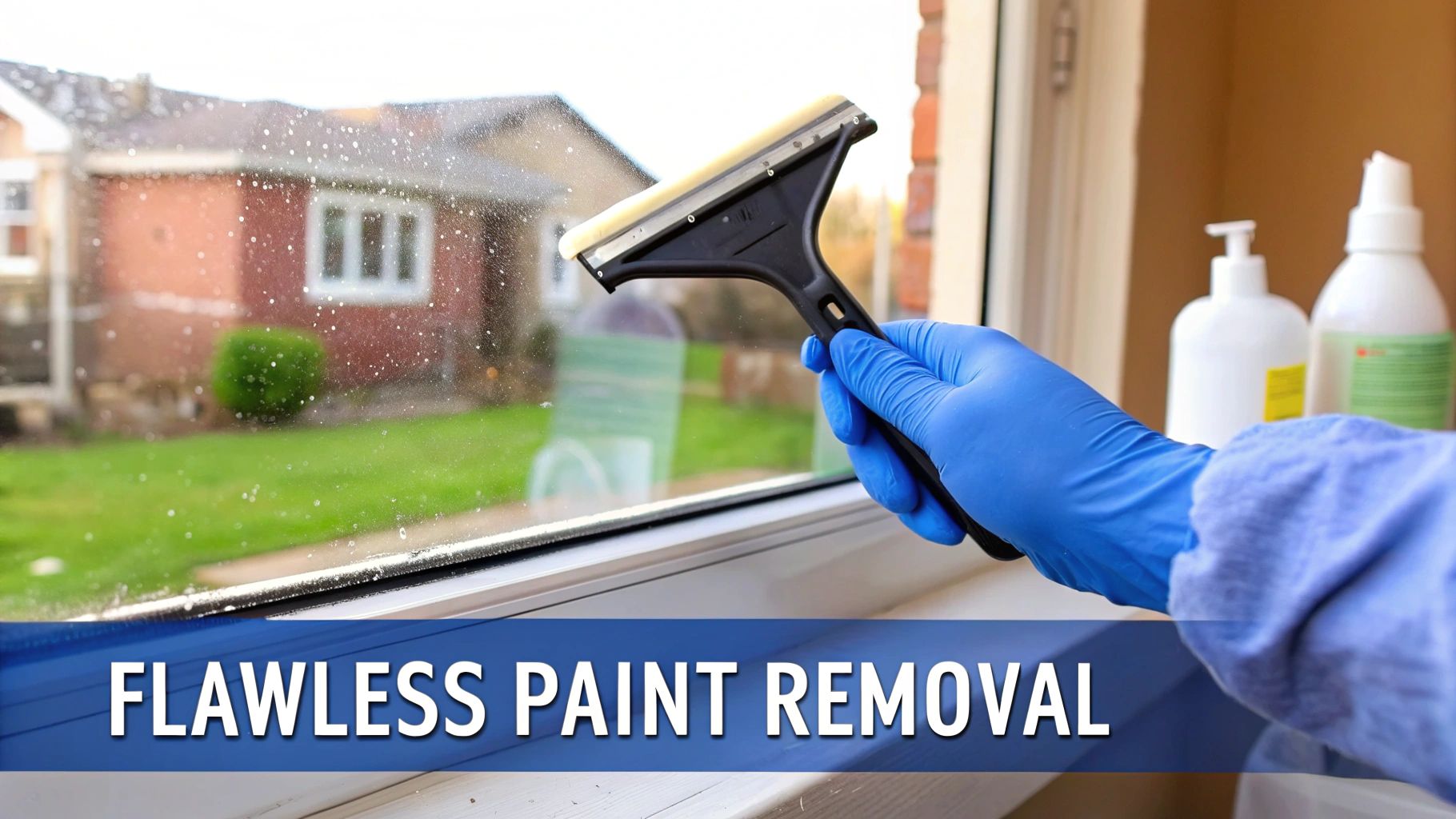
Whether you’re a homeowner in Phoenix tackling a DIY project or a property manager in Las Vegas dealing with post-construction cleanup, those paint splatters are a frustrating final hurdle. The goal is always the same: a crystal-clear, damage-free finish.
Luckily, with the right approach, you can get those windows looking pristine again. The strategy really boils down to the type of paint and the kind of glass you're working with. This guide will walk you through it, ensuring your investment in new windows and composite doors stays looking sharp. Our teams serving Denver and Scottsdale handle these issues daily.
Before you even think about grabbing a tool, take a moment to assess the situation. A little prep work here can save you from a costly mistake like a deep scratch or, even worse, permanently etched glass.
Here's what to look for:
This initial diagnosis is absolutely critical. For instance, taking a scraper to tempered glass is a recipe for disaster and can leave you with irreversible scratches. With over 26 years in the business, our team at Professional Window Cleaning has seen firsthand how a small misstep can lead to a big headache.
Paint overspray is incredibly common. It's estimated that of the 15 million residential painting projects in the U.S. each year, a staggering 68% end up with splatters or drips on the windows. If that paint isn't removed correctly, it can reduce visibility by up to 25%.
To make things even simpler, here's a quick cheat sheet to help you decide on the best approach for your specific paint problem.
This table covers the most common scenarios you'll run into. Just remember to always test your method on a small, inconspicuous area first, especially when using solvents.
Getting a flawless, damage-free result starts with having the right tools ready to go before you even think about touching the glass. Trust me, trying to scrape paint off windows with the wrong gear is the fastest way to turn a simple job into a costly repair. This isn't just about grabbing any old scraper; it's about using the correct one and knowing why it makes all the difference.
Pros almost exclusively use a dedicated window scraper, usually one with a 4-inch or 6-inch blade. Why? A wider blade spreads the pressure out evenly across the glass, which dramatically cuts down the risk of creating scratches or weak spots. It's a huge step up from a narrow utility knife blade, which focuses all that force into one tiny area and can easily gouge the surface. Always, and I mean always, start with a brand-new, rust-free blade. A dull or nicked edge is probably the number one cause of scratched glass.
Once you have the right scraper, the supporting cast of tools is just as critical for that clean, professional finish.
Having the right gear is a cornerstone of professional work. For over 26 years, our teams at Professional Window Cleaning have relied on a specific set of tools to deliver perfect results on every job, whether it's a home in Scottsdale or a commercial building in Denver. To see exactly what the pros use, you can learn more about professional window cleaning equipment in our detailed guide.
Proper prep also means putting your safety first. This step gets overlooked all the time in DIY projects, but it's absolutely crucial for avoiding injury, especially when you're working with sharp blades and potential solvents.
First things first, protect your eyes. Safety glasses are essential. When a scraper blade pops off a piece of dried paint, those little chips can go flying. A tiny, sharp fleck of paint in your eye can cause serious irritation or worse.
Next, always wear a good pair of gloves. Simple nitrile or latex gloves will protect your skin from any solvents you might need for stubborn oil-based paint. Even better, a pair of heavy-duty work gloves will give you a much firmer grip on your scraper and protect your hands from the blade, seriously reducing the risk of accidental cuts. This is the kind of basic prep work that separates a frustrating DIY attempt from a safe, successful project.
Dried latex paint splatters are probably the most common cleanup job you'll run into after painting. It can look like a nightmare, but you’d be surprised how easily it comes off without a scratch—if you know the right technique. The secret isn't elbow grease; it's all about using a professional squeegee and scraper with the right lubrication and angle.
This is a fundamental skill we use on projects all the time, from brand-new homes in Scottsdale to historic renovations in Denver. The number one rule, the one you absolutely cannot break, is to never scrape on a dry window. A dry blade on dry glass is the fastest way to cause deep scratches and turn a simple cleanup into a costly window replacement. You have to get that surface wet first.
First thing's first, mix a simple solution of water and a few drops of dish soap in a spray bottle. Spray the entire glass surface generously, making sure to soak the areas with paint. Don't be shy here—you want the window dripping wet. The soapy water creates a slick, protective film that lets the scraper blade glide smoothly instead of digging into the glass.
Now, grab your window scraper, making sure it's fitted with a fresh, sharp blade. A dull blade will just make you work harder and increase the risk of scratching. Hold the scraper at a shallow 30 to 45-degree angle against the glass. That angle is critical. It allows the blade to get under the paint and lift it off cleanly, rather than just chipping away at it. Pushing at a steeper angle is a surefire way to leave a scratch.
This simple diagram shows you how to think about getting ready for the job—it’s a flow from gear, to tools, to cleanup.
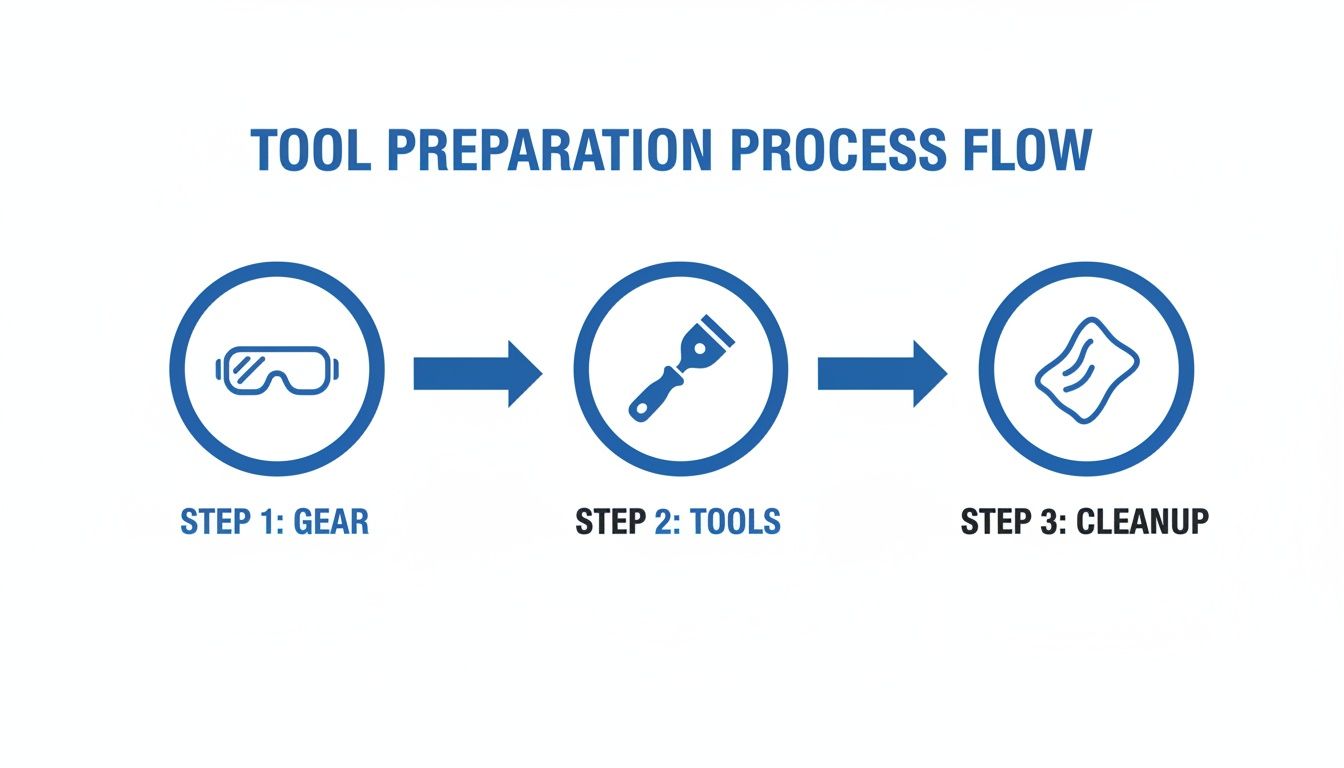
Thinking about your prep work this way ensures you don't miss a step and can work safely and efficiently.
Use short, controlled strokes, always pushing the blade forward. Never drag it backward. Dragging it back can trap tiny bits of grit or debris under the blade's edge and scratch the glass. Let the blade do the work for you; you shouldn't need to apply a ton of pressure.
Here’s a pro tip from our 26 years at Professional Window Cleaning: listen. A properly lubricated blade moving across the glass makes a quiet, smooth sound. If you hear a gritty, scraping noise, stop immediately. It's a clear sign that you either need more soapy water or some debris is caught under your blade.
Be extra careful when you get to the edges and corners of the window pane. It's incredibly easy to slip and nick the window frame, glazing, or rubber seals with the sharp corners of the scraper.
Remember, the goal is finesse, not force. A sharp blade, plenty of lubrication, and the correct angle are the three pillars of a scratch-free result. This is a core technique that every professional window cleaner relies on.
Once you’ve lifted all the paint, grab a squeegee to wipe away the soapy water and loose paint flakes. To finish, give the glass a final wipe with a clean microfiber cloth for a perfectly clear, streak-free shine. This methodical approach will leave your windows looking immaculate, with no trace of the paint job left behind.
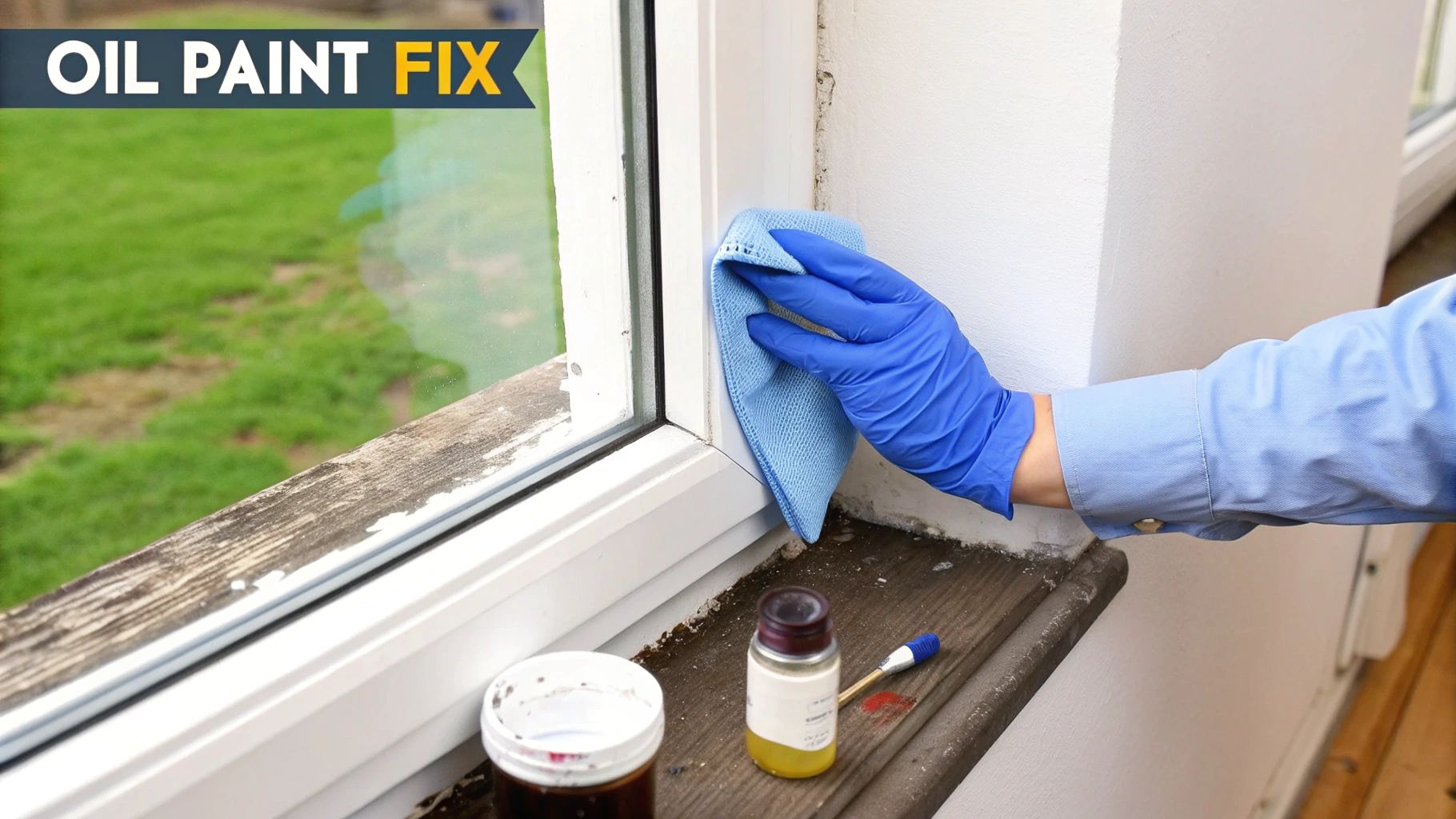
When you're dealing with stubborn oil-based paint or a fine mist of overspray, the usual scraper-and-soap method we use for latex paint just won't cut it. These tougher jobs require a totally different game plan. Instead of just trying to lift the paint off, we need to dissolve its bond with the glass.
This is where solvents come into play. The golden rule here is to start mild and only escalate if you need to. For small, isolated spots, something as simple as isopropyl (rubbing) alcohol on a clean cloth can sometimes be enough to do the trick. It's always a great first move to avoid bringing out the heavy-duty chemicals unless you absolutely have to. Our crews in Phoenix and Las Vegas always start with the safest method first.
If alcohol doesn't make a dent, it’s time to step up to a dedicated paint remover. But hold on—it's critical to pick the right product and use it safely.
Working with solvents means safety becomes your number one priority. You absolutely must make sure the area is well-ventilated. Crack open other windows or doors to get a good cross-breeze going, which helps dissipate the fumes so you aren't breathing in anything harmful.
Before you go all-in, always perform a patch test. Find a small, out-of-the-way corner of the window and apply a tiny amount of the solvent. This step is non-negotiable; it ensures the product won’t damage your window frame, any tinting film, or special coatings on the glass. Let it sit for the recommended "dwell time"—that's the time the solvent needs to sit and work its magic on the paint.
Always take a minute to read the manufacturer's instructions before you start. They'll give you specific directions on how to apply the product, how long to let it dwell, and what safety gear you need, like chemical-resistant gloves and eye protection.
Once your patch test comes back clean, apply the solvent directly to the paint spots with a cloth. After the dwell time is up, the paint should be soft enough to wipe away or gently lift with a plastic scraper. And remember, if the job feels too big or too risky, professional window cleaning services are always a smart call.
Paint overspray is a real nuisance. It can leave a hazy, stubborn film on your glass that blurs the view and just won't seem to come off. While solvents can work, there's another pro trick we use: super-fine #0000 steel wool. I can't stress this enough—you have to use only this specific grade. Anything coarser will leave you with a mess of scratches.
The technique is a lot like using a scraper:
Once you’ve removed the overspray, finish the job with a professional squeegee to get rid of any residue. You'll be left with a perfectly clear, streak-free window. This method can bring back clarity to glass that looked permanently clouded.
For even more detailed tips on this specific challenge, check out our guide on how to remove spray paint from glass.
Knowing how to get paint off your windows is half the battle. The other half is knowing what not to do. It’s shocking how quickly a simple cleanup job can turn into a permanent, expensive problem if you make one wrong move.
So many DIY attempts go wrong because people overlook a few fundamental rules of working with glass.
The absolute most common—and most damaging—mistake is scraping a dry window. Glass feels smooth, but on a microscopic level, it's full of tiny peaks and valleys. When you drag a dry razor blade across it, it’s going to catch on those high points and dig in, leaving deep, irreversible scratches. This is a core principle we've drilled into our technicians at Professional Window Cleaning over our 26 years in the business. Always use a lubricant.
Another huge error is using the wrong kind of blade, or worse, a dull one. A utility knife blade is way too aggressive for glass. Same goes for a rusty, nicked scraper blade you found in the back of your toolbox. A fresh, sharp blade held at the right angle is designed to glide under the paint, lifting it cleanly. A dull blade just forces you to mash down harder, and that's when you hear that awful scratching sound.
Not all glass is created equal, and treating specialty windows like standard glass is a recipe for disaster. This is especially true when it comes to chemical solvents, which can cause permanent damage that no amount of cleaning will ever fix.
Before you put any chemical on your glass, do a small patch test in an inconspicuous corner. This simple five-minute step can save you a massive headache, especially in places like Phoenix, where high-performance coated glass is incredibly common to manage that intense sunlight.
These slip-ups aren't just cosmetic annoyances; they have a real financial impact. Clean, pristine windows are a huge factor in a property's value. In fact, a 2023 survey found that crystal-clear, paint-free windows can boost a home's sale price by 7-11%.
The stakes are even higher in commercial settings. Property managers in places like Las Vegas report that a staggering 55% of tenant complaints are tied to hazy or damaged windows, often marred by leftover construction paint. You can explore more data on how much professional window cleaning services impact property value.
At Professional Window Cleaning, our entire job is to protect your investment. We stick to two proven, safe methods: a professional squeegee technique for standard cleans and a pure-water system for everything else. This guarantees a flawless, damage-free finish every single time.
Even with the best guide in hand, you probably still have a few questions buzzing around. That’s completely normal. When you’re dealing with something as delicate as glass, it’s always better to be safe than sorry. Let's clear up some of the most common questions we get from homeowners.
This is a big one, and the answer is a hard no. It's a common misconception that a razor is safe for all glass, but that couldn't be further from the truth.
A fresh, sharp razor blade is your best friend when working on standard annealed glass—as long as you keep the surface lubricated. However, you should never take a blade to tempered glass. You'll often find this type of safety glass in doors or windows close to the ground.
The process that makes tempered glass strong also leaves behind microscopic bumps on the surface. A razor blade will snag on these invisible imperfections, leaving behind permanent scratches called "fabrication debris." The same goes for any windows with specialty coatings, films, or tints; a blade will ruin them in an instant.
My Two Cents: Always, and I mean always, do a quick test scrape in a tiny, hidden corner first. If you have any doubt about what kind of glass you're working with, it's smarter (and cheaper) to call a pro.
For fresh latex paint splatters, you don't need anything fancy. Good old warm, soapy water is perfectly safe and surprisingly effective.
When you're up against dried paint, it's best to start with the gentlest options first. Isopropyl alcohol or plain white vinegar can often soften up small spots without resorting to harsh chemicals.
If those don't cut it, your next move should be a citrus-based commercial paint remover made specifically for glass. Whatever you choose, make sure the area is well-ventilated. And just like with the razor, always test your solvent on a small spot to be sure it won’t damage the window frame, seals, or any protective coatings.
Sometimes, a DIY job just isn't worth the risk or the headache. It’s probably time to call in the experts if you find yourself in any of these situations:
Window cleaning is a serious business, especially when it comes to post-construction cleanups. The U.S. window washing industry hit $2.9 billion, and a huge chunk of that—a 45% increase, in fact—comes from cleaning up new construction sites where paint overspray is an issue at 70% of locations.
For those tricky jobs on homes and high-rises in cities like Las Vegas or Phoenix, hiring an experienced service isn't just a convenience; it's the smartest call you can make. You can learn more about the window washing industry's growth and its role in property maintenance.
When in doubt, don't risk your valuable windows. The team at Professional Window Cleaning has been removing paint and making windows shine for over 26 years. Contact us today, and we'll handle the rest.
Read our blog posts regularly and keep learning.