Care and Maintenance
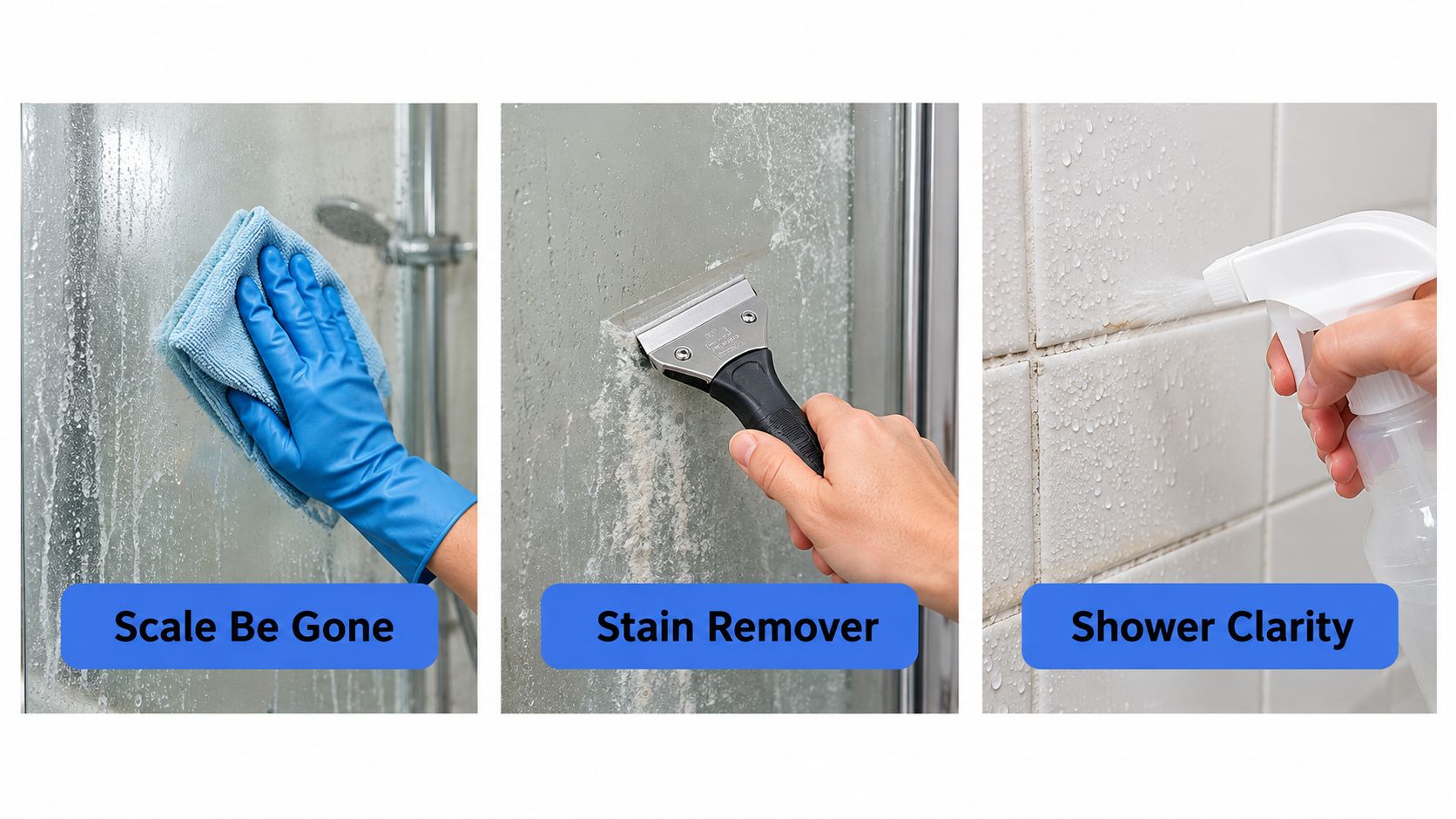
Hard Water Stain Remover Shower: What Actually Works
Find the right hard water stain remover shower fix for glass, tile, grout, and chrome. Safe DIY recipes, product picks, and prevention tips that work.


Most advice about multi purpose cleaning liquid starts with the same promise. One bottle. Every room. Every surface. Less clutter under the sink.
That sounds efficient, but it's only half true.
A multi-purpose cleaner can be useful for routine wiping, light grease, fingerprints, and general housekeeping. It is not automatically the best choice for every material you own. In window cleaning, that distinction matters a lot. The same ingredients that help a product cut kitchen grime can leave film, streaks, and haze on glass, especially when sunlight hits the pane at an angle.
After more than 26 years around window cleaning work, one pattern keeps showing up. Property owners often blame the towel, the weather, or their technique when the actual problem is the cleaner itself. If the liquid leaves residue behind, no amount of buffing fixes the root issue for long.
The market loves convenience, and it's easy to see why. The global multi-purpose cleaners market was valued at USD 6.98 billion in 2024 and is projected to reach USD 10.11 billion by 2034, according to Zion Market Research's multi-purpose cleaners market report. That tells you these products are not a niche category. They're standard equipment in homes, offices, retail spaces, and maintenance closets.
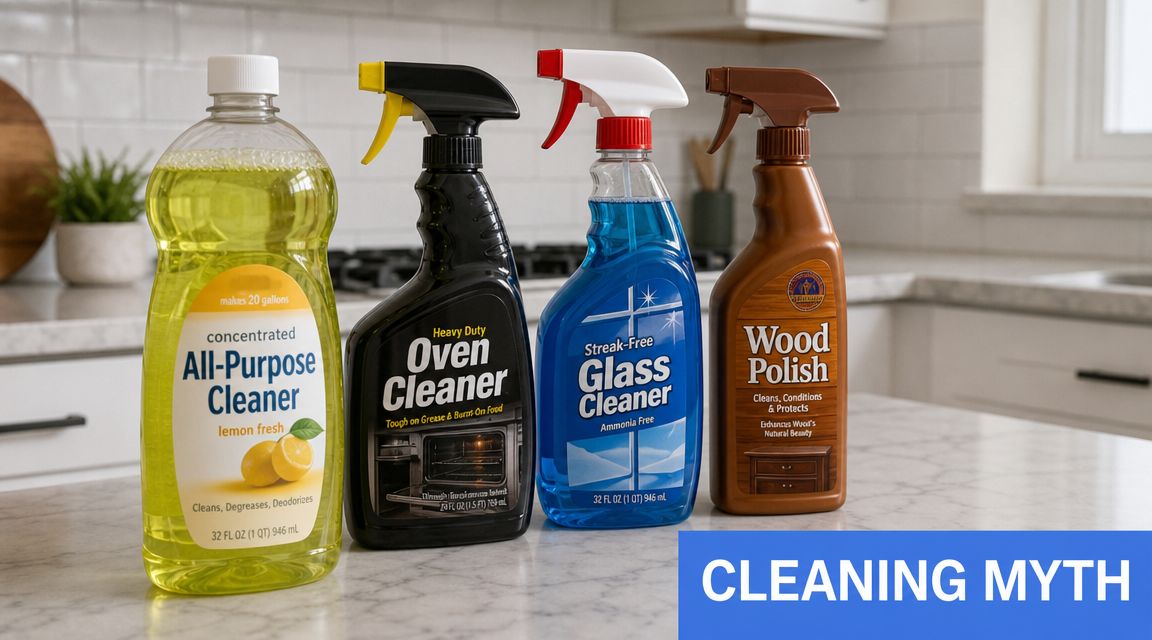
A good multi purpose cleaning liquid does a lot reasonably well. That's why people buy it. You can wipe counters, clean sink surrounds, spot-clean cabinet faces, and freshen up many sealed hard surfaces with one product.
The problem starts when “works on most washable surfaces” gets translated into “best for all surfaces.” Those are not the same claim.
Glass exposes weak product choices fast. So do mirrors, glossy stainless, coated surfaces, and some stone finishes. On those materials, even a light residue shows up clearly. A countertop may still look clean with a little leftover surfactant or fragrance film. A sunlit window won't hide it.
Practical rule: If a surface has to look flawless instead of merely clean, convenience should not be your first filter.
Multi-purpose liquids usually earn their keep in places where appearance standards are forgiving. Mud room floors, utility sinks, backsplashes, and general wipe-downs are typical examples.
They become a poor shortcut when you need:
Property owners often ask why a product can clean an appliance panel but still make a window look worse. The answer is simple. “Clean enough” and “clear enough” are different standards.
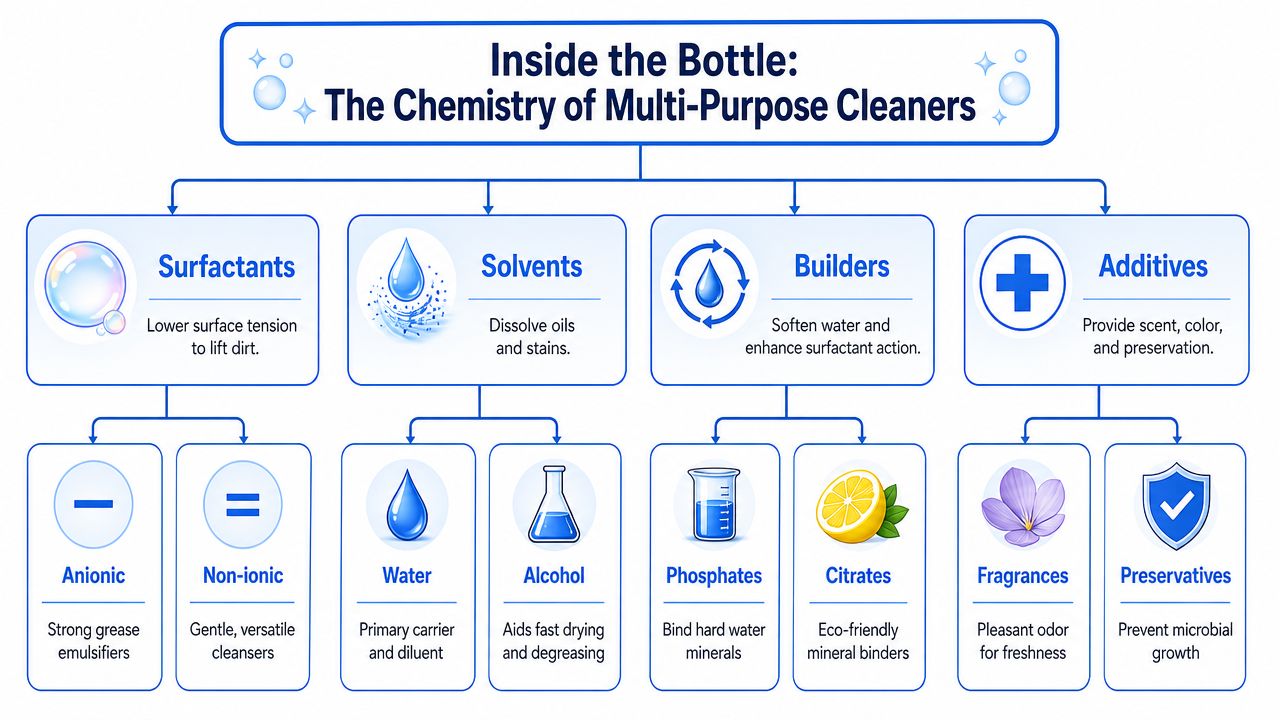
Most multi-purpose liquids work because they combine several cleaning jobs in one formula. Think of it as a cleaning team, not a single ingredient doing all the work.
A broad market analysis found that liquid cleaning products held 48.11% of the global cleaning-products market in 2025, and household and residential use accounted for 73.12% of demand in that same year, according to Mordor Intelligence's global cleaning products market report. That tells you liquid cleaners aren't a side category. They are the standard format commonly chosen.
Here's the simple version of how a multi purpose cleaning liquid usually works:
That's why one product can tackle a greasy splash near a stove and a dusty shelf in the same afternoon. The formula is built for flexibility.
Liquids are easy to dilute, easy to spray, and easy to spread across larger surface areas. They also fit routine cleaning habits. People want something they can apply quickly with a microfiber cloth, mop, or sponge without mixing a complicated solution first.
Some buyers also look for specialized options within the same category. If you're comparing scent profiles or botanical ingredients, a guide to antimicrobial peppermint clean is a useful example of how formulas can vary while still aiming at broad household use.
If your main concern is glass, that's a different decision. This guide on what is the best glass cleaner is worth reviewing before you assume an all-purpose liquid can do the same job.
A multi-purpose cleaner is designed to be broadly effective. That broad effectiveness is exactly why it often leaves compromises behind.
The label may say “multi-surface,” but it rarely tells you how the finish will look on a high-visibility pane of glass at 3 p.m. in direct sun. It also rarely explains which ingredients are most likely to leave drag, haze, or a faint film after wiping.
That gap matters more than is commonly understood. Cleaning chemistry that helps on one surface can become the reason another surface never looks fully finished.
The dirty secret of multi-purpose cleaners is simple. The ingredients that help them perform across many household surfaces often make glass look worse.
On a counter or sink surround, a little leftover surfactant or fragrance may go unnoticed. On a window, that same residue catches light and turns into haze, drag marks, and streaking. That is why property owners often feel like the glass looks clean until the sun hits it.
A review-focused consumer resource makes the same point from the buyer side. Products sold for “most washable surfaces” can still leave residues, fragrances, or additives that cause streaks and film on glass, which makes them a weak choice for finish-level window cleaning, according to Consumer Reports coverage of multipurpose cleaners.
Glass does not hide residue. It shows it.
Unlike painted drywall, grout, or textured laminate, glass gives cleaning agents nowhere to go. The water evaporates. What does not evaporate stays on the pane. In practical terms, that means dyes, scent additives, heavier surfactants, and polishing agents can leave a light film that looks minor up close and obvious from across the room.
The problem gets worse on:
I see the same pattern constantly. People keep wiping, switch cloths, then assume the problem is technique alone. Often the liquid is part of the problem.
If glass needs repeated buffing to look presentable, the cleaner is usually leaving residue behind.
| Surface | Compatibility | What to watch for |
|---|---|---|
| Sealed laminate countertops | Usually good | Fine for light soil and routine wipe-downs |
| Tile and many sink surrounds | Usually good | Handles everyday grime on sealed hard surfaces |
| Painted trim | Use caution | Overwetting and residue can dull the finish over time |
| Stainless steel | Mixed | Removes fingerprints, but many formulas leave visible wipe marks |
| Glass and mirrors | Poor for finish work | Additives often show as streaks, film, or drying lines |
| Unsealed stone | Use caution | Wrong pH and leftover residue can create appearance issues |
| Wood floors and wood finishes | Often a poor choice | Moisture and formula mismatch can stress or dull the finish |
Wood causes similar problems for a different reason. The issue is less about streaking and more about finish damage, swelling risk, and residue build-up. Birmingham experts' wood floor warning gives a practical example of how a cleaner that seems harmless can still be the wrong fit for the surface.
Window cleaning is not just soil removal. It is residue control.
That trade-off matters. A multi purpose cleaning liquid gives convenience, broad use, and one-bottle simplicity. Professional glass cleaning methods aim for a different result, which is a clear pane with as little leftover material as possible. That usually means using glass-specific chemistry, controlled dilution, proper scrub-and-squeegee technique, and clean detailing towels instead of treating windows like any other hard surface.
For routine interior touch-ups, a DIY approach can be fine if the product is glass-safe and used sparingly. For large panes, sun-exposed glass, post-construction residue, hard water spotting, or windows that always seem streaky no matter what you use, a specialized process gets better results.
Bad results often come from bad mixing, not just a bad product. I see this all the time. Owners use an all-purpose liquid at the wrong strength, spray too much, let it dry on the surface, then blame the cleaner when the actual problem is leftover residue.
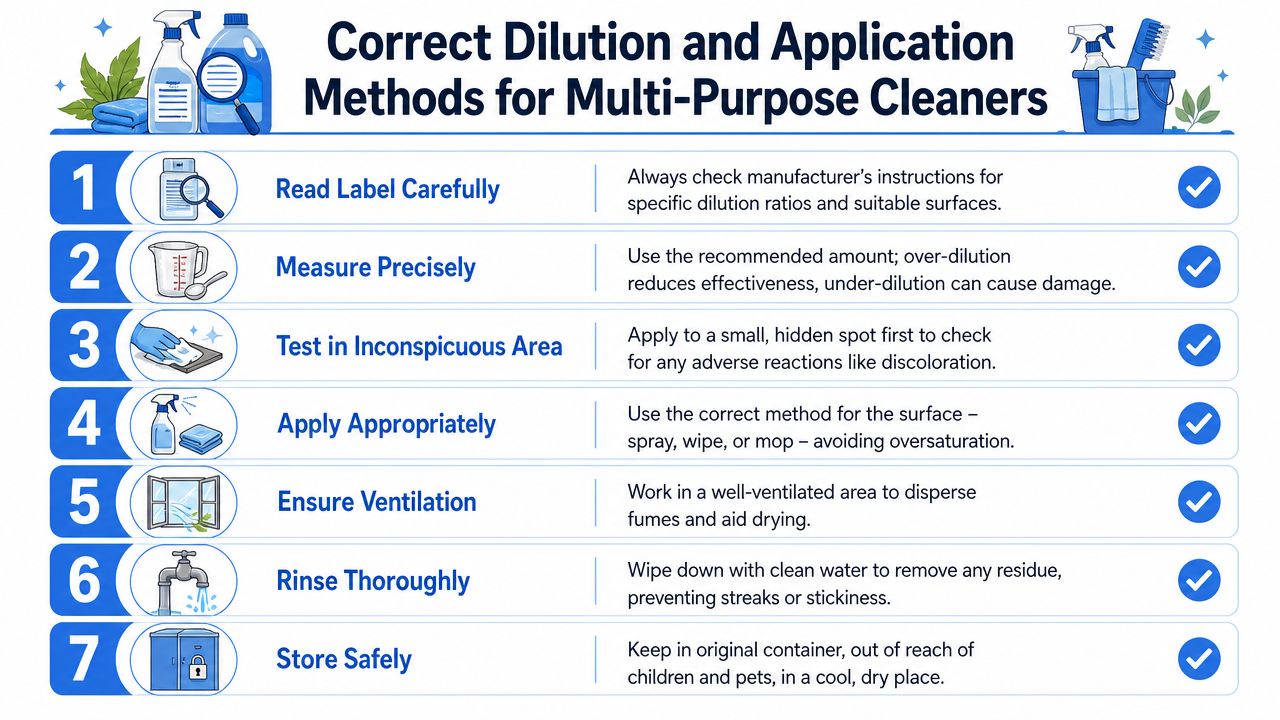
One professional example of a multi-purpose cleaner uses a pH range of 7.2 to 8.2 in concentrate, shows hard-water tolerance over 20 grains, and reflects the detergent-builder design common in stronger commercial formulas, as described by Essential Industries' product information for a multi-purpose cleaner. Balanced chemistry helps, but the finish still depends on how much you use, what you apply it to, and whether you remove the dissolved soil fully.
A pro-grade concentrated cleaner example recommends ¼ cup per 1 gallon of water for routine cleaning, with heavier soil handled by stronger direct application. A disinfecting variant requires full-strength use and a 10-minute wet contact time on hard, non-porous surfaces, according to Source Office and Technology product guidance for a professional cleaner. Those label differences matter.
DIY users usually run into three practical mistakes. They mix too strong for routine wiping. They use a disinfectant like a general spray cleaner. They spray the surface heavily, then spread dirty solution around instead of removing it. Each one leaves more film behind, and glass shows that film faster than almost any other surface.
For counters, tile, appliance exteriors, and other sealed surfaces, a simple process works well:
Here's a useful visual walk-through before you mix anything:
Professional window cleaners use two methods.
That trade-off matters. A multi-purpose liquid is convenient because it cleans many surfaces with one bottle. Convenience is not the same as clarity. Many all-purpose formulas include surfactants, builders, fragrance, or glossing agents that help with broad cleaning performance but leave faint residue behind. On a countertop, that may be tolerable. On a sunlit window, it turns into streaks, drag marks, or a hazy film.
For interior touch-ups on lightly soiled glass, a careful DIY wipe can be fine if the product is glass-safe, diluted correctly, and buffed dry with a clean microfiber. For large panes, hot glass, exterior windows, or windows that keep streaking no matter how often they are wiped, professional methods get better results because they remove the solution instead of letting it dry on the pane.
A cleaner can remove dirt and still be the wrong fit for the space. That's especially true when people are sensitive to fragrance, manage tightly sealed buildings, or care about residue on high-visibility surfaces.
Recent product trends show more fragrance-free, refillable, and biobased options on the market, including cleaners with 45% biobased content, as reflected in The Unscented Company's all-purpose cleaner product information. Those products address sustainability and sensitivity concerns, but they don't automatically guarantee a better finish on glass.
Fragrance-free formulas can be a smart choice in homes with sensitivities and in workplaces where scent lingers longer than people expect. They can also reduce one common source of that “freshly cleaned but still smeary” feeling on smooth surfaces.
Still, there's a practical limit to the benefit. A formula can be unscented and still leave residue if it isn't designed for glass clarity. Low-odor and refillable are good product traits. They're not the same thing as streak-free performance.
If indoor environment is part of the decision, it helps to step back and identify indoor air quality threats beyond the spray bottle itself.
Climate changes the result, even when the product stays the same.
In dry climates, cleaners can flash off too fast. That means less working time, more wipe marks, and more uneven drying. In hard-water areas, minerals can compound residue problems. In high-altitude regions like Denver, fast evaporation can make timing and technique more important than people expect.
For readers trying to reduce chemical load while still keeping glass looking right, this article on eco-friendly window cleaning is a solid next step.
The best cleaner for your property isn't just about what it removes. It's about what it leaves behind after the surface dries.
If your windows still look cloudy after you've wiped them twice, the issue usually comes down to one of three things. Wrong product. Too much product. Water left to dry on the glass.
Before you give up on the pane, try these steps:
These are fair DIY fixes for light interior issues. They are not the best answer for large homes, storefronts, high glass volume, or mineral-heavy exterior buildup.
Call a pro when the problem is no longer basic housekeeping.
That includes:
After a certain point, the hours spent re-cleaning glass cost more than the service call. Professionals don't just bring labor. They bring the right method. In window cleaning, that means a squeegee system or a pure-water system, not a random all-purpose spray and extra buffing.
For over 26 years, Professional Window Cleaning has handled residential, commercial, and high-rise window cleaning with that standard in mind. They serve Las Vegas, Phoenix, Denver, Scottsdale, Flagstaff, and Tempe.
If you're tired of fighting streaks, haze, and residue with the wrong cleaner, Professional Window Cleaning can help. With more than 26 years of experience in residential, commercial, and high-rise window cleaning, they use the methods professionals rely on: squeegees and pure-water systems. If you want glass that looks clean in full daylight, not just for five minutes after wiping, contact them for expert service.
Read our blog posts regularly and keep learning.