Care and Maintenance
Window Washing Cloths: The Professional Guide
Discover the best window washing cloths for streak-free glass. Compare microfiber, chamois, and cotton, plus expert care tips for homes and high-rises.


Let's be honest—we've all been there. You grab a spray bottle and a roll of paper towels, determined to get that perfect, invisible-glass look. You spray, you wipe, you step back to admire your work... only to be met with frustrating streaks and a hazy film.
This endless cycle sends just about everyone on a quest for the "best" glass cleaner. But what if I told you the secret to a flawless shine isn't actually in a bottle?
For a quick touch-up on a smudged bathroom mirror, a good store-bought spray or even a simple DIY solution can do the trick. The game completely changes, however, when you’re talking about windows battered by the elements. Dust, pollen, rain spots, and road grime don't just wipe away.
This is where the professionals' biggest secret comes into play: it’s all about the method. A paper towel and a bottle of blue liquid simply can't compete with a proven, professional technique when it comes to exterior glass.
After 26 years in this business, we at Professional Window Cleaning know that a magical spray doesn't exist. The real magic lies in the two time-tested methods we rely on every single day: the traditional squeegee technique and advanced pure-water systems.
These are the only two approaches that seasoned pros trust for an impeccable, long-lasting finish. Our expert teams, serving communities from Phoenix to Denver, use these methods to transform windows from dull and dirty to stunningly transparent.
So, to help you get closer to that perfect shine, this guide will walk you through:
By the end, you'll see why the "best" glass cleaner is really a combination of the right tool for the job and—most importantly—the right technique. Let's dive into why the pros focus on the process to guarantee that spotless finish every time.
Ever wonder what's actually in that iconic blue spray bottle? To figure out what the best glass cleaner really is, we need to get a little bit into the science of what makes them work. It all comes down to a careful mix of ingredients designed to cut through dirt and evaporate before streaks can even think about forming.
Think of a good glass cleaner like a highly specialized cleaning crew. Each ingredient has a specific job, and they all have to work together perfectly to get that crystal-clear finish. When they do, the cleaner dissolves grime and vanishes, leaving nothing but clear glass behind.
Peek at the label of most store-bought cleaners, and you'll probably find a few of these common players:
But just because this chemical team is effective doesn't mean it's perfect. The very ingredients that make these cleaners so strong can also be pretty harsh. Ammonia, for instance, has a potent smell and can damage sensitive surfaces like window tint, some plastics, or the rubber seals around your windows over time. This is a huge deal for homeowners in sunny places like Scottsdale, AZ, where protective window tints are everywhere.
This risk of damage is a big reason why so many people are now on the hunt for ammonia-free or eco-friendly alternatives. These formulas usually swap out the harsh chemicals for gentler, plant-based solvents and surfactants.
Knowing what these ingredients do helps you make smarter choices at the store. If you've got tinted windows, an ammonia-free cleaner isn't just a preference—it's a must. If you're worried about indoor air quality for your family or pets, a cleaner low in volatile organic compounds (VOCs) is the way to go. But while these gentler products are great for quick touch-ups on a bathroom mirror, they can sometimes leave a faint film if not wiped away flawlessly—another reason why professional methods are in a league of their own for a truly perfect shine.
Walk down any cleaning aisle, and you’ll see dozens of products claiming to be the "best" glass cleaner. But here’s a secret seasoned professionals know: the real magic isn’t in the bottle. It’s in the method.
That old spray-and-wipe trick with a paper towel? It often just pushes dirt around. Worse, it creates static electricity on the glass, which actually attracts more dust. After 26 years in this business, we at Professional Window Cleaning have seen it all, and one truth holds up: technique trumps product every single time. Our teams serving Las Vegas and Phoenix rely on this principle daily.
For a truly streak-free finish, the kind you can’t stop looking at, there are ONLY 2 methods professionals use. One is a timeless craft perfected over decades, and the other is a brilliant modern solution.
Those bottled cleaners are packed with chemicals designed to break down grime, which these two professional methods make entirely unnecessary.

Solvents, surfactants, and ammonia all have a job to do, but a professional’s goal is to leave the glass so clean that these chemicals aren't needed in the first place.
The difference between a pro job and a DIY attempt usually comes down to the tools and techniques used. Here’s a quick comparison of how our methods stack up against the common spray-and-wipe approach.
| Method | How It Works | Effectiveness | Recommended Use |
|---|---|---|---|
| Squeegee Technique | A blade pulls all liquid and dirt off the glass in a single, controlled motion. | Extremely high; leaves no streaks or residue when done correctly. | All residential and commercial windows, especially indoors. |
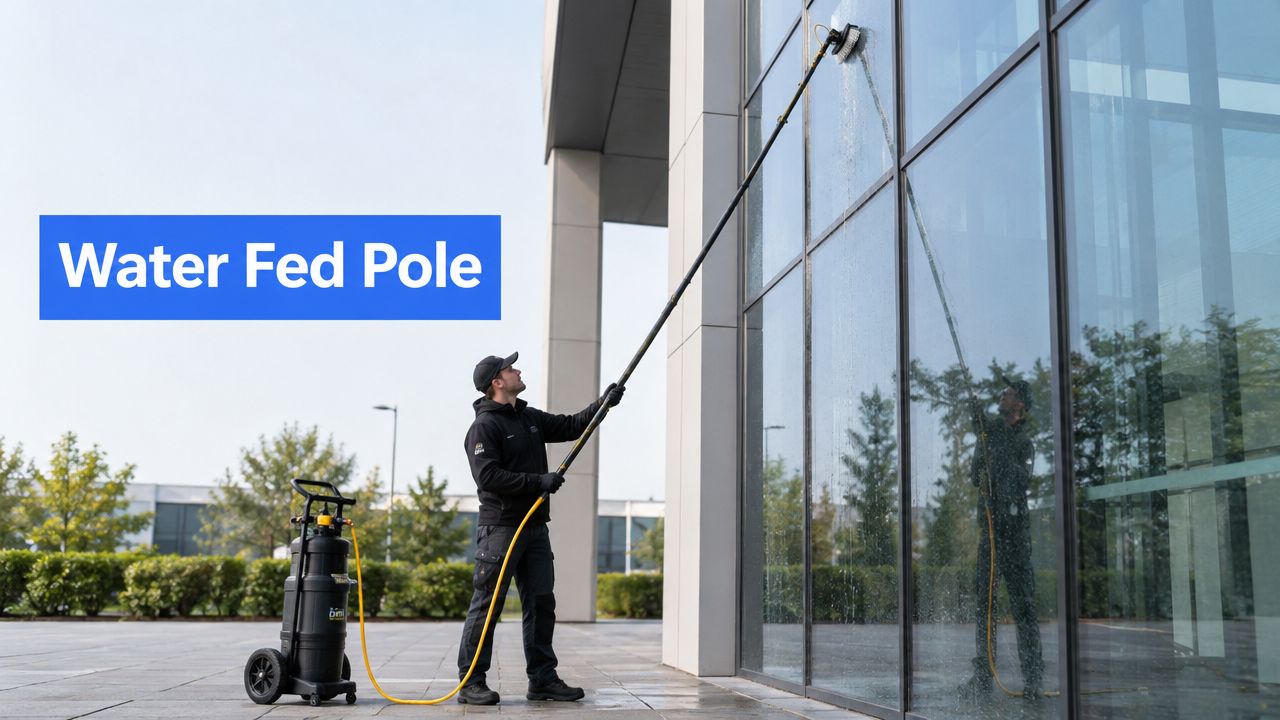
| Pure-Water System | Deionized water attracts and lifts dirt, then evaporates without leaving spots. | Excellent for exterior windows, especially high or hard-to-reach ones. | Multi-story homes, commercial buildings, and solar panels. |
| DIY Spray & Wipe | A chemical cleaner is sprayed on and wiped off with a cloth or paper towel. | Low to moderate; often leaves behind streaks, film, and static. | Quick spot-cleaning for minor smudges. |
As the table shows, professional methods are designed for a complete clean, while the DIY approach is often just a temporary fix.
It all comes down to what gets left behind. The spray-and-wipe method almost always leaves an invisible film of leftover cleaner and loosened dirt. That film is what catches the light and creates those frustrating streaks you see.
A professional method is designed for 100% removal. Whether it's the blade of a squeegee physically clearing the surface or pure water rinsing it completely clean and evaporating, the goal is to leave nothing on the glass.
This is why our teams rely exclusively on the squeegee and pure-water systems. They deliver a level of clean that a spray bottle simply can't match, and the results last longer because there’s no sticky residue left to attract new dirt.
If you want to dive deeper into the tools of the trade, you can explore our full guide on what professional window cleaners use. Ultimately, a commitment to method is the real secret to getting your glass perfectly clean.
For those everyday indoor cleaning jobs, you might be surprised to find that the best solution is already sitting in your pantry. A homemade cleaner won't replace a professional service for tough exterior windows, but it’s absolutely perfect for wiping away fingerprints on mirrors, smudges on a glass coffee table, or a light layer of dust on your interior panes.
Whipping up a great DIY glass cleaner is all about mixing a few simple but powerful ingredients. The most popular recipe is a classic for a good reason—it just plain works. It uses a bit of basic chemistry to slice right through common household grime, and you get to skip the harsh chemicals found in a lot of store-bought sprays.

To get started, you only need three things. This recipe creates a solution that’s tough on dirt but still gentle enough for most surfaces around your home.
Gently swirl the bottle to mix everything together, and you're good to go. If you want to explore more homemade options, check out our complete guide to creating the perfect window cleaning solution recipe.
Each ingredient in this bottle has a specific job to do, and they work together to give you that clean, clear finish.
While this DIY cleaner is a champion for indoor touch-ups, it does have its limits. When you're dealing with exterior windows that face the elements—especially in places with hard water and dust like our service areas of Denver and Scottsdale—it's just not going to cut it. That's when professional methods, like a squeegee or a pure-water system, become necessary for a truly deep, lasting clean.

Sure, a quick spritz of DIY spray can handle a stray fingerprint on a mirror. But there comes a point where tackling your windows yourself isn't just a pain—it can be downright dangerous. Sometimes the best "glass cleaner" isn't a product at all. It's knowing when to pick up the phone and call in an expert who has the right tools and training for the job.
Let’s be honest, some cleaning jobs demand more than a paper towel and elbow grease. Trying to muscle through them without the right gear can lead to scratched glass, property damage, or worse, a trip to the emergency room. You might even end up with a streaky mess that looks worse than when you started.
Knowing the difference between a quick touch-up and a job for a pro is the key to protecting your property and yourself. If you find yourself in any of these situations, it’s a clear sign to call for backup.
These scenarios go way beyond a simple weekend chore and step into the world of specialized trade work. It's not just about windows, either—understanding the broader considerations for When To Hire A Cleaner can help you decide when it's time to bring in help for your home.
Hiring a pro isn't just about dodging a chore. It's an investment in quality, safety, and getting your valuable time back. A true professional brings a lot more to the table than just a squeegee and a bucket.
At Professional Window Cleaning, we bring over 26 years of experience to every job. We’ve honed our craft down to the ONLY 2 methods that guarantee flawless, streak-free results: the timeless art of the traditional squeegee and the modern efficiency of pure-water systems. These aren't things you can replicate with a spray bottle and a cloth.
The true value of a professional service lies in guaranteed results, enhanced safety, and the freedom of getting hours of your weekend back. We handle the risks so you can enjoy a crystal-clear view without the hassle or danger.
In the end, while a DIY solution might be fine for a small indoor smudge, any significant window cleaning job is best left to a professional. For the integrity of your property and your own safety, knowing when to make that call is the smartest move you can make.
Deciding to hire a professional is a great first step, especially for those tough, out-of-reach windows. But how do you pick the right company and avoid the headache of a job done poorly? Choosing a window cleaning service isn't just about finding the cheapest price; it's about trusting your home or business to a skilled, reliable team.
When you're looking at potential companies, there are a few things that are absolutely non-negotiable. These are the clear markers of a true professional service that takes its work—and your property—seriously. Before you hire anyone, make sure they check these critical boxes.
A legitimate company will be completely open about its qualifications. Here’s a quick checklist to help you sort the pros from the amateurs:
The most telling question you can ask a potential window cleaner is, "What methods do you use?" If they can't confidently explain their use of either a professional squeegee technique or a pure-water system, they likely lack the expertise for a flawless finish.
With 26 years of experience, we at Professional Window Cleaning proudly meet and exceed these standards. Our insured teams have been delivering exceptional results for both homeowners and businesses for decades. While you're evaluating services, it's also smart to know about proper upkeep, like learning how to clean aluminium window frames to keep your entire window system in top shape. By focusing on these key qualifications, you can confidently hire a skilled company you can trust.
We’ve heard just about every window cleaning question under the sun. Getting that perfectly invisible, streak-free look can be tricky, so we’ve gathered some of our most frequently asked questions to give you clear, expert answers.
Streaks are the number one complaint we hear about, and they’re almost always caused by leftover residue. This could be a film from the cleaner itself, minerals from your tap water, or simply grime that got smeared around instead of removed.
The two biggest culprits? Using way too much cleaning solution or wiping with a dirty cloth. Paper towels can also be a problem, as they often break down and leave lint behind.
Not always. A higher price tag usually just means you're paying for brand marketing or a specialized formula, like an ammonia-free version. The real secret to a flawless shine isn't in the bottle—it's in the method.
Professionals get perfect results with simple, effective solutions because there are ONLY 2 methods professionals use: a squeegee or a pure-water system. These will always outperform even the most expensive spray bottle.
For most homes, a deep professional cleaning twice a year is a great rule of thumb. But where you live matters. If your home is in a high-pollen or dusty area like Phoenix, AZ, you might need more frequent cleanings to keep your view clear and maintain curb appeal. For commercial buildings, we usually recommend a monthly or quarterly schedule.
The most important thing is consistency. Regular cleaning prevents the buildup of corrosive contaminants like hard water spots and acid rain, which can permanently etch and damage your glass over time.
For the most part, yes, but you have to be careful with specialty glass. Many modern windows have low-e coatings to improve energy efficiency, and car windows are often tinted. Ammonia-based cleaners are notorious for damaging these sensitive films.
When in doubt, always reach for an ammonia-free cleaner or stick to a simple solution of vinegar and water. It’s the safest bet for protecting your investment.
For a guaranteed streak-free shine without the frustration, trust the experts who have been perfecting the craft for over 26 years. Contact Professional Window Cleaning today for a free, no-hassle estimate and see what a professional can do for your view. Learn more at professionalwindowcleaning.com.
Read our blog posts regularly and keep learning.