Care and Maintenance
Best Commercial Window Cleaning: Top Providers for 2026
Compare the best commercial window cleaning providers across AZ, CO, and NV, with criteria for high-rise access, pricing factors, and how to choose a vendor.


You clean the glass. You step back. The sun hits the window, and there they are again. White spots, cloudy patches, and that crusty film around the edges that makes the whole pane look old even when it's technically clean.
That's the aggravation with a hard water stain. It makes good glass look neglected, and in dry places where water evaporates fast, it can show up over and over. Sprinklers are a common culprit. So are hose rinses, runoff, and any window that stays wet long enough for minerals to dry in place.
After 26 years in window cleaning, the pattern is familiar. Some stains wipe off with a simple acid treatment. Others have bonded to the surface long enough that they need polishing, patience, and the right touch. The difference matters, because the wrong fix can waste your weekend or scratch the glass.
A lot of homeowners notice hard water stain trouble the same way. The windows looked fine in the shade. Then morning light or late afternoon sun exposed every spot. What looked like dust turns out to be a chalky film that won't come off with regular glass cleaner.
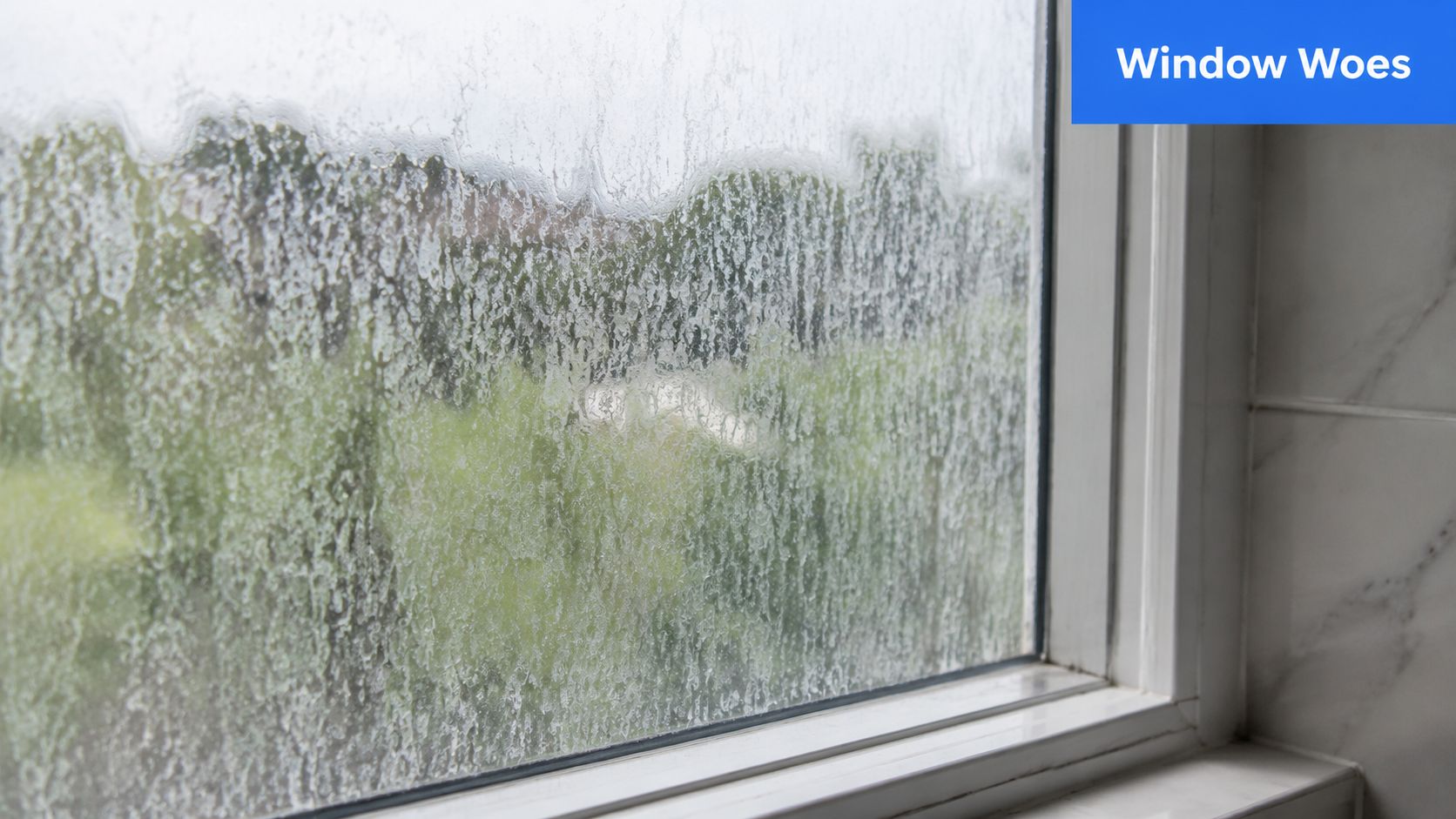
In tougher climates, this isn't rare. It's routine. Exterior panes near irrigation lines get hit again and again, and every dry cycle adds another layer. The result is a window that looks permanently dirty, even after a basic wash.
Practical rule: If a spot survives normal washing and dries back in the same place, you're not looking at dirt. You're looking at mineral residue.
That's why these stains are more than a cosmetic nuisance. The buildup grabs more grime, makes windows lose clarity, and can turn a clear pane into a hazy one. If it sits long enough, the surface can start to look etched and tired.
The good news is that not every hard water stain needs the same answer. Light spotting is one thing. Older buildup is another. Knowing which one you have saves time, saves effort, and helps you avoid the common mistake of scrubbing glass far too aggressively.
A hard water stain is what's left after mineral-heavy water evaporates off the glass. The water disappears. The minerals don't. They stay behind as a visible deposit that can look white, cloudy, or slightly rough.
Very hard water is water that contains more than 180 mg/L of calcium carbonate, based on the hardness classifications explained by Lysol's guide to hard water. That same classification places 0 to 60 mg/L as soft, 60 to 120 mg/L as moderately hard, 121 to 180 mg/L as hard, and anything above that very hard.
On glass, that matters because evaporation is unforgiving. Once the water dries, calcium and magnesium deposits stay on the surface and crystallize into the film you can see. Standard window cleaners don't break those mineral bonds well, which is why people spray and wipe and still see the same spots.
Glass is brutally honest. It shows every deposit, especially in direct light. A sprinkler overspray on a picture window, a hose rinse on patio glass, or mineral-heavy runoff can all leave a hard water stain behind.
That same basic mineral issue shows up in other places too. If you've ever looked into descaling systems used to boost coffee flavor, the principle is similar. Minerals build up where water is heated or evaporates, and once that buildup gets established, mild cleaners usually aren't enough.
Hard water stains don't mean the glass is dirty in the usual sense. They mean the water left something behind.
A lot of people think the white film is soap residue or dust baked onto the pane. Sometimes there's dirt mixed in, but the backbone of the stain is mineral content. That's why treatment has to target the deposit itself, not just the surface grime sitting on top of it.
If you want to tackle a hard water stain yourself, start with the least aggressive method and move up only if needed. That's the safest path. Homeowners get into trouble when they jump straight to scraping, harsh pressure, or random abrasive pads.
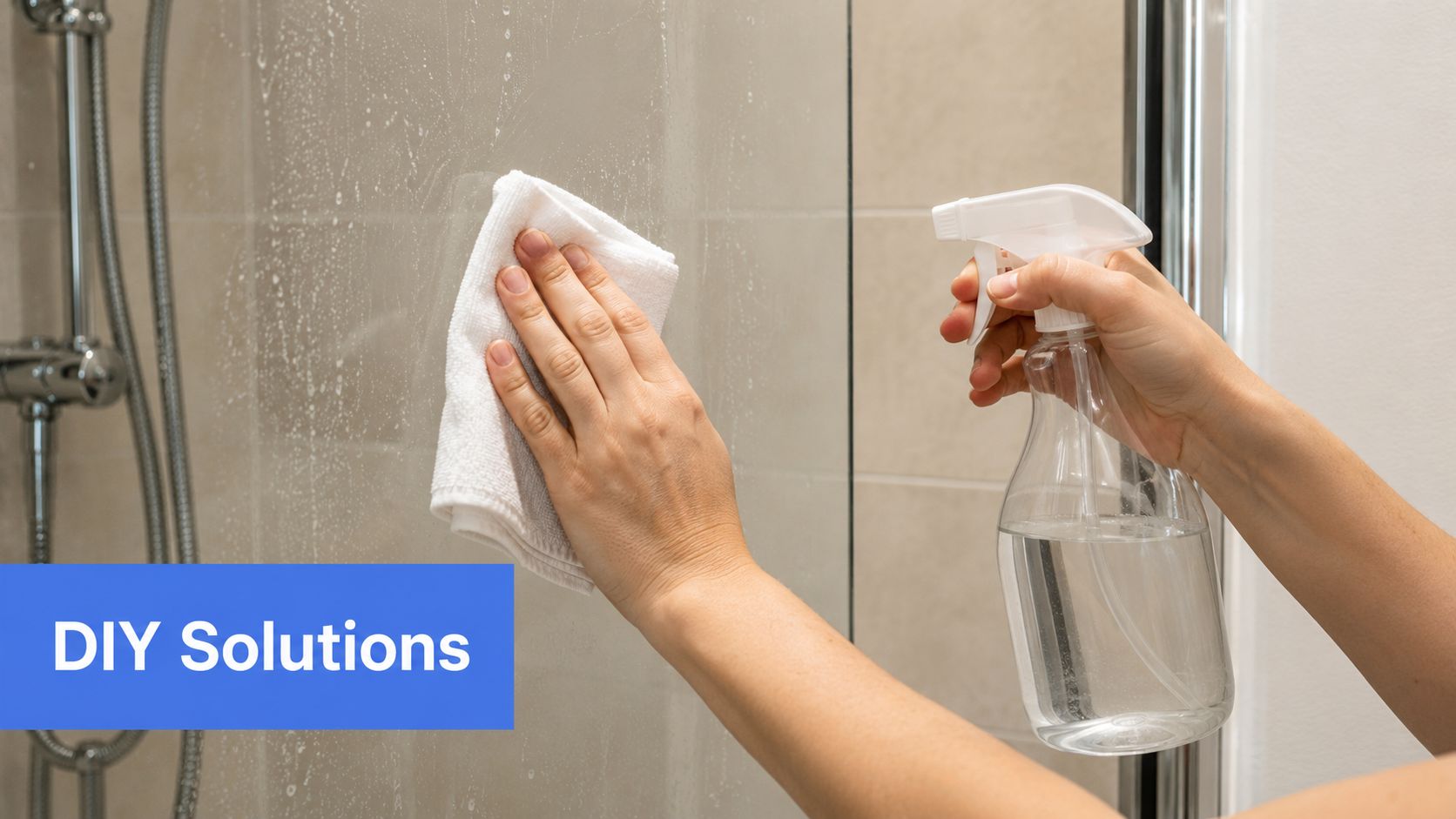
The classic first attempt is a 50/50 vinegar and distilled water mix. That's still a reasonable starting point for light deposits. The key word is light.
According to Pine Country Windows on removing hard water stains, vinegar-based DIY methods drop off sharply once stains are older than 1 to 2 seasons, because vinegar usually isn't acidic enough to dissolve mature calcium carbonate deposits. The same source also notes that using tap water instead of distilled water can reduce success rates by up to 60%, and letting acidic solutions dry on glass or frames can contribute to seal problems within 6 to 12 months.
This method can help on fresh spotting. It usually won't solve older, bonded stains on exterior windows in hard water regions.
When vinegar stalls out, the next level is polishing. At this point, DIY starts getting more technical.
A practical glass-restoration method shown in this glass polishing demonstration follows a five-stage process. First, prep the glass and remove loose debris. Second, apply a glass-polishing compound such as Diamond Magic with a damp microfiber rag. Third, work the product in with 2 to 4 lbs of pressure. Fourth, rinse before the product dries. Fifth, buff with a clean microfiber towel.
The pressure limit matters. That same demonstration warns that going above 4 lbs raises the risk of micro-scratching, and those marks permanently reduce optical clarity.
If you can't control your pressure, stop. Glass damage happens faster than most people think.
For homeowners trying to decide what cleaner makes sense before stepping into polishing, this guide on the best cleaner for hard water spots on glass lays out the practical differences between common options.
Ultra-fine #0000 steel wool can help as a secondary abrasive step on stubborn deposits, but only with restraint. It isn't a substitute for sound technique, and it isn't something to bear down on. Minimal pressure is the rule.
That's also where a lot of DIY efforts go sideways. People feel the stain resisting, so they scrub harder. On glass, that can turn a removable mineral problem into a permanent surface problem.
A quick visual can help if you want to see a typical homeowner-style removal approach before deciding whether to go further:
There's a point where hand treatment stops making sense. The same Pine Country Windows source reports that 70 to 80% of stubborn stains need an electric buffer with buffing compound for full removal, while hand-scrubbing with #0000 steel wool achieves only 40 to 50% success on aged deposits.
That lines up with what experienced cleaners run into in the field. Fresh stains can respond to simple methods. Older buildup often needs machine polishing, better chemistry, or both.
If you're in a dry, mineral-heavy area, the issue usually isn't effort. It's that the stain has matured past what household acids can handle.
Removing a hard water stain is work. Preventing the next one is cheaper, easier, and far less risky for the glass. Most recurring problems come from the same sources hitting the same windows over and over.
If sprinklers hit the glass, adjust them. If a hose rinse leaves windows to air dry, change the routine. If runoff from nearby surfaces regularly splashes onto lower panes, that needs attention too.
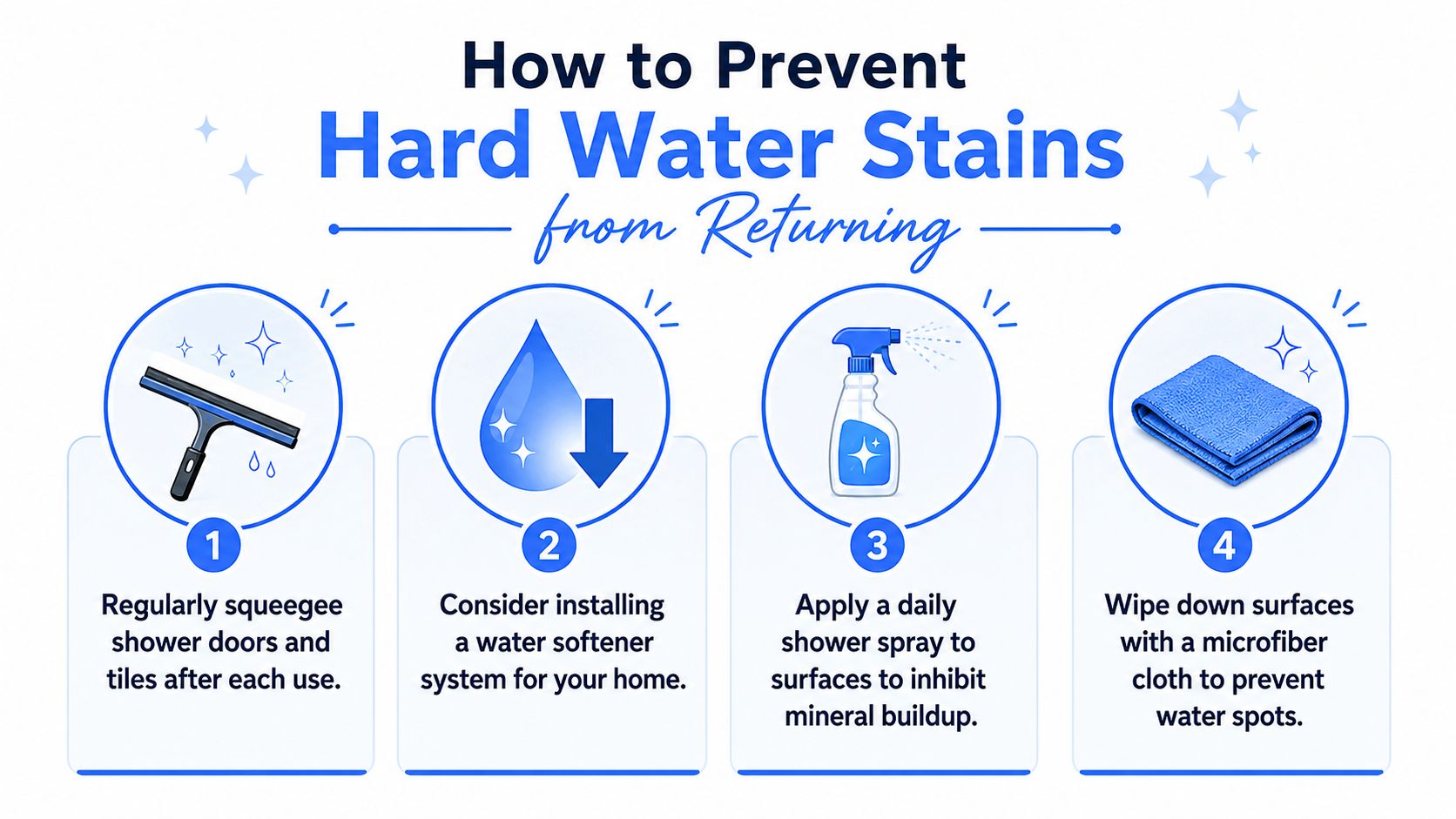
The infographic points to the right habits, and the same logic works on windows:
In places with severe hardness, prevention often means changing the water, not just changing the cleaner. Culligan notes that nearly 90% of American homes have hard water, and in high-hardness regions DIY approaches often fail without a water softener, especially where deposits return quickly after cleaning, as described in their discussion of hard water stains.
For homeowners dealing with repeated mineral buildup, local plumbing support can be worth reviewing. If you're already researching softener upkeep or service options, this overview of Las Vegas water softener repair is a useful starting point for understanding the maintenance side.
Prevention beats restoration. Once minerals bake onto glass again and again, every cleanup gets harder.
Some prevention advice sounds good but doesn't survive real life. These habits usually do:
In hard water country, the best prevention plan is simple. Stop the mineral-heavy water from landing on the glass, and remove any water that does before it dries.
There's a point where a hard water stain stops being a weekend project. That point usually arrives when the deposits are old, widespread, or sitting on windows that get hit repeatedly by irrigation. DIY can still play a role, but it helps to know where the ceiling is.
There are only 2 methods window cleaning professionals use. One is the traditional mop-and-squeegee approach with soapy water. The other is a pure-water system. Industry practitioners put it plainly in this comparison of squeegee vs pure water window cleaning, noting that “most pro window cleaners use a mop and squeegee and/or a pure water cleaning system”.
That's it. Not mystery chemicals. Not gimmick tools. Just two proven systems used correctly.
The traditional method works well when the goal is controlled cleaning by hand. The soap provides lubrication, which helps the squeegee glide over the glass. A forum discussion on pure water cleaning of interior windows points out that soapy water helps the squeegee move properly, while pure water works differently.
Pure-water cleaning is built around sediment-free water and agitation. According to Window Cleaning Warehouse's explanation of pure water cleaning, when pure water is used in window cleaning, there's no need to squeegee the water off the window because it won't leave residue when it evaporates, provided the dirt has been agitated first.
A separate industry comment also notes that both DI vessel and reverse osmosis systems are efficient ways to produce pure water, which matters because the whole point is to clean with water that won't leave mineral spotting behind.
DIY efforts tend to fail for three practical reasons.
First, the stain may already be too mature for mild acids. Second, the coverage may be too large for hand polishing to be realistic. Third, even after you remove the stain, the same hard water source is still hitting the glass.
That third one is why homeowners in Phoenix, Las Vegas, Scottsdale, and Denver run into repeat problems. In those service areas, dry conditions and mineral-heavy water can turn a one-time cleanup into a recurring maintenance issue fast.
| Factor | DIY Methods | Professional Service |
|---|---|---|
| Tools | Vinegar, microfiber, #0000 steel wool, consumer polish | Mop-and-squeegee or pure-water system |
| Best use | Fresh, light spotting on limited glass | Recurring buildup, larger jobs, difficult access |
| Risk level | Higher if pressure and product choice are wrong | Lower when handled by trained technicians |
| Time investment | Often slow, repetitive, and messy | Faster and more systematic |
| Prevention value | Limited if hard water source remains | Better fit for ongoing maintenance plans |
If the glass has gone cloudy after multiple cleanings, if vinegar did almost nothing, or if you're dealing with whole banks of windows, that's usually the signal. A pro can match the method to the condition of the glass instead of guessing.
Some jobs need restoration first, then a maintenance approach that keeps the problem from coming back as fast. For a broader look at how trained crews handle recurring glass issues, this page on professional window cleaning solutions is worth a read.
The biggest advantage of professional work isn't just better tools. It's knowing when to stop using one method and switch to the other.
That judgment matters most in hard water hotspots. If a pane needs detailed hand work, the squeegee method may be the right fit. If the goal is spot-free exterior maintenance using mineral-free rinse water, pure-water cleaning is hard to beat.
A hard water stain looks simple until you try to remove it with the wrong product. Then it turns into a cycle of spraying, wiping, and wondering why the glass still looks cloudy. The root problem is mineral residue, not everyday dirt.
Light stains can sometimes respond to careful DIY treatment. Older deposits usually need stronger restoration methods and a much lighter touch than is commonly realized. Prevention matters just as much as removal, especially if sprinklers, hose water, or repeated runoff keep feeding the problem.
The long-term answer is usually a combination of two things. Remove the existing deposits correctly, then stop mineral-heavy water from drying on the glass again. That's what keeps windows clear instead of just temporarily improved.
After more than 26 years in the trade, one thing stays true. The right method saves glass. The wrong one can make a bad-looking window worse. If you're dealing with stubborn, recurring hard water stain buildup, getting experienced help is often the fastest route back to clear views.
If your windows are covered with stubborn hard water stain buildup, Professional Window Cleaning can help restore clarity and keep your home or business looking sharp. With more than 26 years of experience, they handle residential, commercial, and high-rise window cleaning with the methods professionals use.
Read our blog posts regularly and keep learning.