Care and Maintenance
How to Restore Window Glass and Frames the Right Way
Learn how to restore window glass, frames, and seals with pro methods, real tools, and honest trade-offs. A practical guide


You're probably dealing with one of two frustrations right now. Either your glass looks clean for about an hour and then the streaks show up when the sun hits it, or you're responsible for a property where the windows are part of the first impression and “good enough” isn't good enough.
That gap between looking wiped down and looking professionally cleaned is often underestimated. Window glass is unforgiving. It shows minerals, soap residue, silicone haze, hard water spotting, poor technique, and the wrong chemistry immediately.
After more than 26 years in the trade, one thing is clear: professional window cleaning solutions aren't just about what's in a bottle. They're about method, water quality, surface condition, runoff control, safety, and knowing when a common DIY fix will make the glass worse. That matters whether you manage a home in Phoenix, a storefront in Denver, a condo in Scottsdale, or a high-rise in Las Vegas.
Late afternoon in Phoenix or Las Vegas is when bad window cleaning gets exposed. Glass that looked fine at noon suddenly shows drag marks, dried minerals, detergent residue, and frame runoff once the sun hits it at an angle. In Colorado, freeze-thaw cycles and airborne dust create a different problem. Soil bonds to the glass and edges, and the wrong cleaner can leave a film that grabs more dirt after the first weather swing.
Professional work starts before any liquid touches the pane. The first question is not which spray to use. It is what is on the glass, what type of glass it is, what sits around it, and what standards the site has to meet. A lobby entry in a medical building, a tinted residential picture window, and exterior glass on a high-rise do not get treated the same way because the contamination, runoff risk, and safety requirements are different.
That is the point many DIY articles miss. Professional window cleaning solutions are not defined by a blue bottle or a "green" label. They are defined by chemistry, water quality, compatibility with coatings and seals, and whether the method can produce a residue-free result at scale. If you want the technical side explained clearly, this guide to pure water window washing is a useful reference.
Clean glass is partly chemistry and partly optics. Property owners usually notice appearance first, but the job has a broader effect. Brighter interiors, clearer sightlines, and sharper storefront presentation all change how a property is perceived. Analysts at Grand View Research outline that demand in their window cleaning services market summary, though the practical takeaway is simpler. Window cleaning is a specialized maintenance trade because glass shows every shortcut.
One rule holds up on nearly every job: if a cleaner needs more rubbing to get worse results, the problem is usually residue, minerals, or the wrong method for the contamination.
Homeowners often judge the result while the glass is still wet. Property managers sometimes assume every vendor is selling the same outcome. Neither assumption holds up in the field. Glass can dry into streaks, spotting, or haze even after it looks clear for a few minutes, especially in hard-water regions like Arizona and Nevada.
Professional service is built around repeatable results. The target is not "looks better than before." The target is no residue, controlled edges, protected frames and floors, and no added damage to tint, low-E coatings, seals, or surrounding finishes. On regulated sites and high-rise properties, that same standard has to hold under stricter safety procedures, chemical handling rules, and water-management requirements.
That is the difference between wiping glass and cleaning it properly. One improves appearance for the moment. The other addresses the contamination, respects the material, and holds up under sunlight, weather, and inspection.
A homeowner in Phoenix can wash a west-facing window at 8 a.m., watch it look clean for a minute, and still end up with spots by the time the glass fully dries. A property manager in Denver can hire a crew that wipes every pane, only to see mineral haze show up again in afternoon sun. Those failures usually come down to method, not effort.
Professional window cleaning relies on two field-tested systems: the squeegee method and the pure-water system. Each solves a different problem. Choosing the wrong one wastes labor, leaves residue, and can create issues on sensitive glass, large elevations, or regulated commercial sites. The trade is knowing which method fits the glass, the soil, the climate, and the access.
Squeegee work is still the best tool for many interiors and for exterior glass that needs controlled hand detailing. The process is simple in principle and demanding in practice. A technician wets the glass with a washer, uses the right amount of agitation to break loose soil, then removes the solution with a sharp rubber blade while controlling edges, corners, and runoff.
Done well, it gives precise results on:
This is also the method I trust when a surface has tint film, delicate surrounding finishes, or interior conditions where excess water is a liability. Skill matters. Blade angle, rubber condition, solution choice, and pressure all affect whether the glass dries clear or with lines and drag marks.
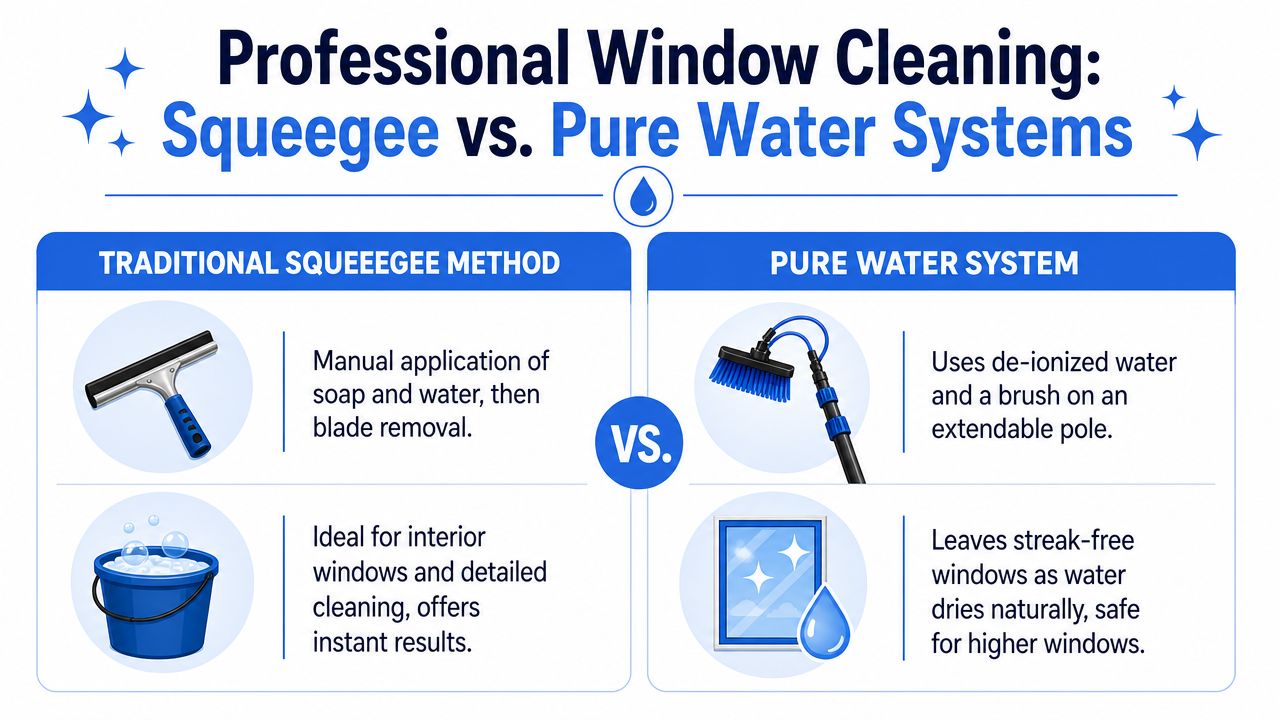
Pure water cleaning is based on chemistry, not marketing language. The water is filtered to remove dissolved minerals and impurities, usually through deionization, reverse osmosis, or both. That matters because untreated water leaves solids behind as it evaporates. Filtered water does not, which is why it can rinse glass to a spot-free finish when the operator uses enough agitation and enough rinse volume, as outlined in this introduction to pure water cleaning.
This method shines on exterior glass, upper elevations, and buildings where working from the ground with a water-fed pole reduces ladder use and improves consistency. In Arizona, Nevada, and parts of Colorado, that mineral issue gets harsher because hard water and rapid drying expose every weakness in the rinse. Pure water addresses the root problem by removing the solids that cause spotting in the first place.
Property owners who want the mechanics can review this guide to pure water window washing.
Technique still decides the outcome. Frames often need cleaning first so dirty runoff does not recontaminate the glass. The operator works from top to bottom, uses brush pressure that matches the soil load, and rinses thoroughly enough to carry contaminants off the pane, a point covered in this guide to avoiding pure-water cleaning mistakes.
Here's a quick visual explainer:
Pure water is not a replacement for squeegee work in every setting. It is the better exterior system on many jobs, especially higher or broader glass. Squeegees still win where detailing precision, runoff control, or interior access matters more. Professional results come from matching the method to the contamination, the glass type, and the site conditions.
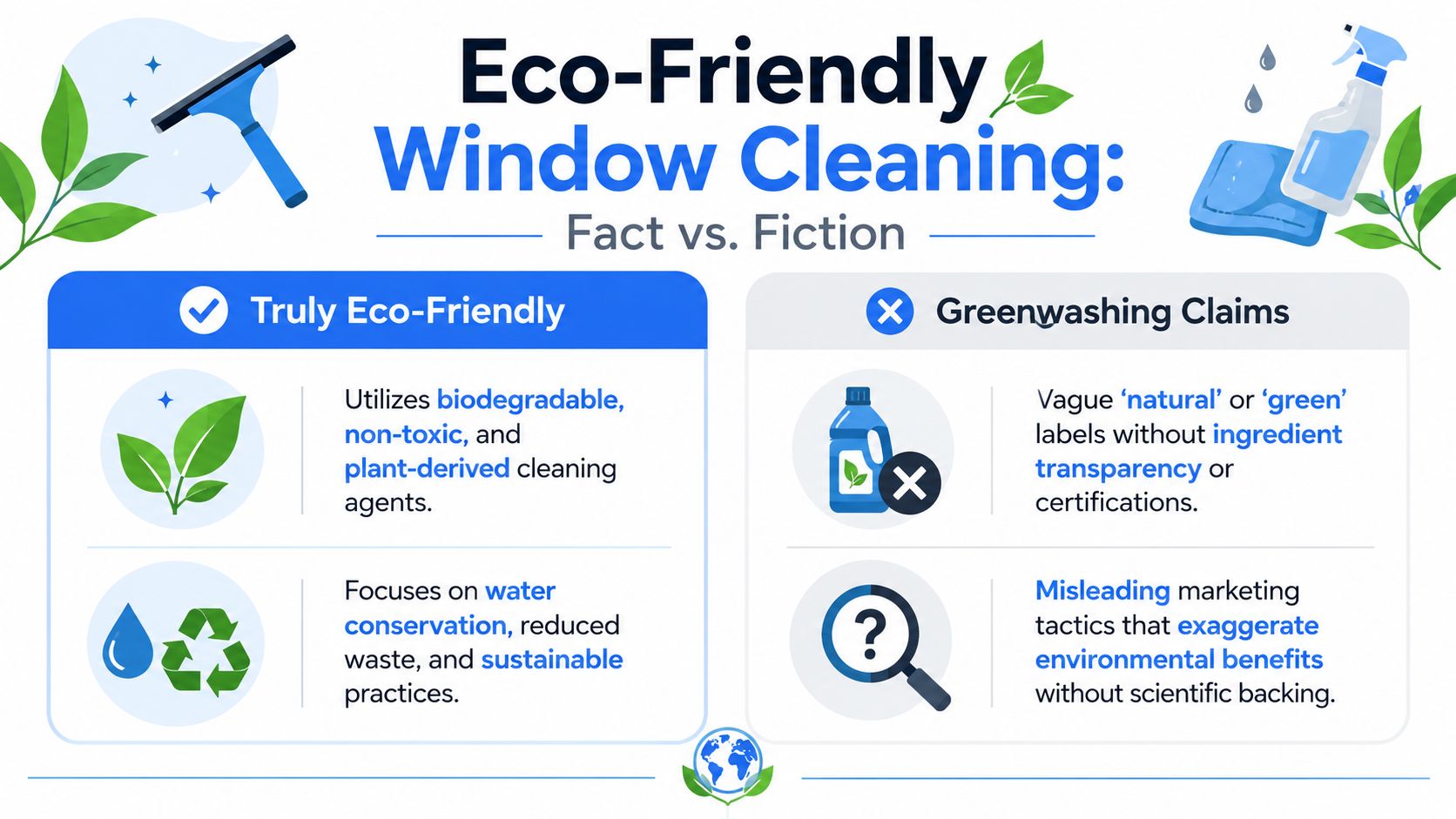
A property manager in Phoenix asks for an eco-friendly service before a summer clean on a multi-story office building. Fair request. The problem is that "green" on a label tells you very little about what will happen once that solution hits hot glass, runs down a facade, and reaches concrete, soil, drains, or decorative stone.
After 26 years in this trade, the pattern is familiar. Clients often assume ammonia-free means safe, compliant, and low-impact. It does not. A professional standard is narrower and more useful: use the least chemistry that will clean the glass properly, know the ingredients, and control where the runoff goes.
The strongest question to ask is not whether a product is marketed as eco-friendly. Ask what is in it, whether a Safety Data Sheet is available, and how the contractor handles runoff on your specific site.
That matters more in Arizona, Colorado, and Nevada than many owners realize. Heat speeds evaporation. Hard water leaves mineral residue behind. On larger commercial sites and high-rise work, overspray and rinse water can travel farther than people expect. What looks harmless on a storefront can become a liability issue on a tower, a medical campus, or a property with tight stormwater rules.
The U.S. EPA's Safer Choice program gives buyers a better screening tool than marketing language because it reviews products against human health and environmental criteria, including ingredients and surfactants, rather than relying on broad claims alone. That still does not remove the need for jobsite judgment. A product can be a better chemical choice and still be used poorly.
That is why dish soap and water is not a serious environmental policy. It is improvised cleaning.
If you manage a property in Scottsdale, ask for specifics that connect chemistry to the site:
Good window cleaning uses chemistry carefully, not casually. The standard is performance, residue control, runoff awareness, and compliance with the property's conditions. That is the difference between a professional solution and a greenwashed promise.
At 7 a.m., a homeowner wants quiet work before the house wakes up. At 9 a.m., a clinic manager wants glass cleaned without odors drifting into exam rooms. On a high-rise, the property manager wants the work timed around wind, tenant access, and public traffic below. Same trade. Different job.
That is why real professional window cleaning is property-specific. The method, water quality, access plan, crew size, and scheduling all change with the building type, the local climate, and the level of risk. In Phoenix, Las Vegas, and Denver, those decisions matter even more because hard water, mineral dust, intense sun, freeze-thaw conditions, and height exposure change how glass gets cleaned and how long it stays clean.
Homeowners usually notice the glass first, but the service quality shows up in everything around it. Clean shoe covers, careful ladder placement, protected floors, respect for privacy, and controlled movement through the home are part of the job.
Residential glass also brings a wider mix of small problems than many owners expect:
A good residential crew adjusts for occupied spaces, alarm systems, locked gates, pets, and family schedules. It also knows when standard cleaning will improve the glass and when mineral staining, failed seals, or construction debris need a different conversation. I have seen plenty of homeowners blame the cleaner for haze that is etched glass. A seasoned contractor explains that upfront.
Commercial clients are usually buying consistency as much as appearance. Storefronts need clean front glass that does not distract from the business. Offices need predictable service windows. Medical and professional settings often need low-odor products, controlled entry, and crews that can work without disrupting staff or visitors.
The cleaning plan has to match the building's use. A retail route may need frequent exterior touch-ups because handprints, traffic film, and irrigation overspray return fast. A suburban office complex may be better served with recurring exterior maintenance and less frequent interior work. In Denver, winter scheduling can shift around snow, ice, and shaded elevations that stay colder longer. In Phoenix and Las Vegas, heat and evaporation rates affect how fast solution flashes on the glass, especially on dark façades in direct sun.
Good commercial service looks organized from the first email to the final walkthrough. Property managers should also verify that the provider's documentation is in order, especially for multi-tenant sites. A clear explanation of bonded vs insured window cleaning companies helps separate administrative polish from actual protection.
High-rise cleaning has more in common with façade access work than with routine house washing. The glass still has to be clean, but the larger challenge is controlling the entire process safely and predictably on a live building.
Access method drives much of the plan. Rope descent, swing stage work, and lift access each come with different restrictions, setup needs, and exposure points. Wind loads, anchor locations, façade geometry, public space below, and the way water travels down the exterior all affect the cleaning approach. On tall buildings in dry climates, pure water work can reduce residue problems, but runoff control and spotting risk still need to be assessed against the glazing system, surrounding finishes, and sun exposure.
This is also where green marketing falls apart fast. A product labeled eco-friendly means very little if it leaves residue on heat-loaded glass, runs across metal panels, or creates slip hazards at entries. In high-rise environments, chemistry has to work with the building envelope, not just with the sales pitch.
For owners and managers, the practical standard is simple. Hire a company that adjusts the process to the property instead of forcing the property into a generic package.
A crew member slips while cleaning fourth-floor glass, and the owner finds out too late that the company's insurance is incomplete. That is how a low bid turns into an expensive problem. Clean windows do not protect you from liability. Proper coverage, documented training, and a method that matches the building do.
The paperwork matters because the risk is real, but serious contractors treat safety as an operating system, not a sales talking point. In high-rise work, that includes fall protection, equipment inspection, access planning, weather limits, and control of the public area below. In Arizona, Colorado, and Nevada, sun load, afternoon wind, and rapid drying also affect chemical choice, runoff control, and how crews schedule the work. Those are field decisions tied to safety, not just cleaning quality.
Start with two items. Ask for current general liability and workers' compensation certificates, and make sure the company name matches the one on the proposal. If the answers are vague, or the documents arrive late and incomplete, keep looking.
Owners also mix up bonding and insurance all the time. They are not the same protection. This guide on bonded vs insured window cleaning companies explains the difference in plain language.
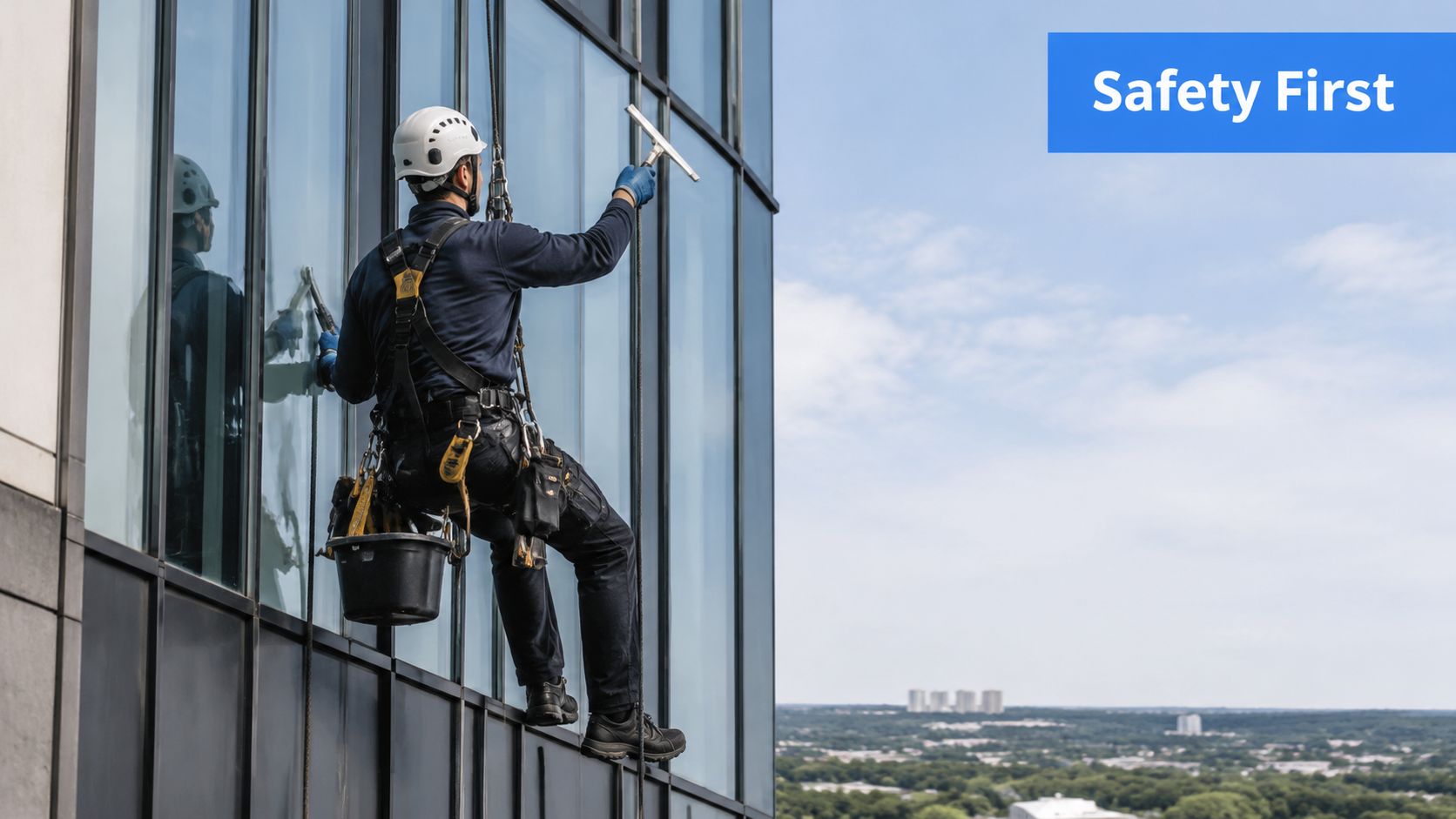
On ground-level residential work, basic ladder safety and glass handling still matter. On commercial and high-rise properties, the standard is higher. The contractor may need documented rope access procedures, lift training, hazard communication for any chemicals on site, and a plan for protecting entrances, sidewalks, and tenants during service.
That regulatory side also exposes a lot of greenwashing. A label that sounds safer does not automatically mean the product is appropriate for a hot glass façade, a coated window, or a sensitive entry surface. Professional solutions are chosen by surface compatibility, residue behavior, local conditions, and worker exposure controls. In dry, high-heat markets, the wrong mix can flash off too fast, leave spotting, or create slippery runoff at the base of the building.
A competent crew usually reveals itself in the first few minutes on site.
Look for signs like:
Property managers already understand this logic in other trades. The same way buyers compare realistic vent cleaning costs by scope, access, and risk, window cleaning should be judged by exposure and compliance, not price alone. A legitimate company protects the glass, the building, the public, and the owner's position if something goes wrong.
Window cleaning prices vary because the work itself varies. A single-story home with easy access, maintained glass, and standard screens is one kind of job. A post-construction commercial property with high exterior glass, hard water exposure, and limited access is another.
That's why a serious quote asks questions before giving numbers. The provider should want to know the building type, the number and size of panes, whether the work is interior or exterior, how dirty the glass is, what access equipment is needed, and whether there are special conditions such as tint, paint overspray, or new construction residue.
A useful estimate usually reflects several drivers at once:
| Pricing factor | Why it matters |
|---|---|
| Access difficulty | Higher or obstructed windows take more time, equipment, and setup. |
| Glass condition | Post-construction residue, hard water, and neglected frames add labor and risk. |
| Cleaning method | Interior squeegee work and exterior pure-water work are priced differently because the workflow differs. |
| Frequency | Recurring service is usually simpler to maintain than first-time restoration work. |
| Site sensitivity | Medical offices, retail entrances, and occupied commercial spaces often require tighter scheduling. |
The best quotes explain scope clearly. They don't hide important exclusions in vague wording.
This checklist cuts through marketing fast:
To understand one of those answers, it helps to know a specific technical standard. For a streak-free finish, filtered water used in professional cleaning should have a Total Dissolved Solids level of 0 ppm, and when TDS rises above 10 ppm, it can leave a hazy film that reduces light transmission by up to 15%, as summarized in this window cleaner reference on TDS and residue.

If you're comparing overall building maintenance budgets, it also helps to look at related services realistically. For example, this guide to realistic vent cleaning costs is useful because it shows how transparent pricing should read in another property-care category too.
Cheap quotes often leave out the part that actually solves the problem. Ask what's included, what isn't, and what happens if the glass needs more than routine cleaning.
Property owners usually ask the same few questions once they have lived with glass long enough to see that “window cleaning” is not one simple task. That is a good sign. The right questions get past spray bottles and into the key issues: residue type, service interval, occupant impact, and whether a cleaner understands the rules that apply to your site.
New glass often looks dirty for reasons that routine cleaning cannot solve. What owners call streaking is frequently construction residue, fabricating debris, adhesive transfer, hard-water spotting from sprinkler overspray, or cured silicone left near frames and seams. In high-rise condos and new commercial builds, silicone sealant residue is a very common source of post-installation service complaints.
That matters because each residue responds to a different method. Standard soap may loosen surface dust, but it will not reliably remove bonded contamination. Scrubbing harder can waste time, spread residue, or in some cases create scratch risk if debris is still on the glass. Post-construction cleanup calls for inspection first, then the least aggressive method that matches the contaminant and the manufacturer's guidance.
The right schedule depends on soil load, water quality, exposure, and the standard the property has to meet.
A single-family home in a protected area may do fine with less frequent service. A storefront, medical office, casino-adjacent property, or Class A office with public-facing glass usually needs a tighter cycle because fingerprints, irrigation mist, dust, and traffic film build fast. In Arizona, Nevada, and parts of Colorado, dry air, alkaline dust, and mineral-heavy water change the schedule. Glass can go from routine maintenance to stain-removal work if you wait too long.
A practical baseline is simple. Clean often enough that soil still comes off as maintenance cleaning, not restoration.
Yes, if the company is set up to do it properly.
On occupied commercial sites, timing is only one part of the job. Crews need to control hose routing, ladder placement, entry procedures, runoff, noise, and chemical use. That is especially important in medical offices, schools, government buildings, food-related properties, and high-rise towers with strict access rules. In runoff-sensitive areas, the cleaning solution has to match the site conditions and local requirements, not just the crew's habit.
Green labels alone do not answer that question. Property managers should expect a clear explanation of what is being used, where it will run off, and whether the method fits the building's environmental and operational constraints.
Listen for clear questions and clear limits.
A seasoned contractor will ask about building height, access, shade, frame type, water source, spotting history, tenant sensitivity, and whether the issue is maintenance soil or post-construction residue. They should also tell you what they cannot confirm over the phone. That is usually a better sign than a fast quote with a promise to “handle anything.”
For high-rise work, listen for fluency in access planning, insurance documentation, and site rules. For properties in AZ, CO, and NV, listen for whether they understand mineral deposits, heat, wind, and regional dust loads. If a company talks only about price or pushes a miracle chemical, keep looking. Professional results come from matching the method and chemistry to the glass, the building, and the regulations that govern the site.
If you want help from a team that's been cleaning residential, commercial, and high-rise glass since 1999, Professional Window Cleaning serves property owners across Arizona, Colorado, and Nevada with practical expertise built on real field experience.
Read our blog posts regularly and keep learning.