Care and Maintenance
Water Fed Pole Window Cleaning Brush: A Complete Guide
Learn how a water fed pole window cleaning brush works, the best brush types, pole compatibility, and pro tips for streak-free, ground-level window cleaning.


Ever notice those stubborn white spots on your glass that just won’t wipe away? It's a common headache, and no, it’s not just dirt. What you're seeing are mineral deposits—mostly calcium and magnesium—left behind after water evaporates. To get rid of them, you need a cleaner that can dissolve these minerals, something your standard soap and water just can't do.
Have you ever wondered why those chalky, white spots seem to weld themselves onto your windows, shower doors, and even your car glass? The culprit is the water itself. When water has a high concentration of dissolved minerals, we call it "hard water," and it's the reason those stains are so tough.
This is a familiar battle for homeowners everywhere, but it’s especially persistent in arid regions. If you live in a city like Phoenix or Las Vegas, you know exactly what we’re talking about, thanks to the local water composition. Every time a droplet of hard water dries, the H2O vanishes, but the minerals stay put, creating a tough, scaly film that clings to the glass.
It's not just a surface-level issue. The minerals in hard water, like calcium and magnesium carbonates, have a natural chemical attraction to silica, which is the main ingredient in glass. This attraction forms a surprisingly strong bond.
Over time, that bond gets even tougher, which is why your regular cleaning routine doesn't make a dent. You're not just fighting grime; you're trying to break a chemical reaction that’s happening right on your glass.
At first, these deposits are just an unsightly nuisance. But if left untreated, the alkaline minerals can begin to corrode the glass itself, leading to a more serious problem known as etching.
It’s crucial to know what you’re up against:
Your standard window cleaner is designed to tackle organic stuff—dirt, dust, pollen, and fingerprints. It simply doesn't have the acidic muscle to break down the resilient mineral compounds found in hard water stains.
Trying to use an all-purpose cleaner on these spots is like trying to wash dried cement off your driveway with a garden hose. You’ll just end up smearing the problem around without actually dissolving the source of the stain.
With over 26 years of hands-on experience, we at Professional Window Cleaning have seen countless cases where the wrong cleaner only made the situation worse. The secret is using a method that specifically targets and dissolves mineral buildup. There are only two methods professionals use: the use of a squeegee with a specialized cleaning solution, or the use of a pure-water system that leaves nothing behind.
Before you head to the store for a heavy-duty cleaner, you might be surprised to learn the best solution for those chalky hard water spots is already sitting in your kitchen. Many homeowners find that simple, inexpensive pantry staples are more than enough to cut through mineral buildup. These DIY methods are not only budget-friendly but are often gentler on your glass than harsh chemical products.
The two go-to heroes are white vinegar and baking soda. Vinegar’s natural acidity is perfect for dissolving fresh mineral deposits, while a baking soda paste gives you a bit of gentle scrubbing power for more stubborn stains without scratching the surface.
Deciding which one to use really comes down to how severe the stain is. This flowchart can help you figure out whether you're dealing with fresh deposits or a more set-in stain that needs a different approach.
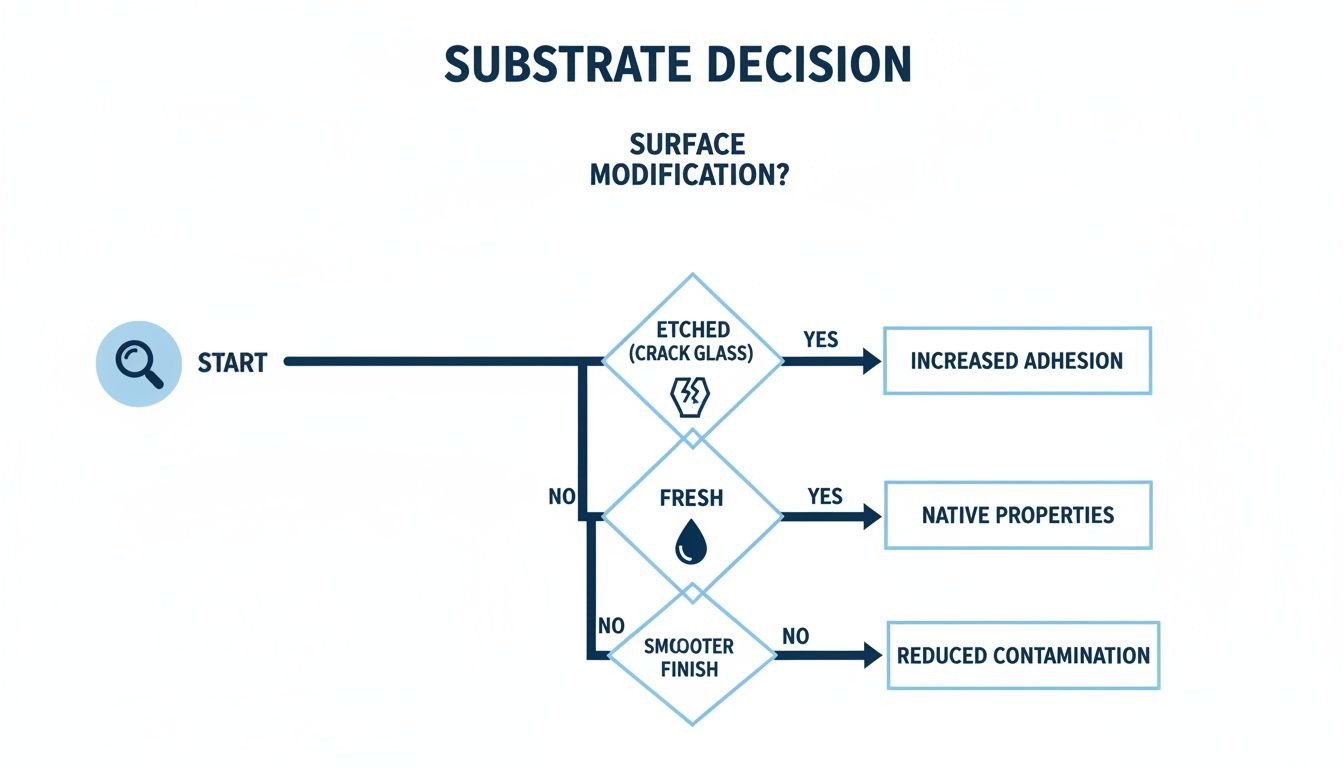
The main takeaway here is simple: assess the stain first. Is it a light, fresh film, or has it been there for a while? Your answer will point you to the right solution.
If you're dealing with newer hard water spots, a simple vinegar solution is your best first move. The acetic acid works to break down the alkaline minerals, making them easy to wipe away. This is our go-to method for light to moderate buildup.
Here’s how we do it:
When vinegar just won’t cut it, it’s time to bring in the baking soda. Baking soda acts as a fantastic mild abrasive, giving you the scrubbing power to lift stubborn mineral stains without scratching the glass.
Here’s how to whip up a batch and use it:
To help you decide which DIY approach is right for you, here’s a quick breakdown.
This table gives you a quick comparison to help choose the right DIY method for your specific hard water problem.
| Method | Best For | Application | Pros | Cons |
|---|---|---|---|---|
| Vinegar Solution | Light, recent mineral deposits and general cleaning. | Spray on, let sit for 5-10 mins, wipe off. | Inexpensive, non-toxic, and effective on fresh stains. | May not be strong enough for old, set-in stains. |
| Baking Soda Paste | Stubborn, thicker mineral buildup that needs scrubbing. | Apply paste, scrub gently, rinse thoroughly. | Provides mild abrasion without scratching glass. | Can be messy and requires a thorough rinse to avoid residue. |
Ultimately, both methods are great starting points for tackling hard water spots. Always remember to test in a small area first to ensure you get the results you want.
Pro Tip: Always test any DIY solution on a small, inconspicuous area first. This simple step ensures the cleaner won't cause unexpected damage or cloudiness on your specific type of glass. For particularly stubborn spots on glass, you might explore an effective DIY fix for water spots from windshields that utilizes common household ingredients.
Whether you're in a hard-water area like Las Vegas or Phoenix, these methods can save you a lot of frustration. If you want to take an even deeper dive, you can learn more about how to clean hard water stains on glass in our detailed guide.
So, you’ve tried the vinegar trick. You mixed up a baking soda paste. And yet, those stubborn white spots are still staring back at you. When your go-to DIY methods just aren't cutting it, it’s time to bring in the pros—the commercial-grade products.
But walking down the cleaning aisle can feel a little overwhelming, with countless bottles all promising miraculous results. The key is knowing what to look for, because choosing the right product is about more than just cleaning. It's about protecting your glass from accidental scratches or damage, a real concern for homeowners in places like Denver and Scottsdale, where hard water is a constant battle.
Not all hard water removers are built the same. They generally fall into a few categories, and matching the product to your problem is the secret to success.
It can be helpful to think about how other products solve similar problems. For instance, looking into what makes the best descaler for tough mineral deposits in coffee machines gives you clues about the kinds of ingredients that are proven to dissolve mineral scale effectively.
The real secret to finding the right cleaner isn't on the front of the bottle—it's on the back. Get in the habit of flipping it over and reading the fine print.
Always look for formulas made specifically for glass that clearly state they are non-abrasive. This is your first line of defense against damage. You'll want to avoid anything with harsh abrasives or aggressive chemicals meant for tougher surfaces like tubs or toilets, as they can easily cause permanent cloudiness or scratches on your windows. If you want a deeper dive, our article on how to pick the right commercial hard water stain remover is a great resource.
Ultimately, it’s all about finding that sweet spot between a product that works and one that’s safe for your glass. The golden rule? Always start with the least aggressive option first. And no matter what you choose, test it on a small, hidden corner of the window before going all-in. That one simple step can save you from a very expensive mistake.

So, you’ve tried the vinegar, scrubbed until your arms ached, and maybe even bought a special cleaner from the store, but those stubborn hard water spots just won’t budge. It’s a frustratingly common problem. When DIY solutions fall short, it’s usually because the mineral buildup is too severe for household products to handle.
After more than 26 years in this business, Professional Window Cleaning has seen it all. There’s no magic wand for this kind of work—just proven methods, specialized tools, and the right expertise. Professional Window Cleaning has been cleaning windows in cities like Phoenix, Las Vegas, Denver, and Scottsdale for over 26 years!
When it comes to professionally removing tough hard water stains, there are only two highly effective methods we use. These methods aren't just about making the glass shiny; they’re about systematically breaking down and removing mineral deposits without damaging the window itself.
Sometimes, the old ways are the best. For many jobs, especially after we’ve treated the glass for hard water stains, nothing delivers a better finish than a classic squeegee in the hands of a pro. It’s a craft that takes thousands of hours to perfect, and the flawless result is impossible to get with paper towels or a cloth.
Here’s where the professional touch makes all the difference:
This traditional approach is a true art form. It’s particularly effective for ground-floor windows or interior glass where that perfect, hand-finished touch is paramount.
The difference between a professional and an amateur with a squeegee is night and day. A pro knows how to 'read' the glass, adjusting their technique for different types of stains and glass conditions to achieve a perfect result every time.
For more challenging jobs—think second-story windows or large commercial buildings—we bring in modern technology. A pure-water system is the second professional method and is often the best weapon against hard water spots, especially for rinsing away stubborn, dissolved minerals.
This advanced system uses a multi-stage filtration process to strip 100% of the dissolved solids out of tap water. The water becomes so pure that it actually acts as a natural cleaning agent.
Here’s how it works its magic:
This technology is incredibly efficient and much safer, as it often eliminates the need for ladders. For homeowners in cities like Phoenix, where the water is notoriously hard, a professional service using a pure-water system can restore windows that seemed permanently stained.
It’s this combination of traditional skill and modern technology that truly sets a professional clean apart.

Winning the battle against stubborn hard water spots is a great feeling. But what if you could avoid the fight altogether? Prevention is always better—and easier—than a cure.
Instead of constantly scrubbing away mineral deposits, you can adopt a few simple habits to keep your windows crystal clear. A little proactive care goes a long way and saves you a ton of work down the road.
One of the biggest, yet most overlooked, culprits of hard water stains is a misdirected sprinkler system. If your sprinklers are dousing your windows every morning, they’re coating the glass in mineral-rich water that dries and builds up, layer after stubborn layer.
Take a few minutes to check your sprinkler heads. A simple adjustment to redirect any spray hitting your house can save you countless hours of future scrubbing. It’s a tiny change that makes a huge difference, especially in areas with very hard water like Denver and Scottsdale.
Here’s another incredibly simple but effective strategy: dry your glass whenever it gets wet. This goes for after a rainstorm, washing your car, or power washing your house.
Allowing water to just sit and evaporate is what leaves those chalky mineral deposits behind. By taking a moment to wipe the glass with a microfiber cloth or a squeegee, you remove the water—and the minerals—before they get a chance to bond to the surface. It’s a small habit that pays off with big dividends in clarity.
The core principle of prevention is simple: don't let water dry on your glass. Whether it's from rain, sprinklers, or washing, removing the water before it evaporates is the most effective way to stop mineral deposits before they start.
For a more robust and long-lasting defense, consider applying a glass sealant or a water-repellent treatment. These products create an invisible, hydrophobic barrier right on the surface of your glass.
Instead of clinging to the window, water simply beads up and rolls right off, taking the dissolved minerals with it. This technology is a game-changer, dramatically reducing the ability of water spots to form. It's a must-have for homes in particularly challenging hard-water areas like Las Vegas.
The demand for solutions to persistent issues like hard water buildup is huge. In fact, the U.S. window cleaning industry alone generated $2.8 billion in revenue in 2023. You can explore more data by reviewing these window cleaning industry statistics. This really highlights why both preventative measures and professional services are so crucial for homeowners.
You’ve tried the vinegar sprays. You’ve scrubbed with every commercial cleaner you could find, but those chalky, stubborn hard water spots just won’t budge. Knowing when to wave the white flag isn’t a sign of defeat—it’s actually a smart move to protect your home's windows.
Sometimes, what you're seeing is no longer just a stain sitting on top of the glass. After months or years of exposure, those mineral deposits start to corrode the glass itself, leading to something we in the business call mineral etching. This is when the minerals have physically damaged the surface, leaving a permanent haze that no amount of elbow grease can fix. At this point, you’re past the point of cleaning; you need professional restoration.
To fix etching, we use specialized polishing compounds and professional-grade machinery to carefully resurface the glass. It’s a delicate process where one wrong move can cause irreversible scratches or distort the view, which is why it's a job best left to the experts.
Beyond just getting the glass clean, the most critical issue is safety. Are the stained windows on the second story? Do you need to get on a tall, wobbly ladder to reach them? Any job involving heights is one for insured professionals who have the right training and equipment.
It's a sobering fact that falls from ladders lead to thousands of serious injuries every year. It’s simply not worth risking your health when a professional team can handle the job securely and efficiently.
For homeowners in places like Phoenix and Denver, dealing with aggressive hard water is just a part of life. This is where a team with a long history of success becomes your best asset.
When you hire an experienced company like Professional Window Cleaning, which has been serving communities for over 26 years, you’re getting more than just clean windows. You’re investing in guaranteed results, protection for your property, and your own peace of mind. Our technicians have seen it all and can accurately diagnose the severity of the damage, choosing the right method—whether it's the use of a squeegee or a pure-water system—to deliver a flawless finish.
When you've exhausted all your options and the stains remain, it’s time to trust the pros. Hiring an expert not only restores your glass but also prevents the costly mistake of permanently damaging your windows by using the wrong tools or techniques.
Don't let stubborn hard water spots take away from the beauty and value of your home. If you're tired of fighting a losing battle, our experienced team is ready to deliver the crystal-clear results you’ve been looking for, both safely and effectively.
If you're ready to see the difference a professional touch can make, contact Professional Window Cleaning today for a free estimate and let us restore the sparkle to your home. https://www.professionalwindowcleaning.com
Read our blog posts regularly and keep learning.