Care and Maintenance
How Long Does Window Cleaning Take
Wondering how long does window cleaning take? Get realistic time estimates for homes, offices, and high-rises, plus the factors that change every job.


You wipe the glass, step back, and the white spots are still there. Maybe they faded for a minute, then came right back as the surface dried. That’s the part that frustrates homeowners and property managers most. These marks don’t behave like ordinary dirt because they aren’t ordinary dirt.
Water stains on glass come from minerals left behind after water evaporates. In the Southwest, that problem is more aggressive than many people realize. If you own a home, manage a property, or maintain storefront glass in Phoenix, Las Vegas, or Denver, you’re dealing with mineral-heavy water that can turn routine spotting into a recurring maintenance issue.
After more than 26 years in professional window cleaning, one pattern keeps showing up. Most DIY methods fail not because people are careless, but because they misjudge the stain. Some spots are fresh deposits. Others have already started etching the glass. Those are two very different problems, and they don’t respond to the same treatment.
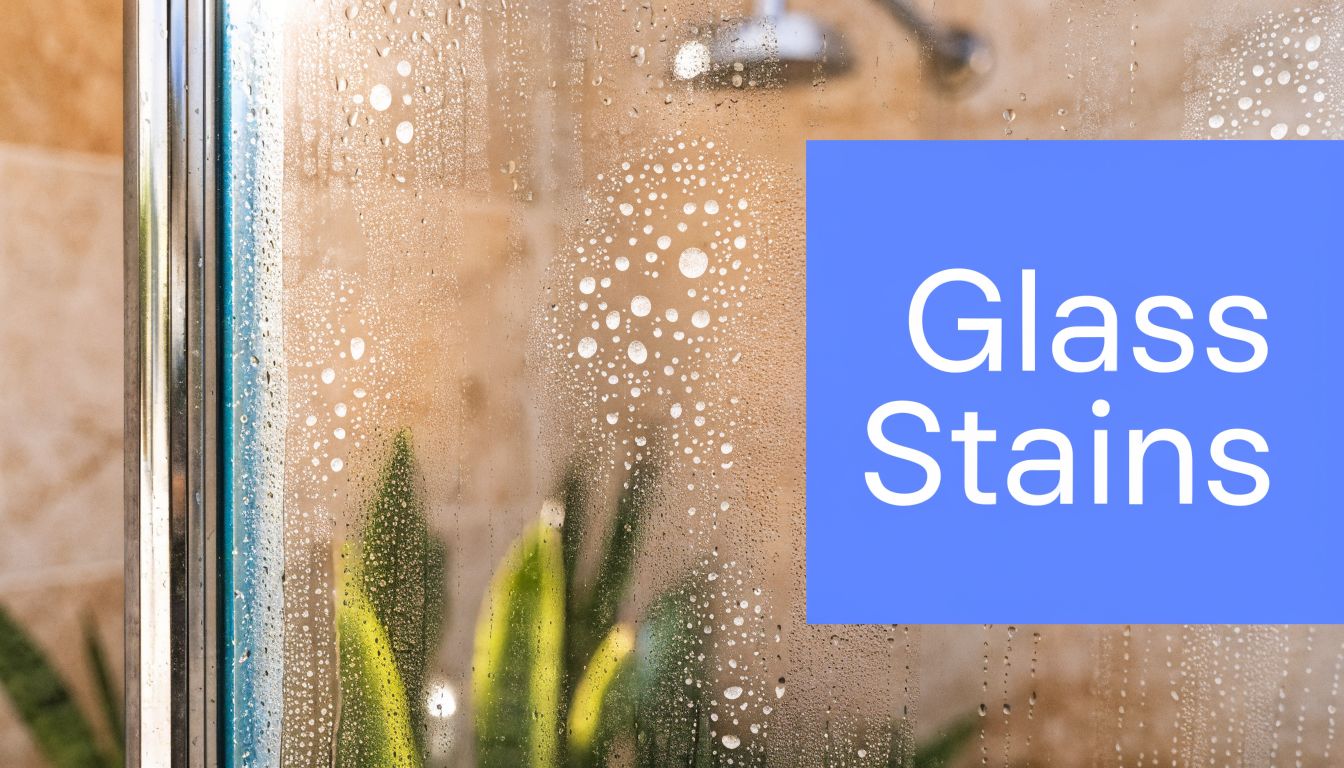
Those chalky dots and cloudy patches are usually calcium and magnesium deposits. Water lands on the glass, evaporates, and leaves the minerals behind. If that keeps happening, sprinklers, shower spray, runoff, or repeated rinsing can build layer after layer until the glass looks dull even when it’s clean.
This issue is more severe in the Southwest because the water itself is harder. USGS data shows Arizona averages 150-500 mg/L calcium carbonate hardness, Nevada (Las Vegas) 300-600 mg/L, and Colorado (Denver) 100-400 mg/L, compared with a US average of 60-120 mg/L, which helps explain why DIY methods that work in softer-water regions often fall short here, as summarized in this Southwest hard water overview.
That matters in practice. A shower door in one market might clean up with basic vinegar and a cloth. A window facing irrigation overspray in Arizona or Nevada may need stronger chemistry, better technique, or restoration work because the mineral load is heavier and the deposits set faster.
Practical rule: If your windows sit near sprinklers, runoff paths, or pool splash zones, you’re not fighting occasional spots. You’re fighting repeated mineral exposure.
A standard glass cleaner may remove surface grime, fingerprints, and dust. It usually won’t dissolve established mineral deposits well enough to restore clarity. That’s why people clean and still see haze.
The other problem is confusion between dirt and damage. Fresh deposits sit on the surface. Older staining can change the surface itself. That’s when homeowners start scrubbing harder, and harder scrubbing often creates a second problem by scratching glass or damaging surrounding finishes.
Glass railings are a good example because they show every deposit and every streak. If your staining issue is happening on interior stair systems or decorative panels, this expert guide for homeowners on glass railings is useful for understanding how visible glass features change the cleaning and maintenance conversation.
Before you try to remove water stains on glass, identify what level of staining you have. That single step saves time and prevents a lot of bad DIY decisions.
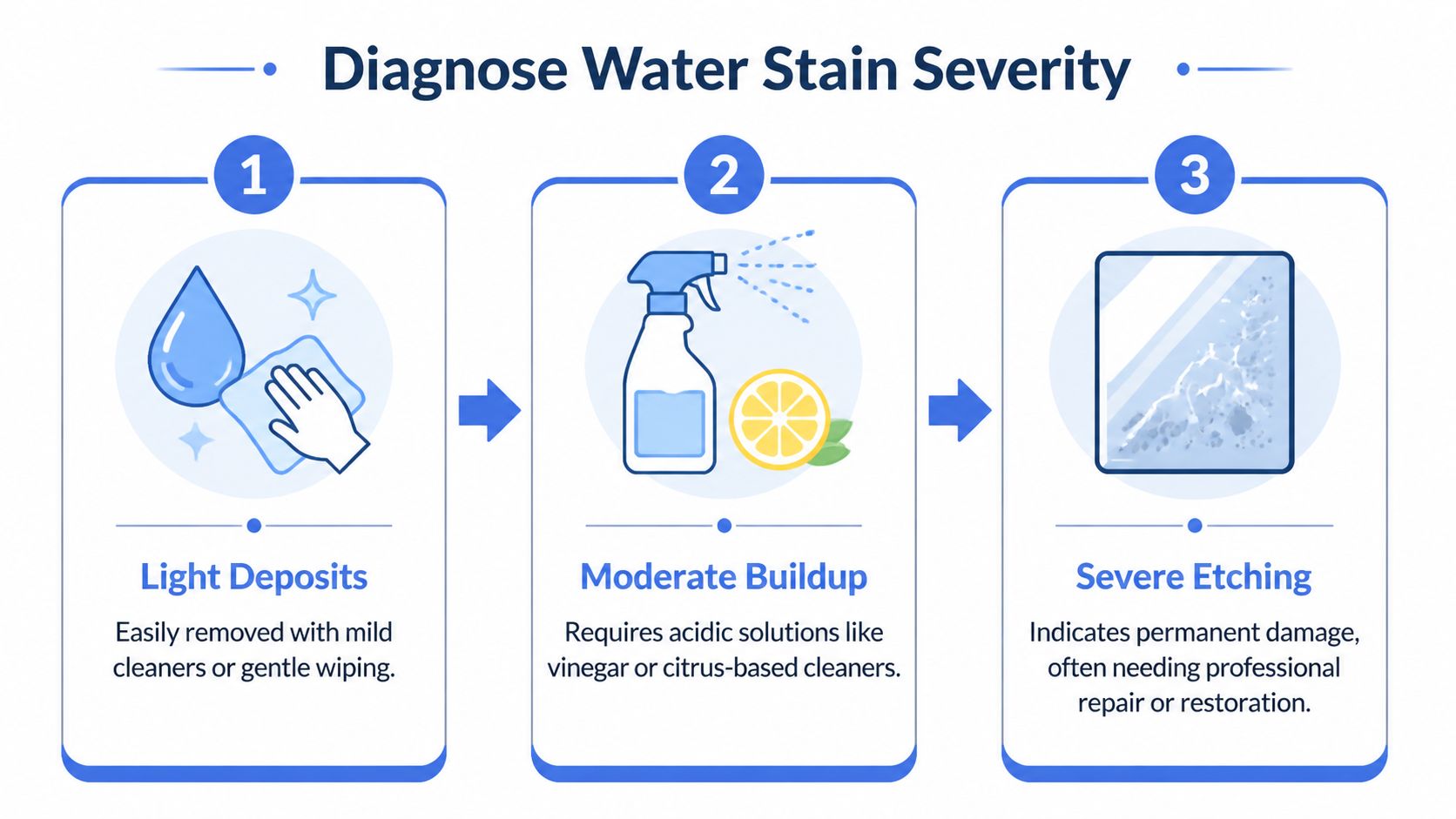
Hard water stains can be classified into four levels of severity. Level 1 stains disappear when wet. Level 2 stains respond to a vinegar test. Level 3 requires commercial acid cleaners. Level 4 indicates permanent etching that needs mechanical polishing with cerium oxide, according to this glass water spot severity guide.
That framework is practical because it matches treatment to the actual condition of the glass.
| Level | What you’ll notice | What it usually means |
|---|---|---|
| Level 1 | Spots vanish when the glass is wet | Light mineral deposits |
| Level 2 | Spots improve with vinegar | Surface buildup that still responds to mild acid |
| Level 3 | Vinegar doesn’t do enough | Bonded deposits or early etching |
| Level 4 | Damage stays visible wet or dry | Permanent etching |
The first test is the wet test. Splash water on the panel or use a damp cloth. If the spots disappear while wet and reappear as the glass dries, you’re usually looking at lighter deposits.
The second is the vinegar test. Apply a small amount of vinegar solution to a limited area and let it sit briefly. If the stain softens or fades, it’s likely still in the removable range.
If a spot looks the same when wet, dry, and after mild acid contact, stop treating it like a cleaning problem. It may already be a restoration problem.
Many homeowners assume every visible spot is removable if they use enough pressure. That’s the mistake. A Level 1 or Level 2 stain often responds well to patient cleaning. A Level 4 defect won’t scrub out because the glass surface has changed.
Once you know the difference, your next move becomes much clearer.
If your glass falls into Level 1 or Level 2, DIY treatment often makes sense. The key is to work gently, test first, and use chemistry before force.
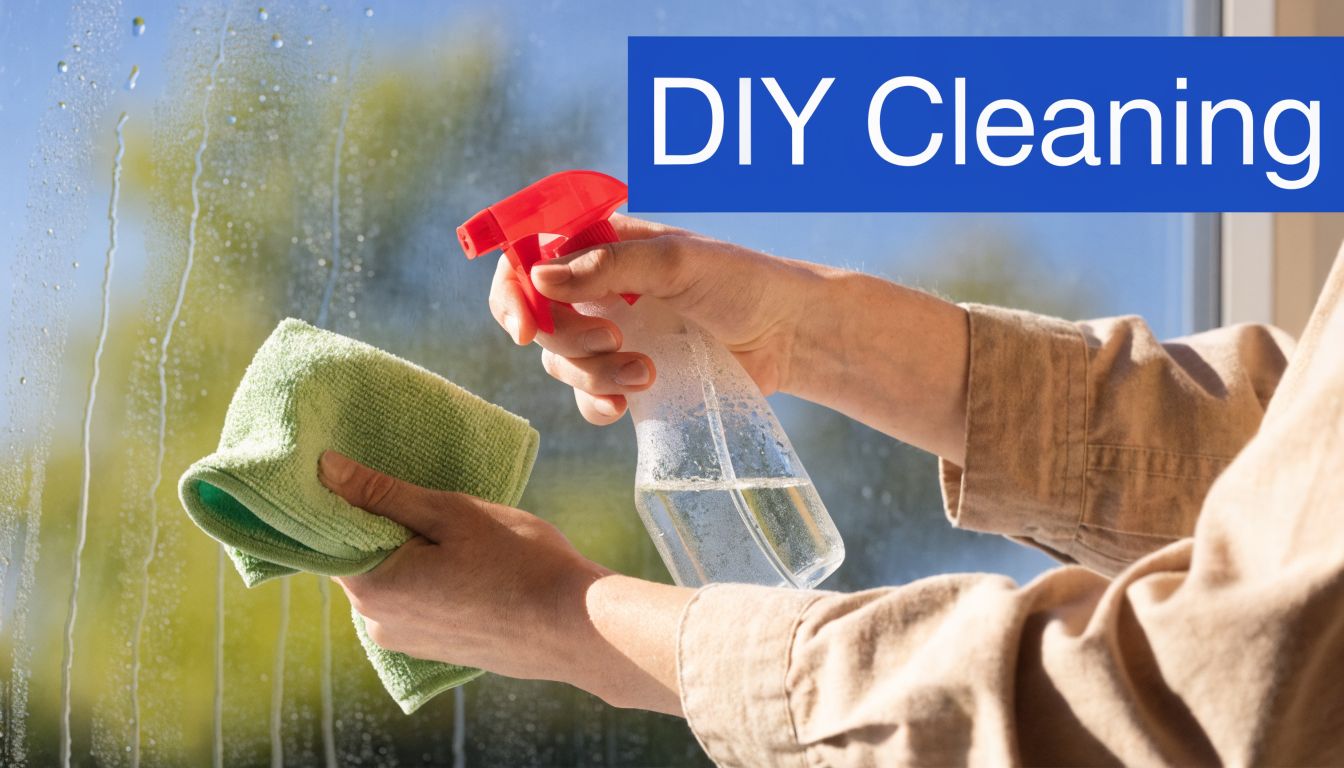
Use a soft microfiber towel, white vinegar, water, and a non-scratch applicator. For many light stains, a vinegar-and-water solution is the right starting point because mild acid helps dissolve the mineral layer.
A practical sequence looks like this:
For a deeper walkthrough, this hard water spot cleaner guide is a useful companion.
Some moderate stains need more contact and a little more mechanical help. A baking soda paste can add mild cleaning action without the aggression of harsh abrasives. Lemon-based cleaners can also help on mineral film if the glass is still in the removable range.
Use care around frames, hardware, tinted surfaces, and nearby stone. The glass may be fine with a cleaner that damages something beside it. Gloves and ventilation are smart, especially in bathrooms and enclosed areas.
Here’s a quick DIY comparison:
| Method | Best for | Main caution |
|---|---|---|
| Vinegar solution | Light spotting and fresh deposits | Don’t let residue dry on adjacent finishes |
| Baking soda paste | Moderate buildup with some texture | Keep pressure light |
| Microfiber detailing | Final wipe and inspection | Replace dirty cloths often |
| Store-bought specialty remover | Tougher Level 2 issues | Spot test first |
A short demonstration can help if you want to see the process in motion.
DIY tends to break down for three reasons.
Mild acid does the dissolving. Your cloth only helps remove what the solution has loosened.
One more practical note from the trade. Surface cleaning technique matters as much as the product. If you flood the glass with tap water and let it air-dry, you can leave a fresh layer of minerals behind. That’s one reason professional results often look different even when the chemistry sounds familiar.
In Phoenix, Las Vegas, and parts of Colorado, I often see glass that looks dirty even after a homeowner has already scrubbed it twice. The problem is not effort. It is mineral load, heat, and dry air. In Southwest conditions, water dries fast, leaves heavier deposits, and gives mild DIY methods less time to break those deposits down.
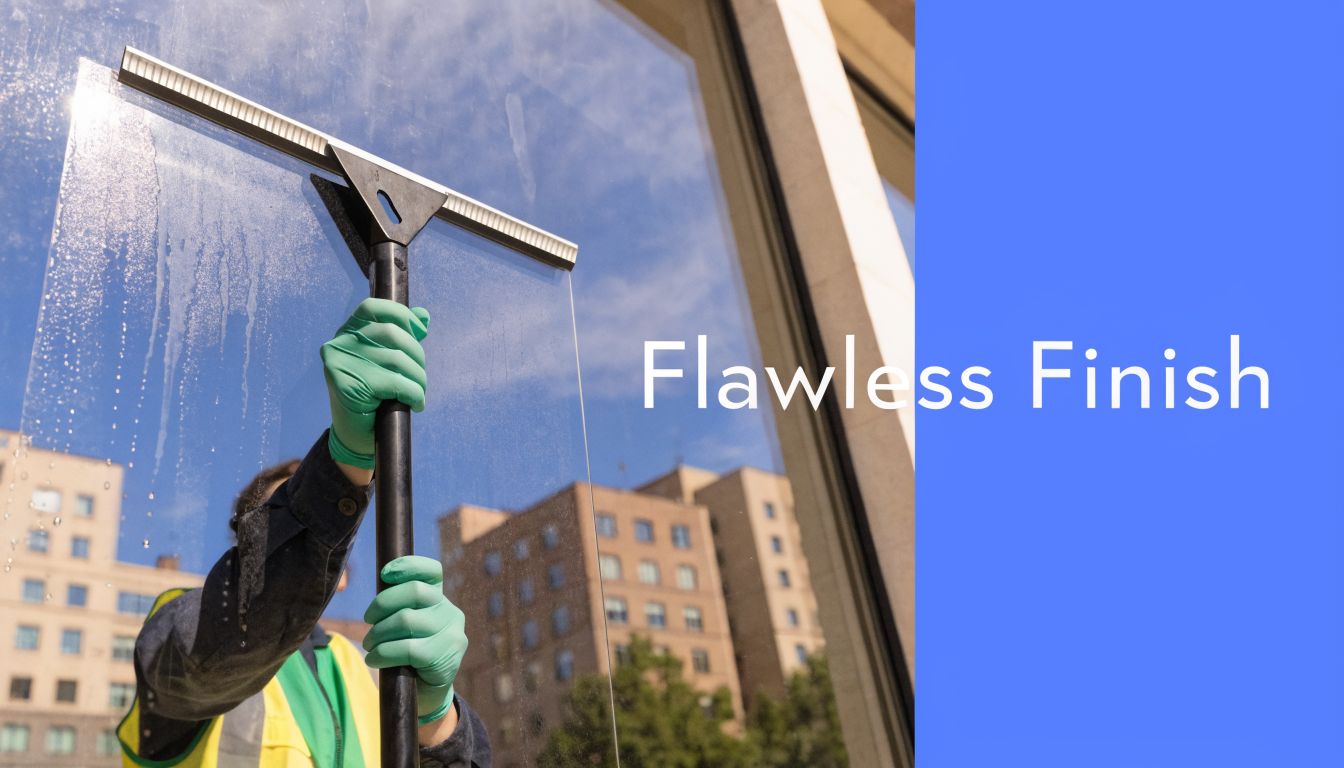
Professional work starts with matching the method to the glass and the stain. On one job, that means traditional squeegee work with controlled solution and careful edge detailing. On another, it means deionized or reverse-osmosis pure water, specialty stain removers, and restoration pads used with a light hand. The goal is simple. Remove deposits without scratching the surface or leaving fresh minerals behind.
A professional squeegee clears solution off the glass cleanly instead of spreading residue from side to side. On interior glass, storefronts, and first-floor residential windows, it still gives the best control over the finish.
What matters is the small stuff. Rubber condition, blade angle, overlap, frame wipe, and towel management all affect the result. In hard-water areas, that control matters even more because any missed line of solution can dry into a new spot before you finish the pane.
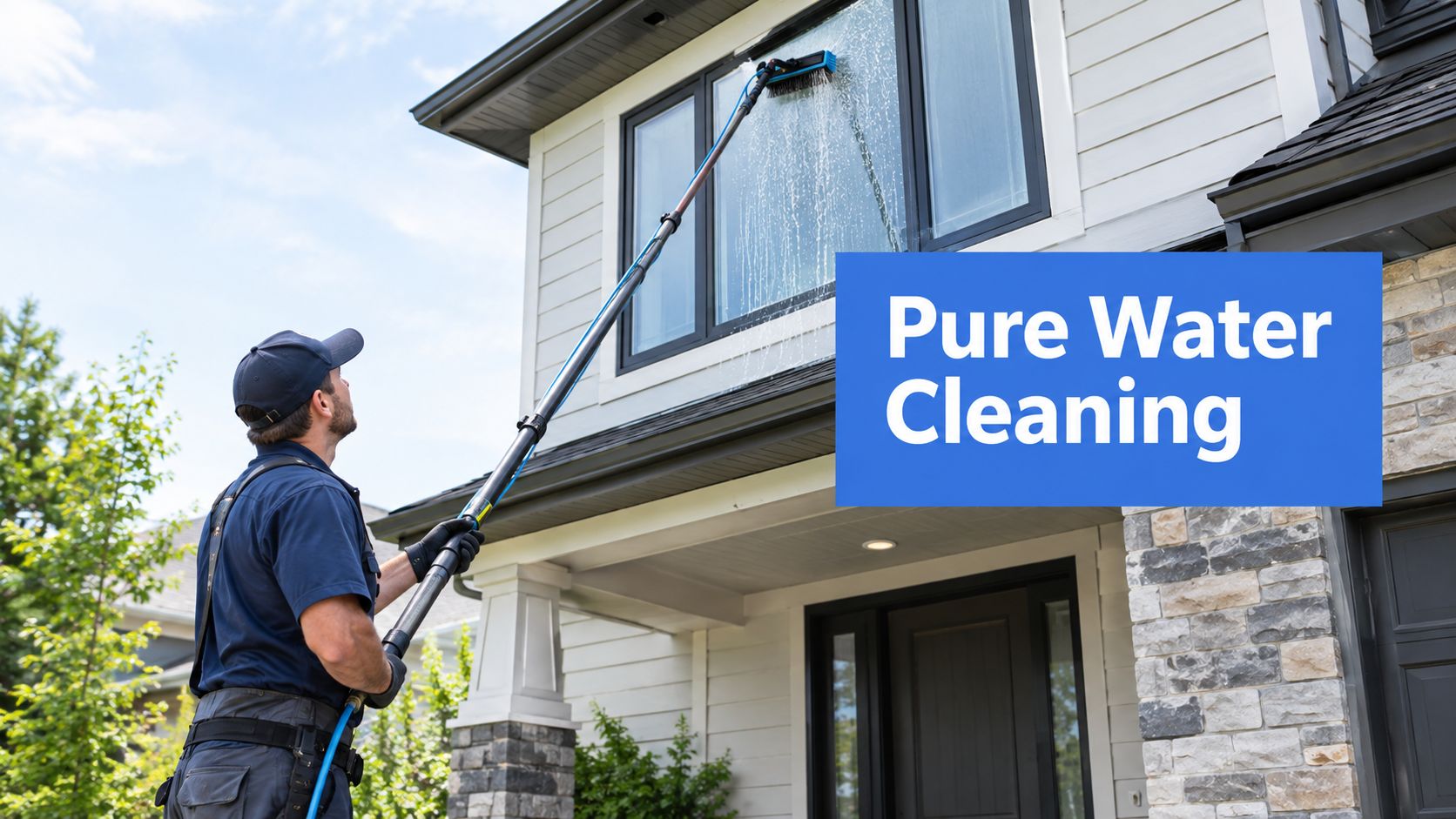
Pure-water cleaning removes minerals from the rinse water before it touches the glass. That changes the result on exterior windows because the water can dry without leaving the chalky spotting that tap water often leaves behind.
This method earns its keep on larger homes, multi-story buildings, and exterior maintenance routes. It also reduces ladder use in many situations, which lowers risk and improves consistency on upper glass. In the Southwest, pure water only works well when the filtration is maintained properly and the operator understands when the stain is removable buildup and when it has already etched the glass.
Shower glass, office glass, and exterior residential windows do not fail in the same way. Sprinkler overspray in Arizona can bake minerals onto lower panes. Nevada sun can dry solution too fast if the timing is wrong. Colorado properties often deal with a mix of irrigation spotting, snowmelt residue, and hard municipal water.
That is why professional service is not just "stronger cleaner." It is diagnosis, method choice, and restraint. If the stain has crossed from deposit into etching, aggressive scrubbing can make the glass worse. If your concern extends to vehicle glass, this pro's guide to car water spots explains how mineral deposits behave differently on automotive surfaces.
The finish people notice comes from clean water, controlled technique, and knowing when restoration is possible and when replacement is the more honest recommendation.
The cheapest stain to remove is the one that never hardens in the first place. Prevention works because mineral deposits are easier to interrupt early than to strip away later.
The most economical approach is prevention. Daily squeegee use offers high effectiveness at minimal cost, weekly vinegar applications disrupt mineral bonding, and nanotechnology glass coatings can help prevent minerals from adhering to the surface, as explained in this hard water stain prevention resource.
That advice holds up in the field. On shower glass, a quick pass with a squeegee after use keeps water from drying in place. On exterior glass, correcting sprinkler overspray often does more than changing cleaners.
For homeowners, the most effective habits are usually simple:
For commercial properties and multi-unit buildings, prevention is more about systems than habits:
Prevention isn’t glamorous. It’s the part that keeps restoration work from becoming replacement work.
A water softener can reduce minerals at the source, but it’s a bigger investment. A squeegee and routine wipe-down take discipline, but they’re inexpensive. Protective coatings add another layer of defense, yet they still need maintenance and realistic expectations.
For managers of properties in Scottsdale and similar hard-water markets, this usually comes down to one decision. Pay a little attention often, or pay a lot of attention later.
Some glass should not be a weekend experiment. If you’ve already tried mild treatment and the spots still look etched, cloudy, or rough, it’s time to stop pushing DIY further.
Call a pro when any of these apply:
There’s also a long-term reason not to wait. Untreated glass in hard water environments can lose 5% to 10% of its transparency per year as minerals are absorbed into the glass’s porous structure, causing permanent etching, according to this report on hard water damage to glass.
Professional service isn’t just stronger product. It’s diagnosis, controlled technique, safe access, and restoration judgment. Severe stains may call for specialized acid-based treatment, careful use of restoration tools, or cerium oxide polishing when the surface has already moved beyond basic cleaning.
That matters on homes, storefronts, high-rise glass, medical offices, car dealerships, and any building where appearance and visibility count. It also matters when the cost of replacing damaged glass is far worse than the cost of evaluating it correctly the first time.
If you want a deeper look at what professional treatment involves, this window water stain removal guide lays out the process in more detail.
Once glass is etched, brute force won’t restore it. The work shifts from cleaning to correction, and that’s where experience starts to matter a lot.
After 26-plus years in the trade, the pattern is simple. Light stains respond to patient, careful cleaning. Heavy Southwest mineral exposure often needs more than household methods. And when the glass has already changed, the smartest move is to protect what’s left instead of gambling with it.
If your windows, shower glass, or commercial glass keep spotting no matter what you try, Professional Window Cleaning can assess the severity, identify whether you’re dealing with removable deposits or permanent etching, and recommend the right next step for residential, commercial, and high-rise properties in Arizona, Colorado, and Nevada.
Read our blog posts regularly and keep learning.