Care and Maintenance
How to Prevent Hard Water Stains on Windows
Learn how to prevent hard water stains on windows with proven tips for homeowners and property managers in Las Vegas, Phoenix, Denver, and beyond.


Dirty windows usually sneak up on people. One day the morning light feels dull, the view looks hazy, and every sprinkler mark or dust streak suddenly becomes impossible to ignore. That’s often when the search starts: professional window washing near me.
Clients aren’t just looking for someone with a bucket and a ladder. They want clean glass, clear pricing, and a crew they can trust around their home, storefront, office, or multi-story property. They also want to know what separates a real professional from the cheapest bid that showed up first.
A homeowner usually notices the problem at the worst time. Morning sun hits the living room glass, and every spot, streak, and screen shadow shows up at once. A property manager gets the same moment from the parking lot, where dull exterior glass can make an otherwise well-kept building look neglected.
Clean windows change that quickly. They improve curb appeal, bring more natural light indoors, and make a property feel maintained. For commercial buildings, they also shape first impressions before a customer, tenant, or visitor ever opens the door.

The trade itself is larger than many customers expect. Window cleaning industry statistics from Window Genie show a sizable national workforce and steady growth in demand. That lines up with what I have seen over 26 years. Glass is one of the first things people notice, and one of the fastest ways to improve the look of a home or commercial property.
The buying decision is not whether to hire a pro. It is how to avoid hiring the wrong one.
A low quote can leave out screens, tracks, hard water treatment, ladder work, interior glass, or proper insurance coverage. A better company explains what is included, what access issues may affect the job, and what result is realistic if the glass has mineral staining, failed seals, or construction debris. That is the difference between a cheap visit and professional service.
Communication matters too. Resources like My AI Front Desk window cleaning services give a useful look at how service companies handle calls, booking, and follow-up. In practice, organized communication usually points to organized field work.
Local conditions also change what good window cleaning looks like. Desert dust, hard water, pollen, and irrigation overspray all affect the method, frequency, and labor involved. A smart buyer asks about those factors before comparing prices.
Clean windows improve more than the view. They make the whole property look cared for.
A homeowner looking at a few dusty second-story windows is shopping for a very different service than a property manager responsible for a retail center or a 20-story tower. The job title sounds the same. The work is not.
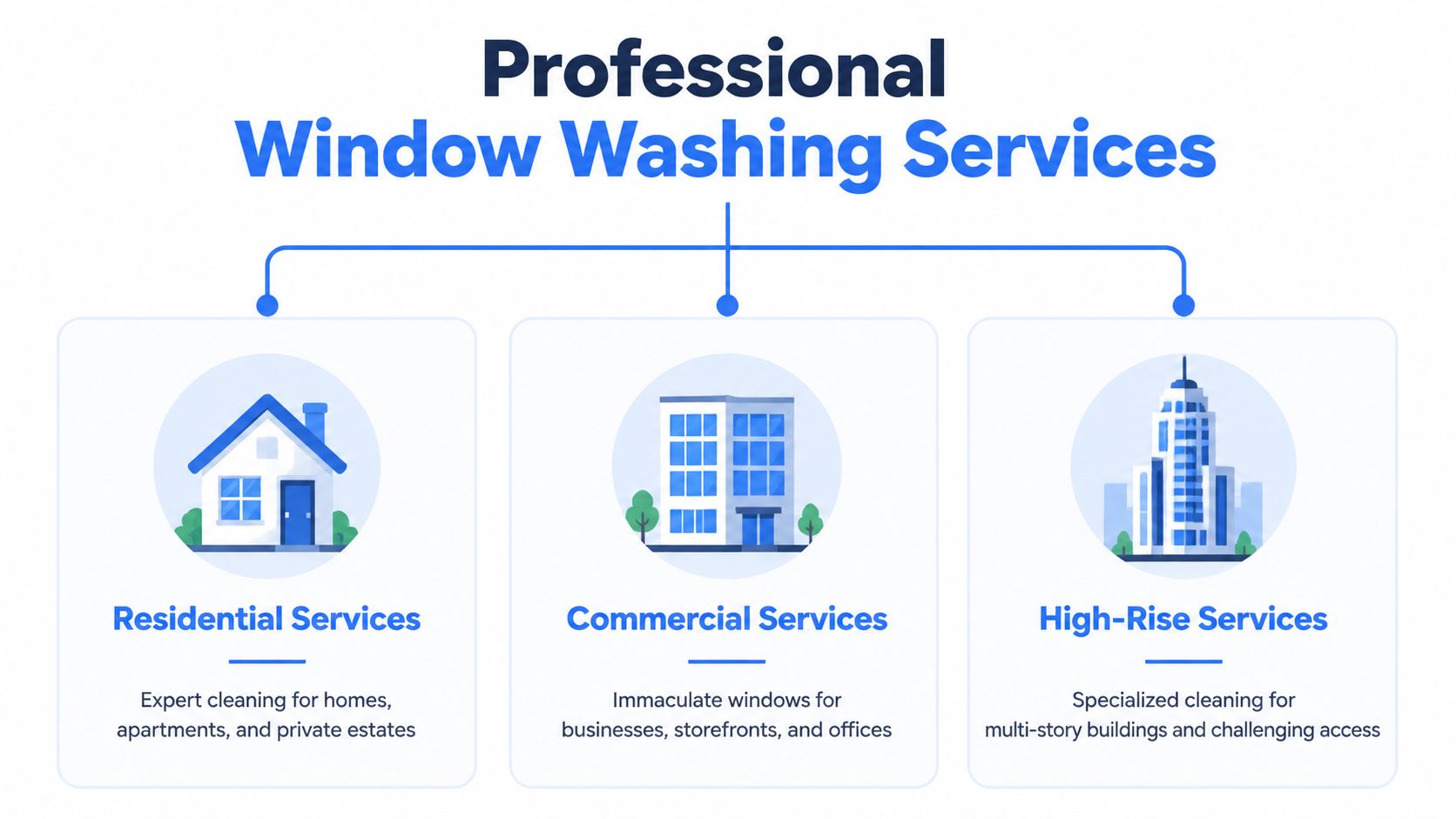
Residential window cleaning is close-detail work. Homeowners usually judge the result as a whole, not just by whether the glass is clear. They notice dusty screens, debris in the tracks, cobwebs in the corners, and the streaks that only show up once the sun hits the pane at an angle.
In desert markets, outside glass often picks up dust, pollen, and irrigation overspray. Inside glass tells a different story. Fingerprints, pet nose marks, cooking residue, and buildup around locks are common. Good residential service also protects floors, works carefully around furniture, and avoids leaving wet sills or dirty runoff behind.
That is why a smart buyer asks what is included before comparing prices. One company may quote glass only. Another may include screens, tracks, and sill detailing.
Commercial work is driven by appearance, access, and repeatability. Entry doors, storefront glass, lobby panels, and exterior lines all affect how the property is perceived by customers, tenants, and staff. Clean glass supports a professional appearance, but consistency is what keeps a site from looking neglected between visits.
Scheduling matters just as much as cleaning skill. Some properties need monthly exterior service. Others need weekly touch-ups on doors and front glass, with full interior and exterior cleaning on a separate cycle. Property managers should also ask whether the crew works around business hours, how they handle foot traffic, and whether the scope changes for hard-to-reach panes. If you are comparing vendors, it helps to review what is typically included in commercial window cleaning services so you can compare bids on the same scope.
High-rise window cleaning is controlled by access and safety planning first, cleaning second. Building height matters, but the primary variables are roof access, anchor points, swing stage or rope-descent systems, glass layout, wind exposure, and local requirements. A mid-rise with poor access can be more complicated than a taller building with a clean setup.
Buyers need to ask better questions. Ask how the crew reaches the glass. Ask what fall-protection system they use. Ask whether the company carries the right insurance for suspended work and whether they can document it. Office towers, hotels, condo buildings, and mixed-use properties all come with different risks, and the right contractor should explain those differences clearly.
The best fit starts with matching the service type to the property, then checking whether the company’s methods, scheduling, and safety standards match that level of work.
There are only two professional methods used in modern window cleaning. A squeegee method and a pure-water system. That’s it.
Anyone can wipe glass with paper towels or a rag. That doesn’t make it professional work. Real results come from using the right method for the right surface, access point, and condition of the glass.

This is the traditional craft side of the trade. It’s still the standard for interior glass and for exterior windows that need close detailing by hand. The basic sequence is mopping the glass with cleaning solution, pulling the water off with a squeegee, and finishing edges, frames, and sills with detail cloths.
According to Precision Power Wash’s explanation of window cleaning methods, that 3-step process of mopping, squeegeeing at a 45° angle, and detailing cuts cleaning time by 40% compared to cloth wiping and leaves residue levels below 0.01g/m². That matters because cloth wiping often just moves dirty water around. A properly used squeegee removes it cleanly.
For homeowners, the easiest comparison is hand-detailing a car. A trained cleaner controls pressure, angle, and blade path so the glass dries clear instead of streaking.
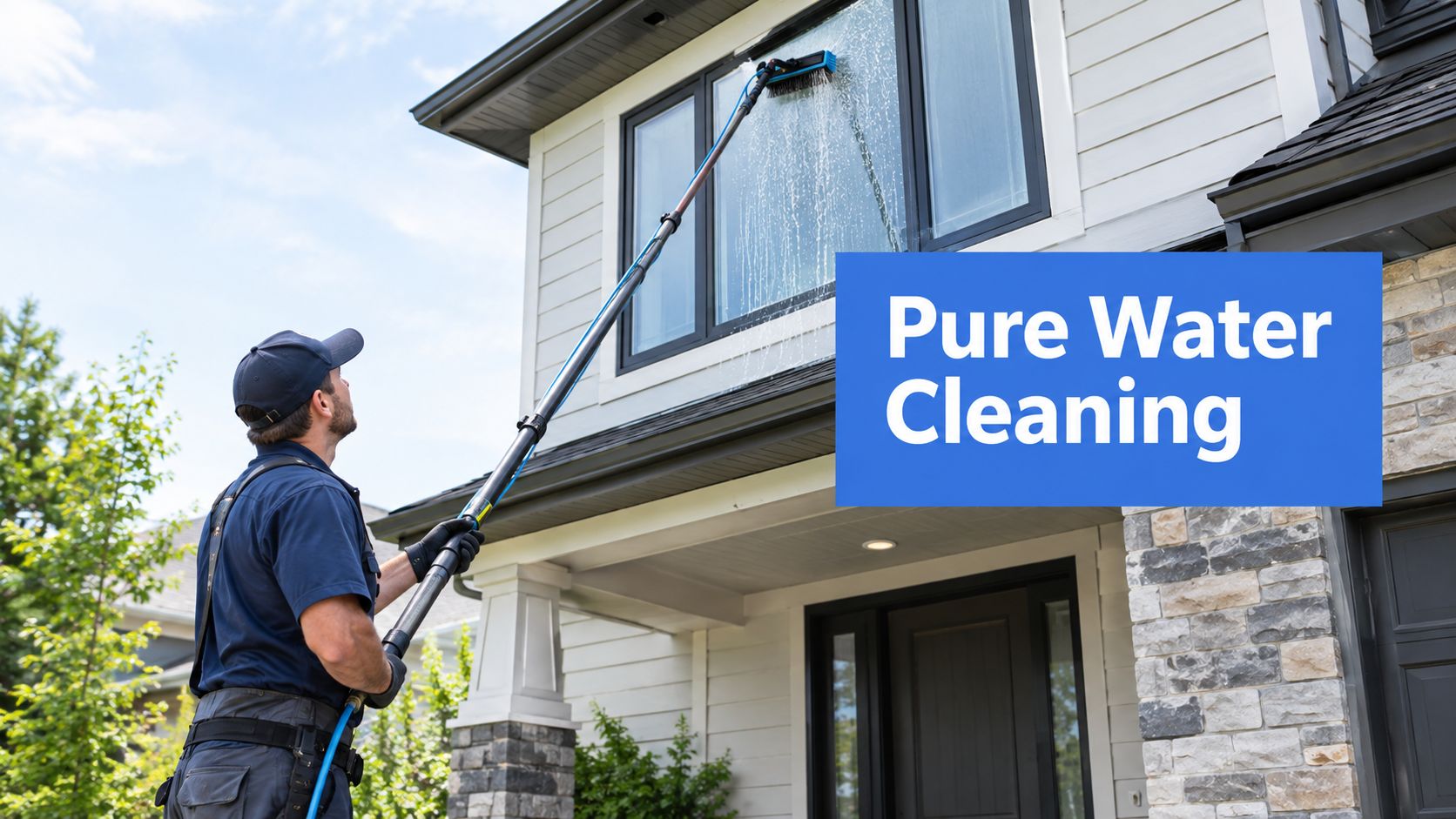
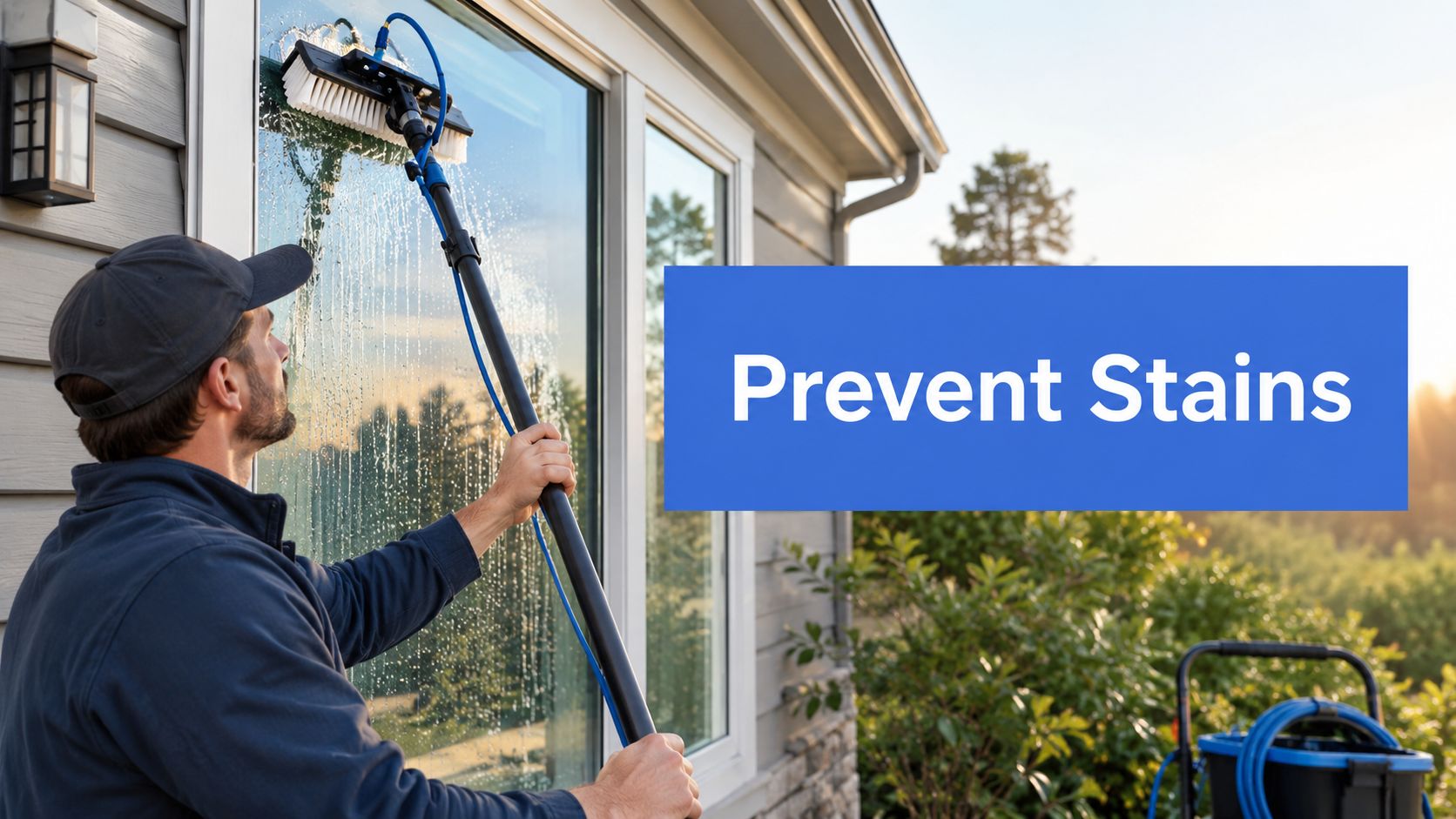
Pure-water cleaning is the second professional method. It uses purified water through a water-fed pole system to clean exterior windows from the ground. Because the water is purified, it dries spot-free without leaving mineral residue behind.
This method is especially useful on exterior glass that’s hard to reach safely with ladders. It also works well on many larger residential properties and commercial buildings where consistency and safe access matter more than hand-detailing every exterior pane.
Here’s a quick visual of pro technique in action:
Neither method is “better” in every situation. The right answer depends on the job.
Practical rule: If a company can’t clearly explain when it uses a squeegee and when it uses pure water, it’s worth asking more questions before you book.
If you want a deeper look at technique, tools, and what leaves glass clear, this guide on the best way to clean windows is a useful starting point.
A good service visit feels organized from the start. The crew arrives, confirms the scope of work, and walks the property with you if needed. On residential jobs, that usually means identifying which windows are included, checking access, and noting any existing issues like failed seals, scratched glass, or hard water staining.
Inside the home, the first priority is protection and respect for the space. Cleaners should work carefully around flooring, furnishings, and window treatments. Shoes, tools, towels, and ladders all need to be handled with intention, not dragged carelessly from room to room.
On a typical job, the flow is straightforward:
Arrival and review
The crew confirms what’s being cleaned and answers any last-minute questions.
Set up
Tools are staged where they’re needed, and interior areas are approached carefully to avoid mess.
Cleaning
Glass is cleaned using the method that fits the window and access. Frames, sills, and edges are addressed as part of the finish.
Final check
The cleaner inspects for missed spots, streaks, or drips before calling the job complete.
For commercial sites, that same structure applies, but timing matters more. Work may happen before opening hours, around customer traffic, or in phases so business operations keep moving.
A professional visit shouldn’t feel chaotic. You should see a clear process, clean tools, and a crew that knows where it’s going next without constant direction.
You should also get straightforward communication if the team finds something that cleaning won’t fix. Mineral etching, seal failure, fabricating debris, and existing scratches can all affect the appearance of glass even after a careful cleaning.
Good cleaners don’t promise magic. They explain the difference between removable dirt and permanent glass damage.
If you’re not home for an exterior-only appointment, many companies can still complete the work as scheduled. Interior service usually requires access unless arrangements have been made in advance.
Window cleaning prices vary because windows vary. Size, quantity, access, condition, and scope all affect labor time. That’s why one property can be a quick exterior touch-up while another needs a longer, more detailed appointment.
A useful benchmark comes from Thumbtack’s window cleaning pricing overview, which notes that nationally, window cleaning averages $120 to $170. The same source shows $8 to $15 per residential first-story pane in some cases, while commercial inside-and-out cleaning may run $4 to $5 per window. Those figures are a starting point, not a universal price list.
Here’s the simplest way to think about pricing:
| Cost Factor | Description | Impact on Price |
|---|---|---|
| Number of windows | More panes mean more labor and more detail work | Higher count usually increases total price |
| Height and access | Ground-floor glass is easier than second-story or difficult-to-reach windows | Harder access raises labor time |
| Interior and exterior scope | Exterior-only work takes less time than cleaning both sides | Full service costs more than exterior-only |
| Screens and tracks | Screens, sills, and tracks add labor beyond the glass itself | Extra detail work increases the quote |
| Condition of the glass | Dust is simple. Hard water stains, paint specks, and heavy buildup take more effort | Problem glass often requires added labor |
| Property type | Homes, storefronts, offices, and high-rise buildings all require different setups | Complexity affects scheduling and cost |
There isn’t one perfect interval for every property. A home near active landscaping or frequent dust may need attention more often than a shaded property with less exposure. A storefront with constant foot traffic usually benefits from a more regular schedule than a private residence.
For practical planning, use this approach:
If you’re comparing bids, ask what’s included at the quoted price, what counts as extra work, and whether recurring service changes the visit scope. A low number without clear details often becomes an expensive surprise later.
A homeowner usually notices the difference after the crew leaves. The glass may look decent from the driveway, but inside you see skipped edges, drip marks on the sill, bent screens, or ladder scuffs on painted walls. By then, the low quote has already cost time, frustration, and a second appointment with someone else.
That is why the hiring process matters as much as the cleaning itself. A reputable company should explain how they will access the glass, what is included, what can change the price, and what protections are in place if something goes wrong. If those basics are hard to get before the job, service usually gets harder after you book.
For taller buildings and difficult access work, safety credentials matter even more. Squee-G-Clean’s discussion of high-rise window cleaning concerns explains why property managers should verify training and safety standards such as IWCA or SPRAT when the job calls for rope work, suspended access, or other specialized methods.

Good companies answer direct questions without getting defensive. Ask these before you approve the job:
What insurance do you carry?
Ask for proof of general liability coverage and workers' compensation, not just a verbal yes. For commercial and high-access work, ask for the certificate.
Who will be on site, and are they trained for this type of property?
Ground-floor residential work, multi-story homes, storefronts, and high-rise buildings all require different skill sets and equipment.
What is included in the quoted scope?
Get clear wording on interior glass, exterior glass, screens, tracks, sills, French panes, skylights, and mineral stain treatment.
How do you handle problem glass or access issues?
An experienced estimator should mention things like hard water, paint overspray, sun-baked debris, fragile screens, or restricted access without having to be prompted.
What happens if weather or site conditions change the plan?
Clear communication here usually signals a well-run company.
After 26 years in this trade, I can say judgment is the primary test. Almost anyone can clean easy glass on a mild day. The difference shows up with oxidized frames, cut-up panes, older seals, construction debris, or windows set over tile, planters, and steep rooflines.
Good companies slow down where the risk is. They know when a stain may improve with restoration and when it is etched into the glass. They know when a ladder should not be placed on decorative stone or uneven pavers. They know that rushing around a property creates callbacks.
Reviews help, but read them with some care. Look for comments about punctuality, respect for the home, follow-through, and whether the final invoice matched the estimate. Those details tell you more than a page full of vague praise.
The office side usually reflects the field side. If calls are returned late, estimates are unclear, and paperwork is missing, the job often feels the same way.
Property owners who want to understand why some service companies stay organized while others stay inconsistent may find this article on marketing strategies for cleaning companies useful. It gives a practical look at the systems and habits that often separate stable operators from crews that only chase the next job.
Ask for proof, not promises. Insurance certificates, written scope, recent reviews, and a clear arrival plan are better indicators than a cheap number given over the phone.
One practical example is Professional Window Cleaning, a company that has operated since 1999 across Arizona, Colorado, and Nevada for residential, commercial, and high-rise window cleaning.
A homeowner in Phoenix can have windows cleaned, turn on the sprinklers that night, and see fresh mineral spots by the next afternoon. A property manager in Denver may deal with a different pattern entirely, clean glass in spring can pick up pollen, windblown grit, and weather residue in a short stretch.
Arizona, Colorado, and Nevada do not foul glass the same way, so a smart buyer should expect the cleaning plan to change with the property and the climate. That matters when you compare estimates. A low quote may cover basic dust removal but leave out stain treatment, screen washing, or the extra time needed to work around sun-baked deposits.
In Arizona and Nevada, hard water is the issue that gets underestimated most often. A1A Window Cleaning’s service overview describes the kind of mineral-heavy conditions that make sprinkler spotting and runoff stains difficult to remove with ordinary soap alone. On these jobs, the key question is not whether the glass will be washed. It is whether the company knows the difference between removable mineral buildup and permanent etching.
Across desert properties, the usual combination is mineral spotting, dust, and fast exterior buildup. Glass can look fine early in the day, then show every spot once the sun hits it directly. That is why experienced cleaners inspect from more than one angle before calling the job finished.
Early treatment usually saves money. Light deposits often respond well to proper restoration methods. Stains that sit through repeated heat cycles can bond more tightly to the glass, and some eventually leave etching that cleaning alone will not reverse.
There is also a practical prevention step many homeowners miss. Check sprinkler heads, overspray, and runoff paths. If irrigation keeps hitting the same panes, even excellent cleaning becomes a shorter-term fix.
Colorado windows usually tell a different story. Pollen, windblown debris, insect residue, and rapid weather changes create a film that can build slowly and become obvious all at once, especially in spring and fall.
Mountain-adjacent properties add another wrinkle. Exposure can change from one side of the building to the other, so one elevation may need more frequent exterior service than the rest. That is normal. It does not always mean the last cleaning was done poorly.
The right method has to match the residue on the glass. Loose dust and seasonal grime may clean up quickly. Mineral staining and baked-on residue need more time, different tools, and careful judgment. That is one of the clearest signs of a quality provider. They explain what can be cleaned, what may need restoration, and what damage is already in the glass before the work starts.
Usually, no. Rain by itself doesn’t make clean glass dirty. Dirt, dust, pollen, and residue on the glass are what create the muddy look. If the window was cleaned properly, normal rain often dries without causing major spotting.
Sometimes yes, sometimes only partially. If the stain is a surface deposit, professional treatment can often remove it. If minerals have etched the glass over time, cleaning may improve the appearance but won’t always restore a like-new finish.
For exterior-only cleaning, not always. Many customers schedule service while they’re away, as long as access has been arranged. Interior work usually requires someone to provide entry unless a different plan has been confirmed ahead of time.
Look at what’s missing. Very low bids often leave out screens, tracks, interior panes, difficult access, or stain treatment. Sometimes they also come from uninsured operators.
That depends on the window location and condition. Some jobs are best done by squeegee. Others are better suited to a pure-water system. A qualified cleaner should be able to explain the choice in plain language.
If you’re ready to stop comparing vague estimates and want clear answers about methods, pricing, and safe service for your property, contact Professional Window Cleaning. They provide residential, commercial, and high-rise window washing across Arizona, Colorado, and Nevada, and they’ve been doing it since 1999.
Read our blog posts regularly and keep learning.