Care and Maintenance
Window Squeegee Rubbers: A Complete Reference Guide
Window squeegee rubbers explained — types, sizes, materials, how to measure, replace, and pick the right rubber for clean, streak-free glass every time.


To get your glass truly clean, you first need to dissolve the stubborn mineral deposits left behind when water evaporates. A simple go-to solution for many homeowners is a 1:1 mix of white vinegar and water, which uses acid to break down that chalky calcium and magnesium buildup. But for tougher, more established stains, you might find yourself needing a commercial-grade cleaner or even a professional's touch.
Before you grab a bottle and start spraying, it helps to know exactly what you’re up against. Those milky, ghost-like spots aren’t just everyday dirt. They're mineral deposits—mostly calcium and magnesium—that have literally bonded with your glass after the water they were in evaporated.
This chemical bond is precisely why regular window cleaners and a quick wipe-down often do little more than smear the problem around.
The issue is especially frustrating for those of us in arid climates like Las Vegas and Phoenix. Not sure how bad your stain situation is? This little guide can help you figure it out.
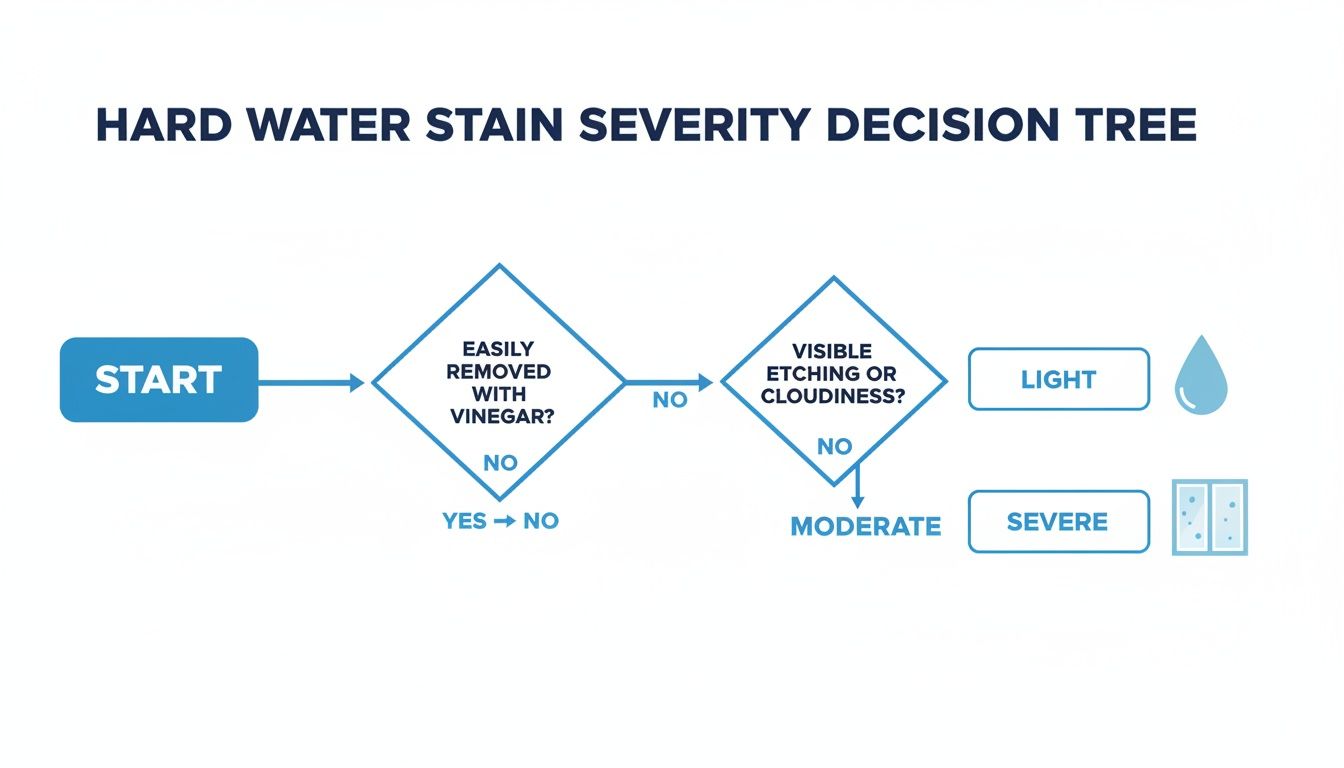
As you can see, the more resistant the stains are to a simple cleaning, the more severe the problem is, which means it’s time to bring out stronger solutions.
Your glass might feel perfectly smooth, but at a microscopic level, the surface is actually quite porous. When hard water droplets sit on your windows or shower doors, the minerals start to seep into these tiny imperfections.
Once the water evaporates, those minerals crystallize and essentially lock themselves onto the surface. This process creates a tough, semi-permanent film that builds up over time.
This isn't just an eyesore; it's a real problem for homes and businesses across the Southwest, particularly in states like Arizona and Nevada. In fact, water quality reports show that over 85% of households in Arizona's Maricopa County—which includes cities like Scottsdale, Tempe, and Gilbert—are dealing with 'hard' to 'very hard' water.
Left untreated, these mineral deposits can slash visibility through a window by up to 40%. Worse, they accelerate a damaging process called etching, which can shorten a window's lifespan by 20-30% over a decade.
If you wait too long, those mineral deposits cause permanent damage known as etching. At this stage, the minerals have chemically corroded the glass, creating a permanent cloudy or hazy look that no amount of cleaning can fix.
This is why being proactive is so important. When you understand that you're fighting a chemical bond—not just surface grime—you can choose the right strategy to dissolve the deposits without harming your glass in the process.
Use this quick guide to assess your hard water buildup and determine the best starting point, from gentle home remedies to commercial-grade solutions.
Once you've identified where your stains fall on this spectrum, you'll be much better equipped to pick the right tools and techniques for the job.
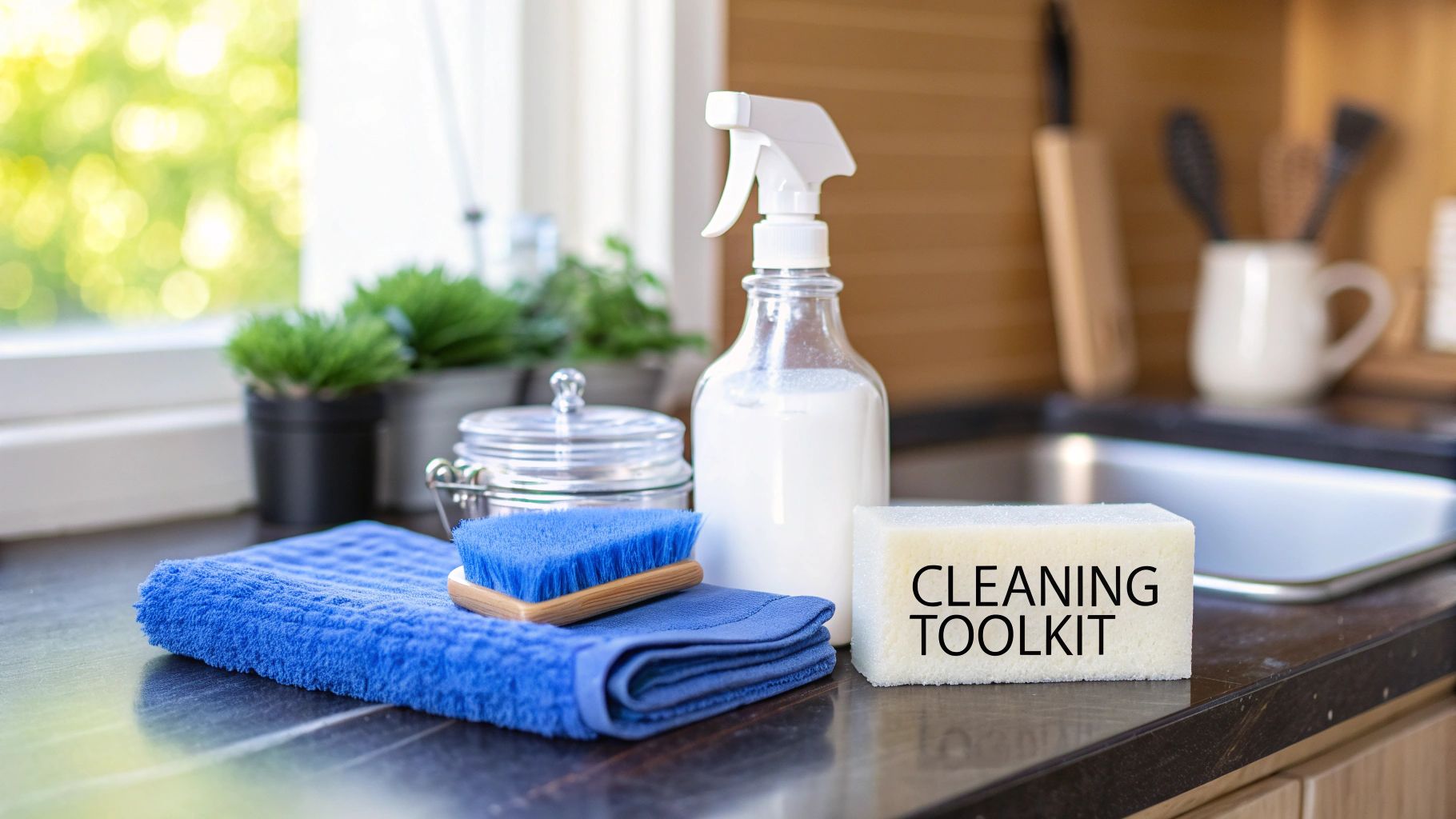
Having the right gear on hand makes all the difference when you’re staring down stubborn hard water stains on your glass. A well-stocked toolkit doesn't just make the job easier; it ensures you get that professional, streak-free finish without playing a frustrating guessing game. Before you even think about starting, getting all your supplies in one place will save you from those annoying mid-task interruptions.
For lighter, everyday spots, you probably already have what you need in your pantry. A simple mix of distilled white vinegar and water is a fantastic place to start. The natural acidity in the vinegar works wonders at dissolving the alkaline mineral deposits—like calcium and magnesium—that create those cloudy blotches.
For tougher areas, you can create a powerful (but safe) cleaning paste by combining baking soda with a little bit of water. This gives you a gentle abrasive that can scrub away buildup without scratching the glass. Honestly, these two household staples are the foundation of any good DIY stain removal kit.
Of course, the cleaners are only half the story. You also need the right tools to apply them effectively.
For the most stubborn, baked-on stains that plague homes in places like Phoenix, you might need to bring in the big guns with a commercial cleaner. Products like Bar Keepers Friend are specifically formulated to tackle heavy mineral deposits when DIY methods just aren't cutting it.
Ultimately, the goal is to have a range of options ready. You can find a detailed breakdown of the gear we pros use in our guide to professional window cleaning equipment. Always start with the gentlest method first and work your way up. It’s the best way to clean effectively while protecting your glass for the long haul.
For those frustrating but not-yet-stubborn spots, your kitchen pantry often holds the most effective and safest solutions. Before you reach for harsh chemicals, starting with gentle, everyday items can be surprisingly powerful when trying to clean hard water stains on glass. This approach also protects your windows and shower doors from unnecessary wear.
The classic vinegar and water mix is a go-to for a reason. The acetic acid in vinegar is fantastic at dissolving the alkaline mineral deposits—like calcium and magnesium—that cause those cloudy stains. It's often the first line of defense for homeowners and pros alike, from Scottsdale to Denver.
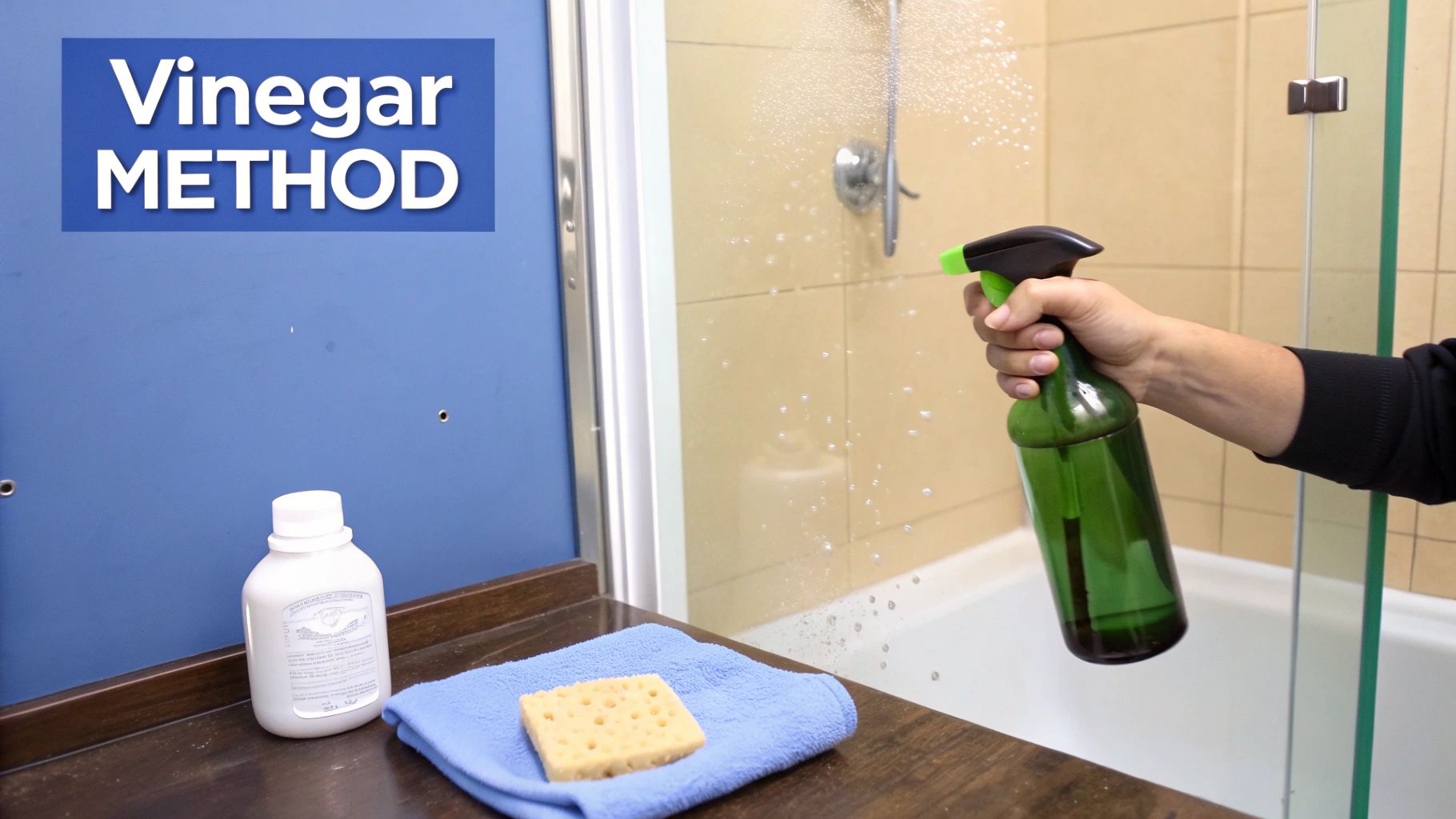
First things first, mix up a solution using a 1:1 ratio of distilled white vinegar and water in a clean spray bottle. Using distilled water is key here, since tap water can just add more minerals back onto the surface you're trying to clean.
Once it's mixed, generously spray the solution over the entire stained area. You want the glass to be completely saturated. Let it sit for at least 10-15 minutes to give the acid time to work its magic and break down those mineral bonds.
Pro Tip: For an extra boost of cleaning power, gently warm the vinegar in a microwave-safe bowl before mixing it with water. The heat accelerates the chemical reaction, making it even more effective against stubborn spots. Never boil it—just warm to the touch is perfect.
After letting it dwell, grab a non-abrasive sponge or microfiber cloth and scrub the area in small, circular motions. You should start to feel the gritty mineral deposits loosening up. Finally, rinse the glass thoroughly with clean water and dry it immediately with a squeegee or another clean microfiber cloth to prevent new spots from forming.
For shower doors and windows, this simple DIY approach can be incredibly effective. In fact, some studies have shown that saturating glass with vinegar-soaked paper towels and letting them sit for 10 minutes can loosen up to 70% of mineral buildup. For even lighter stains, a natural mix of lemon juice and salt can tackle about 65% of the problem. You can learn more about how simple ingredients prevent stains on glass and see how these methods provide an excellent starting point.
If the vinegar spray alone doesn't quite cut it, it's time to bring in a bit of gentle abrasion with baking soda. This method is perfect for spots that need a little more elbow grease but are still vulnerable to scratching.
Create a thick paste by mixing baking soda with a small amount of water until it has a consistency similar to toothpaste. Apply this paste directly onto the hard water stains, making sure you cover them completely.
Let the paste sit for a few minutes, then use a damp microfiber cloth or a non-abrasive pad to gently scrub the area. The baking soda acts as a mild abrasive that physically lifts the loosened mineral deposits without harming the glass. This is a common challenge for homes in Denver, CO, where water hardness can vary quite a bit.
Rinse the glass thoroughly to remove all the paste residue and dry it completely. By starting with these gentle, household solutions, you can effectively manage light mineral buildup while preserving the integrity and clarity of your glass.
When your trusty vinegar solution and baking soda paste just aren't cutting it against those stubborn, chalky marks, it’s time to bring in the heavy hitters. For severe, baked-on mineral deposits, you’ll need to turn to commercial-grade cleaners. These products are specifically formulated to dissolve the tough mineral bonds that household remedies can’t touch, giving you the power to finally clean hard water stains on glass.
Many homeowners have found success with products like the powdered version of Bar Keepers Friend or other cleaners containing mild oxalic acid. They’re designed to break down mineral stains and rust without being overly harsh. The trick, however, is using them correctly to get a flawless finish instead of accidentally causing more damage.
The most effective way to apply these cleaners is by making a paste. Just mix a small amount of the powdered cleaner with a few drops of water until you get a consistency like toothpaste. This concentrated paste lets you apply the product right onto the stains where it can get to work without dripping away.
Using a non-abrasive pad or a damp microfiber cloth, apply the paste directly to the affected glass. You’ll want to work it into the stains with gentle, circular motions. The idea is to let the cleaner’s chemical properties do the work, not to muscle through it with aggressive scrubbing. Too much pressure, especially with a slightly abrasive pad, can easily leave fine scratches on the glass surface.
Let the paste sit on the glass for about 5-10 minutes, but don't let it dry out completely. Keeping it moist is key—it ensures the active ingredients stay busy breaking down that mineral buildup.
Before you go all-in, always test any new commercial product on a small, hidden spot. A corner of a window or a low area on a shower door works perfectly. This quick test ensures the cleaner won't cause any unexpected discoloration or hazing.
After letting it sit, rinse the glass thoroughly with clean water until every last bit of residue is gone. The final, and most critical, step is to dry the surface completely with a high-quality squeegee. This removes all remaining water droplets and prevents new hard water spots from forming right after you’ve worked so hard to get rid of the old ones.
While effective, commercial cleaners pack more of a punch than their pantry counterparts. Taking a few simple safety precautions is non-negotiable for protecting yourself and your home. These steps are especially important for homeowners in areas like Denver, CO, where tackling tough stains is a frequent battle.
By following these guidelines, you can confidently use commercial products to restore your glass to its original clarity. For more tips on picking the right product for your situation, check out our detailed guide on the best cleaner for hard water stains.
Winning the battle against existing hard water buildup is a great feeling, but what's even better is preventing the war from starting in the first place. Once you've got your glass sparkling again, shifting your focus from reactive cleaning to proactive prevention is the key to keeping it that way. A few simple habits can make a massive difference, saving you hours of scrubbing down the line.
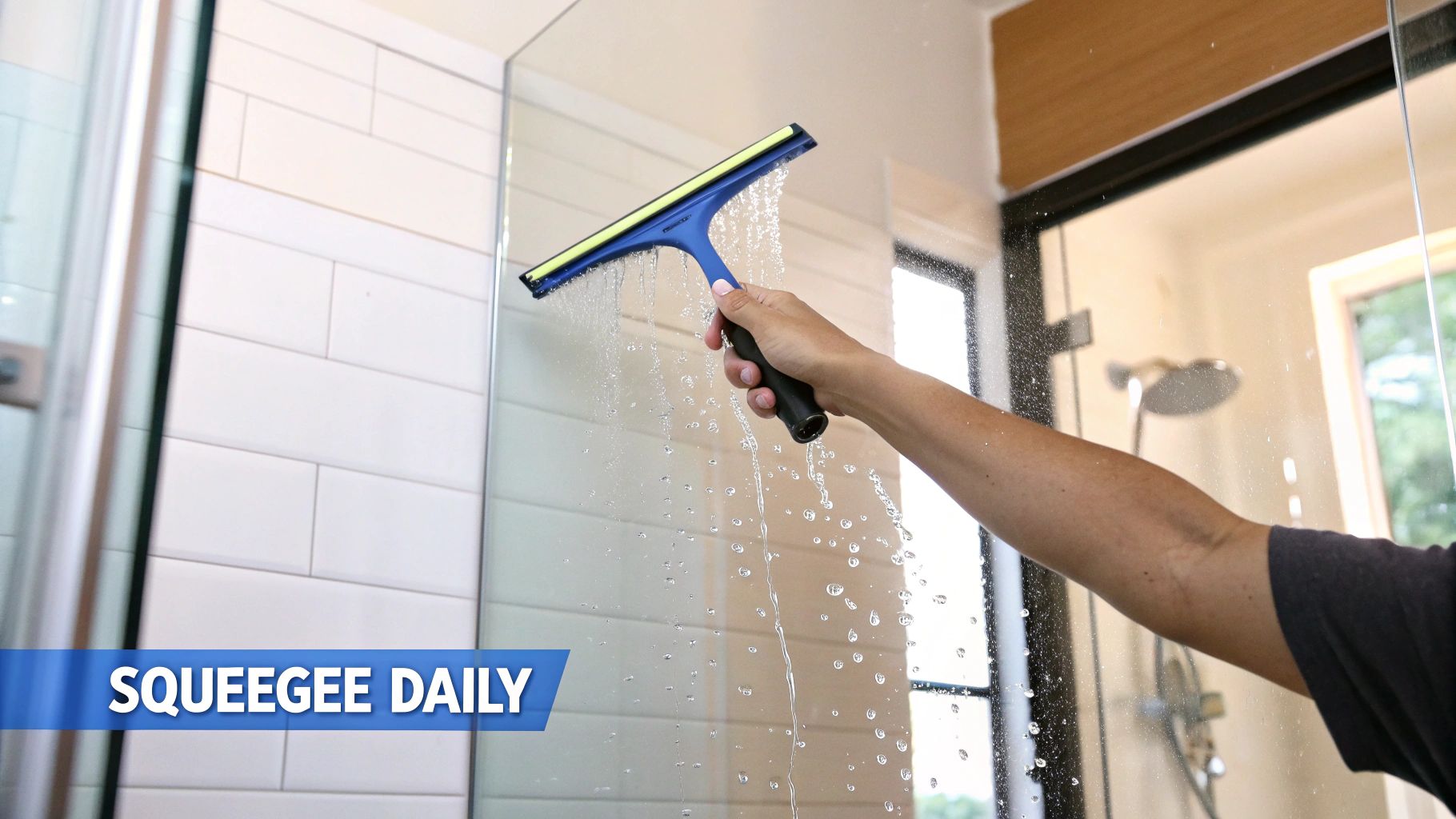
The single most effective strategy is also the simplest: get the water off the glass before it has a chance to evaporate. This is non-negotiable for shower doors. Keeping a squeegee hanging in your shower and giving the glass a quick wipe-down after every use takes less than 30 seconds. That tiny bit of effort stops those mineral-rich droplets from ever drying and leaving their chalky residue behind.
If you want to take your prevention game up a notch, you can treat your glass to make it actively resist water. Applying a hydrophobic coating creates a slick, invisible barrier that forces water to bead up and roll right off, taking all those pesky minerals with it. Think of it like waxing your car—the water just can't cling to the surface.
You can achieve this in a couple of ways:
Don't forget about those hard-to-reach spots. Understanding effective skylight cleaning techniques is important, but applying a preventative coating to them is even smarter since they're constantly exposed to the elements.
For homeowners in areas with notoriously hard water, like many of our clients in Scottsdale, even the most diligent prevention can feel like an uphill battle. When you're dealing with extreme mineral content, the ultimate fix is to tackle the problem at its source with a whole-home water softening system.
A water softener works by removing the hard minerals—primarily calcium and magnesium—from your water supply before they ever reach your faucets, showerheads, or windows. This not only prevents stains on glass but also protects your plumbing and appliances from scale buildup.
While it's a bigger upfront investment, a water softener completely eliminates the root cause of the problem. It transforms the task of how to clean hard water stains on glass from a constant, frustrating chore into a rare, simple wipe-down.
In the end, a few moments of prevention—whether it's a daily squeegee swipe or a long-term water treatment solution—will save you countless hours of difficult scrubbing.
You’ve tried it all. The vinegar soaks, the baking soda paste, even the strongest cleaner you could find at the store. But those stubborn, chalky stains just aren’t budging. It’s a common story—sometimes, no amount of elbow grease can conquer mineral buildup that's been left to its own devices for too long.
This is especially true when stains have been baking onto the glass for years, particularly under the intense sun we get here in places like Phoenix, AZ.
If you've cleaned and cleaned, but the glass still looks hazy or cloudy, you might be dealing with something more serious: etching. This is when the minerals have physically damaged the glass surface itself. At this point, more scrubbing can actually do more harm than good. Another clear sign it's time to call for backup is when you’re dealing with hard-to-reach windows, like those on a second story or massive picture windows.
With over 26 years of experience, our crew at Professional Window Cleaning knows exactly how to clean hard water stains on glass without causing damage. When it comes to professional window cleaning, there are ONLY two methods our experts use: a traditional squeegee or an advanced pure-water system. We don’t have a one-size-fits-all solution; we bring the right approach for the specific job.
For interior glass, like shower doors, nothing beats a classic squeegee in the hands of a pro. A trained technician can leave a flawless, streak-free finish that’s almost impossible to replicate with DIY methods. It pulls every last bit of mineral residue and solution off the glass.
But for tough exterior windows plagued by years of buildup, we often turn to our pure-water system. This is a game-changer. The system uses deionized water that acts like a magnet for dirt and minerals, lifting them right off the glass. The best part? It dries completely spotless on its own—no squeegee needed.
Calling in professionals isn't just about cleaning; it's an investment in preserving your glass. We have the specialized tools and knowledge to remove what you can't, saving you time and preventing permanent damage.
Even when you've got the right game plan, a few questions always seem to pop up right before you get started. Let's tackle some of the most common ones to make sure you get that crystal-clear finish without accidentally damaging your glass.
Yes, they absolutely can, and this is the biggest reason not to put off cleaning them. If you let those mineral deposits sit for too long, they start a chemical reaction that actually etches into the glass itself.
Once that happens, you’re left with a cloudy, hazy look that no amount of scrubbing will ever remove. At that point, your only options are professional polishing or a full glass replacement. Early intervention is everything.
This is a tricky one. You should never grab regular steel wool from under the sink, as it will leave a mess of scratches on your glass.
The only exception is #0000 grade steel wool, which is an ultra-fine abrasive designed specifically for polishing delicate surfaces. Even then, you have to use it with plenty of lubricant (like your cleaning solution) and always test it on a small, hidden spot first. Honestly, a good non-abrasive pad is a much safer bet for most situations.
The best offense is a good defense. Wiping down a shower door with a squeegee after every use takes less than 30 seconds. It stops minerals from ever drying on the surface in the first place, keeping your glass spotless day after day.
When your best efforts just aren't cutting it, especially for severe staining or those impossible-to-reach windows, it’s time to call in the pros. With over 26 years of experience, Professional Window Cleaning has the specialized tools and proven know-how to restore your view.
Read our blog posts regularly and keep learning.