
Care and Maintenance
High Rise Windows Explained for Building Owners
Learn what high rise windows are, how they work, and how to hire pros to clean and maintain high rise windows safely and efficiently.


When it comes to the best cleaner for hard water stains, you're usually looking for an acidic solution. These cleaners are designed to dissolve stubborn mineral deposits like calcium and magnesium. For light spotting, a simple mix of white vinegar and water can do the trick. But for tougher, set-in buildup, you'll likely need a specialized commercial cleaner that contains mild acids or even gentle abrasives to get the job done.
Those frustrating, chalky spots on your windows are more than just dirt—they're mineral deposits left behind when water evaporates. This is a common headache in places with hard water, like much of Arizona and Colorado, where high concentrations of calcium and magnesium cling to surfaces. They create a cloudy, unsightly film that regular soap and water just can't touch.
The science behind removing them is actually a straightforward chemical reaction. Since the mineral deposits are alkaline, you need an acidic cleaner to neutralize and dissolve them. This is why vinegar is such a popular DIY go-to. However, for stains that have been baking in the sun for months, you'll often need a stronger, more targeted approach to break down the buildup without accidentally damaging the glass.
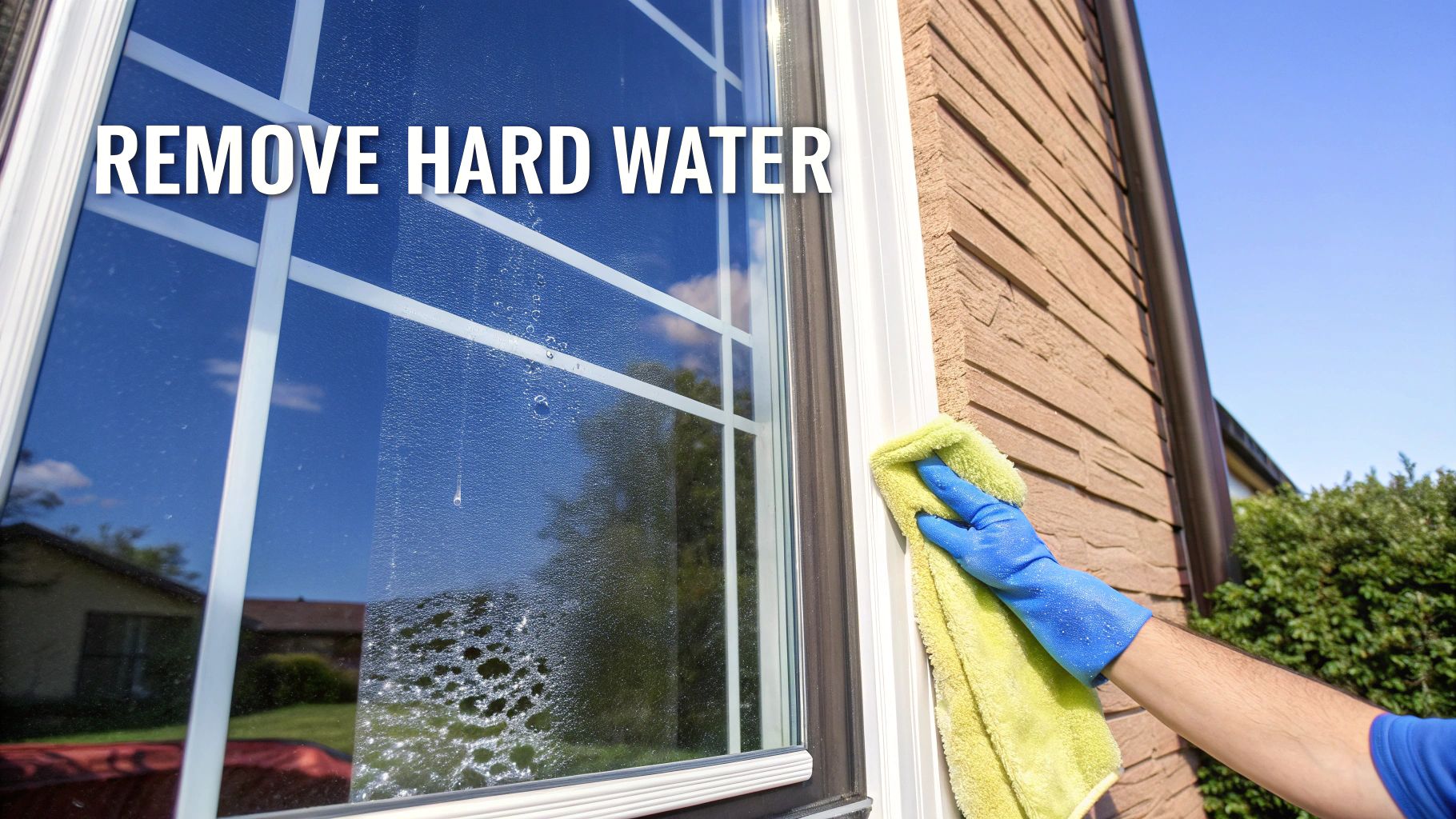
When you're choosing a cleaner, you really have two main options, and each one is suited for different levels of buildup. Knowing the difference will help you get the best results safely.
It’s clear homeowners are looking for better solutions. The global market for hard water stain removers was valued at around $1.5 billion in 2025 and is projected to hit $2.3 billion by 2033. With over 85% of US homes dealing with hard water, people are increasingly turning to specialized, eco-friendly products that can outperform traditional DIY methods by 40-50% on glass surfaces.
The key is to match the cleaner to the severity of the stain. Always start with the least aggressive method—like a mild acidic solution—to prevent unnecessary wear on your glass. Only escalate to a gentle abrasive if that first attempt doesn't cut it.
Deciding between a DIY mix and a commercial product can be tough. This table breaks down the key differences to help you choose the right approach for your windows.
Ultimately, the best cleaner depends on how long the stains have been there. For minor spotting, a DIY solution is a great first step. For anything more serious, a commercial product is usually worth the investment.
Even with the perfect product in hand, your application technique is just as important. For instance, simply spraying and wiping often isn't enough for tough spots. You need to let an acidic solution dwell on the stain for several minutes to give it time to break down the minerals.
While professionals have access to advanced tools, mastering a few basic techniques can dramatically improve your results at home. If you're dealing with mineral deposits on other surfaces, like a boat, you might find these tips for removing hard water spots from your boat really helpful.
And once the stains are gone, a final, thorough cleaning is what restores that crystal-clear clarity. Window cleaning pros rely on just two main techniques for perfect results: a pure-water system for exterior glass or the traditional squeegee method. To get that truly professional, streak-free shine, you have to learn more about how to properly squeegee a window.
Before you rush out to buy a specialty product, take a look in your pantry. You might be surprised to find that some of the most effective cleaners for hard water stains are already sitting on your shelves. With the right mix and a little know-how, you can whip up some powerful, safe solutions to cut right through those chalky spots and bring the sparkle back to your glass.
We’re moving beyond the basic vinegar-and-water trick here. Below are some tested recipes for everything from light spotting to heavy-duty mineral deposits. The real secret is knowing which DIY cleaner to use for the job at hand.
For fresh or light hard water spots, an acidic spray is always your best first move. The acid gets to work dissolving the alkaline minerals—mostly calcium and magnesium—which makes them a breeze to wipe away.
A super simple but effective recipe is just equal parts distilled white vinegar and warm water in a spray bottle. Using warm water gives the vinegar’s acetic acid a little boost to work more efficiently.
Want to give it a little extra kick? Swap out some of the vinegar for lemon juice. The citric acid in lemon juice is another fantastic mineral-buster and leaves a much fresher scent behind.
Sometimes an acidic spray just won’t cut it, especially on those thick, layered stains that have been there a while. When that happens, you need a solution with a bit more grit. A gentle abrasive paste can physically scrub away the deposits without scratching your glass. It’s the perfect method for those stubborn, milky-white spots.
Making the paste is easy: just mix baking soda with a tiny bit of water until you get a thick, spreadable consistency, almost like toothpaste.
Slather the paste directly onto the hard water stains, making sure you cover the whole area. Let it sit for about 15-20 minutes. While it sits, the baking soda works to loosen the deposits, making them way easier to remove. Then, use a damp microfiber cloth to scrub the paste off and rinse the window thoroughly with clean water.
This approach takes a bit more elbow grease, but it’s incredibly effective on stains that liquid cleaners can't touch. Once you’re done rinsing, it's a good idea to follow up with your favorite window cleaner to get rid of any leftover residue. Getting that final wipe-down right is crucial, and you can learn more about what works best in our guide to the perfect cleaning solution for outside windows.
For those really persistent stains that even baking soda can’t conquer, powdered citric acid is a total game-changer. You can usually find it in the canning or bulk food sections of the grocery store. It’s a concentrated acid that absolutely excels at demolishing heavy limescale.
To make a potent spray, just dissolve two tablespoons of citric acid into two cups of warm water. This creates a seriously strong cleaner that can handle even severe buildup. Just be sure to wear gloves when you’re working with a more concentrated solution like this one.
This shift toward more potent ingredients is something we're seeing across the board. New formulas with citric acid and enzymes are being developed that can dissolve stains 3 times faster than old-school ammonia cleaners. And with a 30% rise in demand for non-toxic options since 2020, it’s clear that people want effective and safe solutions.
When your trusty vinegar-and-water solution just isn't cutting it against those stubborn hard water stains, it's time to bring in the big guns. But stepping into the cleaning aisle can be overwhelming—every bottle promises a miracle shine.
The secret to picking the right product isn't about the flashiest label. It's about knowing what's inside and how it works.
A truly effective commercial cleaner for hard water stains is almost always acid-based. Flip the bottle over and look for ingredients like sulfamic acid or phosphoric acid. These are the heavy hitters that chemically dissolve the calcium and magnesium deposits causing the milky haze on your glass. This chemical reaction is far more powerful than elbow grease, especially on stains that have been setting in for a long time.
Beyond the active ingredients, the physical form of the cleaner makes a huge difference, especially on vertical surfaces like windows. You’ll generally find three types, and each has its own strengths.
The DIY approach is always a great starting point, and the process is pretty straightforward, as this visual guide shows.
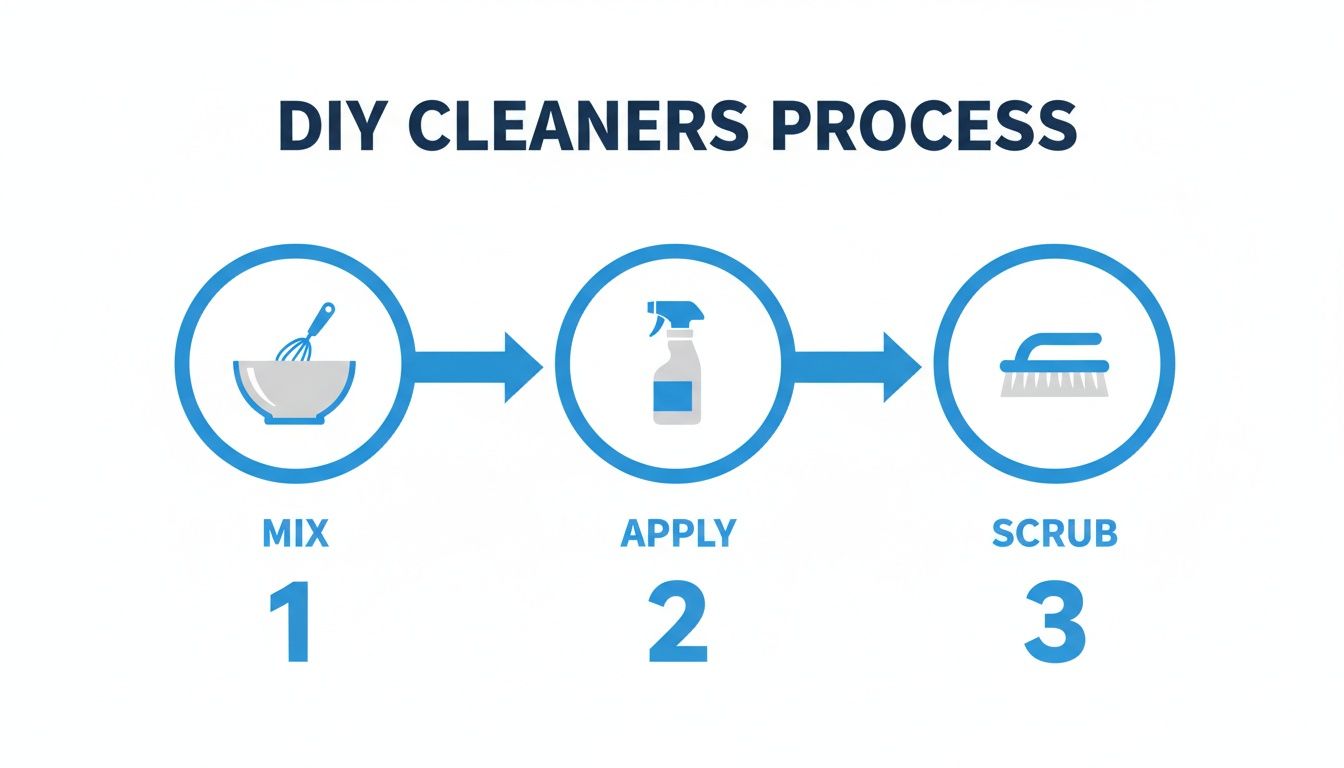
This simple mix, apply, and scrub method is the foundation of any cleaning effort, but sometimes you just need a bit more chemical muscle.
Choosing a powerful cleaner is one thing; making sure it’s safe for your home is another. Always, always read the label to check for compatibility with your window materials. Some aggressive formulas can damage window tints, rubber seals, or painted frames. Look for products specifically marked as safe for tinted windows or certain materials if that applies to you.
A good rule of thumb is to always test a new cleaner on a small, inconspicuous area first. This quick spot test can save you from accidentally causing widespread damage, like discoloration or etching.
Don't skip the safety instructions, either. Acid-based cleaners can irritate your skin and eyes, so throwing on a pair of protective gloves and eyewear is just smart. Proper ventilation is also key—crack a window to avoid inhaling strong fumes.
Taking a moment to read the directions ensures you’re only removing the stains, not harming your windows or yourself in the process.
When your own efforts with vinegar and elbow grease just aren't cutting it, you know the hard water stains have gone from a simple nuisance to a serious problem. For buildup that's been baking onto the glass for months—or even years—it's time to call in a professional. In the window cleaning world, there are only two methods professionals use: the classic squeegee technique and modern pure-water systems.
This isn't just about having better tools. It's about a deep understanding of how to remove stubborn mineral deposits without causing permanent, costly damage to the glass itself.
For homeowners in areas with notoriously hard water, like the dry climates of Las Vegas or Phoenix, professional help is often the only realistic way to restore clarity. These advanced techniques are designed to tackle mineral deposits that have literally bonded with the glass, a battle that off-the-shelf cleaners simply can't win.
When you picture a pro, you probably see them with a squeegee. But for severe hard water, their technique is far more involved than a simple wipe-down. This method uses a specialized, hands-on approach to physically—but safely—lift those caked-on minerals right off the glass.
A true professional will often use a specific grade of fine steel wool (#0000 grade) or a dedicated glass-safe blade. This isn't just aggressive scraping; it's a careful, methodical process.
This hands-on method is incredibly effective for thick, concentrated spots of buildup, giving the technician total control over the removal process.
For more widespread issues or delicate surfaces, we often turn to pure-water systems. This approach uses the natural power of deionized or reverse-osmosis filtered water to achieve an unmatched clean. The process strips water of all its mineral content, effectively turning it into a hungry cleaning agent.
Because this pure water is free of dissolved solids, it becomes highly reactive. It acts like a magnet, actively pulling minerals and dirt from the glass surface it touches. This is a process known as ion exchange.
A technician uses a water-fed pole with a soft-bristled brush to gently scrub the window while a continuous stream of pure water rinses it. The brush loosens the hard water deposits, and the pure water immediately bonds with those minerals, carrying them away. Since the water itself is completely pure, it dries to a perfectly clear, spot-free finish. No squeegee needed.
This battle against stains is part of a larger trend. The global water softener market is projected to hit $3.46 billion by 2025, with salt-based systems commanding a 58.6% market share. These systems can slash the need for stain removers by up to 60% by treating water at the source, preventing the very damage that affects so many homeowners. Reading up on the growing water softener market really shows how widespread this issue has become.
Cleaning off existing hard water stains is a satisfying victory, but let's be honest—the real win is preventing them from coming back in the first place. After you’ve put in all that effort to restore your glass, shifting your focus to prevention will keep your windows looking pristine for the long haul. This isn't about constant, grueling cleaning; it's about making a few smart adjustments to your home and routine.
Preventing future buildup starts with managing the water itself. You'd be surprised how much of a difference simple habits can make. For glass shower doors, just keeping a squeegee in the shower and giving the glass a quick wipe-down after you’re done stops those mineral-rich droplets from ever drying. When it comes to exterior windows, the most common culprit is a misaimed sprinkler that soaks the glass, leaving a fresh layer of mineral deposits behind with every watering cycle.
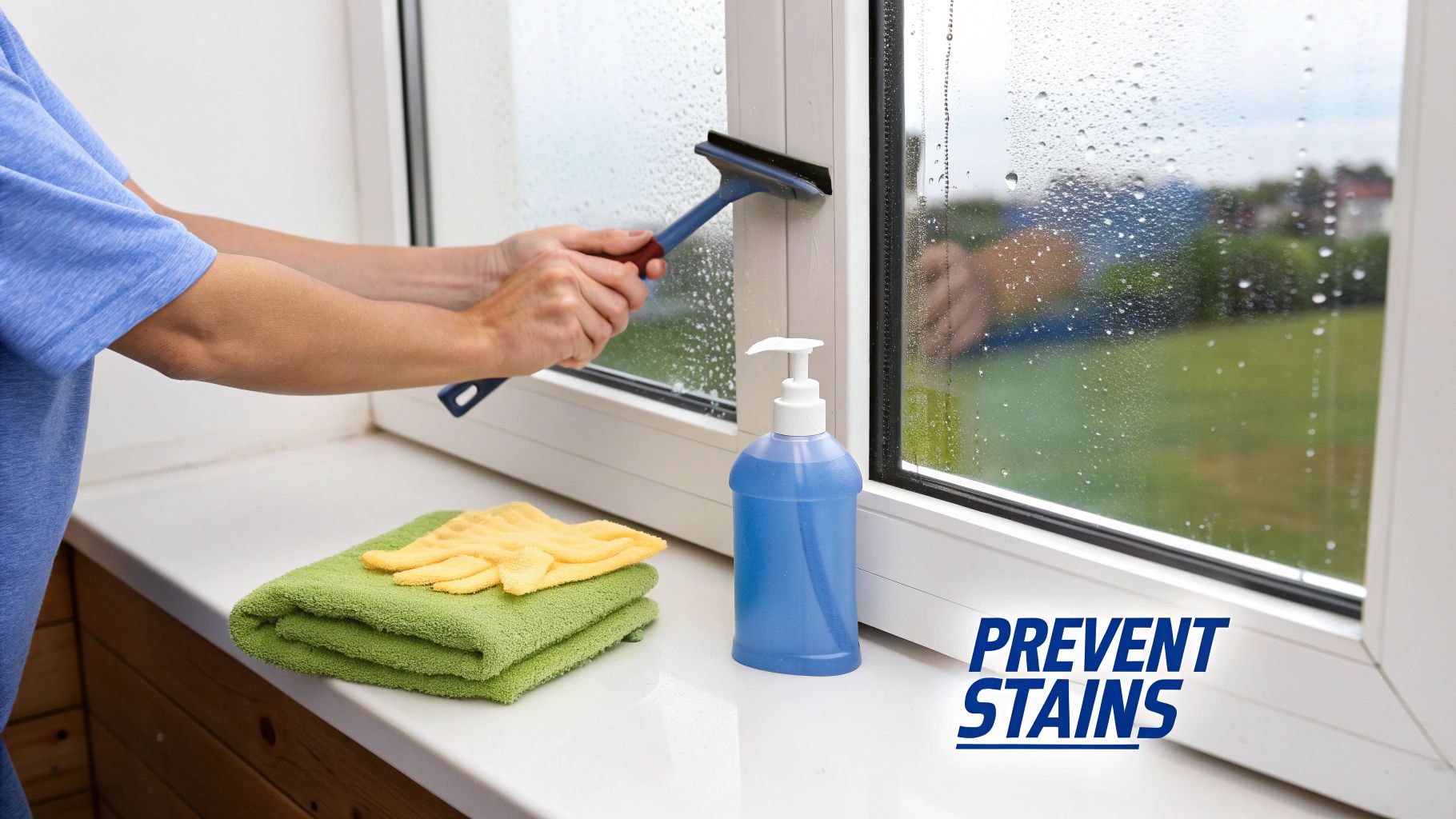
A few practical tweaks around your property can dramatically reduce how often your windows get hit with hard water. Taking just a few minutes to inspect your irrigation system can literally save you hours of scrubbing down the road.
These little changes interrupt the cycle of wetting and drying that allows minerals to build up on your glass.
For a more robust and long-lasting defense, consider applying a hydrophobic sealant to your windows. These treatments create an invisible, water-repellent barrier on the glass. Instead of flattening out and sticking, water beads up and rolls right off, taking most of the dissolved minerals with it.
Think of it like waxing your car—the protective layer prevents contaminants from bonding to the surface. You can find DIY spray-on sealants at most home improvement stores. Application is usually pretty straightforward: just clean the window thoroughly before spraying on the product and buffing it clear. While they need to be reapplied every few months, the protection they offer is well worth the minimal effort.
A hydrophobic coating doesn't just prevent stains; it also makes future cleaning so much easier. Since dirt and minerals can't stick as effectively, a simple rinse or light wipe is often all that's needed to restore that crystal-clear view.
While adjusting sprinklers and applying sealants are effective strategies, they really only treat the symptoms, not the root cause. The most comprehensive way to stop hard water stains everywhere—on your windows, shower doors, faucets, and even inside your appliances—is to treat the water itself.
One of the most powerful moves you can make is investing in professional water softeners. These systems remove the problem-causing minerals like calcium and magnesium from your water supply before they ever reach your fixtures. By tackling the issue at its source, you not only protect your windows but also extend the life of your dishwasher, washing machine, and water heater. It's the ultimate preventative measure for any homeowner who is serious about ending their battle with hard water for good.
There's a certain satisfaction in a good DIY project, but when it comes to stubborn hard water stains, even the most determined homeowner can meet their match. Knowing when to put down the spray bottle and call a professional isn't admitting defeat. It’s making a smart call to protect your windows and get the job done right.
So, how do you know you've hit that point? The glass itself will tell you.
After you've tried cleaning a spot, run your fingertips over the surface. If it still feels rough or gritty, you're dealing with etching. This is where the mineral deposits have physically corroded the glass, creating tiny pits. No amount of scrubbing with a standard cleaner for hard water stains is going to smooth that out.
Beyond the stain's severity, you have to think about practicality and safety. Are the affected windows on the second story? Tucked away in a spot that requires a ladder and some awkward leaning? The risk of an accident often isn't worth the few bucks you might save.
It’s time to call in the pros when you encounter these situations:
For anyone living in areas with notoriously hard water, bringing in a pro is often a necessity, not a luxury. The constant exposure to high mineral content means stains can set in and become severe much faster than you’d expect.
In regions where hard water is a constant battle, local window cleaners have invaluable experience. They know the specific mineral cocktail in your local water and have perfected their methods for dealing with it. For residents in the Southwest and Mountain West, finding a trusted service is key to keeping your home looking its best.
If you're in a hard water hotspot like Las Vegas, a professional cleaner is your best bet for handling the intense, sun-baked mineral deposits common to the desert. Homeowners in Phoenix will benefit from experts who know exactly how to manage the region’s extreme mineral content. Even in a city like Denver, where water hardness varies, a local pro can save you hours of frustration and prevent permanent damage to your windows.
Even when you have the right tools and a solid plan, a few questions always seem to pop up in the middle of a tough window cleaning job. Getting the right answers can be the difference between a frustrating afternoon and a job well done. Here are some of the most common things people ask when they're staring down stubborn hard water spots.
This is a big one. Diluted white vinegar is a fantastic, go-to cleaner for hard water stains, but you have to be careful with what’s around the glass. Its acidity, while great for dissolving minerals, can dry out and degrade rubber or vinyl window seals if you let it sit for too long. It can also cause damage to certain aftermarket window tints.
Pro Tip: Always stick to a 1:1 ratio of vinegar to water. Never let the mixture pool or dwell on the seals, and make sure you rinse the entire area thoroughly with plain water as your final step. This simple habit protects the rest of your window frame.
Another common question is figuring out when you're fighting a losing battle.
A stain becomes permanent damage when the minerals have actually etched into the microscopic pores of the glass. It's no longer just a surface problem.
Here’s a simple test: After cleaning the spot as best you can, run your fingernail across it. If the surface feels rough or pitted compared to the smooth glass next to it, you’re likely dealing with etching.
Once glass is etched, standard cleaners won't cut it. The glass needs to be professionally polished with specialized compounds to restore that smooth surface. Trying to scrub etched glass with harsh abrasives will only scratch it and make the damage worse, so it's critical to know when to stop.
Absolutely. Many modern, eco-friendly stain removers are incredibly effective. They often use plant-based acids, like citric acid, which are brilliant at breaking down stubborn mineral deposits. You get powerful cleaning action without the harsh fumes or environmental impact of old-school chemical cleaners.
Products like these are a safe and smart choice, especially for homes with kids and pets. They prove you don’t have to compromise on cleaning power to be environmentally conscious. Citric acid, for instance, works by binding to the metal ions in the hard water (a process called chelation), effectively neutralizing and dissolving the limescale without needing aggressive chemicals. It's a go-to for tough but sensitive jobs.
When a stain is etched, located on high-rise windows, or just too stubborn for DIY methods, the safest and most effective solution is to call in an expert. Professional Window Cleaning has the specialized tools and experience to restore your glass without causing damage. Contact us today for a free estimate!
Read our blog posts regularly and keep learning.