Care and Maintenance
Deck Wash Before Staining a Practical Guide That Works
Learn how to do a proper deck wash before staining, from cleaner choice to pressure setting and drying checks, so your stain holds longer and looks even.


Frosted glass adds a beautiful touch of privacy and style to any space. But before you grab just any cleaner and a cloth, take a moment. The wrong move can permanently scratch, streak, or even peel the finish, turning a simple cleaning job into a costly mistake.
The absolute first step is figuring out what kind of frosted glass you actually have. This single detail changes everything about how you should clean it.
Most frosted glass falls into two main camps: true frosted glass and frosted film. They might look similar from a few feet away, but they are worlds apart when it comes to cleaning and durability.
Here's the breakdown:
So, how can you tell which one you have? It’s surprisingly simple.
Just run your hand over the surface. If you feel a slight, grainy texture—almost like very fine sandpaper—you’re dealing with true etched or sandblasted glass. If it’s perfectly smooth to the touch, you have a frosted film.
This quick test is your most important move. A cleaning method that’s perfectly fine for durable etched glass could easily cause a vinyl film to peel, bubble, or scratch. You’ll often see these different types used in commercial settings for things like glass partition walls, where knowing the material is key for maintenance, especially in busy cities like Las Vegas, NV.
This flowchart breaks down the simple touch test.
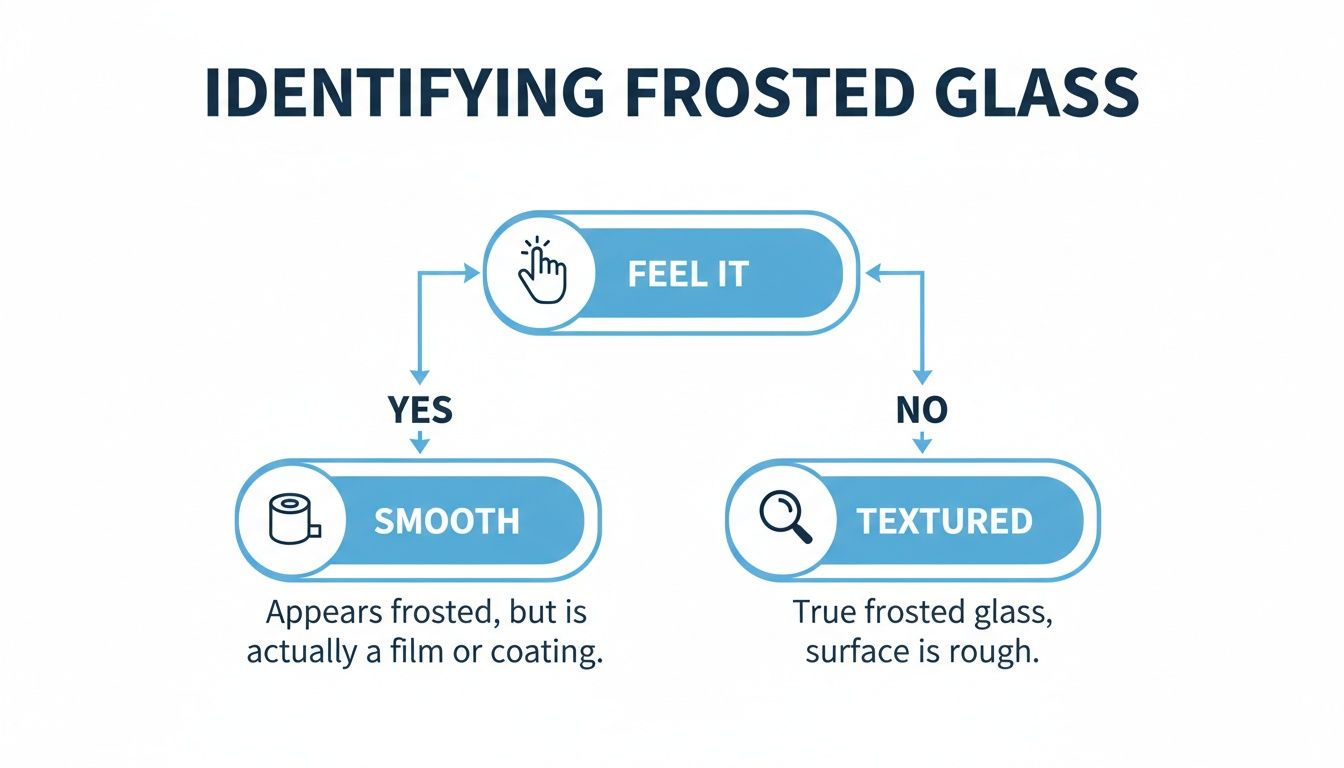
As you can see, feeling for that distinct texture is the most reliable way to know if you're cleaning true frosted glass or a delicate film.
To make things easier, here's a quick comparison of how to approach cleaning each type.
This table provides a great starting point, ensuring you begin with the safest and most effective method for your specific type of glass.
With frosted glass becoming a staple in modern design, the demand for proper care has skyrocketed. The U.S. window cleaning industry generated an incredible $2.8 billion in revenue in 2023. We see this trend firsthand in markets like Phoenix, AZ, and Scottsdale, AZ, where frosted shower doors and privacy windows are everywhere—and constantly battling hard water buildup.
For most jobs, a simple solution of one part white vinegar to ten parts water is our go-to recommendation. It’s fantastic at dissolving the mineral deposits from hard water without the harshness of ammonia-based products, which can ruin a frosted finish.
At Professional Window Cleaning, we've seen it all. Professional Window Cleaning has been cleaning windows for over 26 years! The most common mistake we encounter is homeowners using abrasive sponges or harsh chemicals, causing irreversible damage to their beautiful frosted glass.
Starting with the gentlest approach is always the winning strategy. It protects your investment and is the first step toward getting that perfect, streak-free shine you’re after.
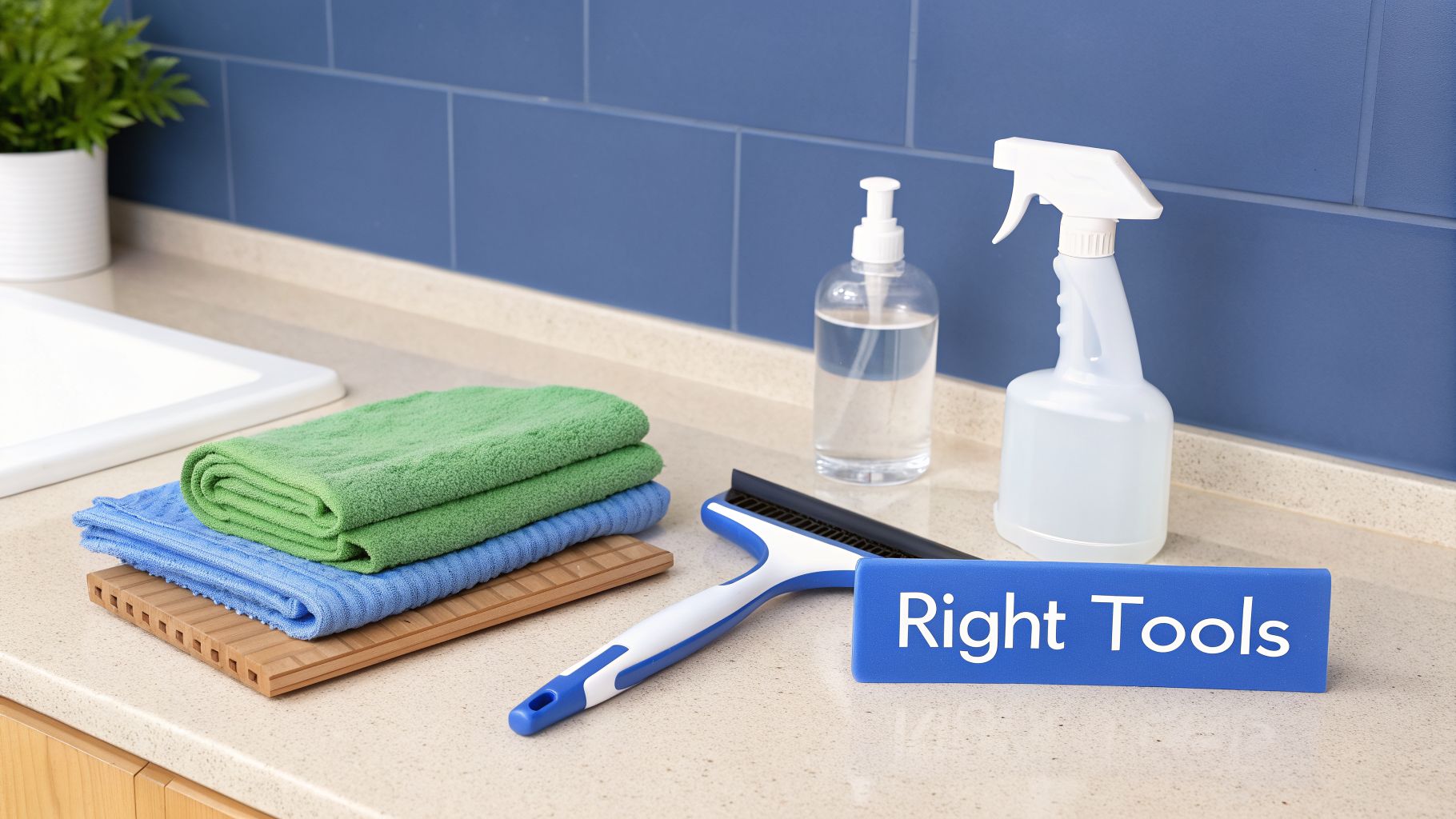
Using the wrong supplies is the fastest way to turn a simple cleaning task into a costly repair. Before you even think about spraying or wiping, gathering the right arsenal is the most important step you can take. It’s not just about what you should use; it's also about what you absolutely must leave under the sink.
Think of it as preparing your battle plan. Having these items ready ensures a safe, effective clean every time, whether you're tidying up a shower door in your Denver, CO, home or wiping down a privacy panel in a commercial office.
The right tools are simple but non-negotiable if you want a scratch-free, streak-free finish. You don't need expensive gadgets, just a few key basics that professionals rely on.
Microfiber Cloths: A few high-quality, lint-free microfiber cloths are your best friend here. Their soft, dense fibers are designed to grab dust and soak up liquids without leaving behind fuzz or creating micro-scratches. Please, do not use paper towels—they fall apart on textured surfaces and leave a layer of lint that’s a nightmare to remove.
Spray Bottle: Get a good spray bottle that creates a fine, even mist. Drenching the glass is a common mistake that causes the solution to run and drip, which can easily damage surrounding wood frames or paint. A light mist gives you total control.
A Professional-Grade Squeegee: This is the secret weapon for a truly flawless finish. While it might seem like an extra step, using a quality squeegee is one of the two core methods window cleaning professionals use. Professional Window Cleaning has been cleaning windows for over 26 years, and we've perfected this technique.
Choosing the right squeegee makes all the difference. We’ve seen countless DIY jobs where a cheap squeegee left behind more streaks and watermarks than it removed.
It's a fact that using abrasive pads is a recipe for disaster. Data from cleaning forums show they damage or completely remove the frosting on roughly 25% of DIY cleaning attempts. For drying, a professional squeegee, like those made by Ettore, is invaluable because it's designed to remove over 99% of streaks in a single, smooth pass.
Knowing what not to use is just as important as knowing what to grab. So many common household cleaners will cause irreversible damage to your frosted glass.
Here’s your "do not touch" list:
By assembling this simple toolkit, you're setting yourself up for success. For a more detailed look at the tools of the trade, you can check out our complete guide on essential window cleaning supplies. This preparation ensures you can move on to the actual cleaning process with confidence.
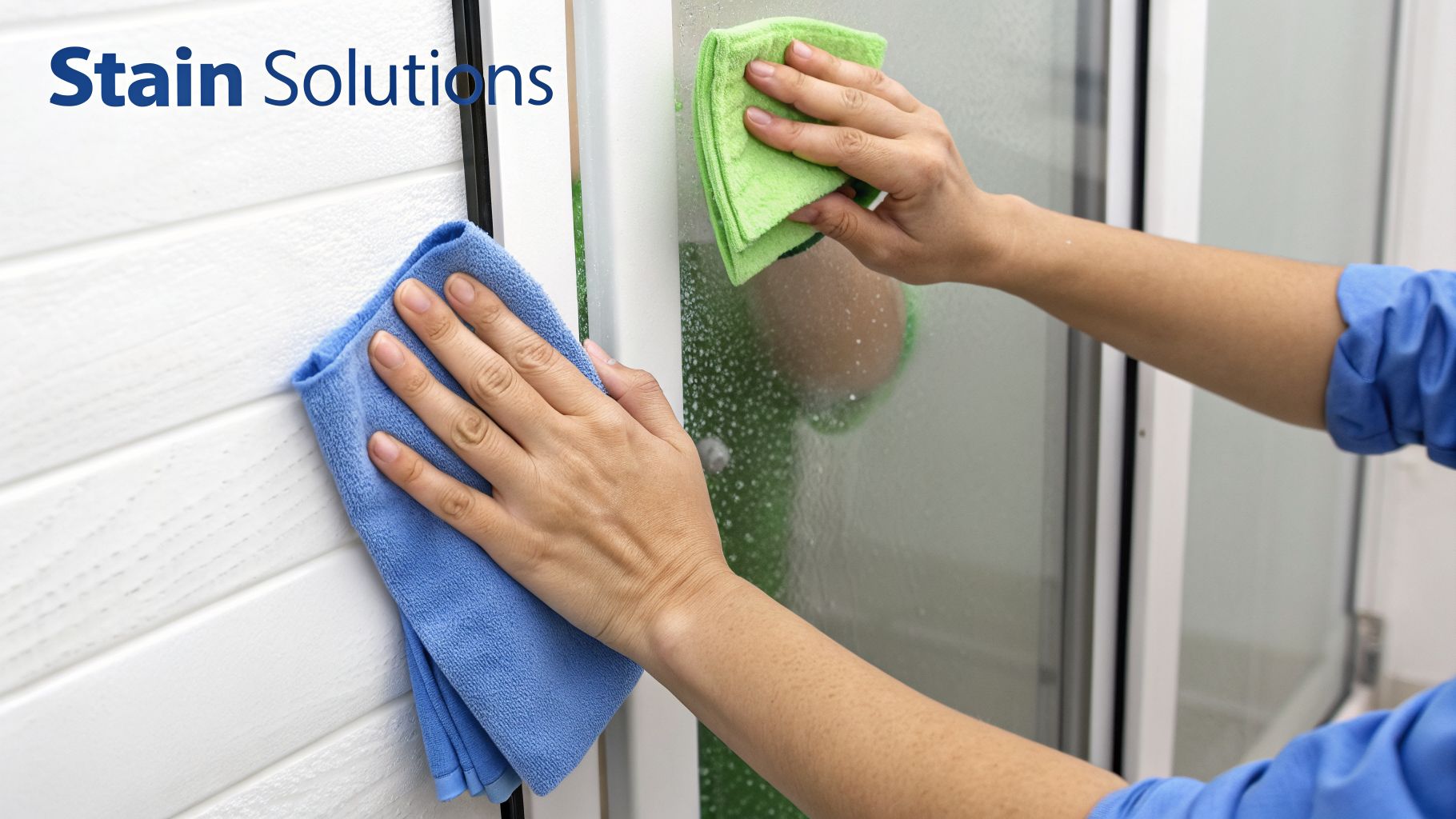
Alright, now that you've got the right supplies, let's get down to business. The thing about frosted glass is that it collects grime differently depending on where it is. An office partition might just have a few fingerprints, while a shower door is battling stubborn soap scum daily.
You can't use the same approach for every stain and expect great results. This is where we move past the basics and get into the specific, field-tested methods our own professional teams use in cities like Las Vegas, NV, to get glass looking brand new.
For everyday upkeep, you don't need anything complicated. A gentle touch is all it takes to handle the dust and smudges on office partitions, cabinet doors, or interior windows.
Think simple. Mix just a few drops of mild dish soap into a spray bottle with warm water. You don't want a ton of soap, or you'll be left with a streaky film.
Lightly mist the glass—don't soak it. A fine, even spray is perfect for loosening everyday grime. Then, grab a clean, dry microfiber cloth and wipe in one consistent direction, either top-to-bottom or side-to-side. This simple trick helps prevent streaks.
To finish, take a second, completely dry microfiber cloth and give the glass a quick buff. That final step is what really brings out a polished, clear finish and prevents any leftover moisture from spotting.
Frosted glass in kitchens and bathrooms is a whole different ballgame. Soap scum—that lovely mix of soap residue, body oils, and hard water minerals—clings for dear life. Greasy smudges from cooking splatters can be just as stubborn on that textured surface.
For these tougher jobs, soap and water just won't cut it. You need something with more power.
A solution of one part white vinegar to three parts warm water works wonders here. The acetic acid in vinegar is a natural at breaking down the minerals in soap scum and cutting through grease. Just spray it on, let it sit for about five minutes to work its magic, and then wipe it clean with a microfiber cloth.
Professional Window Cleaning has been cleaning windows for over 26 years! We can't stress this enough: always test a new cleaning solution on a small, inconspicuous corner first. This simple precaution ensures the cleaner won't react negatively with your specific type of frosted glass.
Hard water stains are the number one enemy of glass, especially here in places like Phoenix, AZ, where mineral content is high. Those chalky white spots are calcium and magnesium deposits left behind when water evaporates. Leave them too long, and they can permanently damage the glass.
The vinegar solution is a great first line of defense for moderate spots. For more stubborn buildup, you'll need to step up your game. A simple paste of baking soda and water can provide the gentle abrasion needed to scrub those deposits away without scratching the glass.
Here’s a pro tip we’ve seen work in the field: that same baking soda paste can often buff out very light surface scratches in about 80% of cases. Mix baking soda with water to a 3:1 ratio to form a paste, apply it gently with a soft cloth, and work it into the stain.
If your glass is covered in severe mineral buildup, it's time to bring in the heavy hitters. For a deeper dive into tackling this common problem, check out our full guide on how to clean hard water stains on glass.

You’ve put in the work to get your frosted glass looking brand new. So how do you keep it that way? The secret isn’t more scrubbing—it’s prevention. A few simple habits can dramatically cut down on how often you need to do a deep clean, saving you time and protecting that beautiful frosted finish.
Think of it as an investment. A little consistent care stops stubborn, long-term buildup before it ever becomes a headache.
The single best thing you can do, especially for frosted shower doors, is a quick wipe-down after each use. It takes less than 30 seconds but prevents the vast majority of hard water spots and soap scum from ever taking hold.
Keep a small squeegee hanging in the shower. Once you’re done, just pull it from top to bottom to whisk away the excess water. The use of a squeegee is a core technique we use as professionals, and it’s incredibly effective at stopping mineral deposits from drying onto the glass.
Moisture is the number one enemy of clean frosted glass. When water evaporates, it leaves behind a chalky film of minerals. The easiest way to fight back is to improve the airflow in high-humidity spots like your kitchen and bathroom, a common issue in homes from Denver, CO, to Phoenix, AZ.
It’s also important to make sure the window itself is in good shape. Problems like fixing leaking windows can introduce moisture that undermines all your cleaning efforts.
A quick weekly wipe-down is your secret weapon for keeping frosted glass looking pristine and avoiding the need for more intensive scrubbing. This is especially true for businesses that need to maintain a crisp, professional appearance every single day.
Just mist the glass with a gentle cleaner, like a 1:10 vinegar-to-water solution, and wipe it down with a fresh microfiber cloth. This five-minute task handles light smudges and dust before they get a chance to build up.
For commercial locations like car dealerships, consistent cleaning has a measurable impact. Studies show that maintaining curb appeal can boost it by as much as 35% and potentially draw 15% more foot traffic. Professional Window Cleaning has been cleaning windows for over 26 years, helping businesses in Denver, CO, and other cities achieve that sparkle. Learn more about how cleanliness impacts business appeal by reading these window cleaning industry statistics.
These simple, consistent actions—daily squeegeeing, better ventilation, and weekly wipe-downs—form a powerful defense against buildup. They protect the delicate frosted surface and ensure your glass remains a beautiful, low-maintenance feature in your home or business for years to come.
DIY cleaning solutions are perfect for handling a bit of dust or a few fingerprints on your frosted glass. But sometimes, you run into a problem that a spray bottle and elbow grease just can't solve.
Knowing when to step back and call in a professional is about more than convenience. It’s about protecting your glass from accidental damage and getting that truly flawless finish that DIY efforts can’t quite deliver. This is where our team at Professional Window Cleaning brings over 26 years of hands-on experience to get the job done right in cities like Las Vegas, NV.
Some jobs are simply too big, too high, or too risky to tackle on your own. Trying to clean hard-to-reach frosted glass without the right training and equipment is a recipe for disaster.
Here are a few scenarios where calling a pro is the smartest move:
You can't achieve a perfect, even finish when you’re more worried about your footing than the glass in front of you.
When you hire a professional, you're not just paying for their time. You're investing in their expertise and the specialized tools they bring to the job. The two methods professional window cleaners use are the squeegee or a pure-water system.
The industry has come a long way. For instance, 68% of pros now use water-fed poles to safely clean windows up to 60 feet high without leaving the ground—a key feature of modern pure-water systems. In high-rise markets, the adoption of robotic cleaners even jumped by 25% in 2023. You can read more about these trends in these window cleaning industry statistics.
But for textured surfaces like frosted glass, nothing beats manual precision. That’s why we rely on two primary, time-tested professional methods:
Professional Window Cleaning has been cleaning windows for over 26 years! We have perfected both of these methods, giving us the right tools and deep knowledge to restore even the most neglected frosted glass without causing any harm.
If you’re staring at stubborn hard water stains that won’t budge, or if your frosted glass is just too far out of reach, it's time to call in the experts. Don't risk damaging your glass or your own safety. We proudly serve homeowners and businesses in cities like Phoenix, AZ, and Scottsdale, AZ, ensuring every pane of frosted glass looks as pristine as the day it was installed.
Frosted glass comes with its own set of rules for proper care. We get a lot of questions from our clients in places like Las Vegas, NV, and Phoenix, AZ, so we've put together some answers based on our 26 years of hands-on experience.
Here’s the expert guidance you need to keep that frosted finish looking perfect.
That’s a hard no from us. While Windex and similar ammonia-based cleaners are fine for your standard windows, they are a recipe for disaster on frosted glass. The harsh chemicals can easily damage the delicate etched surface or vinyl film.
Over time, you’ll start to see permanent streaks, discoloration, or even notice the frosted finish wearing away completely. It’s simply not worth the risk.
Stick with a much safer solution: a few drops of mild dish soap in warm water. For more stubborn spots, a diluted mix of one part white vinegar to ten parts water does the trick. Always—and we mean always—use a soft, lint-free microfiber cloth, not paper towels that leave behind lint.
This is one of the toughest challenges we see. When hard water stains become severe, the mineral deposits can actually bond with the glass. If you want to try a DIY approach, you can make a thick paste with baking soda and white vinegar.
Apply the paste right onto the stained area and let it work its magic for about 15-20 minutes. This gives the vinegar time to break down the minerals. Afterward, gently scrub the spot with a soft cloth or a non-abrasive brush.
If those stains are still staring back at you after a good scrub, it's time to call in the pros. Professional Window Cleaning has been cleaning windows for over 26 years, and we use specialized compounds and techniques—like pure-water systems—to safely lift heavy mineralization without scratching the glass. It’s a common problem we solve for homes and businesses in hard water areas like Scottsdale, AZ.
This is a great question, and our answer will make the job much easier. We always recommend starting with the smooth side of the glass.
Why? Because it’s quicker to clean and you can immediately tell if you’ve left any streaks behind. Get that smooth side perfectly clean and dry first.
Once it's spotless, you can tackle the textured (frosted) side. This way, if you see any remaining smudges or hazy spots, you'll know for sure they're on the side you're currently working on. It’s a simple trick that helps you work more efficiently and guarantees a flawless finish.
Yes, but you have to be extremely careful. When a frosted vinyl film starts peeling at the edges, moisture can get trapped underneath, which will only make the problem worse.
Here’s the safe way to approach it:
Peeling is a sure sign that the film is nearing the end of its life. While this careful cleaning method can maintain its look for a while, you’ll likely need to plan for a replacement soon.
When DIY methods don’t cut it, or the job is just too big to handle, Professional Window Cleaning is here to help. Professional Window Cleaning has been cleaning windows for over 26 years, serving residential and commercial clients in cities like Las Vegas, NV, Phoenix, AZ, Scottsdale, AZ, and Denver, CO. We have the expertise to restore your frosted glass safely and effectively. Contact us today for a free estimate at https://www.professionalwindowcleaning.com.
Read our blog posts regularly and keep learning.