Care and Maintenance
Water Fed Pole Window Cleaning Brush: A Complete Guide
Learn how a water fed pole window cleaning brush works, the best brush types, pole compatibility, and pro tips for streak-free, ground-level window cleaning.


Late winter and early spring make glass look worse than it did all season. The sun sits differently, morning light starts pushing deeper into the house, and every fingerprint, dust line, and hard water spot suddenly shows up. Homeowners notice it first from the breakfast table. Property managers notice it when entry glass starts looking dull even after basic janitorial wipe-downs.
That’s usually when the question comes up. When to spring clean isn’t really about the calendar. It’s about conditions. If you clean too early, cold glass and unstable weather work against you. If you wait too long, pollen, dust, and heat can turn a simple job into a frustrating one.
One doesn’t need much convincing once winter starts to break. You open the blinds, the room feels brighter, and suddenly the windows look like they’ve been collecting the whole season. They have. Tracks hold dust, screens catch debris, and the glass shows a film that wasn’t obvious in darker winter light.

That urge to reset the house isn’t random. Spring cleaning started as a practical job in the 1800s, when winter left homes coated in soot and grime from coal and kerosene lamps. March became the right time because it was warm enough to open windows for ventilation, but not yet warm enough for insects to become a problem. That pattern still holds cultural weight today, and 80% of Americans still follow the tradition, according to Country Living’s summary of spring cleaning’s history.
Floors can wait a week. Closets can wait a month. Windows usually can’t, at least not if you care about how the house feels.
Dirty glass changes the room. Light gets muted. Outdoor views lose contrast. Even a clean interior can feel tired when the glass is hazy. That’s why windows are often the first job that makes a whole home feel refreshed.
A lot of homeowners pair window cleaning with a broader reset. If you’re sorting rooms at the same time, this guide on decluttering for people with clutter is a useful companion because it approaches the process in a practical way, not a perfectionist one.
Clean windows do more than improve curb appeal. They change how every room reads in daylight.
After more than 26 years in the trade, one thing stays true. Good spring cleaning results come from timing, not just effort. Scrubbing hard on the wrong day won’t beat glass that’s too cold, a wind pattern that keeps throwing dust back at the house, or a pollen cycle that’s about to coat everything again.
That’s why experienced window cleaners don’t schedule by instinct alone. They watch weather patterns, local conditions, and the type of buildup on the property. A house in a dry Arizona neighborhood, a foothills home outside Denver, and a commercial property in Nevada don’t hit their ideal cleaning window at the same time.
The best spring window cleaning days have three things in common. Stable temperatures, useful daylight, and a clean weather window. Miss one of those and the work gets harder fast.
For optimal, streak-free results, window cleaning should begin only when temperatures are consistently above 50°F for at least five consecutive days, a threshold typically reached between late February and mid-March according to this window cleaning timing guidance. That benchmark matters because cleaning solution behaves differently on cold glass.
When the glass is too cold, water doesn’t move or evaporate the way it should. Residue hangs around longer. Rubber blades don’t glide the same way. You can finish a pane thinking it looks fine, then step back and see drag marks and haze.
Spring light exposes problems that winter light hides. Mid-morning is especially useful because the angle helps reveal dust trails, mineral spotting, and smudges without the harsh glare that can come later in the day.
A practical rule on residential work is simple:
Practical rule: If you can’t clearly see the residue pattern on the glass, you’re probably cleaning at the wrong time of day.
A warm day by itself isn’t enough. Wind can undo exterior work. A surprise shower can leave fresh spotting on recently cleaned glass. In desert climates, airborne dust matters as much as temperature. In colder climates, a late cold snap can make an otherwise good week a bad choice.
What works well is a short decision check before scheduling:
People often think spring cleaning should happen on the first nice day. That’s usually too early. The right answer is the first stretch of usable days.
Generic advice fails fast in the Southwest and Rocky Mountain region. “Clean in spring” sounds fine until you compare a Phoenix suburb, a Denver neighborhood with late frost risk, and a windy Las Vegas commercial corridor. The season arrives differently in each place, and the glass shows it.

Regional timing is often ignored, even though last frost in parts of Colorado can stretch into early May while Arizona valleys may be ready weeks or months earlier, as discussed in this regional spring timing guide from Illinois Extension. That same local variability affects when exterior maintenance makes sense.
In Arizona, waiting for a generic national spring schedule usually means waiting too long. Valley markets warm early, and once the heat ramps up, glass dries faster and exterior work gets less forgiving. Dust also becomes a bigger issue as the season moves forward.
For homeowners in Phoenix and Scottsdale, the sweet spot is often earlier than expected. The goal is to clean after winter buildup has settled but before stronger dust patterns and hotter days start fighting the result. If you want a local read on desert conditions, this article on window cleaning in Phoenix gives a useful city-specific perspective.
What usually works in Arizona:
Colorado punishes early optimism. A warm week can make homeowners think the season has turned, then a late freeze or snow event resets the exterior surfaces. In higher elevation areas, that swing is even more pronounced.
For Denver and surrounding areas, it’s smart to let the frost pattern settle before committing to a full exterior clean. Pollen can also arrive in a heavy wave, so timing around both weather and plant activity matters. Cleaning too early can mean doing the work right before the actual spring residue arrives.
In Colorado, “first warm spell” and “best cleaning window” are rarely the same thing.
Nevada has its own version of the same problem. Dry air, dust, and hard water marks can make glass look tired well before summer. Wind matters more than many people expect, especially on larger homes and commercial buildings where exterior surfaces stay exposed.
For properties in Las Vegas, the best approach is to target a calm, stable stretch before prolonged heat and recurring dust leave a fresh layer on the glass. Nevada clients often benefit from treating spring cleaning as the first reset of the year, not the only one.
A simple way to think about the region:
| State | Main spring issue | Better timing strategy |
|---|---|---|
| Arizona | Early heat, dust, mineral residue | Clean early once stable warmth arrives |
| Colorado | Late frost, snowmelt residue, pollen | Wait for weather stability, then move |
| Nevada | Wind, dust, hard water spotting | Use a calm window before hotter conditions build |
Good timing helps, but prep is what separates a clean finish from a frustrating one. Most of the avoidable problems show up before the first pane gets washed. Bushes scrape the glass, screens dump debris onto clean windows, and tracks hold so much dirt that the whole opening still looks messy after the glass is done.

Use this checklist whether you’re doing the work yourself or preparing for a professional visit.
| Task | Area | Why it Matters |
|---|---|---|
| Trim back branches and shrubs | Exterior window line | Prevents scratching and gives better access |
| Remove or loosen screens if possible | Windows and patio doors | Helps expose trapped dust and debris |
| Dust sills and frames | Interior edges | Keeps loose dirt from turning into muddy streaks |
| Check for torn screens | All openings | Makes repair decisions easier before reinstalling |
| Move fragile décor away from windows | Interior rooms | Protects lamps, plants, and breakables |
| Turn off sprinklers near cleaning areas | Exterior landscaping zones | Reduces fresh spotting on finished glass |
There are only two methods professional window cleaners use. A squeegee or a pure-water system.
A squeegee is the standard for detailed glass work. It gives direct control over edges, corners, and smaller panes. On French panes, entry glass, interior work, and many storefront-style surfaces, it’s still the precision tool.
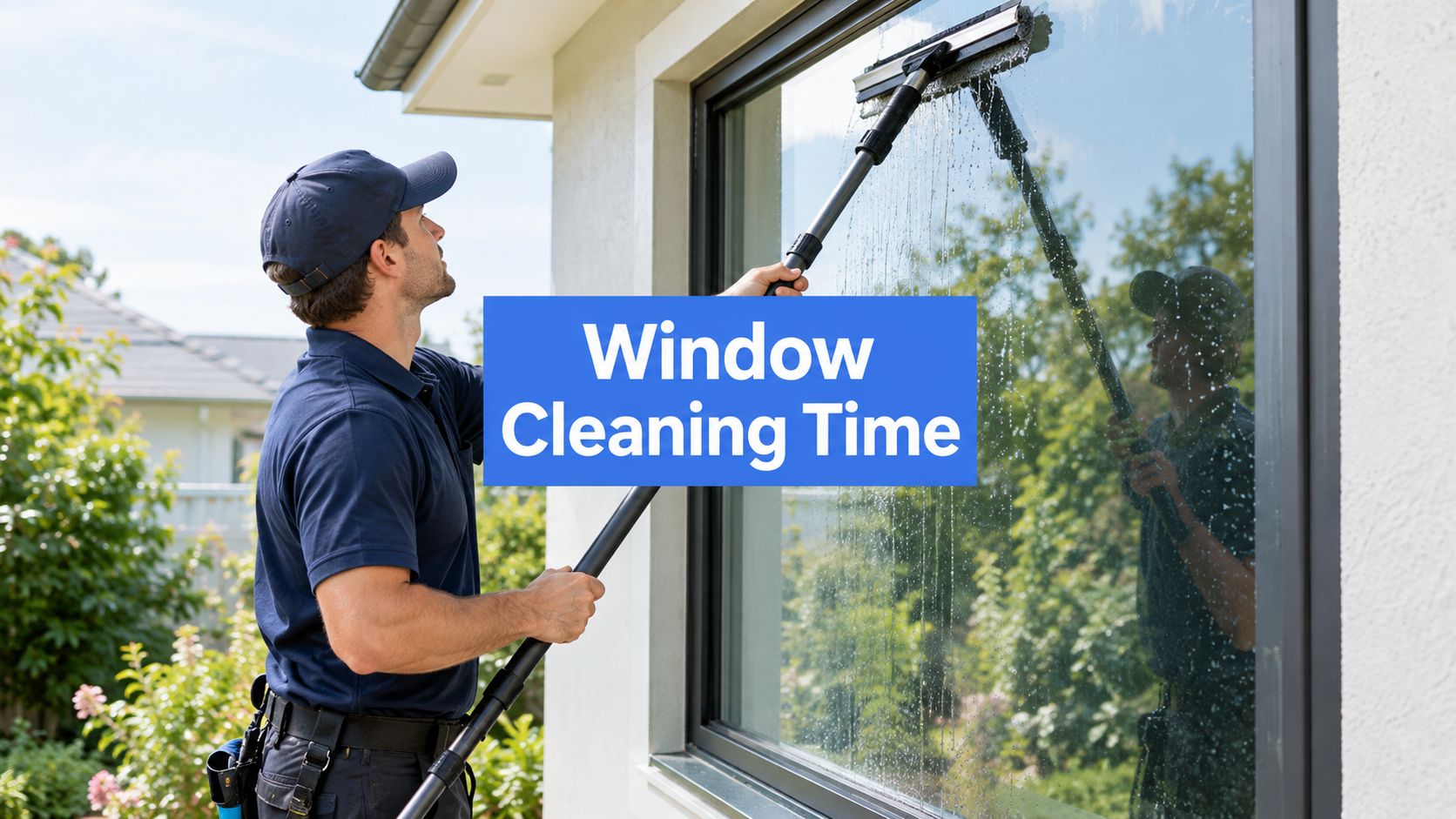
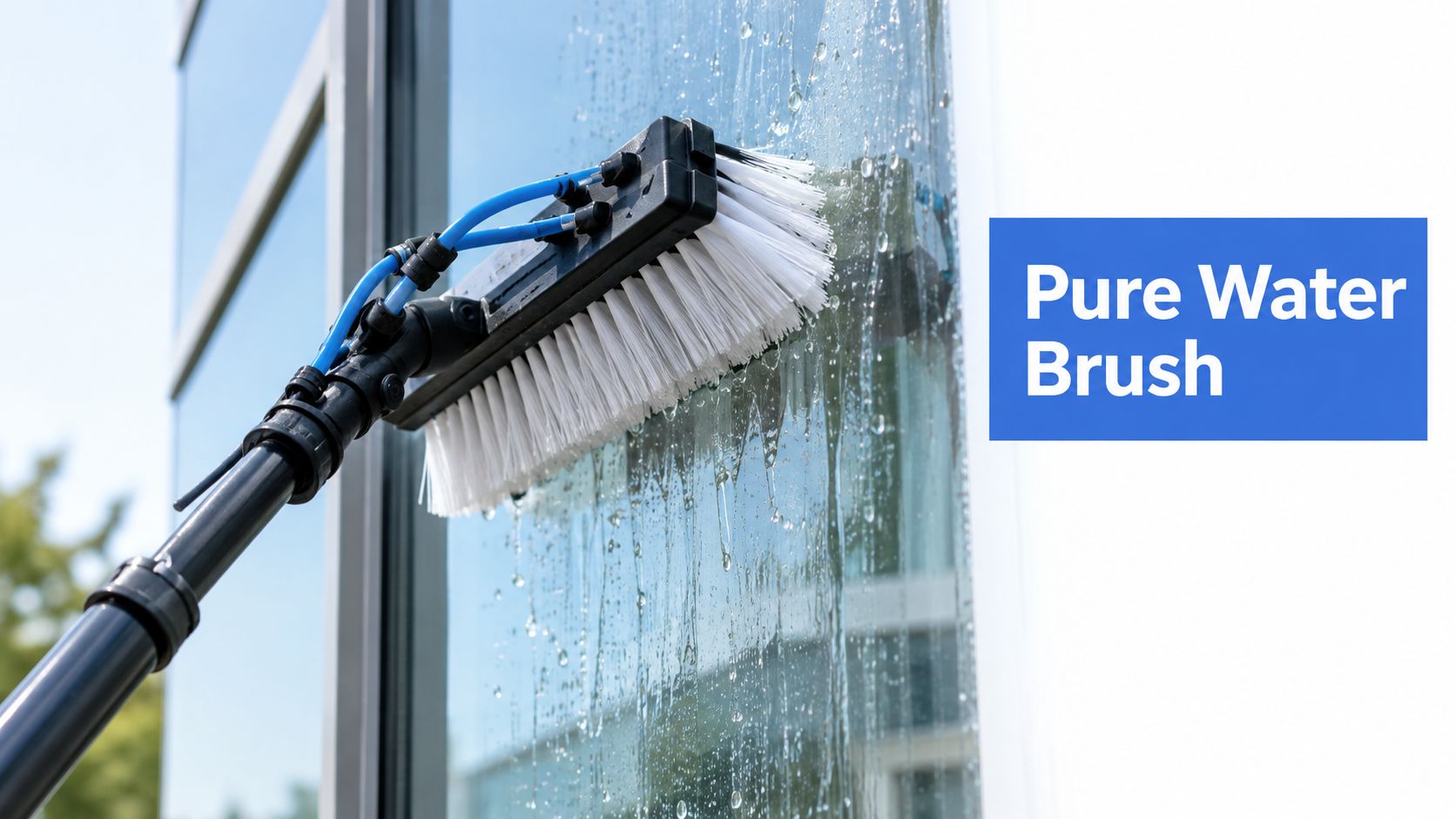
A pure-water system is different. It sends purified water through a pole-fed brush, scrubs the surface, and rinses without leaving mineral residue behind. It’s especially useful on harder-to-reach exterior glass and larger runs where a spot-free rinse matters.
What doesn’t work well is mixing random DIY methods. Paper towels shed lint. Household glass sprays can leave residue. Garden hose rinses often add spotting, especially in hard water areas.
If you’re washing fabrics and soft furnishings during the same seasonal reset, it helps to check care instructions first. This guide on how to wash curtains safely at home is useful because window areas often look unfinished if the glass is clean but the curtains still hold dust.
A quick visual walkthrough can help before the job starts:
Open and close every window you plan to have cleaned. Not for the glass itself, but to check for stuck frames, failing locks, and screens that have shifted. Those small issues slow down a job and sometimes explain why certain windows keep collecting dirt around the edges.
The right spring cleaning schedule depends on what kind of building you have and what the glass has to deal with. A single-family home on a quiet lot doesn’t collect residue like a medical office on a busy corridor. A high-rise doesn’t operate on the same timeline as a one-story retail pad.

According to this cleaning frequency discussion, high-traffic commercial properties benefit from quarterly or semi-annual professional window cleaning, while smaller residential properties may only require an annual cycle. The same source notes that 65% of homeowners identify windows as the dirtiest surfaces during spring assessment periods.
For most houses, the biggest mistake is waiting until the windows look bad enough to bother you. By then, screens are dirty, tracks are loaded, and the glass has often held onto residue for months.
A reasonable residential plan is to treat spring as the main reset, then decide whether your property needs another cleaning later based on exposure. Homes near open lots, active roads, or desert dust usually need more attention than sheltered neighborhoods. If you’re weighing timing in more detail, this guide on how often to clean windows is a helpful next step.
Medical offices, car dealerships, professional stadiums, and busy retail properties don’t have the luxury of waiting for “whenever it looks dirty.” Customer-facing glass is part of the building’s presentation every day. Dust, fingerprints, and traffic film build faster, especially on doors and lower panels.
For these properties, spring cleaning should launch the schedule, not finish it. Quarterly or semi-annual service usually makes more sense because buildup returns faster in active environments. Property teams that manage multiple vendors often benefit from better coordination tools too. If operations are getting messy, this overview on how to streamline cleaning operations with Pebb is worth reviewing.
A commercial property with inconsistent glass care never looks fully maintained, even if the landscaping and lobby are in good shape.
High-rise and condominium work carries a different set of constraints. Access, safety, weather exposure, tenant coordination, and facade design all shape the schedule. These buildings can’t rely on the same casual timing decisions that work for a house.
In cities such as Denver, Phoenix, and Las Vegas, the best high-rise plans account for seasonal wind patterns, access windows, and the side of the building that takes the harshest exposure. The result is a calendar built around logistics and building appearance, not just the first warm spell of the year.
The best answer to when to spring clean is never just “March” or “when the mood hits.” The right timing comes from conditions. Stable warmth, usable daylight, and a realistic read on local weather make the difference between a clear finish and a streaky one.
Location matters too. Arizona properties often need an earlier move. Colorado owners usually need more patience. Nevada buildings benefit from careful timing around wind, dust, and hard water buildup. Then the property type shapes the schedule even further, because a home, a medical office, and a high-rise don’t collect grime the same way.
Good spring window cleaning also depends on method. In the trade, that means using the right professional approach for the glass. A squeegee or a pure-water system. Nothing else consistently replaces those two.
Professional Window Cleaning has been delivering spotless results since 1999, with more than 26 years of experience serving homes and businesses across Arizona, Colorado, and Nevada. The work is still guided by the same principle that made spring cleaning matter in the first place. Choose the right moment, use the right method, and the whole property looks renewed.
If you’re ready to stop guessing about timing, Professional Window Cleaning can help you schedule the right service for your home, commercial property, or high-rise. Whether you’re dealing with desert dust in Arizona, late-season residue in Colorado, or wind-driven buildup in Nevada, our team knows how to time the work for a cleaner, brighter result.
Read our blog posts regularly and keep learning.