Care and Maintenance
Concentrate Window Cleaner: Professional Guide
Learn how to dilute and apply concentrate window cleaner like pros. Master ratios, safety, and streak-free results for residential and commercial glass.


You're probably here because a suction cup window mount, hook, sign, or decoration looked secure at first, then let go without warning. That failure is frustrating when it only drops a small item, and it becomes a real safety concern when the cup is supporting something heavier on a large pane of glass.
After more than 26 years in professional window cleaning, the pattern is clear. Suction cups don't usually fail because the idea is flawed. They fail because the wrong cup gets paired with the wrong surface, or because the glass wasn't prepared the way a pro would prepare it. On homes, storefronts, and larger buildings, the same basics decide whether a cup holds or slides.
A suction cup works by creating a seal against a smooth, non-porous surface. When you press the cup onto clean glass and force the air out, the pressure outside the cup is greater than the pressure inside it. That pressure difference helps keep the cup in place.
It's common to first notice suction cup failure with something ordinary. A holiday ornament drops off the window overnight. A temporary bathroom caddy slowly peels away from tile. The lesson is the same in both cases. The seal matters more than the squeeze.
Glass is one of the best surfaces for suction, but only when it's clean. Dust, soap film, pollen, hard water residue, and oily fingerprints all interfere with the rim of the cup. Even a tiny break in that contact line gives air a path back in.
In window work across homes and businesses in Denver and Scottsdale, one thing shows up again and again. People assume the cup is the problem when the issue is surface prep. A window that looks clean from a few feet away can still be dirty enough to ruin the seal.
If you're cleaning glass before applying a cup, distilled water can help reduce residue on some surfaces. This practical guide on cleaning with distilled water is useful if you want a cleaner finish before installation.
Practical rule: If a suction cup fails quickly on glass, inspect the glass first, not the packaging.
The wrong suction cup can fail even on perfectly clean glass. Selection comes first. Before you ever press a cup onto a window, match the cup's design and material to the job, the surface, and the weather it will face.
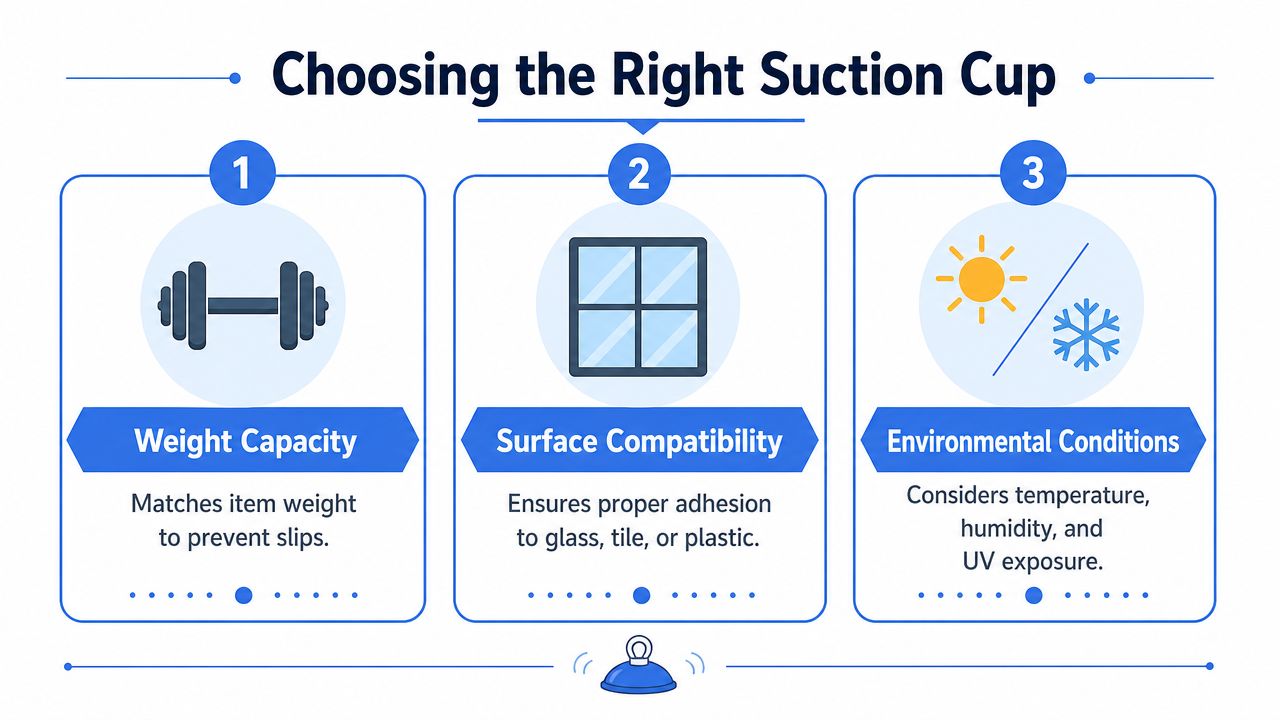
Not all cups create and maintain suction the same way. Here's how the common styles compare in real use:
| Type | Best use | What works well | Where it falls short |
|---|---|---|---|
| Push-type cup | Light decorations, small cable guides, simple hooks | Fast to apply, inexpensive, easy to reposition | More likely to lose seal over time if the glass or rim isn't spotless |
| Lever-lock cup | Medium-duty wreath hangers, temporary display pieces, tool handles | Stronger and more consistent seal because the lever helps expel air | Bulkier, usually costs more |
| Screw-in or knob-tightened cup | Temporary signage, controlled commercial setups, specialty mounts | Lets you fine-tune pressure and attachment hardware | Slower setup and over-tightening can distort the cup |
For a lightweight item inside a climate-controlled room, a simple push-type cup can be perfectly fine. For something with more pull, more movement, or more exposure to heat, a locking style is usually the better choice.
PVC cups are common and often fine for short-term indoor use. Silicone cups usually hold up better when the window gets hot, cold, or direct sun for long periods. If the suction cup window application is near strong sunlight, I'd lean toward silicone over bargain PVC every time.
A useful perspective is:
A cup that feels slightly rigid at the lip is already telling you it won't seal as well as a softer, cleaner rim.
Don't choose by appearance. Choose by load path and environment.
Also pay attention to labels and manufacturer guidance. If the package gives a capacity rating, respect it and leave yourself a safety margin instead of loading right to the stated limit.
The strongest suction cup window setup starts before the cup touches the glass.
Professionals only use two methods of window cleaning. The use of a squeegee, or the use of a pure-water system. That matters here because suction performs best on a surface that's clean at the detail level, not just clean enough to look good from across the room.
If I want a cup to hold, I don't start with the cup. I start with the glass.
A good prep routine looks like this:
On professional jobs, that prep is why results are more consistent. The glass has already been cleaned properly with a squeegee or a pure-water system, and that removes many of the hidden reasons cups fail.
A brand-new cup isn't always ready to use straight out of the package. Mold release residue, dust, lint, and fingerprints can all sit on the sealing edge.
Use mild soap and water, rinse well, and dry with a lint-free cloth. Then inspect the lip. If it's nicked, flattened, or hardened, don't use it on anything important.
There's also the old debate about moisture. Some people wet the cup before applying it. For most glass applications, I prefer a clean, dry cup on clean, dry glass. A tiny amount of moisture can help in some cases, but too much creates slip and gives people a false sense of security.
Field note: The best hold usually comes from clean materials, not extra water.
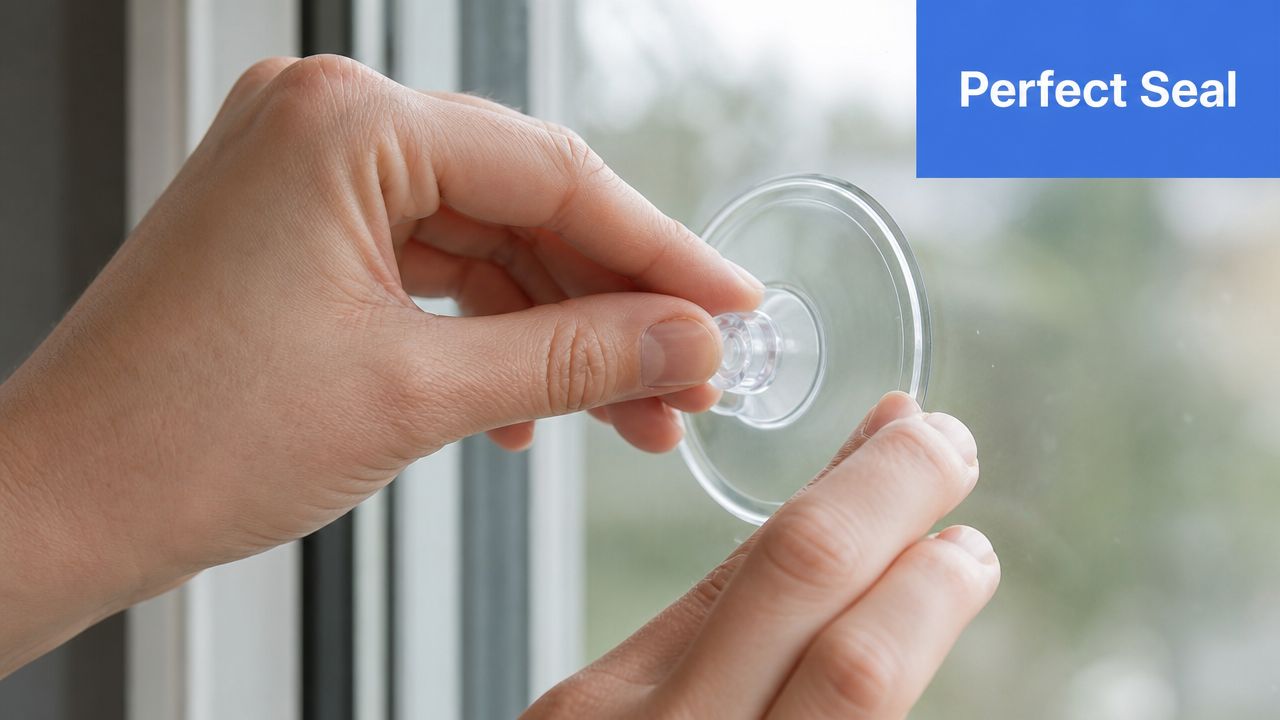
Application should be controlled, not rushed. Press from the center and work outward so the rim seats evenly. If the cup has a lever or lock, engage it only after the rim is fully flat against the glass.
That final step matters because uneven pressure traps pockets of air. Those pockets become the starting point for failure.
For crews working around glass at height or temporary mounted equipment, task planning matters as much as installation technique. If you manage safety paperwork or site procedures, this overview of the differences between JSA and SWMS is a helpful reference for understanding how job safety planning tools differ.
This short demonstration reinforces the technique well:
A few habits cause repeat failures:
A reliable seal feels boring. That's usually the sign you did it right.
When a suction cup window mount fails, the failure pattern usually points to the cause. Fast drops, slow peeling, and random afternoon releases don't mean the same thing. Read the symptom before you replace the hardware.
If the cup holds at first and then gradually sags, suspect a small air leak. The usual culprits are a dusty rim, residue on the glass, or a deformed edge that isn't making full contact.
Try this fix:
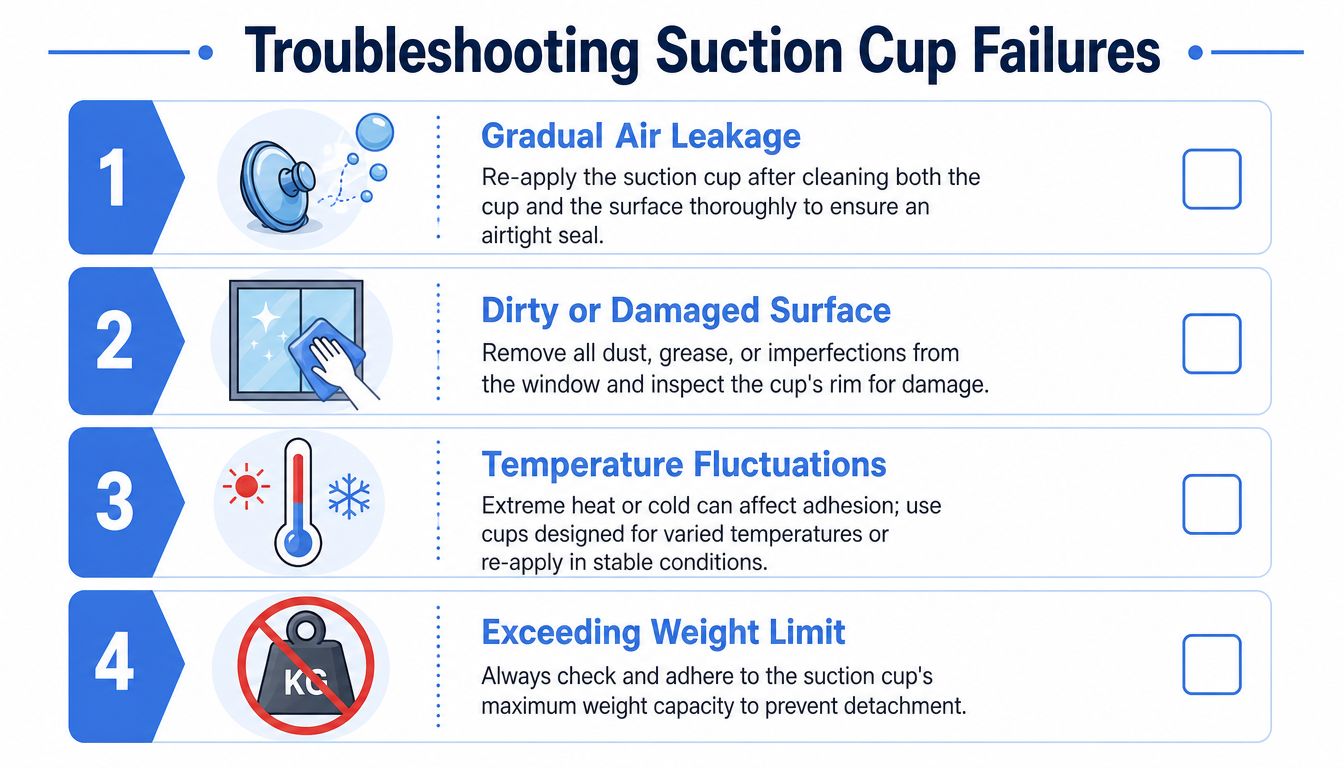
Temperature changes affect both the cup material and the glass surface. On hot panes, some cups soften too much or lose shape. In cold conditions, the material can stiffen and resist sealing.
A practical response depends on the weather:
| Condition | Typical problem | Better approach |
|---|---|---|
| Direct sun | Cup softens or releases later in the day | Use a silicone cup and install during milder surface temperature |
| Cold morning glass | Rim won't conform well | Warm the cup indoors first, then apply |
| Big daily swings | Seal changes as materials expand and contract | Check attachment more often and use higher-grade cups |
Some windows just aren't ideal. Textured glass, scratched areas, coatings near edges, and subtle contamination can all defeat a good cup. Then there's overloading. A cup may stick perfectly but still fail because the item pulls outward or downward in a way the cup wasn't meant to handle.
If the mounted item swings, twists, or catches wind, the cup is dealing with more than simple weight.
For recurring failures, stop focusing only on the cup. Reassess the glass, the mounting angle, and whether the setup belongs on a suction mount at all.
A suction cup that held all week can still be ruined in five careless seconds. I see that more often than I see true material failure. The lip gets peeled back too hard, twisted off dry, or crushed in storage, then the cup gets blamed the next time it slips.
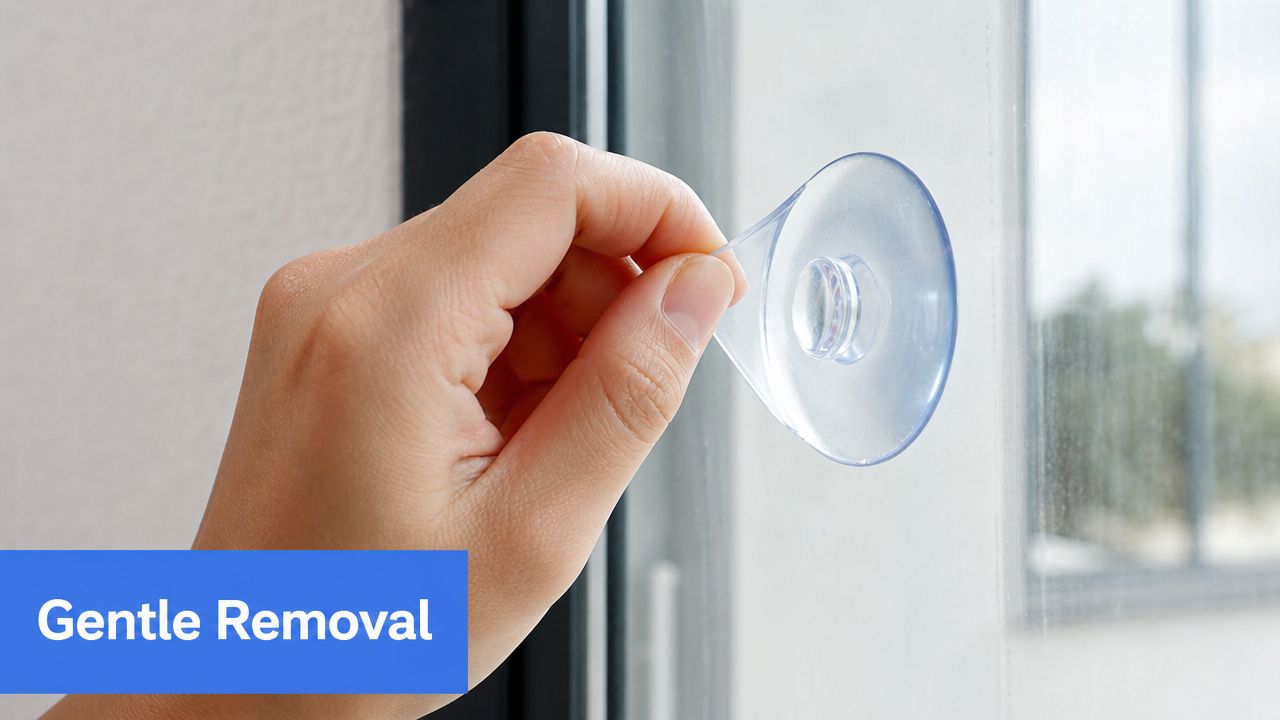
Break the vacuum first. If the cup has a release tab, lift it. If it does not, work a fingernail or a thin plastic card under one edge and let air enter slowly. Once the seal releases, the cup should come off without force.
Avoid metal blades or scrapers on the glass. They can scratch the pane, nick the cup, and turn a simple removal job into a repair problem. If the glass is chipped, cracked, or already unstable, deal with that issue before reusing the area. This guide explains how to repair a broken window safely.
Good cups wear out from age, but poor storage shortens their life much faster. In residential work, that usually means cups tossed into a hot garage. On commercial crews, it is often cups stacked under tools, extension poles, or hardware in the truck.
Use a simple routine:
I also recommend marking cups used for heavier commercial tasks and keeping them separate from light household ones. That makes inspection easier and helps you retire worn cups before they become unreliable.
Before each reuse, check the rim with your thumb and forefinger. Look for flat spots, small cuts, stiffness, or a chalky surface. If the edge no longer feels uniform, replace it. For crews handling taller buildings or exterior glass access, the inspection standard should be stricter, especially if the cup is part of a temporary work setup tied to high-rise window washing safety practices.
Good maintenance does not guarantee indefinite service. It does give the cup its best chance to hold the way it was designed to hold.
Commercial and high-rise work changes the standard completely. A suction cup window setup that's acceptable for indoor decor is not the same as a system used for temporary signage, glass handling, staging tasks, or access-related work on a larger building.
In commercial settings, use industrial-grade cups with clear load guidance from the manufacturer and hardware suited to the exact attachment point. Storefront glass can heat up hard in sun, and large panes amplify small mistakes because the loads don't stay static. People bump signs. Doors vibrate. Wind pressure changes across the face of the building.
For work at height, suction cups should never be treated casually. The issue isn't just whether the cup sticks. It's whether the full setup meets the site's safety expectations, material demands, and fallback requirements if the seal is compromised.
Climate matters too. Glass exposed to intense sun in Phoenix behaves differently from glass dealing with sharp day-to-night shifts in Las Vegas. Material choice, inspection frequency, and installation timing all become more important in those environments.
For building owners and managers dealing with access, maintenance planning, and exterior glass at height, this resource on high-rise window washing adds useful context beyond simple suction hardware selection.
If you want experienced help with residential, commercial, or high-rise glass, Professional Window Cleaning brings more than 26 years of hands-on window cleaning experience to the job. From routine maintenance to complex exterior glass care, the focus stays the same: safe methods, reliable results, and windows that look the way they should.
Read our blog posts regularly and keep learning.