
Care and Maintenance
High Rise Window Cleaning Cost: A 2026 Pricing Guide
Explore high rise window cleaning cost in 2026, from per-window and per-floor rates to Arizona, Colorado, and Nevada examples that help you budget


You're probably looking at a gutter full of leaves, pine needles, or black sludge and thinking the same thing most homeowners think. I need to clean that out, but I really don't want to drag out a ladder.
That hesitation is smart. Gutter cleaning is one of those routine chores that turns risky fast, especially when the ladder is on uneven soil, flower beds, gravel, or a wet driveway. The good news is that ground-based tools have gotten much better, and if you match the tool to the debris, you can do a lot of effective gutter cleaning without ever climbing.
The key is simple. Dry debris responds best to air. Wet muck usually needs water or direct extraction. Deep compacted clogs often need a manual grabber. Most bad results come from using the wrong method for the mess that's in the gutter.
Gutter cleaning isn't hated for its dirtiness. The task is loathed because ladders are unstable, awkward to reposition, and easy to trust too much. You lean a little too far, one leg settles into soft ground, and a basic maintenance job turns into a real emergency.
That risk isn't exaggerated. Ladder-related accidents account for approximately 18,000 emergency room visits annually in the United States, many of which occur during seasonal tasks like gutter cleaning. Ground-based tools also let homeowners clean gutters up to 20 to 30 feet high without climbing. That makes ground-level cleaning a safety decision first, not just a convenience upgrade.
You've got three practical categories of ladder-free gutter cleaning tools:
Each one has a place. Problems start when people assume one tool can handle everything.
Practical rule: Choose the method by the condition of the debris, not by what tool is easiest to grab from the garage.
If you want another homeowner-focused walkthrough before starting, this helpful guide for Utah homeowners is worth a read because it complements the same safety-first approach.
Cleaning from the ground changes the whole job. You can keep a stable stance, move more freely around landscaping, and work longer without balancing a tool in one hand and a ladder rail in the other.
It also makes you more methodical. Instead of rushing because you're uncomfortable on a rung, you can work one section at a time, check the downspouts, watch where debris falls, and stop when the setup isn't right.
That's how to clean rain gutters without a ladder effectively. Not by buying one magic gadget, but by using the right ground-based method for the debris you currently have.
Dry leaves, seed pods, pine needles, and dusty roof grit are where air tools shine. If your gutters are filled with light material that hasn't been soaked into a compacted mat, a blower or vacuum attachment is usually the fastest way to clear a long run.
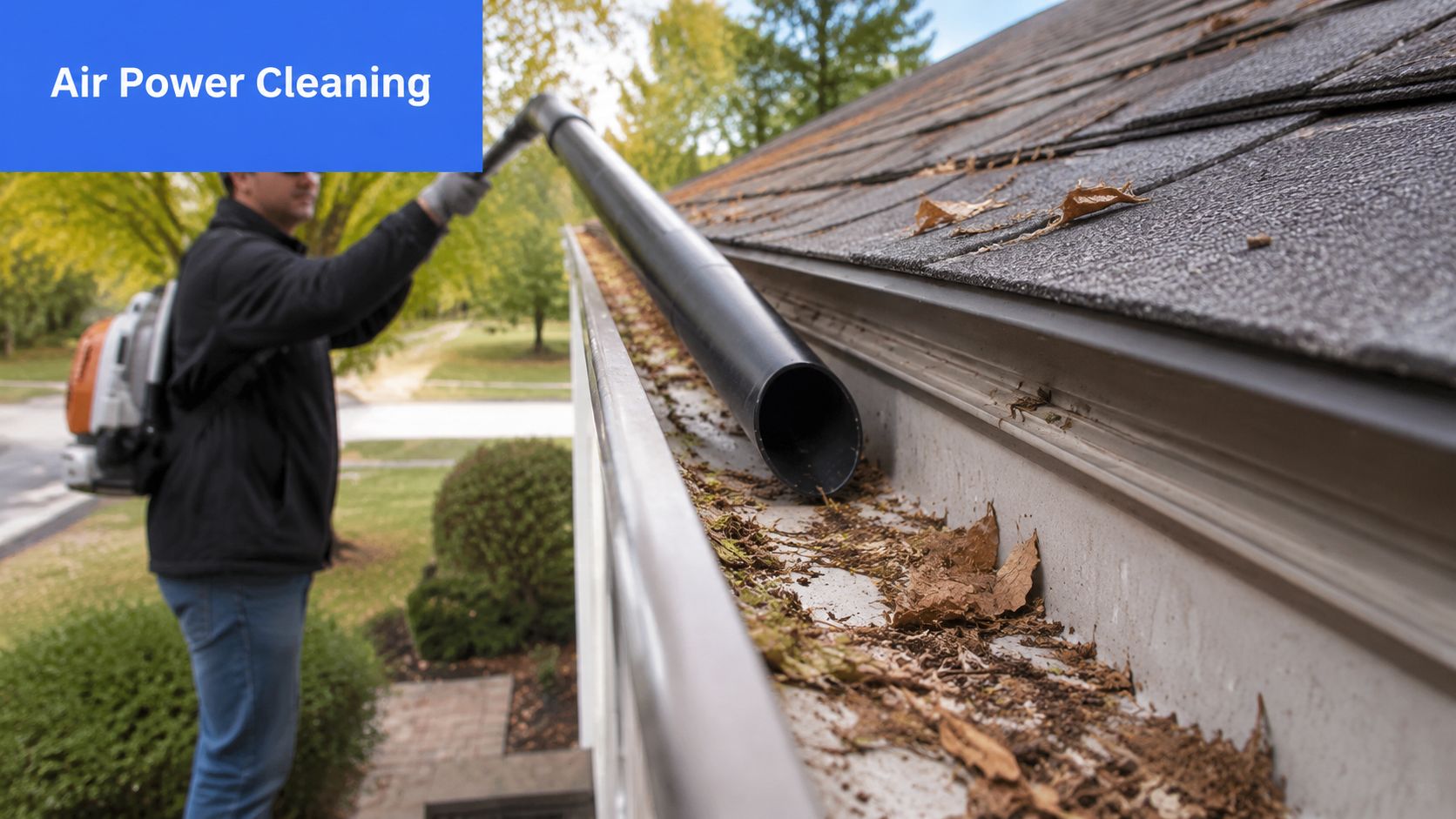
This method is best when the gutter contents are crisp, light, and not glued to the bottom. A curved gutter nozzle directs airflow down into the channel and pushes debris toward an open end or a downspout area you can clear afterward.
Experts recommend a gas-powered blower for second-story gutters, and this approach reaches about an 85% success rate for moderately clogged gutters with dry leaves according to this gutter tool breakdown. That same source also notes a detail many DIY videos skip. Using the wrong schedule of PVC for homemade extensions can lead to severe kickback injuries.
That warning matters. A lot of people copy cheap extension builds online without thinking about weight, rigidity, and control. Once the pipe gets long enough, the whole assembly wants to twist, especially when you're aiming upward and trying to keep the nozzle seated in the gutter.
A blower pushes debris out. A vacuum pulls debris in. They look similar in marketing, but they behave very differently on the house.
A quick comparison helps:
| Tool | Best for | Weak point |
|---|---|---|
| Leaf blower with curved extension | Dry leaves and loose needles | Makes a mess below if you don't control the discharge |
| Wet/dry vac gutter kit | Light loose debris near the edge | Struggles once debris is damp, matted, or packed |
A blower is usually more aggressive. A vacuum is usually cleaner. If the debris is still dry but you're working over decorative rock, patios, or delicate beds, the vacuum can be easier to control.
Air tools save time only when the debris is light enough to move easily. If you have to fight every section, switch methods early.
Start on a calm day. Wind turns a simple cleanup into a mess on the siding, windows, and landscaping.
Then work like this:
A lot of homeowners learn faster by watching the angle and pacing in action. This video gives a useful visual reference before you try it yourself:
Homemade extensions can work. Sloppy homemade extensions are where people get into trouble.
If the pipe is too heavy, the blower becomes tiring to control. If the fit is poor, the extension can rotate or separate under load. If the material choice is wrong, kickback gets more violent and accuracy disappears. That's why I'd rather see a homeowner use a properly fitted commercial attachment than copy a bargain setup from a short video and hope for the best.
For dry debris, air is efficient. For wet sludge, it's the wrong fight.
Water-based cleaning sounds simple. Hook up a telescopic wand, point it into the gutter, and wash everything out. That works sometimes, but this is also the method that causes a lot of avoidable damage when people get aggressive with pressure.
The common advice to “just blast it out” leaves out the part that matters most. Your gutter system has to move that water somewhere. If the downspout is restricted, disconnected, or slow-draining, you can force water backward into places you don't want it.
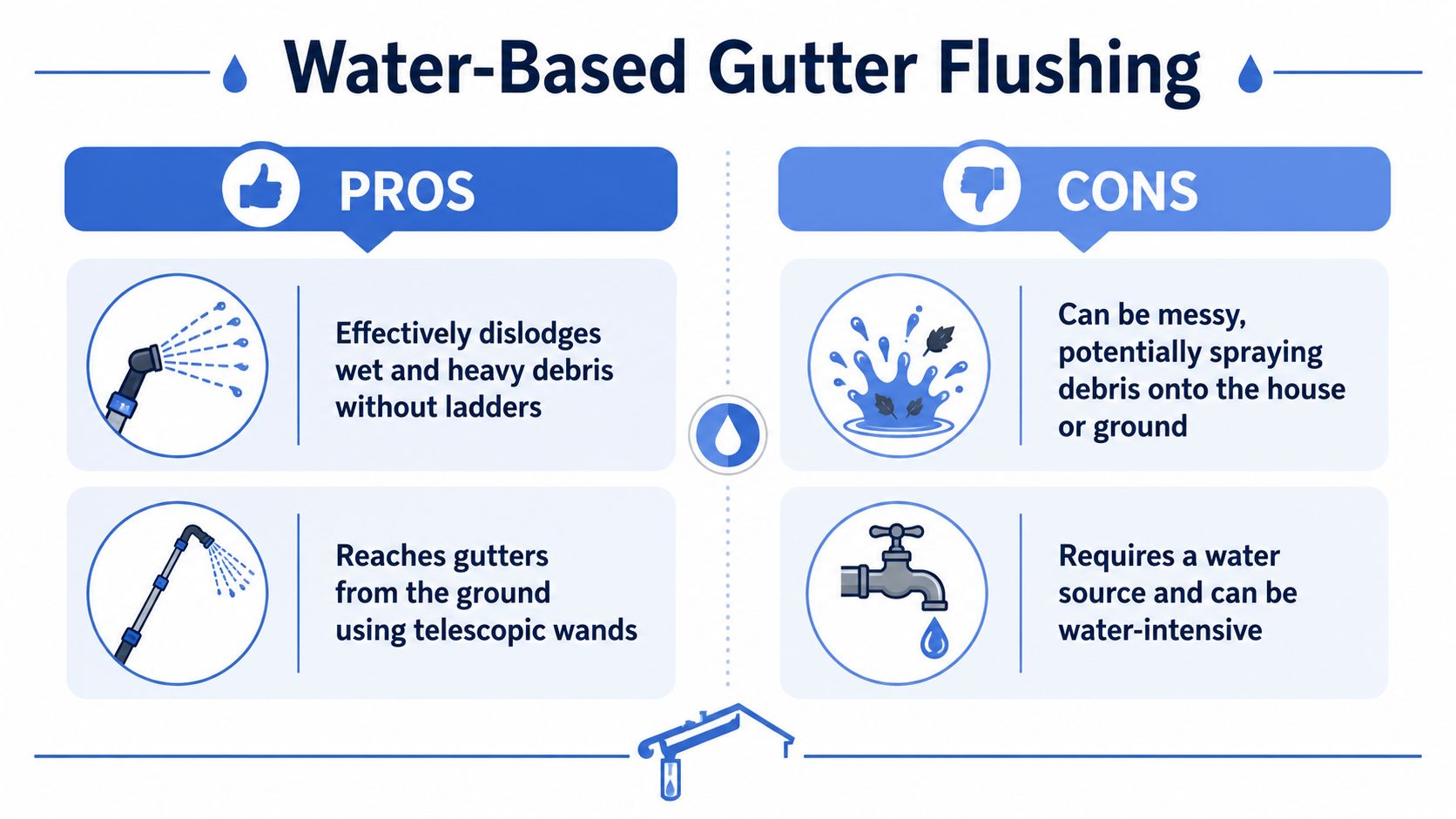
A 2025 National Home Improvement Survey found that 45% of homeowners reported water intrusion issues after DIY pressure washing, often because they weren't told to test downspout integrity first, as noted in this discussion of ground-based gutter cleaning.
That's the issue. Water is effective, but it's also indiscriminate. If it can't escape through the downspout, it'll find another path. That can mean siding, soffits, trim joints, or vulnerable roof edges.
Don't start with maximum pressure. Start by proving the gutter and downspout can drain.
Before you send a strong stream into the gutter, do a basic check:
If your goal is to reach awkward exterior areas from the ground, the same control principles that matter in gutter work also matter in higher-access cleaning tasks, which is why this guide on reach window cleaning is useful context.
Water-based tools are strongest when debris is damp, soft, and too heavy for a blower but not yet packed like clay. A telescopic wand with an angled tip can break apart muck and move it toward the downspout.
What works well:
What doesn't:
Aiming matters as much as pressure. Keep the stream moving with the gutter channel. If you fire straight down into one spot, you often just pack the blockage tighter or splash debris onto the soffit and siding.
The best water-based gutter cleaning looks boring. Short passes, moderate pressure, constant observation, and frequent checks at the outlet. If the water starts backing up, stop and switch tactics. More pressure won't fix a drainage path that's already blocked.
That's the trade-off with flushing. It can do a nice job on wet buildup, but it punishes impatience.
When air scatters the top layer and water just tunnels through the middle, you're left with the stuff that causes most bad clogs. Wet leaf paste, roof grit, seed clusters, and sludge that has been sitting long enough to bind together.
That's where a gutter tong or claw tool earns its keep.
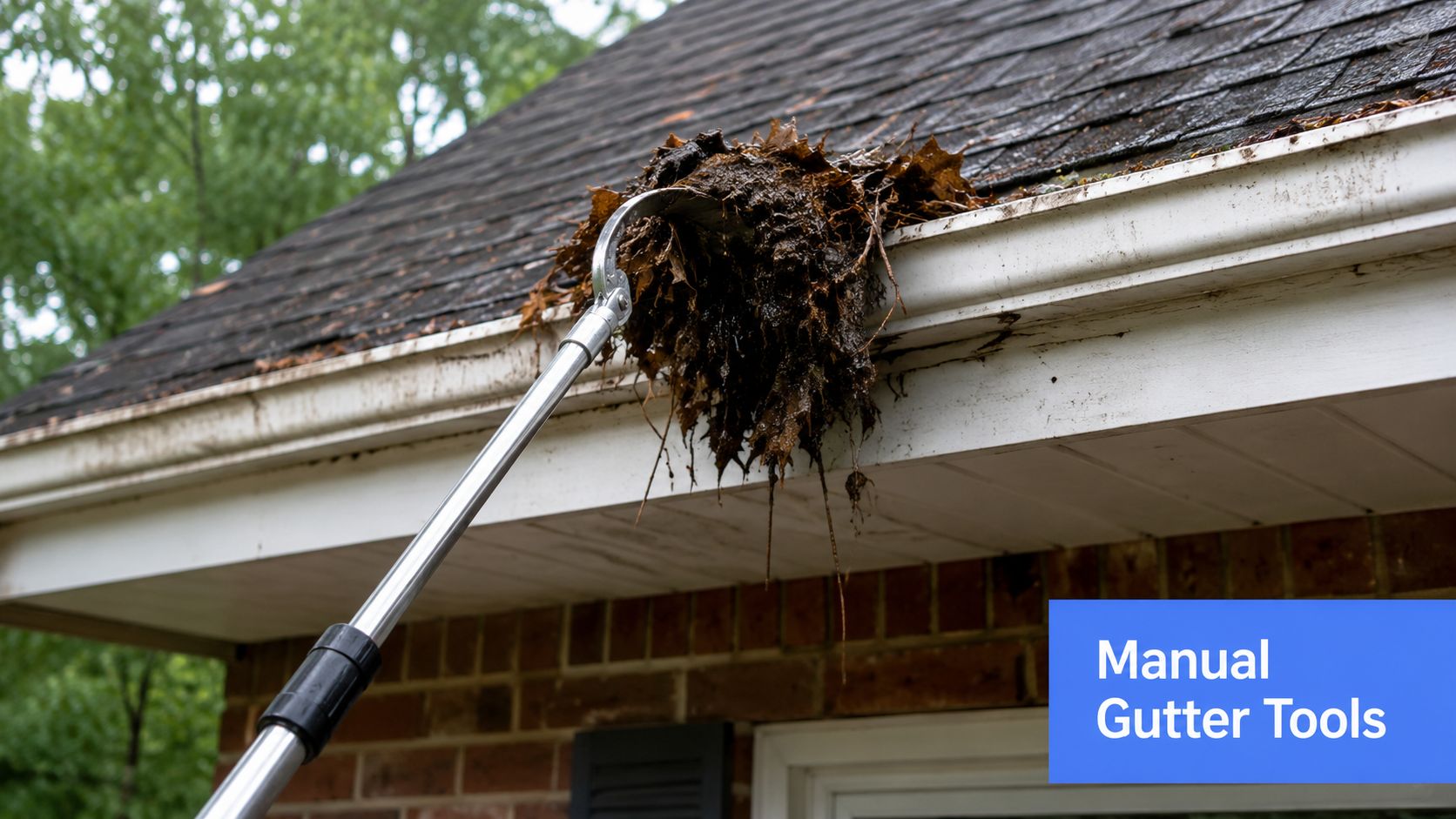
This tool is simple. A grabber head sits at the top of a telescopic pole, and a pull-string opens and closes the jaws. You position it over the clog, drop into the mass, squeeze, and lift the debris out in chunks.
For wet leaves or caked debris where other methods fail, the gutter tong or claw tool reaches a 90% success rate on heavy debris, based on this guide to cleaning gutters without a ladder. That tracks with field experience. It's the closest thing to surgical removal you can do from the ground.
Use the claw when you're dealing with:
This method is slower than a blower, but speed isn't the point here. Precision is.
If you can identify the exact section that's blocked, manual extraction usually beats trying to overpower it with more air or water.
The best technique is to remove the worst mass first, then follow with a lighter cleanup method if needed. Grab the clog in sections instead of trying to yank out one oversized load. That keeps the tool controllable and reduces the chance of dropping debris back onto the roof edge.
Also, pay attention to what comes up. If you're pulling out dark sludge with granules, shingle grit, or sprouting material, that gutter probably needs a more complete inspection after the debris is gone. Heavy clogs don't just block drainage. They can hide loose spikes, separated joints, and standing water damage.
For ugly, stubborn sections, the claw is usually the tool that finally gets the job moving again.
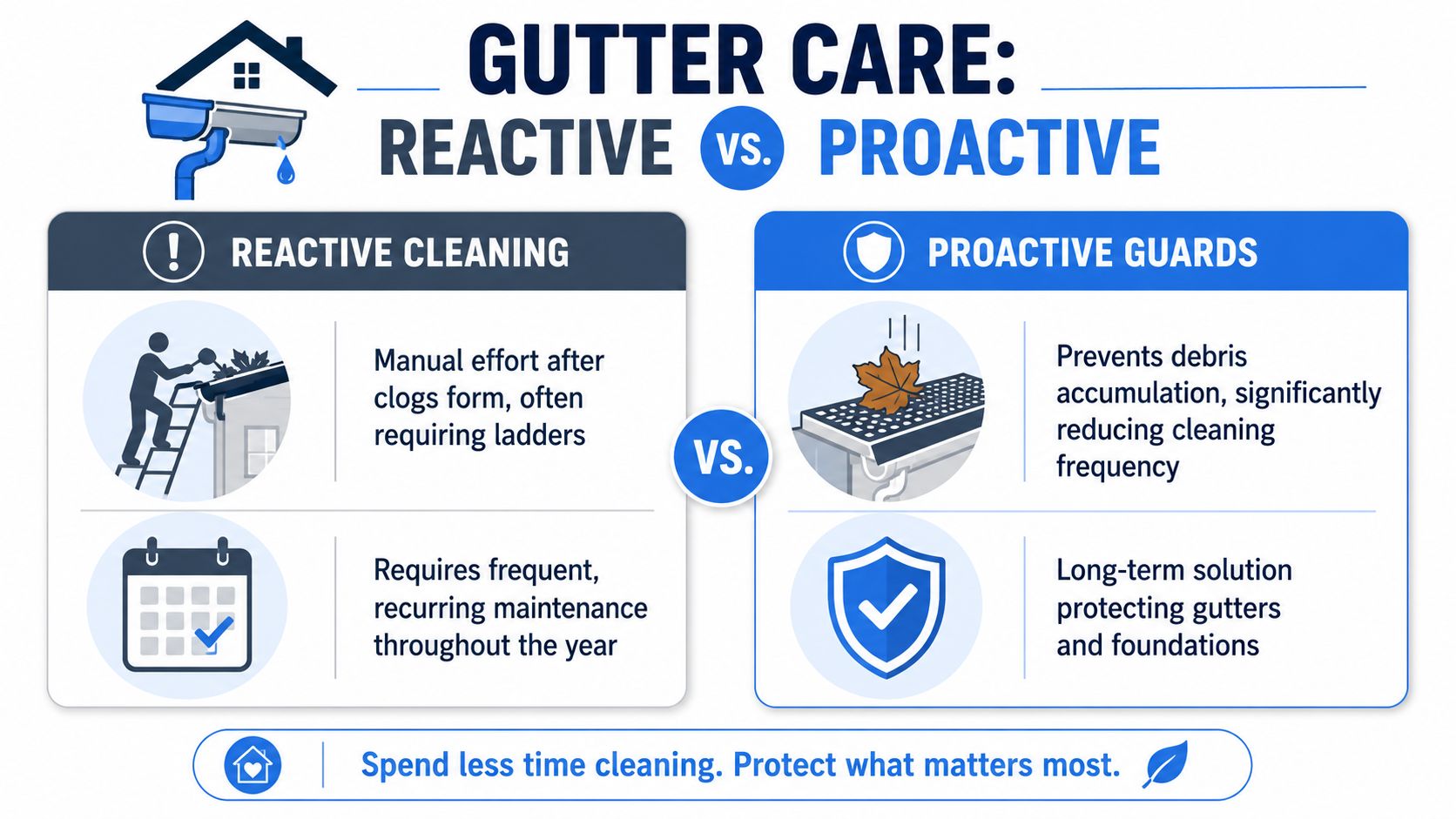
The easiest gutter to clean from the ground is the one that doesn't keep filling up in the first place. That's why gutter guards are worth considering if you're tired of repeating the same cleanup every season.
They don't make gutters maintenance-free. Nothing does. But they can change the job from major debris removal to lighter inspection and occasional clearing.
Here's the practical breakdown:
| Guard type | What it does well | What to watch for |
|---|---|---|
| Mesh screen | Blocks larger leaves and keeps visibility simple | Fine debris can still collect on top or through openings |
| Brush insert | Easy concept for catching leaves before they settle deep | Needs periodic removal and cleaning |
| Reverse-curve systems | Directs water while shedding larger debris | Installation quality matters a lot |
The right choice depends on the trees around the property, the roof pitch, and how much maintenance you're willing to do later.
Reactive cleaning means you deal with the mess after the clog forms. Prevention changes the whole cycle. Less debris gets into the trough, downspouts stay clearer, and every future cleaning session becomes shorter and safer.
If you're comparing cleanup alone versus adding protection, this article on how to clean gutters with gutter guard is a helpful next step because it shows what maintenance still looks like after guards are installed.
For homeowners committed to staying off ladders, guards are the long game. You still inspect. You still maintain. But you spend less time fighting packed organic debris at the bottom of an open gutter.
Some jobs are still better left to a crew with the right access equipment and exterior maintenance experience. If the home is especially tall, the gutter system is damaged, the downspouts are hidden and hard to verify, or the clogs are tied to drainage problems you can't diagnose from the ground, calling a professional is the safer move.
The same goes for homes where the gutter problem is part of a bigger exterior maintenance issue. Overflow stains on siding, dirty upper windows, clogged roofline areas, and neglected trim often show up together. If you're already evaluating the outside of the house, it makes sense to look at the whole envelope, not just the gutters.
Professional Window Cleaning has been cleaning windows for over 26 years. In window cleaning, there are only two methods professionals use. The classic squeegee system, and the pure-water system. Pure water cleaning filters ordinary tap water to remove natural minerals, which leaves the water sediment-free for cleaning applications, as explained in this introduction to pure water cleaning. Most pros use either a mop-and-squeegee setup or a pure-water system, and a common mistake with pure water is using it on glass that was previously cleaned with traditional soap-based methods without accounting for residue.
For homeowners in Las Vegas, Phoenix, Denver, and Scottsdale, that kind of exterior care matters because curb appeal usually comes down to the details at the roofline and the glass. If you want a regional gutter perspective too, Guide to Dallas home gutter cleaning is a useful comparison point for how pros think about seasonal debris and maintenance planning.
If you can handle the work safely from the ground, do it. If the house, the clogs, or the drainage system are telling you the job is bigger than that, don't force a DIY win.
If your gutters have you looking more closely at the rest of your home's exterior, Professional Window Cleaning can help you finish the job properly. From traditional squeegee work to pure-water window cleaning, their team handles residential, commercial, and high-access glass with the kind of detail that makes the whole property look cared for.
Read our blog posts regularly and keep learning.