
Care and Maintenance
Window Cleaning with Pure Water: A Practical Guide
Learn how window cleaning with pure water works, the equipment behind it, real benefits and limits, and what to expect on cost for homes and high-rises.


It’s a huge misconception that installing gutter guards means you can just “set it and forget it.” While they do a fantastic job blocking big stuff like leaves and twigs, they aren’t a magical forcefield. Smaller gunk—think pine needles, shingle grit, and pollen—inevitably settles on top, mixes with rain, and creates a thick sludge that stops water in its tracks.
This guide will walk you through how to clean gutters with gutter guard systems so you can keep them working as intended and protect your home from water damage.
Gutter guards are an excellent investment for any homeowner. They absolutely cut down on how often and how hard you have to work to maintain your gutters. But thinking they eliminate maintenance entirely is a costly mistake.
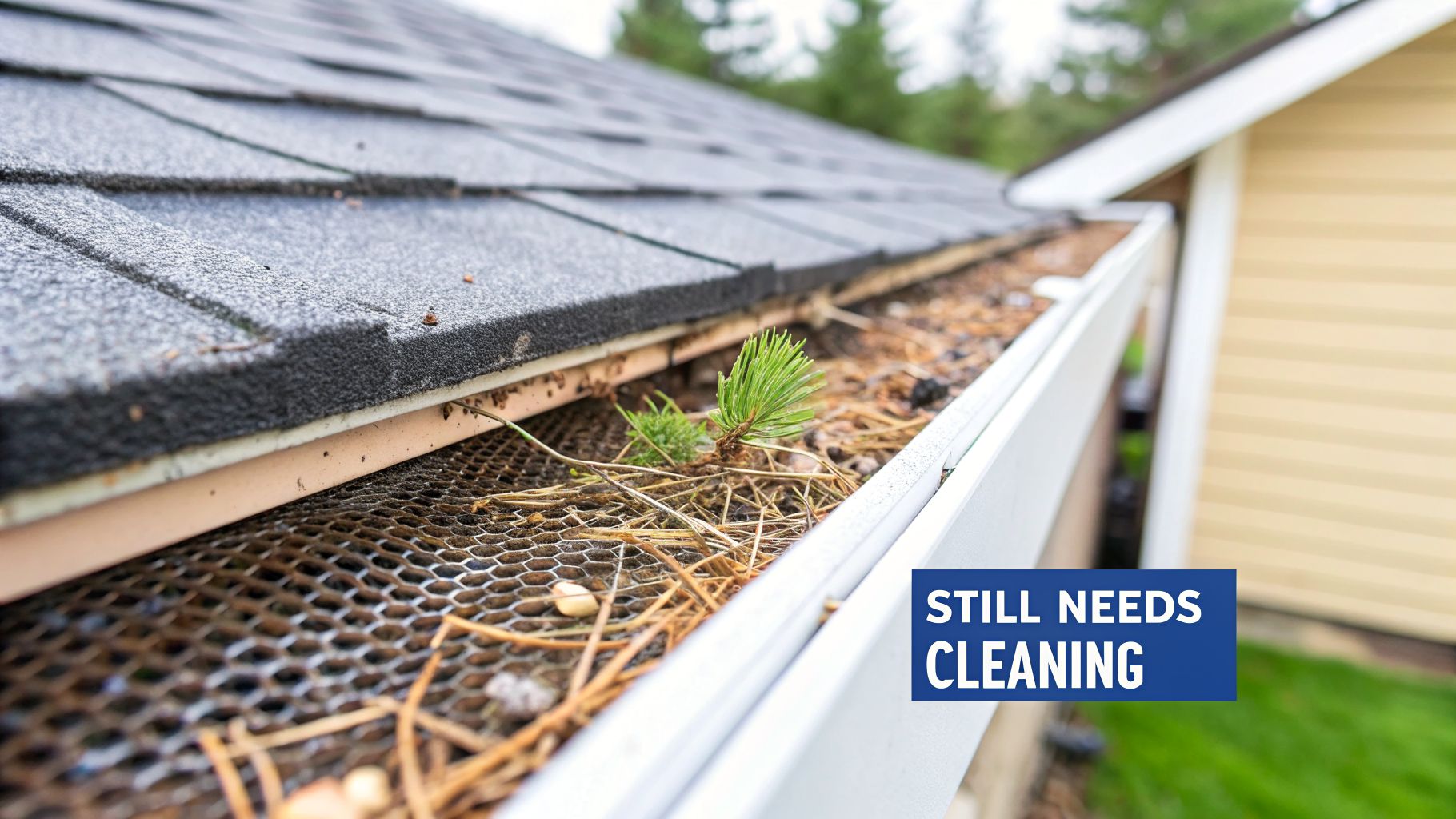
The main job of a gutter guard is to keep large debris out of the channel itself. Over time, however, a completely different kind of clog builds up right on the surface of the guard.
Even the best-designed gutter guards can't stop the fine stuff. Here’s what we typically see caked on top:
This layer of sludge effectively turns your high-tech gutter guard into a solid, non-porous sheet. When a heavy rain hits, water just cascades right over the edge, completely bypassing your gutter system. This can lead to serious damage to your foundation, siding, and landscaping. It's a common issue we see, especially in places like Denver, CO, where the changing seasons dump all sorts of different debris onto roofs.
The core issue isn't that gutter guards fail. It's that they change the type of maintenance required. Instead of scooping handfuls of wet leaves from inside the gutter, you're now keeping the guard's surface clear.
The reason for installing guards is still solid. They prevent the worst kinds of clogs deep inside your gutters. In fact, research shows that 87% of residential demand comes from homeowners trying to prevent water damage and cut down on overall maintenance. One case study even found that bundling new roofs with gutter guards cut down on warranty claims by over 30% by stopping overflow problems before they started.
Staying on top of this surface cleaning is what protects your initial investment. A little bit of maintenance ensures your guards can actually do their job—directing water away from your home. It also prevents the buildup from getting so bad that you need to call in a professional to fix a bigger problem.
To get a better handle on what system is right for you, consulting an expert roofing and gutter guide can show you what other homeowners are picking and why.
If you need help figuring out a good maintenance schedule, our article on when to clean out gutters is a great place to start. With over 26 years in business, our team at Professional Window Cleaning has seen firsthand how a little upkeep can save homeowners in cities like Phoenix, AZ, thousands in the long run.
Before you even think about setting a ladder against your house, let’s talk prep. Getting your tools and safety gear lined up first is what separates a smooth, successful gutter cleaning from a frustrating, or even dangerous, afternoon. This isn't just about piling up equipment; it's about having the right gear for a job that can be surprisingly risky.
The single most important item you'll use is a sturdy ladder. I can't stress this enough—a wobbly ladder is a recipe for disaster. You need to be aware of the real dangers of DIY gutter cleaning, and it almost always starts with the ladder. For maximum stability, I strongly recommend a ladder stabilizer (or "standoff"). This simple attachment braces against the roof, not your gutters, preventing costly damage and giving you a much safer platform to work from.
Your safety is the top priority, period. That gunk festering in your gutters isn't just a harmless pile of leaves. It's often a mix of decomposing organic matter, sharp twigs, animal droppings, and even bacteria. Protect yourself.
Once you're geared up for safety, you can focus on the tools that make cleaning your gutter guards much, much easier. You don’t need a ton of fancy equipment to get this done right.
A simple plastic gutter scoop is your best friend for getting out any sludge that managed to sneak past the guards. Its flexibility means you won’t scratch or gouge the gutter channel. You'll also want a bucket with a sturdy handle or a hook so you can hang it from your ladder—this keeps you from dropping debris all over your yard.
When you get to the rinsing stage, a garden hose with a high-pressure spray nozzle is all you need. It’s far safer than a pressure washer, which can be powerful enough to damage delicate mesh guards or even throw you off balance on the ladder.
Finally, a leaf blower can be a massive time-saver, especially for the light, fluffy debris that collects on top of the guards. A directional nozzle lets you clear huge sections in seconds, either from the ground or while on the ladder. And speaking of ladders, make sure you know how to find the correct angle for a ladder to stay as safe as possible. For over 26 years, Professional Window Cleaning has been helping homeowners in Scottsdale, AZ with all their exterior cleaning needs.
Alright, you've got your gear ready and your ladder steady. So, how do you actually clean gutters with a guard system in place? The truth is, there’s no single answer. The right method depends entirely on what kind of guard you have—what works for a simple mesh screen could damage a more complex reverse-curve system.
No matter the type, your first job is always to clear what’s sitting on top. This is where most of the fine debris, like pine needles, shingle grit, and dirt, accumulates and starts blocking water flow. Think of it as the universal first step before you dive into the specifics for your guard.
This infographic hits the nail on the head when it comes to the safety basics for any gutter job.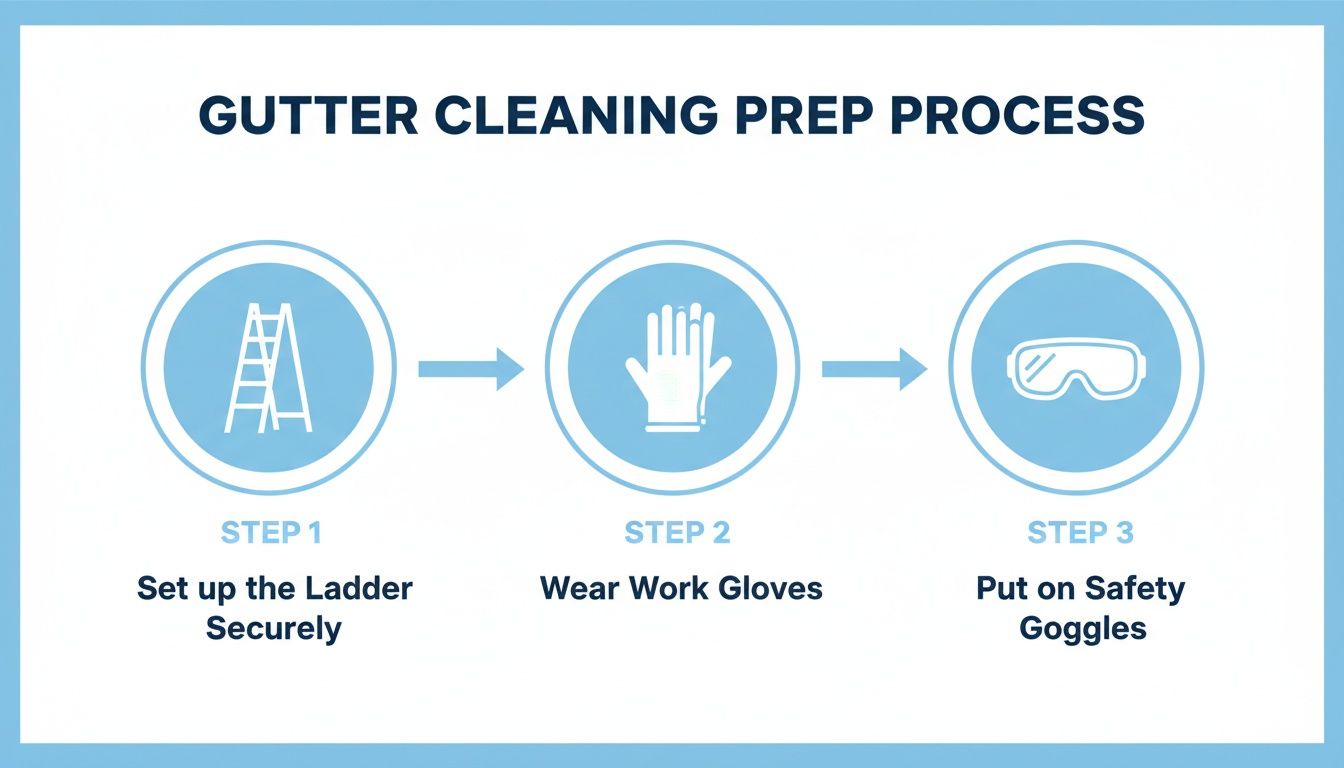
As it shows, a stable ladder and the right personal protective equipment are non-negotiable. Safety always comes first.
Mesh and screen guards are probably the most common type you'll see, and thankfully, cleaning them is pretty straightforward. The goal here is to sweep the surface clean and then flush out any fine particles that slipped through.
Start by grabbing a leaf blower on a low setting or a stiff-bristle brush. Work your way along the gutters, blowing or brushing off the loose, dry debris. This gets the bulk of the mess out of the way fast.
Once the bigger stuff is gone, switch to a garden hose with a high-pressure nozzle. Spray down the guards to wash away any stubborn, caked-on grit and fine sludge. This simple rinse is great for clearing out the tiny openings in the mesh.
As you rinse, keep an eye on how the water is flowing. If you notice it pooling in certain spots, that’s a red flag. It likely means some gunk has made it under the guard and is clogging the gutter channel itself. You may need to gently lift a section of the guard (if the design allows) or use a thin tool to break up the blockage.
Foam and brush guards—sometimes called "hedgehog" style—work by filling the gutter channel completely. This design means you have to remove them to get them truly clean, so it’s a bit more hands-on.
Carefully pull the inserts out of the gutter, working in small, manageable sections. Don't yank on a long piece all at once; you risk tearing the foam or getting it jammed. Once the sections are on the ground, your cleaning method depends on the debris.
Before you put them back, you absolutely must clean out the now-empty gutter channel. This is your one chance to get in there and scoop out all the fine sediment that has settled at the bottom. Once the gutter is clear, the clean inserts can go back in.
Pro Tip: Always work away from your downspouts. When you’re scooping or brushing debris, push it toward a section of the gutter where you can easily collect it in a bucket. Pushing it toward the downspout is a surefire way to create a brand-new clog deep where you can't reach it.
These solid-hood guards are designed so that debris slides right off the edge, while water clings to the curved surface and drains into the gutter. But sometimes, debris can still get stuck on the "nose" of the guard or clog the narrow opening.
Your main job here is to clear the surface. Use a soft brush to sweep any leaves or twigs off the top. Follow that up with a targeted stream of water from your hose, aimed directly at the opening where water enters the gutter. This will help flush out any small particles that have wedged their way inside.
Regardless of your guard type, consistency is everything. Homes in areas like Phoenix, AZ, might just need a quick check after the monsoon season, while houses in other climates need more frequent attention. At Professional Window Cleaning, we've learned over our 26 years in the business that a little proactive cleaning saves you from major headaches later on. If the job ever feels too big or unsafe, our professional teams are always here to make sure your gutters are flowing perfectly.
Alright, you’ve cleared out all the surface gunk and interior sludge. Before you pack up the ladder, there's one last step that separates a quick clean-up from genuine preventative maintenance. Taking just a few extra minutes for a thorough inspection is your best bet for catching small issues before they snowball into costly headaches.
Think of it as your final quality check. You did the hard work, and now it’s time to make sure your gutter system is actually ready for the next downpour. This is where you’ll spot the subtle signs of wear and tear that were hiding under all that debris.

With the gutters and guards finally clear, you have an unobstructed view of the entire system. This is the perfect time to give everything a once-over as you move along the roofline. Be methodical—check every component.
Your inspection should cover three key areas: the guards themselves, the gutter channels, and the downspouts. This isn’t just about looking for leftover clogs; it’s about checking the structural health of every part. A focused look can reveal problems that were completely hidden before.
To make sure nothing gets missed, run through a quick but effective checklist. This will help you spot the most common failure points we see in the field.
The water test is the most important part of your inspection. It’s the only way to know for sure if your system is working as it should. This simple step simulates a rainstorm and instantly reveals any hidden blockages or leaks.
Grab your garden hose and start at the end of the gutter farthest from the downspout. Run a steady stream of water into the channel and watch it closely. The water should flow smoothly and consistently toward the downspout without pooling or backing up anywhere.
The final proof is watching the water exit. Head down to the bottom of your downspout and look for a strong, steady flow. If water backs up into the gutter or just trickles out, you still have a clog somewhere down below.
This is a very common issue. Debris often gets tightly compacted deep inside the downspout where it’s impossible to see or reach easily. If this happens, you’ll likely need to use a plumber’s snake to break up the blockage from the top or bottom.
This post-cleaning check is also the perfect time to map out a future maintenance schedule. Your local climate plays a huge role here. For homeowners in a place like Phoenix, AZ, an inspection after the summer monsoon season is a must. In other regions, a check after the heavy leaf fall in autumn is non-negotiable.
Catching these small issues now is what how to clean gutters with gutter guard is all about—proactive care. With over 26 years of experience, our team at Professional Window Cleaning knows that a 10-minute inspection can save you thousands in water damage repairs down the road.
Tackling a DIY project can be incredibly rewarding. You save some money and get that great sense of accomplishment. But when it comes to cleaning gutters, especially those with guards, you’ve got to know when to draw the line. Knowing how to clean gutters with gutter guard systems also means knowing when to call for backup.
No amount of savings is worth a trip to the emergency room. Your safety is always, always the top priority. There are a few clear signs that it’s time to hang up your DIY hat and call in the pros.
Sometimes, your home’s design itself makes a DIY job too risky. If any of the following sound familiar, making that call is the smartest move you can make.
Beyond your home’s layout, be honest about your own comfort level. If you get even a little queasy on a ladder or don't feel confident working at heights, it’s just not worth it.
It’s not always about the height. Sometimes, the gunk itself is the real problem. After a few seasons of neglect, what’s on or in your gutters can become more than a simple scoop and brush can handle.
Here are a few scenarios where you’ll want a professional on your side:
Gutter guards are a fantastic investment, largely because they cut down on maintenance and safety risks. In fact, research shows homes with guards can spend about 50% less on annual cleanings. That’s a huge plus, especially when you factor in the safety benefit of staying off a ladder—a major concern for the multi-story homes common across Arizona, Colorado, and Nevada. You can learn more about the benefits from this helpful research.
Peace of mind is the biggest benefit of hiring an experienced service. You get the assurance that the job is done correctly, safely, and thoroughly, protecting both you and your property.
For homeowners in communities we’re proud to serve, like Las Vegas, NV, turning to a trusted team is the best way to get that invaluable peace of mind. At Professional Window Cleaning, we bring over 26 years of experience to every single job. Our technicians arrive with the right safety gear and powerful tools to tackle any challenge, ensuring your entire gutter system is clean, secure, and working exactly as it should.
Even after a thorough walkthrough, a few questions always pop up. We get it. Homeowners often have very specific concerns when it comes to cleaning and maintaining their gutter guard systems.
To make sure you feel completely confident, we’ve put together answers to the most common questions we hear out in the field. Think of this as the final piece of the puzzle for keeping your system in top shape.
This is a question we get all the time, and our answer is almost always a firm no. It’s tempting to think that blasting away the gunk with a pressure washer is the fastest route to a clean gutter, but it can cause far more harm than good.
The intense, focused spray can easily bend, tear, or even dislodge screen and mesh guards. Once they’re damaged, they’re pretty much useless. Worse, that high pressure can force fine sediment and grit through the guard and deep into the gutter channel, creating a compacted clog that’s a nightmare to remove later.
Most importantly, handling the powerful kickback of a pressure washer while you're perched on a ladder is a serious safety risk. A standard garden hose with a high-pressure nozzle gives you all the power you need to clean the guards effectively without damaging your property or putting yourself in danger.
The honest answer? It really depends on your immediate environment. There’s no one-size-fits-all schedule.
The best practice is to just look up! Do a quick visual inspection from the ground every spring and fall. If you can see debris piling up on top of the guards, it’s time to schedule a cleaning. This simple check stops small issues from turning into big, expensive problems.
After you’ve finished cleaning, it's the perfect time to inspect your guards for wear and tear. Age, harsh weather, and falling branches can all take their toll.
Keep an eye out for these red flags:
Spotting any of these issues means it’s time to think about a replacement. A failing gutter guard is just as bad as no guard at all.
When in doubt, calling an expert is always the safest and most effective choice. With over 26 years of experience, the team at Professional Window Cleaning has the right equipment and know-how to tackle any gutter cleaning job, making sure your system works flawlessly. Contact us today for a free estimate and get professional service you can trust.
Read our blog posts regularly and keep learning.