Care and Maintenance
High Rise Window Cleaning Cost: A 2026 Pricing Guide
Explore high rise window cleaning cost in 2026, from per-window and per-floor rates to Arizona, Colorado, and Nevada examples that help you budget


You open a basement door, step into a guest room, or pull back a piece of furniture, and the smell reaches you before anything else does. It's earthy, stale, and unmistakably damp. Air freshener may cover it for an hour, but the odor comes back because the source is still in the building.
The practical answer to how to get rid of mold smell starts with finding moisture, not choosing a stronger fragrance. Mold odor can come from visible growth, hidden damp materials, contaminated cavities, or, in older buildings, odor-producing chemistry inside preserved wood. The cleanup succeeds only when the moisture source and contaminated materials are addressed together.
A musty room usually points to a moisture pathway. Water entered somewhere, porous materials stayed damp, and microorganisms produced volatile compounds as they grew. Your nose registers those compounds as the familiar moldy odor. The U.S. Environmental Protection Agency's explanation of mold smell says a moldy odor suggests mold may be growing and should be investigated. Moisture control remains the foundation of mold control.
That determines the correct work sequence. Candles, essential oils, and deodorizing sprays may change the air briefly, but they do not identify the leak or dry the materials holding the odor. Check where water is entering, how far it has traveled, and whether drywall, insulation, carpet backing, trim, or other porous materials remain affected.
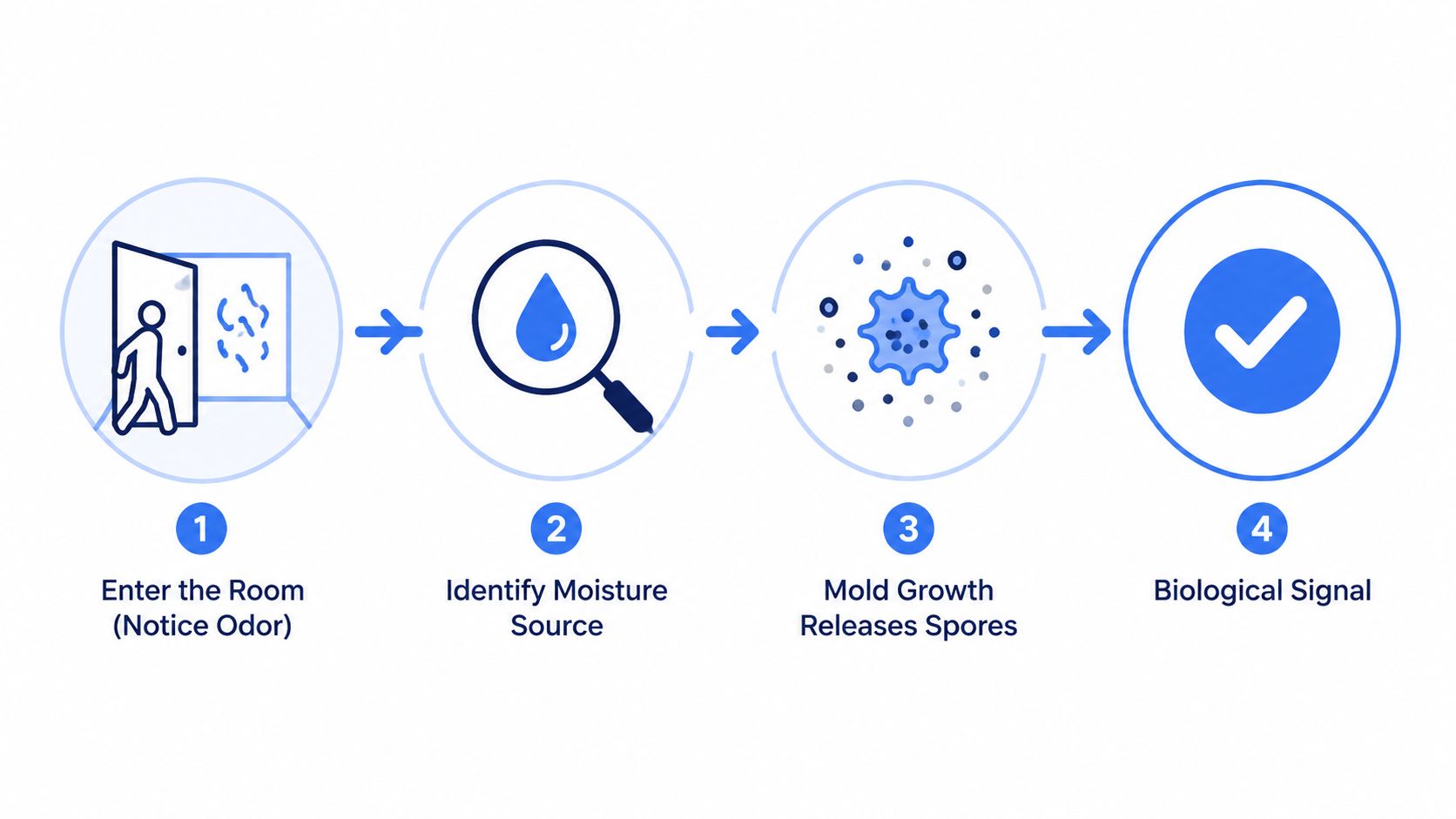
I have seen homeowners scrub a wall, paint over a stain, and run an air purifier, only to smell the problem again during the next humid spell. At one property, visible mildew near a window was only the surface symptom. Condensation collected in the track, wicked into nearby trim, and kept the assembly damp. Guidance on preventing window condensation addresses that specific risk around glass and frames.
Fragrance changes the odor without removing wet drywall, damp insulation, contaminated carpet backing, or growth inside a wall cavity. Ozone generators also need caution. They can alter smells, but they do not replace source correction, drying, cleaning, or removal of damaged materials.
If a leak is suspected but its route is unclear, professional water leak detection with MG Drain Services can help narrow down concealed plumbing or building-envelope problems. Odor is a diagnostic clue, not a cleaning target.
The EPA recommends drying water-damaged areas and belongings within 24 to 48 hours, because materials dried within that window will usually avoid mold growth. A persistent odor needs a fuller response: repair the leak, dry the area, clean or remove affected materials, and keep indoor humidity below 60 percent, ideally between 30 and 50 percent. These moisture targets are covered in EPA mold and moisture guidance. Verify the repair by checking moisture conditions after drying, not merely by judging whether the room smells fresher.
Start at the highest likely moisture points and work downward. Don't rely on the strongest smell alone, because air movement can carry odor away from the actual source.
Check window sills, frame corners, tracks, and the underside of trim. Look for water marks, swollen wood, peeling paint, soft caulk, and dirt that stays wet after the glass appears dry. A small amount of recurring condensation can keep porous trim damp enough to support odor.
Window mildew often develops in overlooked tracks and sill joints. The guide on mildew on a windowsill is a useful reference for that narrow but common problem.
Then inspect:
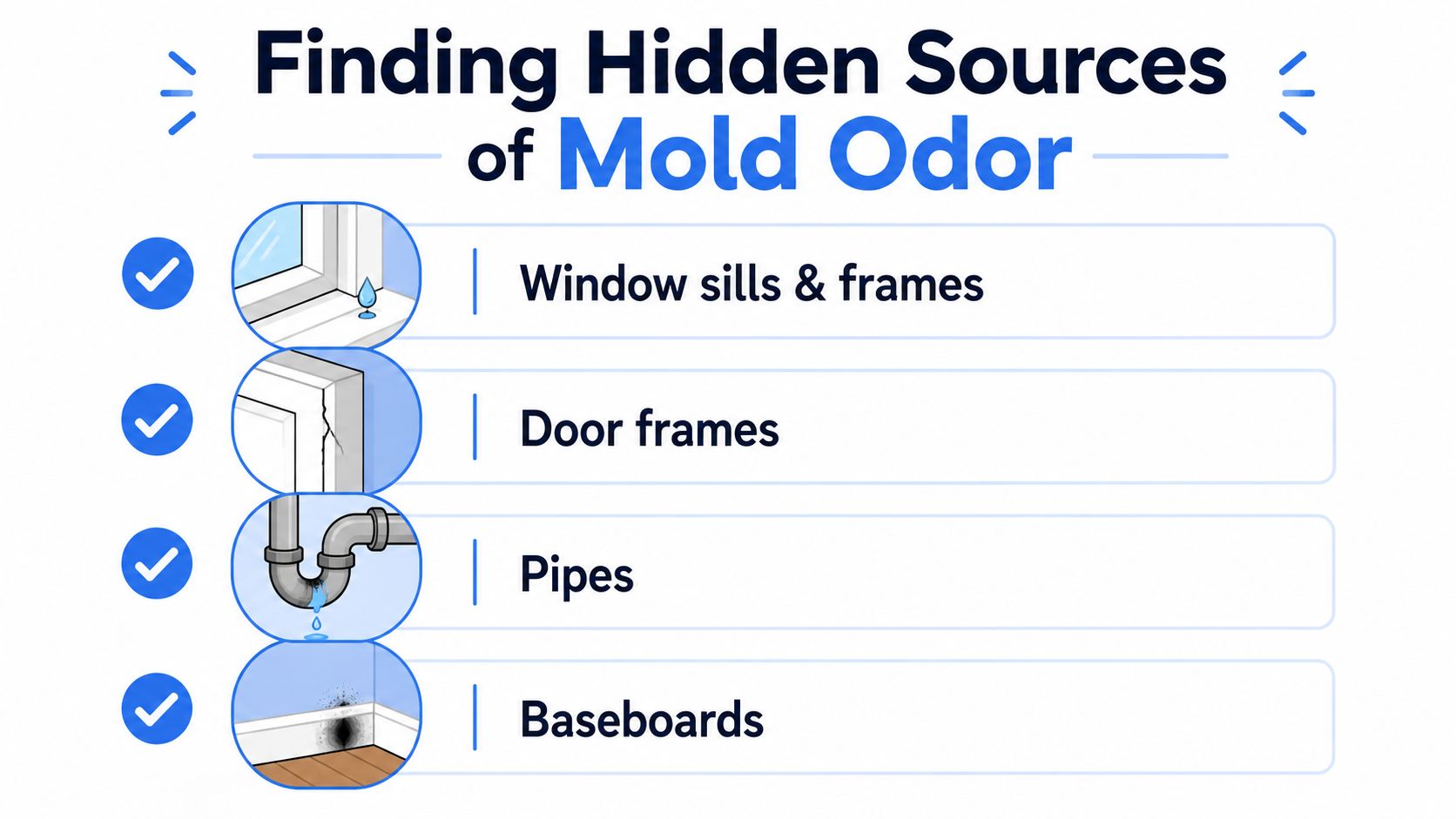
Air-conditioning systems create cold surfaces where moisture can collect. Inspect the condensate pan, drain line, return-air cavity, accessible duct insulation, and the area around the air handler. A dirty or blocked drain can keep the mechanical closet damp while distributing odor through the property.
Basements and crawlspaces deserve a deliberate inspection. Check rim joists, floor insulation, stored cardboard, foundation walls, vapor-barrier edges, and areas where soil moisture can migrate upward. Remove stored items from walls so you can smell and inspect the actual surfaces.
A moisture meter helps confirm whether a suspicion is real, but don't treat one reading as a complete diagnosis. Compare suspect areas with nearby dry materials, look for patterns, and investigate any persistent dampness before closing walls or reinstalling trim.
Use this video as a visual aid while inspecting common household locations:
Odor that intensifies inside a closet, behind furniture, or near a return grille deserves extra attention. Those locations restrict airflow and can conceal damp materials long after the original leak appears to have stopped.
The first decision is whether the material is non-porous, semi-porous, or absorbent. Glass, metal, and glazed tile can usually be cleaned because contamination remains near the surface. Drywall, insulation, carpet padding, and particleboard are different. Their internal layers can retain moisture and growth beyond what a surface wipe reaches.
Wear an N95 respirator at minimum, along with gloves and eye protection. Isolate the work area where practical, avoid dry sweeping, and bag contaminated disposable materials before carrying them through clean parts of the building. Never mix bleach with ammonia-based cleaners.
For glass, glazed tile, and metal, use detergent and water to remove soil, scrub the affected area, rinse as appropriate for the surface, and dry completely. A disinfectant may be appropriate after cleaning, but disinfectant doesn't compensate for incomplete physical removal or ongoing dampness.
Wood trim and concrete need more care. HEPA vacuuming can remove loose debris, while brushing or careful sanding may reach surface contamination on sound wood. Follow the label for any EPA-registered antimicrobial, including its application, dwell, ventilation, and rinse requirements. Test finished wood first, since aggressive abrasion or liquid can damage the coating.
Practical rule: If a material stays soft, swollen, stained through its thickness, or persistently odoriferous after drying and cleaning, replacement is usually more reliable than another chemical treatment.
| Material Type | Clean or Replace | Recommended Method |
|---|---|---|
| Glass, metal, glazed tile | Clean | Detergent scrubbing, appropriate rinse, thorough drying, and a compatible disinfectant when needed |
| Sound finished wood or concrete | Usually clean | HEPA vacuuming, controlled brushing or sanding where suitable, antimicrobial treatment, and complete drying |
| Window trim with limited surface mildew | Assess and clean | Remove loose contamination, clean carefully, improve drying, and monitor for recurring moisture |
| Drywall and insulation | Often replace | Remove affected sections when contamination or dampness extends into the material, then dry the cavity |
| Carpet padding and particleboard | Usually replace | Remove and seal for disposal if moldy or persistently musty, because internal contamination is difficult to eliminate |
| Carpet or fabric furnishings | Assess carefully | Clean only when contamination is limited and the material can be dried fully; replace when odor or growth remains embedded |
Bleach is popular because it feels decisive, but it's a poor answer for porous building products. It may lighten staining on the surface without removing what has penetrated behind the visible face. Cleaning is successful when the material is physically clean, dry, and free of recurring odor, not merely when the stain looks paler.
A room can look clean while its odor source remains wet inside framing, subfloors, carpet, or wallboard. Drying must reach those concealed materials. Wiping the visible area or running a purifier may improve the air temporarily, but neither removes moisture trapped behind a finished surface.
Choose a dehumidifier suited to the space, then position air movers so they sweep across affected materials rather than circulate in the room's center. Open enclosed areas where safe, pull furniture away from walls, and inspect edges, cavities, and floor transitions before sealing or repainting. Air conditioning removes some moisture, while exhaust fans help discharge damp air from bathrooms and utility spaces.
Keep indoor relative humidity below 60 percent, with 30 to 50 percent preferred. Monitor it with a hygrometer instead of judging dryness by touch. A dry surface can conceal dampness underneath, especially where materials have absorbed water or where airflow is restricted.
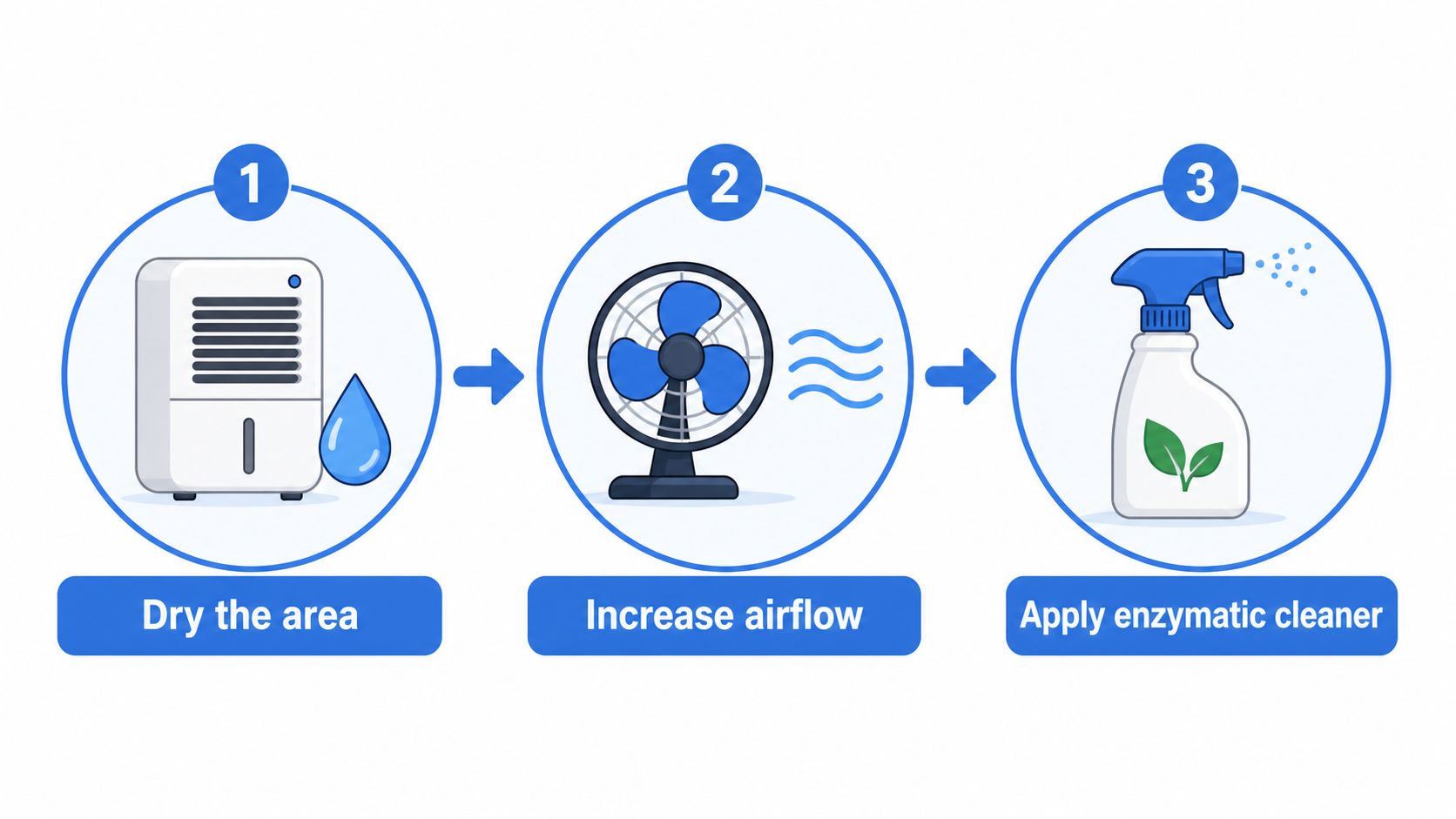
A HEPA air scrubber captures airborne particles after contaminated surfaces are cleaned and the area has dried. It does not dry drywall or remove growth bonded to a wall. A clinical and field study of combined dehumidification and HEPA filtration reported that the combined approach controlled indoor dew point in test facilities and reduced airborne culturable fungal spore levels in one facility. Filtration belongs alongside moisture control, not in place of it.
Use activated charcoal for residual odor in enclosed cabinets or closets after the source is gone. Baking soda can help with mild surface odors, while vinegar solutions may suit some compatible hard surfaces after a test patch. Hydroxyl equipment and ozone require professional judgment, ventilation, and occupant-safety controls. Neither treatment justifies leaving wet materials in place.
For practical ventilation and air-movement ideas, banish stale home smells provides useful household context. Remove drying equipment, then recheck the room under normal conditions. If the odor returns as humidity rises, source correction or drying remains incomplete.
A fresh-smelling room isn't proof that the building is dry. Prevention depends on controlling moisture before it reaches the point where materials stay damp long enough to support growth.
Keep indoor relative humidity below 60 percent, ideally between 30 and 50 percent, and place hygrometers in basements, bathrooms, laundry areas, and rooms with heavy window exposure. Use air conditioning or a dehumidifier when readings climb, and don't store damp clothing, rugs, cardboard, or upholstered items in closed spaces.
The EPA's mold remediation guidance identifies odor as an important completion check. A properly remediated building shouldn't retain moldy or musty odors, and absorbent items such as carpet or ceiling tiles may require replacement when they become moldy.
Prevention also includes clean window assemblies. Professional Window Cleaning has been cleaning windows for over 26 years, and track, sill, and frame cleaning can remove accumulated organic debris that holds moisture against the assembly. It won't repair a leak or replace damaged materials, but it can support a wider maintenance plan when window areas are part of the odor pattern.
Persistent odor after cleaning deserves a new diagnosis, not another round of fragrance. Mold can remain inside drywall backing, insulation, subflooring, wall cavities, or window-frame assemblies. In older properties, peer-reviewed research also describes odors from chloroanisoles, compounds that can form when microorganisms transform chlorophenols in preserved wood. That chemistry can explain why a building continues to smell after visible mold has been removed, as discussed in this peer-reviewed review of mold odor compounds.
Look for a localized hotspot rather than treating the entire building as one problem. Recurring condensation, staining behind baseboards, bubbling wallpaper, damp flooring edges, or odor that strengthens near a particular cavity all justify further investigation.
| Situation | Recommended Action |
|---|---|
| Small, visible contamination on a hard surface with no recurring dampness | Clean safely, dry fully, and monitor the area |
| Odor concentrated around a window, sill, or track | Correct condensation or water entry, then clean the assembly and inspect adjacent trim |
| Moldy drywall, insulation, carpet padding, or particleboard | Arrange controlled removal and replacement rather than relying on surface treatment |
| Repeated odor after cleaning and drying | Investigate wall cavities, subfloors, HVAC components, crawlspaces, or legacy materials |
| Widespread contamination, significant water damage, or uncertain exposure risk | Contact a qualified mold remediation professional for an assessment and written scope |
| Odor affecting multiple rooms or returning after repairs | Use building-level moisture investigation and remediation, not air freshener or a standalone purifier |
A legitimate remediation scope should identify the moisture source, define affected materials, describe containment and removal methods, specify cleaning and drying steps, and explain how completion will be evaluated. Window cleaners can address dirty tracks, frames, and exterior water-management details. A remediation contractor is the appropriate choice for concealed contamination, extensive water damage, or materials that need removal.
Professional Window Cleaning provides residential, commercial, and high-rise window cleaning, including work on window glass, frames, and tracks that may contribute to localized dampness and odor. If window areas are part of the problem, visit Professional Window Cleaning to request service and discuss the condition of the property's window assemblies.
Read our blog posts regularly and keep learning.