Care and Maintenance
Best Way to Clean Commercial Windows: A Pro Guide
Discover the best way to clean commercial windows with pro squeegee and pure-water methods, safety tips, schedules, and when to hire experts.


That fine, powdery stuff that keeps showing up on your windowsill? That’s mildew, a surface-level fungus that absolutely loves moisture. It’s often confused with its more notorious cousin, black mold, but mildew is usually gray, white, or yellowish and can be wiped away fairly easily.
The real question is, why does it keep coming back? It's simple: your windowsills provide the perfect storm of moisture, warmth, and a food source for it to thrive.
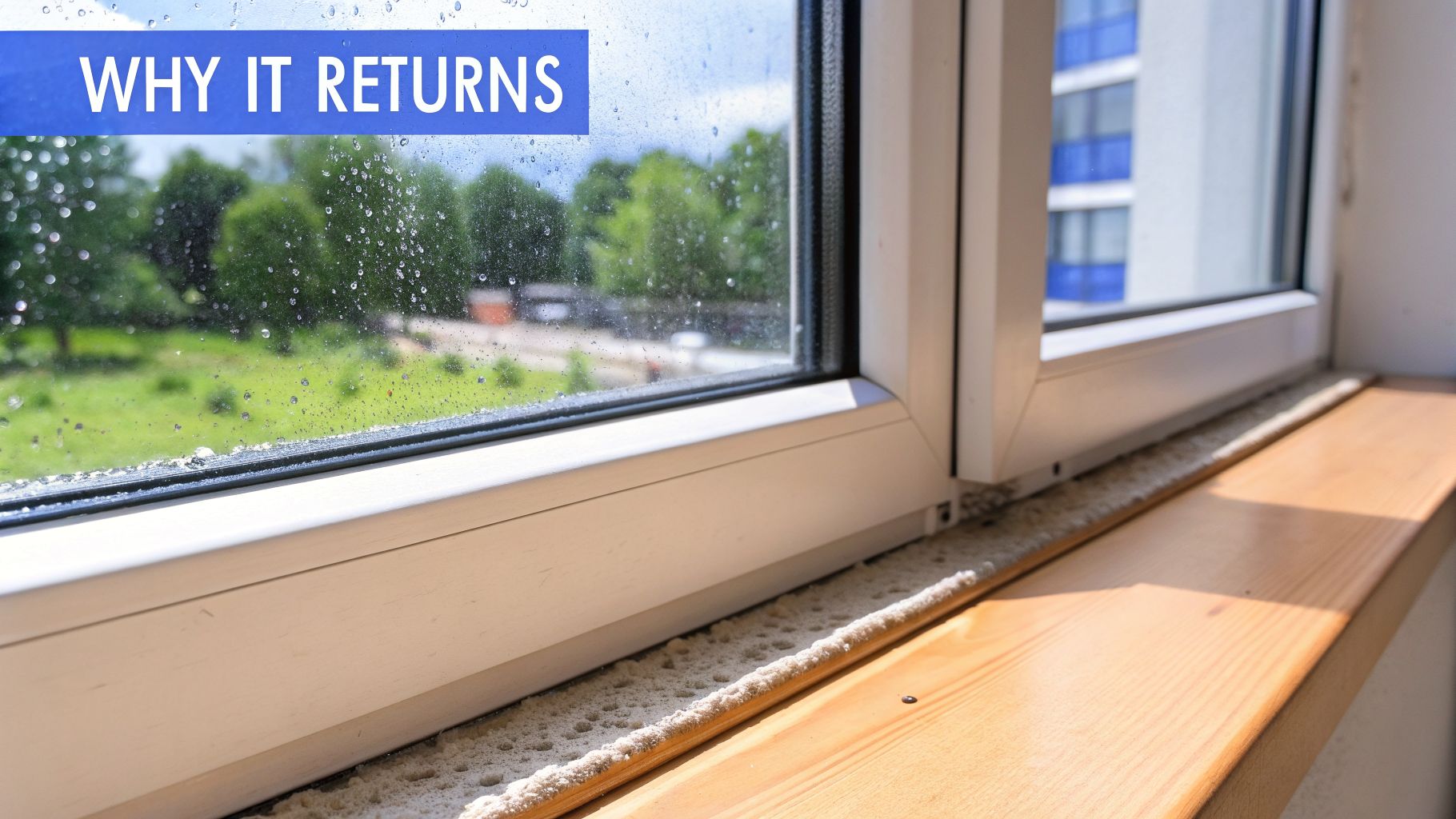
It’s a frustrating cycle for so many homeowners. You scrub the mildew off, and just a few weeks later, it’s back. The number one culprit is almost always condensation. This happens when warm, humid air inside your home meets a colder windowpane, causing tiny water droplets to form and pool right on the sill.
This is a classic problem during seasonal changes. In cities like Phoenix or Denver, the big temperature swing between a warm, heated home and a frigid winter night creates the perfect breeding ground for windowsill mildew.
To give you a quick overview, here's a look at what you're likely dealing with.
| Identifier | Common Causes | Initial Action |
|---|---|---|
| Powdery, gray/white spots | Condensation from temperature differences | Wipe away with a vinegar solution |
| Musty smell near the window | Poor air circulation behind curtains/blinds | Open curtains daily to allow airflow |
| Appears on wooden or painted sills | Organic material (dust, pollen) as a food source | Clean sills regularly with a dry cloth |
| Returns quickly after cleaning | Persistent high indoor humidity | Use a dehumidifier to lower moisture |
This table covers the basics, but let's dig a little deeper into why your sills are such a hotspot.
Your windowsills are basically prime real estate for mildew, and it comes down to a few simple factors:
This isn’t just a minor annoyance; it's a widespread problem. Mildew on windowsills is an incredibly common issue, and research shows that at least 45 million buildings in the U.S. have unhealthy levels of mold and mildew. Windowsills are a top hotspot because all that moisture can kickstart mildew growth in just 24-48 hours.
As you troubleshoot the mildew on your windowsills, don't forget to look at other systems in your home. Sometimes, the problem is bigger than just the window itself.
If you’ve noticed a persistent musty odor, it’s possible that your air conditioner smells like mildew, which could be circulating spores throughout your house. In our over 26 years of experience at Professional Window Cleaning, we've found that addressing all moisture sources is key.
Understanding what’s causing the mildew is your first and most important step. Just cleaning it off without tackling the root cause is a temporary fix. By figuring out why it’s happening, you can finally move from constantly cleaning to preventing it from coming back.
So, you've noticed some funky stuff growing on your windowsill. Is it just dirt, or is it something more… alive? Before you can grab a cleaner, you have to know what you’re up against. Mildew can look surprisingly different depending on where it’s decided to set up camp, so the gunk on your wooden bathroom sill won't look the same as what's on a metal frame in the kitchen.
Figuring out if you have mildew is often a job for your eyes and your nose. Your nose is usually the first to know. If you catch a whiff of something musty—think damp socks or wet soil—near your window, that’s a huge red flag.
Visually, mildew is a bit of a wallflower. It’s typically a powdery or downy substance that lies flat on the surface. Look for colors in the white, gray, or sometimes pale yellow family. It spreads out rather than digging in deep.
Wooden windowsills are a five-star resort for mildew. Why? Because the organic material in both the wood and the paint is a perfect food source. On wood, mildew often shows up as a fine, grayish-white powder, almost like someone sprinkled dust in the corners or behind the curtains. If it’s been there a while, it might form small, splotchy patches.
For instance, if your bedroom window in Las Vegas gets a lot of morning condensation, you might see a thin, gray film that wipes away easily. This is classic mildew on a windowsill, and you’ll want to tackle it right away before it causes the paint to bubble or the wood to stain.
Takeaway: On wood, you’re looking for powdery, surface-level growth. If you see black, slimy spots that seem to be in the wood, you're likely dealing with a more serious mold problem that has already started to cause damage.
On non-porous surfaces like vinyl and aluminum, mildew can’t actually eat the material itself. Instead, it snacks on the buffet of dust, pollen, and skin cells that has settled on top. Because of this, its appearance is often much more subtle.
Since mildew on these surfaces is just feeding on debris, regular cleaning is your best defense. For homeowners in dusty, dry climates like Phoenix or Scottsdale, keeping sills free of dust is a non-negotiable preventative step. A quick wipe-down removes the food source and stops mildew before it can even get started.
So you’ve spotted it—that unwelcome powdery buildup on your windowsill. Now that you know it’s mildew, it's time to get it gone. This isn't just about appearances; it’s about taking back your space and keeping it healthy. This isn't a job you want to rush, though. Doing it right means proper prep and using the right cleaning methods to make sure it doesn’t come back.
Before you even reach for a cleaning bottle, get the area ready. Lay down an old towel or some plastic sheeting on the floor right under the window. This will catch any drips and save your flooring from potential damage. If you can, crack open the window for some fresh air—good ventilation is key when you're working with any kind of cleaning agent.
Not all cleaners are a one-size-fits-all solution. The best choice really hinges on what your windowsill is made of and how bad the mildew is. What works wonders on a tough vinyl sill could easily ruin a beautifully painted wooden one.
Here’s a quick rundown of your best bets, from gentlest to strongest:
No matter which you choose, always test it on a small, hidden spot first. You want to be sure it won't cause any discoloration or damage. If you're dealing with a bigger issue or want to get ahead of future problems, our detailed guide on cleaning your window sills and frames has even more great tips.
If you need a quick sanity check before you start cleaning, this little flowchart can help confirm what you're up against.
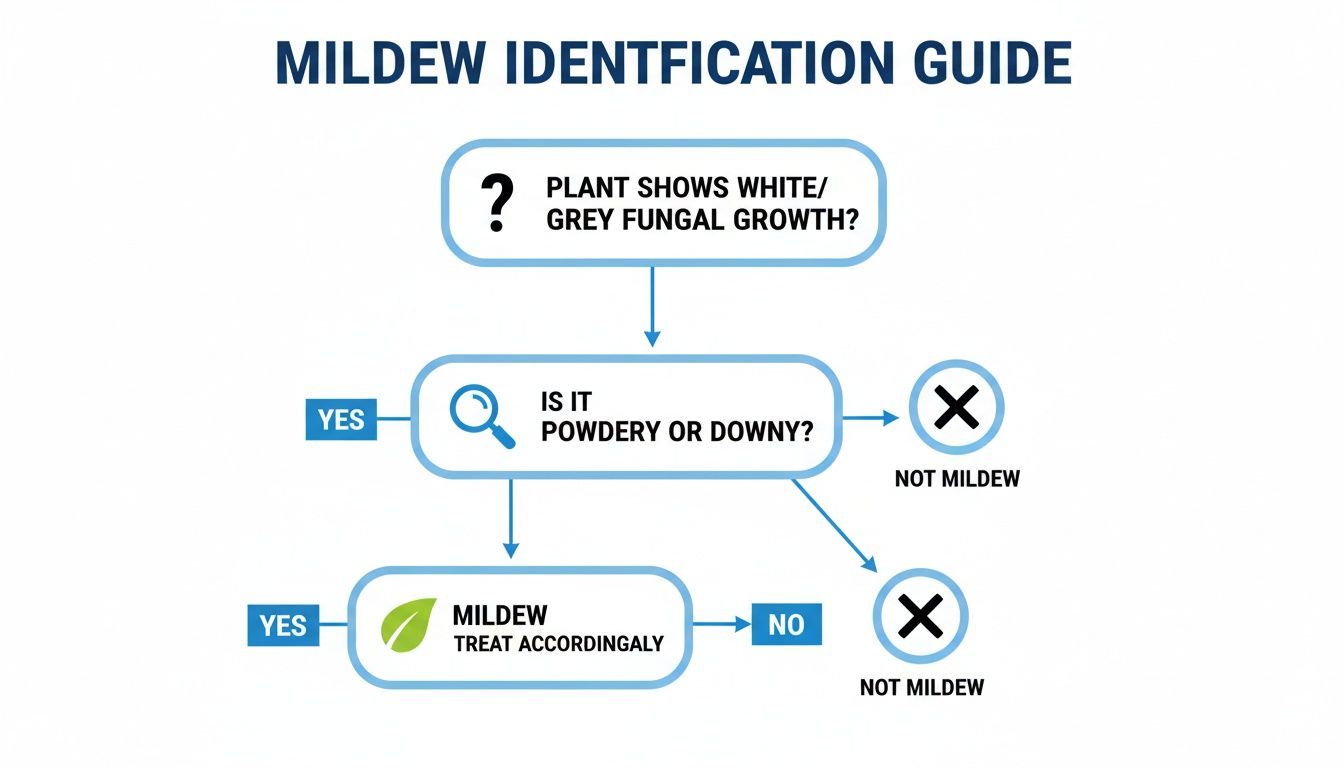
As you can see, mildew's tell-tale sign is its powdery or downy feel, which helps distinguish it from other kinds of dirt and grime.
If you’re mixing up a solution at home, choosing the right one for your windowsill material is key. Here’s a comparison to help you decide.
| Cleaning Agent | Best For (Material) | Pros | Cons / Cautions |
|---|---|---|---|
| White Vinegar & Water | Painted Wood, Vinyl, Aluminum | Natural, effective, non-toxic | Strong smell; may not work on heavy buildup. |
| Dish Soap & Water | Vinyl, Aluminum, Fiberglass | Gentle, readily available | Only removes surface mildew, may not kill spores. |
| Baking Soda Paste | All (as a gentle abrasive) | Lightly abrasive, deodorizing | Can leave a gritty residue if not rinsed well. |
| Hydrogen Peroxide (3%) | Painted Wood, Vinyl | Antifungal, less harsh than bleach | Can cause slight lightening on dark wood or paint. |
While DIY solutions are great for minor issues, remember that commercial products are formulated for tougher jobs. Always start with the gentlest option that works for your surface.
Once you've got your solution mixed and ready, spray it generously over all the mildew-covered spots. Now, walk away for at least 10-15 minutes. This is the most important part—that "dwell time" gives the cleaner a chance to actually penetrate and kill the mildew spores, not just wipe them off the surface.
After letting it sit, grab a soft-bristled brush or a sponge and gently scrub the area. An old toothbrush is your secret weapon for getting into tight corners and window tracks. You want to agitate the mildew enough to lift it completely away from the sill.
Next, wipe everything down with a clean, damp cloth. And now for the step people often miss: you have to dry the area completely. Use a clean, dry towel and sop up every last bit of moisture. Leaving a windowsill damp is like sending the mildew a written invitation to come right back.
Crucial Tip: Never try to dry-scrape or brush away mildew. This will just launch the spores into the air, spreading the problem to other parts of your home and potentially irritating your lungs. Always, always use a wet cleaning method.
For commercial properties in cities like Denver, the stakes are much higher. A persistent mildew on windowsill problem can point to larger, more expensive moisture issues. Spores can spring to life on a damp surface in as little as 24-48 hours. If you let it go, the problem can escalate quickly, costing building owners thousands in professional remediation and even fines.
It feels great to get rid of that ugly mildew, but the real win is stopping it from ever coming back. When we're talking about the long game against mildew on a windowsill, it all boils down to one thing: moisture control. Mildew can’t live without water, so if you cut off its supply, you’ve won the battle.
This starts with a few simple tweaks to your daily routine. Running the exhaust fan when you shower or cook is a perfect example—it pulls all that extra moisture out of the air before it can settle on your windows and start causing trouble.
A dehumidifier is your best friend in this fight, especially if you have naturally damp spots like a basement or laundry room. The key is to keep your home’s humidity in the sweet spot. Facility guidelines recommend keeping indoor humidity between 30-50%. Any higher, and you’re just rolling out the welcome mat for mold, which can take hold in as little as 48-72 hours.
With over 26 years cleaning windows, Professional Window Cleaning has seen it all. We know windowsill mildew spikes in the winter across Colorado, Arizona, and Nevada, mostly due to poor ventilation combined with sneaky, hidden leaks.
Good airflow is also a non-negotiable. Mildew loves still, damp air, so you’ve got to keep things moving.
If you’re looking for a complete game plan to keep your whole house fungus-free, this guide on how to prevent mold is a fantastic resource.
Pro Tip: Get into the habit of wiping down your windows each morning. A quick pass with a squeegee or microfiber cloth gets rid of morning condensation before it can feed mildew. This is especially true in cities like Phoenix, where cool desert nights create a ton of condensation.
Sometimes, the problem isn’t just humidity—it’s the window itself. Failing window seals are a huge, often overlooked, source of moisture. They let in a tiny but constant stream of damp, cold air, which turns your windowsill into a condensation magnet.
Take a close look at the caulking around your window frames. Do you see any cracks? Is it peeling or pulling away? On a windy day, you can even run your hand along the edges of the frame. If you feel a draft, you’ve found your weak spot.
Luckily, resealing those gaps is a pretty simple DIY fix that makes a world of difference in preventing mildew. For more detailed advice on fixing the root cause of window moisture, be sure to read our guide on how to prevent window condensation. A little proactive maintenance now will save you from an endless cycle of cleaning later.
While a good DIY cleaning can handle a small patch of mildew, there are times when the problem is bigger than a spray bottle and some elbow grease. Are you stuck in a cycle of cleaning the mildew on your windowsill only to watch it come back stronger than before? That’s a tell-tale sign of a deeper moisture issue that a simple wipe-down won’t solve.
Sometimes, the sheer size of the problem is the first red flag. If the mildew has taken over a large area, crawled up the surrounding wall, or started appearing on multiple windows, it's time to bring in the pros. This kind of widespread growth points to a systemic humidity or water intrusion problem that a home remedy just can’t fix.
Beyond mildew that just won't quit, keep an eye out for physical damage around the window itself. These are clear signs that water has been quietly seeping into your home’s structure, creating a perfect home for mildew and setting the stage for serious rot.
You'll want to watch for these key warning signs:
If any of these sound familiar, it's best to put the DIY supplies away and get a professional opinion.
At Professional Window Cleaning, we've seen it all in our 26+ years of experience. A recurring mildew problem is often a cry for help from your windows, indicating that a more comprehensive approach is needed.
When you hire a professional, you get so much more than just a clean window. Our experienced teams, whether in Scottsdale or Las Vegas, don't just treat the mildew you can see; we assess the entire window system to find the source. We rely on two professional methods: a traditional squeegee for a perfect, hand-detailed finish or a cutting-edge pure-water system that leaves zero residue behind.
This detailed cleaning process removes every trace of mildew, dirt, and organic grime from the glass, frames, tracks, and sills. By eliminating these contaminants, we take away the food source that mildew thrives on. While we’re handling the cleaning, we can also help you spot the signs of failing window seals or other structural issues that are causing the moisture problem in the first place. Handing the job over to seasoned pros ensures the problem is handled correctly, protecting your home's health and value.
Even after you’ve scrubbed away the last spot of mildew, you might still have a few questions lingering in the back of your mind. That’s perfectly normal. Getting straight, honest answers is the final step to feeling confident you've handled this common problem for good.
Let's clear up some of the most common concerns we hear from homeowners every day.
While it’s generally less aggressive than its cousin, black mold, windowsill mildew is definitely not harmless. It releases microscopic spores into your home’s air, which can easily trigger allergic reactions in anyone who’s sensitive. The usual signs are coughing, sneezing, a sore throat, or even headaches.
For family members with asthma or weakened immune systems, the risks are more serious. Constant exposure can make respiratory problems much worse. That’s why it’s so important to get rid of mildew as soon as you spot it and fix the moisture issue that’s letting it grow in the first place. Professional Window Cleaning has been cleaning windows for over 26 years, and we've seen how a clean environment improves home health.
This is probably the number one question we get, and it’s a great one because the two are often confused. Both are types of fungi, but they look and act very differently.
A good way to think about it is this: mildew is the guest who shows up uninvited and sits on your furniture, while mold is the one who starts knocking down your walls.
Staying ahead of mildew is all about being proactive. A quick visual check of your windowsills at least once a week is your best line of defense, especially in damp areas like kitchens and bathrooms. During the colder months in places like Denver, when condensation is practically a daily occurrence, a quick morning wipe-down is a fantastic habit to get into.
Catching mildew on a windowsill when it's just a tiny spot is worlds easier than tackling a full-blown colony. It only takes a second to pull back the curtains for a quick peek.
Pro tip: The best time for a really thorough check is when you're doing your regular window cleaning. Once the glass is sparkling, any spots or powdery buildup on the sill will be impossible to miss.
Mildew-resistant paints are a great tool in your prevention arsenal, but they aren't a magic bullet. These paints are mixed with antimicrobial agents (called mildewcides) that stop fungus from growing on the paint film itself, making the surface a much less friendly place for mildew.
However, if the root cause—like heavy condensation, a draft, or a leaky window seal—isn't addressed, mildew will just grow on top of the dust and grime that settles on the paint. From our professional experience of over 26 years at Professional Window Cleaning, these paints deliver the best results when you also have good ventilation and keep those sills clean and dry. They help, but they don’t replace good maintenance.
If you're tired of the constant scrubbing and want a professional solution that gets to the root of the problem, it might be time to call in the experts. Professional Window Cleaning offers comprehensive services in cities like Las Vegas, Phoenix, Denver, and Scottsdale to leave your entire window system spotless. Contact us today for a free estimate!
Read our blog posts regularly and keep learning.