Care and Maintenance
Concentrate Window Cleaner: Professional Guide
Learn how to dilute and apply concentrate window cleaner like pros. Master ratios, safety, and streak-free results for residential and commercial glass.


Residential window cleaning for a typical home usually costs $150 to $450, and most companies calculate that price per window at $10 to $18 or per pane at $4 to $8. If you're standing in your driveway or looking around your office right now trying to figure out whether a quote is fair, those numbers are the right starting point.
The hard part isn't finding a price range. It's understanding why one property lands near the low end and another climbs fast. A ranch home with easy first-floor glass gets priced very differently than a multi-story home with divided panes, hard-water spotting, and screens that need attention.
That's where people get frustrated. They hear “window cleaning” and expect one flat number, then find out the quote changes based on access, pane count, interior work, or construction debris. After more than 26 years in the trade, that pattern is easy to spot.
If you're comparing service in Las Vegas, Phoenix, Denver, or Scottsdale, the same basic logic applies. A solid quote should be understandable, not mysterious.
You call two companies for the same house. One says $189. Another says $385. The useful question is not which number is lower. It is how each company built the quote.
A professional quote should show the scope, the counting method, the access issues, and any extra work that changes labor time. If those parts are clear, you can estimate the price yourself before you book. A simple homeowner formula works well: base window count or pane count + access difficulty + add-ons = realistic budget.
A solid quote usually answers five questions:
That level of detail matters because it lets you compare bids on the same scope instead of comparing two different jobs with two different totals.
Before a crew arrives, use a quick estimate:
Basic glass cleaning price + extras + difficult access = expected quote
For example, a single-story home with standard windows and exterior-only service should price very differently from a two-story property with divided panes, removable screens, and mineral staining. The labor is different. The ladder setup is different. The risk is different.
This is also why the cheapest quote on paper can cost more in practice. If tracks, screens, or hard-water stains were never discussed, they often show up later as added charges or rushed work.
Window cleaning is labor, but it is also process. You are paying for safe ladder work, clean detailing, proper squeegee technique, screen handling that does not bend frames, and enough experience to spot problems before someone damages a seal or scratches tempered glass.
Regular service also protects the condition of the windows over time. If you want a broader homeowner explanation of the benefits of window cleaning services, that resource covers the upkeep side well.
A good quote leaves very little to guesswork. If a company cannot explain the total in plain language, ask them to break it down by count, access, and add-ons. Reputable cleaners do that every day.
A homeowner calls and asks, “What will it cost for 22 windows?” My first answer is usually, “That depends on how those 22 windows are being counted.” A house with 22 standard panes prices very differently from a house with 22 cut-ups, storm panels, or awkward second-story windows.
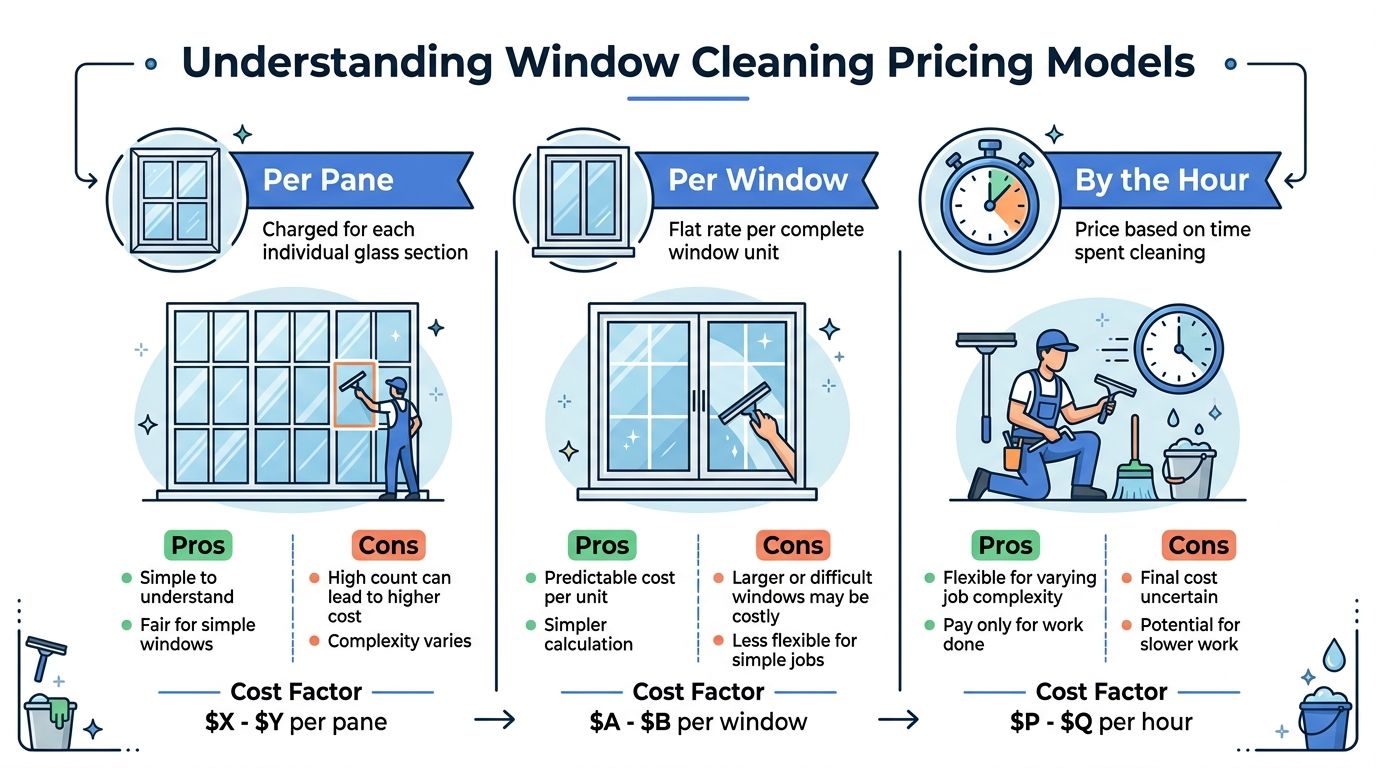
Professional quotes usually use one of three models: per pane, per window, or hourly. The right model is the one that matches the labor. If the pricing method does not fit the glass, the quote can look fair at first and fall apart once the work starts.
Per pane pricing works best when the glass has lots of separate sections. French panes, divided lites, and older homes often fit this model better than a flat per-window count.
Use this formula:
Number of panes × per-pane rate = estimated cost
This method is more precise because it charges for the actual amount of detailing. A six-over-six window takes more work than one large fixed pane. Counting both as one window usually hides that difference.
For homeowners, the practical benefit is simple. You can walk the property, count the individual glass sections, and get a rough budget before requesting quotes.
Per window pricing is the easiest model to read on a quote. It suits homes with standard window sizes and layouts where each unit takes roughly similar time.
Use this formula:
Number of windows × per-window rate = estimated cost
This is the fastest way to estimate a routine residential job. It also keeps the quote easier to explain. If a property has basic double-hungs, sliders, and a few fixed panes, per-window pricing is often clean and fair.
The trade-off is accuracy. A patio door, a transom pair, and a multi-pane casement set should not always be priced as if they were equal units. Good companies adjust for that instead of forcing everything into one flat count.
Hourly pricing is common on jobs where counting glass alone misses the full scope of labor. Commercial sites, post-construction cleanup, and buildings with difficult access often land here.
Use this formula:
Estimated labor hours × hourly rate = estimated cost
This model works because setup, ladder movement, water-fed pole work, and safety procedures can take as much time as the actual cleaning. On those jobs, a strict pane count can underprice the work and create disputes later.
If you have priced other property services before, the logic is similar to Manchester carpet cleaning rates. Straightforward spaces are faster to quote. Irregular sites need more room for labor and access time.
| Pricing model | Best fit | Why it works |
|---|---|---|
| Per pane | Homes with divided glass | Charges for detailed hand work |
| Per window | Standard residential windows | Simple estimate for straightforward layouts |
| Hourly | Complex commercial or access-heavy jobs | Covers setup, safety work, and variable labor |
If you want a quick budgeting rule, start here. Standard home with mostly uniform windows: count windows. Older home or decorative glass: count panes. Commercial or awkward-access property: estimate labor hours first.
That approach gives you a usable number before the quote arrives, and it makes it much easier to spot whether a bid matches the work.
A quote can look high or low until you know what is driving the labor. Two homes with the same number of windows can price very differently if one has easy first-floor sliders and the other has French panes over a tile roof with baked-on hard water.
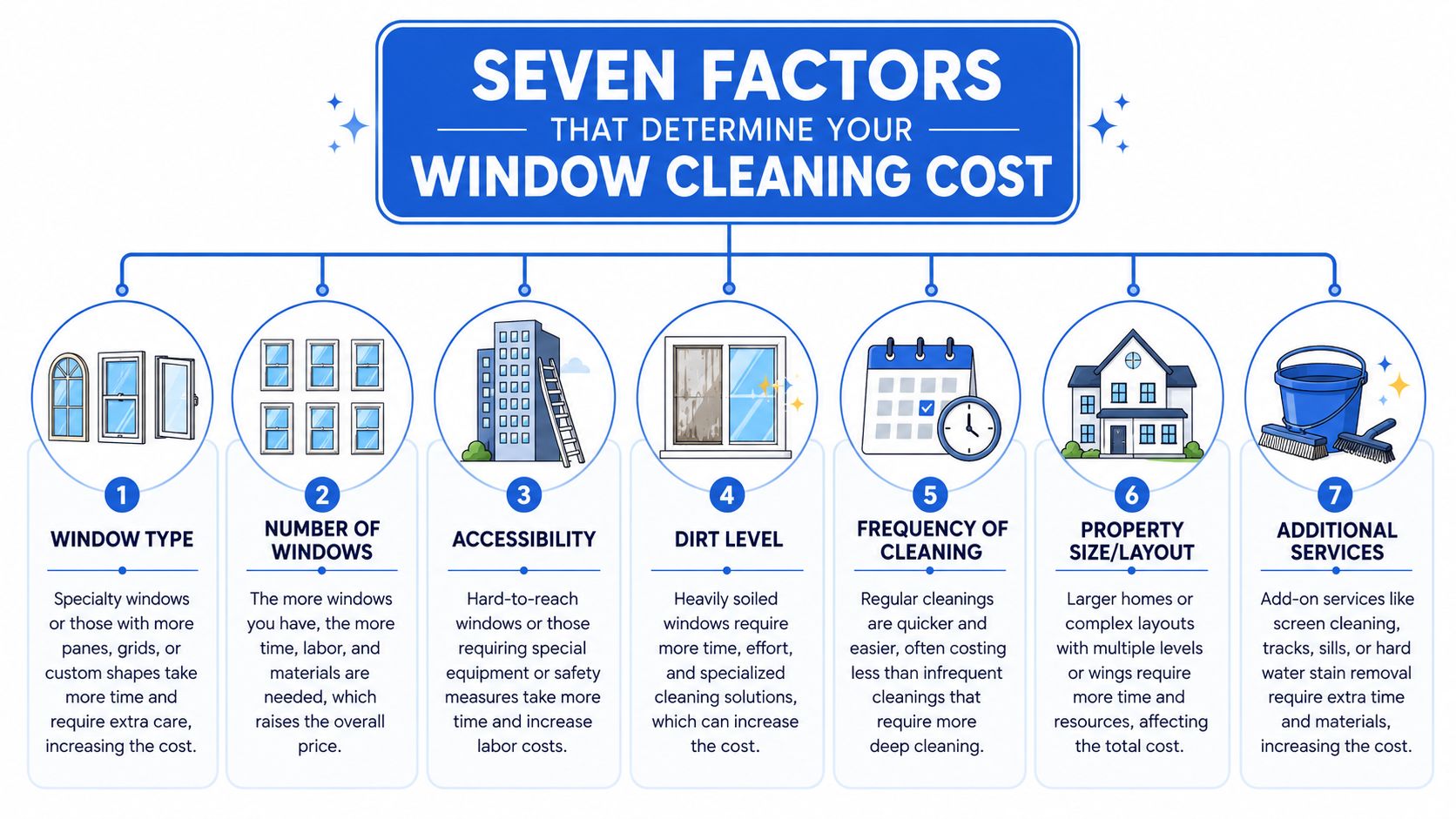
The simplest way to budget is to start with your base count, then add for anything that slows the work or adds risk.
Quick estimating formula:
Base window price + access adjustments + condition adjustments + add-ons = realistic budget range
That gives homeowners and property managers a usable number before the site visit.
These seven factors change the final cost more than anything else:
Window type
Standard sliders and double-hungs are usually straightforward. French panes, cut-ups, skylights, transoms, and odd-shaped glass take more detail work per opening.
Number of windows
More windows usually means a higher total, but not always in a straight line. Twenty identical windows are faster to clean than twenty mixed windows with different sizes, locks, and screen types.
Accessibility
Easy ground-level access keeps labor down. Second- and third-story glass, tight side yards, furniture, steep grades, fragile landscaping, and roof work all add time.
Dirt level and condition
Light dust is routine. Heavy pollen, bug residue, sprinkler spots, salt, oxidation runoff, and hard-water staining can turn a standard clean into restoration work.
Cleaning frequency
Regular service is usually cheaper per visit because the glass stays maintainable. First-time or long-overdue cleaning often takes much longer.
Property size and layout
A compact two-story home can be faster than a sprawling one-story property with glass spread across multiple wings. Travel time around the building counts too.
Additional services
Screens, tracks, sills, mirrors, glass doors, mineral stain treatment, and construction debris removal can all be priced separately.
If you want a rough self-check, use this rule: start with your basic window count, then add a line item for anything that needs extra hand work, extra setup, or extra risk control.
Post-construction cleanup changes the price fast.
Fresh builds and remodels often leave paint, silicone, stickers, caulk, concrete dust, and overspray on the glass. That is not standard maintenance cleaning. It takes scraping, detailing, and more careful inspection to avoid damaging tempered glass or existing scratches.
I always tell customers to answer this question before asking for a price: Is the glass dirty, or does it have debris bonded to it? The first is cleaning. The second is cleanup or stain removal, and it should be quoted that way.
If your property has upper windows that may be cleaned with a pole system, it also helps to understand how pure water window washing works on exterior glass. Method affects labor time, especially on taller homes and larger elevations.
This video gives a useful visual look at how real-world conditions affect the work:
Before you compare prices, check the property against the work:
Square footage helps very little with window cleaning by itself. Glass style, condition, and access are what usually decide whether a quote is fair.
When people ask how much do window cleaners charge, they usually think about the glass count first. The cleaning method matters too, because it affects labor, access, safety, and finish.
There are only two methods window cleaning professionals use. A squeegee or a pure-water system.
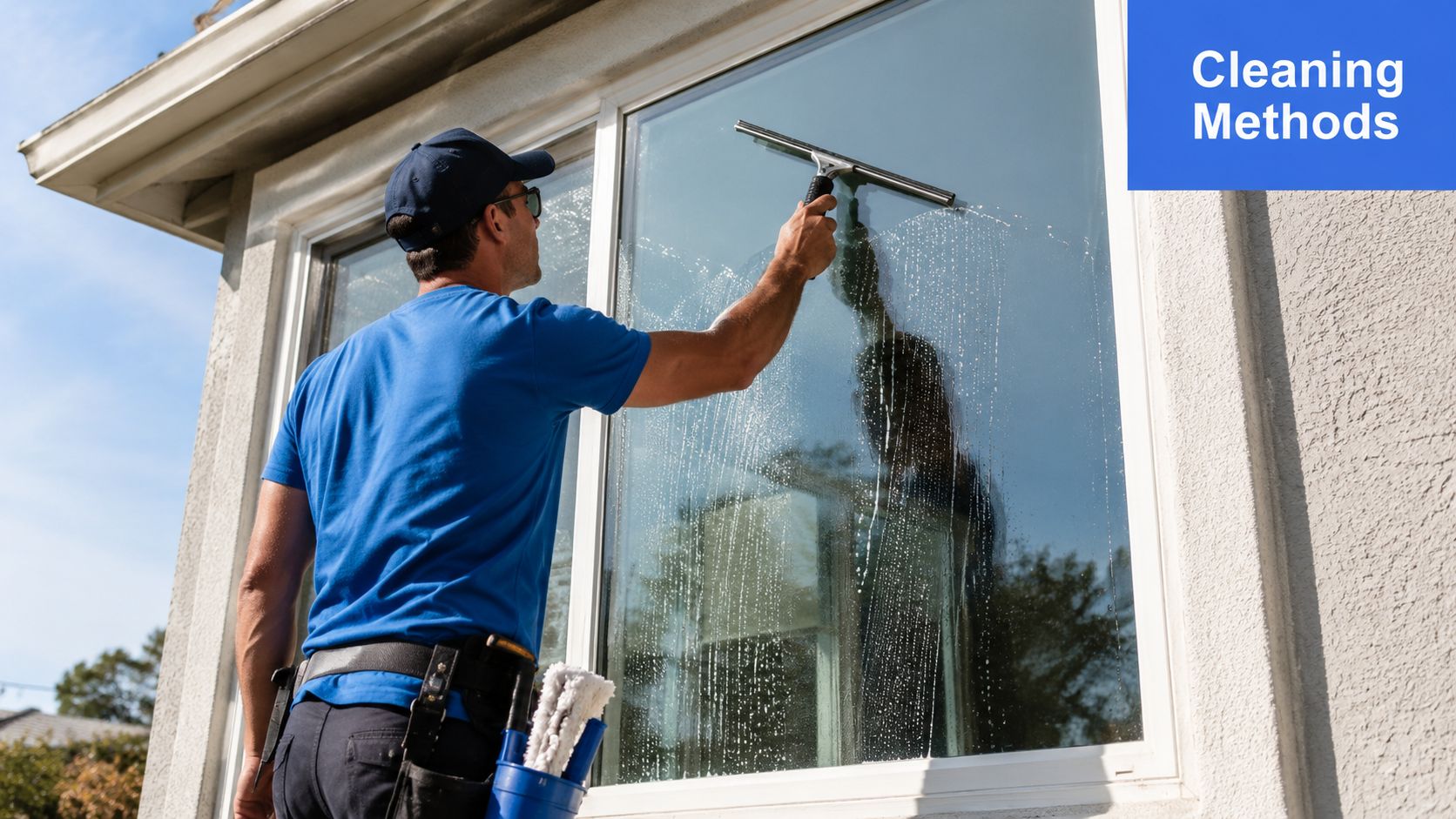
Squeegee cleaning is the classic method. A technician scrubs the glass, loosens soil, and removes the water with a rubber blade for a detailed finish.
It's still the right choice for a lot of first-floor work, interior glass, detail-heavy panes, and situations where the technician needs close control over edges and corners. Done well, it produces excellent results.
Pure-water cleaning uses a water-fed pole and purified water. The technician agitates the glass with a brush and rinses it so the water dries without residue.
According to Nick's Window Cleaning on water-fed pole versus squeegee systems, professional window cleaners predominantly use water-fed pole systems because they're safer, faster, and in some ways more effective than traditional squeegee methods, and many professionals now treat that approach as the industry standard.
For a deeper look at the method itself, this explanation of pure-water window washing is worth reading.
A pure-water setup lets crews reach upper-story exterior glass from the ground in many situations. That can reduce ladder use and improve efficiency on the right property.
There's an equipment cost behind that, though. A pure-water system typically requires an initial investment of about $2,500 to $3,000, based on this pure-water equipment cost discussion. That's one reason professional pricing isn't based only on “time with a squeegee in hand.”
Pure water also works differently from soap-and-squeegee cleaning. It doesn't need a squeegee pass after agitation because the purified water dries without residue, as explained by Window Cleaning Warehouse's introduction to pure-water cleaning.
The best method isn't the one that sounds modern. It's the one that fits the glass, the height, and the condition.
One caution matters here. If windows were previously cleaned with traditional soap-based methods, residue can contaminate a pure-water clean until that buildup is fully removed, which Unger notes in its guidance on common mistakes in pure-water window cleaning.
You call for window cleaning, hear one price on the phone, and get a different number once the crew arrives. In my experience, that usually comes down to missing details, not bait-and-switch pricing. The fix is simple. Give the right information up front and ask for the quote in a format that shows exactly what you are paying for.
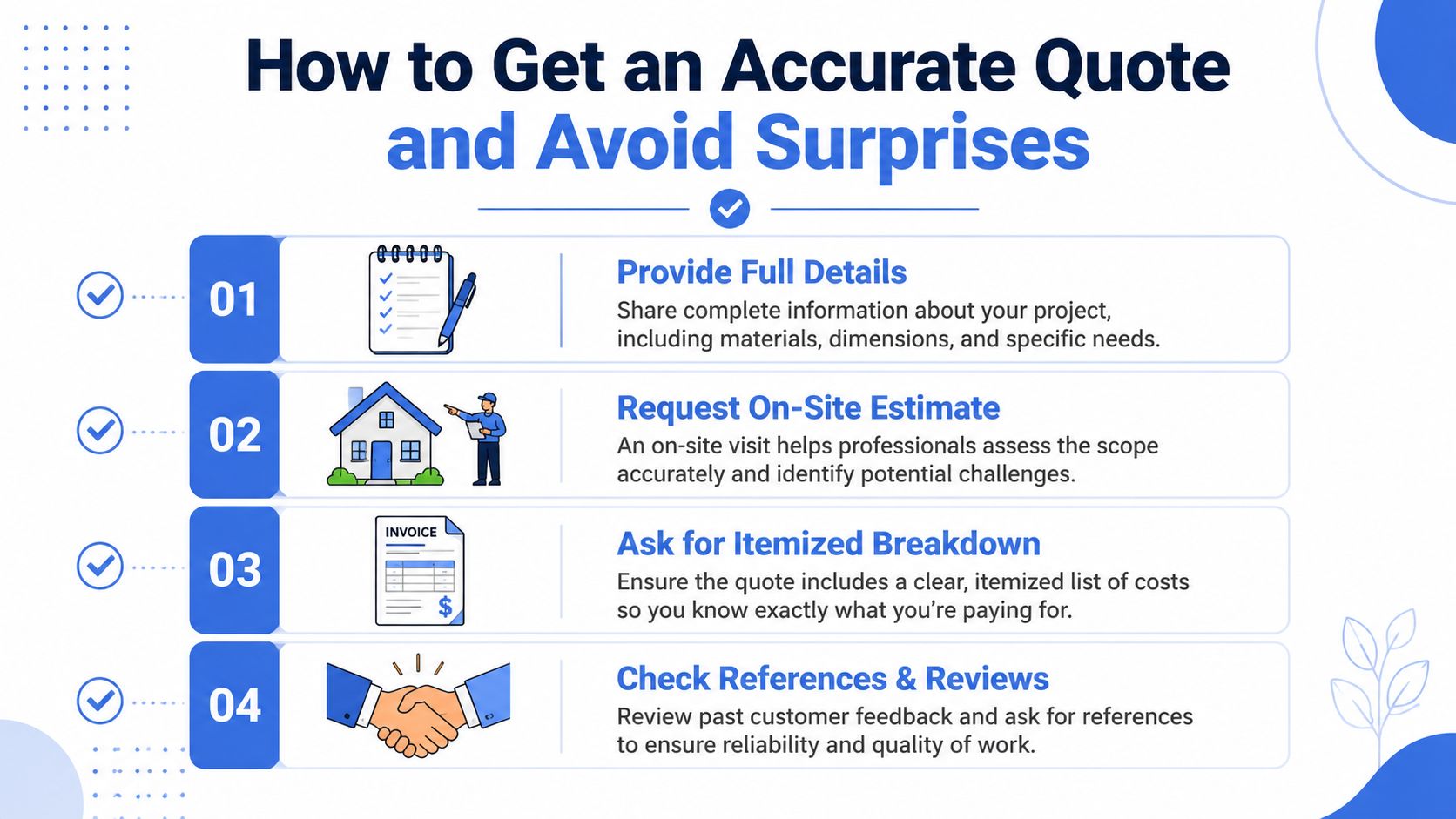
A good quote starts with a usable scope. You do not need trade knowledge. You need a basic count and a clear description.
Use this quick formula before you reach out:
That gives a company enough to build a first estimate that is tied to real labor. If you want to organize those details before you call, use this window washing price calculator.
Recent construction should always be mentioned. Regular maintenance cleaning and post-construction cleanup are priced differently because the labor is different.
The fastest way to avoid surprises is to ask for line items, not just a total.
Ask these questions:
For commercial work, one more question matters. Ask whether the company switches to hourly pricing when access, setup, or safety takes more time than the glass itself. GorillaDesk's window cleaning pricing guide notes that commercial and high-rise work often moves to hourly billing because access and safety requirements change the job.
Photos work for many standard homes. An on-site visit is usually the better choice for larger houses, commercial buildings, and properties with hard access.
Glass count alone does not tell me enough on those jobs. I also need to see ladder placement, screen type, cut-up panes, stain level, and whether the crew will lose time moving furniture or working around foot traffic. Those details decide whether the first number holds up.
Ask for an itemized quote with separate lines for the base cleaning, interior work, screens, tracks, stain removal, and any access-related charges. A lump-sum quote is harder to compare and easier to dispute later.
A clear quote should answer one simple question before the job is booked. What, exactly, is being cleaned, and what would change the price?
Both are common. Per-pane pricing is usually more accurate for divided glass. Per-window pricing is easier to understand for standard residential layouts. On larger commercial work, some companies move to hourly billing because setup and safety become part of the job, not just the glass count.
Sometimes, but you should never assume they are. Many companies treat those as add-ons, especially when screens need removal and reinstalling or when tracks and mineral deposits need extra labor. The cleanest way to avoid confusion is to ask for each item in writing on the quote.
Because it isn't routine maintenance. Paint specks, overspray, labels, adhesive, putty, and fine construction dust take slower, more careful work. That kind of cleanup needs different tools and more time than a standard recurring service.
For professional work, it comes down to two methods only: squeegee cleaning and pure-water cleaning. Squeegee work is common on interiors and detailed glass. Pure-water systems are widely used for exterior work where safer ground-based access and efficient rinsing make more sense.
That depends on the property, location, and how quickly the glass gets dirty. Homes often do well on a regular maintenance schedule, while storefronts, offices, medical buildings, car dealerships, and other public-facing properties usually need more frequent service to keep the building looking sharp.
Some do, some don't. It's appreciated when a crew handles a difficult job well, but it isn't the main thing professionals look for. Clear communication, site access, and repeat business matter just as much.
Because access, safety planning, and equipment needs change the labor. A one-story storefront route is one kind of work. Multi-story or high-rise glass is another. The quote has to reflect how the crew will safely reach the windows and how much setup that requires.
If you want a clear, itemized quote from a company that's been doing this since 1999, Professional Window Cleaning serves residential, commercial, and high-rise properties with experienced crews across Arizona, Colorado, and Nevada.
Read our blog posts regularly and keep learning.