Care and Maintenance
Best Commercial Window Cleaning: Top Providers for 2026
Compare the best commercial window cleaning providers across AZ, CO, and NV, with criteria for high-rise access, pricing factors, and how to choose a vendor.


You're probably looking at a building that seems fine at first glance, then the details start to show themselves. Smudged entry glass. Restrooms that drift out of spec by mid-afternoon. Dust on ledges no one notices until a tenant does. That's usually the moment a property manager realizes cleaning isn't a background task. It's part of how the building performs.
A clean property helps people trust the space. Tenants notice consistency. Visitors notice the lobby, the glass, the floors, and the restrooms. Staff notice whether common areas are cared for or touched up. In commercial properties, cleaning quality shapes first impressions and daily experience at the same time.
At 7:30 a.m., the owner walks the lobby before the first tenant meeting. The floor finish still looks good, but fingerprints are already building on the entry glass, one restroom is missing supplies, and dust is showing along the baseboards where sunlight hits. That is how cleaning gets judged in commercial properties. Not by whether the crew showed up, but by whether the building still reads as controlled under real daily use.
Analysts at Global Market Insights commercial cleaning market analysis found that the global commercial cleaning market was valued at USD 67.2 billion in 2025 and is projected to reach USD 140.4 billion by 2035, growing at a CAGR of 7.6%. Owners and procurement teams are paying closer attention for a reason. Cleaning now sits closer to risk management, tenant retention, and asset protection than to a simple after-hours task.
A professionally cleaned building protects revenue in small, repeatable ways. Fewer tenant complaints reach the property office. Front-of-house areas hold their appearance longer. High-visibility materials such as glass, stone, metal, and finished floors last longer when soil is removed before it grinds in, stains, or etches the surface.
That last point matters more in dry, high-sun markets than many new managers expect.
In Phoenix and Las Vegas, dust load and hard water can make exterior glass and entry areas look tired fast. In Denver, snow, de-icing residue, and seasonal swings change what gets tracked inside and how often mats, lobbies, and hard floors need attention. The national standard is consistency. The local reality is that consistency takes different staffing, frequencies, and inspection habits in each market.
Property managers are buying a standard that holds up on Tuesday afternoon, not just a crew count on a proposal. That includes supervision, site inspections, supply control, training, and a scope that matches how the building operates.
A documented commercial building cleaning program helps set that standard. The useful version ties service levels to traffic, occupant expectations, complaint history, and the surfaces that fail first. It also gives the manager a way to check performance without hovering over every shift.
Here is the trade-off I see most often. If the scope is priced too tightly, crews protect the visible center and let the edges slip. Floor corners, glass detail, touchpoints, and daytime restroom recovery are usually the first places quality drops. If the scope is too broad for the building's actual use, you pay for labor that does not change tenant experience.
A good vendor helps you balance both. They identify what has to look right every day, what can run on a weekly or monthly cycle, and where specialty work such as professional window cleaning carries more value than adding another general cleaning visit.
A cleaning scope should follow the building, not the vendor's default package. Corporate offices, medical suites, retail storefronts, and stadium facilities all create mess differently. If you apply one generic checklist to all of them, you'll either overpay for tasks you don't need or underfund the areas that drive complaints.
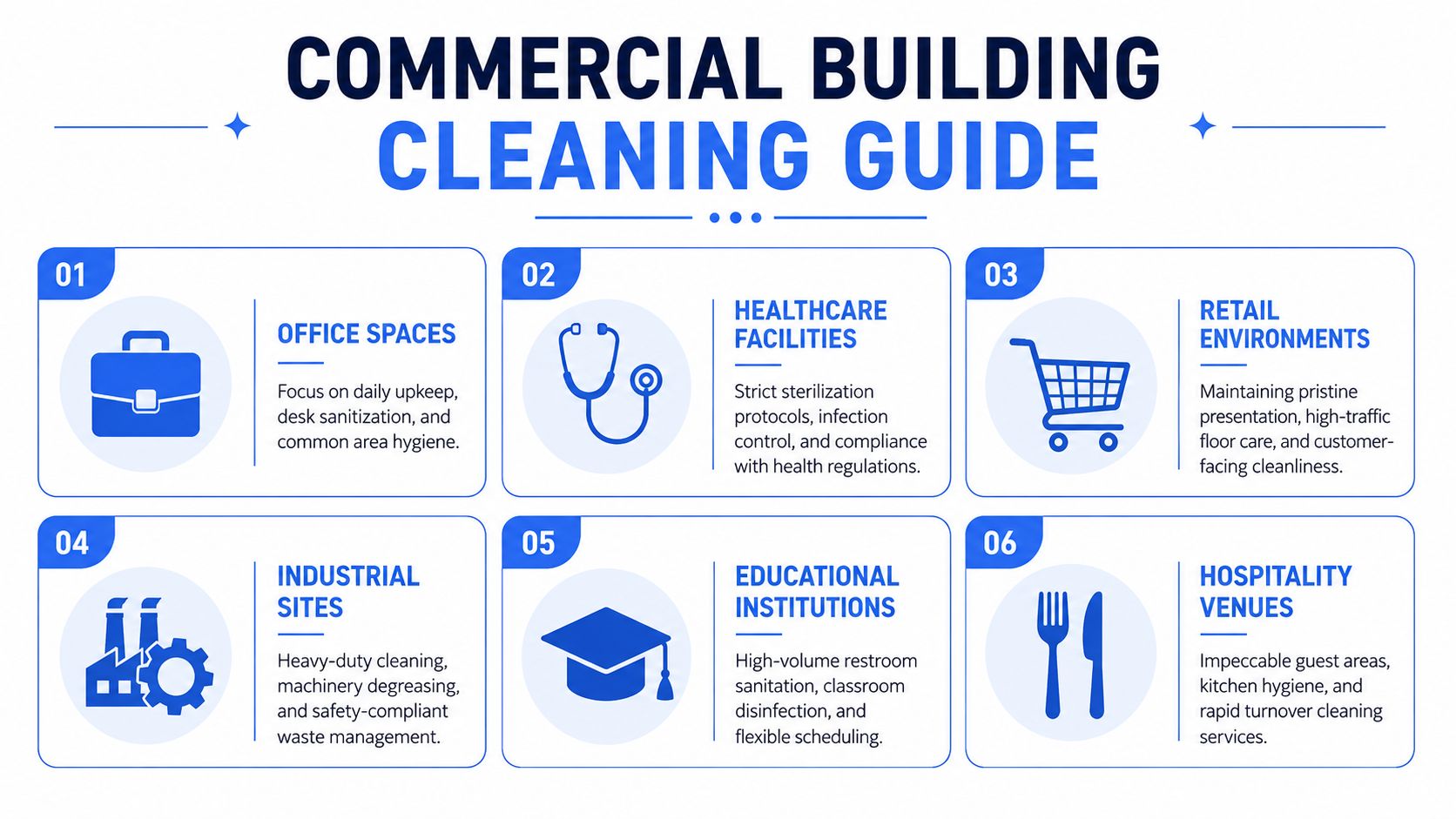
Office environments reward consistency. Entry glass, reception, restrooms, break rooms, conference spaces, and touchpoints have to hold up every day, even when the overall soil load seems moderate.
In a typical office setting, property managers should pay attention to:
Retail and medical spaces look similar from the outside because both are public-facing, but the cleaning logic is different.
Retail spaces need polished presentation. The standard is visual. Smudged display glass, dull floors, dusty base edges, and neglected fitting rooms all hurt the customer experience. Medical spaces require stricter process discipline, especially around touchpoints, exam areas, and waste handling. The service has to be more controlled, with clear product use and documented routines.
In customer-facing buildings, the visible miss is rarely the only miss. If the glass is neglected, there's a good chance the detailing and inspection process is weak elsewhere too.
Industrial properties demand a heavier service model. Dust loads are different. So are floor soils, machinery residue, and waste streams. These jobs often require degreasing, more durable tools, and crews that understand how to clean around operations without creating a safety problem.
Large venues, including stadiums and event properties, add another complication. They cycle between calm periods and sudden surges. Concourse floors, public restrooms, seating areas, railings, and exterior glass can all shift from acceptable to unacceptable in a short window. Scheduling matters as much as technique.
Some facilities live or die by shine. Car dealerships are one of them. Glass, showroom floors, and customer waiting areas have to stay crisp because the product on display is presentation itself. Dirt around door tracks, haze on glazing, or dull tile undermines the whole showroom.
Educational and hospitality properties bring high turnover and constant touchpoints. These spaces need flexible scheduling, quick resets, and strong communication with onsite management.
A simple way to sort your own building is to ask three questions:
The answers tell you what belongs in the base scope and what should be treated as specialty service.
A property manager usually notices specialty cleaning after a complaint, a leasing tour, or an owner walk. By then, the issue is visible. Glass looks hazy in the lobby, dust has built up on high ledges, and exterior surfaces have slipped from normal wear into deferred maintenance.
That is why specialty work should be treated as part of building presentation, not as an occasional add-on. Floor restoration, high-detail dusting, pressure washing in appropriate areas, and exterior glass care protect how the property reads to tenants, visitors, and prospects. Window cleaning deserves special attention because poor results show immediately and good results are harder to deliver than buyers expect.
Window work also changes by market. In Phoenix and Las Vegas, dust, hard water, and sun exposure can make exterior glass look tired fast. In Denver, weather swings, runoff, and seasonal debris create a different maintenance pattern. The service category is the same nationwide, but the right method, frequency, and access plan depend on local conditions.
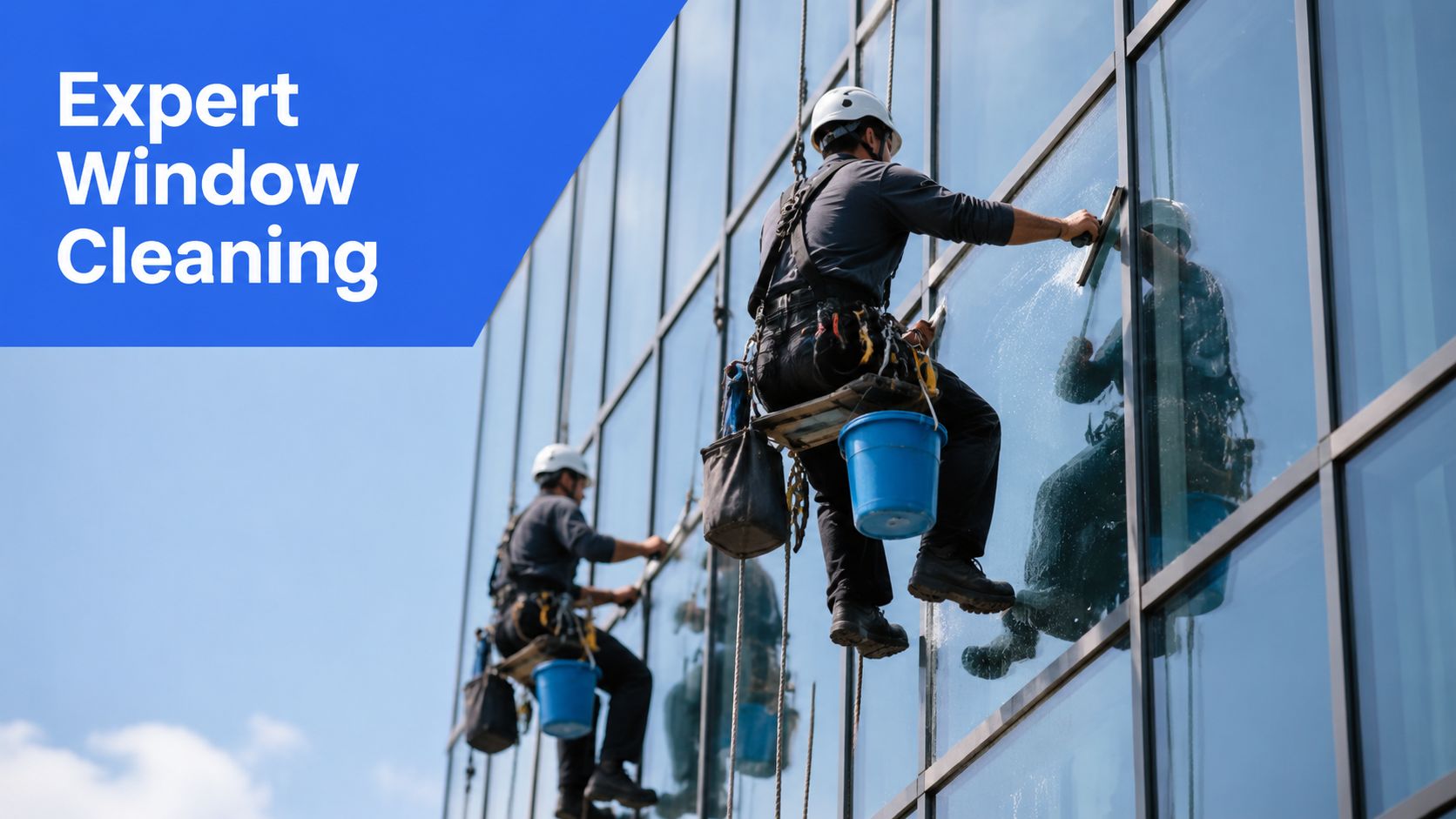
For exterior glass, contractors generally rely on two standard approaches. The traditional mop-and-squeegee method and the pure-water system. This window cleaning methods comparison gives a useful breakdown of how the two differ in practice.
Traditional hand work still earns its place. A technician applies cleaning solution with a mop, loosens soil, and removes it with a squeegee. On glass that people see up close, that level of control matters.
It is usually the better fit for:
The limitation is scale. Once the building gets taller, the access plan starts driving the job more than the glass itself.
Pure-water cleaning uses filtered deionized water that dries without leaving mineral residue. That lets crews clean many exterior panes effectively without dragging a squeegee across each one. This overview of pure-water cleaning explains the basic process.
On commercial exteriors, the advantage is not just speed. It is safer access and better reach for routine work on mid-rise glass, especially when crews can use water-fed poles instead of ladders for large sections of the building. This discussion of traditional versus modern window cleaning methods explains why many operators now prefer pure-water systems for a wide range of exterior jobs.
The trade-off is equipment and setup. Filtration quality, water testing, hose management, and technician training all affect the result. Cheap systems and weak process control usually show up as spotting, missed edges, or inconsistent drying. If you are comparing scopes, this guide to commercial window cleaning services is a useful reference for what a serious vendor should include.
A short demonstration helps if you're evaluating methods and access challenges in the field.
Buyers often start with window count. That is only one input. Labor hours also change with height, glass layout, frame condition, screen removal, swing stage or lift requirements, interior access restrictions, and whether the scope includes detail work on tracks and sills.
Public pricing guides simplify this too much. Thumbtack's commercial cleaning overview notes that the number of windows affects cost, which is true, but that still does not give a property manager a reliable way to judge a bid on a complex site.
The practical fix is to ask for a site-specific scope. A good estimate should separate interior and exterior glass, define the access method, note any water staining or restoration limits, and spell out what is included on frames, ledges, and surrounding surfaces. In dry, high-sun markets like Phoenix and Las Vegas, frequency often needs to account for dust and spotting. In Denver, weather and seasonal buildup may drive timing more than simple calendar intervals.
Clean windows are part of the building's baseline presentation. On the right property, they also support leasing, retail visibility, and the perception that the asset is being managed properly.
A strong cleaning budget starts with service frequency, not with a random monthly number. If you build the schedule around what soils the building, budget discussions get easier because every line item connects to a visible need.
Industry benchmarks for office buildings follow a clear rhythm. Daily tasks include trash emptying and restroom sanitization. Weekly tasks include thorough dusting and window cleaning. Monthly tasks include deep carpet cleaning and floor polishing. Quarterly or bi-annual tasks include HVAC system cleaning, according to Janitorial Manager's office cleaning standards guide.
Use the benchmark as a base, then adjust for traffic, building use, and finish level.
| Task | Frequency |
|---|---|
| Trash emptying | Daily |
| Restroom sanitization | Daily |
| Thorough dusting | Weekly |
| Window cleaning | Weekly |
| Deep carpet cleaning | Monthly |
| Floor polishing | Monthly |
| HVAC system cleaning | Quarterly or bi-annual |
That table is a starting point, not a fixed law. A medical office may need touchpoint work that's more rigorous than a standard office suite. A retail site may need more floor attention and more glass attention at the entrance. A high-end dealership may care less about back-office dusting and far more about showroom floors and front glazing.
Property managers usually get the best bids when they define the scope clearly before asking for pricing. Ambiguous requests lead to padded proposals or underbidding that causes service failures later.
Focus on these variables:
Budgeting advice: Ask every bidder to separate routine janitorial work from specialty work. If they blend everything together, you won't know what you're actually comparing.
The best scopes are specific enough that a supervisor can inspect them. “Clean lobby weekly” is vague. “Dust ledges, wipe entry glass, spot doors, vacuum mats, and detail corners” is inspectable. That's the difference between buying appearances and buying a standard.
A cleaning contractor can do good work on the floor and still expose your property to risk if the paperwork is weak. The service agreement, insurance documents, and compliance process matter just as much as the walk-through. If those pieces aren't solid, every incident becomes harder to resolve.
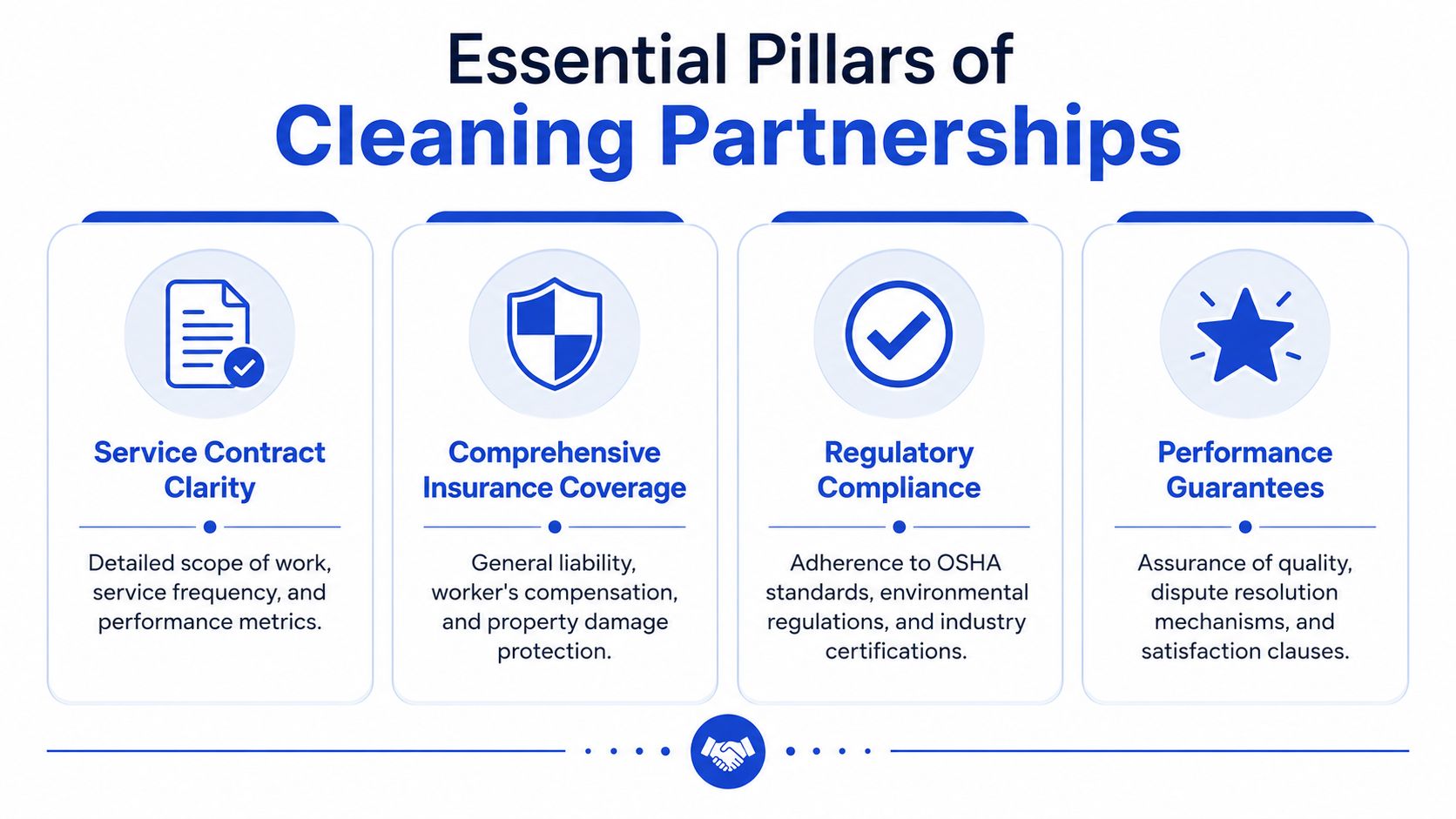
A usable service agreement should identify the scope, frequency, service times, exclusions, response expectations, and how quality issues are handled. If the agreement is too vague, it becomes difficult to prove what was promised.
Many managers use a draft checklist or sample form before legal review. A practical starting point is this VerticalRent cleaning contract template, which helps organize scope, terms, and responsibilities before you negotiate final language.
You should also verify how the company explains its coverage. This overview of bonded vs insured cleaning providers is a good reference if you want a quick distinction before asking for certificates and policy details.
Green claims and safety claims should be backed by training. Green Seal GS-42 requires commercial building cleaning services to use a highly trained workforce skilled in effective green cleaning practices for commercial, public, and institutional buildings, as outlined in the Green Seal GS-42 standard. The standard also connects training to chemical handling, PPE use, and safer operations.
Ask direct questions when you vet a vendor:
A contractor that can answer those questions clearly is usually running a real operation. A contractor that answers vaguely is usually relying on luck.
The U.S. market is crowded, and that changes how you should hire. There were 1,207,299 commercial cleaning businesses operating in the U.S. in 2022, a 7.7% increase from the prior year, according to Corvus Janitorial's industry overview. That fragmentation creates plenty of options, but it also means quality varies widely.

Don't start with price. Start with operating discipline. A low bid from a company with weak supervision usually turns into complaints, callbacks, and scope disputes.
Use a checklist like this during interviews:
Strong providers don't hide behind generalities. They explain who supervises, what gets inspected, when reports are sent, and how corrections happen. They know the difference between routine janitorial cleaning and technical work that needs dedicated equipment and trained specialists.
Experience matters here. Professional Window Cleaning has been cleaning windows for over 26 years, and that kind of tenure is useful shorthand for one thing: the company has seen enough building types, access problems, and client expectations to know where jobs usually go wrong.
If a vendor can't describe its quality-control process in plain language, it probably doesn't have one.
For managers in places such as Gilbert, Flagstaff, Tempe, or Chandler, the same rule applies as it does in major metros. Hire the company that can define the standard, document the work, and solve problems without drama.
That depends on use, visibility, and risk. A quiet office may hold a good standard with a lighter schedule in some areas, while a retail site, medical office, or busy lobby may need more frequent attention. The right answer starts with traffic patterns, restroom load, entry conditions, and whether the building has high-visibility glass or specialty flooring.
Usually, it should be scoped separately even if the same company performs it. Routine janitorial work and professional window cleaning use different tools, training, and access planning. Keeping them separate in the proposal makes it easier to compare pricing and service levels.
Yes, and many commercial properties prefer it. After-hours service helps avoid disruption, but it also requires better key control, alarm procedures, and written entry instructions. If the building has multiple tenants or restricted zones, make sure the contractor's access process is documented.
The contractor should report it quickly, document what happened, and explain the next step. That's where insurance and contract language matter. A professional provider should already have a process for damage reporting, claim communication, and site follow-up.
Visual inspection still matters, but it isn't the only option. In higher-risk areas, some operations now use ATP testing to verify cleanliness more objectively instead of relying only on appearance. That approach is especially useful when a site needs evidence-based confirmation that a cleaning process was completed properly.
Not when it's backed by training, product control, and documented procedures. A serious green cleaning program affects chemical handling, PPE use, staff instruction, and how work is performed inside occupied buildings. If a company says it uses green practices, ask what standards and training support that claim.
That's common. Mixed-use properties often need one scope for office suites, another for retail frontage, and another for shared amenities or exterior glass. The mistake is forcing one cleaning model across all of them. A better approach is one contract with distinct scopes by area.
If you're comparing vendors and want a team that understands both routine building care and technical glass work, Professional Window Cleaning is a strong place to start. They provide residential window cleaning, commercial window cleaning, and high-rise window cleaning across Arizona, Colorado, and Nevada, and they've been in business since 1999.
Read our blog posts regularly and keep learning.