Care and Maintenance
How Much Can a Window Cleaning Business Make in 2026
Wondering how much can a window cleaning business make in 2026? See real revenue, profit margin, and owner income numbers for solo, crew, and high-rise


Tackling water-stained windows takes more than just a spritz of standard glass cleaner. It really comes down to using the right acidic or abrasive solutions to break down and dissolve the crusty mineral deposits left behind.
For those light, fresh stains, a simple mix of white vinegar and water often does the trick. But for the really stubborn, built-up spots that have been sitting there for months? You're going to need to bring in the heavy hitters to get your glass back to its original, crystal-clear state.
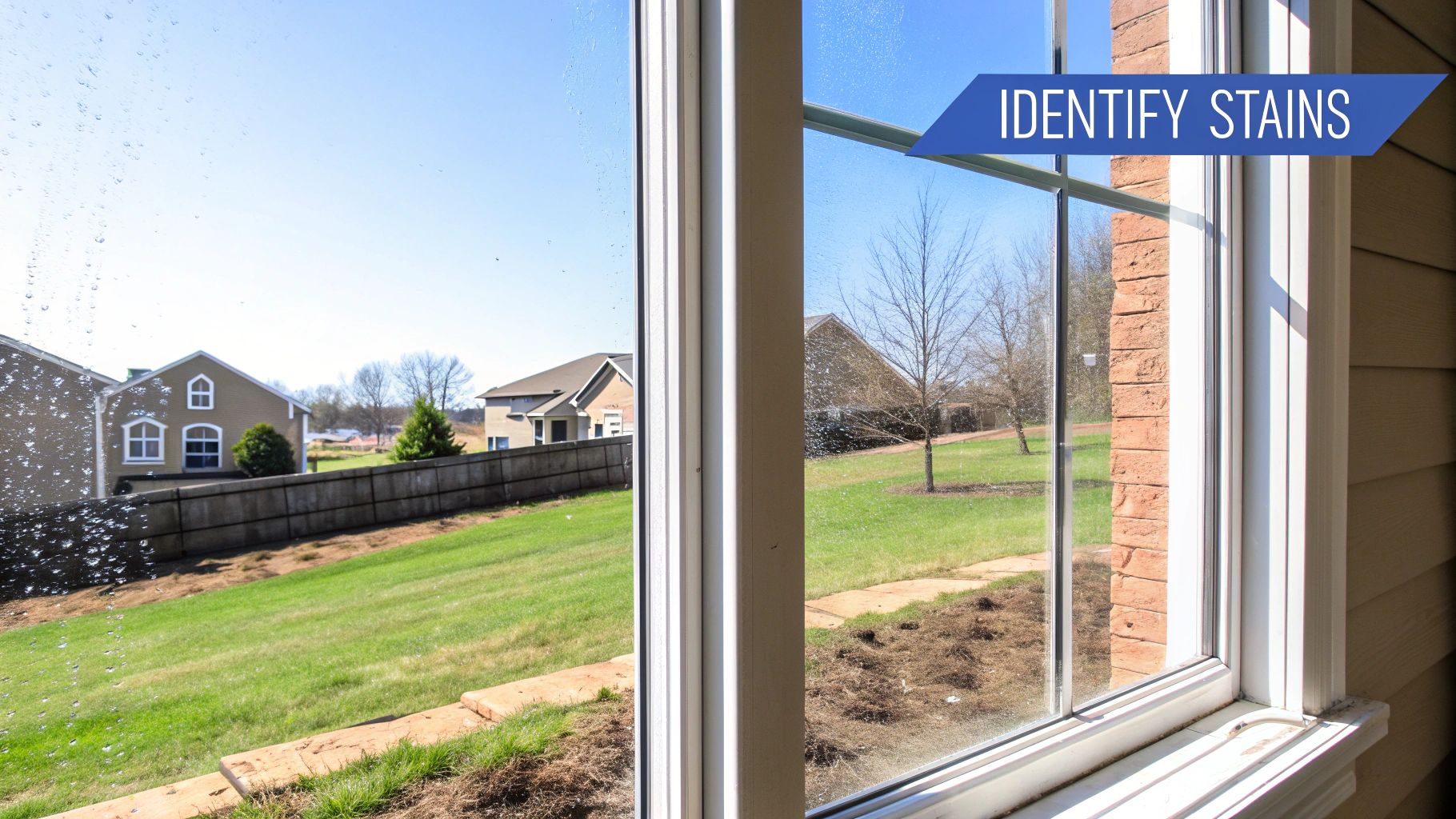
Those chalky white spots ruining your view aren't just dried water. They're what’s left behind after water evaporates: mineral deposits, mostly calcium and magnesium carbonates. This is the classic sign of "hard water," a problem many of us face when sprinklers, hoses, or even rain runoff repeatedly splash against our windows.
Here’s the thing most people don’t realize: glass is porous. Because of this, those minerals don't just sit on top. Over time, they can actually bond with the glass and etch into the surface. This is what creates that persistent, ugly film that soap and ammonia-based cleaners just can't touch.
Not all water stains are created equal, and knowing what you're up against is the first step to choosing the right battle plan. Generally, stains fall into two categories:
Stage I Stains: Think of these as fresh mineral deposits sitting on the surface. They might look like faint white spots or a light haze. At this point, the stains are totally removable with the right techniques because they haven't started to damage the glass itself.
Stage II Corrosion: This is where the real trouble starts. The minerals have been on the glass so long that their alkaline nature has started to corrode and etch the surface. The glass looks cloudy or milky, even after you've scrubbed it clean. This damage is physical, and it often takes professional polishing to even have a chance at fixing it.
This issue is so common that it’s become a huge driver for the cleaning industry. The global cleaning services market was valued at $55.7 billion in 2020 and is on track to nearly double, largely because people need specialized solutions for headaches like hard water buildup. You can discover more insights about the window cleaning industry and its growth.
A critical mistake is treating all water spots the same. Using a generic cleaner on a Stage II stain is like trying to fix a scratch with a cloth—it simply won't work because the underlying surface is already damaged.
Professionals are trained to handle these tough deposits safely. For example, in places with notoriously hard water like Las Vegas or Phoenix, experts rely on two primary methods: the use of a squeegee with specialized cleaning agents or advanced pure-water systems that dissolve minerals on contact without harming the glass.
Having the right gear is the difference between a frustrating afternoon and a sparkling finish. Before you start scrubbing away at water stains, pulling together a proper toolkit will help you work safely and effectively, and most importantly, prevent accidental scratches or damage.
Think of this as your battle plan against stubborn mineral deposits.
Your basic kit should always start with safety. Goggles and chemical-resistant gloves are non-negotiable, especially if you’re handling commercial-grade cleaners. You'll also want a healthy stack of microfiber towels handy for applying solutions and drying the glass without leaving lint behind.
For light to moderate stains, your primary tools will be applicators and some gentle abrasives. It’s a good idea to have these items in your bucket:
When you’re up against more stubborn, caked-on deposits, you'll need to step up your equipment. A zero-degree scraper, used carefully at the correct angle, is a professional's secret for safely lifting thick mineral buildup without gouging the glass. Similarly, an automotive clay bar can be surprisingly effective at grabbing and lifting contaminants that have bonded to the window's surface.
Remember, the goal is to remove the stain, not the glass. Always start with the least aggressive tool and method first. Test any new tool or chemical on a small, inconspicuous spot before tackling the entire window.
Assembling the right gear from the start saves you time and protects your windows. For a deeper look into what the experts keep in their vans, check out this guide to professional window cleaning equipment, which covers everything from squeegees to advanced pure-water systems. With the right toolkit, you're prepared for any level of hard water stain.
When you first notice those faint, chalky spots creeping across your glass, don't panic. For lighter, surface-level mineral deposits, your kitchen pantry often has everything you need. These simple, acidic remedies are perfect for tackling Stage I water stains before they get a chance to permanently bond with the glass.
The secret to making these methods work is a little basic chemistry. Hard water stains are just alkaline mineral deposits—mostly calcium and magnesium. To break them down, you need a mild acid. This is where common household items really shine, offering a gentle but effective way to clean your windows without reaching for harsh chemicals.
This little decision tree can help you figure out when a simple DIY approach will work versus when you might need to pull out something more heavy-duty.
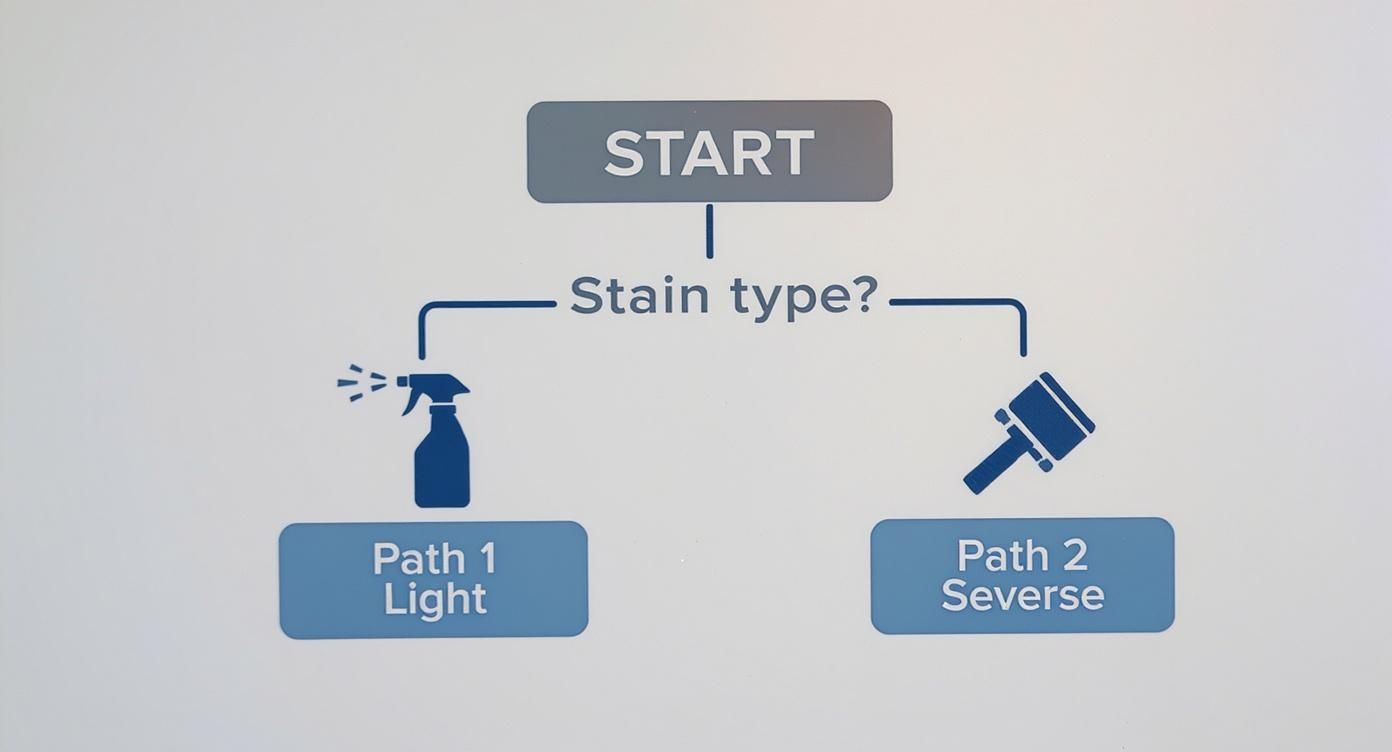
As you can see, for light, recent staining, a simple spray solution is your first line of defense. The more aggressive tools should be reserved for severe, built-up deposits that have been there for a while.
To help you decide what to grab from the cupboard, here’s a quick rundown of the most common DIY solutions we've used over the years.
These methods are fantastic starting points, especially if you catch the stains early. Now, let’s get into how to use them properly.
The most popular and accessible DIY cleaner is a straightforward mix of equal parts white vinegar and distilled water. The acetic acid in vinegar is a champ at breaking down mineral buildup. If you want a bit more cleaning power or a fresher scent, you can swap the vinegar for lemon juice, which contains citric acid.
Here's how to apply it:
A common mistake we see is people scrubbing too soon or too hard. Let the acidic solution do the heavy lifting. If the stains are still there after the first try, just reapply and let it sit longer. Using more muscle is more likely to scratch the glass than remove the stain.
If your acidic spray isn't quite cutting it, you can introduce a gentle abrasive into the mix. A paste made from baking soda and a little water creates a mild scouring agent that can help lift more stubborn spots without scratching the glass.
Just apply the paste to the stained areas and gently scrub in a circular motion with a soft cloth. This method gives you just enough friction to dislodge mineral particles that the acid loosened but didn't fully remove.
As more homeowners deal with hard water, the market for these kinds of solutions has exploded. In fact, the market for hard water stain removers is projected to grow at a CAGR of 5.00% through 2032. You can read the full research about hard water stain remover market trends to get a deeper look.
Just remember, these DIY methods work best on newer, lighter stains. If you find yourself scrubbing away with no results, the stains have likely progressed to Stage II, and you'll need to move on to more advanced techniques.
When your DIY vinegar solution and a good bit of elbow grease just aren’t cutting it, you’re probably up against what we call Stage II corrosion. These aren't just surface-level smudges; these severe stains have physically started to etch and damage the glass itself. This is the point where you have to graduate from simple cleaners to more specialized, powerful techniques designed to restore the glass.
The good news? A determined DIYer can still get fantastic results. But it’s going to take the right tools and a careful, patient hand. The whole game is about using methods that are just abrasive enough to grind away the mineral damage without scratching the surrounding glass. It’s a delicate dance, but one that can save a window that looks like a lost cause.
Your first move into advanced territory should be a high-quality commercial hard water stain remover. These aren't your average all-purpose cleaners. They are specifically formulated with mild acids and fine abrasives engineered to break down and polish away those stubborn mineral deposits.
When you use these products, always follow the manufacturer’s instructions to the letter. Most will have you apply the remover with a non-abrasive pad, working it into the glass in small, circular motions. It’s a process that demands patience and a bit of muscle, but the payoff can be huge.
Always test any new commercial product on a small, hidden spot first. This simple check ensures the product won't cause any unexpected hazing or damage, which is especially important for coated or tinted windows.
For those stains that laugh in the face of commercial removers, it’s time to bring out the specialized tools the pros use for deep restoration. These methods are incredibly effective but require a delicate touch to avoid creating permanent scratches.
Here are a few advanced options to consider:
If you find yourself dealing with stains so deep that they require this level of intervention, you might be stepping into the realm of professional work. For severely etched glass that can’t be fixed with pads or compounds, you may need to learn more about the benefits of professional glass polishing, which uses specialized machinery to restore the surface.
Ultimately, tackling water-stained windows with these advanced techniques can be incredibly rewarding. It allows you to salvage glass that might otherwise need a costly replacement, bringing it back to a like-new condition with the right mix of powerful products and careful technique.
Let's be honest—sometimes the smartest move you can make is knowing when to call for backup. While DIY methods are fantastic for tackling fresh, surface-level spots, some situations just scream for a professional's touch. If you're staring at severe, etched-in stains or have windows that are just too high to reach safely, hiring a pro isn't just a matter of convenience; it's a necessity.
Trying to grind out severe Stage II corrosion without the right training can quickly turn a cleaning project into a costly window replacement. And let's not forget the very real risks of climbing tall ladders or messing with powerful chemicals without the proper safety gear. A professional service takes all that danger right off the table.
When you bring in a professional, don't expect them to show up with a simple vinegar spray. They come armed with highly effective methods designed to deliver flawless, lasting results. Professionals only use two methods for window cleaning:
The Squeegee Method: This is the classic technique, perfected over decades. Pros use high-end, specialized squeegees paired with custom cleaning solutions that lift away dirt and mineral deposits. The result is a perfectly clear, streak-free finish that's nearly impossible to get with a roll of paper towels.
The Pure-Water System: The modern approach uses a water-fed pole system that pumps highly purified, deionized water. This "pure water" is an aggressive cleaner all on its own, naturally pulling in and dissolving minerals like calcium and magnesium. Because it leaves zero residue, the windows simply air-dry to a completely spot-free shine.
If you think you're in a situation that needs expert help, learning more about dedicated window cleaning services can help you make the right call. It really clarifies why professional results are in a league of their own.
The decision to call a professional usually boils down to two things: how bad the stains are and how safe the job is.
If your windows look milky or cloudy even after you've tried cleaning them, you're likely dealing with Stage II damage. This kind of etching requires specialized glass polishing—a skill best left to a trained technician.
Beyond that, any windows on a second story or higher, or those located over sloped or unstable ground, are a serious safety risk. Professionals are insured and come equipped with the right safety gear to handle these challenges without incident. If you're not sure where to start, check out this helpful guide on finding professional window cleaners near you to connect with qualified experts in your area.
Think of the cost of a professional service as an investment in quality and safety. For windows with severe mineral buildup, pros often charge more because of the intensive labor involved. For example, a window that costs $15 for a standard clean might jump to $30 for a hard water treatment. You can see a full breakdown of window cleaning pricing to get a better idea.
In hard-water hotspots like Denver, the mineral content is so high that professional help is often the only way to get your windows truly clear again. The same goes for desert climates like Phoenix and Las Vegas, where the combination of intense sun and hard water is brutal on glass. Local pros in these areas have the specific experience needed to tackle even the worst stains.

After putting in all that effort to get your windows sparkling clean, the last thing you want is for those stubborn white spots to creep back. The real secret to clear glass isn't just cleaning—it's prevention. A few simple adjustments can stop mineral deposits before they even get a chance to cling to your windows.
Believe it or not, the most common culprit is usually lurking in your own yard: the sprinkler system. When sprinkler heads blast water directly onto your glass, they're painting it with mineral deposits, especially in dry climates where the water evaporates almost instantly. A quick walk around your property can make a world of difference.
Your first line of defense is simply managing what’s hitting the glass. It sounds obvious, but redirecting water is the single most effective way to protect your windows from a constant barrage of minerals.
These small tweaks dramatically cut down how often your windows get soaked in hard water, which is the root cause of the whole problem.
Think of it this way: every time a drop of water dries on your glass, it leaves a microscopic layer of calcium and magnesium behind. It’s far easier to prevent the water from hitting the window in the first place than it is to scrub off months of caked-on minerals.
Another fantastic strategy is to make your glass slippery, so water can’t stick around. Applying a hydrophobic sealant or glass protectant creates an invisible shield that forces water to bead up and roll right off, taking those pesky minerals along for the ride.
These products work just like wax on a car. Instead of letting water droplets sit flat and evaporate, the sealant creates a surface so slick that they can't help but slide off. You can find easy-to-use spray-on sealants at most home improvement stores, and one application can last for months. This is a game-changer for windows that get wet all the time, like those near a pool, in a shower, or constantly in a sprinkler’s path.
Finally, a little maintenance goes a long way. A quick once-over with a squeegee or microfiber cloth after a window gets wet can stop minerals from bonding to the glass. By combining these proactive steps—controlling water, applying a sealant, and doing quick wipe-downs—you’ll protect the hard work you put in and keep your windows looking pristine.
Even with the best game plan, questions pop up when you're face-to-face with stubborn water stains. Let's tackle some of the most common issues homeowners run into, so you can handle any curveballs with confidence.
Yes, unfortunately, they can. When you let those mineral deposits (what we call Stage I stains) sit on the glass for too long, a chemical reaction starts. They can actually bond with the glass and etch into the surface, creating what's known as Stage II corrosion.
At that point, the damage is physical. Simple cleaning just won't cut it anymore. This is exactly why catching those stains early makes all the difference.
If you've tried the vinegar or lemon juice trick and it's not making a dent, it usually comes down to one of two things. First, you might not have let it sit long enough. That acidic solution needs at least 5-10 minutes to really get to work dissolving the minerals.
Second, you might be past the DIY stage. If the stains are still there, you’re likely dealing with more advanced Stage II stains that have already etched the glass. Those require more abrasive methods to fix.
When you hire a pro, you're paying for a perfect finish, and there are ONLY 2 methods of window cleaning professionals use: the use of a squeegee, or the use of a pure-water system.
This kind of expertise is a game-changer in places with notoriously hard water. Our local pros in cities like Phoenix or Las Vegas rely on these exact methods every single day to get results.
Key Takeaway: The difference between a DIY job and a professional one often boils down to tools and technique. Pros use either a squeegee with a specific cleaning solution or a pure-water system to guarantee a streak-free result that home methods just can't replicate.
Using a razor blade or scraper can definitely be effective for really thick mineral buildup, but it’s a high-risk move. If you don't do it just right, you can easily scratch the glass.
Professionals use a very specific zero-degree scraper and hold it at a precise angle to lift deposits without damaging the surface. For a DIY project, it's much safer to stick with less aggressive options like #0000 steel wool or a clay bar to avoid causing permanent damage.
Don't let stubborn water stains spoil your view any longer. For a guaranteed sparkling finish without the risk or the hassle, you can always trust the experts at Professional Window Cleaning. Our teams across Arizona, Colorado, and Nevada use industry-leading techniques to bring back total clarity to your windows. Schedule your professional window cleaning service today!
Read our blog posts regularly and keep learning.