
Care and Maintenance
How Does Water Fed Pole Window Cleaning Work
Learn how does water fed pole window cleaning work, from purified water chemistry to telescopic poles, brush heads, safety benefits, and when to hire pros.


That frustrating haze you see trapped between the panes of your double-pane window isn't just an ugly obstruction. It’s a clear signal that your window's seal has failed. This double pane window fog means the insulating barrier is broken, letting air and moisture seep in and ruin both your view and your home's energy efficiency.
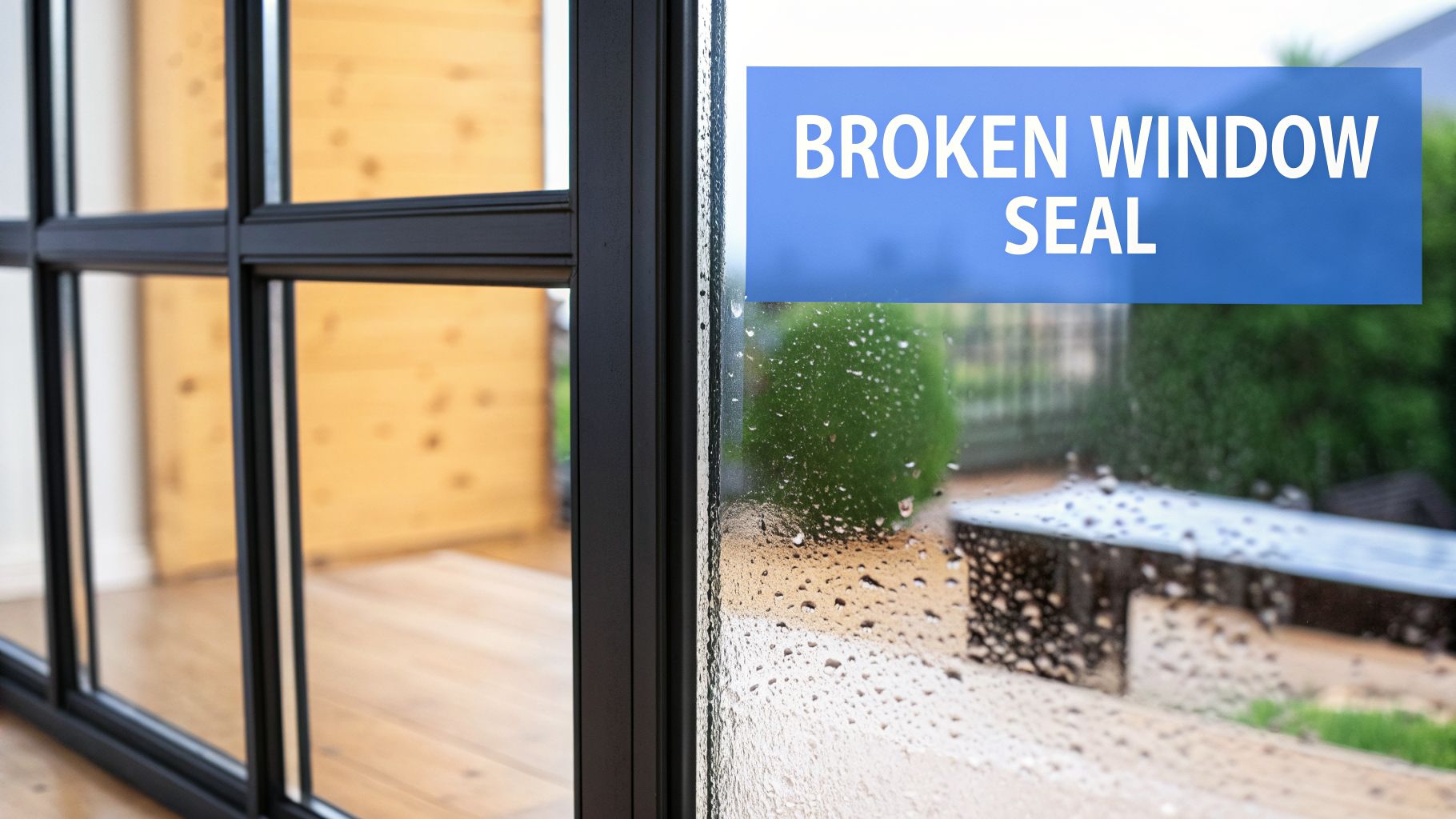
Think of your double-pane window as a high-tech thermos for your home. It’s technically called an Insulated Glass Unit (IGU), and its job is to keep your home comfortable. Two panes of glass are separated by a spacer and sealed together, creating an airtight chamber. This chamber is usually filled with a dense, inert gas like argon to slow heat transfer, keeping your home cooler in the summer and warmer in the winter.
When that perfect seal is compromised, the window’s insulating power vanishes. The argon gas escapes, and ordinary, moisture-filled air gets in. This is the root cause of that stubborn double pane window fog.
The main culprit behind a failed window seal is a process called thermal pumping. It’s a relentless, daily cycle of expansion and contraction that puts constant stress on your windows.
This constant push-and-pull motion, like a bellows breathing in and out, eventually weakens the sealants over many years. This is a widespread issue affecting homeowners across major U.S. markets, including Arizona, Colorado, and Nevada. The daily cycle is especially harsh on sun-exposed windows, which is why homes in sunny cities like Scottsdale and Las Vegas often see accelerated seal failure. You can discover more insights about this phenomenon on NACHI.org and how it impacts window longevity.
To quickly figure out what's happening with your windows, just look at where the moisture is forming. This simple table breaks it down for you.
| Location of Condensation | What It Means | Common Cause |
|---|---|---|
| Inside the House | High indoor humidity | Showers, cooking, humidifiers |
| Outside the House | High outdoor humidity & warm, moist air meeting a cool window surface | Morning dew or after a rainstorm |
| Between the Panes | Your IGU seal has failed | Thermal pumping, age, or damage |
So, if you can't wipe the condensation away from the inside or the outside, you know you're dealing with a broken seal.
To combat minor amounts of moisture that might be present during manufacturing, a special material called a desiccant is placed inside the window's spacer bar. This is the same idea as those tiny silica gel packets you find in new shoes or electronics.
The desiccant’s job is to absorb any trace amounts of water vapor. However, once the seal breaks and a continuous flow of moist air enters the IGU, the desiccant quickly becomes overwhelmed and saturated.
At this point, it can no longer absorb moisture. The water vapor then condenses on the coolest surface it can find—the inside of the glass panes—creating the permanent, impossible-to-clean fog.
Once you see this internal fog, the window's insulating properties are gone for good. While the issue might start as a small, barely noticeable haze, it will inevitably worsen over time, spreading across the entire window and potentially leaving ugly mineral deposits and streaks.
If you're wondering about other reasons your windows might look hazy, check out our guide on why windows get foggy. A professional assessment is often the best way to diagnose the true cause. With over 26 years of experience, Professional Window Cleaning can identify seal failure during a routine service, using proven squeegee and pure-water methods that are safe for your windows.
Seeing moisture on your windows can be alarming, but it doesn't always spell disaster. Before you jump to conclusions, it’s time to do a little detective work to figure out exactly where that moisture is. This one simple step can save you a lot of worry and help you tell the difference between harmless, everyday condensation and a real double pane window fog problem.
Your biggest clue is the location of the condensation. Is it on the inside of the glass you can touch? On the outside, exposed to the weather? Or is it trapped somewhere in the middle?
The easiest way to get your answer is what we call the "wipe test." It's just as simple as it sounds.
If you can wipe it away from either side, breathe a sigh of relief. Your window's seal is probably doing its job just fine. The issue isn't the window itself, but the humidity levels inside or outside. Understanding the best humidity level for home can help you figure out if your indoor environment is the culprit.
This is the moment of truth. If you see that foggy, hazy look or even visible water droplets between the two panes of glass, you have a broken seal. You can try wiping both sides, but that moisture isn't going anywhere.
What’s happened is the insulating gas that once filled the space has escaped, and humid, everyday air has gotten in.
A broken seal means the Insulated Glass Unit (IGU) has failed. That condensation is trapped for good, and unfortunately, it won't clear up on its own. In fact, it usually gets worse, leaving behind ugly streaks and mineral deposits that ruin your view.
This is a critical distinction. Back in the 1960s, before modern sealed windows, condensation between panes was a given. That's what pushed the industry to develop today's factory-sealed units. But even these hermetic seals are under constant stress from temperature changes and atmospheric pressure, causing them to break down over 5-10 years.
In sunny cities like Scottsdale, this thermal stress is even more extreme. We often see south-facing windows fail much faster due to the intense heat.
Knowing for sure if your seal is broken is the first step toward finding the right solution. For a more detailed look into how these seals work and why they fail, check out our guide on what a window seal is. If you're still not sure, a professional can spot a failed seal in a second. With over 26 years of experience, the team at Professional Window Cleaning frequently identifies these issues for homeowners in communities like Phoenix during our regular cleaning services.
So you’ve confirmed it: that frustrating fog inside your double-pane window is from a broken seal. You’ve now reached a critical crossroads. With moisture trapped between the panes, your window is no longer insulating your home properly. Your two main paths forward are replacing just the glass or replacing the entire window, frame and all.
This decision really boils down to the condition of your window frames and your long-term goals. Making the right choice can save you thousands of dollars while restoring your home’s comfort and appearance. It's a common dilemma for homeowners we see everywhere, from the intense sun of Las Vegas to the fluctuating temperatures of Denver.
A popular and highly cost-effective solution is to replace only the Insulated Glass Unit (IGU). This process involves keeping your existing window frame and simply swapping out the failed, foggy glass unit for a brand-new, perfectly sealed one.
This approach is the perfect fit when your window frames are still in excellent shape—no rot, warping, or major damage. It's a much faster and less invasive process than a full frame replacement. Think of it like getting a flat tire on your car; you don't need a whole new vehicle, just the part that failed.
This simple decision tree helps visualize that first diagnostic step.
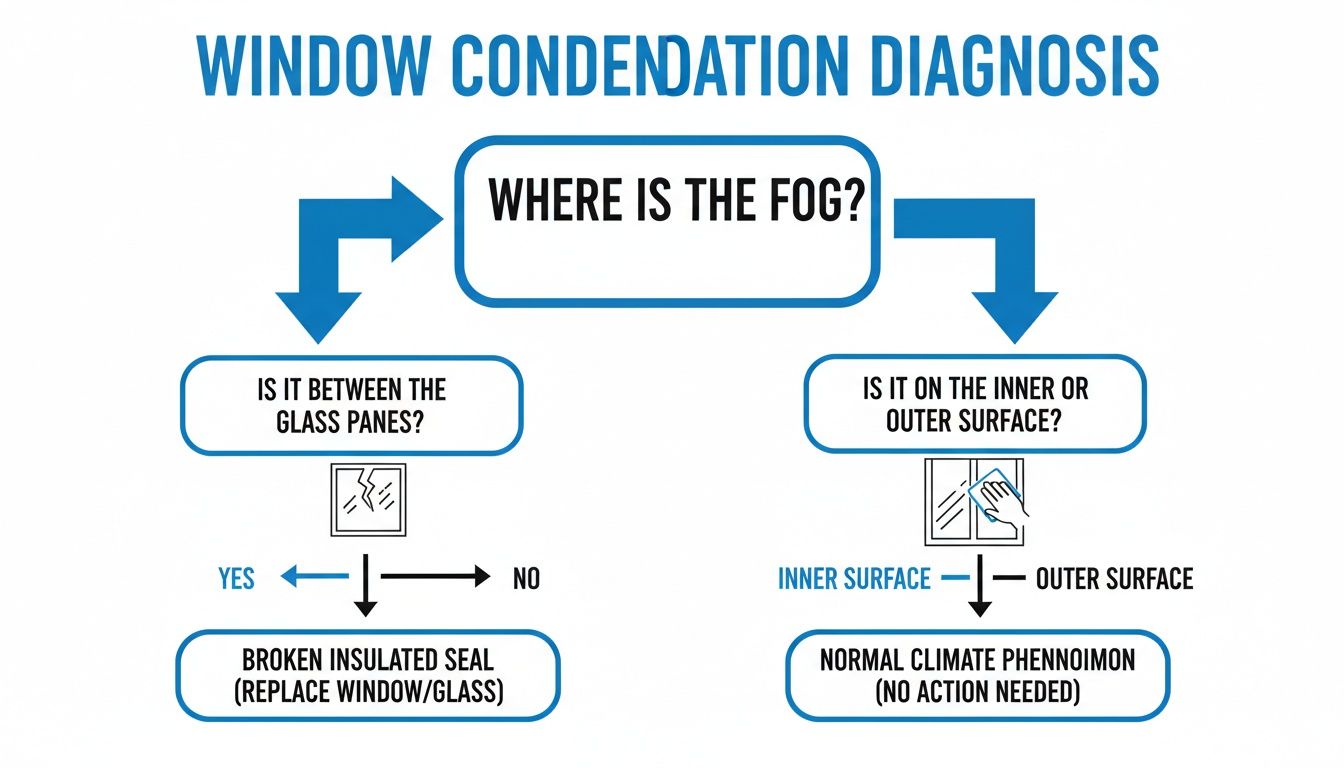
As the flowchart shows, once you spot fog between the panes, you're dealing with a broken seal. That brings you squarely to the repair-or-replace decision.
However, if your window frames are old, damaged, or inefficient, replacing only the glass is like putting a new engine in a rusted-out car. In these situations, a full window replacement is by far the smarter long-term investment. This means removing the entire window—frame, sash, and glass—and installing a completely new, modern unit.
You should lean toward a full replacement if your frames are:
A full replacement is more expensive and labor-intensive upfront, but it’s the only way to address underlying structural problems. It can also drastically improve your home’s energy efficiency, especially if you're upgrading from old single-pane or builder-grade windows.
Choosing the right path forward really depends on your specific situation. The differences in cost, time, and impact are significant.
A failed seal does more than just block your view. Once the insulating argon gas leaks out, your window’s performance drops to that of a single pane, which can spike your heating and cooling bills by up to 20-30%. Worse, the trapped moisture can lead to mold and mildew growth inside the window. You can learn more about the risks of window condensation from NACHI.org.
Here’s a side-by-side guide to help you make an informed choice between replacing the glass unit and a full window overhaul.
| Factor | IGU Replacement (Glass Only) | Full Window Replacement (Frame and Glass) |
|---|---|---|
| Best For | Newer, high-quality frames that are still in good condition. | Old, damaged, warped, or inefficient frames. |
| Average Cost | $150 - $500 per window. | $500 - $1,500+ per window. |
| Installation Time | Typically under an hour per window. | Several hours per window; can become a multi-day project. |
| Energy Impact | Restores the window's original insulating value. | Can dramatically improve overall energy efficiency with modern frame and glass technology. |
Ultimately, weighing these factors will point you to the best solution for your home and budget.
Professional window cleaners, like our teams at Professional Window Cleaning who have served homeowners in places like Phoenix and Denver for over 26 years, often spot seal failure during routine cleanings. Our trained eyes can catch the early signs, and we can advise you when it's time to get a professional repair assessment. A consultation with a trusted window expert will give you a definitive answer tailored to your home.
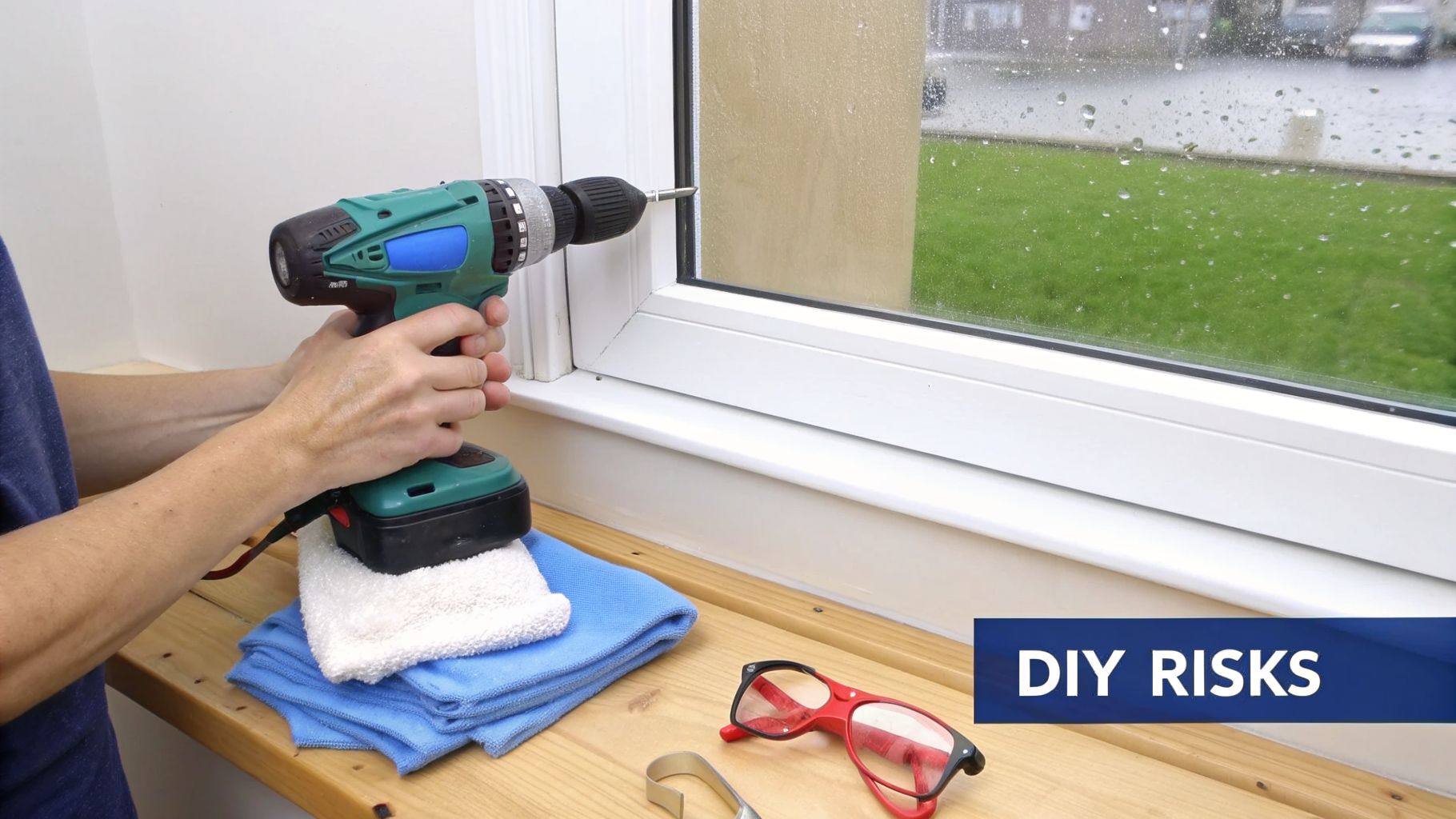
When you're staring at that stubborn double pane window fog, the idea of a quick, cheap DIY solution can be incredibly tempting. A quick search online turns up all sorts of videos and tutorials for methods that seem to promise a crystal-clear view without the professional price tag. The most popular trick you’ll find is the "drill and drain" technique.
This approach involves drilling one or two tiny holes into the corner of the glass, letting the trapped moisture drain out, and then plugging the holes with a special valve. On the surface, it sounds logical enough. You get the water out, the fog disappears, and your problem is solved. Right?
Unfortunately, it’s not that simple. It's critical to understand what these methods actually accomplish—and, more importantly, what they leave broken. While you might temporarily get rid of the moisture, you haven't fixed the root cause: a failed window seal.
At its core, the drill and drain method is a purely cosmetic fix. It tackles the symptom (the visible condensation) but does absolutely nothing for the disease (the broken seal and loss of insulation).
Think of it like this: your double-pane window was a perfectly sealed, pressurized unit filled with insulating argon gas. Drilling into it is like poking a hole in a flat tire and just letting the air hiss out. You haven't patched the tire or refilled it; you've just admitted defeat and made the problem permanent.
DIY defogging methods permanently compromise the window's insulating structure. By drilling into the glass, you create a permanent pathway for outside air to enter, completely eliminating any insulating value and turning your double-pane window into a poorly performing single-pane one.
What does that mean for you? Even if your view is clear for a little while, your window is no longer helping to keep your home cool in the summer or warm in the winter. For homeowners in places with extreme temperatures, like the scorching summers in Phoenix, that loss of efficiency will start showing up on your energy bills.
Beyond just being an ineffective long-term solution, trying to drill into your window glass comes with serious risks. You could easily turn a small cosmetic issue into a much more expensive disaster.
In the end, these DIY "fixes" are a huge gamble. You’re trading a small, temporary improvement in visibility for a permanent loss of energy efficiency and a very real risk of costly damage. Professional repair or replacement is the only way to truly restore your window's function and clarity for good. With over 26 years of experience, the experts at Professional Window Cleaning always recommend proven solutions that protect your home and your investment in cities like Scottsdale and Phoenix.
While no window seal is designed to last forever, you can absolutely take steps to get the most life out of yours. Protecting your investment and avoiding that dreaded double pane window fog comes down to reducing the daily stress your windows endure. A few good maintenance habits can make all the difference.
Believe it or not, many homeowners actually speed up seal damage without even realizing it. Small mistakes in cleaning and care add up over time, causing seals to break down years earlier than they should. The first step in protecting your window seals is knowing what not to do.
A little preventative care goes a long way. If you focus on keeping water away from the seals and using gentle cleaning methods, you can avoid putting unnecessary strain on the very thing keeping moisture out.
One of the most important things you can do is keep your window weep holes clear. These are the small slots on the bottom of the frame designed to drain water away. When they clog up with dirt and leaves, water has nowhere to go. It pools against the seal, causing it to weaken and fail prematurely.
Managing your indoor humidity is just as important. When the air inside is too moist, condensation forms on the glass, putting pressure on the seals from the inside. In fact, research shows that condensation on double-pane windows is a highly reliable sign of indoor humidity problems, with over 70% accuracy in identifying at-risk homes. In places with cold winters like Denver, fog-free windows usually mean the indoor humidity is at a healthy level—below 45%. You can read the full research about these findings on PubMed.
Some common practices are an absolute disaster for your window seals. It’s critical to treat the area around your windows gently to prevent accidental, and often immediate, damage.
The most crucial preventative measure is hiring a true professional for window cleaning. A seasoned expert understands how to clean windows effectively without compromising their structural integrity.
With over 26 years of hands-on experience, Professional Window Cleaning relies on the only two methods trusted by pros: the classic squeegee and modern pure-water systems. These techniques are tough on dirt but gentle on your window seals. Regular service from our teams in cities like Phoenix not only keeps your view pristine but also gives our experts a chance to spot the early signs of seal stress, helping you catch issues before they turn into costly problems.
When that persistent haze shows up between your window panes, it’s easy to feel confused. What caused it? Can it be fixed? Who do you even call? It's a common problem, and knowing what to do next is key.
Let's walk through the most common questions homeowners have about double pane window fog. We’ll give you clear, straightforward answers to help you figure out the best move for your home.
Yes, but it's important to know what "repair" really means here. The problem is a broken seal in the Insulated Glass Unit (IGU)—the sealed sandwich of glass panes. A professional can replace just that glass unit without touching the surrounding window frame. This gets you a crystal-clear view again and restores your window's insulating power.
You might have seen DIY "defogging" kits online. Be very cautious. These kits usually involve drilling a small hole in the glass to let the moisture out. It's a temporary cosmetic fix at best. It won't bring back the lost argon gas or the window's energy efficiency, and we've seen it lead to bigger problems down the road.
The price tag really depends on which route you take. Here’s a quick look at what to expect:
It often is! The first thing you should do is dig out your window paperwork. Many manufacturers offer warranties that cover seal failure for 10 to 20 years after the installation date. If you're still within that window, the manufacturer might cover the cost of a new IGU.
CRITICAL WARNING: Attempting any kind of DIY fix, especially drilling into the glass, will almost certainly void your warranty. Always check the warranty details before you do anything else.
A well-made, properly installed double-pane window should give you 15 to 25 years of clear views before its seals start to give out. But that lifespan isn't set in stone.
Harsh weather can definitely speed up the process. The intense sun and extreme heat we see in places like Scottsdale put a lot of stress on window seals. A sloppy initial installation or a lack of basic maintenance can also take years off a window's life. If you have other questions about glass services or window issues, a general glass company’s FAQ page can be a good starting point.
When it comes down to it, protecting your windows requires professional care. For over 26 years, Professional Window Cleaning has been the trusted expert for homes and businesses, using only industry-approved squeegee and pure-water methods that keep your investment safe. For a clear view and the peace of mind that comes with it, contact us today for a free estimate.
Read our blog posts regularly and keep learning.