
Care and Maintenance
Commercial Window Cleaning Phoenix: Costs and Schedules
Commercial Window Cleaning Phoenix explained: services, squeegee vs pure-water methods, pricing factors, heat-safe scheduling and how to request a quote.


Those frustrating, milky-white spots clouding your view are more than just dirt. They’re the ghosts of hard water, a common headache for homeowners, especially in dry climates.
When a stray drop of water from a sprinkler or hose dries on your window, the water itself vanishes, but it leaves behind every mineral it was carrying. Over time, these tiny deposits build up, creating a stubborn, chalky film that a simple wipe-down won’t touch.
This isn't just a surface-level problem; it's a chemical reaction. The longer those minerals sit on the glass, especially when baked by the sun, the more they can bond with and even etch into the surface. What starts as a simple cleaning job can quickly turn into a full-blown restoration project. Professional Window Cleaning has been cleaning windows for over 26 years and has seen this countless times.
The main culprits are dissolved minerals, with calcium and magnesium being the most common offenders. Water naturally picks up these minerals as it flows through soil and rock, and the concentration level determines the water's "hardness."
When this mineral-rich water hits your windows, the process is simple but destructive:
This cycle repeats over and over, layering more mineral scale onto the glass. What began as a faint haze can become a thick, opaque crust that ruins your view and hurts your home’s curb appeal, a common issue in cities like Phoenix and Las Vegas.
Figuring out where the water is coming from is the first step in preventing future stains. For most homeowners, the problem starts right in their own yard.
A misaligned sprinkler head is the biggest offender, hands down. If your irrigation system is spraying your windows daily, you're basically giving them a constant bath in mineral-rich water. Runoff from pressure washing your driveway or siding can also splash that mineral-heavy tap water onto lower-level windows, leaving spots behind as it dries.
The challenge of hard water is widespread, but some areas have it worse than others. Here in the western U.S., where Professional Window Cleaning serves communities in Arizona, Colorado, and Nevada, we often deal with highly mineralized water from local aquifers. This geological reality means that as water evaporates, it leaves behind tough calcium and magnesium compounds—the very spots homeowners battle. This forces professionals to adapt their methods to local water conditions. You can learn more about how water quality impacts window cleaning from industry experts at Jan-Ex.
Your battle with hard water spots is heavily influenced by where you live. Cities like Phoenix and Las Vegas are notorious for having some of the hardest water in the country. That combination of high mineral content and intense, year-round sun creates the perfect storm for stubborn, baked-on window stains.
In these tough environments, there’s no room for error. Professional Window Cleaning has been cleaning windows for over 26 years, and we know there are ONLY 2 methods professionals use: the use of a squeegee or the use of a pure-water system. These systems are key for removing mineral buildup without leaving any new deposits behind.
Not all hard water spots are created equal. Before you grab a bottle of cleaner and start scrubbing, you need to play detective and figure out exactly what you're up against. Trying to tackle severe mineral buildup with a simple vinegar solution is like bringing a squirt gun to a bonfire—it's frustrating, ineffective, and can even scratch your glass.
Properly assessing the severity of the stains is the key to matching the problem with the right solution. It saves you time, prevents accidental damage, and gets you the crystal-clear results you want. A light dusting of minerals requires a much different approach than a thick, crusty layer that's been baking onto the window for years, especially under the intense sun we get here in Scottsdale.
This decision tree gives you a quick visual of how these spots form and what to look for.
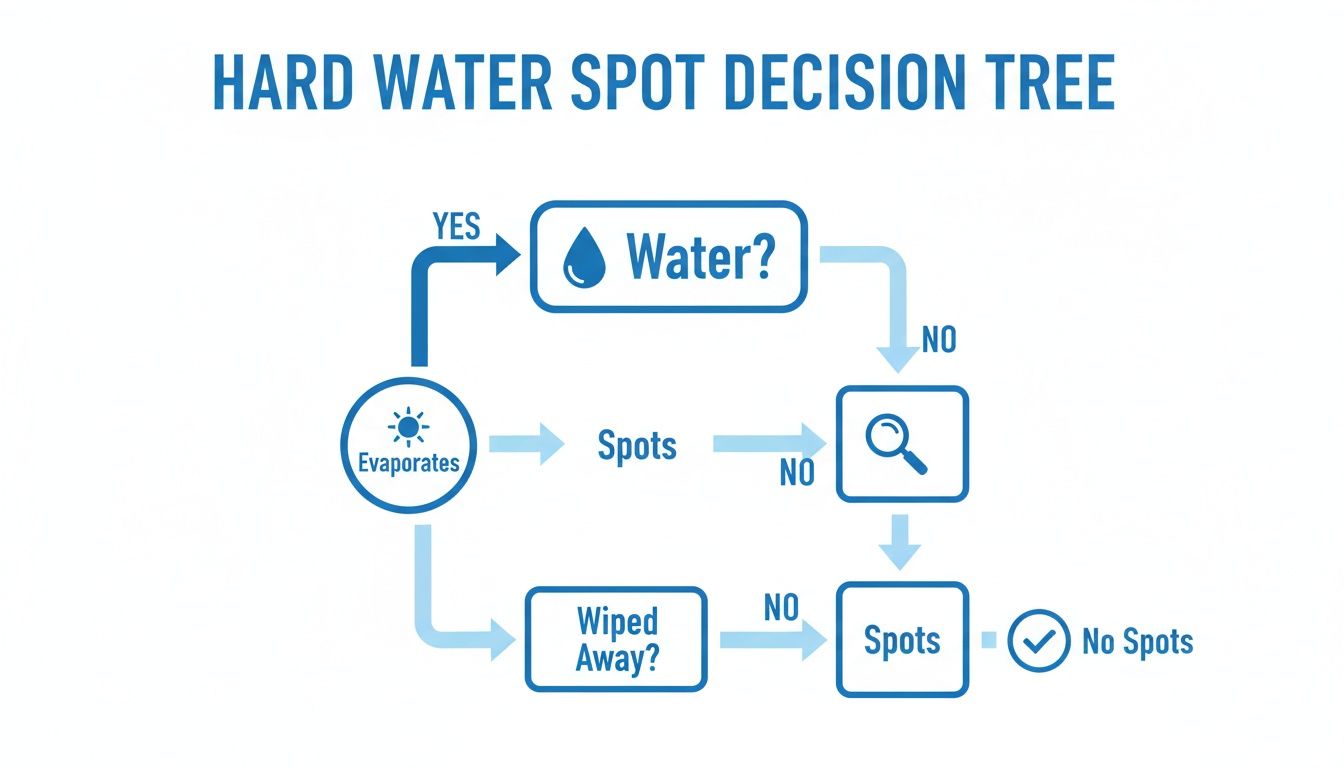
It's a simple but destructive cycle: water sits on the glass, evaporates, and leaves behind a chalky mineral deposit. Now, let's break down what these different stages of buildup look like on your windows.
This is the most common and easiest stage to deal with. At this point, the mineral deposits are just sitting on the surface of the glass and haven't had a chance to chemically bond with it yet.
You can usually spot light stains by these characteristics:
These are the kinds of spots you might see after a sprinkler hits a window for a day or two. Think of them as an early warning sign—they can almost always be handled with simple DIY methods, which we’ll get into later.
When those light spots are left to their own devices, they accumulate and graduate to a moderate level. The mineral buildup is now much more substantial and has started to cling more stubbornly to the glass. At this point, the problem is clearly visible and starts to drag down your home's appearance.
Look for these signs of moderate staining:
Remember, glass is a porous material. Moderate stains are a red flag that minerals have been sitting on the surface long enough to start creeping into those microscopic pores, making them much tougher to remove with a simple wipe-down.
Severe hard water stains are a serious issue that demands immediate attention. Here, the mineral deposits have been on the glass for a long time, often baked on by the sun. The high concentration of calcium and magnesium in the water—common in cities like Denver—can really speed up this process.
Here’s how to identify severe hard water damage:
At this stage, DIY solutions are often completely ineffective and can easily scratch the glass, making things worse. Professional Window Cleaning has been cleaning windows for over 26 years and knows that severe stains typically require professional-grade tools like a pure-water system, one of only two methods professionals use.
To help you quickly identify where your windows stand, we've put together this simple table. It breaks down the severity levels and gives you a clear path forward.
This table should serve as your go-to guide. If you're ever in doubt, it's always safer to start with the gentlest method or consult a professional to avoid accidentally damaging your glass.
When you first notice those faint, cloudy patches cropping up on your windows, it’s easy to get discouraged. But I’ve got good news: for light to moderate hard water spots windows are often surprisingly forgiving. If you catch them early, a trip to your kitchen pantry might be all it takes to get your view back. No harsh chemicals or expensive tools are needed.

The secret is all about acidity. The calcium and magnesium minerals that create those chalky stains are alkaline, which means a simple acidic solution can break them down and dissolve them right off the glass. This is exactly why common household items like white vinegar and lemon juice are your best friends in this fight. This is especially true for residents in Las Vegas and Denver who deal with hard water.
This is our go-to starting point for a reason—it’s simple, it's safe, and it’s remarkably effective on fresh mineral deposits. The acetic acid in white distilled vinegar works wonders on the alkaline minerals that sprinklers and hoses leave behind.
Here’s how we recommend using it for the best results:
Once the time is up, grab a clean microfiber cloth and wipe the window clean. A good quality cloth will trap the dissolved minerals instead of just smearing them around. For bigger panes of glass, a professional squeegee will give you that perfect, streak-free finish you're looking for. Professional Window Cleaning has been cleaning windows for over 26 years, and we know that a squeegee is one of only two trusted methods pros use for flawless results.
If that simple vinegar spray didn't quite cut it, you can introduce a bit more cleaning power without resorting to commercial chemicals. Lemon juice, with its citric acid, works on the same principle as vinegar. Sometimes it's even more potent, and it definitely leaves a fresher scent behind.
You can easily swap lemon juice for vinegar in your spray bottle or even create a powerful combo cleaner.
For a slightly more abrasive—but still safe—approach, try making a paste with baking soda and a little water. Apply the paste directly to the hard water spots and let it sit for a few minutes. Then, spray your vinegar solution right over the paste. You'll see some fizzing, and that chemical reaction is actually helping to lift and scrub away the mineral deposits.
Gently rub the area with a non-abrasive pad before rinsing it thoroughly with clean water and drying with a fresh microfiber cloth. This little trick is especially useful for those moderate spots that have a slightly rough feel to them. If you’re trying to figure out what else works, you can learn more about the best cleaner for hard water stains in our detailed guide.
Even when you're using natural ingredients, a few simple precautions will ensure you get great results without causing any unintended damage. The goal is to remove the hard water spots windows have collected, not create a new headache.
Always Test First
Before you go spraying your entire window, test your mix on a small, inconspicuous spot, like a lower corner. This makes sure the solution doesn't react badly with any tints, films, or special coatings on your glass.
Avoid Abrasives
Whatever you do, don't use abrasive tools like steel wool (unless it's grade #0000, and even then, be extremely careful), scouring pads, or stiff bristle brushes. These will etch fine scratches into the glass that are impossible to remove and will look far worse than the original spots.
Be Mindful of Your Surroundings
Remember, vinegar is acidic. It can harm delicate plants sitting below your windows and can damage certain types of window frames, like natural stone or unsealed wood. Watch where you spray and be sure to wipe up any drips right away. In sunny places like Phoenix, always avoid cleaning in direct sunlight. The solution will evaporate way too fast, leaving you with a streaky mess.
There's a point where a weekend DIY project turns into a job for the pros. While a simple vinegar solution and some elbow grease can handle fresh hard water spots on windows, they stand no chance against severe, long-term mineral buildup. Trying to scrub away these etched-in stains with harsh abrasives usually does more harm than good, leaving behind permanent scratches and irreversible damage.
This is a huge problem in sunny areas like Scottsdale, where the intense heat literally bakes mineral deposits into the glass. The process transforms a simple surface stain into a chemically bonded layer that fuses with the window. At this point, the problem isn't just on the glass—it's becoming a part of it.
To get why these stains are so tough, you need to understand what’s happening on a microscopic level. Glass feels smooth, but it's actually porous, full of tiny imperfections. When water loaded with minerals like calcium and magnesium dries, those deposits don't just sit on top; they sink into these microscopic pores.
Over time, the high alkalinity of these mineral deposits starts to corrode the glass in a process called etching. The minerals are no longer just a residue. They are chemically changing the surface of your window, creating that frosted, milky look that no amount of household cleaner will fix.
Glass is inherently porous and susceptible to corrosion, allowing hard water minerals to absorb directly into the glass structure itself, not merely coat the surface. Once minerals penetrate the glass matrix and the sun bakes these deposits onto the surface, removing water spots becomes exponentially more difficult than addressing fresh spotting. Discover more insights about the ugly truth of hard water damage at Men In Kilts.
This is exactly where professional window cleaners, armed with specialized tools and years of experience, make all the difference. Professional Window Cleaning has been cleaning windows for over 26 years, perfecting our methods for the most brutal mineral stains. We learned long ago that brute force isn't the solution. Instead, we rely on one of the only two methods professionals use: a pure-water system.
This powerful equipment runs tap water through a multi-stage deionization and reverse osmosis process, stripping out 100% of the dissolved minerals. What’s left is ultra-pure water, which is an incredibly effective—and surprisingly gentle—cleaning agent.
Removing severe hard water stains is a delicate restoration process. It takes a trained eye to assess the level of etching and the right touch to apply the correct technique without causing more damage. Our technicians have the experience to know the difference between surface deposits that can be dissolved and permanent etching that might require more intensive work like glass polishing.
Handing this job over to an expert not only guarantees a better result but also protects your property. You can learn more about what separates the pros from the amateurs in our guide to professional window cleaning equipment. When you're staring down a seemingly impossible wall of white haze on your windows, calling in a professional is the smartest and safest move you can make.
Those cloudy spots marring your windows are a lot more than just an eyesore. Think of them as a creeping threat, one that silently chips away at your property's value and structural health. It’s tempting to just live with them, but letting those hard water spots windows accumulate is a decision that comes with a steep, hidden price tag for both homeowners and businesses.
For any commercial property, the stakes are sky-high. Picture a high-end car dealership or a medical office in a competitive market like Denver. Hazy, stained windows don't just block the view; they broadcast an image of neglect. That subtle message is often enough to make potential customers think twice before they even step through the door.
It's the same story for homeowners. Curb appeal is a huge driver of property value, and windows are front and center. Glass caked with mineral deposits can make an otherwise beautiful home look tired and unkempt, potentially dragging down its market value and making it a tough sell.
The real cost of ignoring hard water stains goes much deeper than just appearances. The very minerals that cloud your glass—calcium and magnesium—are quietly waging war on your entire window assembly. This is a slow-motion problem, the kind you don't notice until it's already serious.
As mineral deposits build up, they can worm their way into the window seals and frames. This accumulation slowly degrades the rubber and vinyl seals that are essential for keeping your home airtight. Once those seals start to fail, your home’s energy efficiency takes a nosedive.
The economic impact of hard water stains on windows extends far beyond aesthetics, affecting property values, energy efficiency, and maintenance budgets. Hard water stains can reduce window visibility by up to 40% in severe cases, directly impacting the curb appeal. Learn more about how mineral deposits cause long-term damage and lead to air or water leaks in our detailed guide on hard water stains on windows.
Compromised seals mean drafts, forcing your HVAC system to work overtime just to keep the temperature stable. You'll feel it in your wallet with higher energy bills, month after month. What began as a simple cosmetic issue on the glass has now become a very real drain on your finances.
If you let it go, this gradual breakdown leads to even bigger headaches. Failed window seals don't just let air in; they let moisture in, too. Water can seep between the panes of double-glazed windows, causing that permanent, foggy condensation that no amount of cleaning can fix.
Eventually, the damage spreads to the window frames. Wooden frames start to rot. Metal frames begin to corrode. At this point, you're way past a cleaning job. You're now staring down the barrel of expensive window repairs or, in the worst-case scenario, a full replacement—a project that can easily run into thousands of dollars.
This is exactly why you need to shift your perspective on professional window cleaning. It’s not just another expense; it’s an essential investment in preventative maintenance. Professional Window Cleaning has been cleaning windows for over 26 years, and we know that routine care is the single most effective way to protect your property.
By using one of the only two professional methods—either a squeegee for regular upkeep or a pure-water system to tackle stubborn mineral buildup—we remove those damaging deposits before they can cause permanent harm. Regular professional service is the key to preserving your property’s value, maintaining its energy efficiency, and saving you from the astronomical cost of future repairs in areas like Phoenix and Scottsdale.
You've put in the work and finally gotten rid of that stubborn mineral buildup. So, what's next? The real goal is making sure those hard water spots windows are so prone to never come back. Trust me, being proactive is a whole lot easier than reacting after the damage is done. It saves you time and, more importantly, prevents the kind of permanent etching that requires professional restoration.
The best strategy is also the simplest: stop mineral-rich water from drying on your windows in the first place.
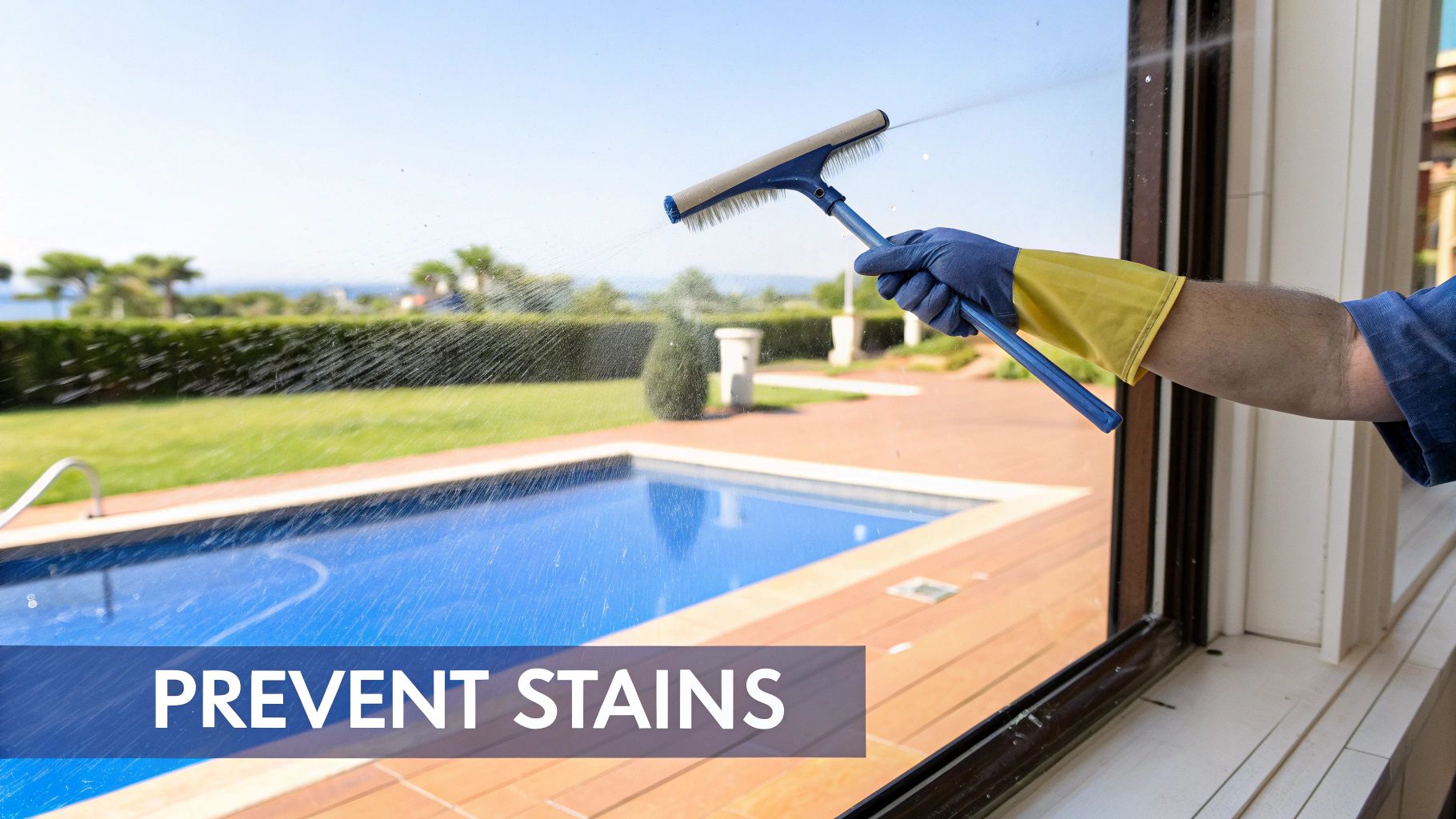
Most of the time, the culprit is right in your own yard. A few simple tweaks can make a massive difference and keep your view pristine.
Your sprinkler system is often public enemy number one when it comes to window stains. A single misaligned sprinkler head dousing a window day after day is a recipe for disaster, especially in places with notoriously hard water like Las Vegas.
Take a few minutes to walk your property while the sprinklers are running. You can often solve the problem with these quick fixes:
These small changes are your first line of defense, breaking the cycle of mineral deposits before it can even start.
"A proactive stance on window maintenance not only preserves the aesthetic appeal of your property but also safeguards against the long-term, corrosive effects of mineral buildup. Simple adjustments can prevent costly future restorations."
While managing where water lands is crucial, you can also tackle the problem at its source. For a more permanent fix, it's worth understanding the benefits of a whole house water filter. By softening the water that comes out of your outdoor spigots and hoses, you're stripping out the problem-causing minerals before they ever touch your glass.
But the most reliable long-term solution? A consistent, professional cleaning schedule.
Professional Window Cleaning has been cleaning windows for over 26 years, helping homeowners protect their investment. We use one of the only two professional methods: a squeegee for regular maintenance or a pure-water system for deep cleans, safely removing damaging minerals before they have a chance to bond. Think of it as the ultimate proactive strategy to keep your windows looking brand new, year after year.
When you’re staring down stubborn hard water spots, a lot of questions pop up. I hear them all the time from homeowners. Here are some quick, straightforward answers to the most common ones we get, drawing from years of experience in the field.
Yes, it absolutely can, and I’ve seen it happen more times than I can count. When you let those mineral deposits sit on the glass for too long, they start to chemically etch the surface. The intense sun we get here in places like Phoenix really speeds up this process.
What you end up with is a cloudy, frosted look that no amount of scrubbing will remove. It’s not a stain anymore; it’s part of the glass. Catching it early is everything.
Not always. Some of the heavy-duty commercial removers can be really effective, but they often contain harsh acids or super-fine abrasives. While they might get the spot off, they can also damage window tints, protective coatings, or even the frames themselves.
My advice? Always read the label and—critically—test it on a small, hidden spot first. The last thing you want is to trade a few water spots for a permanently damaged window.
If you clean the spots and they’re back in a week, you're treating the symptom, not the cause. The problem is that the glass is getting repeatedly soaked with hard water, usually from a rogue sprinkler head or consistent runoff.
Unless you fix that water source, you’ll be stuck in a frustrating cleaning loop. Adjusting that sprinkler is the first real step to solving the problem with your hard water spots windows keep getting.
Look, the most reliable way to break the cycle is with professional gear. Professional Window Cleaning has been cleaning windows for over 26 years, and we know that one of the only two methods the pros trust is a pure-water system. This filters out 100% of the minerals. The water left behind is so pure it dries without leaving a single spot, preventing new deposits from ever forming.
It really depends on how much exposure your windows get. If they’re in the direct line of fire from your sprinklers, a quick squeegee or wipe-down right after they get wet is your best bet.
For general maintenance and prevention, having a professional deep clean twice a year is a solid strategy. It gets rid of any mineral buildup before it has a chance to become a real headache.
Don't let stubborn hard water stains ruin your beautiful view. Professional Window Cleaning has been cleaning windows for over 26 years, using industry-leading pure-water systems to safely restore your glass to its original clarity. Contact us today for a free, no-hassle estimate!
Read our blog posts regularly and keep learning.