Care and Maintenance
Hard Water Stain Remover Shower: What Actually Works
Find the right hard water stain remover shower fix for glass, tile, grout, and chrome. Safe DIY recipes, product picks, and prevention tips that work.


You know those chalky, white spots that seem impossible to scrub off your windows? Those are hard water stains. They’re stubborn mineral deposits left behind after water evaporates, and regular cleaners just can’t seem to touch them.
These spots are usually made of calcium and magnesium carbonates that cling to the glass, creating that frustrating, milky film. Professional Window Cleaning has been cleaning windows for over 26 years, so we know exactly how to deal with them.

If you've noticed those annoying white spots cropping up on your windows, you're definitely not alone. It's a widespread headache for property owners, especially in areas with mineral-rich water. This has nothing to do with your cleaning skills—it’s just simple chemistry at work.
Hard water is loaded with dissolved minerals like calcium and magnesium. When water from a sprinkler, a hose, or even rain splashes onto your windows and dries in the sun, the liquid evaporates, but the minerals are left behind. These deposits chemically bond with the glass, creating those stubborn, cloudy blemishes.
It helps to think of window glass as porous, at least on a microscopic level. As the water disappears, those mineral deposits get trapped in the glass's tiny imperfections. The sun then bakes them onto the surface, making them incredibly difficult to just wipe away.
This problem is especially common across the American Southwest, where the groundwater is naturally high in minerals. In states like Arizona, Nevada, and Colorado, over 70% of households are dealing with hard water.
Take Maricopa County, Arizona—home to cities we serve like Phoenix—where water hardness often tops 300 mg/L. That's five times the level considered "moderately hard." This kind of water causes rapid buildup that can slash visibility by up to 40% if you let it go. You can get more great insights on preventing these stains from the experts at GlassDoctor.com.
At Professional Window Cleaning, we've seen firsthand how the intense sun in cities like Las Vegas speeds up this process. It essentially "bakes" the minerals right onto the glass, making professional removal the only real solution.
To stop the stains from coming back, you first need to figure out where the water is coming from. Most of the time, the culprits are part of everyday routines around your property. We see these sources causing issues time and time again in cities we service like Denver and Scottsdale.
Each of these sources contributes to the cycle of mineral deposits, evaporation, and staining. Once you've identified which one is affecting your home, you're in a much better position to prevent it from happening again.
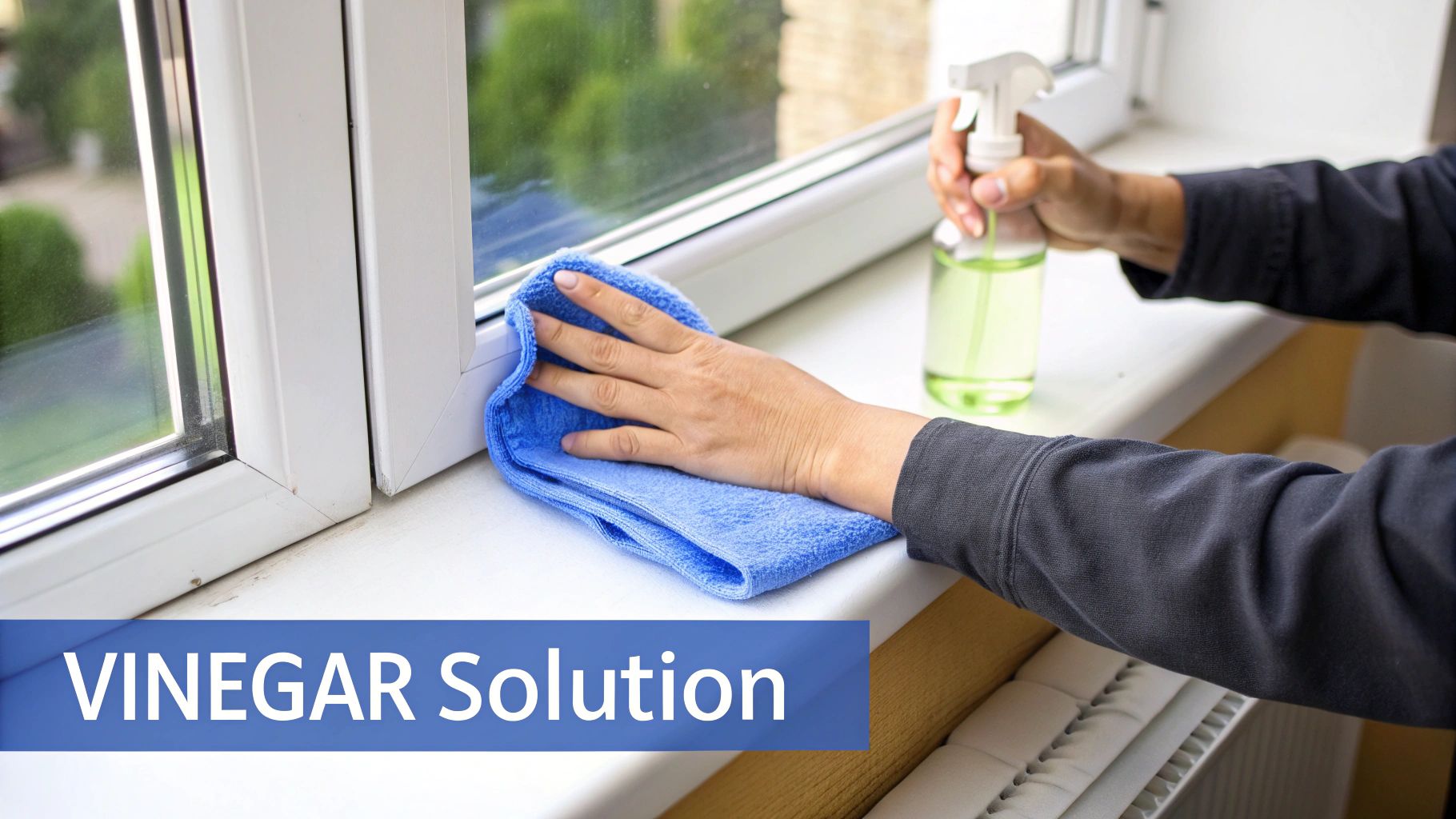
When you catch hard water stains early, you can often skip the harsh chemicals. A few common items from your pantry can work wonders on light to moderate mineral buildup, saving you both time and money. The trick is to use the right stuff and have a little patience.
Before you go all in, it’s always a good idea to test your cleaning mix on a small, hidden spot on the window. This quick check makes sure the solution won’t damage your glass or window frames, giving you the confidence to tackle the more obvious stains.
White vinegar is your best friend when it comes to fighting hard water stains. Its natural acidity is perfect for dissolving the alkaline mineral deposits—like calcium and magnesium—that create those annoying white spots. It’s a simple, non-toxic first line of defense that really works.
Here’s how to mix up your own cleaning solution:
After the stains are gone, rinse the glass with fresh distilled water and dry it completely with a clean microfiber cloth or a squeegee to prevent new spots from forming. This method is often all you need for recent stains, especially on windows in homes around Denver, where hard water is a common headache.
Sometimes, vinegar alone just isn't enough. For those extra stubborn spots, a simple baking soda paste can provide the gentle abrasion you need to scrub away deposits without scratching the glass.
Just mix baking soda with a little bit of water to create a thick paste. Apply it directly onto the hard water stains and let it sit for a few minutes. For a little extra cleaning power, you can spray your vinegar solution right on top of the paste—the fizzing reaction helps lift the minerals right off the glass.
This combo of a mild acid (vinegar) and a gentle abrasive (baking soda) is a classic cleaning hack for a reason. Just remember to always use soft cloths and light pressure to keep your glass safe.
Gently scrub the area with your microfiber cloth, then rinse everything away and dry the window thoroughly. If you're curious about other options, you can learn more in our detailed guide on the best cleaner for hard water stains. While these DIY methods are great for minor issues, remember that older, more severe stains often need a professional touch.
While DIY solutions are great for tackling minor spots, there comes a point where household remedies just can’t cut it. When those chalky mineral deposits have had months, or even years, to bake into the glass, they can actually start to etch the surface. This creates damage that a simple vinegar scrub won't fix.
If you’ve scrubbed and soaked with no success, that’s your cue to call in the experts.
Here at Professional Window Cleaning, we know there are ONLY 2 methods that professionals use. Choosing the right one all depends on how stubborn the stains are and the specific needs of your property in cities like Las Vegas or Phoenix.
In the hands of a skilled technician, a squeegee is so much more than a rubber blade—it's a precision tool. We use specialized, professional-grade cleaning solutions formulated to dissolve stubborn mineral deposits far more effectively than anything you'd find under the sink.
But the real secret is in the technique. A pro knows how to apply the perfect amount of pressure, using specific angles and overlapping strokes to pull all the grime and dissolved minerals off the glass in one clean motion. This is key to preventing dirty water from drying back onto the window and creating new spots, which is a frustratingly common issue with DIY attempts.
For more challenging jobs, especially on higher or hard-to-reach windows, we bring out the modern pure-water systems. Honestly, this technology is a game-changer for removing tough hard water stains.
The system uses a multi-stage filtration process that strips tap water of all its impurities and minerals—including the calcium and magnesium that cause the stains in the first place. This deionized, or "pure," water is so effective because it's in an unstable state and actively wants to bond with minerals and dirt on your windows.
When we rinse your windows with pure water, it acts like a powerful magnet, literally pulling the mineral deposits and grime right off the glass surface. And because the water itself is completely pure, it dries to a perfect, spot-free finish. No squeegees, no wiping, and no chemical residues left behind.
This method is especially effective for homes in areas like Denver, where hard water is a constant battle. It lets our technicians safely and efficiently clean multi-story windows from the ground using water-fed poles.
To see exactly how it works, you can check out our detailed explanation of pure water window washing. Both of these professional techniques guarantee a superior, long-lasting clean that protects your investment and brings back that crystal-clear view.

Getting those stubborn hard water spots off your windows shouldn't put you in harm's way. For a lot of homeowners, the immediate solution for high windows is to pull out a ladder. But what seems like a simple task is actually loaded with risks that are too easy to underestimate.
Think about it: you're trying to scrub a tough spot, leaning just a bit too far on an unsteady ladder. Or maybe you're hanging out of an upstairs window, juggling spray bottles and cloths. One slip, one moment of lost balance, can lead to a serious accident with devastating consequences.
The hazards of cleaning high windows aren't just hypothetical. Hard water, a common issue in countless households, often demands aggressive scrubbing right where it's most dangerous—at height.
The statistics are sobering. In the UK, where hard water is a widespread problem, these tough stains contribute to over 30 serious injuries among window cleaners every single year. A dramatic 2014 incident at New York’s One World Trade Center, where two cleaners were left dangling from the 69th floor after a cable snapped, is a stark reminder of the risks involved on a global scale. You can read more about the hard truth of hard water stains from Window Genie.
This is exactly why calling in the pros is about more than just a better shine. When you choose an experienced company, you're ensuring the job gets done right—without putting yourself, your property, or the technicians at risk. For homeowners in places like Las Vegas, NV, hiring a professional is simply the smartest, safest decision you can make.
With over 26 years of experience under our belts, we at Professional Window Cleaning have honed a safety-first approach that gets results. We’ve pretty much eliminated the need for risky ladder work by investing in specialized equipment designed to clean windows safely from the ground.
Our go-to tools for keeping our team safe include:
This ground-based approach does more than just prevent the number one cause of window cleaning accidents. It also protects your flowerbeds, siding, and window frames from the scrapes and dents that ladders can leave behind.
By investing in the right tools and continuous training, we can tackle even the most stubborn hard water stains on windows without ever taking a gamble. It’s a commitment to safety that gives you peace of mind and a crystal-clear view.
After you’ve put in all that effort to get your windows sparkling, the last thing you want is for those stubborn hard water stains to creep back. This is where a little prevention goes a long way. By making a few simple tweaks around your property, you can stop mineral deposits from bonding to your glass in the first place.
Being proactive doesn't just save you from future scrubbing sessions; it also protects your windows from the permanent etching damage that can happen when stains are left to sit. It’s all about controlling where that mineral-rich water goes.
More often than not, the main culprit behind those milky hard water stains on windows is your own irrigation system. Sprinklers are meant for your lawn, not your house. When they repeatedly spray your windows, they leave a fresh layer of mineral deposits with every single watering cycle.
Take a few minutes to walk your property and check your sprinkler setup. A simple adjustment can make a world of difference.
These small changes disrupt the staining cycle before it can even start, keeping your windows cleaner for much, much longer.
"Essentially, you want to manage stormwater runoff to decrease its volume and prevent pollution." - U.S. Environmental Protection Agency (EPA)
Properly directing water from your roof and sprinklers is a crucial step in maintaining a pristine, stain-free home exterior.
Another highly effective strategy is to make your glass surfaces water-repellent. Applying a quality hydrophobic glass sealant creates an invisible shield that literally forces water to bead up and roll away.
Instead of letting water sit on the glass and evaporate—leaving those chalky minerals behind—the sealant makes it slide right off, taking the dissolved minerals with it. This technology is a real game-changer for homes in hard-water hotspots like Phoenix, AZ, where the intense sun can bake minerals onto unprotected glass in what feels like minutes.
Of course, the final piece of the prevention puzzle is a regular professional cleaning schedule. At Professional Window Cleaning, we’ve been helping homeowners protect their investments for over 26 years. Our professional-grade squeegees and pure-water cleaning methods don't just remove existing residue; they leave a finish that makes it harder for new stains to form. A consistent cleaning plan in a city like Scottsdale ensures mineral buildup never gets the chance to become a serious, damaging problem.
While DIY methods can certainly handle fresh spots, some hard water stains on windows are just too stubborn for household solutions. If you’ve been scrubbing with vinegar and the stains haven’t budged, or if they’ve had years to bake into the glass, it’s probably time to call it a day. Pushing it further could lead to frustration and even damage.
Safety should always come first, too. Tackling stains on second-story windows or other hard-to-reach glass without the right equipment is a huge risk. For situations like these, professional intervention isn't just easier—it's the smartest choice.
This chart offers a quick way to think through the best prevention strategy for your property.
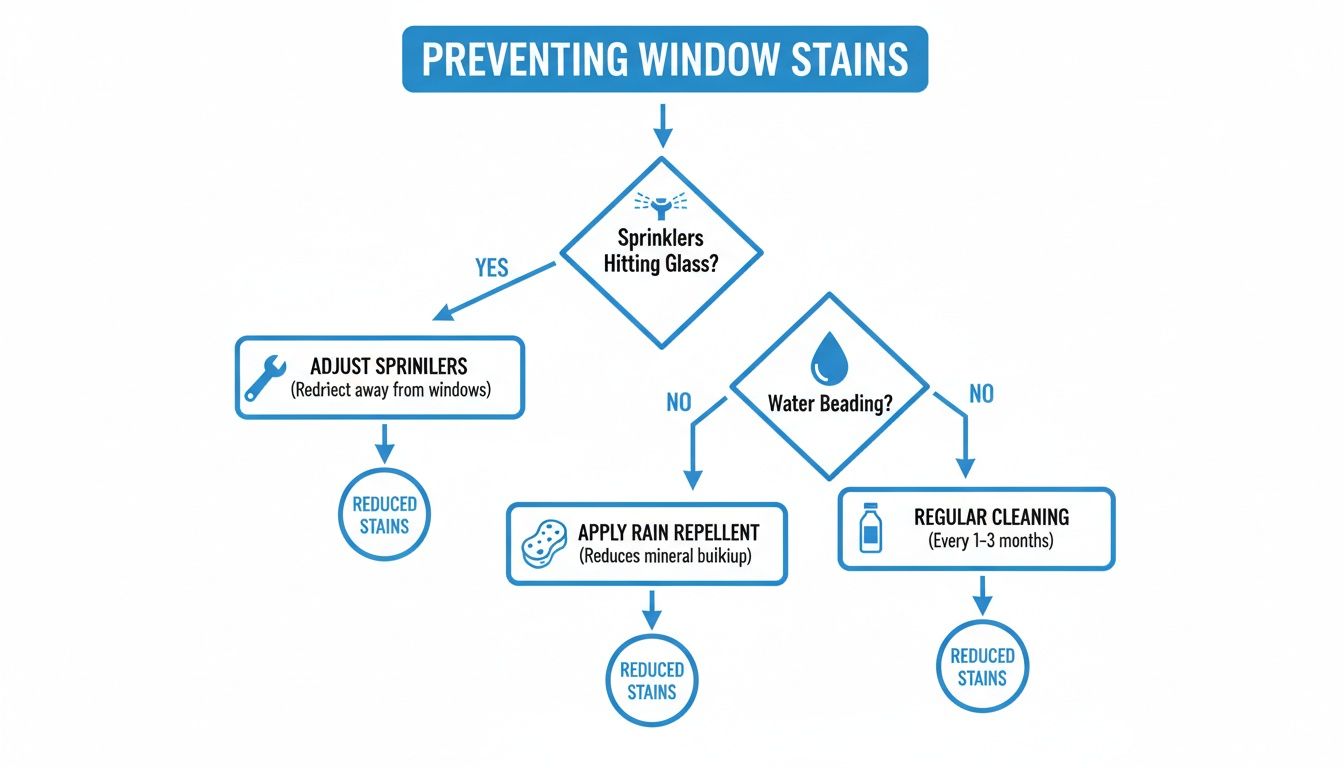
As you can see, proactive steps like adjusting your sprinklers and applying repellents are key to keeping future problems at bay.
For widespread buildup or persistent stains on commercial properties, calling in a pro is almost always essential. With over 26 years of experience making homes and businesses in areas like Scottsdale look their best, we have the specialized tools to restore your glass properly. If you're weighing your options, it helps to get a sense of the current professional window cleaning service costs.
We typically use two primary methods—the traditional squeegee and modern pure-water systems. This flexibility allows us to deliver a flawless, lasting finish that protects your investment and keeps your property looking pristine.
Over the years, we've heard just about every question there is when it comes to those stubborn white spots on windows. Here are a few of the most common ones we get from homeowners, along with some straight answers from our team.
Unfortunately, yes. It's a common misconception that hard water stains are just a cosmetic issue. When mineral deposits sit on your windows for too long, they start a chemical process called etching. The alkaline minerals literally begin to eat into the glass, creating tiny pits and craters on the surface.
Once the glass is etched, the damage is permanent. No amount of scrubbing can fix it. This is why we always stress how important it is to tackle hard water buildup sooner rather than later—you're not just cleaning the glass, you're preserving it.
For homes in places with tough water, like Las Vegas, NV, we generally recommend a professional cleaning at least twice a year. Think of it as preventative maintenance. A regular schedule stops that mineral layer from ever getting thick enough to cause etching.
Now, if your windows are getting hit directly by sprinklers or other constant water sources, you might want to bump that up to a quarterly service. That consistent exposure can accelerate damage, so staying ahead of it is the best investment you can make for your windows.
Absolutely. Using a pure-water system is one of the two go-to methods for professionals, and it's incredibly safe for any type of glass. It doesn't matter if you have tinted windows, coated glass, or even older, more fragile panes—this method is gentle and effective.
The magic is in the water itself. It's been so heavily filtered and deionized that it naturally attracts and lifts away dirt and minerals without any harsh chemicals or abrasives. When it dries, there's nothing left behind to leave a spot, just a perfectly clear finish.
If stubborn hard water stains are ruining your view, don't wait for permanent damage to set in. The team at Professional Window Cleaning has the right tools and expertise to restore your windows safely. With over 26 years of experience, we know how to get the job done right. Get your free, no-hassle estimate today by visiting us at https://www.professionalwindowcleaning.com.
Read our blog posts regularly and keep learning.